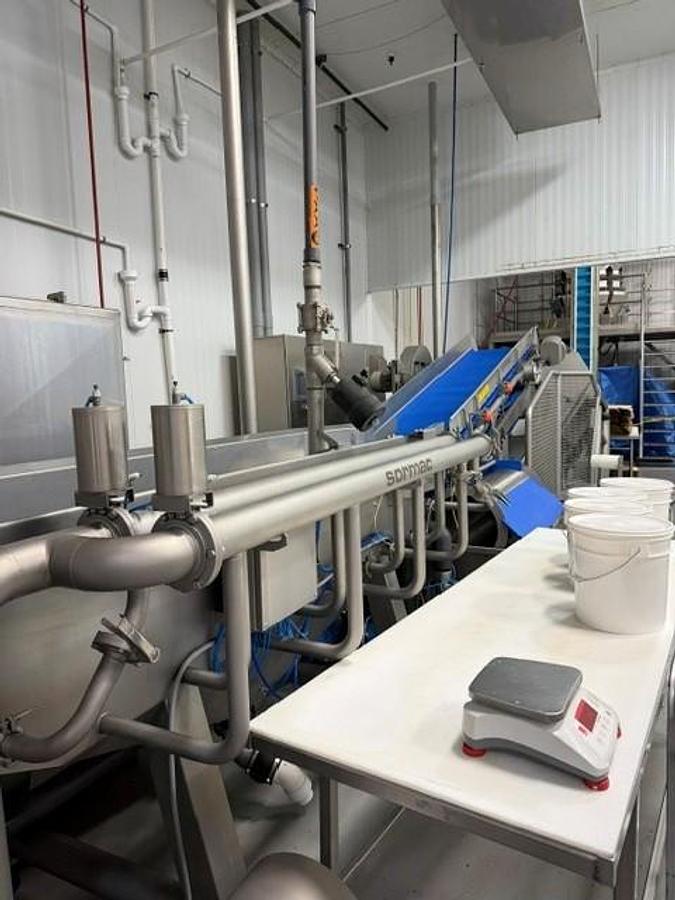
Category
Subcategory
Manufacturer
Model
Centrifuges Used Cornell Versators-Deaerators
We stock a variety of centrifugal and separation equipment for both laboratory and manufacturing uses. Our inventory includes a large selection of used Cornell Machine Company Versators, versatile separation capable of functioning as a vacuum deaerator, degasser, defoamer, homogenizer, and emulsifier. This means that the Cornell Versator can be used to remove trapped air/gases or foam from liquids as part of your production process or to emulsify or homogenize your product. We stock used Cornell D8 Versators, used Cornell D16 Versators, and used Cornell D26 Versators. Our selection of used centrifuges also includes used Sharples centrifuges, used Westfalia separators, and used Bock basket centrifuges.
FAQ :
What types of used centrifuges are available on the market?
The used centrifuge market covers a wide range of equipment, from small tabletop laboratory units to large industrial-scale separators. On the lab side, buyers commonly find benchtop centrifuges, microcentrifuges, floor-standing high-speed centrifuges, and ultracentrifuges suited for research, clinical, and pharmaceutical applications. On the industrial side, the selection typically includes basket centrifuges, disk stack separators, decanter centrifuges, and specialty units like vacuum deaerators and versators that serve food processing, chemical, and manufacturing industries.
Within those broad categories, the inventory at any given time can vary considerably. A well-stocked used equipment dealer might carry basket centrifuges in multiple diameter sizes (30-inch, 48-inch, and larger), stainless steel sanitary units built to food-grade standards, explosion-proof models for hazardous environments, and variable-speed drive configurations. Brands commonly found in the used market include Westfalia, Sharples, Bock, Cornell, Beckman, DeLaval, and Podbielniak, among others. Each brand and model is suited to different process requirements, so buyers should have a clear picture of their application, material compatibility needs, and capacity requirements before shopping.
What is a Cornell Versator and what is it used for?
A Cornell Versator is a centrifugal processing unit made by Cornell Machine Company that performs multiple functions within a single piece of equipment. It can operate as a vacuum deaerator, degasser, defoamer, homogenizer, or emulsifier depending on how it is configured and what the process demands. This versatility makes it a popular choice in food and beverage manufacturing, where removing trapped air or gases from liquids, eliminating foam, or achieving a consistent emulsion are common production requirements.
Cornell Versators are available in several sizes, with the D8, D16, and D26 being the most frequently encountered in the used market. The number generally corresponds to the processing capacity of the unit. Used Cornell Versators are often found in stainless steel sanitary configurations with 4B finishes, making them suitable for food-contact applications. Some units come paired with vacuum pumps (such as SIHI or Stokes pumps) and filtration components, and explosion-proof drive configurations are also available for facilities with hazardous area classifications. Buyers should confirm that any vacuum pump included with a used Versator is in serviceable condition, since that component is integral to the deaeration function.
How do I evaluate the condition of a used centrifuge before buying?
Assessing the condition of a used centrifuge requires looking at several things beyond just the physical appearance of the machine. The most important starting points are the rotor and bowl, since those components experience the most stress during operation and are also the most expensive to replace. Buyers should ask about hours of use, any history of imbalance events or emergency stops, and whether the rotor has been inspected or dye-tested for cracks. Service logs and calibration records, if available, give a clearer picture of how the machine was maintained over its working life.
Reputable used equipment dealers will typically accommodate in-person inspections, virtual walkthroughs, or video documentation of the machine so buyers can assess its current state. Some equipment may still be installed and running at a production facility, which allows for observation under actual operating conditions. It is worth noting that most dealers do not have the permitting or production infrastructure to run product through a machine during a demonstration, so functional testing is generally limited to verifying that the unit powers on, runs without unusual vibration or noise, and that drive and control components respond correctly. Buyers should also consult directly with the manufacturer to understand what parts and technical support are still available for a given model and age of machine, since older or discontinued models may have limited aftermarket support.
Are used centrifuges sold with any warranty?
Warranties on centrifuges are typically provided by manufacturers on equipment sold through authorized channels. Used equipment dealers, by contrast, generally sell machinery on an as-is basis, which means the buyer accepts the machine in its current condition without a warranty from the seller. This is standard practice across the used industrial equipment industry and reflects the fact that the dealer often has limited visibility into the full operating history of a machine.
Because of this, the burden of due diligence falls on the buyer. Selecting a dealer with a long track record of selling equipment in your specific industry matters considerably. A dealer who specializes in centrifugal and separation equipment will have more relevant knowledge about what to look for, how to represent condition accurately, and how to help buyers identify potential issues before purchase. Buyers should take full advantage of inspection options offered by the dealer, request any available documentation on the machine's history, and contact the manufacturer directly to understand what level of technical support and parts availability they can expect for that particular model.
What are the most reputable centrifuge brands to look for in the used market?
Several brands have strong reputations in the used centrifuge market because of their build quality, longevity, and parts availability. On the industrial separation side, Westfalia (now GEA) and Sharples are among the most recognized names for disk stack and scroll centrifuges used in food, dairy, chemical, and pharmaceutical processing. Bock is well regarded for basket centrifuges used in food processing applications. Cornell Machine Company has a loyal following for its Versator line due to the multi-function capability of those units. DeLaval and Podbielniak are also encountered regularly in industrial used equipment inventories.
For laboratory centrifuges, Beckman Coulter, Thermo Fisher Scientific (including the Sorvall line), Eppendorf, Hettich, and Sigma Laborzentrifugen are consistently sought after because of their precision engineering and the ongoing availability of rotors and accessories. When evaluating any brand in the used market, it is worth researching whether the manufacturer still actively supports that model line with spare parts and technical documentation. Machines from brands with strong aftermarket support carry less long-term risk, even if the purchase price is somewhat higher than a comparable unit from a discontinued or less-supported manufacturer.
How do I determine the right RPM and rotor capacity for my application?
Selecting the correct RPM range and rotor capacity starts with understanding the specific separation or processing task at hand. In laboratory settings, the required relative centrifugal force (RCF, measured in g-force) is usually defined by the protocol or method being used, and RPM is then calculated based on the rotor radius. For industrial applications, the key parameters are typically throughput volume, the density difference between the phases being separated, particle or droplet size, and the viscosity of the material being processed. Getting these numbers wrong can result in incomplete separation, product damage, or equipment stress.
Rotor compatibility is one of the most critical factors in used centrifuge purchases, particularly for laboratory units. Rotors are often the most expensive and wear-prone component in a centrifuge system, and not all rotors are interchangeable between models or even between generations of the same model. Buyers should verify that the rotor included with a used centrifuge is compatible with the drive head and that it has not exceeded its rated run-hour or cycle limit, since rotor failures at high speed are serious safety events. For industrial centrifuges like basket or disk stack units, capacity is usually expressed in terms of bowl diameter, basket volume, or throughput rate in gallons or liters per hour, and those figures should be matched to the production volume requirements of the intended process.
What is the difference between a basket centrifuge and a disk stack separator?
A basket centrifuge uses a perforated or solid rotating basket to separate solids from liquids. In a perforated basket design, liquid passes through the basket wall while solids are retained, making it well suited for applications like dewatering food products, crystals, or fibrous materials. Solid bowl basket centrifuges retain both the liquid and solids until the cycle is complete, at which point the basket is manually or automatically discharged. Basket centrifuges are common in food processing, chemical manufacturing, and pharmaceutical production, and they are available in a wide range of basket diameters, with larger diameters handling higher batch volumes.
A disk stack separator (also called a disk centrifuge or clarifier) uses a stack of closely spaced conical disks inside a rotating bowl to create a very large effective separation surface area. This design allows for continuous processing of liquids at high throughput rates and is particularly effective for separating two liquid phases (such as oil and water) or for clarifying liquids by removing fine suspended solids. Westfalia and Sharples are two of the most recognized manufacturers of disk stack separators in the industrial used market. The choice between a basket centrifuge and a disk stack separator depends on the nature of the material being processed, whether the operation is batch or continuous, and the required separation efficiency.
Can I get replacement parts and technical support for a used centrifuge?
Parts and support availability varies significantly depending on the brand, model, and age of the centrifuge. For well-established manufacturers like Westfalia (GEA), Beckman Coulter, Thermo Fisher, and Eppendorf, many models remain supported for years after production ends, with spare parts available through the manufacturer, authorized service centers, or third-party suppliers. For older or discontinued models, parts may require sourcing through specialty used parts dealers or machining custom replacements, which adds cost and lead time to any repair.
Before purchasing a used centrifuge, it is worth contacting the manufacturer directly to ask about support availability for that specific model. Manufacturers can typically advise on whether spare parts are still stocked, whether service technicians are trained on that equipment, and whether any known service bulletins or safety notices apply to the machine. This conversation is especially important for centrifuges that will be used in regulated environments (pharmaceutical, food processing) where documentation of maintenance and calibration is required. A used centrifuge from a well-supported product line will generally have a lower total cost of ownership than one where parts must be custom-sourced, even if the upfront purchase price is higher.
What should I expect when it comes to shipping and delivery of a used centrifuge?
Shipping a used centrifuge involves more logistical complexity than shipping standard freight because of the weight, size, and sensitivity of the equipment. Smaller laboratory centrifuges can often be palletized and shipped via standard freight carriers, but larger industrial units like basket centrifuges, disk stack separators, and versators typically require custom crating, heavy-duty rigging for loading and unloading, and flatbed or specialized freight transport. The cost of packaging and crating varies based on the size of the machine and the level of protection required to prevent damage in transit.
Buyers should ask the dealer for a detailed breakdown of all costs associated with getting the machine to its destination, including rigging at the origin, packaging or crating, freight charges, and any unloading or rigging required at the delivery site. These costs can add up to a meaningful portion of the total purchase price on larger machines, and understanding the full landed cost before committing to a purchase avoids surprises. Some machines may require a crane or forklift with significant capacity for unloading, so buyers should assess their facility's receiving capabilities before finalizing a purchase.
What are typical payment terms for purchasing used centrifuge equipment?
Most used equipment dealers require payment in full before a machine is released for shipping. This is standard practice in the industry and reflects the fact that used equipment inventories are not easily restocked if a transaction falls through after a machine has been held or prepared for shipment. Payment is typically accepted by wire transfer, and buyers should confirm accepted payment methods with the dealer early in the process to avoid delays.
Some dealers will extend payment terms to established customers with a history of prior transactions, but this is not common for first-time buyers. Buyers who are working with a budget constraint or need to arrange financing should address that conversation with the dealer upfront rather than after a purchase price has been agreed upon. It is also worth clarifying whether a deposit is required to hold a machine while inspection or financing arrangements are being finalized, since desirable equipment in good condition can move quickly in the used market.