Category
Subcategory
Manufacturer
Model
Dust Collectors Baghouse Dust Collector, Cyclone, Cabinet Collectors
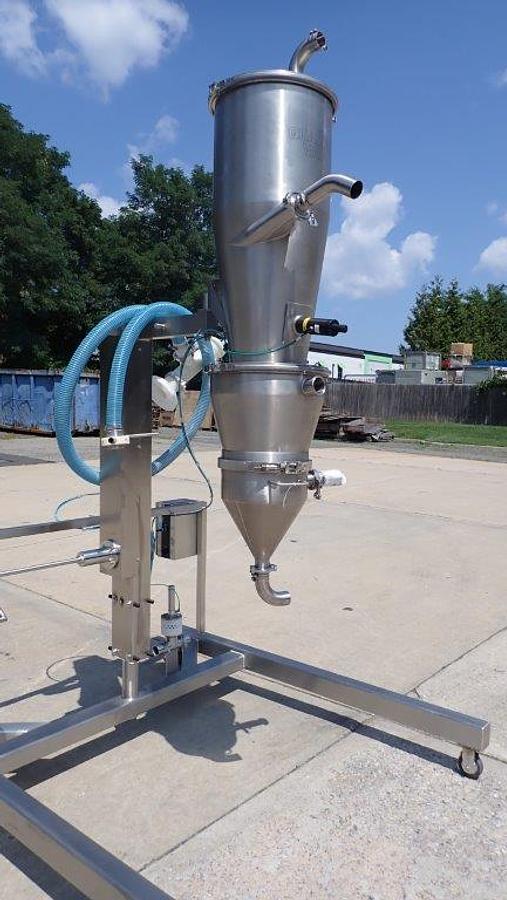
Dust collectors are used to remove dust from the air in facilities where a dust-free environment is required. For example, dust collection is often required in pharmaceutical manufacturing. The most prominent brand of industrial dust collector is the Donaldson Torit dust collector. We stock used dust collectors from Donaldson Torit and others in varieties including the baghouse dust collector, cyclone dust collector, and cabinet style dust collector.
FAQ :
What should I look for when buying a used dust collector?
The most important components to evaluate are the motor, impeller, and filter housing. The motor and impeller bearings tend to be the most expensive parts to replace, so listen carefully for unusual noise during operation and check for excessive vibration. Ask the seller about the machine's run hours if known, and inspect the impeller blades for wear, cracking, or imbalance. Also check the condition of the filter bags or cartridges, the integrity of the ductwork connections, and whether the collection drum or hopper shows signs of corrosion or damage.
Beyond the mechanical condition, pay close attention to the key performance specs. CFM (cubic feet per minute) airflow, static pressure rating, motor horsepower, and filtration micron rating all need to match your application. A machine with a degraded filter or undersized motor may not meet your facility's air quality requirements, even if it appears structurally sound. For pharmaceutical, food processing, or fine woodworking environments, filtration efficiency is especially critical. HEPA or sub-micron filters are often required for compliance with health and safety standards, so confirm whether the existing filters meet your needs or factor in replacement costs before committing to a purchase.
How do I inspect a used dust collector before purchasing?
Used equipment dealers typically offer inspections in person, via video call, or through detailed video captures of the machine. For a thorough inspection, request that the seller demonstrate the unit running under power so you can observe airflow, listen for bearing noise, and confirm that the motor starts and runs without issue. If the machine is still installed at a production facility, an in-person inspection can sometimes be arranged at the plant itself, where you may be able to see it operating in its actual working environment.
Keep in mind that most equipment dealers are not set up to test machines with actual production material, since running a full production process requires different permitting and infrastructure than a typical dealer facility has. The practical goal of any inspection is to get an accurate picture of the machine's current mechanical condition. Check the filter housing for cracks or warping, inspect the gaskets and seals, look at the collection bags or cartridges for tears or heavy loading, and examine the discharge valve or rotary airlock if the unit has one. Asking the seller for any available service records or maintenance history can also give you a clearer picture of how the machine was maintained over its working life.
What are the most reliable brands for used dust collectors?
Donaldson Torit is widely regarded as one of the most prominent and reliable brands in industrial dust collection, and used Torit units are among the most actively sought in the secondary market. Their baghouse, cartridge, and cabinet-style collectors have a strong reputation for durability and are commonly found in pharmaceutical, food processing, and industrial manufacturing facilities. Other well-regarded brands in the used market include Jet, Powermatic, Grizzly, Delta, Penn State Industries, and Oneida Air Systems, particularly for woodworking and lighter industrial applications.
Brand reputation matters beyond just build quality. It also affects parts availability and manufacturer support. Before purchasing a used dust collector, it is worth contacting the manufacturer directly to ask about parts availability and technical support for the specific model and age of the unit you are considering. Older or discontinued models may have limited support, which can make repairs more difficult and costly down the road. Choosing a well-known brand with an active parts supply chain reduces that risk significantly, and reputable used equipment dealers who specialize in dust collection equipment can often advise on which models have the strongest aftermarket support.
What CFM rating do I need for my application?
CFM, or cubic feet per minute, is the primary measure of a dust collector's airflow capacity and the most important spec to match to your specific application. As a general rule, you need enough CFM to capture dust at the source before it disperses into the surrounding air. Each tool or dust-generating process has a recommended capture velocity and duct diameter, which together determine the minimum CFM required at that collection point. For a small woodworking shop with a single machine, a unit producing 400 to 800 CFM may be sufficient. Larger facilities with multiple simultaneous collection points can require several thousand CFM or more.
Static pressure rating is equally important and is often overlooked. A dust collector may produce high CFM in open-air conditions but lose significant performance when connected to long duct runs, multiple branch lines, or fine filtration media that creates resistance. Always calculate your system's total static pressure loss before selecting a unit. Motor horsepower gives a rough sense of capacity but is not a substitute for actual CFM and static pressure specs. When evaluating a used machine, ask the seller for the original performance data sheet if available, and compare those figures against your facility's actual requirements to avoid buying a unit that is undersized for the job.
What is the difference between a single-stage and two-stage dust collector?
A single-stage dust collector pulls all material, including large chips, fine dust, and debris, directly through the impeller before depositing it into a collection bag or bin. This design is simpler and typically less expensive, but it means heavier particles pass through the fan blades, which can accelerate wear on the impeller over time. Single-stage units are common in smaller shops and lighter-duty applications where the volume of coarse debris is relatively low.
A two-stage dust collector separates the heavier chips and larger particles in a first-stage separator, often a cyclone or drop box, before the airstream reaches the impeller and filter. This protects the impeller from abrasive wear and significantly extends filter life because the filter only has to handle the fine dust fraction. For woodworking operations that generate a mix of coarse shavings and fine dust, or for any application producing abrasive particulate, a two-stage system is generally the better long-term investment. When shopping for used two-stage units, inspect the separator chamber for wear or damage in addition to the standard motor and filter checks, since the separator is the component that takes the most mechanical punishment in daily use.
Are replacement filters and bags easy to find for older used dust collector models?
Filter availability varies considerably depending on the brand, model, and age of the unit. For major brands like Donaldson Torit, replacement cartridges and filter bags are generally well-supported and available through the manufacturer or authorized distributors even for units that are several years old. Torit, in particular, has a broad aftermarket parts network, which is one reason their used equipment holds its value and utility well over time. For less common or older models from smaller manufacturers, sourcing exact replacement filters can be more challenging.
Before purchasing any used dust collector, it is strongly recommended to verify filter availability for that specific model. Contact the manufacturer with the model number and ask directly whether replacement filters are still produced and what they cost. In some cases, aftermarket filter suppliers produce compatible replacements for popular models at competitive prices, which can be a practical alternative. Also inspect the condition of the existing filters closely during your pre-purchase inspection. If the filters are heavily loaded, torn, or approaching the end of their service life, factor the cost of immediate replacement into your total acquisition cost. Buying a used machine with spent filters and then discovering that replacements are hard to find or expensive can significantly change the economics of the purchase.
Can a used dust collector handle fine dust from sanding or MDF cutting?
Fine dust from sanding, MDF cutting, and similar operations is one of the more demanding applications for any dust collector, used or otherwise. The particles generated by these processes are often in the range of 1 to 10 microns, small enough to pass through standard filter bags and remain suspended in the air long after the machine is turned off. Exposure to fine wood dust, particularly MDF dust which contains formaldehyde-based resins, carries real health risks, so filtration efficiency is not something to compromise on for these applications.
A used dust collector can absolutely handle fine dust effectively, but the filtration media must be rated for it. Standard felt filter bags are typically rated around 30 microns and are inadequate for fine sanding dust. For these applications, look for units equipped with cartridge filters rated at 1 micron or finer, or confirm that the unit can be retrofitted with higher-efficiency filtration. Many Donaldson Torit cabinet and cartridge collectors are well-suited to fine dust capture because of their filter design. When inspecting a used unit intended for fine dust service, pay particular attention to the condition of the filter media, the integrity of the seals between the dirty and clean air sides of the housing, and whether the pulse-cleaning system (if present) is functioning correctly, since a clogged or damaged filter can allow fine dust to bypass into the clean air stream.
What types of used dust collectors are commonly available on the market?
The used dust collector market covers a fairly wide range of equipment types, from small portable units suited to a single machine or workstation up to large central baghouse systems designed for facility-wide dust control. The most commonly available types include baghouse dust collectors, which use fabric filter bags to capture dust from large airflow volumes; cyclone dust collectors, which use centrifugal force to separate particles before they reach the filter; and cabinet-style collectors, which are self-contained units often used in pharmaceutical, food processing, and electronics manufacturing where a compact footprint and high filtration efficiency are priorities.
Portable dust collectors are also widely available in the used market and are a practical choice for shops that need flexibility or have limited permanent ductwork. These units typically mount on wheels and connect directly to a single machine or tool via a flexible hose. Brands like Donaldson Torit produce portable models such as the VS-550 series that are frequently found in the used market and are well-regarded for their filtration performance in portable configurations. The right type depends on your facility layout, the number of collection points, the type of dust being generated, and your airflow requirements. A used equipment dealer who specializes in dust collection equipment can help match the right style and size to your specific application.
What industries commonly use industrial dust collectors?
Industrial dust collectors are used across a broad range of manufacturing and processing industries wherever airborne particulate poses a health, safety, or product quality concern. Pharmaceutical manufacturing is one of the most demanding applications, where dust-free environments are often required by regulatory standards and where fine active ingredient particles must be contained to protect workers and prevent cross-contamination. Food processing facilities use dust collectors to manage flour, sugar, grain, and spice dust, all of which can create explosion hazards at sufficient concentrations in addition to health risks.
Woodworking operations, from small custom shops to large millwork facilities, rely heavily on dust collection to manage wood chips, sawdust, and the fine dust generated by sanding and routing. Metal fabrication and grinding operations use dust collectors to capture metal particulate and fumes. Plastics manufacturing, cement and aggregate processing, chemical production, and electronics manufacturing are other common applications. The diversity of industries that depend on dust collection is one reason the used market is so active. Equipment from a decommissioned pharmaceutical plant, for example, may be perfectly suited for a food processing or woodworking application, often at a fraction of what comparable equipment would cost through other channels.
What are the typical shipping and logistics considerations when buying a used dust collector?
Shipping a used dust collector involves more logistical planning than most standard freight shipments, particularly for larger industrial units. Smaller portable collectors can often be palletized and shipped via standard LTL (less-than-truckload) freight, but larger baghouse or cabinet-style collectors may require custom crating to prevent damage in transit. The level of packaging required directly affects shipping cost, so buyers should ask the seller for a clear breakdown of palletization or crating charges before finalizing a purchase. Proper packaging is important because damage during transit on a used machine can be difficult to resolve after the fact.
Larger machines often require specialized rigging for loading at the seller's facility and unloading at the destination. Rigging costs can be significant depending on the size and weight of the unit, and they are typically an added expense beyond the base freight rate. Buyers should ask the seller specifically about rigging requirements and whether those costs are included in any quoted shipping figure or billed separately. It is also worth confirming what equipment is available at your receiving location for unloading, since a large industrial dust collector arriving on a flatbed without a loading dock or forklift on the receiving end can create serious problems. Getting a full picture of the landed cost, including the purchase price, crating, rigging, freight, and unloading, before committing to a purchase helps avoid unexpected expenses.