Category
Subcategory
Manufacturer
Model
Hand Sanitizer and Disinfectant Equipment
Sanitizer Mixing, Processing, Filling & Packaging
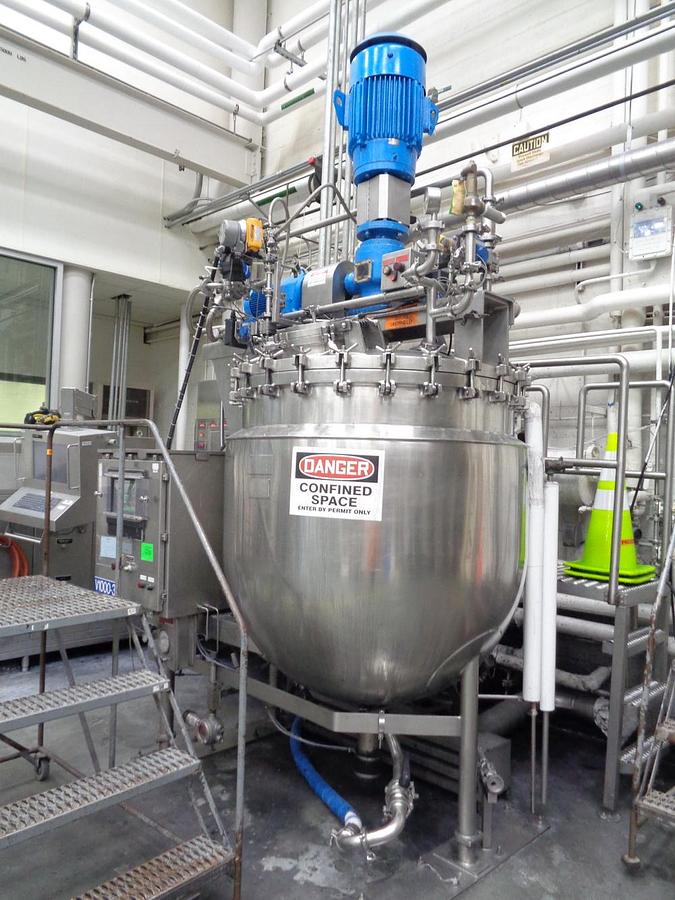
We offer a wide range of pre-owned equipment to buy which may be used in the manufacturing and packaging of hand sanitizer, soaps and other products used to disinfect or sterilize hands, tools and other objects. Our inventory includes machines such as mixing kettles, reactors, tanks, homogenizing mills/high-shear mixers, and feeders that may be used to process raw materials to produce liquid sanitizer/disinfectant.
We also provide machines to assemble and package these sanitizing products for distribution to consumers.
FAQ :
What types of used equipment are available for manufacturing hand sanitizer and disinfectant products?
The used equipment market for hand sanitizer and disinfectant manufacturing covers the full production process, from raw material processing through to finished product packaging. On the processing side, buyers can find mixing kettles, jacketed reactors, homogenizing mills, high-shear inline mixers, and agitated tanks. These machines handle the blending and emulsification steps that turn raw ingredients into a finished liquid or gel sanitizer. Specific examples that appear in the used market include stainless steel scraped-surface kettles in the 250 to 500 gallon range, inline high-shear mixers from manufacturers like Ross and Silverson, and pilot plant homogenizers capable of operating at pressures up to 5,800 PSI.
On the packaging side, the used market offers piston fillers (single, twin, four, and six-head configurations), rotary filling machines with valve counts ranging from 6 to 54 heads, vertical form-fill-seal machines, automatic cappers, bottle unscramblers, and pressure-sensitive wraparound labelers. A 42 or 48-valve rotary gravity filler, for instance, is well-suited to high-volume alcohol-based sanitizer bottling lines. Buyers looking to assemble a complete production line can often source each piece of this equipment separately from used machinery dealers who specialize in liquid processing and packaging.
Can hand sanitizer act as a disinfectant?
Hand sanitizer and disinfectants overlap in function but are not identical products. Alcohol-based hand sanitizers, typically formulated with 60 to 95 percent ethanol or isopropanol, are effective at killing or inactivating many common pathogens on skin surfaces, including bacteria, viruses, and some fungi. The CDC and WHO both recognize alcohol-based hand sanitizer as an acceptable substitute for handwashing with soap and water in many healthcare and public settings, particularly when hands are not visibly soiled. In that sense, a properly formulated sanitizer does perform a disinfecting function on hands.
However, hand sanitizer is not classified as a surface disinfectant in the regulatory sense. Products labeled as disinfectants, particularly those registered with the EPA under the Federal Insecticide, Fungicide, and Rodenticide Act (FIFRA), are tested and approved for killing pathogens on hard, non-porous surfaces like countertops, door handles, and medical equipment. Hand sanitizer applied to a surface may reduce microbial load, but it is not formulated or tested for dwell time, surface compatibility, or the full spectrum of organisms that a registered disinfectant must address. For production facilities manufacturing either category of product, the equipment used (mixing vessels, fillers, labelers) can often be adapted for both, though formulation requirements and regulatory labeling differ significantly between the two product types.
What is the difference between a hand sanitizer dispenser and a disinfectant sprayer machine used in commercial settings?
A hand sanitizer dispenser is designed to deliver a measured dose of gel, foam, or liquid sanitizer directly to a person's hands. These units range from small countertop pumps to large wall-mounted or floor-standing automatic dispensers with capacities of 300ml to over 1,000ml. They are a point-of-use device, meaning the end user interacts with them directly. Touchless or automatic versions use infrared sensors to detect a hand and dispense product without any physical contact, which reduces cross-contamination risk considerably in high-traffic environments like hospitals, schools, and office buildings.
A disinfectant sprayer machine, by contrast, is typically used to apply disinfectant solution to surfaces, rooms, or large areas rather than to individual hands. These range from handheld electrostatic sprayers that charge disinfectant droplets so they cling to surfaces, to large fogging or misting machines used for room-level decontamination. In a manufacturing context, the term also applies to production-scale equipment: filling machines, mixing tanks, and spray nozzle systems used to produce or apply disinfectant products in bulk. The two categories serve very different purposes, and the equipment used to produce them (mixing kettles, piston fillers, rotary cappers) can often be used for both sanitizer and disinfectant product lines, depending on formulation compatibility and regulatory requirements.
What should buyers look for when purchasing used hand sanitizer filling and packaging equipment?
The most important factor is understanding the condition of the machine relative to the asking price. Used filling equipment, such as piston fillers, rotary filling machines, and pump-style fillers, should be inspected carefully for wear on seals, valves, nozzles, and drive components. Machines that previously ran alcohol-based products may have accelerated seal wear compared to those used with water-based formulas. Buyers should request an inspection, either in person or via a detailed video walkthrough conducted by the dealer, that covers the machine running under power if possible. Pay close attention to fill accuracy, nozzle drip performance, and conveyor or carousel function.
Beyond the physical inspection, buyers should research parts availability for the specific make and model. Older machines from manufacturers who have since discontinued a product line may present challenges sourcing replacement seals, nozzles, or electronic components. Contacting the manufacturer directly before purchase is a practical step to gauge what support and parts are realistically available for the age and model in question. Also factor in the full landed cost: crating, rigging, freight, and any site preparation or installation work. A machine priced attractively can become significantly more expensive once shipping from a distant facility is accounted for, especially for larger rotary fillers or multi-head capping systems that require specialized rigging for loading and unloading.
How does a high-shear mixer or homogenizing mill contribute to hand sanitizer production?
High-shear mixers and homogenizing mills are critical for producing hand sanitizer formulations that require uniform dispersion of ingredients. In a typical sanitizer formula, you may have alcohol as the primary active ingredient combined with gelling agents like carbomer, humectants such as glycerin, and fragrance or other additives. Simply stirring these components together in a tank often produces an inconsistent, poorly emulsified product with visible separation or clumping. A high-shear inline mixer, like those made by Ross or Silverson, passes the fluid through a rotor-stator assembly at high velocity, breaking down particle agglomerates and producing a smooth, homogeneous mixture.
Homogenizing mills, such as pilot plant homogenizers operating at pressures around 5,800 PSI, take this a step further by forcing the product through a very narrow gap under extreme pressure, reducing particle size to the micron level. This is particularly relevant for sanitizer gels where consistent viscosity and texture directly affect consumer experience and product stability. In a used equipment context, both high-shear mixers and homogenizers are available from dealers who specialize in liquid processing machinery. Buyers should verify that the wetted parts (rotor, stator, seals, and housing) are constructed from appropriate materials, typically 316 stainless steel, and are compatible with the alcohol concentrations used in sanitizer production, since high-alcohol environments can degrade certain elastomers and coatings over time.
What capacity mixing kettle or reactor is appropriate for hand sanitizer production?
Batch size requirements and production volume are the primary drivers of kettle or reactor size selection. Small-scale or pilot operations typically work with vessels in the 50 to 250 gallon range, which allow for formula development and limited commercial runs without committing to large capital equipment. Mid-scale commercial production commonly uses 250 to 500 gallon jacketed kettles or reactors, which are a practical size for contract manufacturers or regional brands producing sanitizer for distribution. Larger operations may run multiple 500 gallon vessels in sequence or step up to 1,000 gallon and larger tanks to meet high-volume demand.
Beyond raw capacity, the design of the vessel matters considerably for sanitizer production. Jacketed kettles allow temperature control during mixing, which can be important for certain formulations. Scraped-surface agitators prevent product buildup on the vessel walls, which is especially useful with high-viscosity gels. Cone-bottom designs make complete product discharge easier and reduce waste between batches. In the used equipment market, stainless steel jacketed scraped-surface kettles in the 250 to 500 gallon range appear with some regularity and represent good value for producers who need proven, industrial-grade mixing capacity without the lead time and cost of ordering fabricated equipment. Buyers should confirm that the vessel's material of construction, seals, and agitator components are compatible with alcohol-based formulations before purchase.
What is involved in inspecting used sanitizer and disinfectant production equipment before buying?
Inspections of used process equipment generally take one of three forms: in-person visits to the dealer's warehouse or the facility where the machine is currently located, virtual walkthroughs conducted via live video call, or recorded video documentation provided by the dealer. Each approach has trade-offs. An in-person inspection gives the buyer direct access to the machine and the ability to examine welds, seals, electrical panels, and mechanical components up close. A live video inspection is a practical alternative when travel is not feasible, and a reputable dealer should be willing to accommodate this and answer questions in real time.
It is worth understanding that most used equipment dealers do not have the permitting or production infrastructure to run actual product through a machine during an inspection. A filler or mixer can be run dry or with water to demonstrate that it powers on and cycles correctly, but a full production test with sanitizer formula is generally not possible in a dealer setting. For machines that are still installed and running at a manufacturing facility (not yet decommissioned), the dealer may be able to arrange an inspection at the plant, where the buyer can observe the equipment in actual production. In all cases, buyers should ask specific questions about the machine's history: what product it ran, how many shifts per day it operated, when seals or wear parts were last replaced, and whether any repairs or modifications were made. This information, combined with a thorough visual inspection, gives the clearest picture of what the buyer is actually acquiring.
What are the typical payment and shipping terms for purchasing used sanitizer production machinery?
Payment terms in the used equipment industry are fairly standardized. Most dealers require full payment prior to releasing equipment for shipment. This is the norm across the industry and reflects the nature of the transaction: used machines are often one-of-a-kind inventory, and holding a piece of equipment while waiting on partial payment creates risk for the seller. Some dealers extend terms to established repeat customers with a payment history, but buyers purchasing from a dealer for the first time should expect to pay in full before the machine ships. Wire transfer is the most common payment method for transactions of this size.
Shipping costs for sanitizer and disinfectant production equipment vary considerably based on the size and weight of the machine, the origin and destination, and the level of packaging required to protect the equipment in transit. Smaller machines like piston fillers or inline mixers may ship on standard pallets, while larger rotary filling machines, capping systems, or 500-gallon kettles require custom crating and heavy-duty rigging for loading and unloading. Rigging costs at both the origin and destination are typically separate from freight charges and should be factored into the total landed cost. Buyers should request a detailed breakdown of packaging, rigging, and freight costs from the dealer before finalizing a purchase, since these expenses can add meaningfully to the overall investment.
What is the difference between a piston filler and a rotary filling machine for sanitizer bottling?
A piston filler uses a cylinder and plunger mechanism to draw a precise volume of product and dispense it into a container. These machines are well-suited to products with varying viscosities, including gels and thicker liquid sanitizers, because the piston action is not heavily dependent on product flow characteristics. Single and twin-head piston fillers work well for lower-volume operations or products that require careful fill accuracy. Four and six-head configurations increase throughput while maintaining the volumetric precision that piston filling offers. They are also relatively straightforward to clean and adjust between product runs or container sizes.
Rotary filling machines operate on a different principle: containers move continuously on a rotating platform while fill valves open and close to deliver product. These machines are designed for high-speed, high-volume production and are common in large sanitizer bottling operations. Rotary gravity fillers, for example, work well with thin, free-flowing alcohol-based sanitizers, while rotary positive displacement fillers handle a broader viscosity range. A 42 or 48-valve rotary filler can process a significantly higher number of containers per minute than a multi-head piston filler, making them the right choice for operations with large production targets. The trade-off is that rotary fillers are larger, more complex, and generally require more specialized maintenance. In the used market, both types are available across a range of manufacturers and configurations, and the right choice depends on production volume, product viscosity, and container type.
How do labeling machines fit into a hand sanitizer packaging line?
Labeling is a required step in any commercial sanitizer packaging line, both for regulatory compliance and consumer identification. The FDA and other regulatory bodies require that hand sanitizer labels include active ingredient concentration, directions for use, warnings, and manufacturer information. Pressure-sensitive labelers are the most common type used in liquid product packaging lines. Wraparound labelers apply a single label that wraps around the circumference of a round bottle, while spot labelers apply labels to a flat panel or a specific face of a container. Some machines, like the Harland Sirius and Quadrel Moduline models that appear in the used equipment market, can handle both spot and wraparound applications.
Automatic pressure-sensitive labelers integrate into a conveyor-based packaging line and can apply labels at speeds that match upstream filling and capping operations. Key specifications to evaluate on a used labeler include label size range, container diameter compatibility, throughput speed (containers per minute), and whether the machine includes a coder or printer for adding lot numbers or expiration dates. Buyers should also verify that the machine's label feed and sensor systems are in good working order, as these are common wear points. A labeler that previously ran on a high-speed sanitizer line may have accumulated significant cycle counts, so an inspection of the label feed mechanism, applicator pad, and drive rollers is an important part of evaluating any used unit.