Category
Manufacturer
Model
Used Colloid Mills for Sale
Pre-Owned Horizontal, Vertical, and Inline Colloid Mills In Stock
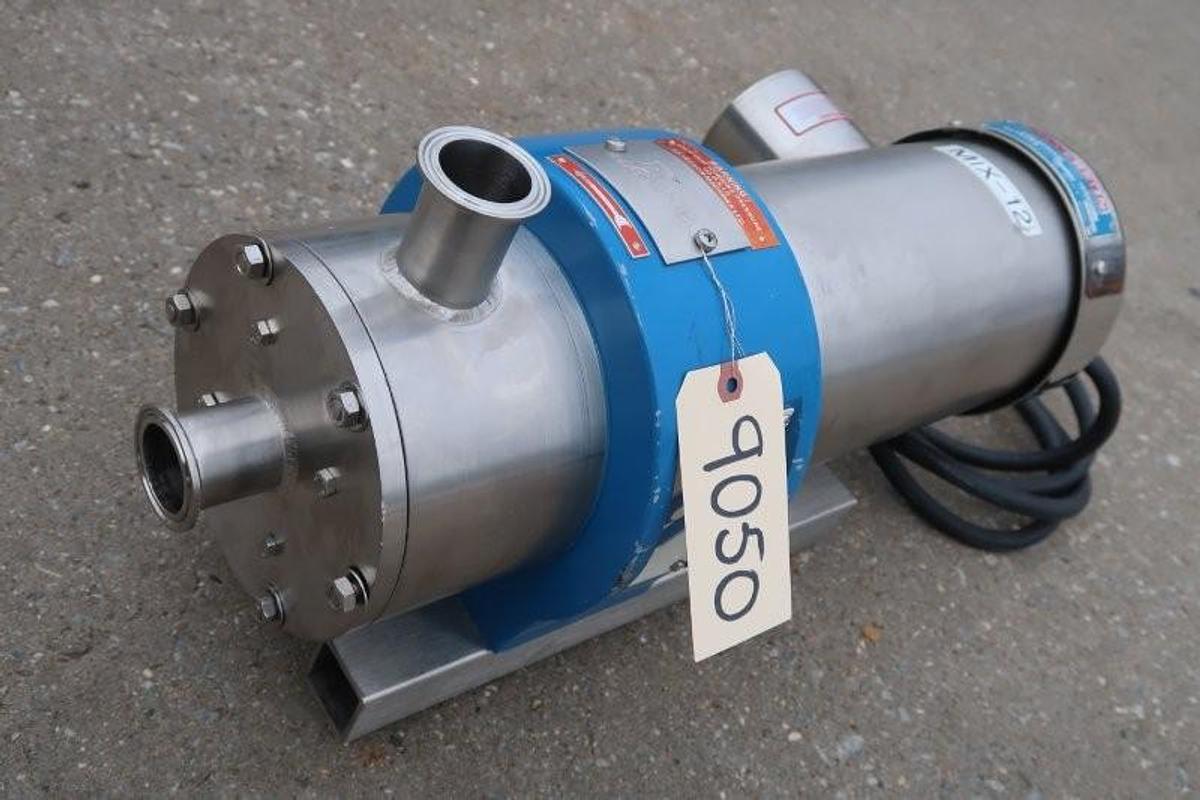
Wohl Industries stocks used colloid mills for food, cosmetic, and pharmaceutical producers. You get pre-owned horizontal colloid mills, vertical colloid mills, and inline units. Colloid mills shear product between a rotor and stator to build fine, stable emulsions. Food plants mill mayonnaise, dressings, and nut butters. Cosmetic lines refine creams and lotions. Pharma plants process ointments and suspensions. Gap setting controls your particle size and texture. Buying used cuts your capital cost and lead time. We inspect every machine before we ship. We have sold processing and packaging equipment since 1968. Send us your product and flow, and we match you to the right mill.
FAQ :
What is a colloid mill and what is it used for?
A colloid mill is a high-speed processing machine that uses a rotor-stator assembly to emulsify, disperse, homogenize, or reduce particle size in liquid and semi-liquid materials. The rotor spins at high velocity, creating intense shear forces in the narrow gap between the rotor and the stationary stator. This mechanical action breaks down particles, droplets, and agglomerates into finer, more uniform sizes, which is critical for achieving stable emulsions and consistent product texture.
Colloid mills are used across a wide range of industries. In food processing, they handle products like mayonnaise, ketchup, mustard, peanut butter, and sauces. In pharmaceuticals and cosmetics, they process ointments, creams, lotions, and emulsions. Chemical and industrial applications include greases, lubricants, asphalt emulsions, and pigment dispersions. Both inline (pipeline) and batch-type configurations are available, with inline mills connecting directly to product piping for continuous processing and batch mills handling discrete volumes. Explosion-proof models are also manufactured for processing flammable or volatile materials in hazardous environments.
What are the most reputable brands of colloid mills available on the used market?
Several manufacturers have built strong reputations for colloid mill durability and performance, and their equipment holds up well over years of industrial use. Charlotte (also known as Chemicolloid) is one of the most widely recognized names, with models like the SD-20 and SD-40 appearing frequently in used inventories. Greerco (including the legacy Gifford-Wood line) produces both vertical and horizontal mills with a loyal following in food and chemical processing. Waukesha offers horizontal colloid mills and inline shear pumps valued for their sanitary construction. IKA's Dispax Reactor series is well regarded for multi-stage high-shear mixing. Silverson, while primarily known as an inline high-shear mixer manufacturer, produces equipment that functions comparably to colloid mills in many emulsification applications. Ross, Admix, Bematek, Sonic, and Siefer also appear regularly on the used market and are respected for specific applications ranging from sanitary food processing to heavy industrial emulsification.
When evaluating brands, it is worth considering parts availability and manufacturer support for the specific model and age of the machine. Older or discontinued models may have limited spare parts availability, so consulting directly with the manufacturer before purchasing is a practical step. A used equipment dealer that specializes in processing machinery will typically carry a variety of these brands and can help match the right model to a specific application based on horsepower, throughput, and construction material.
What industries commonly use colloid mills and what materials can they process?
Colloid mills serve a broad range of industries wherever consistent particle size reduction, emulsification, or homogenization is required. The food and beverage industry is one of the largest users, with colloid mills processing condiments like mayonnaise, mustard, ketchup, and hot sauce, as well as nut butters, dairy products, and salad dressings. The pharmaceutical industry relies on them for producing ointments, suspensions, and emulsified drug formulations. Cosmetics manufacturers use colloid mills to produce creams, lotions, gels, and other topical products that require a smooth, stable emulsion.
On the industrial side, colloid mills process asphalt emulsions, greases, lubricants, paints, and chemical dispersions. Some models are specifically designed or rated for these heavier-duty applications, with larger motor horsepower and more robust construction. For example, a 200 HP inline colloid mill designed for asphalt emulsions is a very different machine from a 3 HP sanitary inline mixer used for cosmetic creams, even though both fall under the broad colloid mill category. This range of applications is why buyers should carefully match a machine's specifications, including horsepower, rotor diameter, gap adjustment capability, and material construction, to their specific product and production requirements before purchasing.
What should I look for when buying a used colloid mill?
The most important specifications to evaluate are motor horsepower, rotor diameter, throughput capacity (typically expressed in gallons or liters per hour), gap adjustment range, and material construction. For sanitary applications in food, beverage, or pharmaceutical production, 316 stainless steel construction is the standard, and any product-contact surfaces should be inspected for wear, pitting, or corrosion. The rotor-stator gap is a critical performance factor since a finer gap produces smaller particle sizes. Confirm that the gap adjustment mechanism is functional and that the rotor and stator show acceptable wear levels.
Beyond specifications, buyers should assess the overall mechanical condition of the machine. Check the motor for proper operation, inspect seals and gaskets, and review the condition of bearings and shaft components. For explosion-proof models, verify that the XP-rated motor and electrical components are intact and have not been modified. It is also worth asking the dealer about the machine's service history, prior application, and how long it has been out of service. A used colloid mill that was recently decommissioned from an active production line is generally in better condition than one that has been in storage for years. Requesting photos, video, or an in-person inspection before purchase gives buyers the clearest picture of what they are getting.
How do I verify the condition of a used colloid mill before purchasing?
Reputable used equipment dealers typically offer inspection options that include in-person visits, virtual walkthroughs, or detailed video documentation of the machine. For high-value equipment like colloid mills, requesting a video inspection that covers the motor nameplate, rotor-stator assembly, seals, gap adjustment mechanism, and overall frame condition is a reasonable starting point. If the machine is still installed at a production facility, some dealers can arrange for an in-person inspection at the plant where the buyer can see the equipment firsthand, and in some cases observe it running.
It is important to understand that most used equipment dealers do not have the permitting or production infrastructure to test a colloid mill with actual product. Testing requires a full production setup, which is beyond the scope of a typical dealer operation. What a dealer can provide is a clear visual and mechanical assessment of the machine's condition. Buyers should also reach out to the equipment manufacturer to understand what level of technical support, spare parts, and service documentation is available for the specific model and serial number they are considering. This step is especially important for older machines where parts may be harder to source. Selecting a dealer with a long track record in process equipment and a specialization in the relevant industry adds a meaningful layer of confidence to the buying process.
What is the difference between an inline colloid mill and a batch-type colloid mill?
An inline colloid mill is designed to connect directly into a product pipeline, processing material continuously as it flows through the machine. This configuration is well suited for high-volume production environments where a product needs to be milled or emulsified as part of a continuous flow process. Inline mills are common in food manufacturing, pharmaceutical production, and chemical processing lines where throughput consistency and integration with existing piping systems are priorities. Many inline models also function as a pump, moving product through the system while simultaneously applying shear.
A batch-type colloid mill processes discrete volumes of material rather than a continuous stream. These mills are often used in smaller-scale production, pilot processing, or applications where product formulations change frequently and the equipment needs to be cleaned and reconfigured between runs. Batch mills can also be portable, which adds flexibility in facilities where the mill needs to serve multiple tanks or processing stations. The choice between inline and batch configuration depends on production volume, process layout, and whether continuous or intermittent processing better fits the application. Both types are commonly available on the used market, with inline mills generally representing the larger share of inventory due to their prevalence in industrial-scale production.
What certifications or compliance standards should a used colloid mill meet for food or pharmaceutical use?
For food and beverage applications, the most relevant compliance standard is 3-A Sanitary Standards, which governs the design and construction of equipment that contacts food products. 3-A certified equipment is built to facilitate thorough cleaning and prevent bacterial harboring, with requirements around surface finish, material composition, and joint design. FDA-compliant materials for product-contact surfaces are also a baseline expectation in food and pharmaceutical environments. Buyers should confirm that the specific model they are considering was manufactured to these standards and that the product-contact surfaces have not been modified or repaired in ways that compromise compliance.
For applications in hazardous or flammable environments, ATEX ratings (used in European markets) or UL/CSA explosion-proof certifications (common in North American markets) are required for motors and electrical components. These ratings indicate that the equipment is designed to operate safely in environments where flammable vapors or dust may be present. When purchasing a used colloid mill for regulated applications, buyers should request documentation such as the original manufacturer's compliance certificates, model specifications, and any relevant inspection records. Keep in mind that used equipment is typically sold as-is, so verifying compliance documentation and the physical condition of sanitary surfaces and seals is the buyer's responsibility. Consulting with the equipment manufacturer about a specific model's certification status is a practical step before committing to a purchase.
Are replacement parts and service support available for used colloid mills?
Parts availability varies significantly depending on the brand, model, and age of the machine. For well-established manufacturers like Charlotte, Greerco, IKA, Silverson, and Waukesha, many models have been in production for decades, and spare parts such as rotors, stators, seals, and bearings are often still available through the manufacturer or authorized service networks. However, older or discontinued models may present challenges, and buyers should contact the manufacturer directly before purchasing to confirm what parts and technical support are available for the specific model and serial number.
Common wear items in colloid mills include rotor-stator sets, mechanical seals, and bearings. These components experience the most stress during operation and will eventually need replacement regardless of how well the machine has been maintained. When evaluating a used colloid mill, it is worth asking whether any of these wear components have been recently replaced and whether spare parts are included with the sale. Some dealers carry rebuilt or replacement rotors and stators for popular models, which can be a practical advantage when sourcing hard-to-find components. Building a relationship with both the equipment dealer and the manufacturer's service team is the most reliable way to ensure long-term support for a used machine.
What horsepower range is typical for colloid mills, and how does motor size affect performance?
Colloid mills span a very wide horsepower range, from small laboratory and pilot-scale units at 2 to 5 HP up to large industrial machines at 75 HP, 200 HP, or more. The motor size directly affects throughput capacity and the machine's ability to handle high-viscosity materials. A 2 HP portable unit might process a few gallons per hour of a relatively fluid emulsion, while a 200 HP inline mill designed for asphalt emulsions can handle much higher volumes of dense, viscous material. Matching motor horsepower to the specific product viscosity and production volume requirements is one of the most important steps in selecting the right machine.
Underpowering a colloid mill for a given application leads to motor strain, overheating, and inconsistent processing results. Overpowering can result in unnecessary energy costs and, in some cases, excessive shear that damages shear-sensitive products. For food and pharmaceutical applications, mid-range motors in the 10 to 40 HP range are common and cover a broad variety of products and production scales. Industrial applications like asphalt emulsification or heavy grease processing typically require significantly higher horsepower. When reviewing used colloid mills, the motor nameplate data, including horsepower, voltage, and phase requirements, should be carefully matched to the buyer's facility electrical supply and production demands.
What are the typical shipping and payment considerations when buying a used colloid mill?
Used colloid mills range from compact portable units to large industrial machines weighing several thousand pounds, so shipping logistics and costs vary considerably. Smaller units can be palletized and shipped via standard freight carriers, while larger mills may require custom crating and heavy-duty rigging for safe loading and unloading. Rigging costs, which cover the labor and equipment needed to move a heavy machine within a facility and onto a truck, are typically separate from freight charges and should be factored into the total landed cost. Buyers should ask the dealer for a detailed breakdown of packaging, rigging, and freight costs before finalizing a purchase.
On the payment side, most used equipment dealers require full payment prior to shipping. Some dealers may offer payment terms to established repeat customers, but this is not standard practice across the industry. Because used colloid mills are sold as-is without manufacturer warranties, buyers carry the responsibility of thoroughly evaluating the equipment before committing to a purchase. Taking advantage of inspection options, whether in-person, virtual, or through detailed video documentation, is the most effective way to make an informed buying decision and reduce the risk of receiving equipment that does not meet expectations.