Category
Manufacturer
Model
Candy Equipment Used Popcorn and Confectionery Factory Equipment
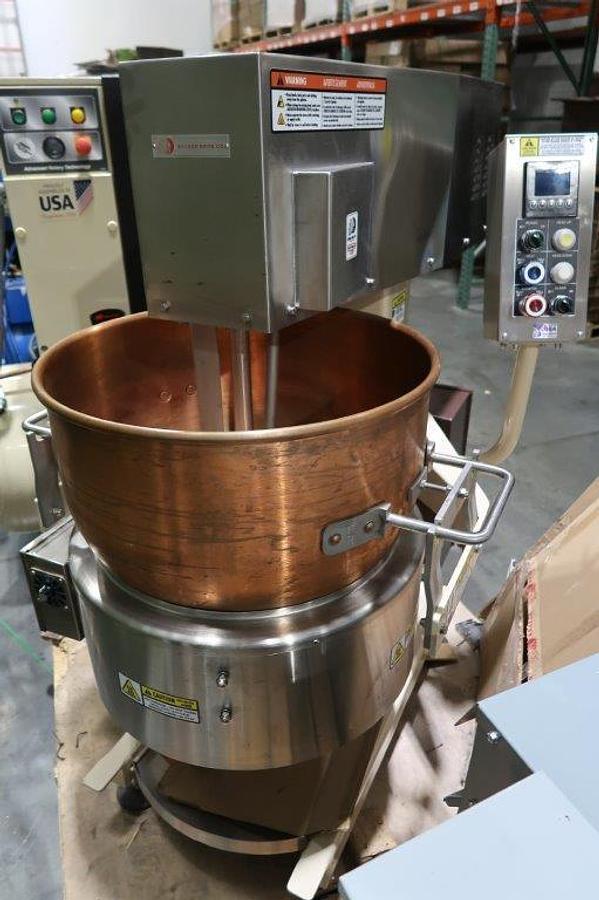
We have a selection of used candy equipment including popcorn equipment, candy mixers, cooking kettles, and steam kettles for your candy manufacturing needs. Commercial popcorn equipment is available as a complete line or and as an individual machine such as the used CRETORS corn popper which is a continuous type popcorn line. Alternatively, if you manufacture kettle corn we can provide various capacities of kettle corn popper.
FAQ :
What types of used candy manufacturing equipment are available on the market?
The used candy equipment market covers a wide range of machinery across virtually every stage of confectionery production. Common categories include chocolate melters and tempering machines, coating pans, candy cookers and cooking kettles, steam kettles, candy mixers, popcorn and kettle corn production lines, gummy manufacturing lines, granola bar lines, depositors, enrobers, cooling tunnels, extruders, and wrapping or form/fill/seal machines. Stainless steel construction is standard across most food-grade equipment, and buyers will frequently find both standalone machines and complete production lines available from a single seller.
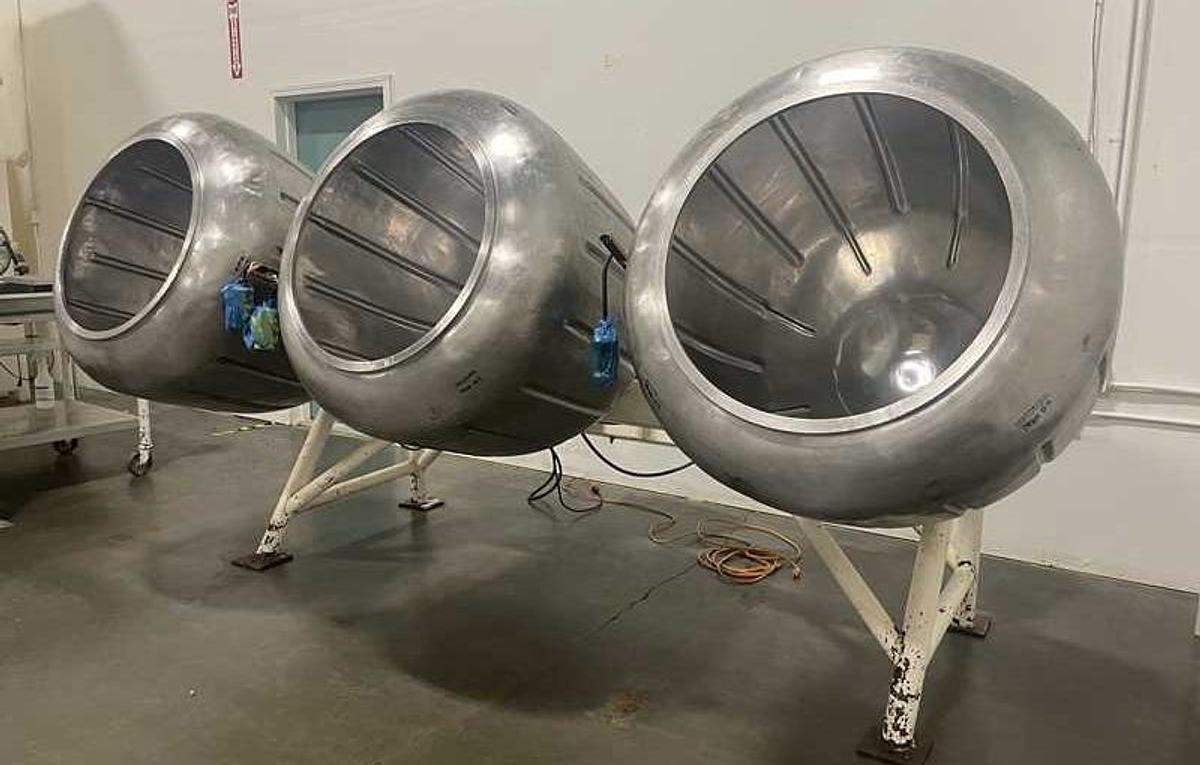
Specific equipment that regularly appears in the used market includes continuous popcorn poppers (such as Cretors Flo-Thru models), stainless steel jacketed chocolate melting tanks, coating pans in diameters ranging from 34 inches to 48 inches or larger, corundum stone mills for grinding, and multi-lane liquid form/fill/seal machines for ice pops and lollies. Gummy lines, caramel popcorn systems, and complete candy processing systems from manufacturers like Terbraak also surface regularly. Whether a buyer needs a single piece of equipment to fill a gap on an existing line or a full turnkey production system, the used market generally has options across most confectionery categories.
What are the most reputable brands to look for when buying used candy manufacturing equipment?
Brand reputation matters considerably in the used candy equipment market because it directly affects parts availability, manufacturer support, and long-term reliability. Brands with strong reputations that appear frequently in the used market include Baker Perkins, Bosch, Sollich, Savage Bros, Tanis, Loynds, Chocotech, Cretors, Groen, Vector, and Fryma, among others. These manufacturers built machines designed for heavy commercial use, which means well-maintained examples can deliver years of additional service life even after their initial ownership period.
Before purchasing any used machine, it is worth contacting the manufacturer directly to ask about parts availability and technical support for the specific model and age of equipment you are considering. Older or discontinued models may have limited factory support, which can make repairs more difficult and expensive down the road. Dealers who specialize in candy and confectionery equipment tend to carry a higher concentration of these established brands, and their familiarity with the machinery can be a useful resource when evaluating a specific machine's condition, history, and suitability for a particular production application.
How do you verify the working condition of used candy manufacturing equipment before buying?
Verifying condition before purchase is one of the most important steps in buying used candy equipment, and reputable dealers typically offer several inspection options to help buyers make informed decisions. In-person inspections are the most thorough approach, allowing buyers or their technicians to physically examine the machine, check for wear on mechanical components, assess the condition of seals and food-contact surfaces, and review any available maintenance records. Some equipment may still be installed and operational at a production facility, making it possible to observe the machine running under actual production conditions.
For buyers who cannot travel, video inspections and detailed photo documentation are commonly offered as alternatives. A dealer can walk through the machine on camera, demonstrating movement of key components and highlighting any visible wear or damage. It is important to understand, however, that most equipment dealers do not have the permitting required to run actual food production, so full operational testing with product is generally not possible at a dealer's facility. Buyers should request machine hours, production cycle history, and any maintenance logs that are available, and should factor in the cost of a third-party technician inspection for high-value purchases. Selecting a dealer with a long track record in the confectionery equipment space adds an additional layer of confidence, as their reputation depends on accurately representing the machines they sell.
What compliance and food safety standards should used candy manufacturing equipment meet?
Food safety compliance is a critical consideration when evaluating any used candy manufacturing equipment. In the United States, equipment used in food production should be constructed from food-grade materials, with stainless steel being the standard for surfaces that contact product. Buyers should look for equipment that meets NSF (National Sanitation Foundation) standards, which address material safety, cleanability, and design features that minimize contamination risk. FDA regulations also govern food contact materials and equipment sanitation requirements, so buyers should confirm that a machine's construction is compatible with their facility's compliance obligations.
For equipment sold into or sourced from European markets, CE marking indicates conformity with relevant EU health and safety directives. CIP (clean-in-place) compatibility is another practical compliance consideration, as it affects how thoroughly a machine can be sanitized between production runs. When buying used equipment, buyers should inspect food-contact surfaces carefully for pitting, cracks, or corrosion that could harbor bacteria and compromise sanitation. If a machine has been modified or repaired over its service life, it is worth verifying that any replacement components also meet food-grade standards. Consulting with a food safety or regulatory specialist before commissioning used equipment in a licensed production environment is a prudent step, particularly for facilities subject to FSMA or other regulatory oversight.
How old is too old when considering used candy manufacturing equipment?
Age alone is rarely the deciding factor in whether a used candy machine is worth purchasing. A well-maintained 20-year-old coating pan or chocolate melter built from heavy-gauge stainless steel may outperform a poorly maintained machine that is half its age. The more meaningful indicators are production hours, maintenance history, the condition of wear components like seals, bearings, and drive systems, and whether the machine has been kept clean and properly stored. Equipment that has sat idle in a warehouse for years without proper decommissioning can present more risk than a machine that ran continuously in a well-managed facility.
That said, age does become a practical concern in a few specific areas. Older machines may use obsolete control systems or electrical configurations that require upgrading before they can be integrated into a modern production line. Parts availability from the manufacturer tends to decline as models age, so buyers should contact the OEM directly to ask what support they can expect for a machine of a given vintage. Machines from the 1980s or earlier may also predate current food safety design standards, which could require modifications to meet current regulatory requirements. A reasonable approach is to treat age as a flag that prompts deeper investigation rather than an automatic disqualifier, and to focus evaluation energy on the mechanical and regulatory factors that actually determine usability.
Can used candy manufacturing equipment be retrofitted or upgraded with modern controls?
Many used candy machines are strong candidates for control system upgrades, particularly older equipment with reliable mechanical components but outdated electrical systems. Replacing pneumatic or relay-based controls with modern PLCs (programmable logic controllers) and HMI touchscreens can significantly improve process consistency, data logging capability, and ease of operation. Variable frequency drives (VFDs) are another common upgrade, allowing more precise speed control on motors and reducing energy consumption. Some used coating pans, for example, already come equipped with variable frequency inverters, which is a sign that the equipment has been updated at some point in its service life.
The feasibility and cost of retrofitting depends heavily on the specific machine and its mechanical condition. A machine with a sound stainless steel structure, functional product-contact components, and a reliable drive train is generally a good retrofit candidate. Buyers should budget for an electrical engineering assessment before committing to a retrofit project, as the cost of controls upgrades can range from a few thousand dollars for simple additions to substantially more for fully integrated automation. It is also worth consulting with the original manufacturer or a specialist in that brand of equipment to understand whether any mechanical limitations would constrain what a controls upgrade could actually achieve. In many cases, a retrofitted used machine can perform comparably to far more expensive alternatives.
What information should a buyer request from a used candy equipment dealer before purchasing?
Buyers should approach a used candy equipment purchase with a structured list of questions to ensure they have a complete picture of what they are acquiring. Key items to request include the machine's age and model number, available maintenance and service records, any known mechanical issues or repairs that have been performed, the reason for decommissioning (if applicable), and whether operating manuals or electrical schematics are included in the sale. Photos and video of the machine in its current state, including close-ups of food-contact surfaces, drive components, and control panels, are also important to review before committing.
On the logistics side, buyers should ask for a detailed breakdown of packaging, rigging, and shipping costs to understand the full landed cost of the equipment, not just the purchase price. Larger machines often require specialized rigging for loading and unloading, which adds to the total cost. Payment terms should also be clarified upfront. Most used equipment dealers require full payment prior to shipping, though some may offer terms to established repeat customers. Understanding all of these details before agreeing to a purchase helps avoid surprises and allows for a more accurate comparison between different equipment options or sourcing channels.
What is the difference between used and refurbished candy manufacturing equipment?
Used candy equipment is sold in its existing condition, as-is, reflecting whatever state the machine was in when it left its previous production environment. This can range from excellent working condition to equipment that requires significant mechanical attention before it is production-ready. Used equipment is typically priced lower to reflect this uncertainty, and the buyer takes on more responsibility for assessing and addressing any issues after purchase. Reputable dealers will represent the condition of the machine as accurately as possible and offer inspection opportunities, but they are generally not performing mechanical work on the equipment before it ships.
Refurbished equipment, by contrast, has gone through a process of inspection, cleaning, repair, and in some cases testing before being offered for sale. This might include replacing worn seals or bearings, repainting or re-coating exterior surfaces, cleaning food-contact areas, and verifying that electrical and mechanical systems are functioning properly. Refurbished machines command a higher price than comparable as-is used equipment, but they reduce the buyer's risk and can shorten the time between delivery and production startup. Buyers evaluating the two options should weigh the price difference against their in-house technical capabilities and the cost of potential downtime if an as-is machine requires unexpected repairs after arrival.
How do you find replacement parts for older candy manufacturing machines?
Sourcing replacement parts for older candy equipment requires a multi-pronged approach. The first step is always to contact the original manufacturer directly with the machine's model number and serial number to ask what parts are still stocked or available to order. Many established confectionery equipment brands maintain parts inventories for machines well beyond their production run, though availability does thin out for very old or discontinued models. Manufacturers can also point buyers toward authorized service centers or regional distributors who may carry parts.
When factory parts are unavailable, several alternatives exist. Specialty used equipment dealers sometimes sell machines specifically as parts donors, making it possible to source mechanical components from a non-functional machine of the same model. Third-party fabricators can manufacture replacement parts from drawings or from the worn component itself, which is a practical option for simpler mechanical parts like shafts, gears, or structural components. For electrical and control components, industrial electronics suppliers often carry compatible replacements for older PLCs, sensors, and drives even when the exact part is discontinued. Maintaining a relationship with a dealer who specializes in candy equipment is valuable here, as they often have institutional knowledge about which parts are commonly needed for specific machines and where to find them.
What should buyers know about shipping and logistics for used candy manufacturing equipment?
Shipping used candy equipment is more complex than standard freight because of the size, weight, and fragility of many machines. Proper packaging is essential to prevent damage in transit, and costs will vary depending on the level of preparation required, whether that means basic palletization, custom crating, or full wooden crate construction with internal bracing. Buyers should ask dealers specifically what packaging method will be used and whether that cost is included in the quoted price or billed separately. For machines with delicate components like glass gauges, exposed sensors, or precision food-contact surfaces, crating is generally the safer choice even if it adds to the upfront cost.
Larger equipment such as full production lines, industrial coating pans, or multi-tank chocolate melting systems often requires heavy-duty rigging for both loading at the seller's facility and unloading at the buyer's location. Rigging costs can be substantial and are typically not included in the base equipment price, so buyers should request a complete breakdown of all logistics costs before finalizing a purchase. Freight class, dimensional weight, and whether the shipment requires a flatbed, enclosed trailer, or specialized heavy-haul carrier all affect the final shipping cost. Getting a full landed cost estimate, including equipment price, packaging, rigging, freight, and any applicable import duties for international shipments, is the only way to make a true apples-to-apples comparison between different sourcing options.