Category
Subcategory
Manufacturer
Model
Fillers-liquid
Liquid Filling Machines, Bottling Equipment
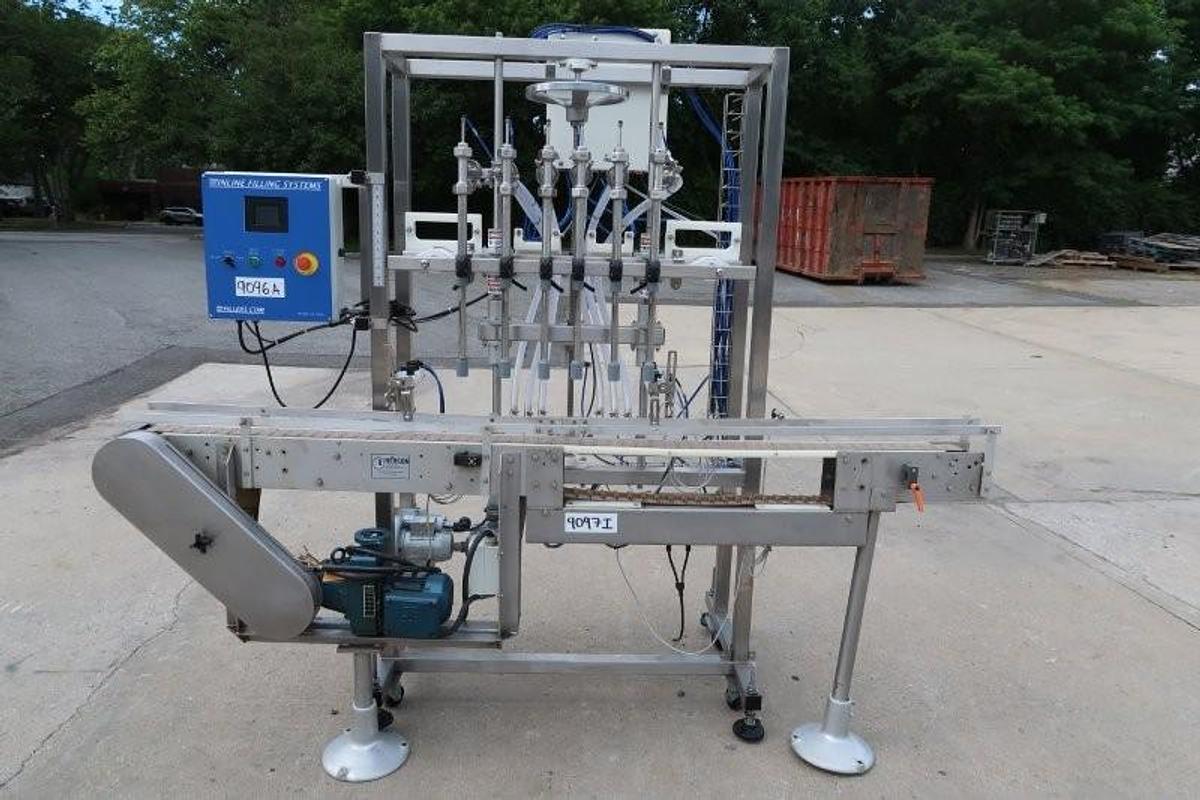
We can help guide you to the proper used liquid filler for your needs. We have a broad selection of both inline liquid filling machine (straight line) and rotary filling machine available for sale. Our inventory of used liquid filler machines and bottle filling machines includes both automatic and semi-automatic gravity fillers, pressure fillers, pressure gravity, and vacuum filling machines. We are suppliers of liquid filling brands such as FOGG, MRM, BINER ELLISON, FILLING EQUIPMENT COMPANY, FEDERAL, and US BOTTLERS.
FAQ :
What are the main types of used liquid filling machines available on the market?
Used liquid filling machines fall into several distinct categories based on how they move product into containers. The most common types are overflow fillers, gravity fillers, pressure gravity fillers, vacuum fillers, piston fillers, and pump-style positive displacement fillers. Each filling method is engineered for a specific range of liquid viscosities and container types, so understanding the differences before purchasing is critical to getting the right machine for your production line.
Overflow fillers work by filling containers to a consistent level rather than a consistent volume, making them ideal for thin, free-flowing liquids like water, juice, and cosmetic serums where shelf appearance matters. Gravity and pressure gravity fillers rely on the weight of the liquid to drive the fill, and they handle low-to-medium viscosity products well. Piston fillers and positive displacement pump fillers are the go-to choice for thicker products like sauces, creams, gels, and pastes because they meter product by volume regardless of viscosity. Vacuum fillers are common in wine and spirits bottling, where a clean, splash-free fill is a priority. The used market carries all of these configurations, including both inline (straight-line) and rotary formats.
What is the difference between an inline liquid filling machine and a rotary liquid filling machine?
Inline filling machines, sometimes called straight-line fillers, move containers in a single-file line through a series of fill heads positioned along a conveyor. They tend to be simpler mechanically, easier to changeover between container sizes, and more compact, which makes them a practical choice for small-to-mid-size production runs or facilities with limited floor space. Semi-automatic inline fillers are also widely available on the used market, giving smaller operations an affordable entry point.
Rotary filling machines use a rotating carousel that indexes multiple containers simultaneously through the fill station, allowing for significantly higher throughput. A rotary filler with 36, 56, or even 72 valves can fill thousands of bottles per hour, making these machines the standard in high-volume beverage, dairy, and consumer goods bottling operations. Used rotary fillers from brands like Fogg, Federal, MRM, and US Bottlers are well-regarded in the secondary market. The trade-off is that rotary machines are larger, more complex to set up and maintain, and typically require more skilled operators. Choosing between inline and rotary comes down to your required output rate, available floor space, and budget.
What types of liquids can a used liquid filling machine handle?
The range of liquids that filling machines can process is broad, but the key variable is viscosity. Thin, free-flowing liquids like water, juices, sodas, wines, spirits, and liquid soaps are well-suited to overflow, gravity, and pressure gravity fillers. These machines rely on liquid flow dynamics, so they work best when the product moves easily through nozzles and valves without clogging or requiring excessive pressure. The used market has a strong supply of these machines because beverage and cosmetic bottling lines are frequently upgraded or decommissioned.
Thicker, more viscous products require a different approach. Piston fillers and positive displacement pump fillers are designed specifically for creams, gels, lotions, sauces, honey, pastes, and similar products. These machines meter product mechanically, so viscosity does not affect fill accuracy. There are also specialized machines for unique applications, such as aerosol fillers for pressurized products, vial fillers for pharmaceutical liquids, and fragrance fillers for perfume and cologne. When evaluating a used machine, confirming that the fill technology and wetted-parts materials (typically stainless steel for food and pharmaceutical applications) are compatible with your specific product is essential before purchase.
What should I look for when inspecting a used liquid filling machine before buying?
A thorough inspection is the most important step in buying used filling equipment, since these machines are sold as-is and the buyer carries the responsibility of verifying condition. Start by examining the mechanical components: fill heads, nozzles, valves, and seals for wear, corrosion, or damage. On stainless steel machines, check welds and contact surfaces for pitting or buildup that could indicate improper cleaning or incompatible product use. Review the electrical panel and controls for any signs of modification, damage, or outdated components that could be difficult to source.
Reputable dealers typically offer in-person inspections, virtual walkthroughs, or video captures of the machine so buyers can assess its current working order before committing. Some equipment is still installed at an active production facility, which allows an inspection while the machine is running product, though most dealers do not have the permits or infrastructure to run actual product tests at their own warehouse. Requesting documentation on the machine's maintenance history, age, and previous application gives additional context. Consulting the manufacturer directly about parts availability and support for the specific model and age is also a smart step, since older or discontinued models may have limited service resources.
What is the difference between a semi-automatic and a fully automatic used liquid filling machine?
Semi-automatic liquid filling machines require an operator to be present for part of the filling cycle, typically to position containers under the fill heads and activate the fill sequence manually or with a foot pedal. These machines are slower by design, but they are significantly less expensive to purchase, simpler to operate, and easier to maintain. They are a practical fit for startups, craft producers, contract packagers handling short runs, or any operation where production volumes do not justify the cost of full automation. The used market has a wide range of semi-automatic options, including tabletop and portable models that require minimal floor space.
Fully automatic filling machines integrate container handling, filling, and often capping into a continuous, unattended process. Conveyors feed containers into the machine, sensors and PLCs control the fill cycle, and the line can run at high speeds with minimal operator intervention beyond monitoring and maintenance. Automatic machines are available in both inline and rotary configurations and are standard in high-volume food, beverage, pharmaceutical, and cosmetic manufacturing. When buying a used automatic filler, pay close attention to the condition of the controls and automation components, as repairs or upgrades to PLC systems and sensors can add meaningful cost after purchase.
Which industries commonly use liquid filling machines, and how do I know which type fits my application?
Liquid filling machines are used across a wide range of industries, including beverage (water, juice, soda, beer, wine, spirits), food (sauces, dressings, oils, condiments, honey), cosmetics and personal care (lotions, shampoos, serums, perfumes), pharmaceuticals (vials, ampules, oral liquids), household chemicals (cleaners, detergents), and industrial chemicals (lubricants, solvents). Each of these industries has specific requirements around fill accuracy, material compatibility, sanitation standards, and regulatory compliance, which influence the type of machine best suited to the application.
Matching the right machine to your application starts with two questions: what is the viscosity of your product, and what is your required output rate? Thin liquids pair with overflow, gravity, or vacuum fillers. Thick or chunky products need piston or pump-style fillers. From there, your required bottles-per-minute rate determines whether an inline or rotary format makes sense, and whether semi-automatic or fully automatic is appropriate. Container type also matters, since some machines are designed specifically for bottles, others for vials or ampules, and others for aerosol cans. Reviewing the specifications of available used machines against these criteria, and discussing your application with an experienced dealer, will help narrow the options considerably.
What fill volume range should I consider when buying a used liquid filling machine?
Fill volume range is one of the most important specifications to verify before purchasing a used liquid filling machine. Machines are engineered to fill within a defined minimum and maximum volume per container, and operating outside that range typically results in inaccurate fills, wasted product, or mechanical strain. Tabletop and benchtop fillers are often designed for small containers, sometimes as little as a few milliliters up to a liter or two, making them suited to cosmetic, pharmaceutical, or specialty food applications. Larger inline and rotary machines may handle containers ranging from a few ounces up to one-gallon jugs or larger, depending on the design.
When reviewing used equipment listings, look for the stated fill range and compare it to your container sizes, including any future packaging formats you might introduce. Also consider whether the machine can be adjusted or fitted with different tooling to accommodate a range of sizes, since flexibility adds long-term value. Some machines, like the Crandall A2/10PTS listed with a 10-liter maximum fill size, are designed for large-format containers, while others are optimized for small-volume precision filling. Confirming that the machine's fill range, nozzle count, and container handling components match your production requirements before purchase prevents costly mismatches.
What maintenance history should I request when purchasing a used liquid filling machine?
Asking for maintenance records is one of the most practical steps a buyer can take when evaluating used filling equipment. Ideally, a seller can provide documentation showing routine service intervals, part replacements, any repairs made to fill heads, valves, seals, or controls, and the types of products the machine previously ran. This history gives a realistic picture of how hard the machine was worked and how well it was cared for. Machines that ran corrosive chemicals or abrasive products, for example, may have accelerated wear on wetted components even if they look clean on the surface.
In practice, complete maintenance records are not always available for used machinery, particularly when equipment has changed hands multiple times or was decommissioned from a large facility without detailed documentation. In those cases, a careful physical inspection becomes even more important. Focus on high-wear components like nozzles, seals, gaskets, fill valves, and drive belts, and factor the cost of replacing these parts into your total purchase price. Contacting the machine manufacturer with the model and serial number can also help you understand the expected service life of key components, what parts are still available, and whether the machine's age places it in a range where major refurbishment might be needed shortly after purchase.
How do used liquid filling machine prices compare to buying new equipment?
Used liquid filling machines typically sell at a significant discount compared to purchasing equivalent equipment directly from a manufacturer. The savings can range from 40% to 70% or more depending on the machine's age, condition, brand, configuration, and how specialized it is. For high-end rotary fillers from manufacturers like Fogg or Federal, which can cost several hundred thousand dollars when purchased new from the manufacturer, the used market can offer access to the same quality equipment at a fraction of that price. This makes used equipment an attractive option for operations looking to scale production without committing to the full capital expenditure of brand-new machinery.
The total cost of ownership, however, extends beyond the purchase price. Buyers should factor in shipping and rigging costs, which vary based on machine size and the level of crating or palletization required for safe transport. Larger rotary fillers require heavy-duty rigging for loading and unloading, which adds to the landed cost. There may also be costs associated with replacing wear parts, updating controls, or adapting the machine to a new production environment. Getting a clear picture of all these costs before finalizing a purchase allows for an accurate comparison and helps avoid surprises after the machine arrives.
What should I know about shipping and payment when buying a used liquid filling machine?
Shipping used filling equipment involves more complexity than standard freight because these machines are heavy, precision-built, and sensitive to damage in transit. Proper packaging is critical: smaller machines are typically palletized with protective wrapping, while larger or more fragile equipment requires custom crating. The level of packaging required directly affects shipping costs, so buyers should ask the seller for a detailed breakdown of crating, rigging, and freight charges to understand the full landed cost before agreeing to a purchase price. Larger rotary fillers and complete bottling lines may require a crane or forklift for loading at the origin and unloading at the destination, which is an added expense that should be planned for in advance.
On the payment side, most used equipment dealers require full payment before the machine is released for shipping. This is standard practice in the industry and reflects the as-is nature of used equipment transactions. Some dealers may offer payment terms to established repeat customers, but buyers who are purchasing from a dealer for the first time should expect to pay in full upfront. Wire transfer is the most common payment method for transactions of this size. Clarifying all payment terms, shipping responsibilities, and any conditions of sale in writing before sending funds is a straightforward way to protect both parties in the transaction.