Category
Manufacturer
Model
Chemical Manufacturing Equipment
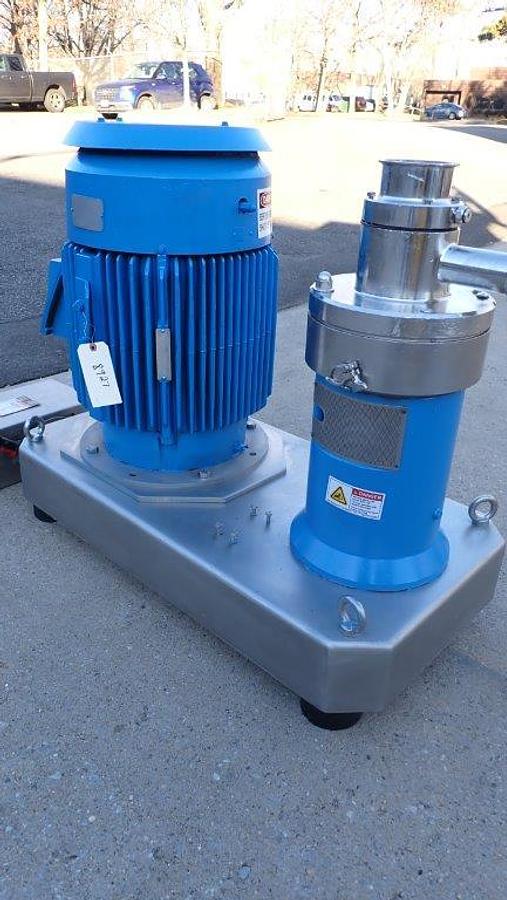
Wohl Associates provides high-quality pre-owned chemical manufacturing equipment for a variety of industrial processes. Our inventory includes reactors, mixers, centrifuges, heat exchangers, and storage tanks, designed to handle blending, emulsifying, distillation, and drying. Whether you’re producing chemicals for pharmaceuticals, cosmetics, or industrial applications, our reliable machinery ensures efficient, precise, and safe operations. Trust Wohl Associates for equipment tailored to the unique needs of the chemical manufacturing industry.
FAQ :
What types of used chemical manufacturing equipment are most commonly available on the market?
The used chemical manufacturing equipment market covers a wide range of machinery designed for industrial chemical processes. The most frequently traded categories include reactors (glass-lined, stainless steel, and Hastelloy), mixers and blenders, centrifuges, heat exchangers, distillation units, and storage tanks. Inline high shear mixers, vacuum mixers, and media mills also appear regularly, particularly from well-known manufacturers. Equipment from brands like Pfaudler, De Dietrich, IKA, and Willy Bachofen tends to attract strong buyer interest because of their reputation for precision and durability in demanding chemical environments.
Beyond the core processing equipment, buyers also seek ancillary items like pumps, filters, dryers, and evaporators that support broader chemical production lines. The availability of any specific piece depends heavily on industry cycles, facility closures, and plant upgrades. Buyers targeting niche applications, such as pharmaceutical-grade reactors or explosion-proof mixers for flammable solvents, may need to work with dealers who specialize in chemical processing equipment rather than general industrial machinery, since the technical specifications in this category are far more application-specific than in most other industries.
What certifications and compliance standards should used chemical manufacturing equipment meet?
Certification requirements for chemical manufacturing equipment depend on the application, but several standards come up repeatedly in purchasing decisions. ASME (American Society of Mechanical Engineers) certification is particularly important for pressure vessels, reactors, and heat exchangers. Equipment bearing a current ASME stamp, along with National Board registration, gives buyers documented assurance that the vessel was fabricated to a recognized safety standard. For pharmaceutical and cosmetic applications, buyers often look for equipment that was previously operated in cGMP (current Good Manufacturing Practice) environments, which indicates the machinery was designed and maintained to meet FDA process hygiene requirements.
It is worth noting that certifications on used equipment can lapse or become complicated by modifications made during a machine's service life. Buyers should request all available documentation, including the original data plate, National Board inspection records, and any prior inspection reports. For pressure-rated equipment, some jurisdictions require re-inspection or re-certification before the machine can be legally operated at a new facility. Consulting with a licensed inspector or the relevant state boiler and pressure vessel authority before commissioning used pressure equipment is a prudent step that experienced buyers rarely skip.
How do I verify the maintenance and service history of used chemical manufacturing equipment?
Verifying a machine's history starts with asking the seller for whatever documentation is available, including maintenance logs, inspection records, repair invoices, and any operator manuals. Reputable dealers who specialize in chemical processing equipment will typically be able to provide at least a partial history, especially if the equipment came directly from a plant closure or a known industrial facility. The more complete the paper trail, the better a buyer can assess how hard the machine was run, what repairs were made, and whether any components were replaced with non-OEM parts.
When documentation is limited, a physical or video inspection becomes even more critical. Buyers should look for signs of corrosion, weld repairs, pitting on wetted surfaces, seal wear, and any evidence of chemical attack on gaskets or linings. For glass-lined reactors, spark testing can reveal chips or cracks in the lining that are not visible to the naked eye. For mixers and centrifuges, listening for bearing noise during operation and checking shaft runout can reveal mechanical wear that affects performance. Arranging an inspection with a qualified process equipment engineer or a representative from the equipment manufacturer can help buyers make a well-informed assessment when the service history is incomplete.
What materials of construction matter most when buying used chemical processing equipment?
Material compatibility is one of the most consequential factors in any used chemical equipment purchase. The wetted surfaces of a reactor, mixer, or heat exchanger must be chemically compatible with the substances they will contact, or the result can range from product contamination to catastrophic equipment failure. Stainless steel 316L is the most common material for general chemical service because of its resistance to a broad range of acids and chlorides. Hastelloy alloys (C-276 in particular) are preferred for highly corrosive environments involving strong acids, chlorinated solvents, or oxidizing agents. Glass-lined carbon steel is widely used in pharmaceutical and fine chemical reactors where product purity is critical and the process involves acidic or reactive compounds.
When evaluating used equipment, buyers should confirm the actual material of construction rather than relying solely on the seller's description. Mill certificates or material test reports (MTRs) provide documented proof of alloy composition for critical components. For glass-lined equipment, the condition of the lining itself is as important as the base material, since even minor chips can expose the underlying steel to chemical attack. Titanium, Inconel, and other specialty alloys appear in more niche applications and can significantly affect both the equipment's suitability and its resale value. Matching the material to the specific chemicals, concentrations, temperatures, and pressures in the intended process is a step that should never be shortcut.
Are replacement parts still available for older used chemical manufacturing equipment?
Parts availability is a legitimate concern with used chemical equipment, and it varies considerably by manufacturer, model age, and equipment type. For well-established brands like Pfaudler, De Dietrich, and Sharples, OEM support often extends to equipment that is several decades old, though lead times and costs for certain components can be substantial. Manufacturers will generally provide guidance on what parts and support they can still offer for a specific model and serial number, so contacting them directly before completing a purchase is a practical step. Dealers who specialize in chemical equipment can also be a useful resource here, as they often have institutional knowledge about which models are well-supported and which are not.
For equipment where OEM parts are no longer available, buyers have a few options. Many components, including seals, gaskets, agitator blades, and heat exchanger tubes, can be fabricated by third-party machine shops to the original specifications. Generic replacement parts from specialty suppliers cover a wide range of standard components like mechanical seals, bearings, and impellers. However, for highly specialized or proprietary components, the absence of OEM support can be a dealbreaker, particularly in regulated industries where part traceability is required. Factoring parts availability into the total cost of ownership calculation before purchase is a standard practice among experienced chemical plant engineers.
How is used chemical manufacturing equipment typically inspected before purchase?
Inspections of used chemical equipment generally fall into three categories: in-person inspections at the dealer's facility or the seller's plant, virtual inspections conducted via live video call, and recorded video walkthroughs provided by the dealer. Each approach has trade-offs. An in-person inspection allows a buyer or their representative to physically examine the equipment, check tolerances, inspect wetted surfaces, and review any documentation on-site. This is the preferred method for high-value purchases or equipment with complex mechanical systems. Some equipment remains in active production at a facility, in which case the dealer can often arrange access for inspection at the operating plant.
Virtual and video inspections have become widely accepted as a practical alternative, particularly for buyers who are geographically distant from the equipment. A thorough video inspection should cover all wetted surfaces, drive components, instrumentation, nameplates, and any visible wear points. Buyers should not hesitate to request specific angles or closer views of areas of concern. One important limitation applies across all inspection types: most used equipment dealers do not have the permitting or infrastructure to run actual chemical production, so functional testing with process materials is generally not possible. Buyers should factor this into their due diligence and may want to budget for a post-purchase inspection or commissioning check at their own facility before full-scale production begins.
Is used chemical manufacturing equipment suitable for handling hazardous, corrosive, or flammable chemicals?
Used equipment can absolutely be appropriate for hazardous chemical service, but the evaluation process needs to be more thorough than it would be for general industrial machinery. The key factors are material of construction, pressure and temperature ratings, electrical classification, and the condition of seals and containment systems. Equipment originally designed and certified for hazardous service, such as explosion-proof motors, pressure-rated vessels, and corrosion-resistant wetted parts, retains those design characteristics as long as it has not been modified or significantly degraded. Buyers should verify that the equipment's ratings still match their intended operating conditions.
For flammable or explosive atmospheres, the electrical components, including motors, controls, and instrumentation, need to carry appropriate hazardous location ratings (NEMA 7, ATEX, or equivalent) and those ratings should be confirmed on the nameplate rather than assumed. Seals and gaskets on used equipment deserve particular scrutiny in corrosive or toxic service, as these are wear components that may need replacement before the equipment is put back into service. Buyers should also review whether any prior chemical exposure has compromised the structural integrity of the vessel walls or lining. Engaging a process safety engineer to review the equipment's suitability for a specific hazardous application is a reasonable precaution, especially where regulatory compliance or worker safety is at stake.
What should buyers know about shipping and rigging used chemical manufacturing equipment?
Shipping large chemical processing equipment involves considerably more planning than standard freight. Reactors, centrifuges, heat exchangers, and large mixers are heavy, often irregularly shaped, and sensitive to impact or tipping during transit. Proper packaging is essential: smaller items are typically palletized with appropriate blocking and bracing, while larger or more fragile equipment may require custom wood crating. Glass-lined equipment in particular needs careful cushioning to protect the lining from vibration and shock. Buyers should ask the dealer specifically how the equipment will be packaged and what the associated costs are, since packaging requirements vary significantly and can add meaningfully to the total landed cost.
For larger machines, rigging for loading and unloading is a separate cost that buyers need to account for. Forklifts handle many pieces, but heavy reactors, large centrifuges, and multi-ton vessels may require cranes, rigging crews, and specialized transport trailers. If the equipment is being removed from an active or decommissioned plant, disconnection and removal from its foundation adds further complexity and cost. Buyers should get a clear picture of all these costs, including dealer-side rigging, freight, and receiver-side unloading, before finalizing a purchase. Surprises in the logistics phase are one of the more common sources of frustration in used equipment transactions, and they are largely avoidable with upfront communication.
What are the typical payment terms for purchasing used chemical manufacturing equipment?
Used chemical equipment dealers generally require full payment before the equipment ships. This is standard practice across the industry and reflects the nature of the transaction: once a machine leaves a dealer's facility, recovering it in the event of a payment dispute is costly and complicated. Payment is most commonly made by wire transfer, though dealers may also accept certified checks or other cleared funds. Credit card payments are less common for large equipment purchases due to transaction fees and processing limits, though some dealers accommodate them for smaller items.
Buyers who have an established relationship with a dealer may occasionally be offered net payment terms, but this is the exception rather than the rule and is typically reserved for repeat customers with a track record of timely payment. For buyers making a significant first purchase, building trust through clear communication, prompt responses, and a straightforward transaction process can lay the groundwork for more flexible terms on future purchases. Buyers should also factor in any applicable sales tax, which depends on the states involved in the transaction, as well as all shipping and rigging costs, to arrive at an accurate total landed cost before committing to a purchase.
What is the typical remaining useful life of used reactors, mixers, and other chemical processing equipment?
Estimating remaining service life on used chemical equipment is more nuanced than applying a simple age formula, because longevity depends heavily on how the equipment was operated, what chemicals it processed, and how consistently it was maintained. A stainless steel reactor that spent its working life in mild aqueous service and was well-maintained can have decades of useful life remaining even after 20 or 30 years of service. Conversely, a vessel that handled aggressive acids or was run with deferred maintenance may show significant degradation well before its nominal design life is reached. Wall thickness measurements, lining condition assessments, and mechanical inspections give a far more reliable picture of remaining life than age alone.
For mechanical equipment like centrifuges and mixers, wear on bearings, seals, shafts, and drive components is the primary indicator of remaining service life. These are generally serviceable components that can be replaced, so the core question is whether the main structural and pressure-containing elements are sound. Buyers who are uncertain about a machine's condition can commission a third-party inspection by a qualified equipment engineer before purchase. Some dealers also provide condition grading that distinguishes between equipment that has been tested and verified operational versus equipment sold as-is without testing. Understanding exactly what condition grade applies to a specific machine, and what that means in practical terms, is an important part of any used equipment evaluation.