Category
Subcategory
Manufacturer
Model
Unscramblers-rotary tables
Unscrambling & Accumulating Tables
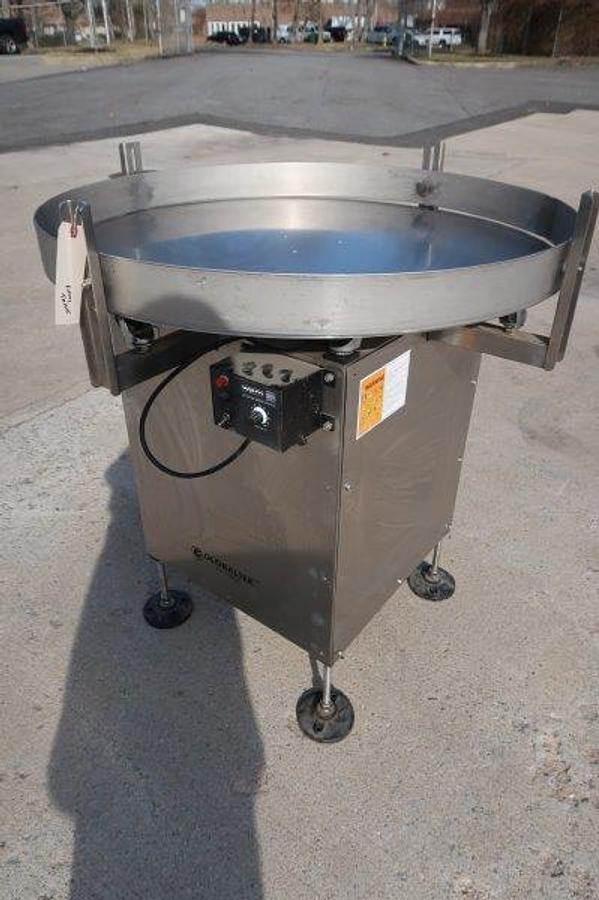
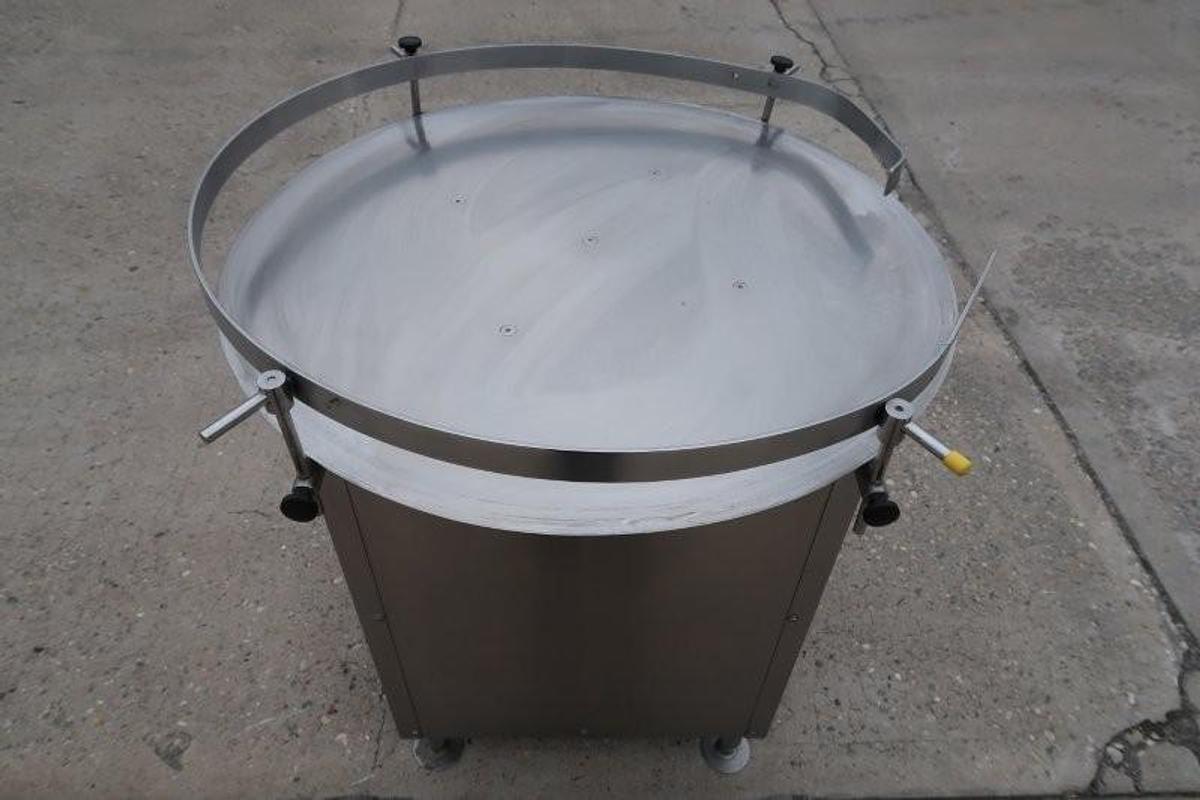
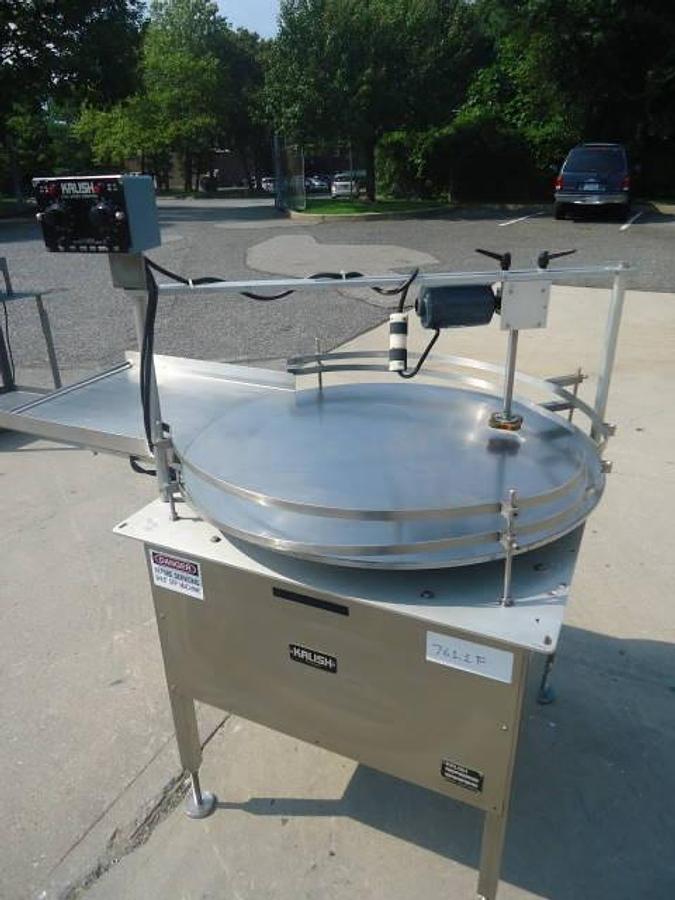
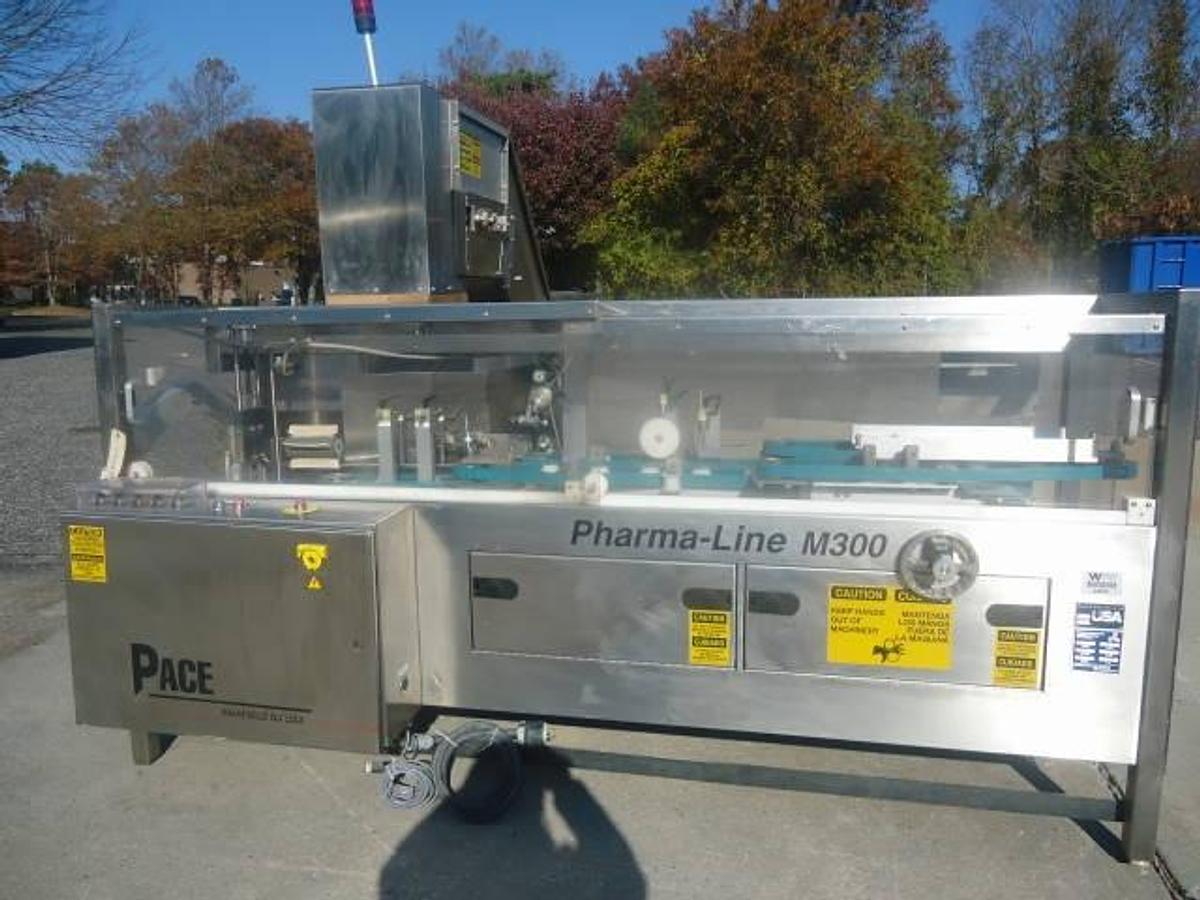
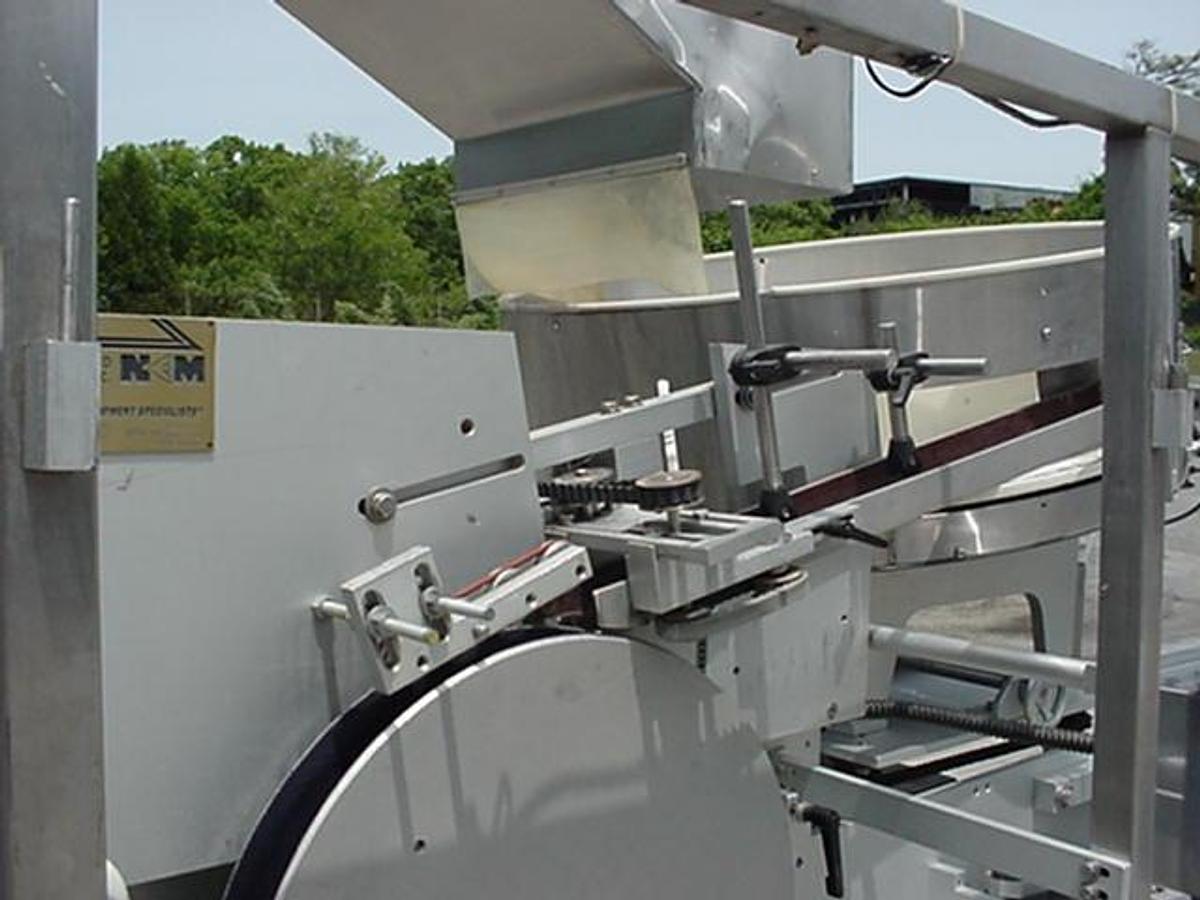
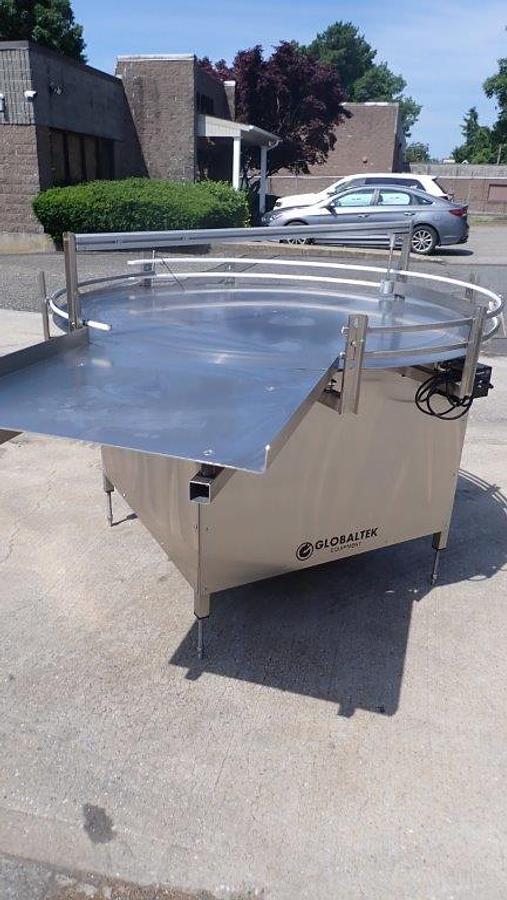
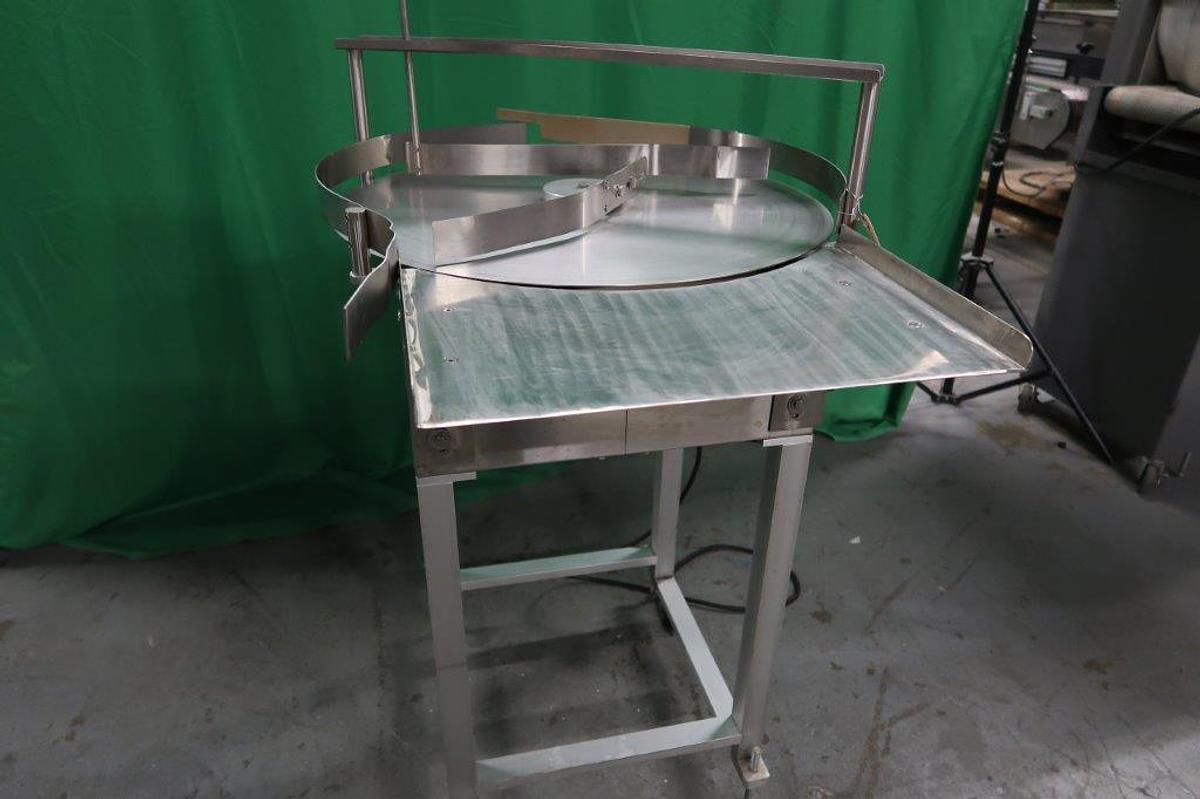
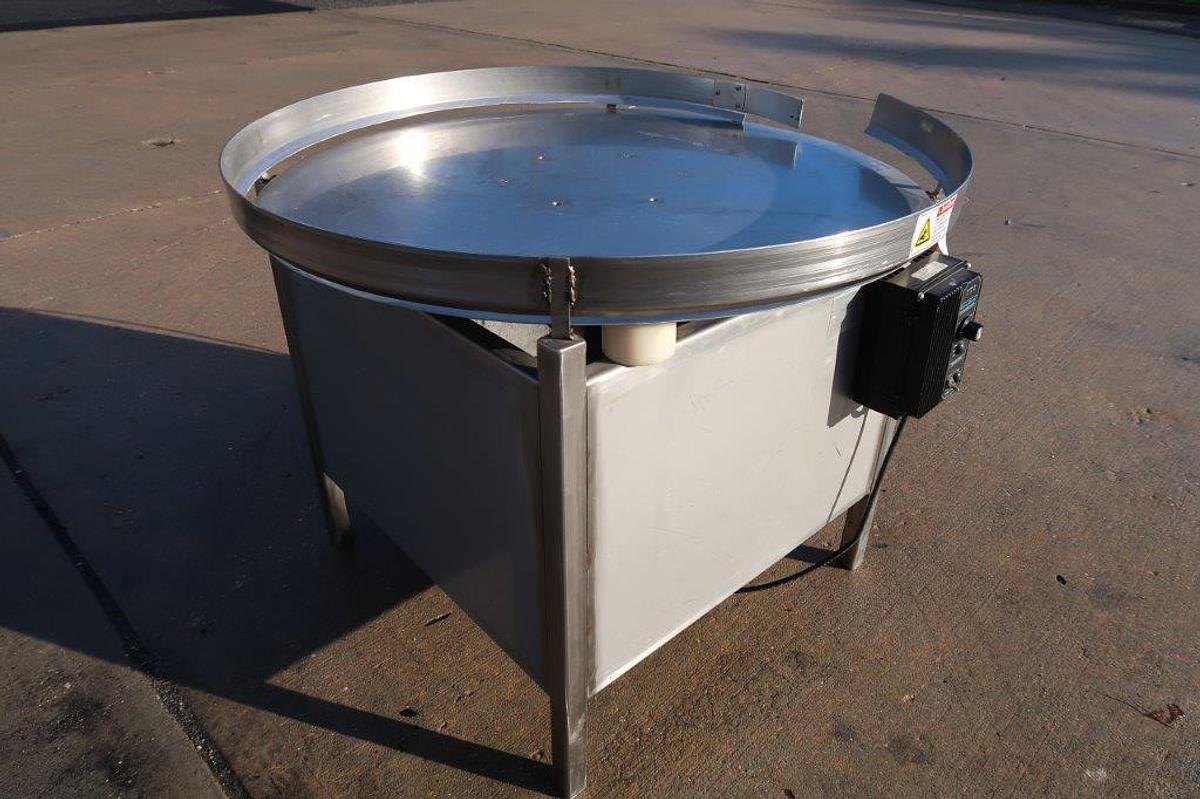
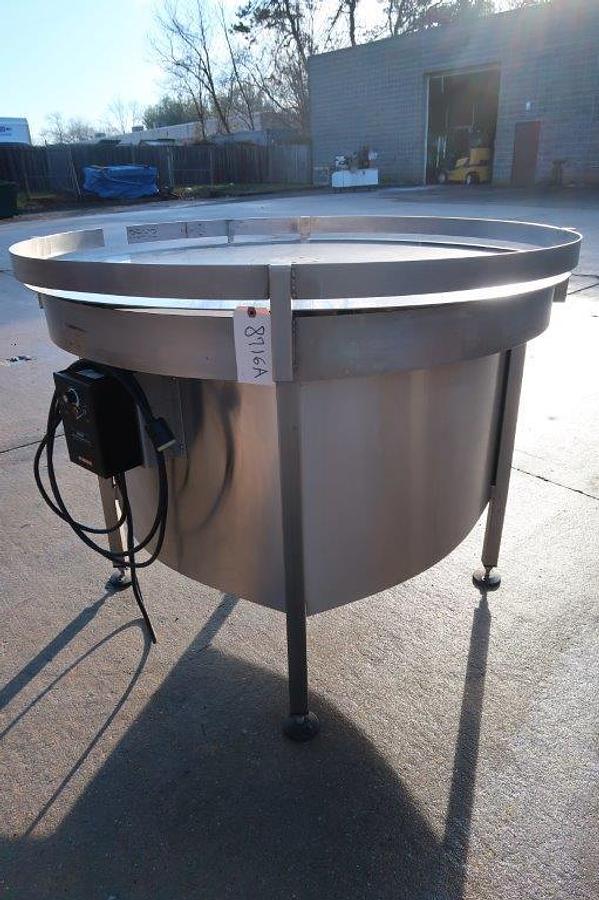
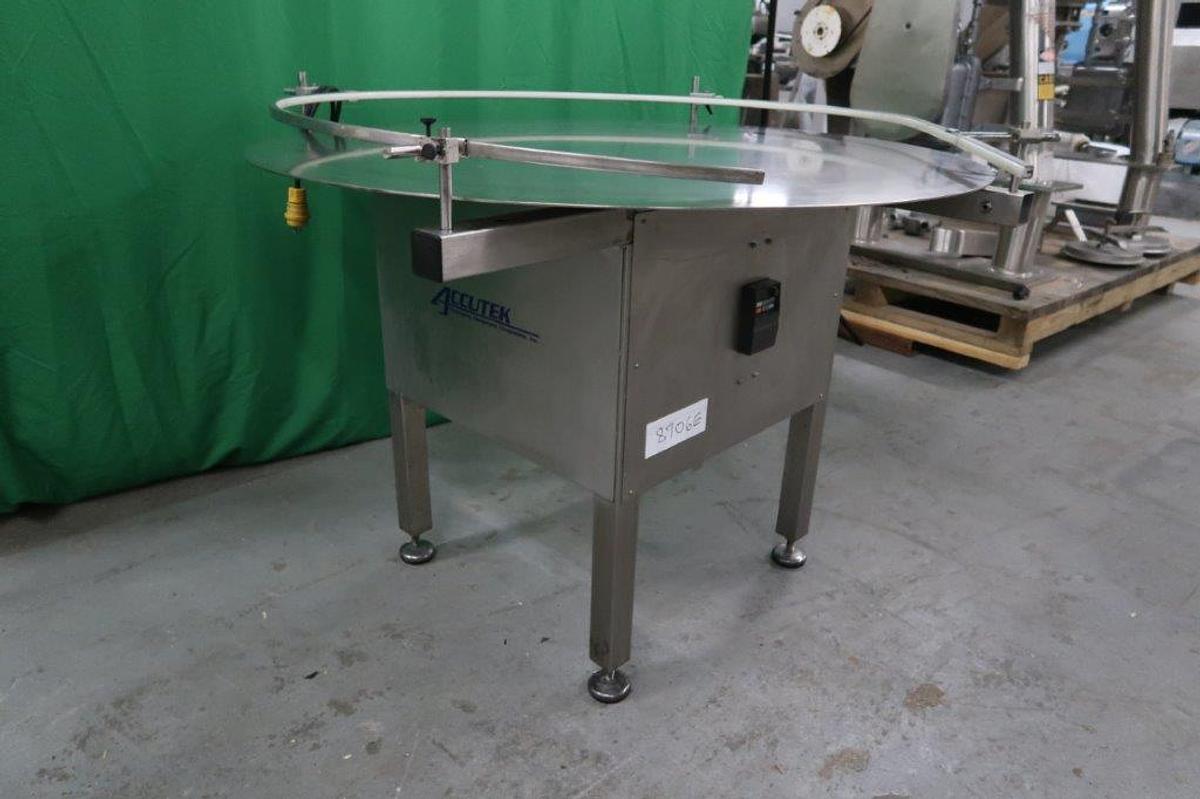
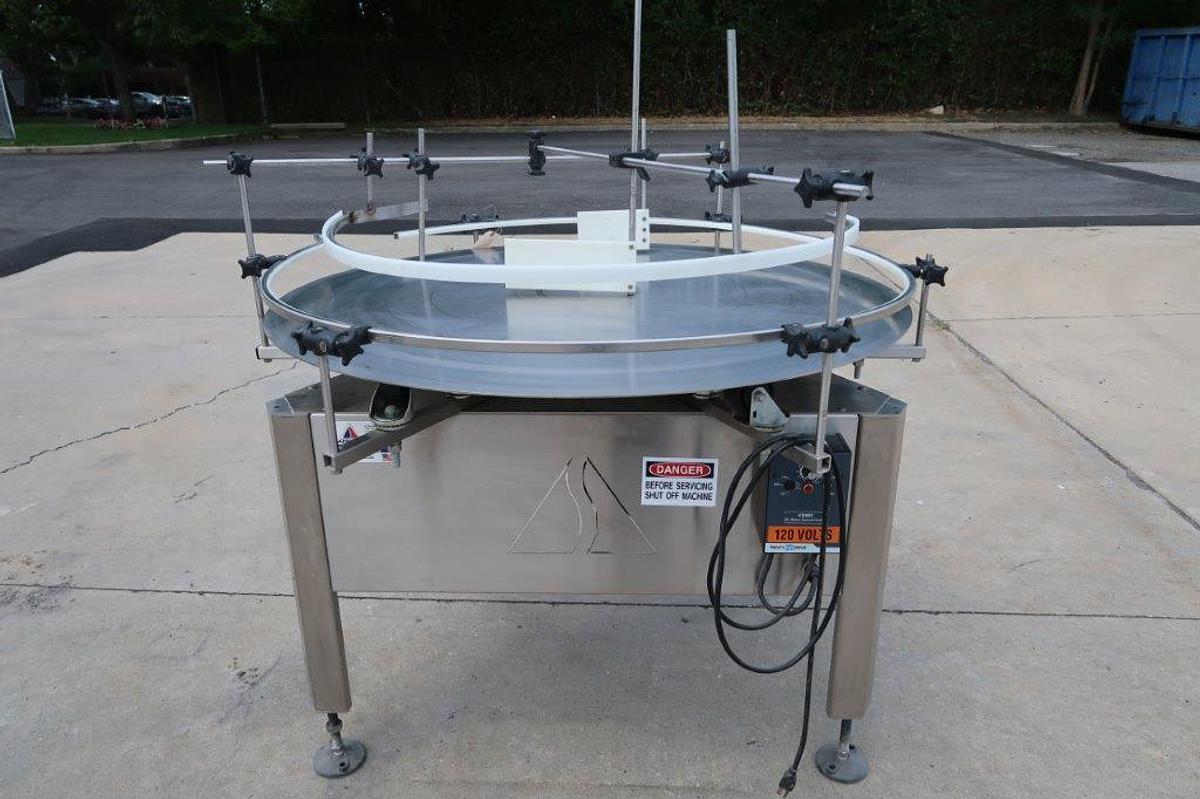
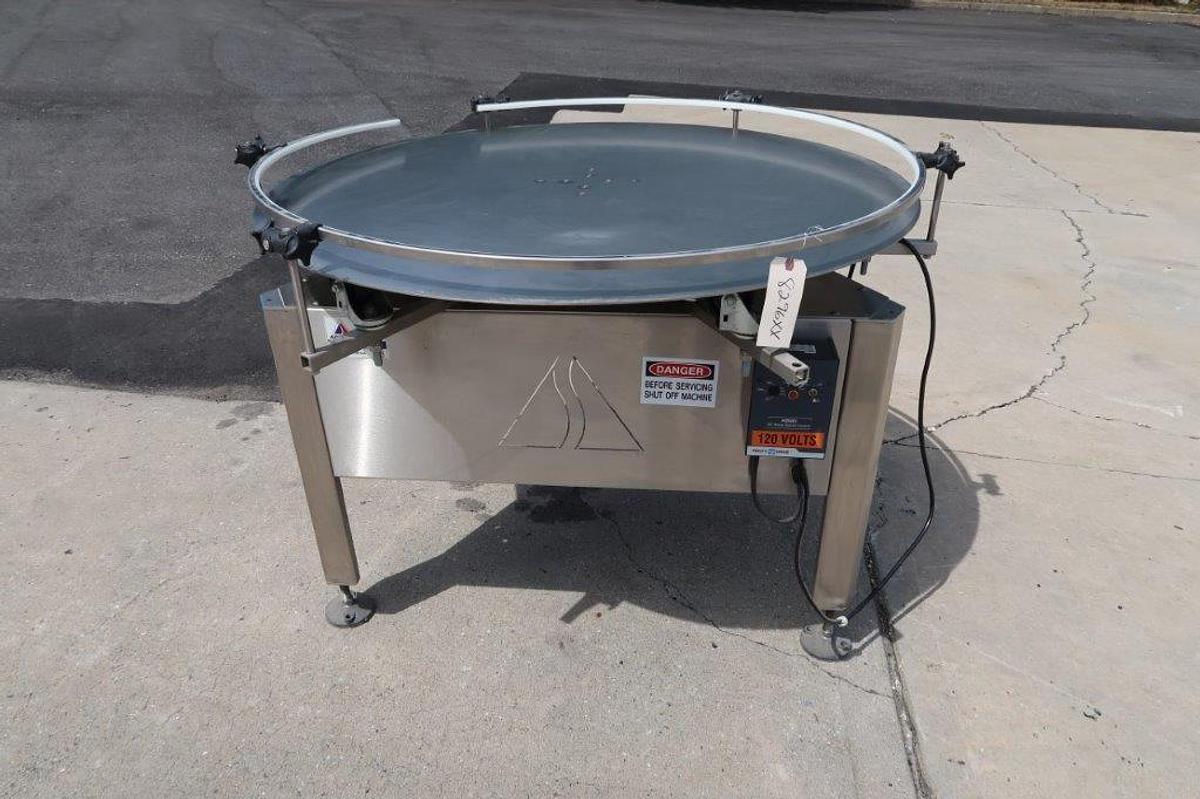
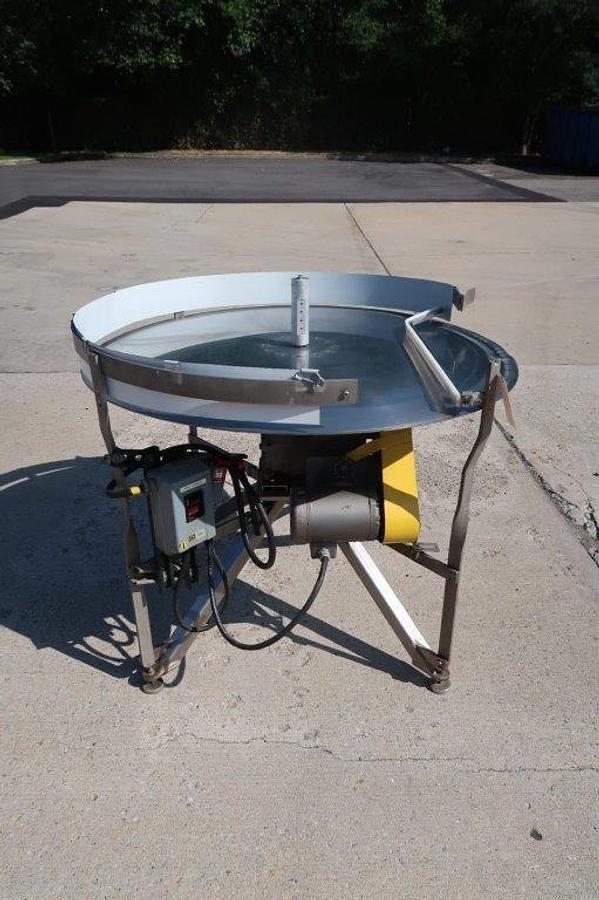
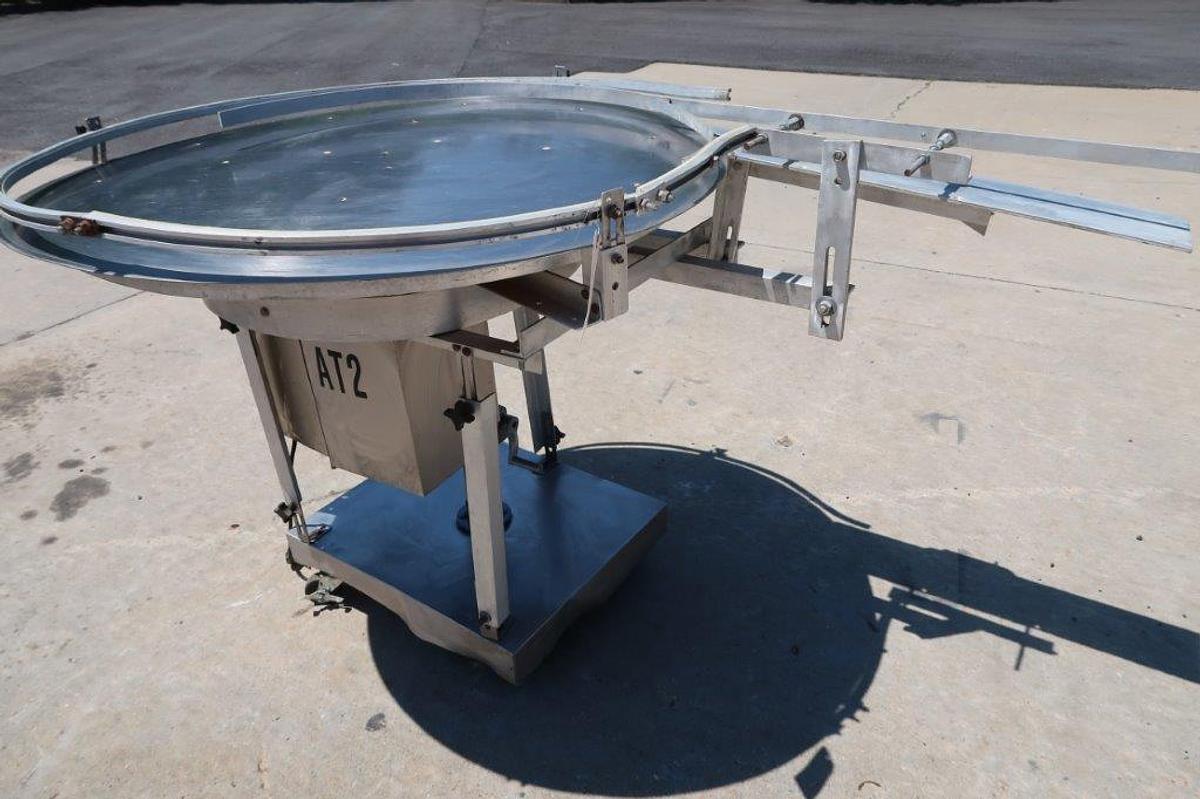
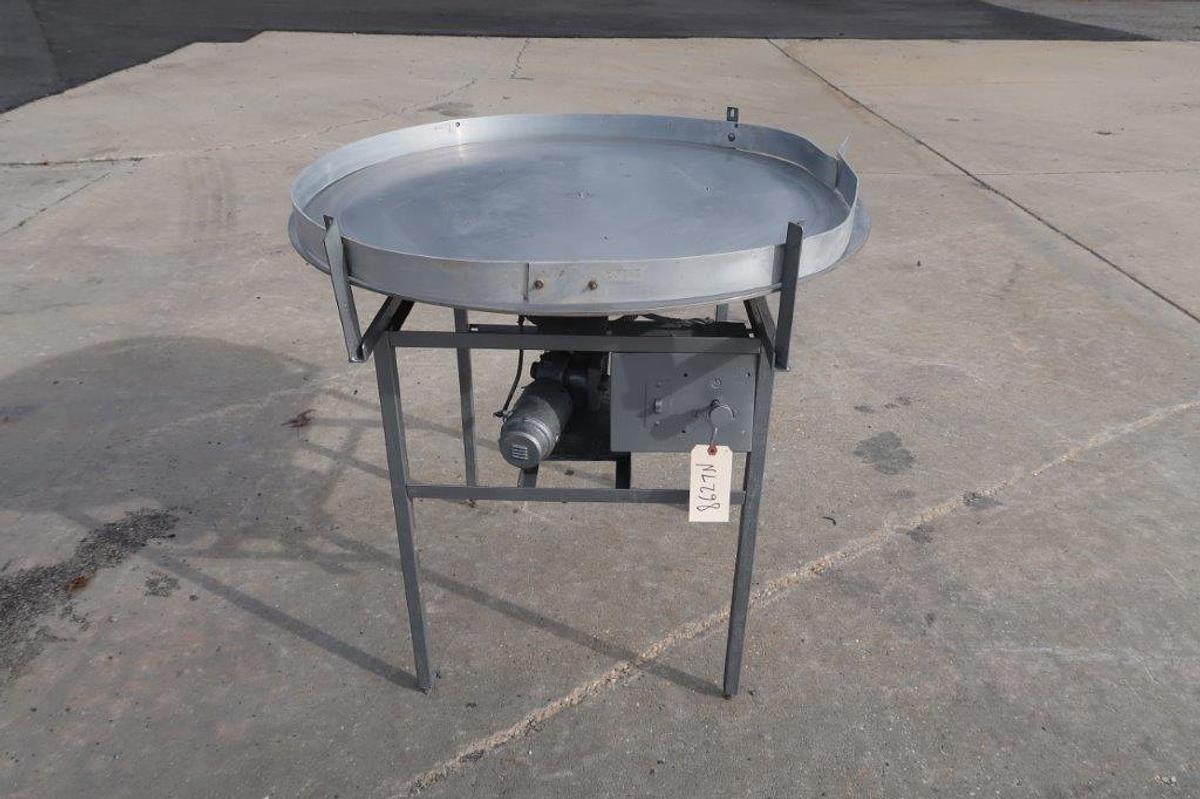
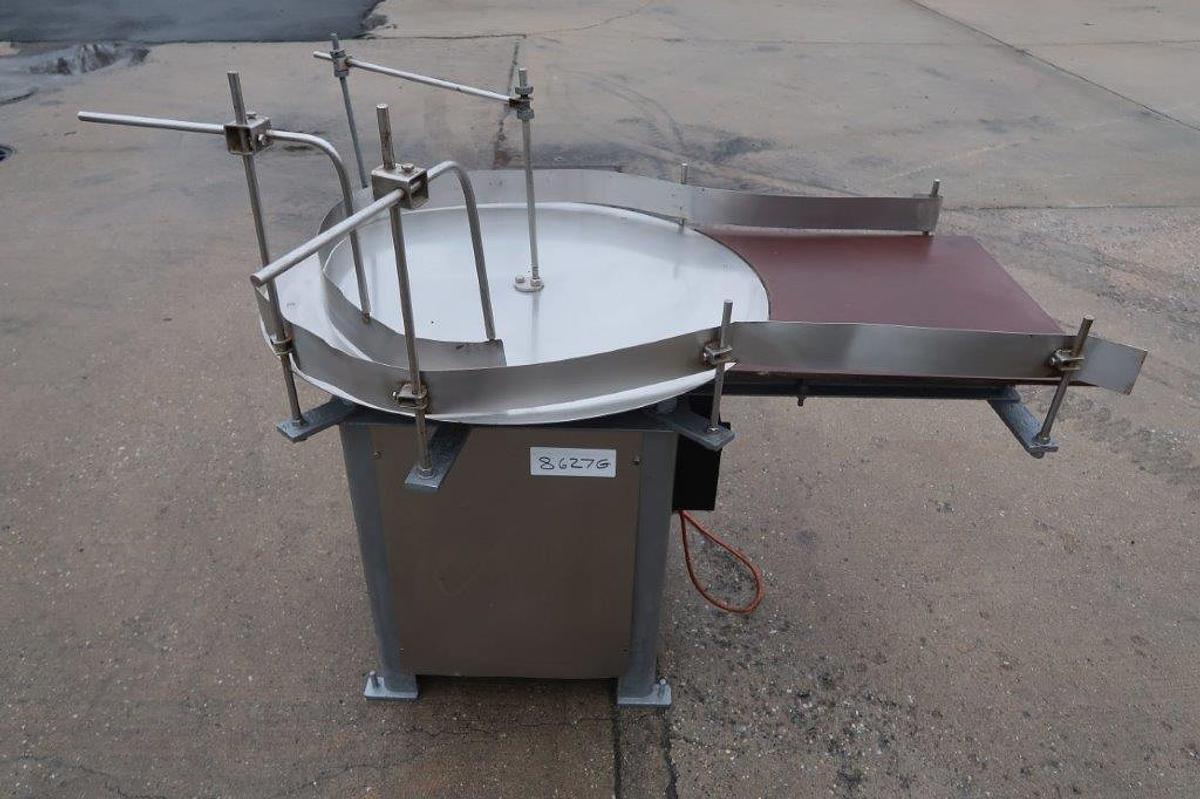
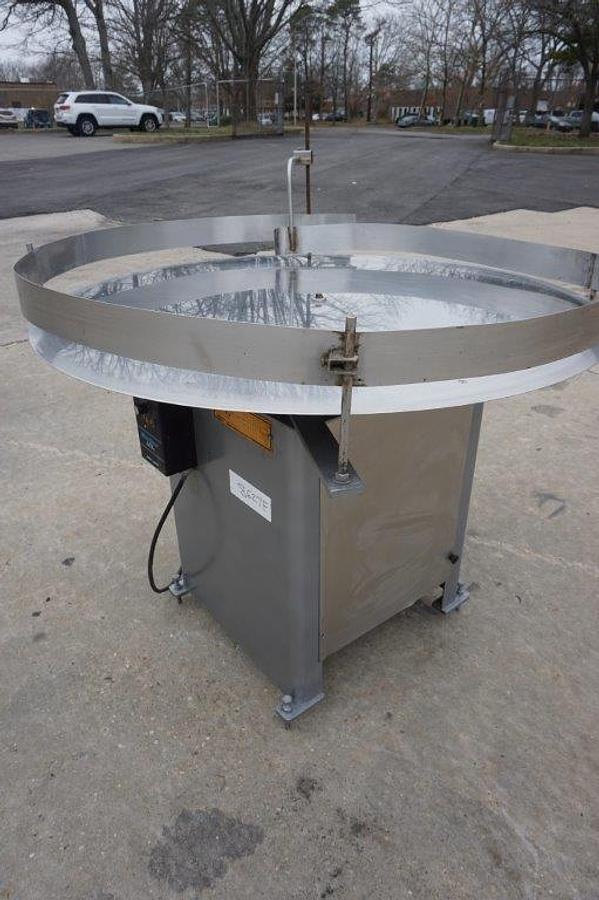
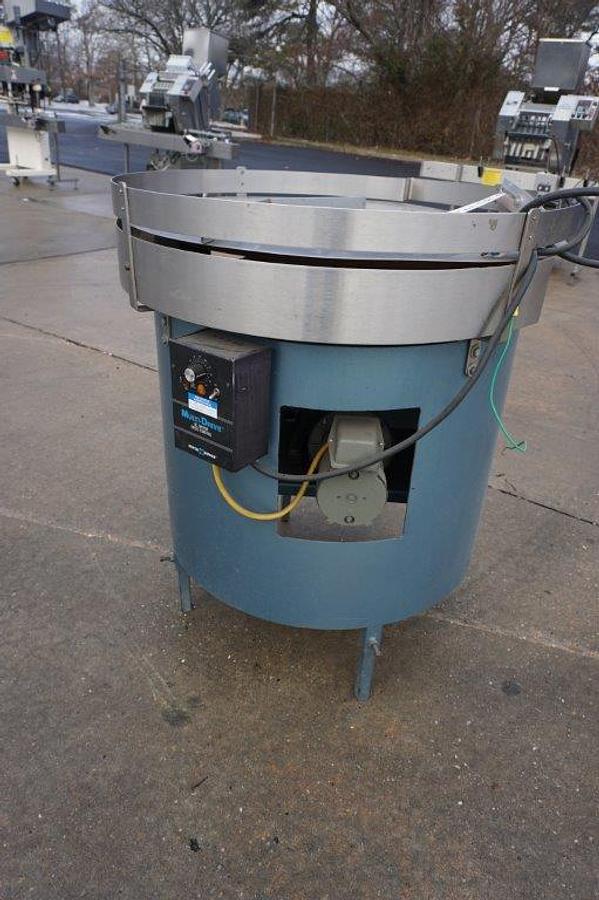
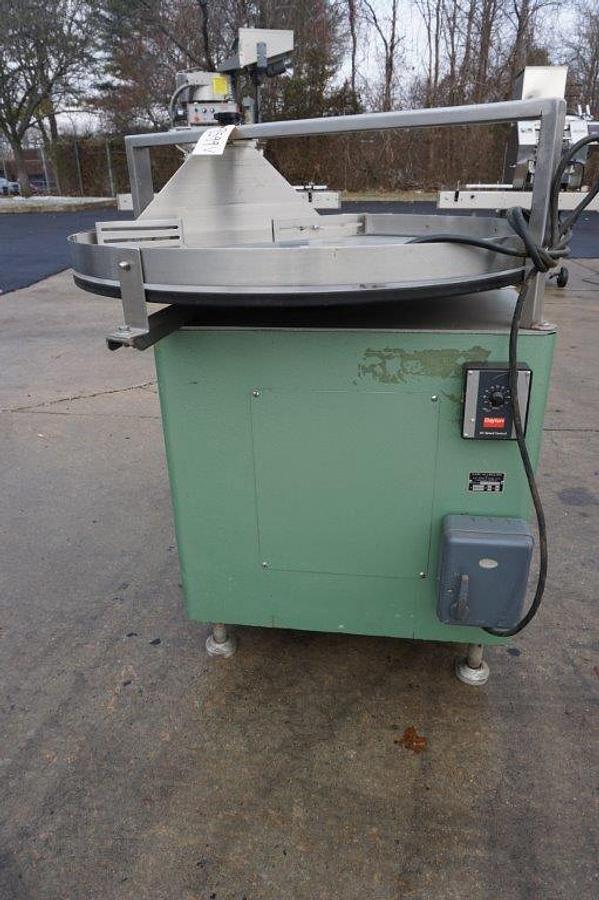
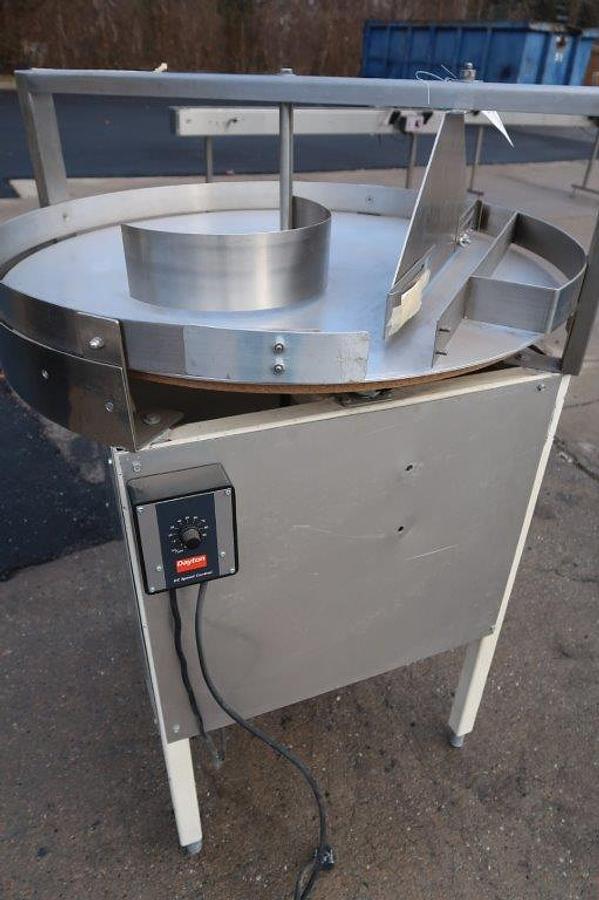
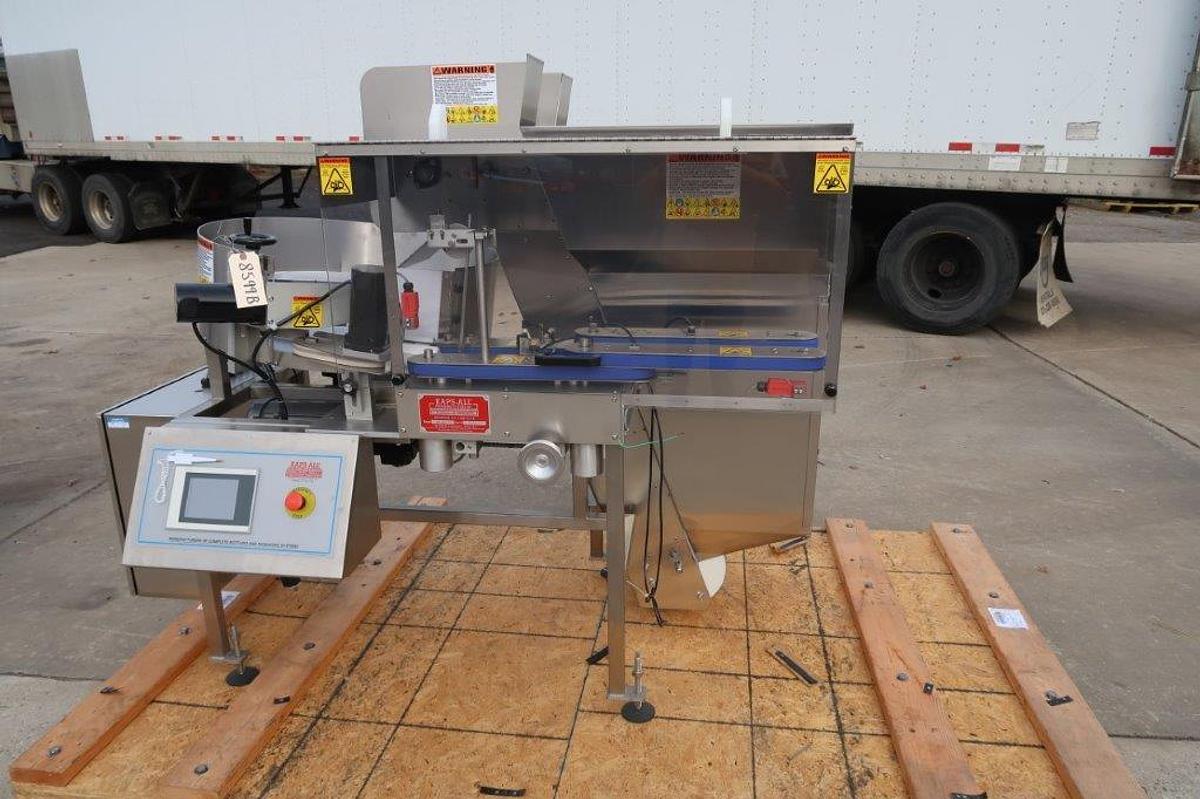
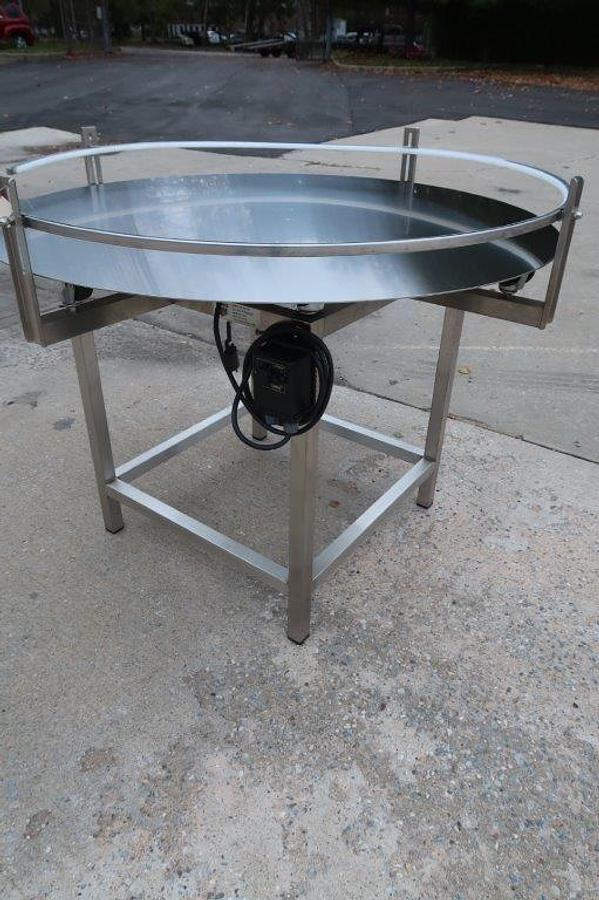
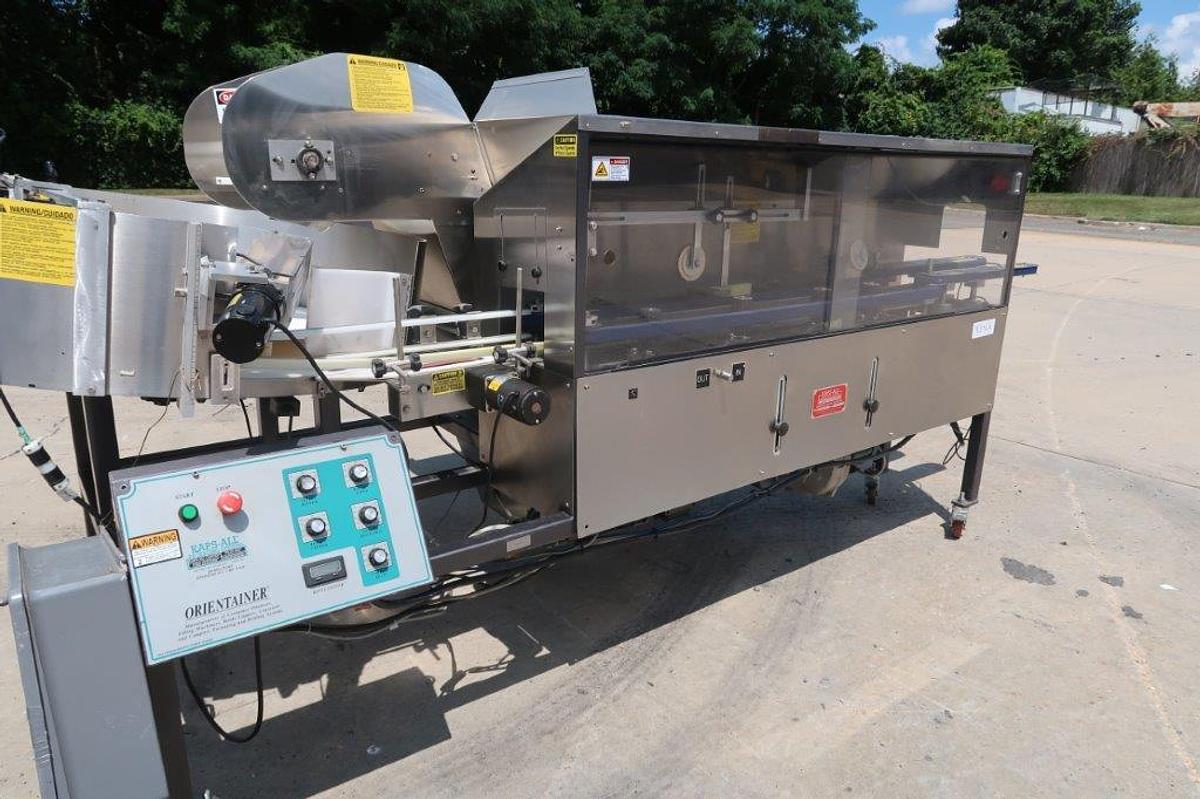
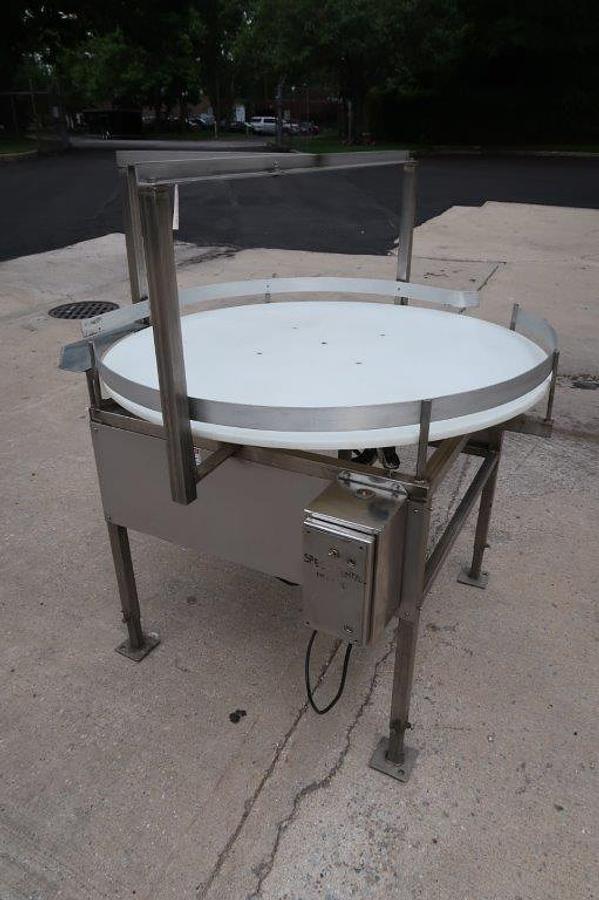
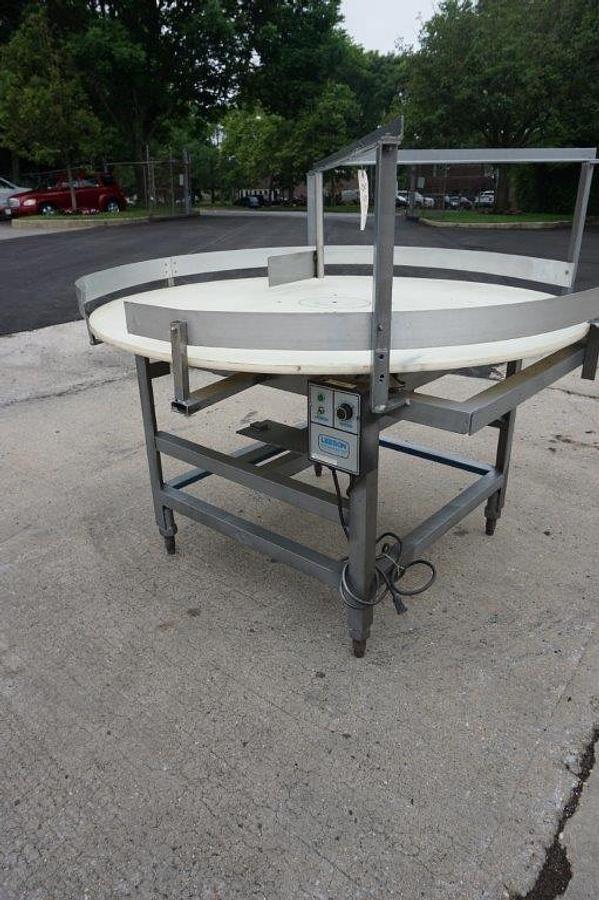
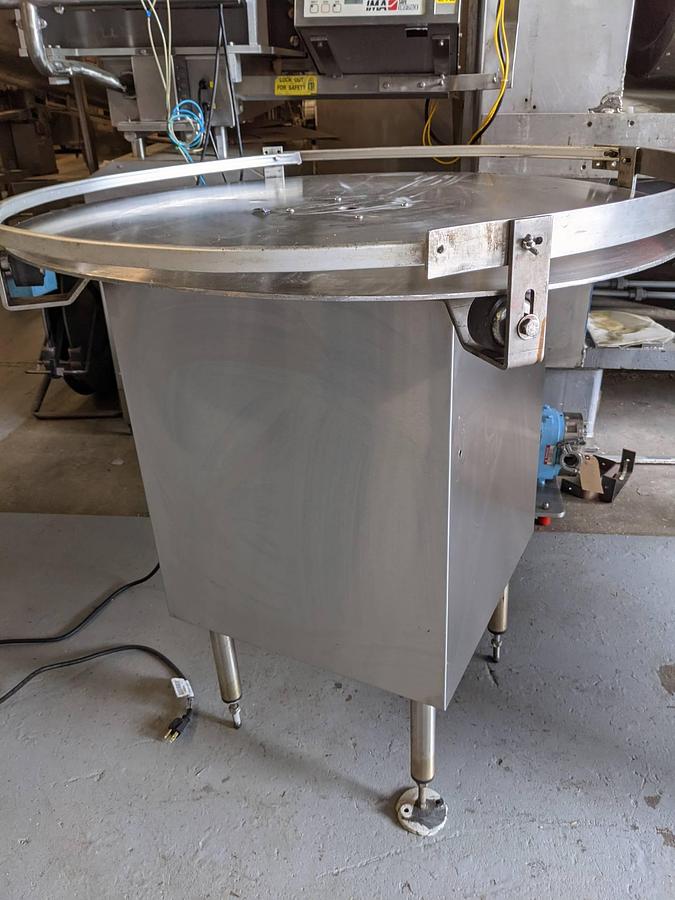
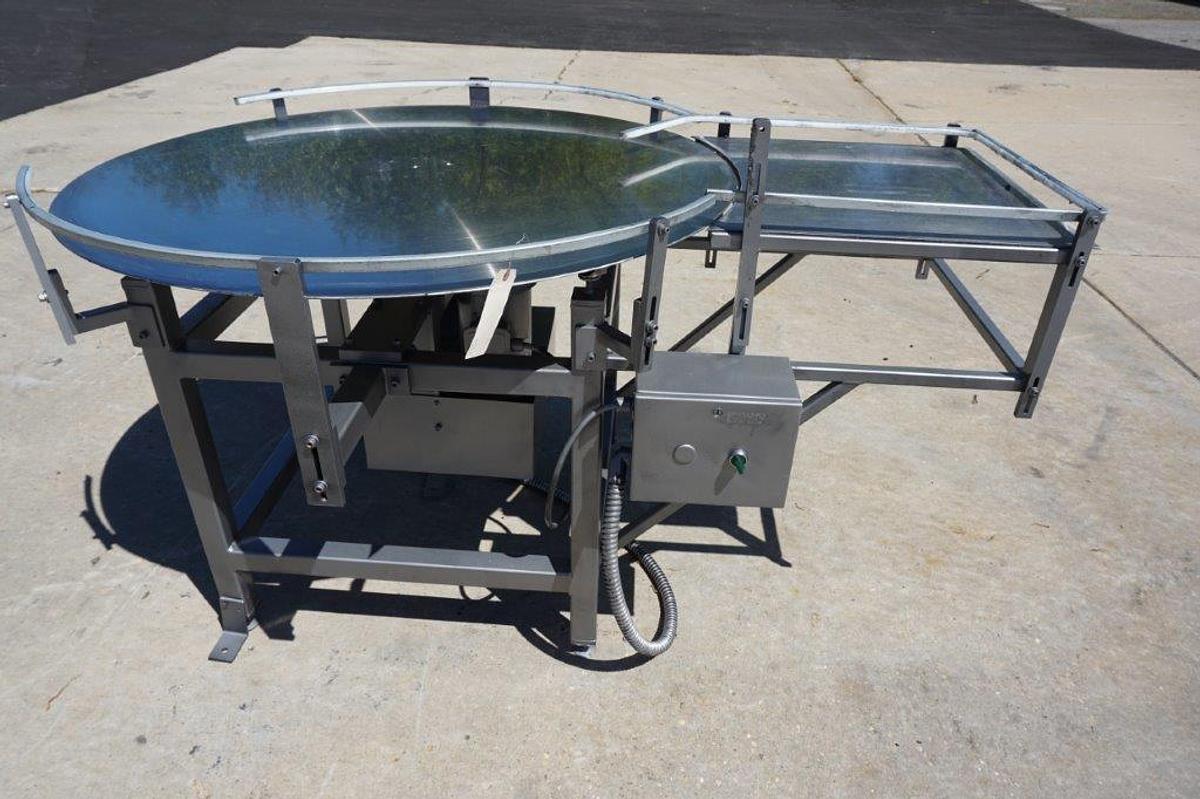
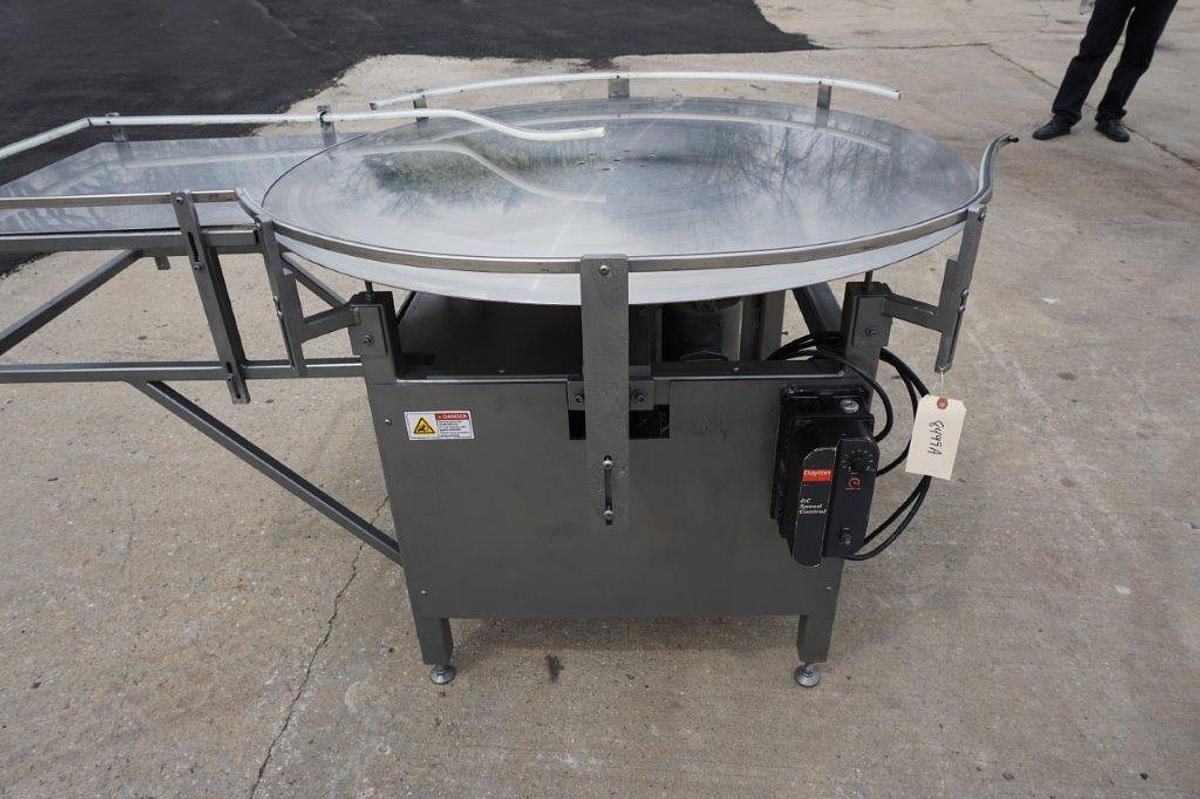
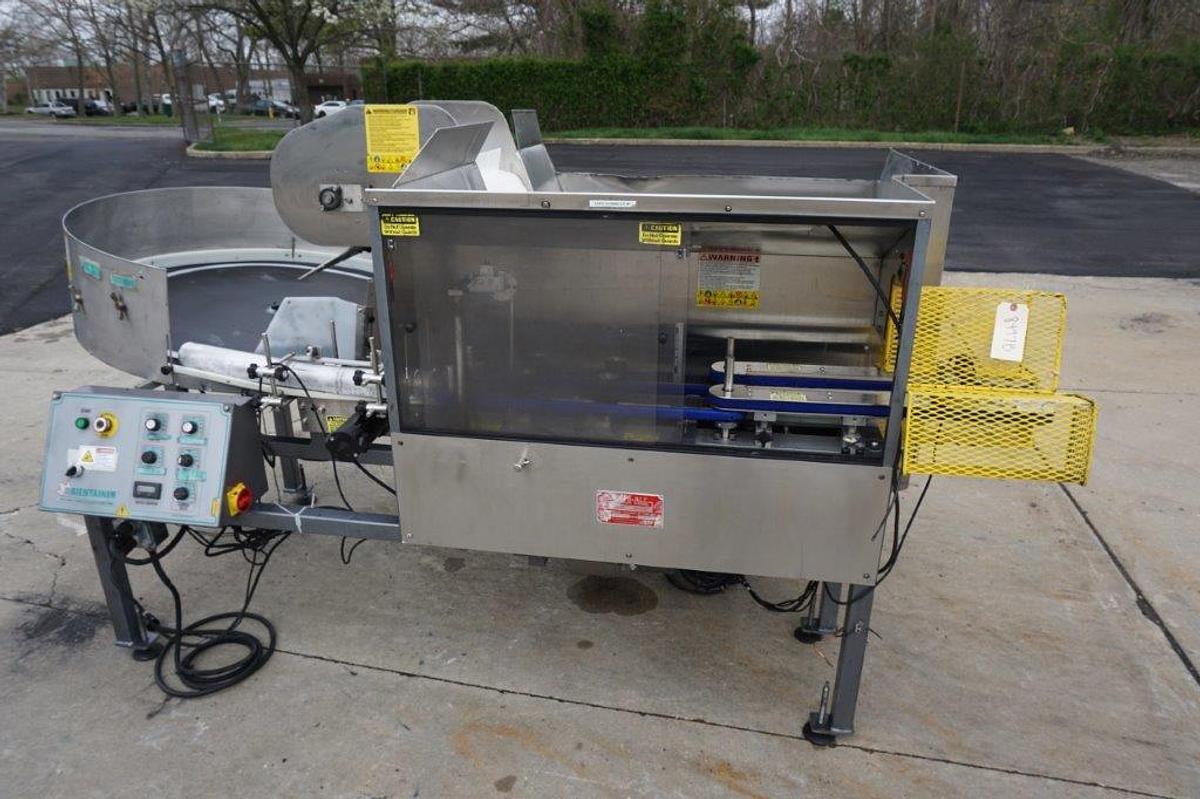
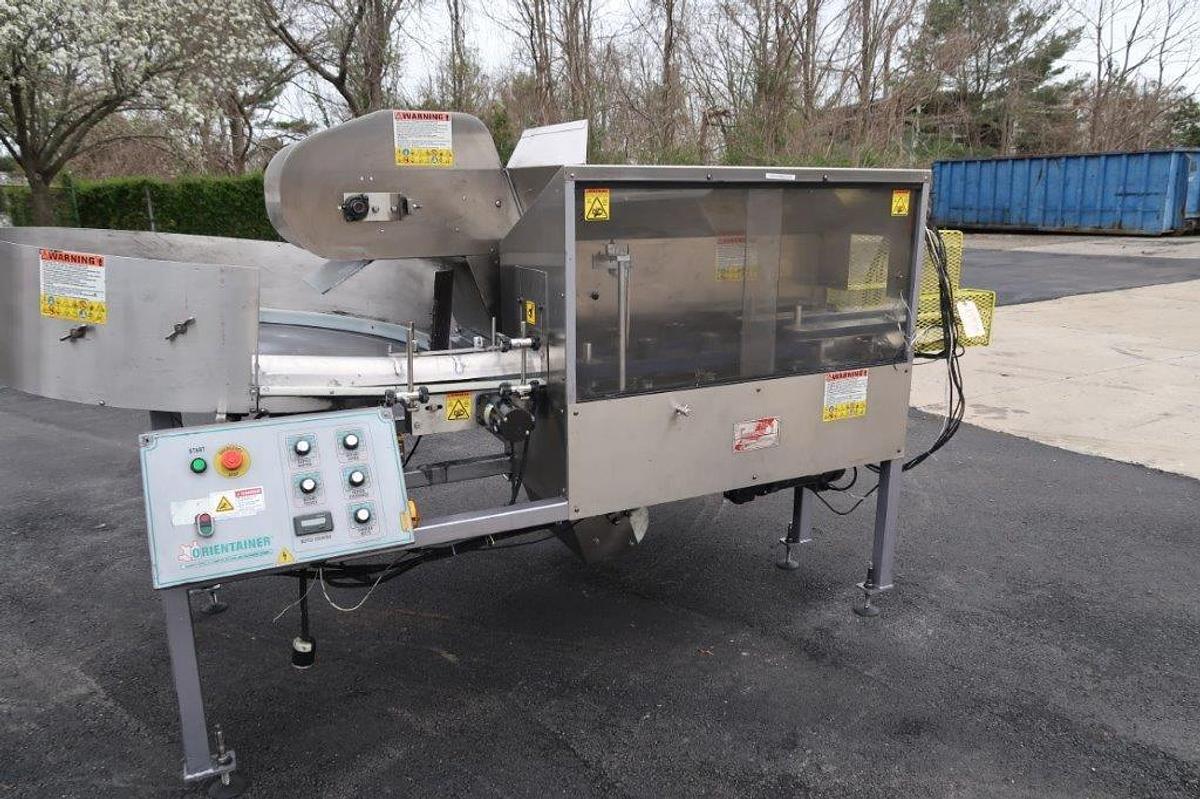
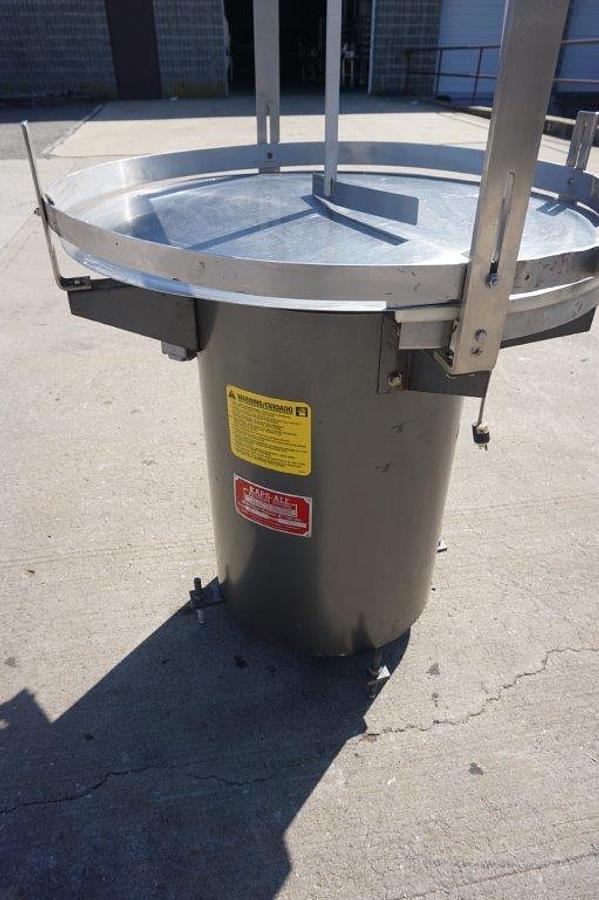
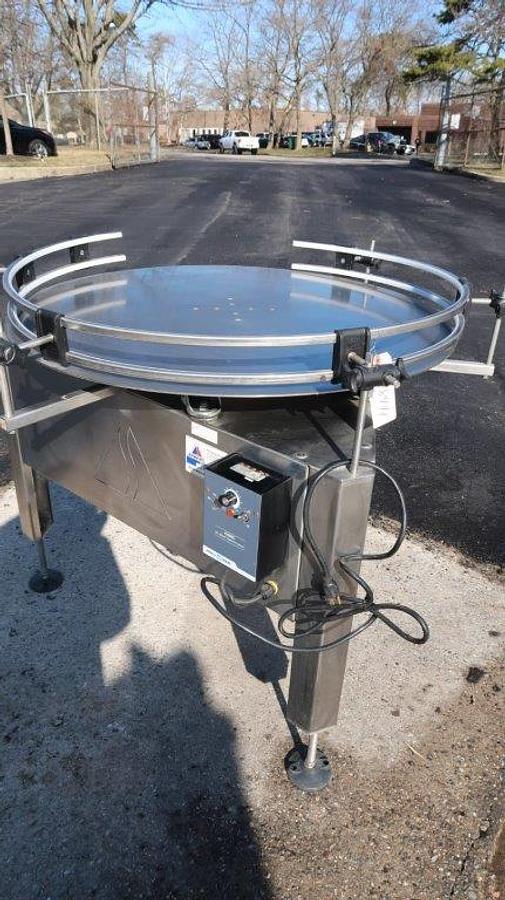
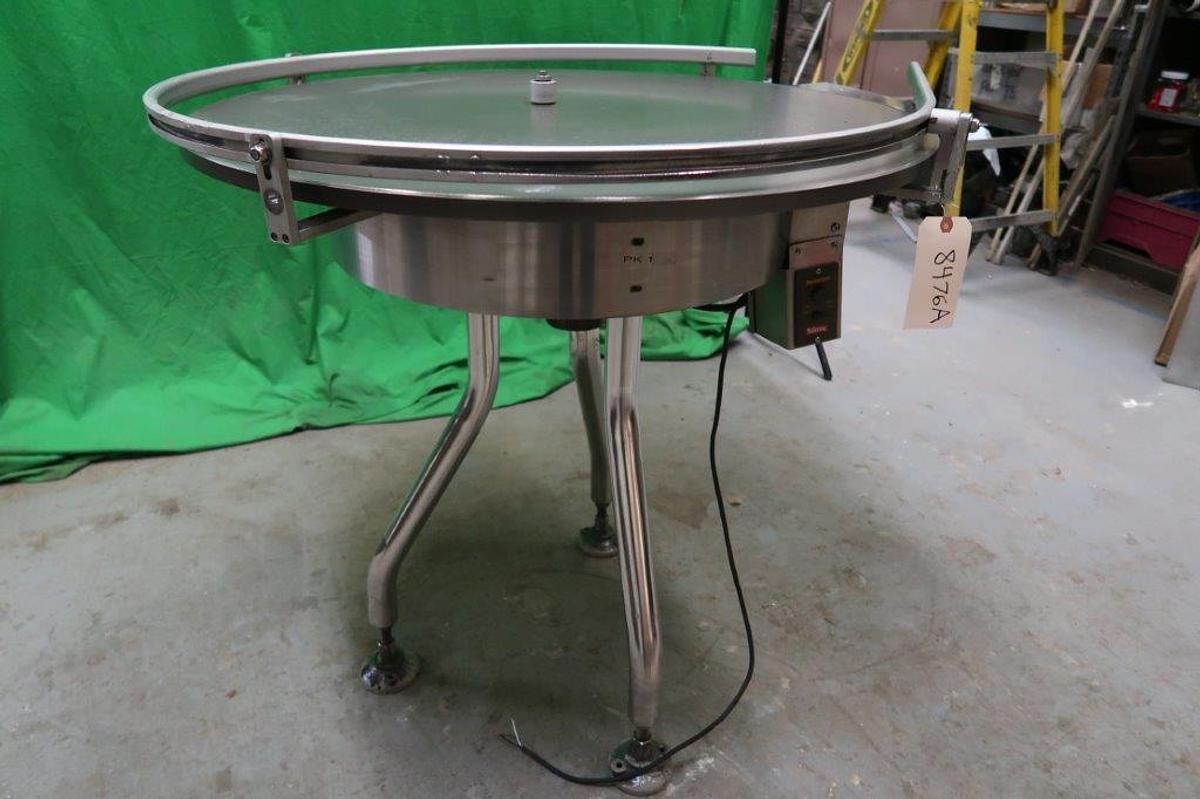
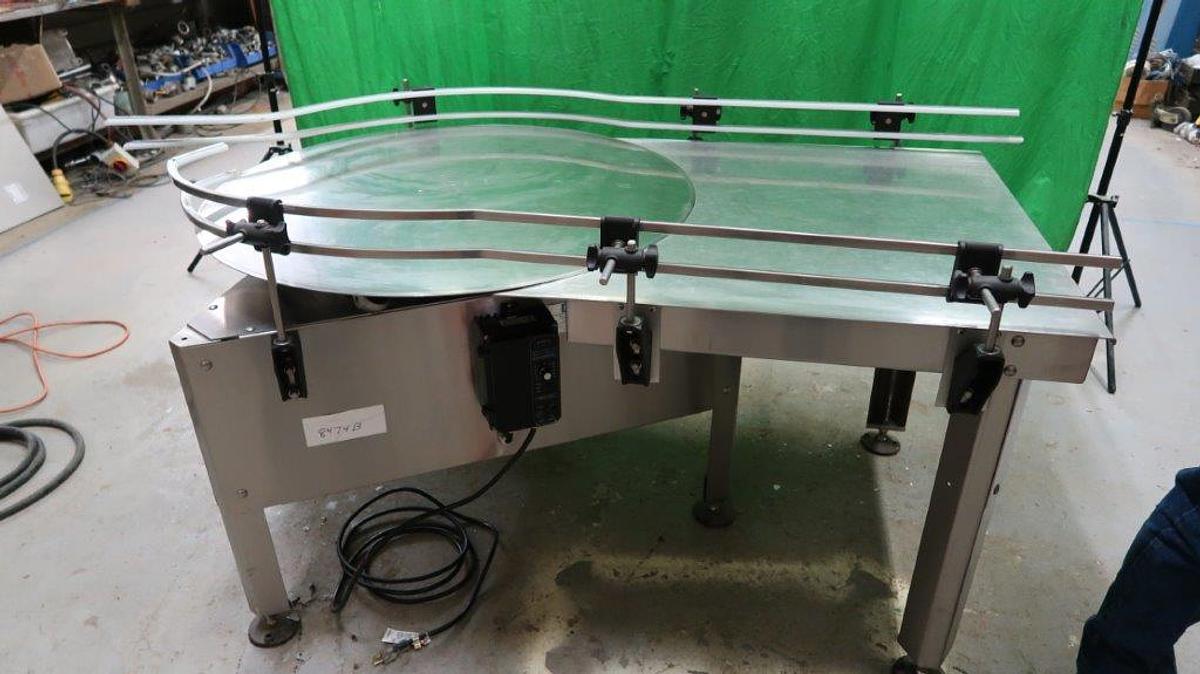
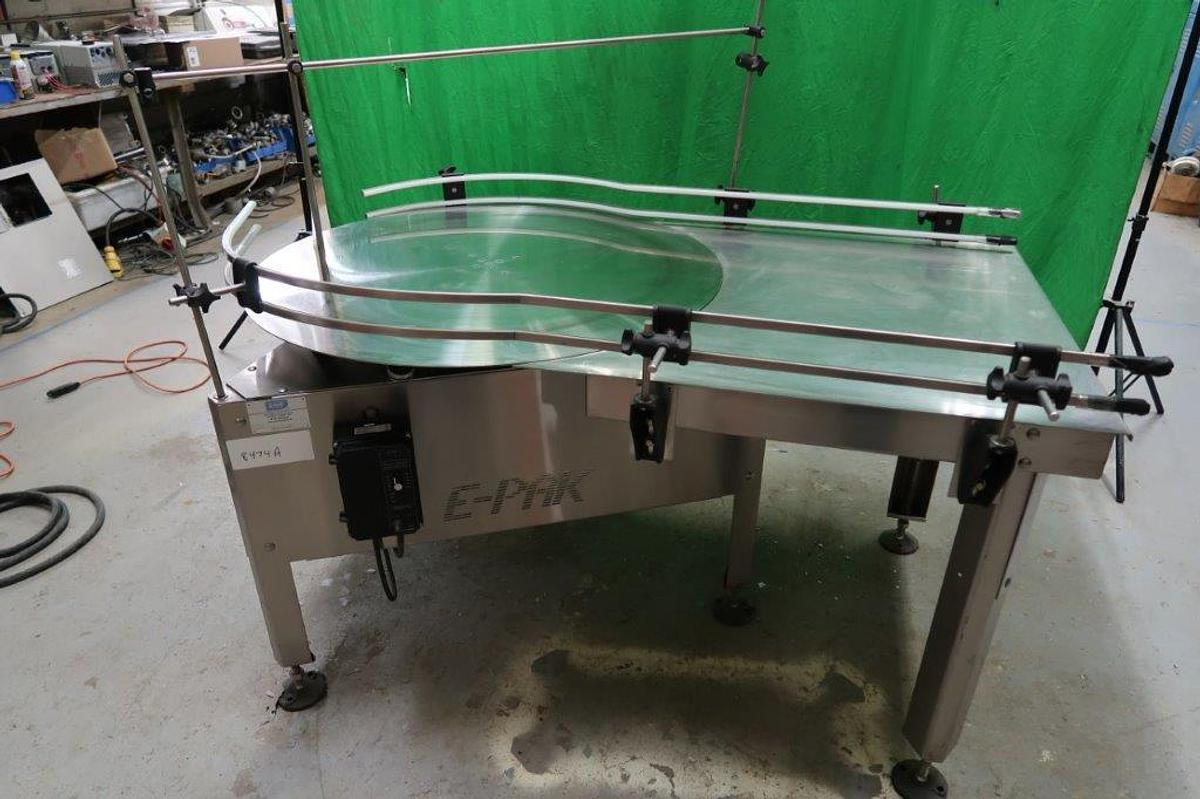
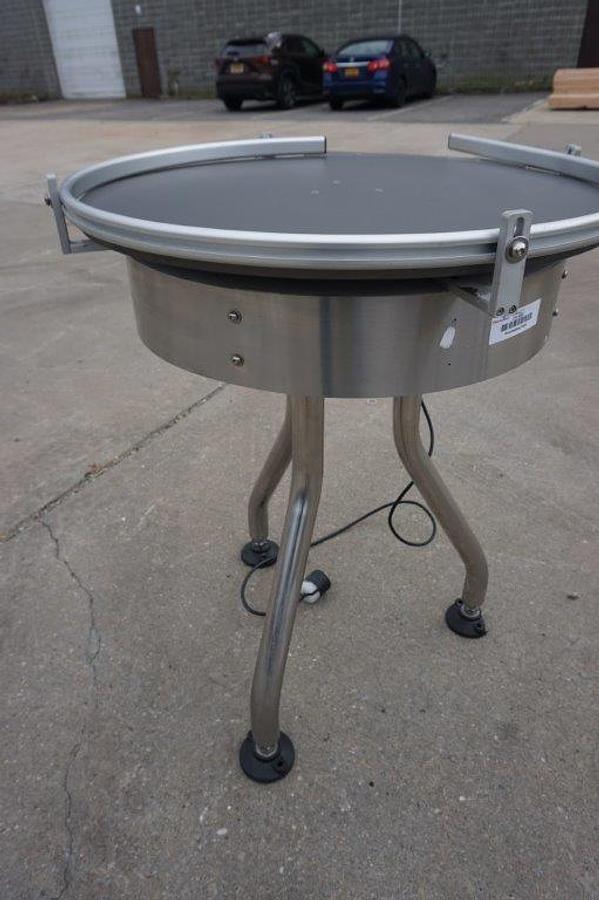
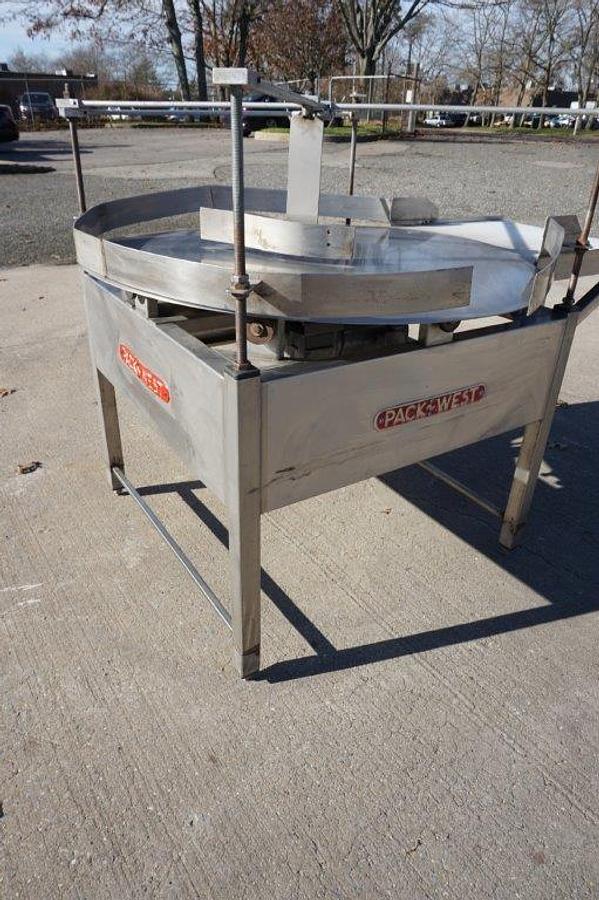
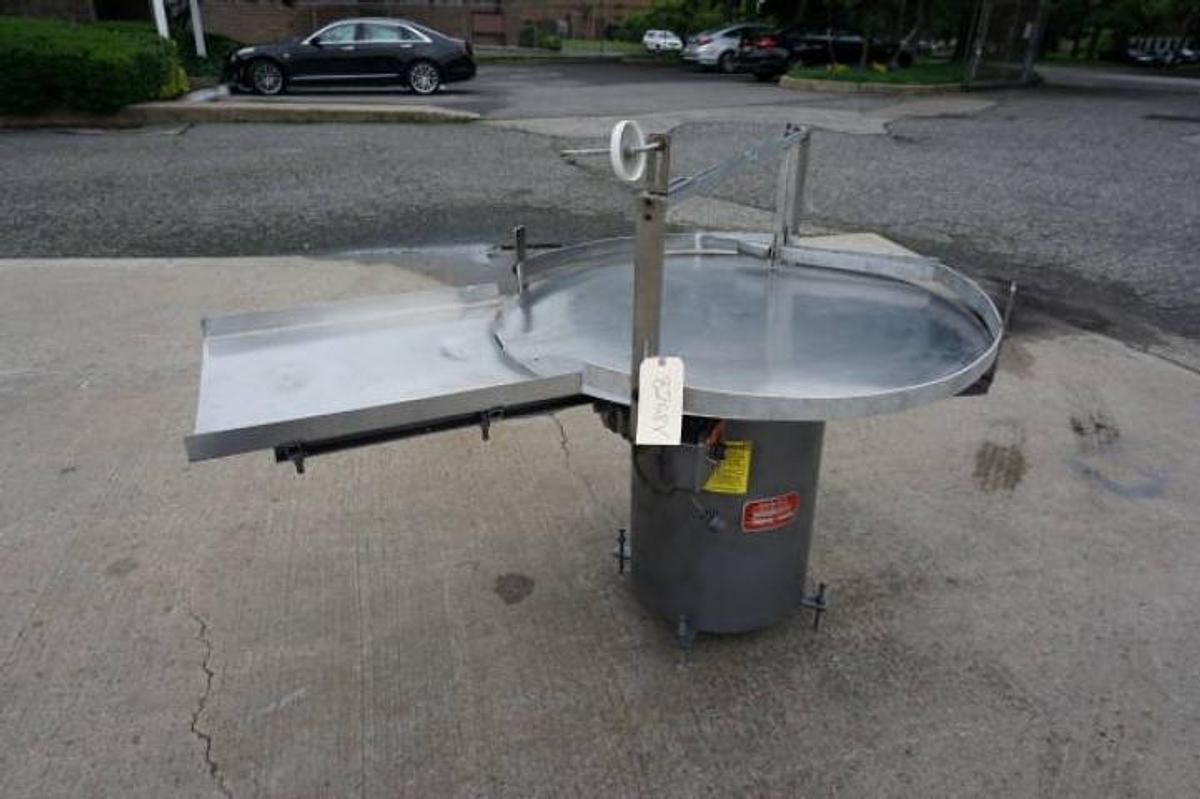
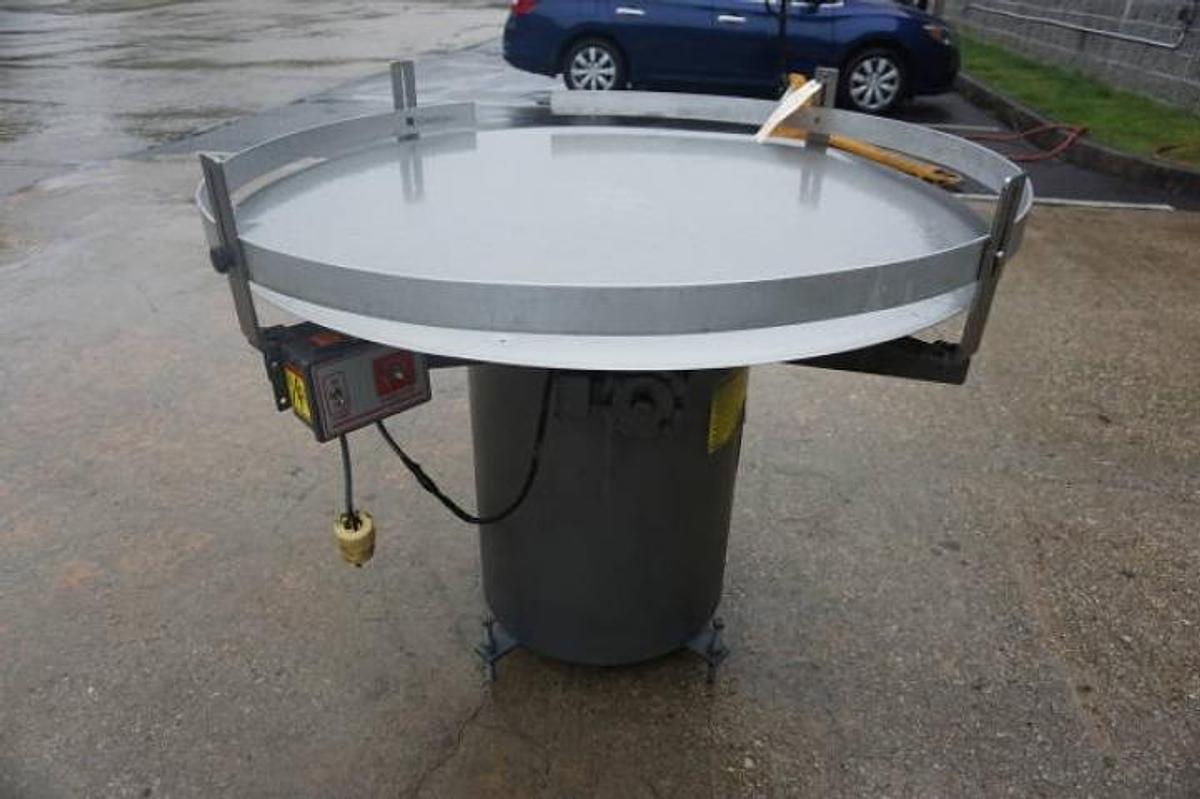
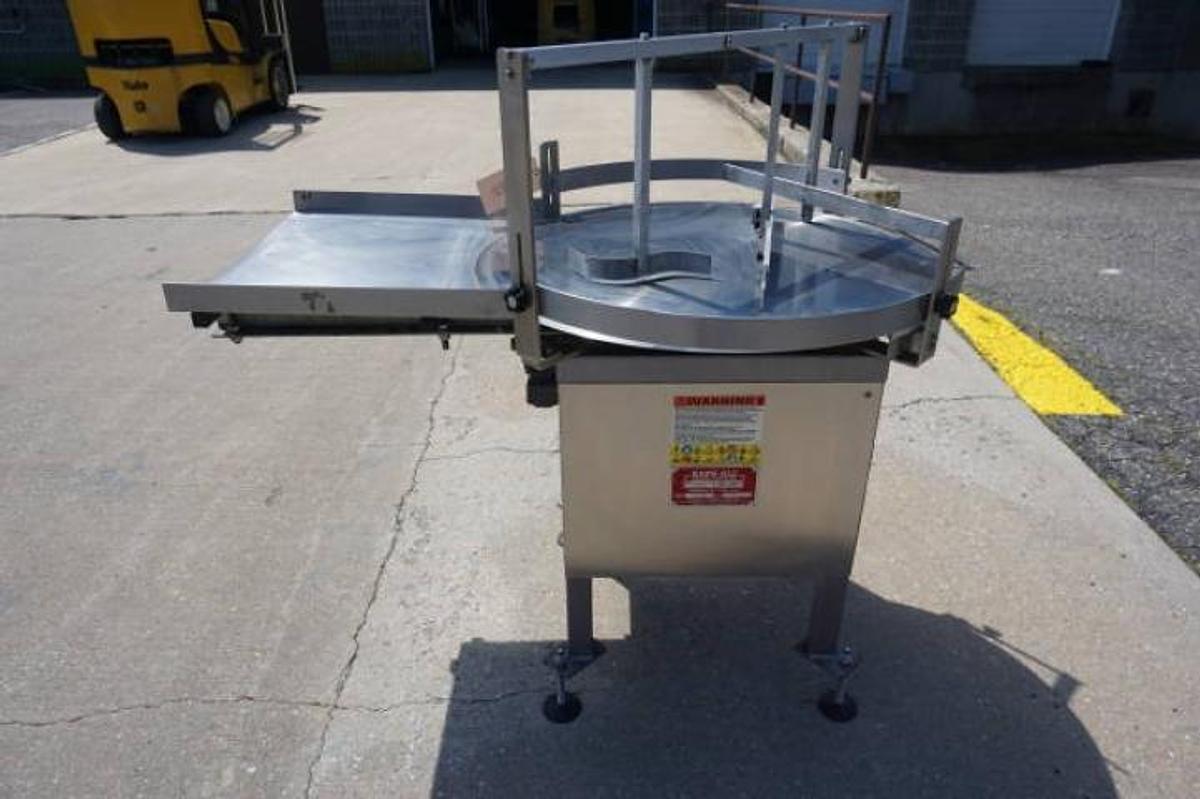
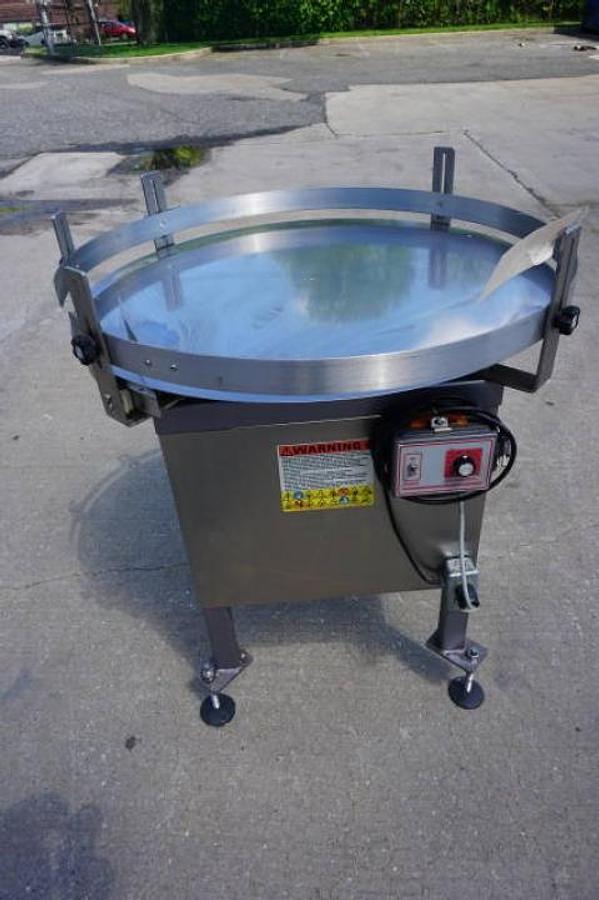
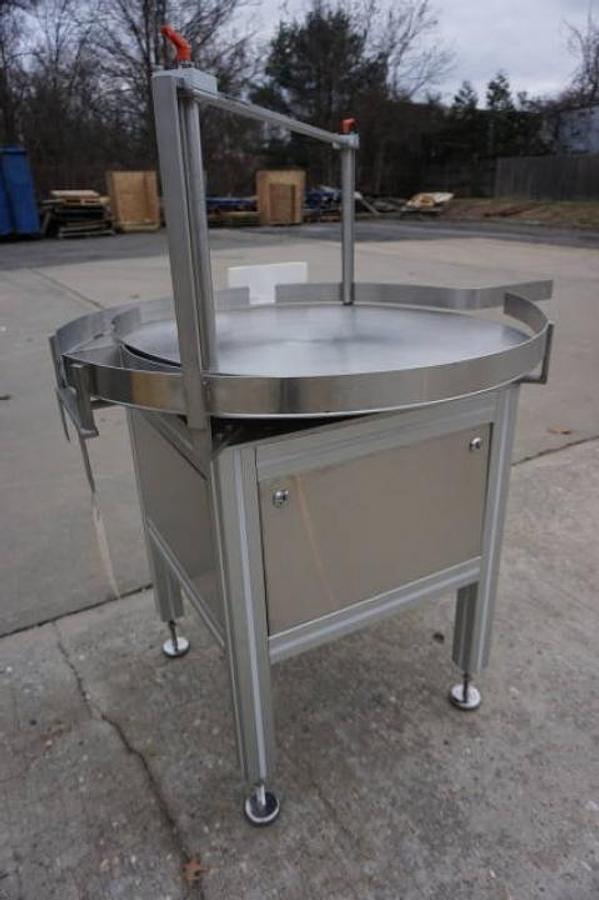
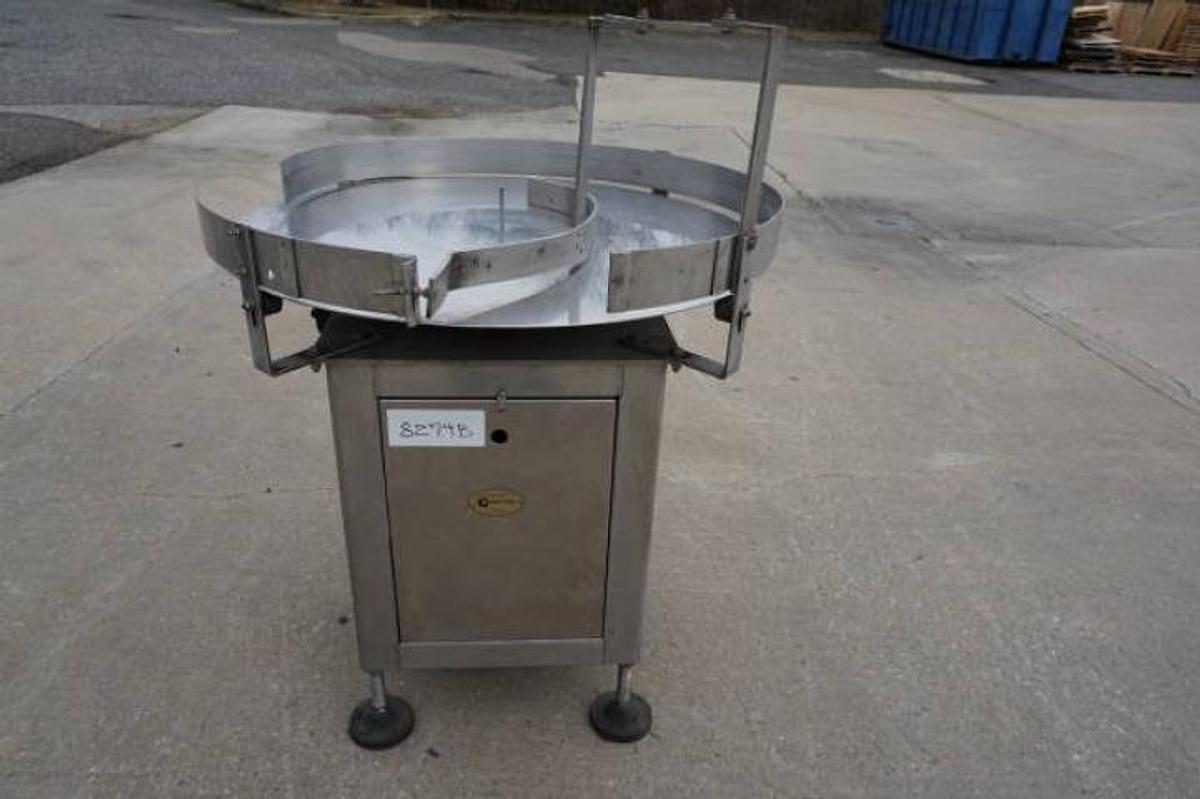
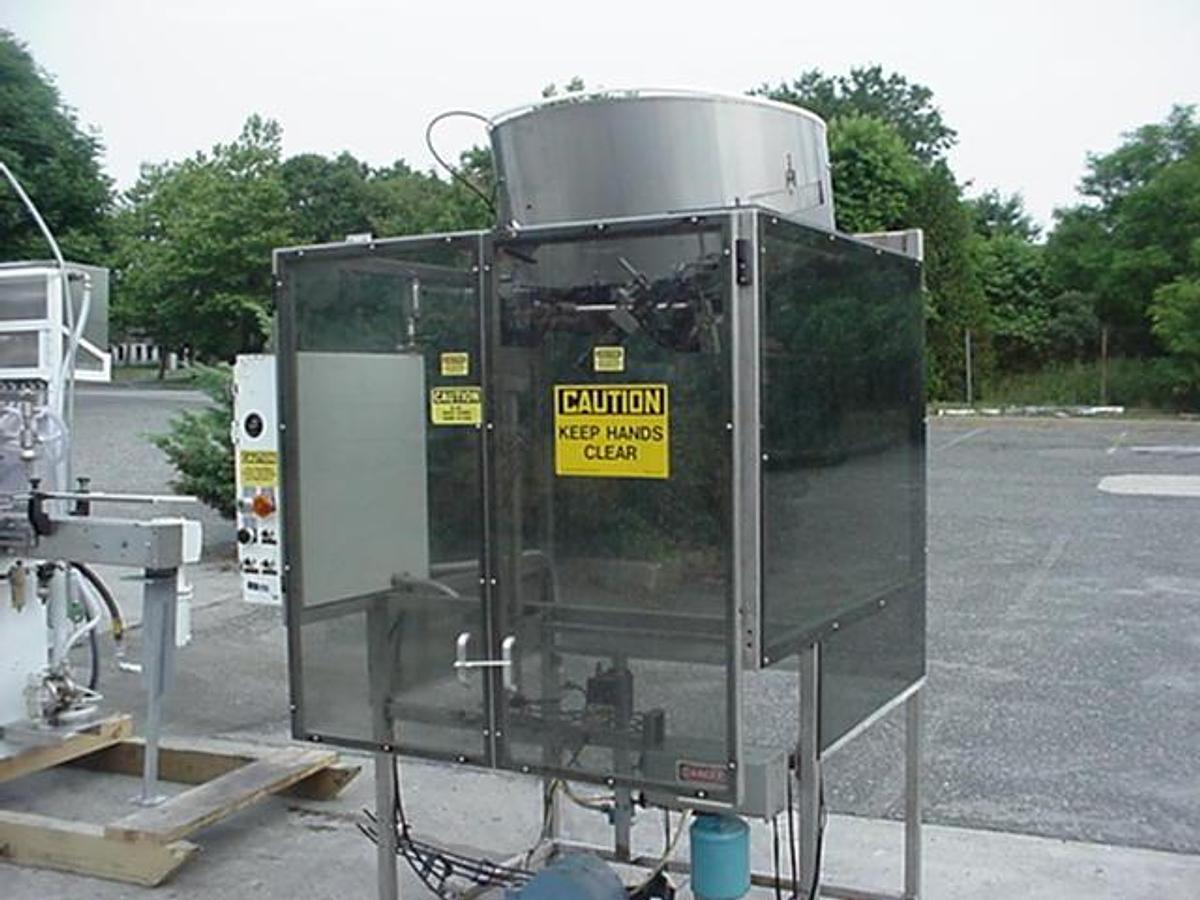
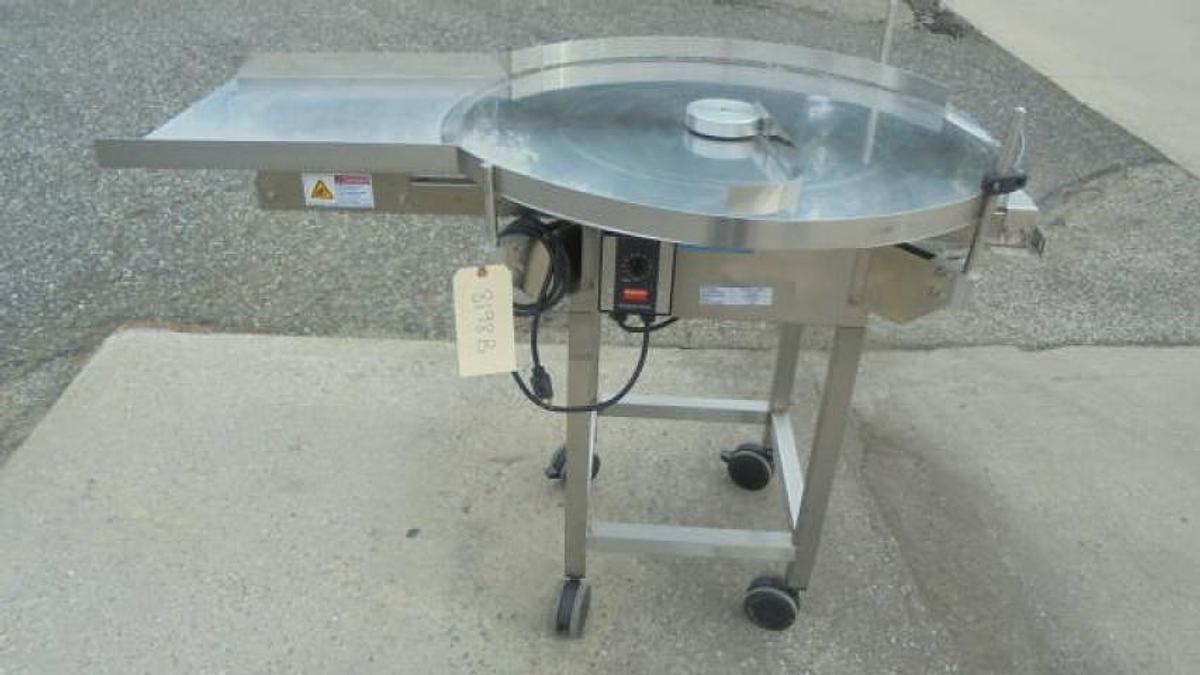
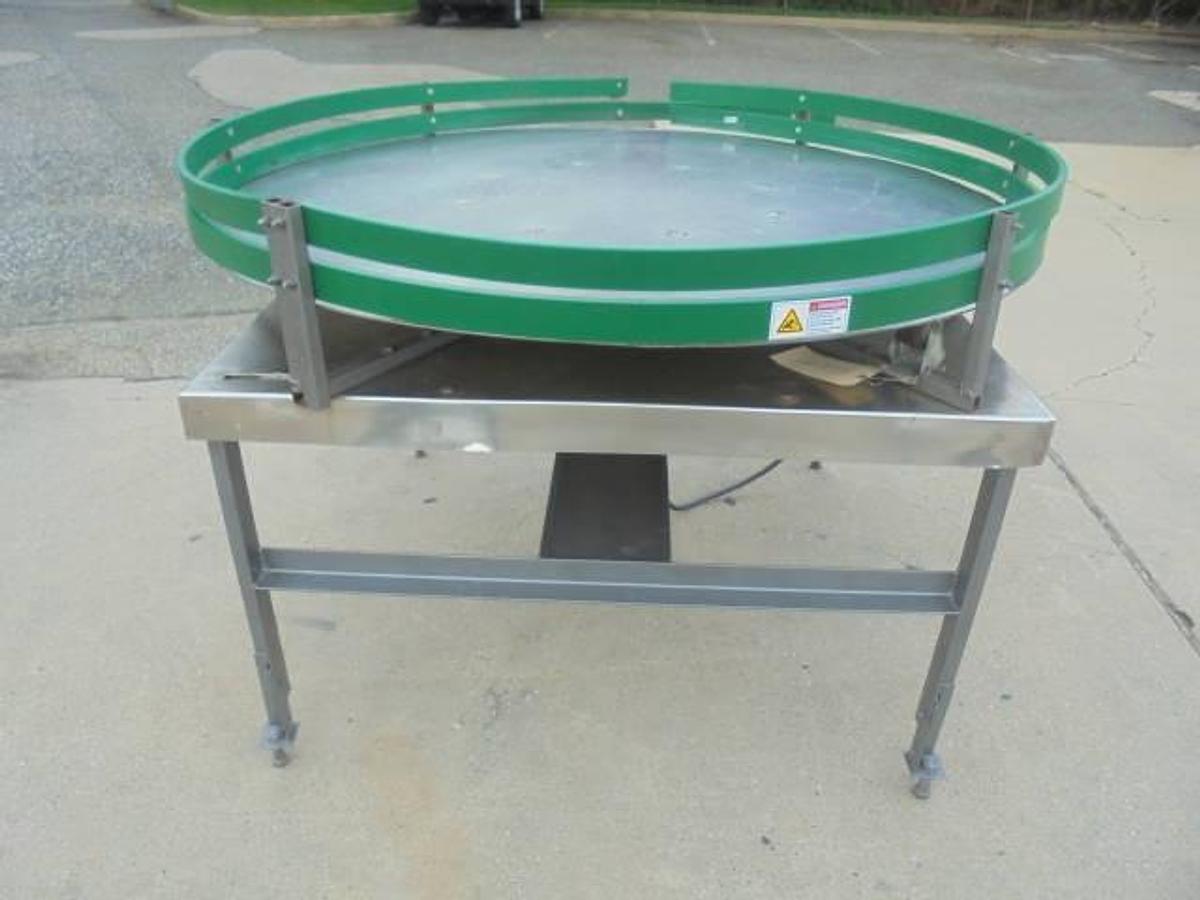
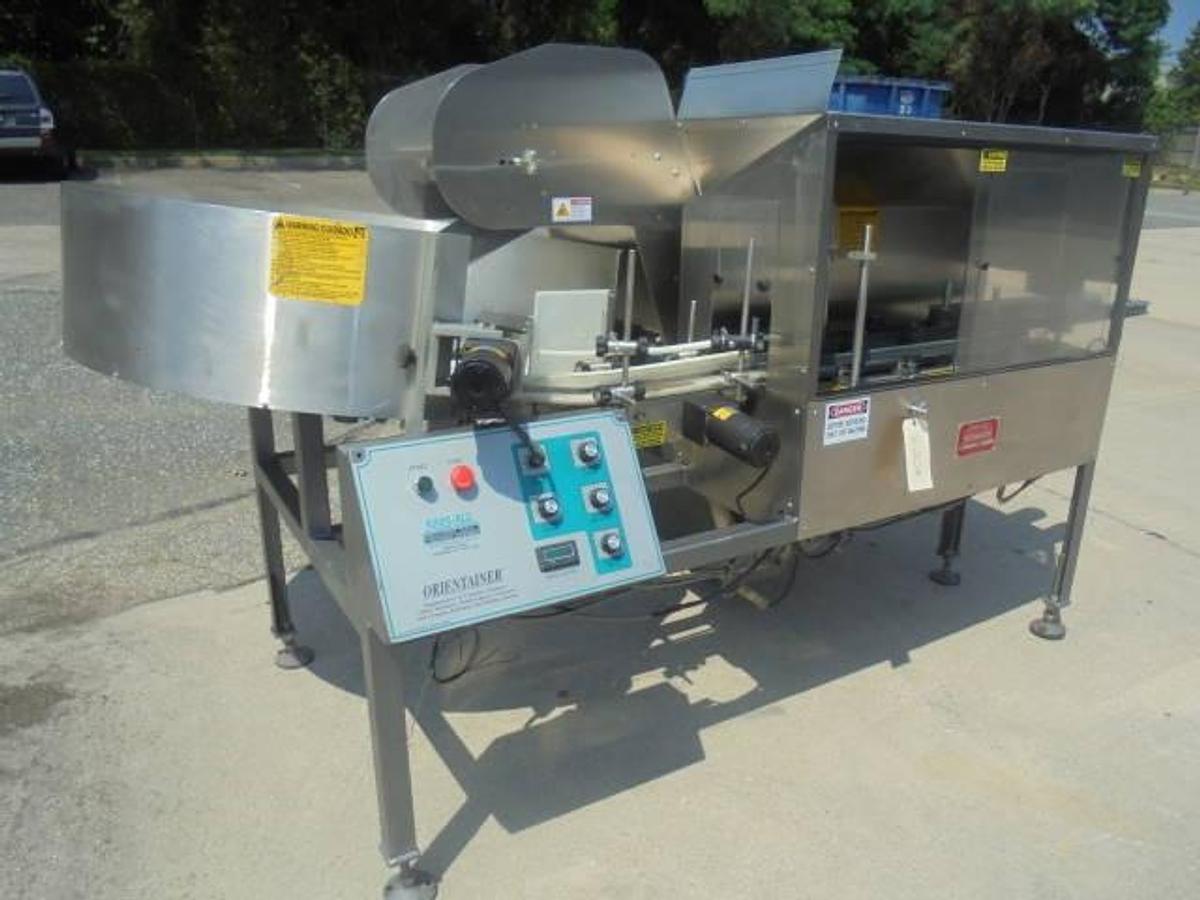
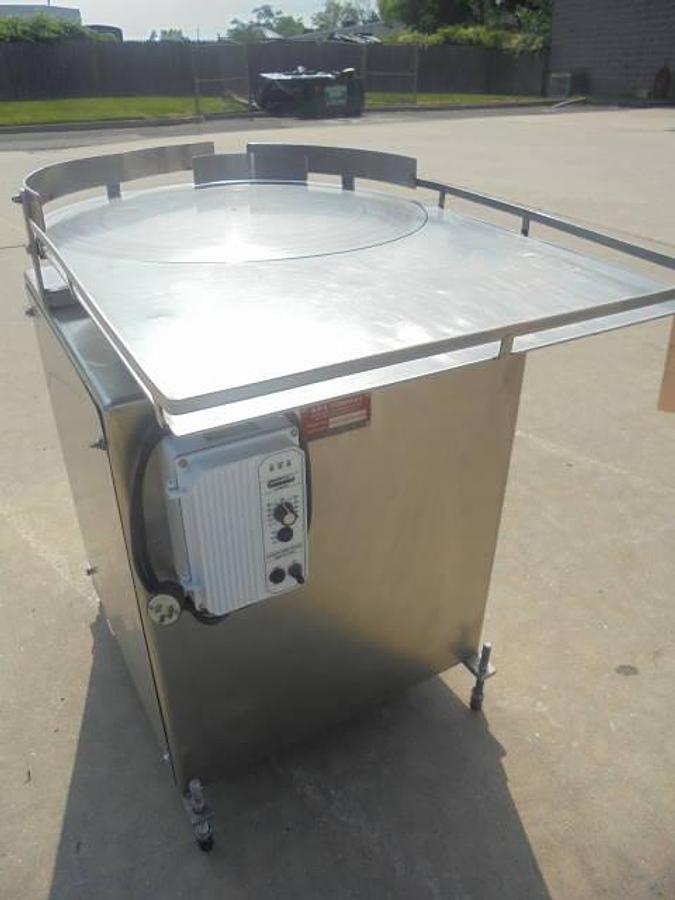
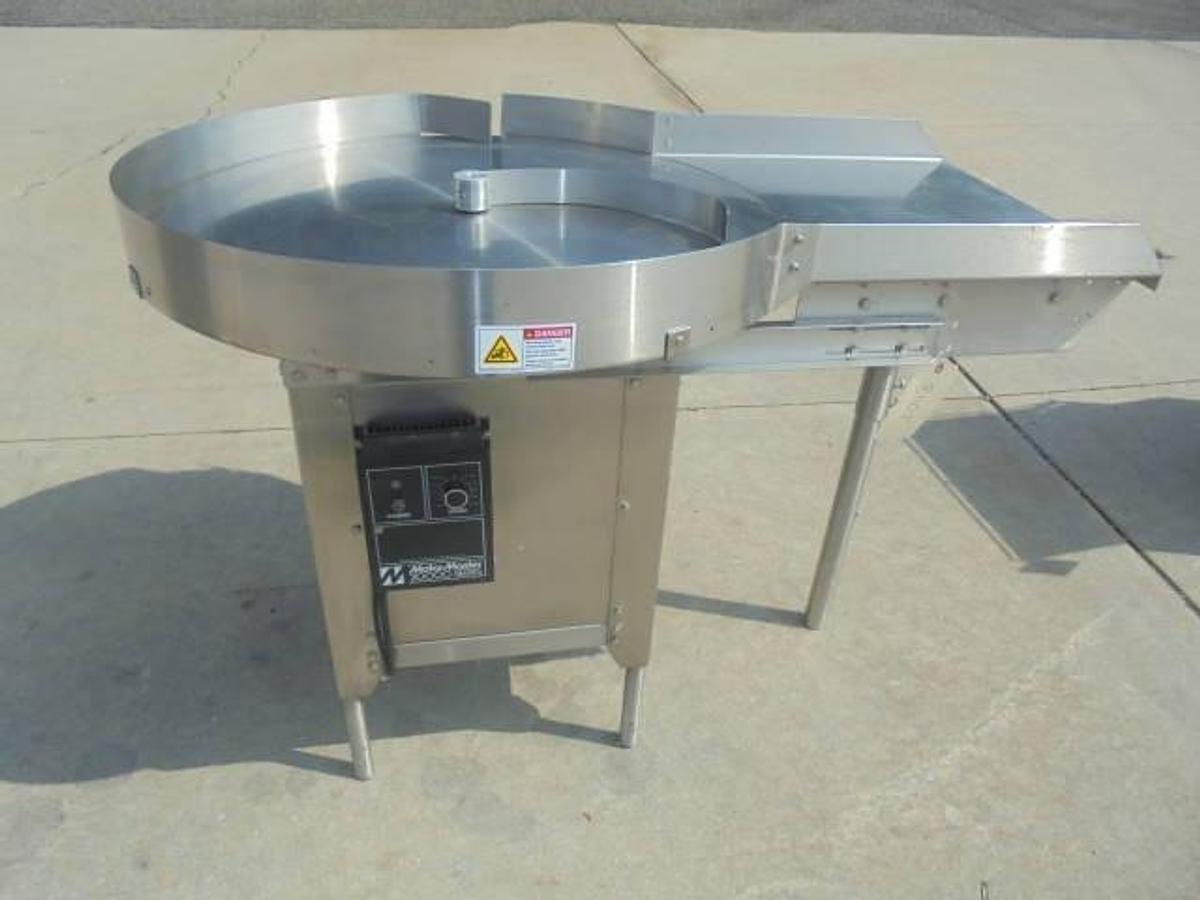
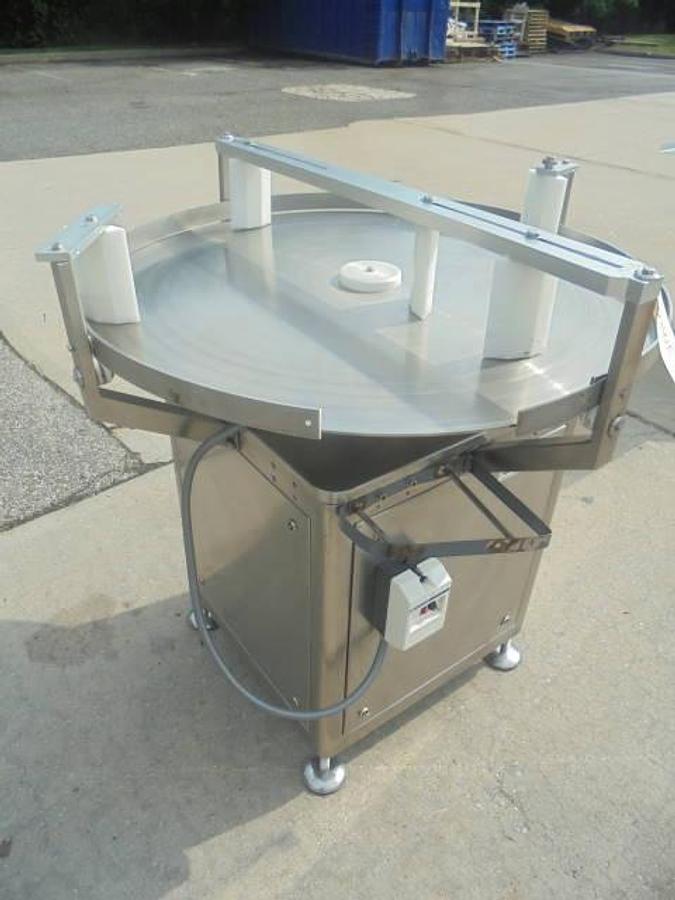
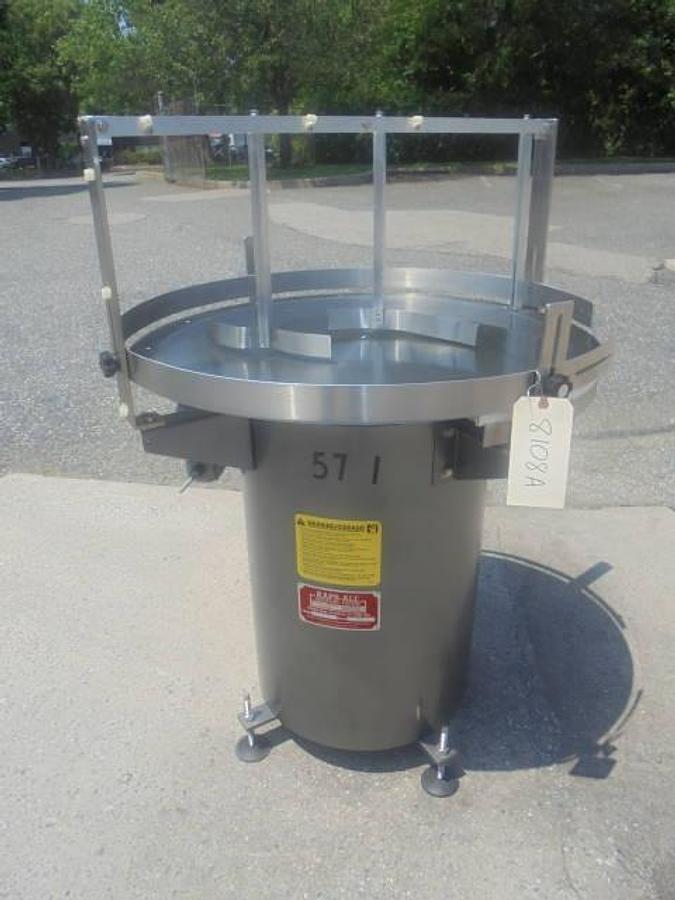
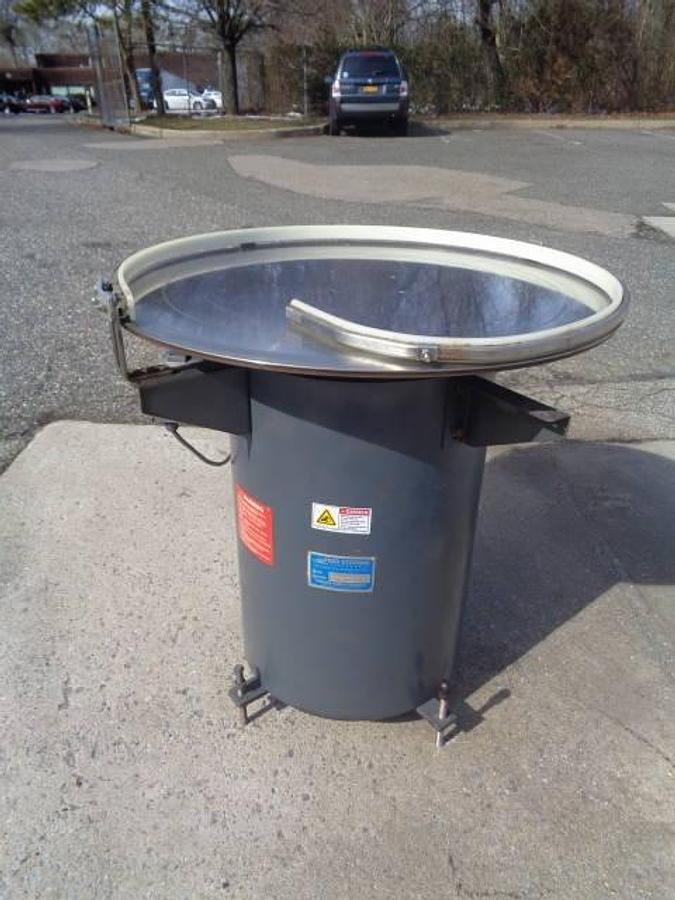
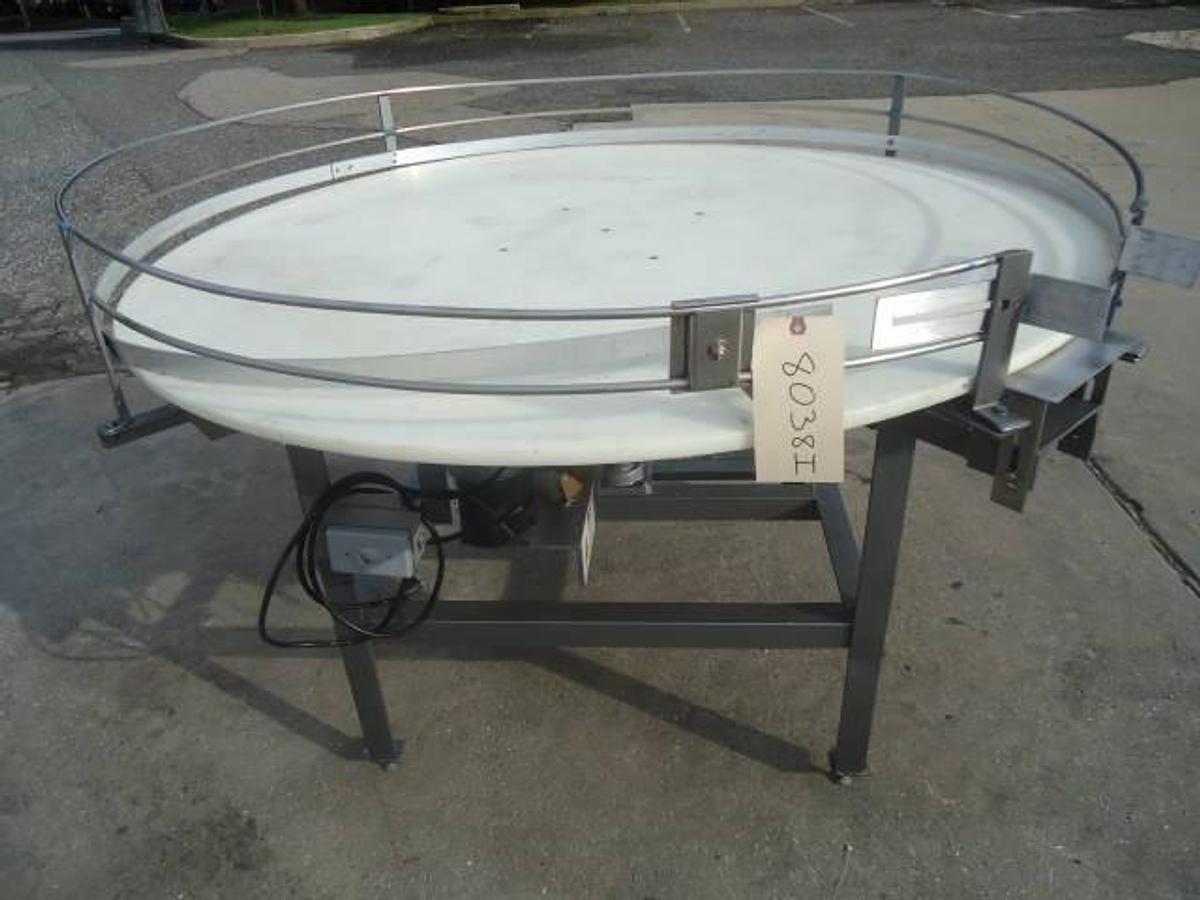
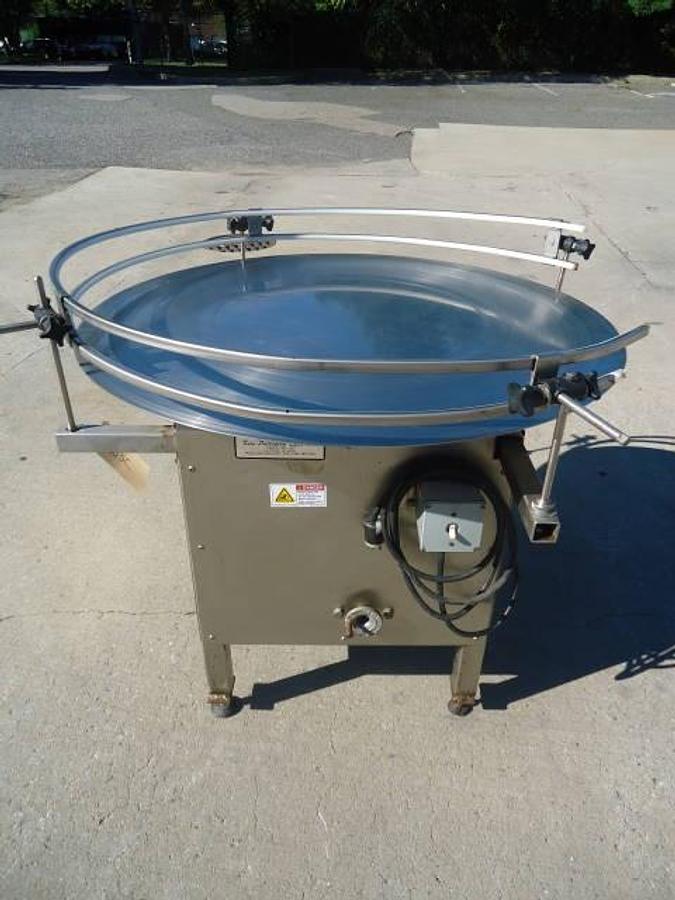
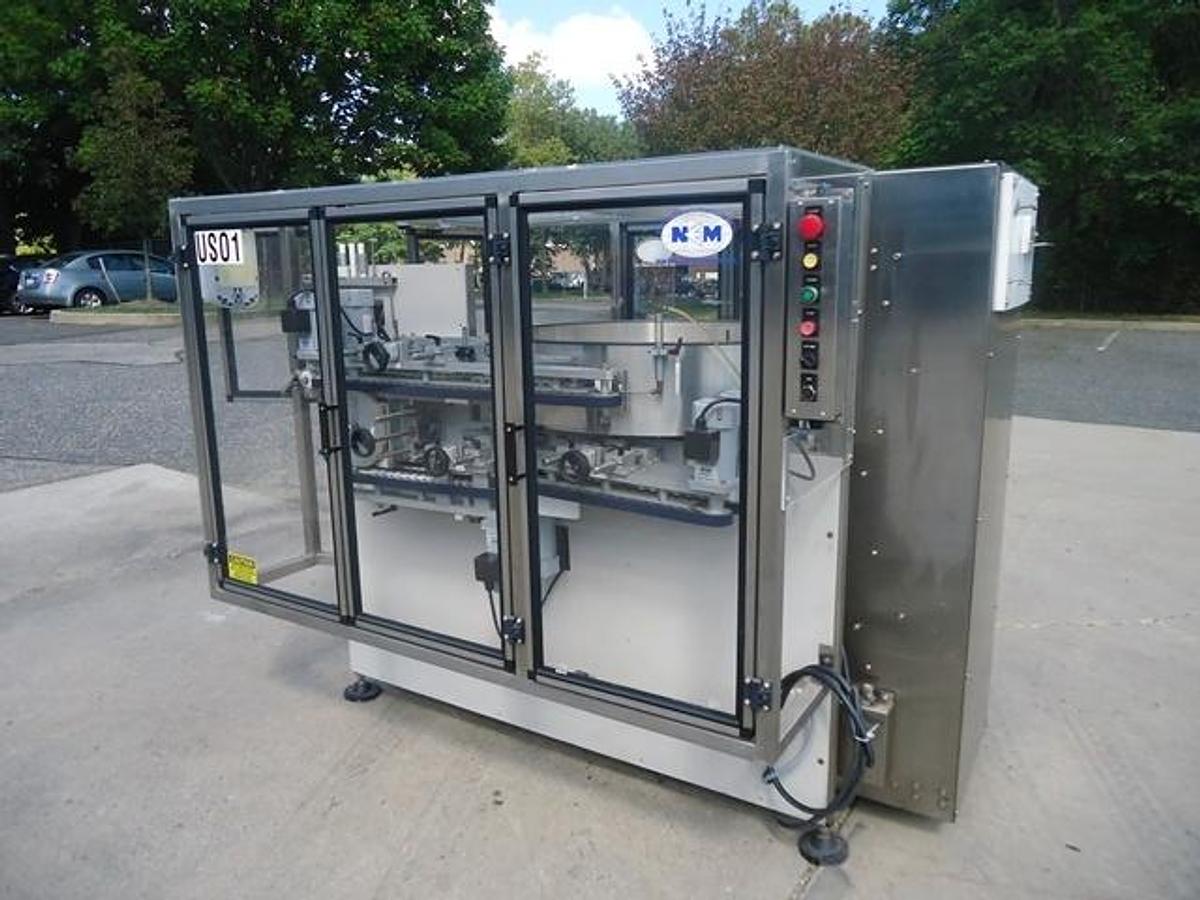
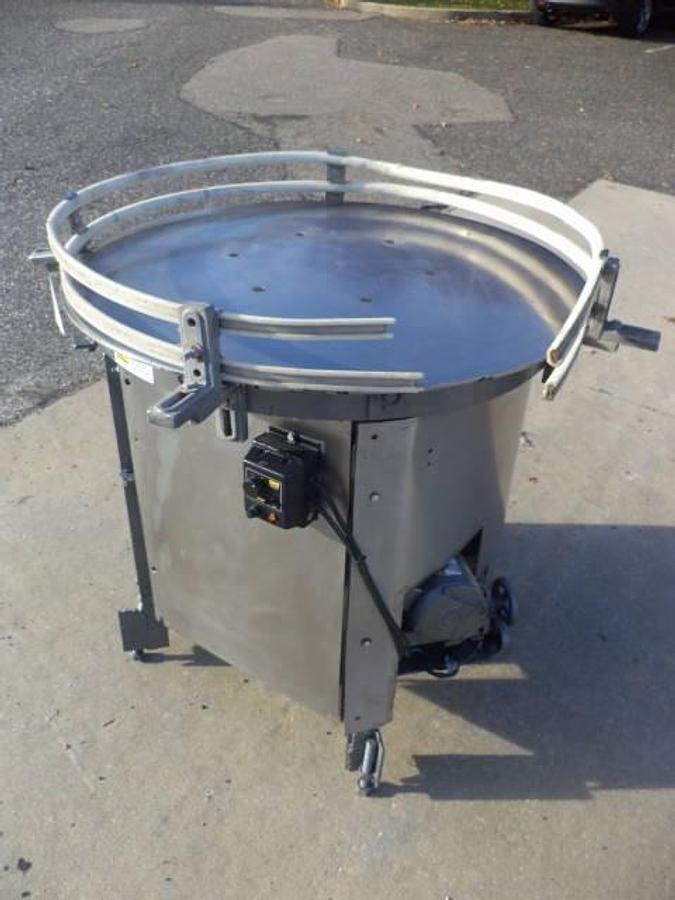
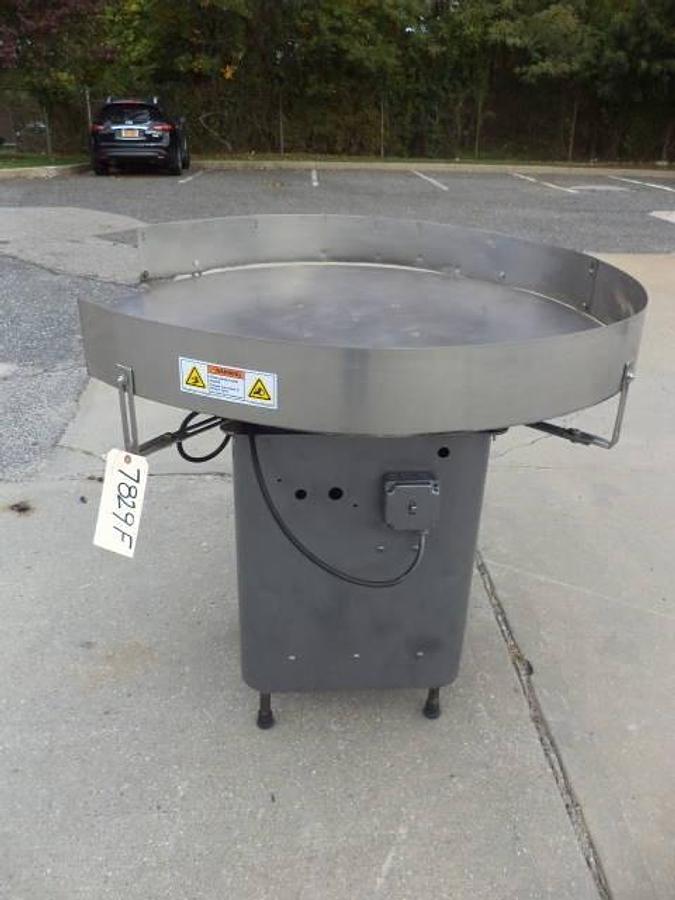
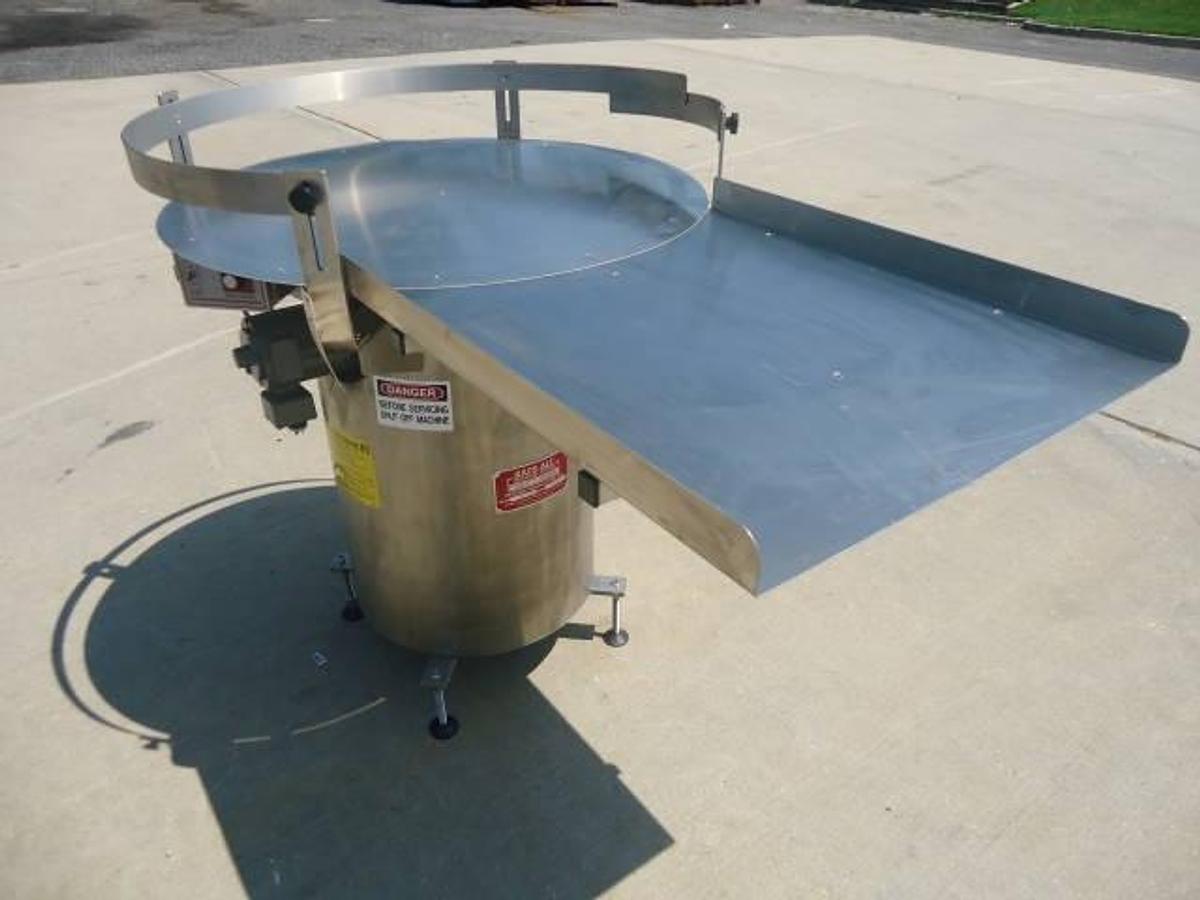
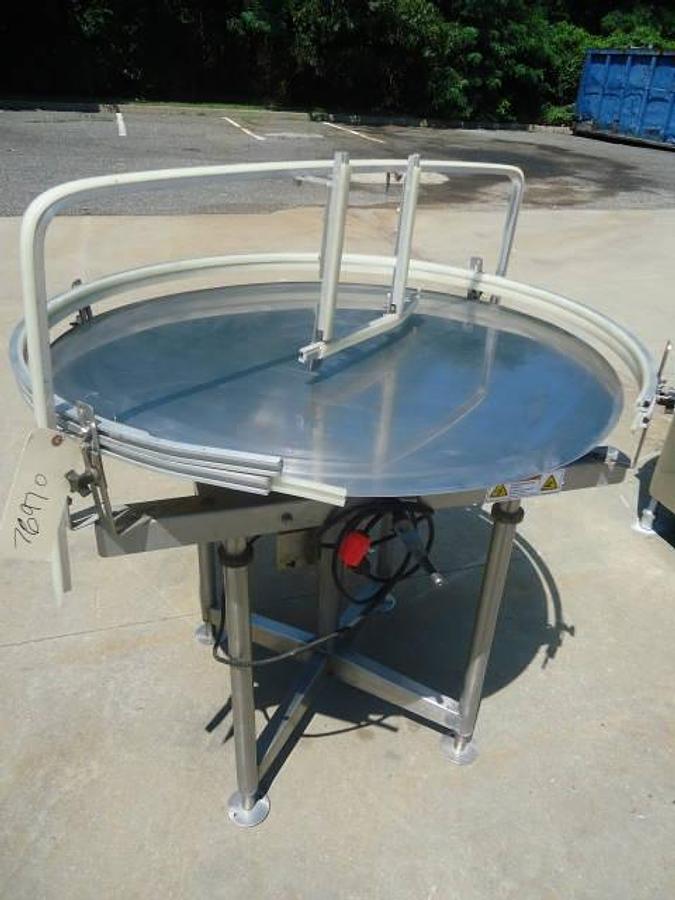
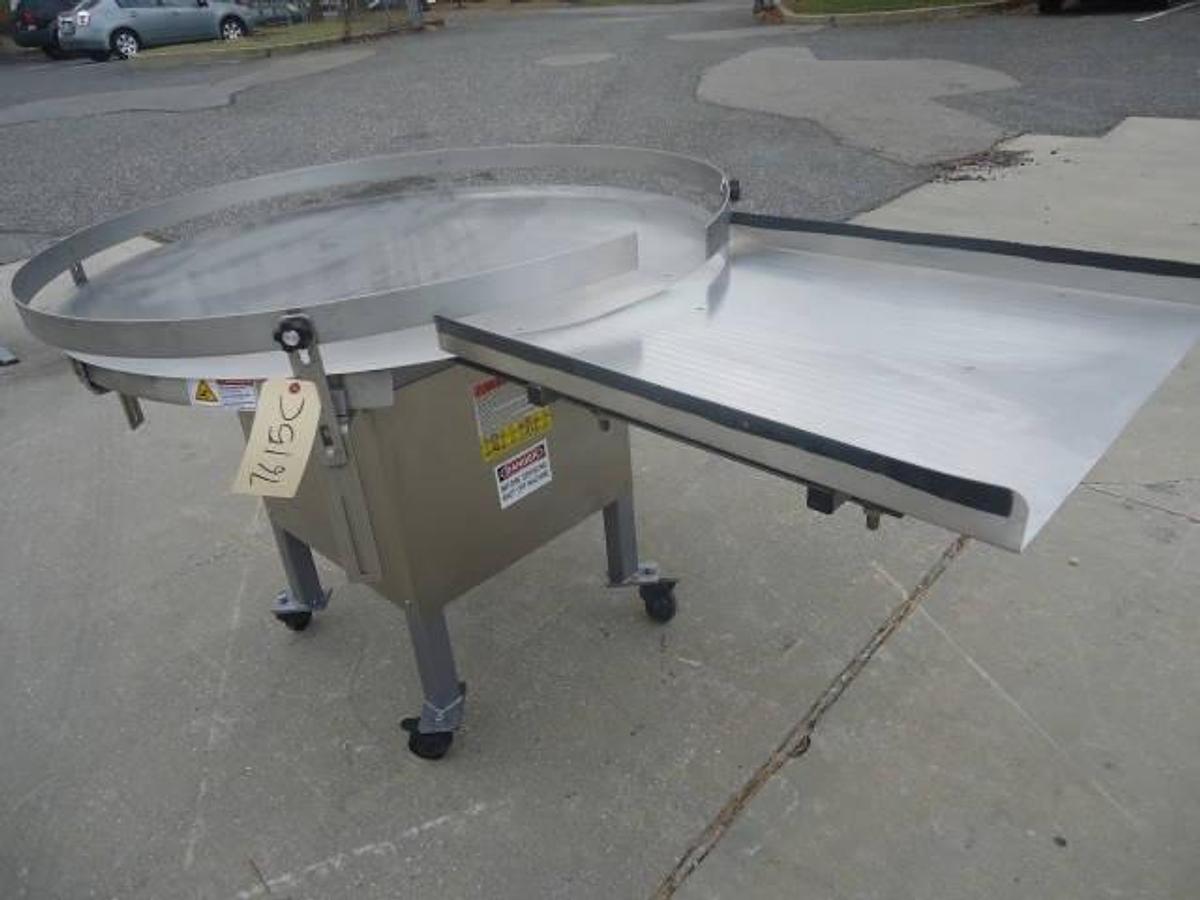
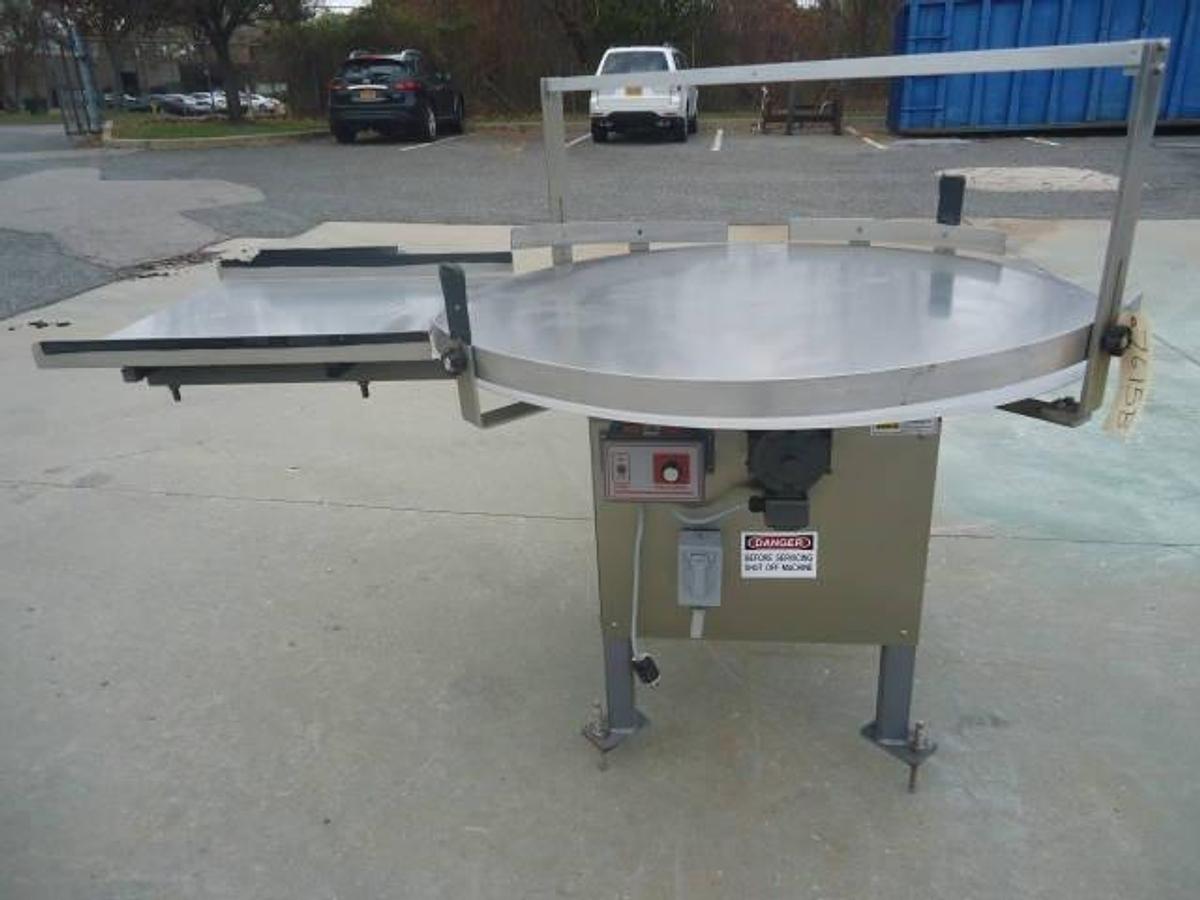
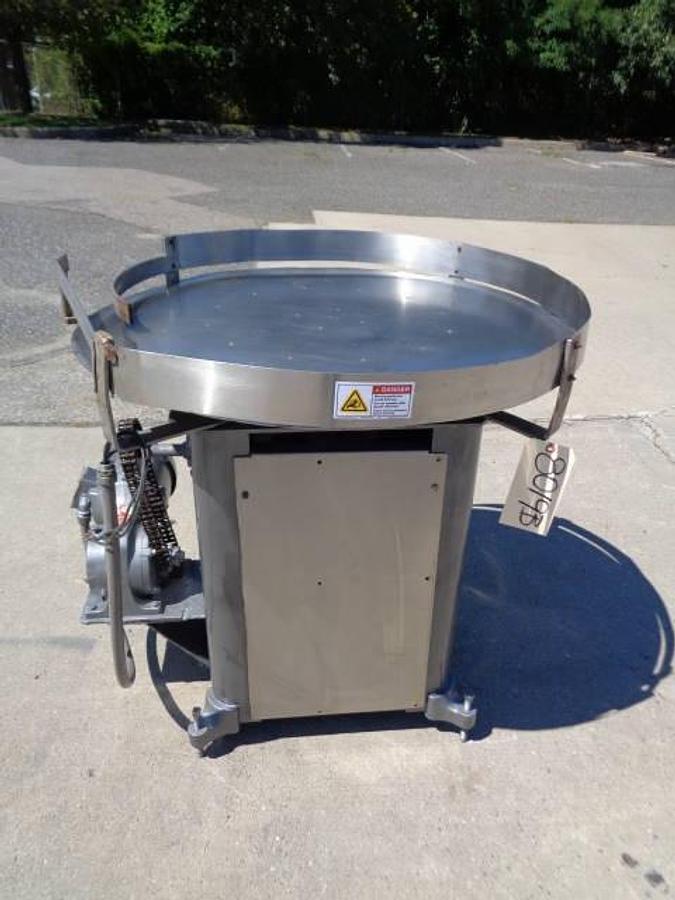
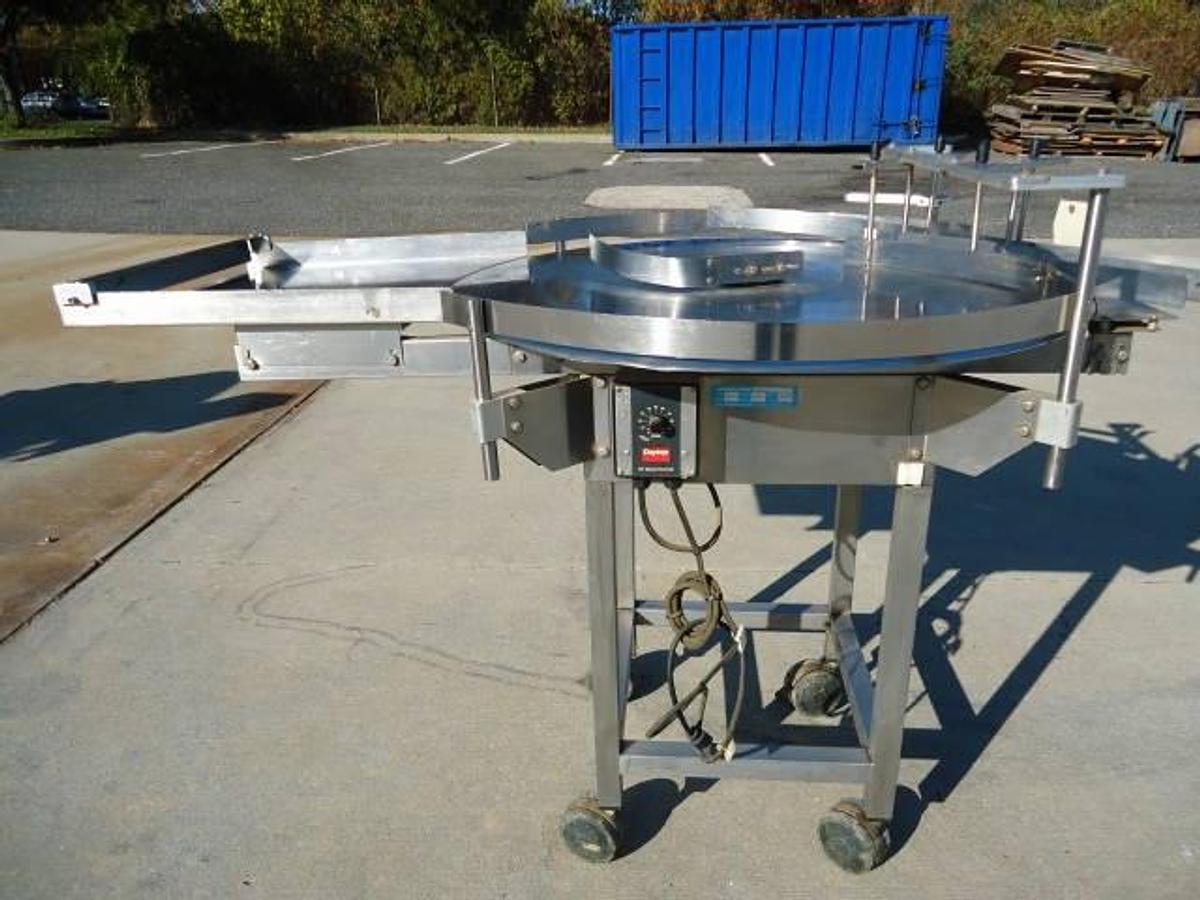
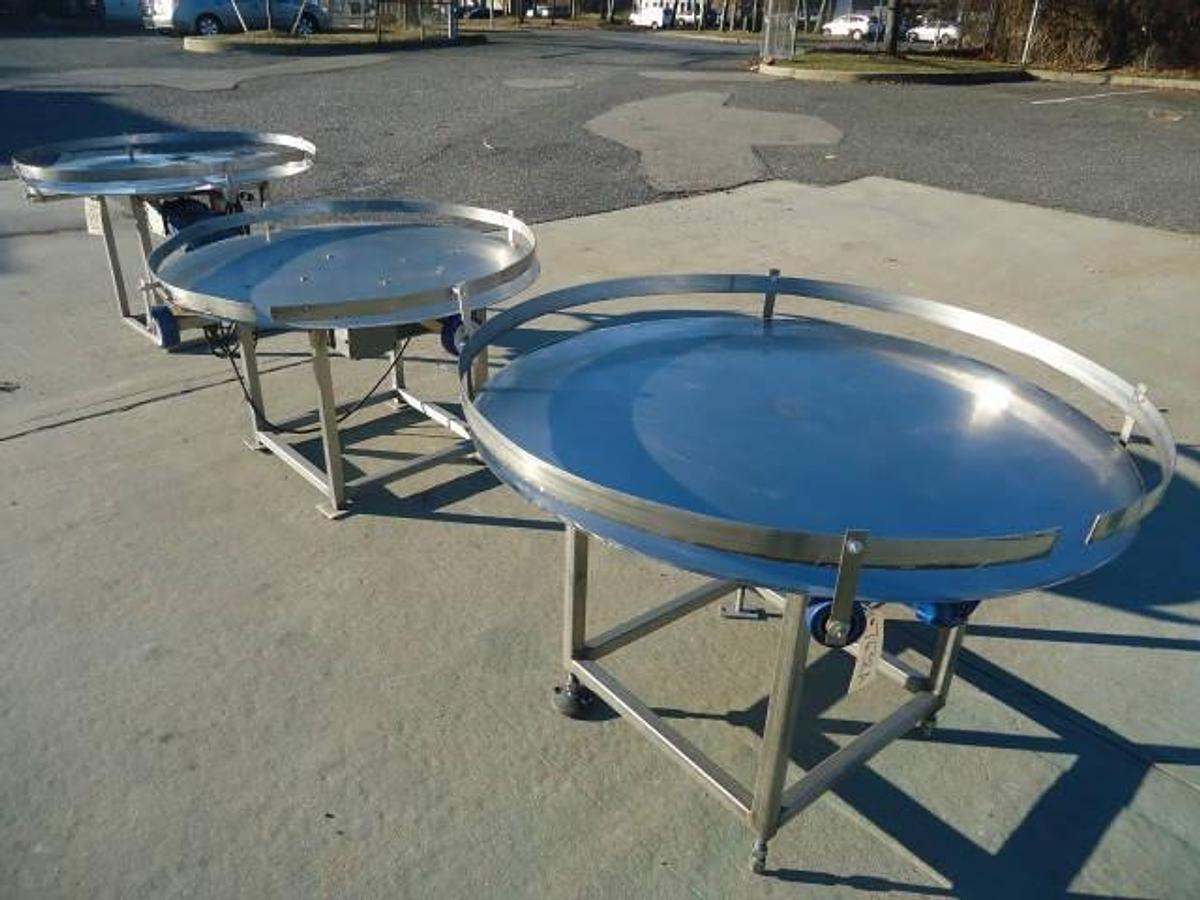
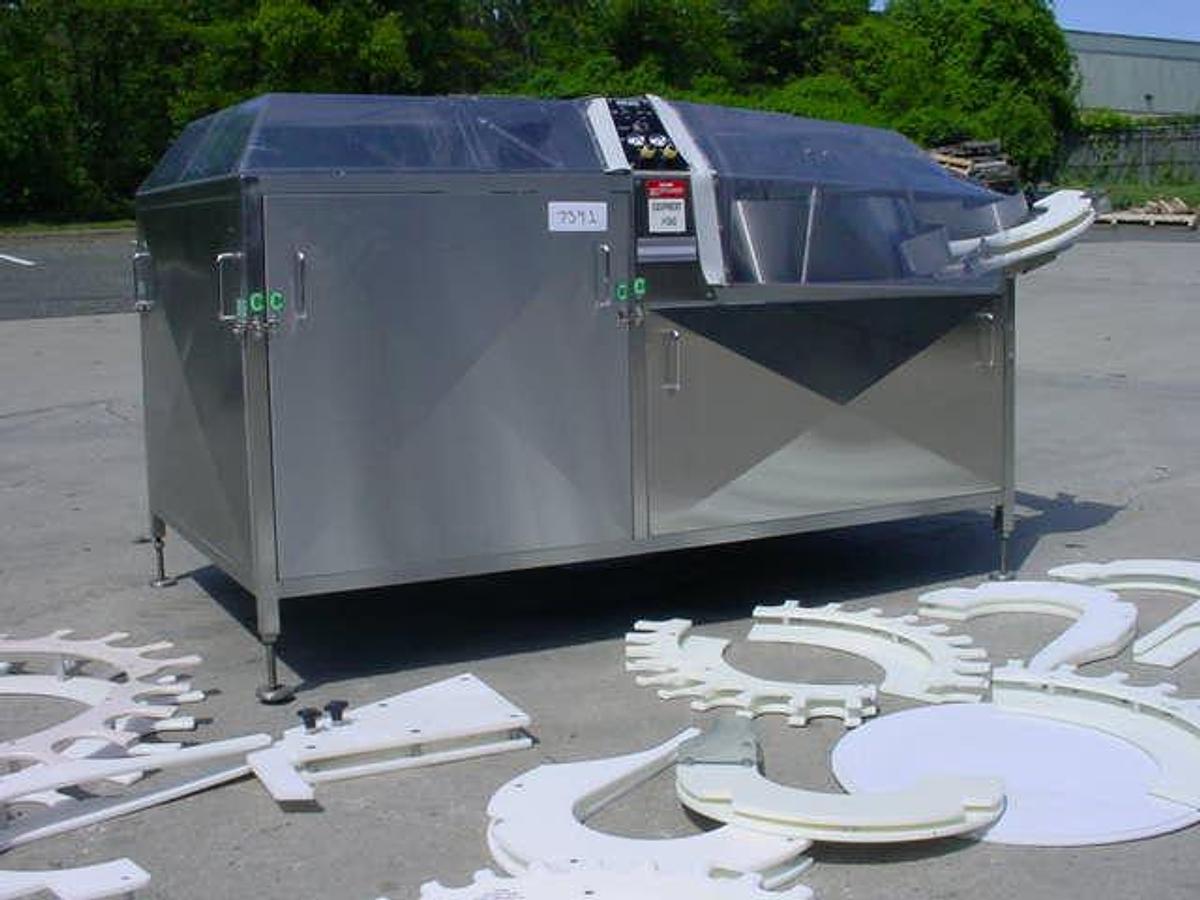
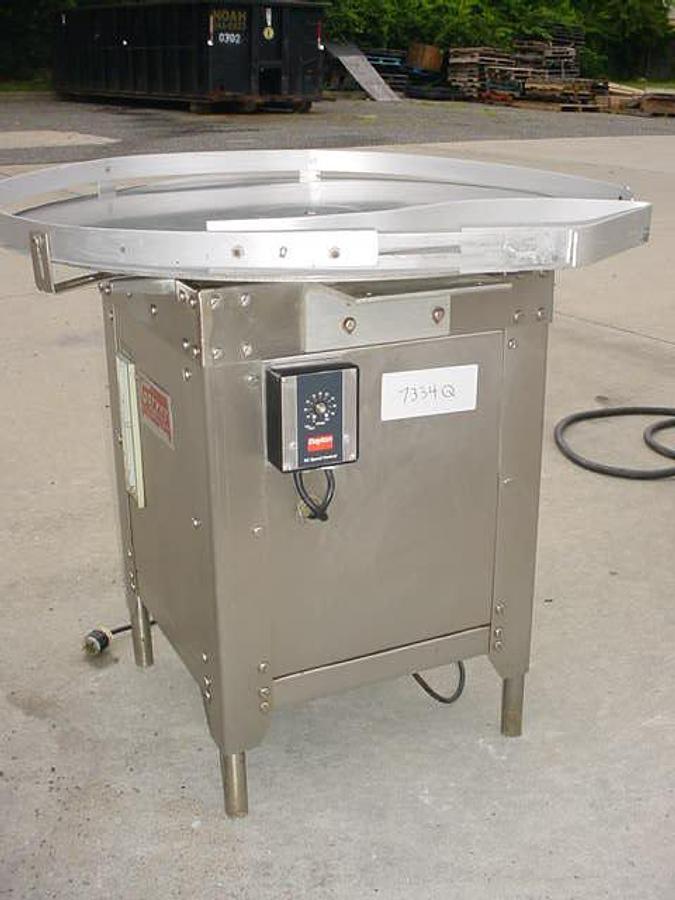
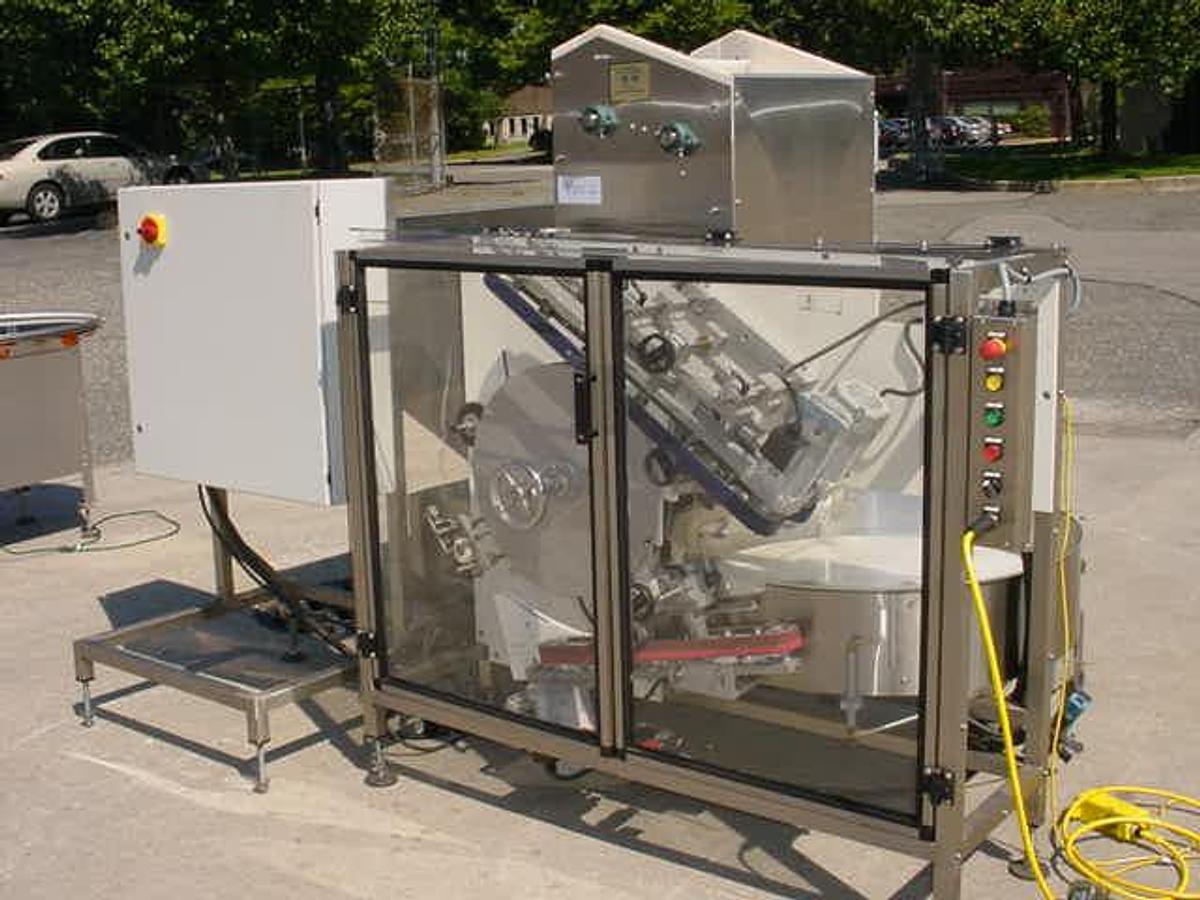
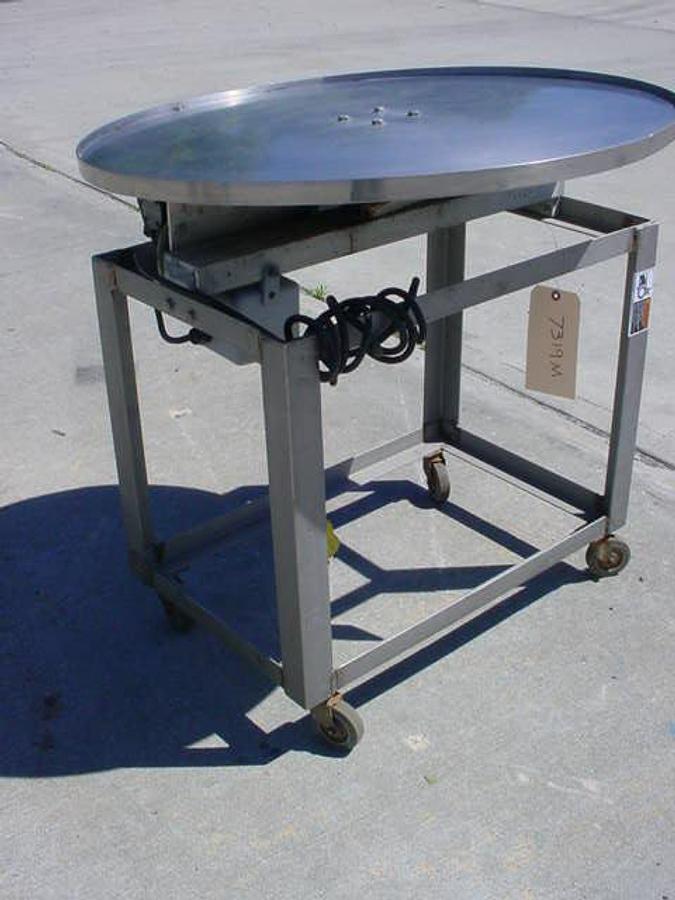
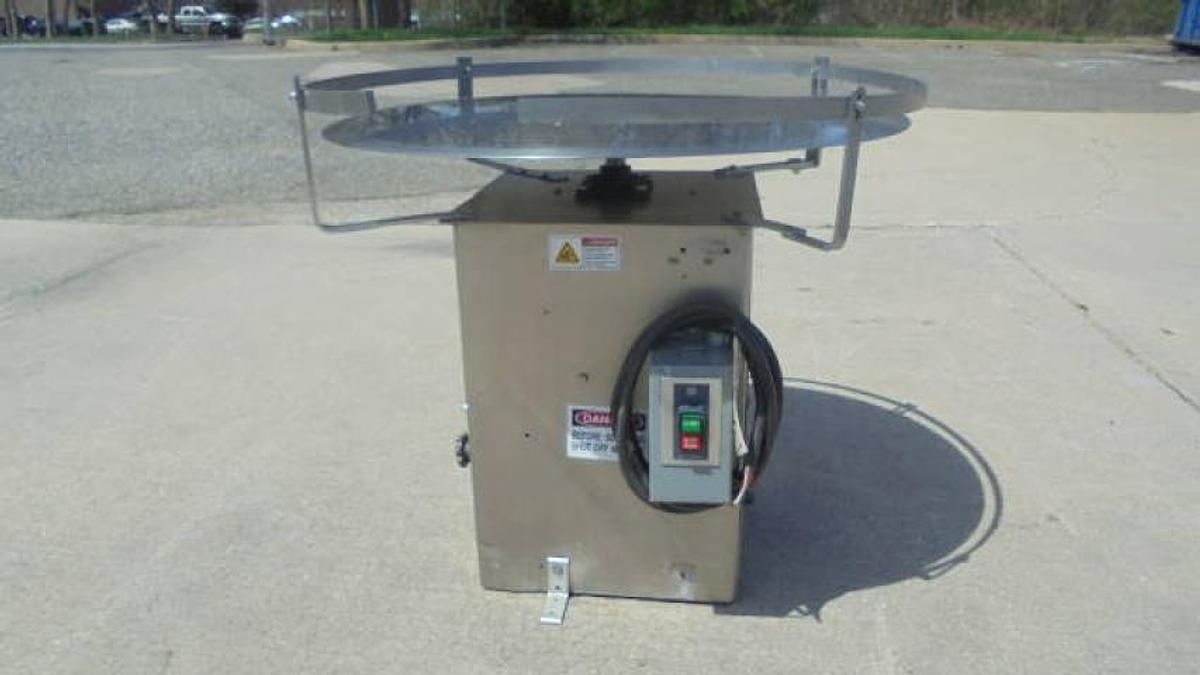
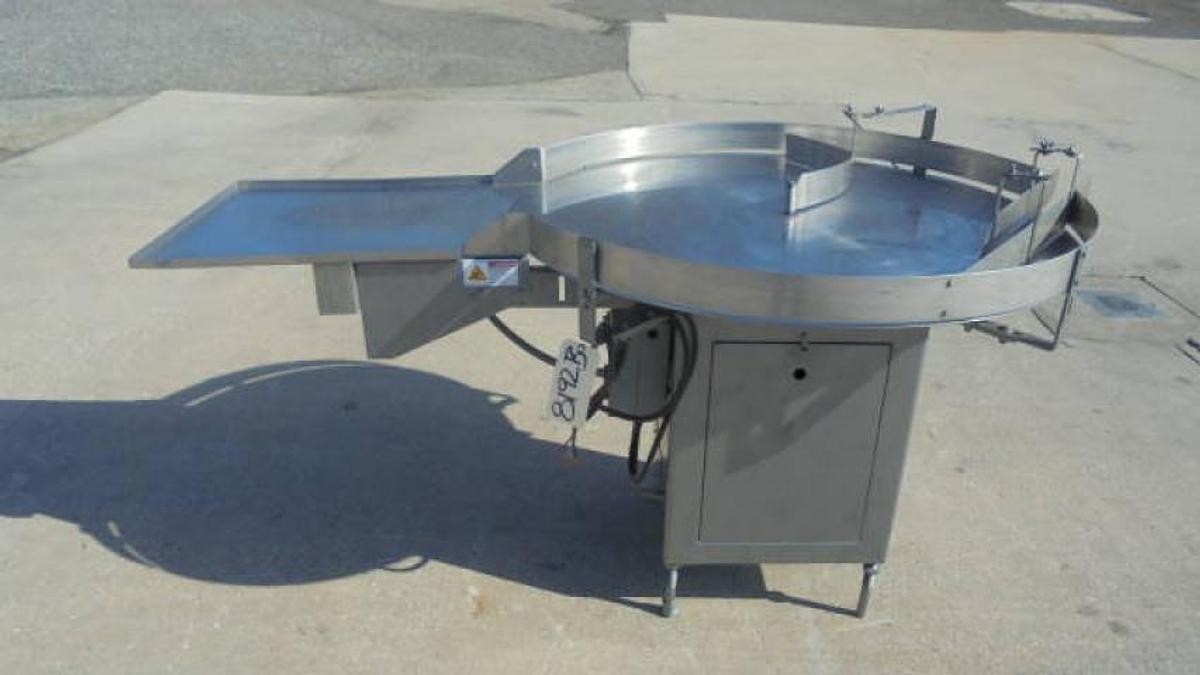
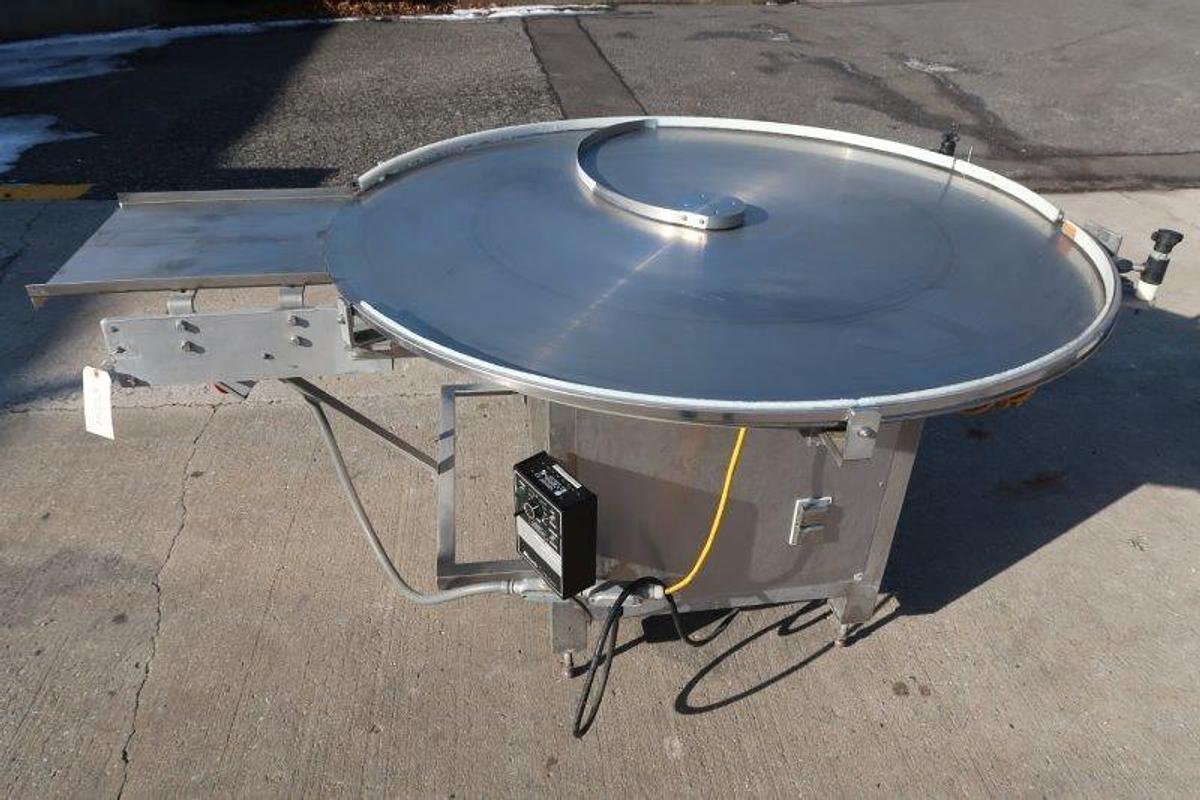
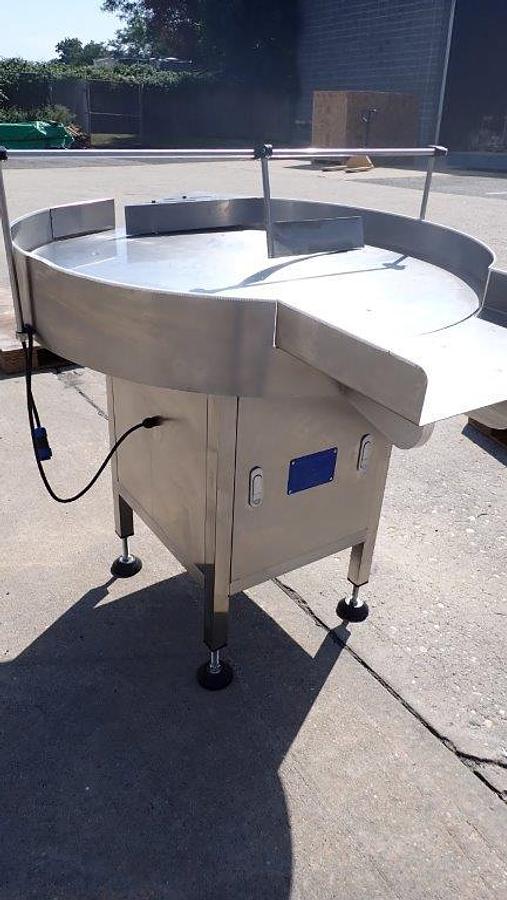
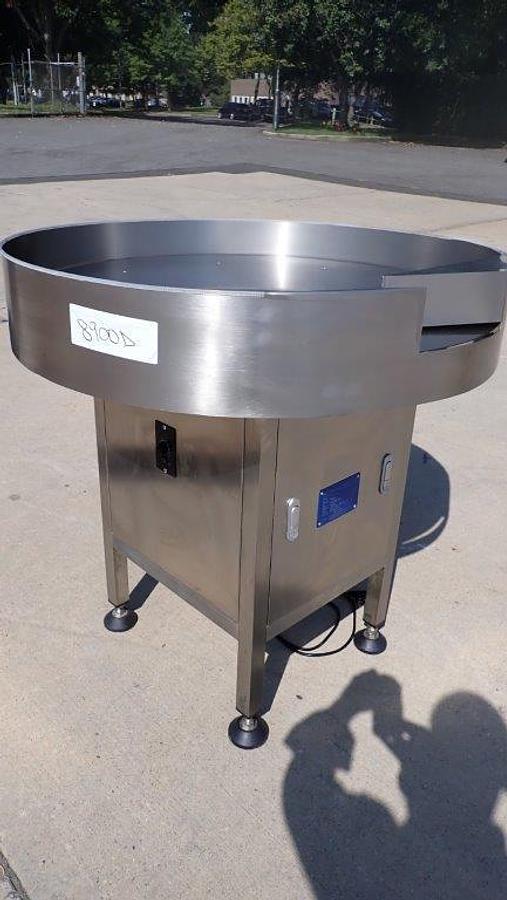
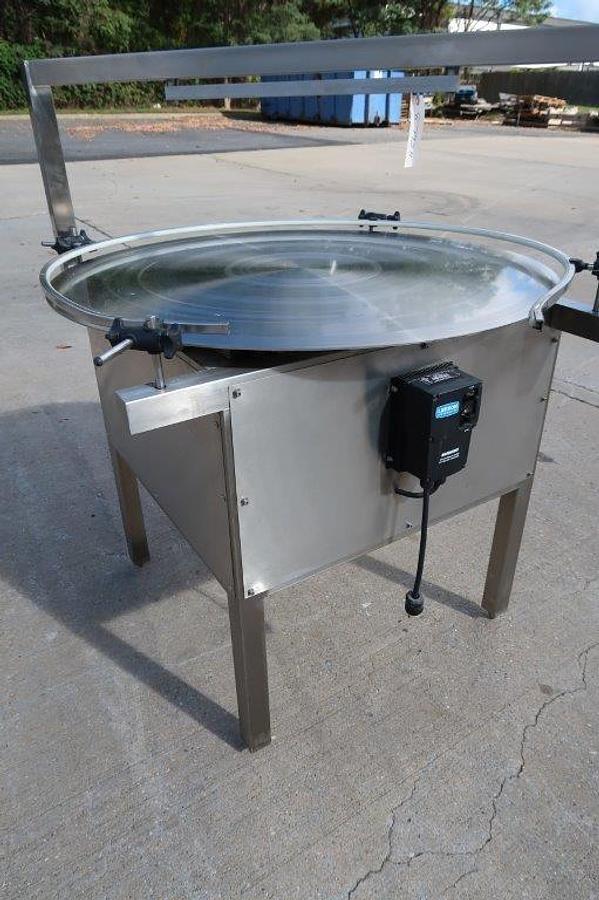
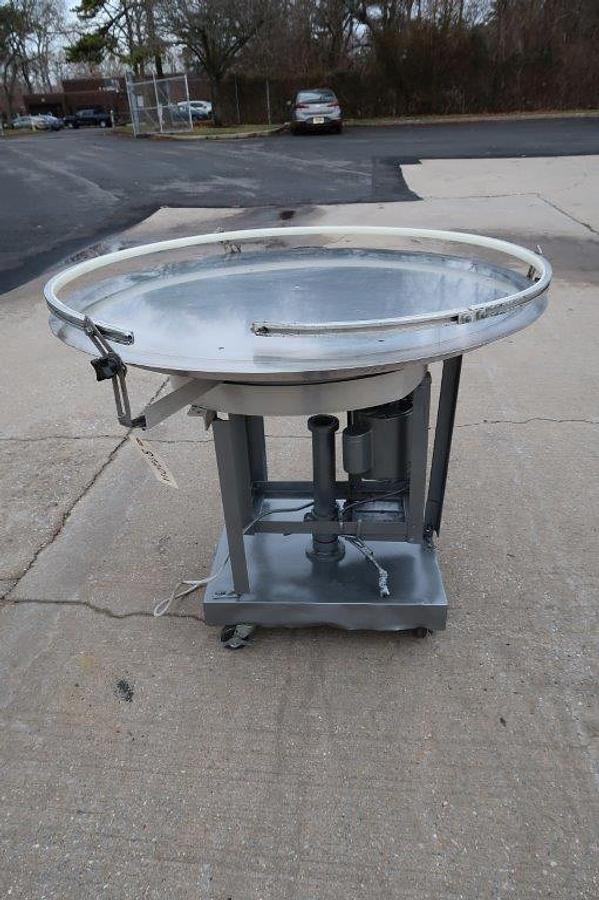
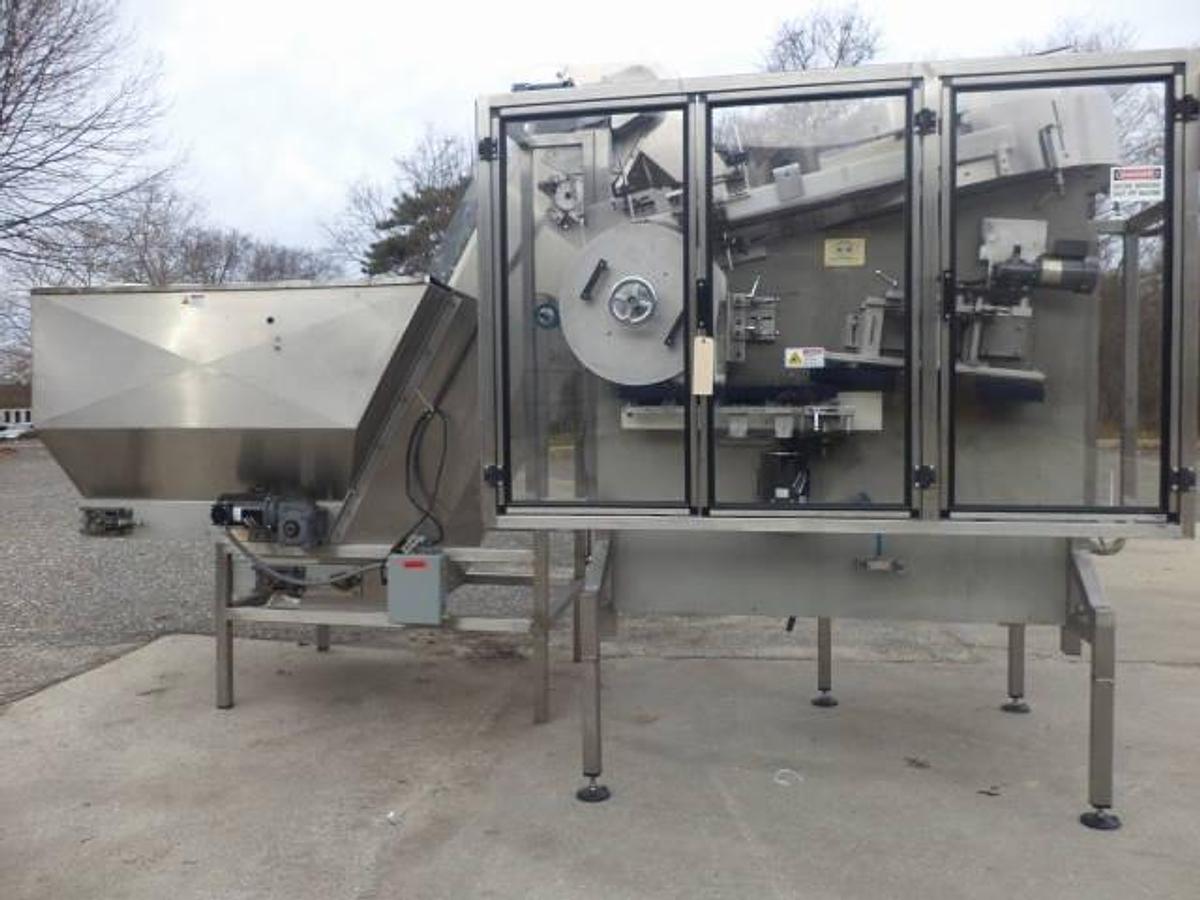
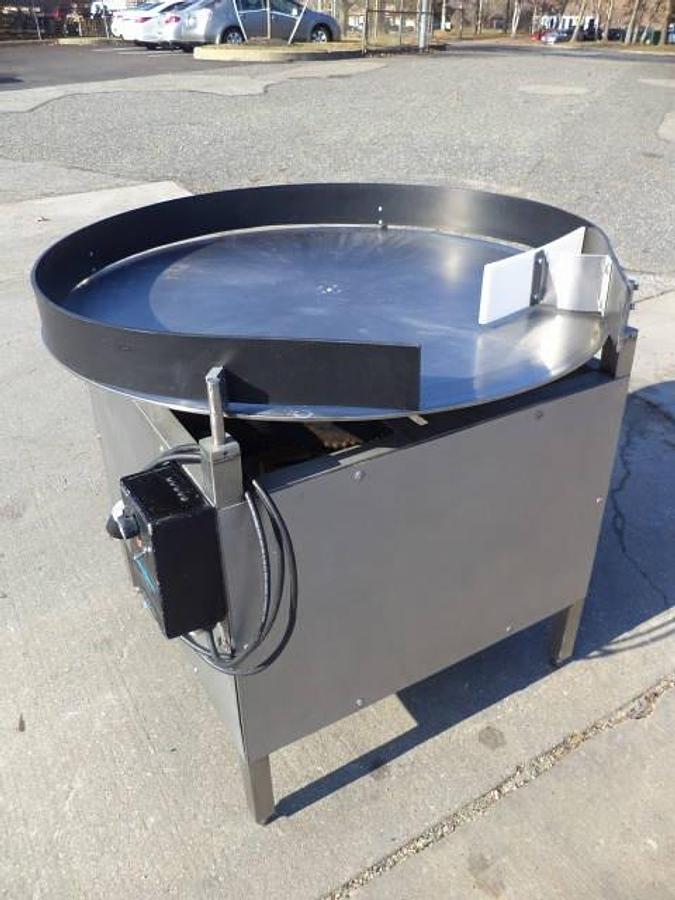
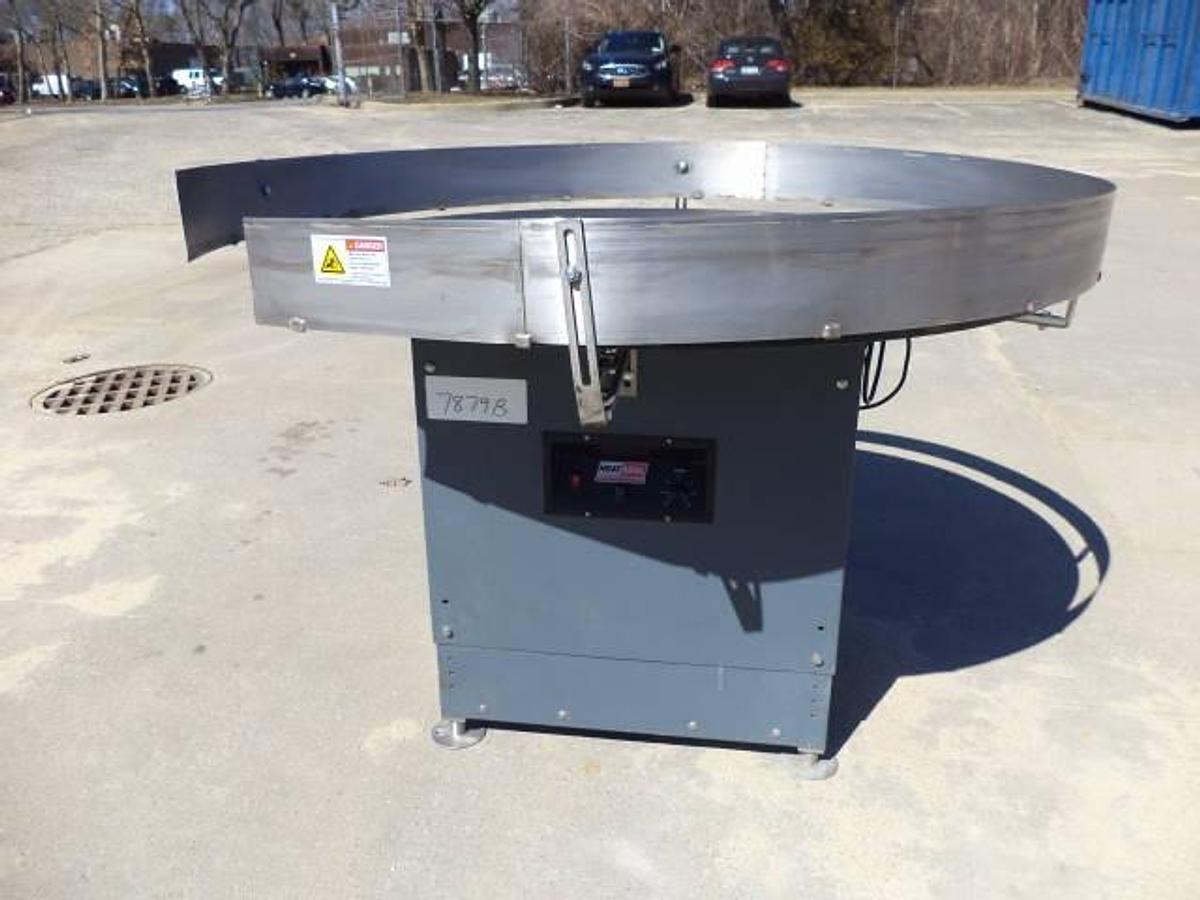
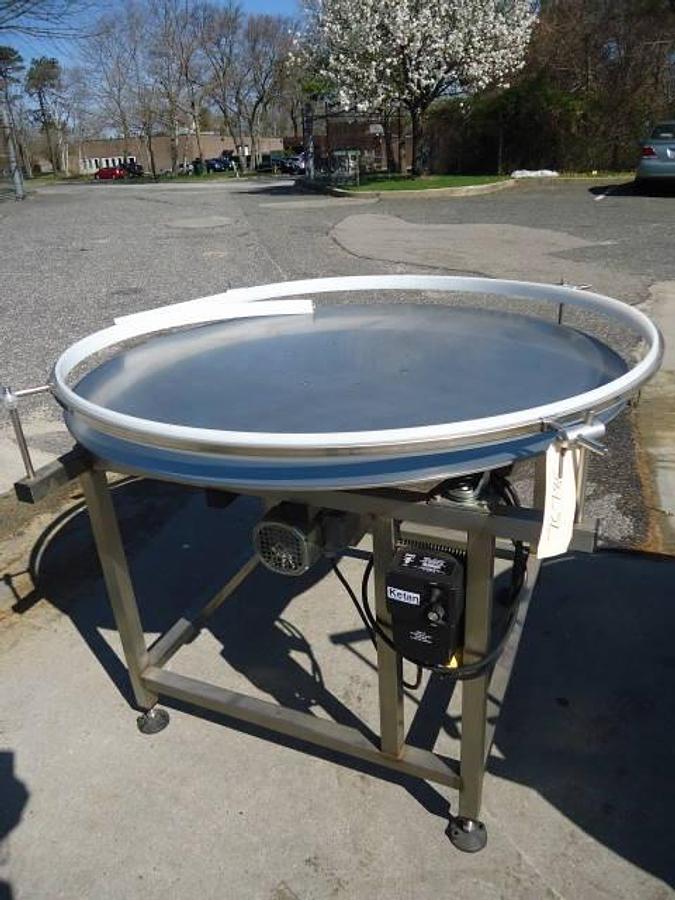
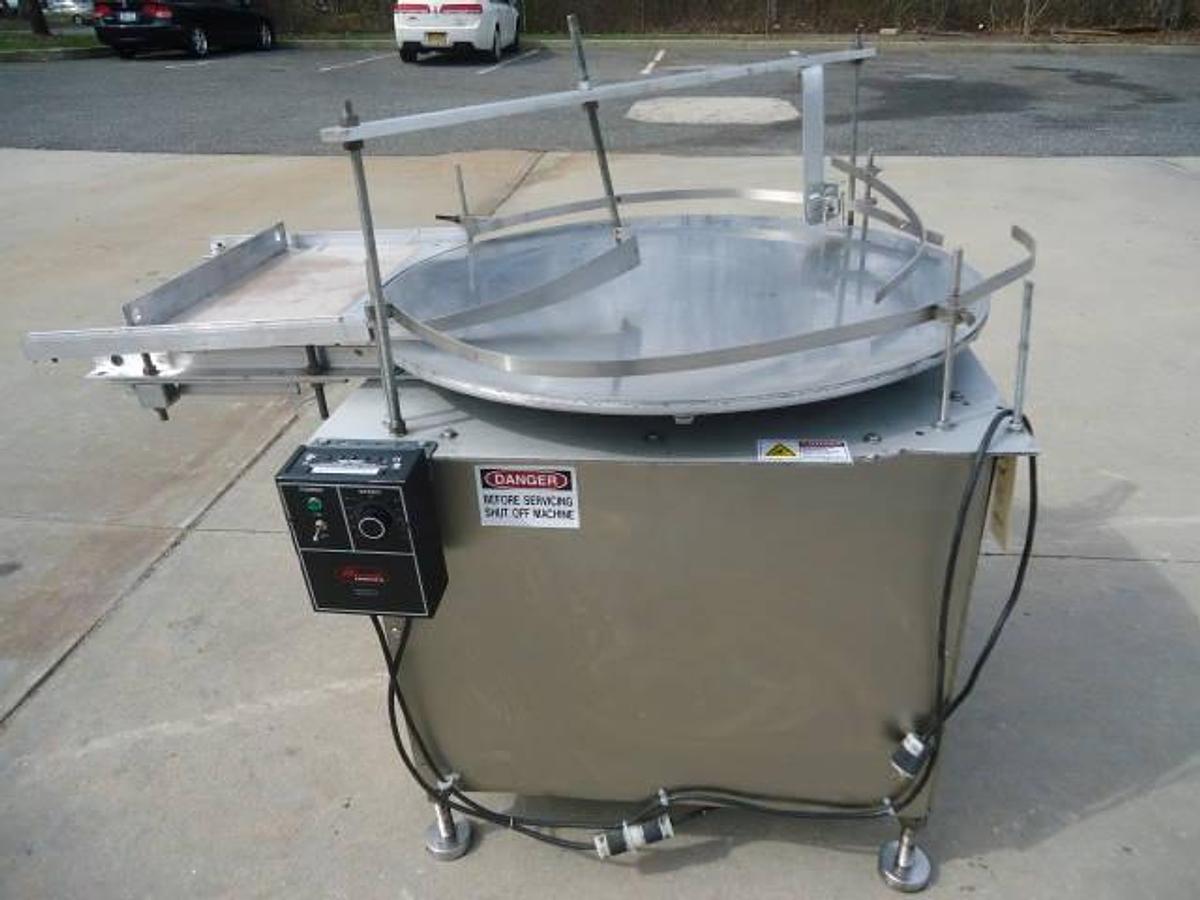
Rotary unscrambling tables and accumulating tables are used to orient or feed bottles on a production line. We are suppliers of used rotary turntables and used accumulation tables for sale. Unscramblers and rotary indexing tables are available in a variety of sizes including 36-inch rotary tables (36” diameter), 40-inch rotary tables (40” diameter), and 48-inch rotary tables (48” diameter). We also stock automatic plastic bottle unscramblers from OMEGA, PACE, KALISH (Kalisort), NEW ENGLAND MACHINERY, and KAPS-ALL.
FAQ :
What is a rotary table unscrambler and how does it work?
A rotary table unscrambler is a piece of packaging line equipment designed to orient and singulate containers, typically bottles, jars, or vials, so they can be fed in a consistent, upright, single-file stream to downstream equipment like fillers, cappers, and labelers. The table itself is a rotating disc that uses centrifugal force and guide rails to move randomly placed containers outward toward the perimeter, where a discharge lane or unscrambling shelf catches them and aligns them for the conveyor.
Some models, often called accumulating tables, serve a dual purpose: they act as a buffer zone that holds a supply of containers and feeds them steadily into the line, smoothing out any upstream irregularities in container flow. Automatic bottle unscramblers take this a step further by mechanically righting tipped or inverted containers using starwheels, elevators, or air-assist mechanisms before releasing them onto the line. Depending on the model and container size, these machines can process anywhere from roughly 100 to 500 or more containers per minute. The rotational speed is typically adjustable, which is why variable speed (varispeed) drives are a common and desirable feature on both used and current-production models.
What size rotary table unscrambler do I need for my production line?
Table diameter is the primary sizing consideration, and it directly affects how many containers the table can hold in reserve at any given moment. Smaller diameter tables, such as 24-inch or 28-inch models, are suited for compact lines running smaller containers at moderate speeds. Mid-range tables in the 36-inch to 42-inch range are among the most common and work well for a broad variety of standard bottle sizes in pharmaceutical, nutraceutical, and consumer goods applications. Larger 48-inch, 60-inch, and even bigger tables are used on high-volume lines or when the containers themselves are large enough that a smaller table would cause jams or inadequate accumulation.
Beyond diameter, buyers should factor in the container's own dimensions, specifically its base diameter and height, since these determine whether the table's guide rail and discharge lane geometry is compatible. Motor horsepower and RPM range also matter, particularly for heavier containers or high-speed applications. When evaluating used equipment, it is worth confirming whether the machine includes existing tooling or change parts for the specific container sizes you plan to run, because sourcing additional tooling separately adds cost and lead time. Used rotary tables are available in a wide range of sizes, with common options including 32-inch, 36-inch, 40-inch, 42-inch, 48-inch, and 60-inch diameter models from manufacturers such as Kaps-All, Packaging Dynamics, E-PAK, Garvey, Globaltek, and others.
What types of containers can a rotary table unscrambler handle?
Rotary unscrambling and accumulating tables are most commonly used with round plastic bottles, which is why so many machines in the used market are described specifically as plastic bottle unscramblers. That said, many rotary tables can handle glass bottles, jars, and other rigid containers, provided the container's base diameter and height fall within the machine's specified range and the guide rail geometry is set up correctly. Container stability is a key factor: tall, narrow containers with a high center of gravity are more prone to tipping, which is why some machines include an unscrambling shelf or a low-friction surface coating to reduce that risk.
Automatic bottle unscramblers, such as those made by Kaps-All, New England Machinery, OMEGA, PACE, and Kalish (Kalisort), are specifically engineered to handle containers that may be inverted or on their side when loaded into the machine, and they use mechanical or pneumatic systems to right the containers before discharge. These machines are particularly common in pharmaceutical, nutraceutical, and personal care packaging environments where consistent upright orientation is critical before filling. When buying a used unscrambler, it is important to confirm the container size range the machine was configured for and whether change parts for other container formats are included, since a machine set up for a 2-ounce round bottle will need adjustment or new tooling to run a 32-ounce wide-mouth jar.
What brands of used rotary table unscramblers are most commonly available and well-regarded?
Several manufacturers have built strong reputations in the rotary unscrambling and accumulating table segment, and their equipment tends to hold up well in the used market because of solid construction and the availability of parts and technical knowledge. Kaps-All is one of the most frequently seen brands in the used market, with models ranging from compact accumulating tables to fully automatic unscramblers like the AU-3S and AU-6 series. New England Machinery produces well-regarded automatic bottle unscramblers including the NEHCL-100, NEHCP-36, and NEHA-48 models. Kalish, known for its Kalisort line, OMEGA, and PACE are also established names in automatic plastic bottle unscrambling.
On the rotary table side, brands like Packaging Dynamics, Globaltek, E-PAK, Garvey, Accutek, Apacks, Aesus Systems, Pharmafill, and Furex appear regularly in the used equipment market. Stainless steel construction is a significant value factor, particularly for pharmaceutical, food, and beverage applications where sanitary standards are strict. Variable speed drives are another feature worth prioritizing, as they give operators flexibility to match table speed to line speed without mechanical adjustments. When considering any used brand, it is advisable to contact the manufacturer directly to ask about parts availability and technical support for the specific model and serial number, since older or discontinued models may have limited support regardless of brand reputation.
How do I verify the condition of a used rotary table unscrambler before purchasing?
Condition verification is one of the most important steps in buying any used packaging machinery, and reputable dealers will typically offer multiple inspection options to help buyers assess what they are getting. In-person inspections are the most thorough approach and allow a buyer or their technician to physically examine the table surface, motor, drive components, guide rails, and electrical panel for wear, damage, or missing parts. Many dealers also offer video inspections or recorded walkarounds as an alternative for buyers who cannot travel, and these can be very effective for evaluating cosmetic condition and confirming that major components are present.
It is worth noting that most used equipment dealers do not have production facilities, so functional run tests using actual product are generally not possible at the dealer's location. What a buyer can typically confirm is that the machine powers on, the table rotates, and the variable speed drive responds correctly. For machines that are still installed at an active production facility prior to decommissioning, some dealers can arrange an inspection at the plant where the equipment may actually be running, which provides a much clearer picture of operating condition. Buyers should ask specifically about the condition of the table surface (scratches, warping, or worn coating), the state of the motor and gearbox, and whether all original change parts and tooling are included. Since used equipment is sold as-is, a thorough pre-purchase inspection is the buyer's primary protection.
What is the difference between a rotary accumulating table and an automatic bottle unscrambler?
A rotary accumulating table is essentially a buffer and orientation aid. Containers are placed onto the rotating disc manually or from a bulk hopper, and the spinning motion moves them outward toward a discharge lane where they exit in a single file. The table does not mechanically correct inverted or tipped containers; it relies on the containers already being upright when loaded. These tables are straightforward, durable, and relatively simple to operate, which is part of why they are so widely used across industries ranging from pharmaceuticals to food and beverage to household products.
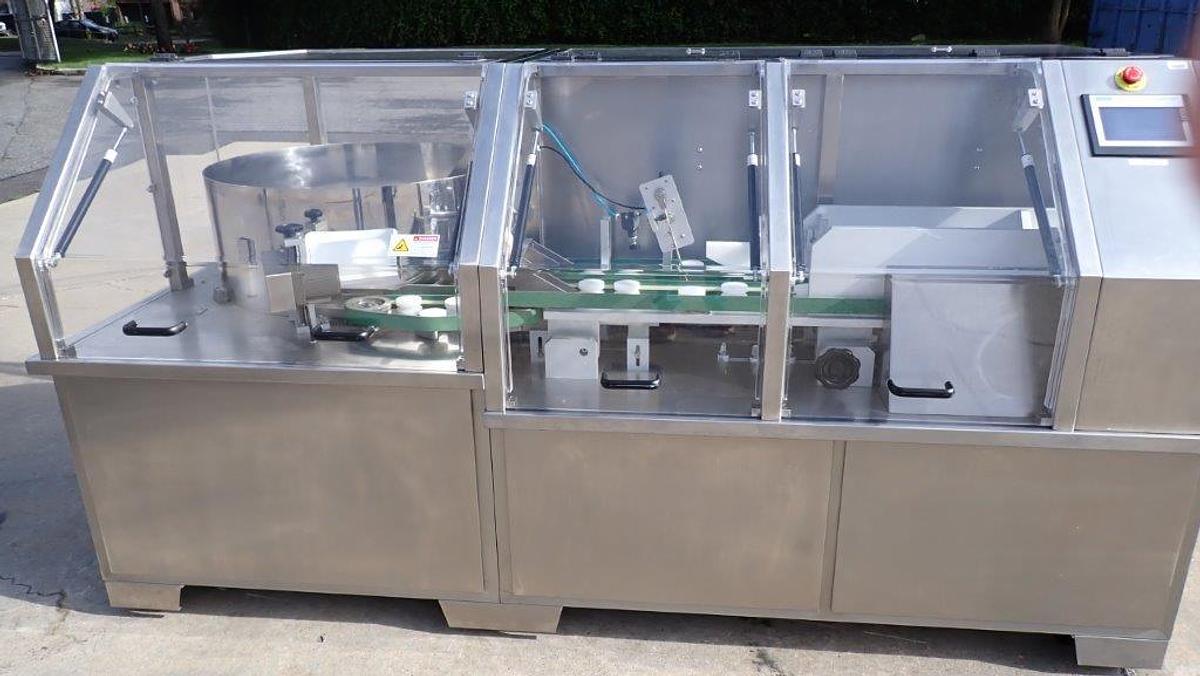
An automatic bottle unscrambler is a more sophisticated machine that can accept randomly oriented containers, including those that are upside down or on their sides, and sort them into an upright, single-file stream automatically. These machines typically use a combination of a bulk hopper, a rotating disc or elevator mechanism, and a series of guides or pockets that capture bottles and flip or guide them into the correct orientation before releasing them onto a conveyor. Automatic unscramblers are faster and require less manual labor, but they are also more mechanically complex, more expensive, and more sensitive to container size changes, often requiring dedicated change parts for each bottle format. Brands like Kaps-All, New England Machinery, PACE, OMEGA, and Kalish are well-known for their automatic unscrambler designs, and used versions of these machines are available in the secondary market at a fraction of the cost of current-production equivalents.
What should I ask a used equipment dealer before buying a rotary table unscrambler?
A few targeted questions can save a buyer significant time and money. Start with the basics: table diameter, motor voltage and phase requirements, and whether the machine has variable speed control. Then ask specifically about what change parts or tooling are included, since a used unscrambler without the correct guide rails, discharge lane parts, or starwheel pockets for your container may require additional investment before it can run. Ask about the machine's history, including what product it was running, how many shifts per day it operated, and why it is being sold, since a machine coming off a low-volume line is in a very different condition than one that ran three shifts a day for ten years.
Also ask about inspection options. Can you inspect in person, via video, or through a live virtual walkthrough? Is the machine currently installed and running, or has it been decommissioned? Request photos of the table surface, undercarriage, motor nameplate, and control panel. Ask whether the dealer has any documentation, such as an operator's manual or wiring diagram, as these are often available for well-known brands and make installation and troubleshooting much easier. Finally, get a clear picture of the total landed cost by asking about packaging, crating, rigging for loading, freight to your facility, and payment terms, since these costs can add meaningfully to the purchase price of larger machines.
Are replacement parts and technical support available for used rotary table unscramblers?
Parts and support availability varies considerably depending on the brand, model, and age of the machine, and it is one of the most practical factors to investigate before committing to a purchase. For established brands like Kaps-All, New England Machinery, Garvey, and Accutek, the manufacturers are still active and generally support their older equipment to some degree, though the level of support and the availability of specific components can depend heavily on how old the model is. It is always worth contacting the manufacturer directly with the machine's model number and serial number to ask what parts they can supply and whether technical documentation is available.
For less common brands or older machines from manufacturers that are no longer in business, buyers typically rely on third-party fabricators to reproduce wear parts like guide rails, table surfaces, and discharge lane components, many of which are relatively simple in design and can be replicated without proprietary tooling. Electrical components such as variable speed drives and motors are usually standard industrial parts that can be sourced through electrical supply houses regardless of the machine's brand. The key takeaway is that a buyer should do this research before purchasing rather than after, since a machine with no parts support path can become a costly paperweight if a critical component fails.
How difficult is it to integrate a used rotary table unscrambler into an existing packaging line?
Integration complexity depends on a few variables: the machine's discharge height and lane width relative to your existing conveyor system, the electrical requirements of the machine versus what your facility can supply, and whether the container you are running matches the tooling already on the machine. Rotary tables with variable speed drives offer the most flexibility, since line speed can be tuned to match the downstream equipment without mechanical modifications. Machines with fixed-speed motors are less adaptable and may require a drive upgrade if the discharge rate does not match your line.
Electrical compatibility is a practical concern that buyers sometimes overlook. Used rotary tables in the market run on a range of voltages and phases, including single-phase 115V machines suited for smaller operations and three-phase 208-230/460V machines common in industrial facilities. Confirming the machine's electrical specs against your facility's available power before purchase avoids costly transformer or rewiring work after delivery. On the physical side, discharge height and conveyor interface geometry are usually adjustable within a range, and most experienced packaging line mechanics can adapt a used rotary table to an existing line without major difficulty. Having the machine's documentation, even just a basic wiring diagram or dimensional drawing, makes the installation process considerably smoother.
What should buyers understand about shipping and payment when purchasing a used rotary table unscrambler?
Shipping costs for used rotary tables and unscramblers are not trivial and should be factored into the total acquisition budget from the start. These machines range from relatively compact 24-inch or 32-inch tables that can be palletized and shipped via standard LTL freight, to large 60-inch diameter accumulating tables or fully automatic unscramblers that require custom crating and heavy-duty rigging for both loading at the dealer's location and unloading at the buyer's facility. The level of packaging required to prevent damage in transit directly affects freight cost, and buyers should ask dealers for a detailed breakdown of crating, rigging, and shipping charges before agreeing to a purchase price.
On payment, most used equipment dealers require payment in full prior to releasing a machine for shipment. This is standard practice in the industry and reflects the as-is nature of used equipment transactions. Some dealers extend payment terms to established repeat customers, but first-time buyers should expect to pay in full upfront. Wire transfer is the most common payment method for transactions of this size. Understanding these terms in advance, along with the full landed cost including freight and rigging, gives buyers an accurate picture of what the machine will actually cost delivered to their facility and ready to install.