Category
Subcategory
Manufacturer
Model
Mills-pulverizers
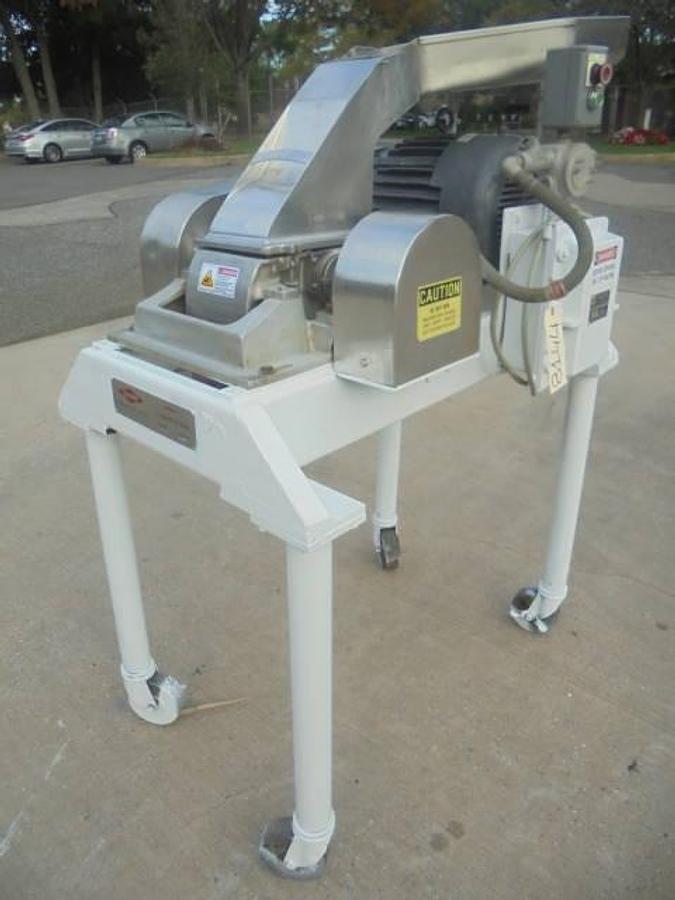
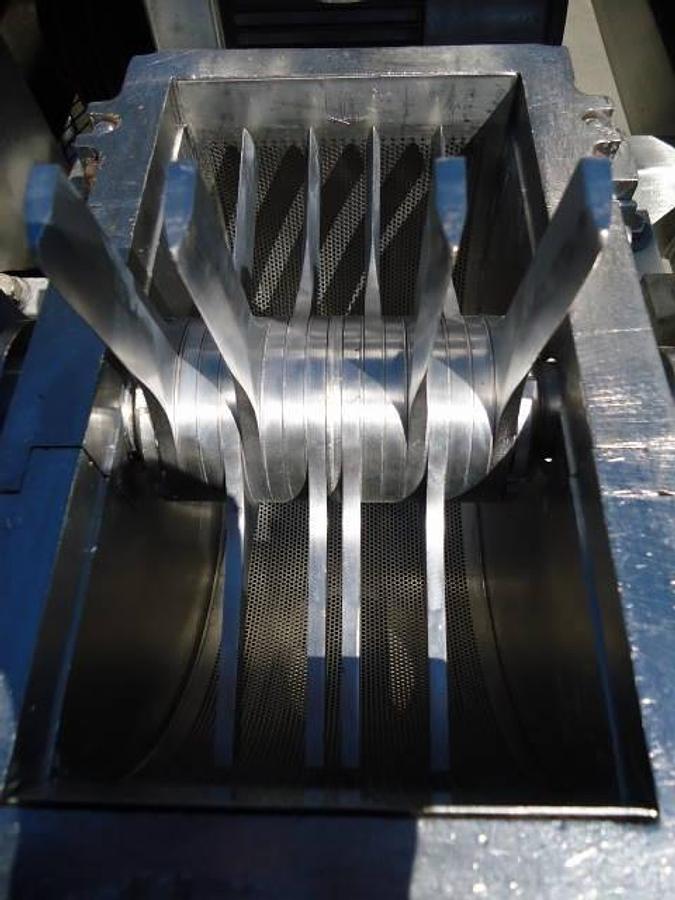
Assorted Grinding Mills & Pulverizers, Used Fitzmills
Pulverizing mills are used to grind or pulverize solids, powders, grains, and other products in order to reduce particle size. We can offer for sale different types of used pulverizing mills for manufacturing depending on your processing needs. Our used pulverizers include MIKRO hammermills, FITZPATRICK comminuting mills (also called comminutors or Fitzmills), air-swept mills, QUADRO comils, ALPINE pin mills, and Rietz disintegrators for sale.
FAQ :
What types of used mills and pulverizers are available on the market?
Used mills and pulverizers cover a wide range of machine types, each designed for specific material characteristics and particle size targets. The most common categories include hammer mills, pin mills, comminuting mills (also called comminutors or Fitzmills), cone mills, jet mills, ball mills, attrition mills, roller mills, and disintegrators. Within each category there are further variations, such as explosion-proof configurations for handling flammable materials, stainless steel construction for food or pharmaceutical applications, and screw-fed versus pan-fed designs depending on how material is introduced to the grinding chamber.
Well-known brands that appear frequently in the used equipment market include FITZPATRICK (known for their DAS06, D6, and Homoloid models), MIKRO (including their hammermill and bantam series), QUADRO (Comil cone mills), ALPINE (pin mills), Rietz (disintegrators), and Pulva. Each brand has its own design philosophy and is favored in particular industries. A buyer sourcing used equipment should identify the machine type first based on the material being processed and the required output particle size, then narrow down to specific brands and models that meet those technical requirements.
How many types of pulverizers are there?
Pulverizers are broadly classified into several mechanical categories based on how they reduce particle size. The main types are impact mills (which include hammer mills and pin mills), attrition mills, jet mills, ball mills, roller mills, and cone mills. Impact mills use high-speed rotating parts to strike and break particles. Attrition mills grind material between two surfaces. Jet mills use compressed air or steam to accelerate particles into each other, producing very fine powders without introducing heat. Ball mills tumble grinding media against the material in a rotating cylinder, and roller mills pass material between rollers under pressure.
Within each of these broad categories there are further subcategories. Hammer mills, for example, can use fixed or swinging hammers, stirrup-style hammers, or stainless steel hammers depending on the application. Comminuting mills like the Fitzpatrick line are a specialized form of impact mill widely used in pharmaceutical and food processing. Cone mills such as the Quadro Comil offer gentler size reduction suitable for delicate or heat-sensitive materials. The right choice depends on the material's hardness, moisture content, required particle size distribution, and whether the process requires explosion-proof or sanitary-grade construction.
What industries commonly purchase used mills and pulverizers?
Used mills and pulverizers serve a broad cross-section of manufacturing and processing industries. Pharmaceuticals rely heavily on comminuting mills and pin mills to reduce active ingredients and excipients to precise particle sizes for tablet and capsule production. Food processing facilities use hammer mills and cone mills to grind grains, spices, sugar, and other ingredients. Chemical manufacturers process pigments, resins, and specialty compounds using jet mills and attrition mills. Mining and minerals operations use large-capacity hammer mills and ball mills to reduce ore and industrial minerals.
Beyond these core industries, plastics recyclers use granulators and hammer mills to reduce scrap plastic into regrind material. Agricultural processors grind feed ingredients and crop byproducts. Cosmetics manufacturers require fine particle sizes for pigments and powders. Recycling operations use heavy-duty mills to process rubber, wood, and other recovered materials. Because used equipment can be sourced at a fraction of the cost of purchasing a comparable machine, these industries frequently turn to the secondary market when expanding capacity, replacing aging equipment, or setting up pilot-scale production lines.
What is the typical price range for used mills and pulverizers?
Pricing for used mills and pulverizers varies considerably based on machine type, brand, size, horsepower, construction material, and overall condition. Small laboratory or pilot-plant scale units, such as a 2 HP Fitzpatrick comminutor or a Mikro Bantam hammermill, can sell in the range of a few thousand dollars. Mid-range production units with motors in the 7.5 HP to 25 HP range typically fall somewhere between $5,000 and $30,000 depending on the brand and configuration. Larger industrial machines with 50 HP or 75 HP motors, or specialized units like jet mills and explosion-proof configurations, can push well above that range.
Stainless steel construction adds meaningful cost compared to carbon steel equivalents, since stainless is required for food, pharmaceutical, and certain chemical applications and carries a higher material value at resale. Explosion-proof motors and controls also add to the price. Buyers should factor in not just the purchase price but the full landed cost, which includes crating, freight, rigging for loading and unloading, and any reconditioning work needed after delivery. Comparing the total landed cost of a used machine against the cost of a comparable machine purchased through other channels is the right way to evaluate the actual value of a used equipment purchase.
How do I verify the condition of a used pulverizer before buying?
Verifying the condition of a used pulverizer requires a combination of documentation review and direct inspection. Buyers should ask the dealer for any available maintenance records, hours of operation, and information about what materials the machine processed. Knowing whether the machine was used in a food-grade, pharmaceutical, or chemical environment matters both for assessing wear and for determining whether the machine can be qualified for the buyer's intended use. Wear parts such as hammers, screens, liners, and bearings are the first things to evaluate, since these components take the most abuse during operation.
Most reputable dealers will accommodate in-person inspections, virtual video walkthroughs, or detailed photo and video documentation of the machine. Some equipment may still be installed and running at the facility where it is being decommissioned, in which case an inspection can sometimes be arranged at that plant. Keep in mind that most equipment dealers do not have the permitting or production infrastructure to run actual material through a machine for a live test, so buyers should focus the inspection on visual condition, shaft and bearing play, screen and hammer wear, motor condition, and the integrity of seals and gaskets. Consulting the machine's manufacturer about the specific model and its age can also help a buyer understand what parts are still available and what level of technical support to expect.
Are used mills and pulverizers sold as-is, or are they refurbished before sale?
Used mills and pulverizers are typically sold as-is in the secondary equipment market. This is the standard practice among used equipment dealers, and it places the responsibility for evaluating the machine's condition squarely on the buyer. Unlike purchasing from a manufacturer, there is no reconditioning guarantee attached to a used machine unless a dealer specifically states otherwise for a particular listing. Buyers should treat the inspection process seriously and not assume any work has been done to a machine unless it is explicitly documented.
That said, some machines in the used market have had wear parts replaced during their service life, and a thorough inspection may reveal recently replaced hammers, screens, or bearings. Refurbished units, when they do appear, typically involve replaced wear components such as hammers, liners, screens, and bearings, which can meaningfully extend the machine's useful life. The key is to ask the dealer directly what, if anything, has been done to the machine and to get that information in writing. Selecting dealers with a long track record in the specific industry, such as pharmaceutical or food processing equipment, provides an additional layer of confidence that the seller understands what to look for and accurately represents the machine's condition.
How do I choose the right size pulverizer for my production needs?
Matching a pulverizer to a production application requires evaluating several interdependent factors. The two most fundamental are throughput capacity, typically expressed in pounds per hour or tons per hour, and the required output particle size, expressed as a mesh size or micron range. Motor horsepower is a proxy for grinding intensity and capacity, with small lab-scale units running 1 to 5 HP and full production machines ranging from 15 HP to 75 HP or more. A machine that is undersized for the application will bottleneck production and wear out faster; one that is oversized adds unnecessary cost and may not grind as efficiently at low feed rates.
Beyond throughput and particle size, buyers need to consider the physical and chemical properties of the material being processed. Hard, abrasive materials require more robust construction and more frequent wear-part replacement. Hygroscopic or heat-sensitive materials may require jacketed designs or air-swept configurations to control temperature during grinding. Flammable or explosive dusts require explosion-proof motors and grounding. Pharmaceutical and food applications require stainless steel contact surfaces and designs that are easy to clean and inspect. Identifying all of these requirements before searching the used equipment market will narrow the field considerably and help avoid purchasing a machine that looks right on paper but does not fit the actual process.
What are the most reputable brands for mills and pulverizers in the used equipment market?
Several brands have built strong reputations over decades of industrial use and continue to be highly sought after in the used equipment market. FITZPATRICK (Fitz Mill) is one of the most recognized names in pharmaceutical and food-grade size reduction, with their comminuting mills appearing across a wide range of production scales. MIKRO (Hosokawa Micron) produces hammer mills and air classifier mills that are widely used in chemical, food, and mineral processing. QUADRO Engineering's Comil cone mill is a standard piece of equipment in pharmaceutical solid dosage manufacturing. ALPINE, part of the Hosokawa group, is known for pin mills and fine grinding equipment used in specialty chemical and food applications.
Rietz disintegrators have a long history in food processing and chemical applications. Pulva Corporation's hammer mills are well regarded in mineral and industrial applications. When evaluating used equipment from any of these manufacturers, buyers should contact the manufacturer directly to ask about the availability of spare parts, wear components, and technical support for the specific model and approximate age of the machine. Older models may have limited parts availability, which affects the long-term cost of ownership. Brands with strong dealer networks and active parts programs offer a lower-risk used equipment purchase compared to discontinued or orphaned models.
What should buyers understand about shipping and rigging costs for used pulverizers?
Shipping costs for used mills and pulverizers are rarely a flat rate and depend heavily on the machine's size, weight, and the level of packaging required to protect it in transit. Small bench-top or pilot-plant units may ship on a standard pallet with minimal crating, while larger production machines with heavy cast housings and motors may require custom wooden crates or skids built specifically to secure the equipment. The cost of that packaging work is typically passed on to the buyer and should be discussed with the dealer before finalizing a purchase.
Larger machines often require specialized rigging services for loading at the dealer's facility and unloading at the buyer's site. This means a forklift or crane may be needed at both ends, and the cost of that rigging is generally an added expense on top of freight. Buyers should ask dealers for a detailed breakdown of packaging, rigging, and freight costs to calculate the full landed cost of the machine before comparing it to other options. For machines still installed at a production facility, coordinating the removal, rigging, and loading adds another layer of logistics that should be clarified early in the purchasing process.
What payment terms are typical when purchasing used mills and pulverizers?
The standard practice in the used industrial equipment market is full payment prior to shipment. This applies to most transactions, particularly for first-time buyers working with a dealer. Unlike purchasing from a large manufacturer with established credit terms, used equipment dealers generally do not extend net payment terms to buyers they have not worked with before. Wire transfer is the most common payment method for larger purchases, though dealers may accept other forms of payment depending on the transaction size and the buyer's relationship with the seller.
Some dealers will offer payment terms to repeat customers with an established purchasing history, but this is the exception rather than the rule. Buyers should clarify payment expectations early in the negotiation process and factor payment timing into their procurement planning, especially if the purchase requires internal approval processes or capital expenditure authorization. Understanding the payment terms upfront, alongside shipping and rigging costs, ensures there are no surprises between the time a price is agreed upon and the time the machine arrives at the buyer's facility.