Category
Subcategory
Manufacturer
Model
Ribbon Mixers & Paddle Blenders
Used Ribbon Blenders, Double Ribbon, Plow Mixers, Paddle Mixers
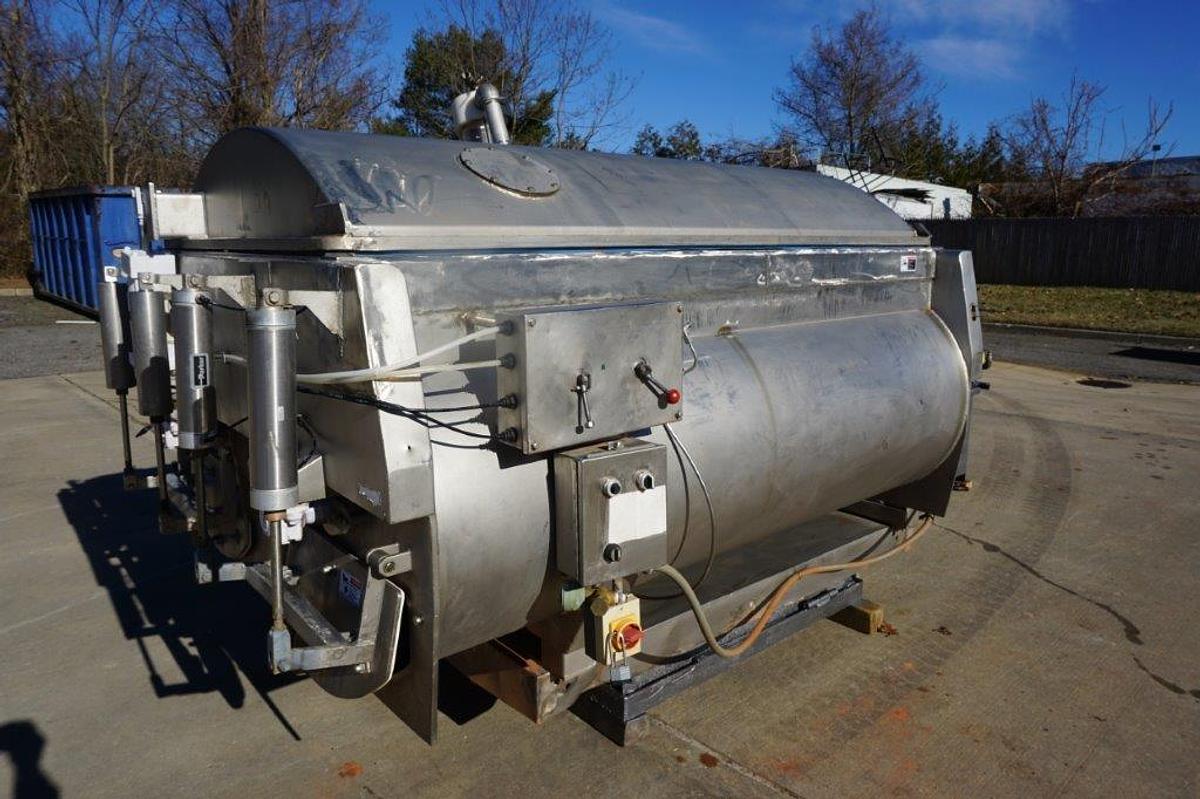
Double ribbon blenders, paddle mixers, and plow blenders are typically trough-shaped mixers used to thoroughly mix/disperse large batches of powders/dry product, meat, or other product. Our used single and twin/double ribbon mixers and industrial paddle blenders are constructed of stainless steel or carbon steel and are available jacketed and in a variety of capacities and horsepower. Our supply of used paddle mixers includes LITTLEFORD mixers, DAY ribbon blenders, AMERICAN PROCESS ribbon blenders, MARION mixers as well as used ribbon blenders from other brands.
FAQ :
What is a ribbon paddle mixer and how does it work?
A ribbon paddle mixer is a horizontal, trough-shaped blending machine that uses one or more helical ribbon agitators mounted on a central shaft to move material through the mixing chamber. The ribbons are arranged in opposing directions, typically an outer ribbon that moves material toward the center and an inner ribbon that moves it outward. This counter-directional flow creates a constant, controlled tumbling action that produces thorough, uniform blending without the aggressive shear forces found in other mixer types. The result is a gentle but effective blend that works well across a wide range of dry and semi-dry materials.
Paddle mixers operate on a similar principle but use flat or angled paddles instead of continuous helical ribbons. Double ribbon designs add a second set of ribbons, which accelerates blending cycles and improves uniformity, particularly in large batch applications. Both styles are well suited for powders, granules, flakes, and fibrous materials. Industries that rely on these machines include food processing, animal feed production, chemical blending, plastics compounding, pharmaceuticals, and agriculture. The trough design also makes discharge straightforward, as material can be released through a bottom or end valve once blending is complete.
What are the differences between a single ribbon and a double ribbon paddle mixer?
A single ribbon mixer uses one continuous helical agitator that moves material in one primary direction along the trough. This design is simpler, easier to clean, and tends to be the right choice for lighter-duty applications or materials that blend easily. Single ribbon units are common in smaller batch sizes and in situations where gentle handling of fragile materials is a priority. They generally require less horsepower for a given capacity, which can reduce operating costs.
A double ribbon mixer adds a second helical ribbon, typically running in the opposite direction of the first. This creates the counter-directional flow that defines the most efficient ribbon blending action, with the outer ribbon moving material one way and the inner ribbon moving it the other. The result is faster blending cycles and better uniformity, especially in larger batch sizes or with materials that have significant differences in particle size or density. Most of the used industrial ribbon blenders on the market, particularly those in the 20 cubic foot and larger range, are double ribbon designs. If throughput, batch consistency, or blending speed is critical to the application, a double ribbon unit is generally the stronger choice.
What materials and applications are ribbon paddle mixers best suited for?
Ribbon paddle mixers handle a broad range of dry and semi-dry materials well. Common applications include blending powders, granules, spice mixes, flour-based products, dry beverage mixes, animal feed ingredients, fertilizers, plastic resins, detergent powders, pigments, and pharmaceutical excipients. The gentle, low-shear action of the ribbon design preserves particle integrity, which makes it a good fit for fragile or friable materials that would degrade in higher-intensity blenders. Some configurations also handle pastes and semi-wet materials, though the moisture content needs to stay low enough to prevent buildup on the ribbons.
The construction material of the mixer matters a great deal depending on the application. Stainless steel units, particularly those built to food or pharmaceutical standards, are required in regulated industries and command a higher resale value on the used market. Carbon steel construction is common in agricultural, chemical, and industrial applications where sanitary standards are less stringent. Jacketed models add the ability to heat or cool the product during blending, which is important for temperature-sensitive formulations or applications where moisture control is needed. When evaluating a used ribbon paddle mixer, matching the construction material and any special features to the actual application requirements is one of the most important steps in the selection process.
What size or capacity ribbon paddle mixer do I need?
Sizing a ribbon paddle mixer starts with the batch size required by the production process. Mixer capacity is typically expressed in cubic feet or liters, and it refers to the working volume of the trough rather than the total trough volume. A general rule is that a ribbon mixer should be loaded to roughly 50 to 70 percent of its total capacity for best blending performance. Loading too little leaves the ribbons partially exposed and reduces blending efficiency, while overfilling prevents proper material movement and can strain the drive system.
Used ribbon paddle mixers are available across a very wide range of sizes, from small lab and pilot plant units under 2 cubic feet up to large production machines exceeding 200 cubic feet. For context, a 20 cubic foot unit with a 10 to 15 horsepower motor is a common mid-range production machine, while units in the 100 to 215 cubic foot range with 25 to 60 horsepower motors are suited for high-volume industrial production. Horsepower requirements scale with both capacity and the bulk density of the material being mixed, so denser materials require more drive power for a given trough size. When shopping for a used machine, it helps to have a clear picture of required batch weight, bulk density of the material, and expected cycle times before evaluating specific units.
What should I inspect when buying a used ribbon paddle mixer?
The most critical areas to examine are the ribbons or paddles themselves, the shaft seals, the gearbox, the discharge valve, and the overall condition of the trough. Ribbons and paddles wear over time, and worn or bent agitators will not produce consistent blending results. Look for uniform clearance between the ribbon edges and the trough wall, since excessive gap increases blend time and can leave material unmixed at the trough bottom. Shaft seals are another high-wear item. Failed or leaking seals allow product to contaminate the bearings and drive components, which is a significant maintenance issue. The gearbox should show no signs of oil leaks, unusual noise, or excessive play in the shaft.
The discharge valve is worth close attention as well, since it takes repeated mechanical stress and is a common source of wear on older machines. On stainless steel units intended for food or pharmaceutical use, check the interior finish for pitting, cracks, or welds that could harbor contamination. Reputable used equipment dealers will typically accommodate in-person inspections or provide video walkthroughs of the machine so buyers can assess its condition before committing. Some machines may still be installed at a production facility, which can allow for observation during actual operation. Keep in mind that most dealers are not set up to run product through a machine during inspection, so visual and mechanical assessment is the primary tool available to buyers.
How do I know if a used ribbon paddle mixer has been properly maintained?
Maintenance history is rarely fully documented when used industrial equipment changes hands, so buyers need to rely on physical evidence of the machine's condition. A well-maintained mixer will have clean, consistent welds, minimal wear on the ribbon edges, tight shaft seals with no sign of product leakage into the bearing housings, and a gearbox that runs smoothly without excessive heat or noise. The interior of the trough should be free of deep pitting, heavy corrosion, or product buildup in hard-to-reach areas. On stainless steel machines, surface finish degradation or discoloration can indicate exposure to harsh cleaning chemicals or improper sanitation procedures.
On the mechanical side, check the condition of the drive components including the motor, gearbox, and any chain or belt drives. Worn sprockets, frayed belts, or a gearbox that shows signs of oil contamination are indicators of deferred maintenance. Discharge valves and end covers should open and close smoothly without binding. Buyers should also consult with the machine's manufacturer when possible to understand what maintenance intervals are recommended for a specific model and what parts are still available, since age and model can affect the level of support that can be expected. Selecting a used equipment dealer who specializes in processing and blending equipment and has a long track record in the industry is one of the most reliable ways to reduce the risk associated with buying a machine without a complete maintenance history.
What is the typical lifespan of a ribbon paddle mixer?
A well-built industrial ribbon paddle mixer can remain in productive service for several decades when it is properly maintained and operated within its design parameters. The trough, shaft, and main structural components are generally the longest-lasting parts of the machine, with the ribbons, seals, discharge valves, and drive components being the wear items that require periodic replacement. Machines from established manufacturers like Littleford, Marion, Day, Ross, and American Process have long reputations for durability, and units from these brands regularly appear on the used market after 20 or 30 years of service and are still capable of reliable production.
The actual service life depends heavily on the abrasiveness of the material being processed, the frequency of use, and how consistently the machine was maintained. Mixers handling highly abrasive materials like silica, mineral powders, or coarse granules will experience faster ribbon wear than those handling lighter food ingredients. Stainless steel construction generally holds up better over time in corrosive or sanitary environments compared to carbon steel. When evaluating a used machine, the age alone is not a reliable indicator of remaining service life. The physical condition of the wear components and the quality of the maintenance practices applied during its previous service life are far more meaningful factors.
Are replacement parts available for older used ribbon paddle mixers?
Parts availability varies considerably depending on the manufacturer, the age of the machine, and how widely that model was produced. For well-known brands like Littleford, Marion, Ross, and Day, many components including ribbons, paddles, shaft seals, and gearboxes can still be sourced either directly from the manufacturer or through aftermarket suppliers. These manufacturers have produced large numbers of machines over many decades, which supports a reasonably active parts and service ecosystem. For less common brands or older discontinued models, parts sourcing can require more effort and may involve custom fabrication of wear components.
Before purchasing a used ribbon paddle mixer, it is worth contacting the manufacturer directly to ask about parts availability and technical support for the specific model being considered. Manufacturers can often confirm whether replacement ribbons, seals, discharge valve components, and gearbox parts are still stocked or can be made to order. This step is particularly important for older machines, where the level of support available can vary significantly based on model age and production history. Ribbons and paddles are the most commonly replaced components and are sometimes fabricated by local metalworking shops if the original manufacturer cannot supply them, provided the material specifications and dimensional tolerances are well documented.
What is the difference between a ribbon mixer, a paddle mixer, and a plow mixer?
All three are horizontal trough-style blenders, but they use different agitator geometries that produce different blending characteristics. A ribbon mixer uses continuous helical ribbons that create a consistent, flowing blending action along the full length of the trough. This makes ribbon mixers efficient for large batches of free-flowing powders and granules where uniformity across the entire batch is the goal. Double ribbon designs, which use inner and outer ribbons moving in opposite directions, are the most common configuration found in industrial production settings.
Paddle mixers use individual flat or angled paddles mounted on the shaft rather than continuous ribbons. This design is gentler on fragile materials and works well for products that need careful handling, such as certain food ingredients or materials prone to breakage. Plow mixers, sometimes called plow blenders, use wedge-shaped plow-like agitators that lift and fold material in a more aggressive tumbling action. Plow mixers are particularly effective for difficult-to-blend materials, agglomerated powders, or applications that require the addition of liquids into a dry mix. Many plow mixer designs also incorporate high-speed chopper blades that break up lumps during blending, making them useful for applications where particle size reduction and mixing need to happen simultaneously. The right choice among these three types depends on the material characteristics, required blend uniformity, and sensitivity of the product to mechanical shear.
What should buyers understand about shipping and payment for used ribbon paddle mixers?
Used ribbon paddle mixers range from compact portable units under 5 cubic feet to large industrial machines exceeding 200 cubic feet and several thousand pounds. Shipping costs reflect both the size and weight of the machine and the level of packaging required to protect it in transit. Smaller units may ship on standard pallets, while larger machines typically require custom crating or skidding to prevent damage during loading, transport, and unloading. Heavy industrial mixers often require rigging equipment for loading at the dealer's facility and unloading at the buyer's location, and those rigging costs are generally separate from the freight charge. Buyers should ask dealers for a complete breakdown of packaging, rigging, and freight costs before finalizing a purchase so the full landed cost is understood.
On payment, most used equipment dealers require full payment before a machine ships. Some dealers may offer terms to established repeat customers, but this is not standard practice for first-time buyers. Because these machines are sold as-is without manufacturer warranties, buyers carry the responsibility for thoroughly evaluating the equipment before purchase. Taking advantage of in-person or video inspection options offered by the dealer is an important part of that process. Inspections help buyers assess the machine's current condition and verify that it matches the listing description, which reduces the risk of surprises after the machine arrives.