Category
Subcategory
Manufacturer
Model
Encapsulators-Capsule Fillers
Powder & Pellet Encapsulation Equipment
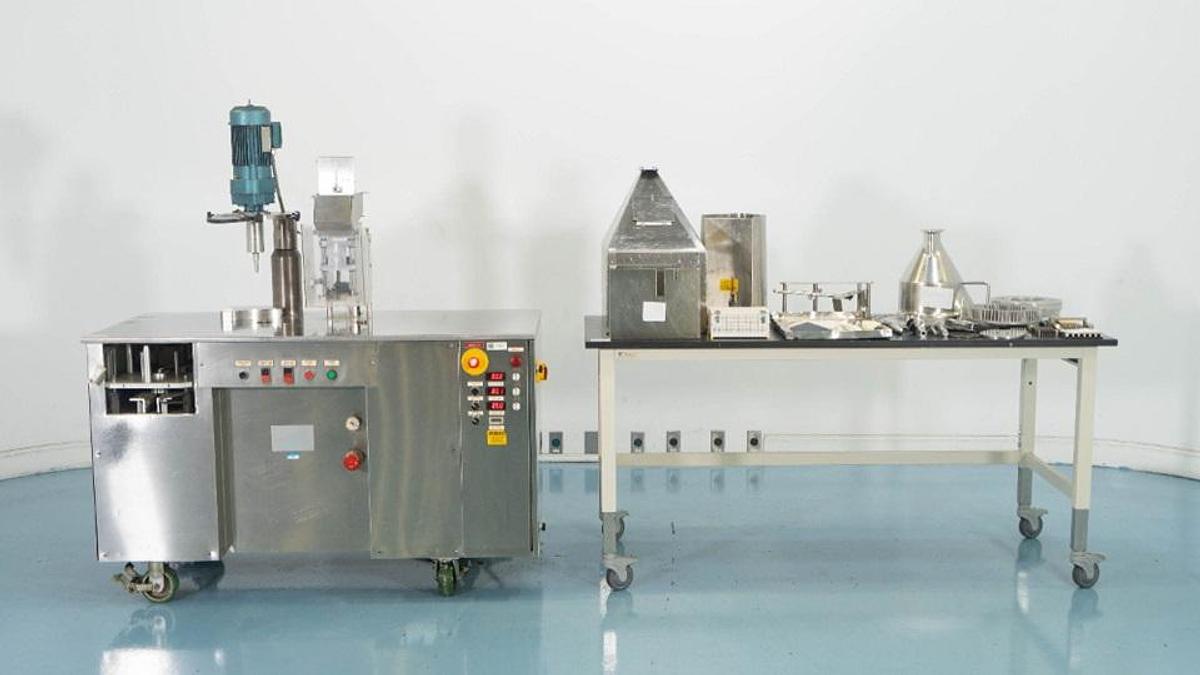
Encapsulators are used to fill and seal capsules for pharmaceutical, vitamin, and other industries. Wohl stocks a wide variety of automatic and semi-automatic capsule filling machines/encapsulators, including both pellet and powder encapsulators. Our used capsule fillers include encapsulators from INDEX, MACOFAR, BOSCH, H + K, CAPSUGEL, PARKE DAVIS, ELANCO, ZANASI and IMA. Many of the encapsulation machines have various sets of change parts/tooling for different size capsules. We also stock equipment for manufacturing softgel capsules.
FAQ :
What is a capsule filling machine and how does it work?
A capsule filling machine, also called an encapsulator, is a piece of pharmaceutical or nutraceutical equipment designed to fill empty capsule shells with powders, pellets, granules, liquids, or other materials and then seal them. The machine separates the cap and body of each empty capsule, fills the body with the measured dose of product, and rejoins the two halves to form a finished capsule ready for packaging. Depending on the model, this process can be fully automated or require some degree of operator involvement.
Encapsulators range widely in scale and complexity. Semi-automatic machines require an operator to load capsules and oversee filling, while fully automatic models handle orientation, separation, filling, and closing with minimal human input. High-speed industrial encapsulators from manufacturers like IMA, Zanasi, Bosch, Capsugel, and Macofar can produce tens of thousands of capsules per hour, making them standard equipment in pharmaceutical and dietary supplement manufacturing. Change parts or tooling sets allow a single machine to accommodate multiple capsule sizes, which is a practical feature that adds flexibility to a production line.
What types of capsule filling machines are available on the used equipment market?
The used encapsulator market covers a broad range of machine types, from benchtop semi-automatic units suited to small-batch production all the way up to high-speed fully automatic encapsulators designed for large-scale pharmaceutical manufacturing. Semi-automatic machines typically require an operator to load capsule trays and activate the filling cycle, while automatic machines handle the entire process from capsule feeding through closing with little manual intervention. Some listings also include soft gelatin encapsulators, which are a separate category designed specifically for liquid-fill softgel capsules.
Well-known brands that appear regularly in the used market include Capsugel, Zanasi, IMA, Macofar, Bosch, Elanco, Parke Davis, Index, and H+K, among others. Output capacities vary considerably across models. A benchtop unit like the PAM AL-90 is designed for lower-volume or laboratory use, while machines like the IMA/Zanasi 40F are rated at 40,000 capsules per hour and the P+AM AF90T can reach up to 90,000 capsules per hour. Many used machines come with multiple sets of tooling for different capsule sizes, which can add significant value to the purchase.
What capsule sizes are compatible with industrial encapsulators?
Most industrial and semi-industrial encapsulators are designed to work with the standard pharmaceutical capsule size range, which runs from size 4 (the smallest) through size 000 (the largest), with sizes 00, 0, 1, 2, 3, and 4 being the most common in production environments. Size 00 is particularly popular for dietary supplements because it holds a relatively large fill weight, typically around 600 to 800 milligrams of powder depending on the material's bulk density. Capsule size compatibility is determined by the machine's tooling or change parts, not the machine itself.
This is an important distinction for buyers of used encapsulators. Many machines are sold with a specific set of tooling already installed or included, but the same machine frame can often be reconfigured to fill different capsule sizes by swapping in the appropriate change parts. A listing that includes multiple tooling sets for sizes 00, 0, and 1, for example, gives the buyer more production flexibility without needing to purchase additional equipment. Before buying a used encapsulator, it is worth confirming exactly which tooling sizes are included and whether additional tooling sets are available for that specific model.
What materials can be filled into capsules using an encapsulator?
Encapsulators are designed to handle a variety of fill materials depending on the machine's configuration and the dosing mechanism installed. The most common fill material is dry powder, which covers a wide range of pharmaceutical active ingredients, herbal extracts, vitamins, minerals, and nutritional supplements. Many machines can also be configured or adapted to fill pellets and granules, which are small pre-formed particles often used in controlled-release formulations. Certain encapsulators are equipped with liquid or paste dosing systems for filling oils, suspensions, or semi-solid materials into hard capsules.
Soft gelatin encapsulators are a separate category entirely, designed specifically to form the capsule shell and fill it with liquid or semi-liquid content in a single continuous process. These are used for products like fish oil softgels, vitamin E, and other oil-based supplements. The type of fill material a machine can handle is determined largely by its dosing mechanism, so buyers should confirm that the used machine's filling system is appropriate for their specific product. Switching between powder and pellet filling, for instance, may require different dosing components, and not all used machines will include all possible configurations.
What is the difference between semi-automatic and fully automatic capsule filling machines?
Semi-automatic encapsulators require an operator to perform certain steps manually, such as loading empty capsules into a tray, positioning the tray in the machine, and sometimes transferring filled capsules to the next stage. The machine handles the filling and closing steps mechanically, but human involvement is part of each cycle. These machines are well suited to small and mid-scale production runs, contract manufacturers filling multiple product SKUs in smaller batches, and facilities where a fully automated line is not justified by volume. Output on semi-automatic machines typically ranges from a few thousand to around 25,000 capsules per hour depending on the model.
Fully automatic encapsulators handle the entire process without manual intervention at each cycle. Capsules are fed from a hopper, automatically oriented, separated, filled, closed, and discharged in a continuous operation. These machines are designed for high-volume pharmaceutical and supplement manufacturing where throughput and consistency are critical. Automatic models from brands like IMA, Zanasi, Macofar, and Bosch can produce anywhere from 40,000 to well over 100,000 capsules per hour. The tradeoff is that fully automatic machines are more complex mechanically, require trained operators and maintenance personnel, and represent a significantly higher capital investment even on the used market.
How much does a used capsule filling machine cost?
Pricing for used encapsulators varies considerably based on the machine's type, capacity, brand, age, condition, and included tooling. Benchtop or semi-automatic units designed for lower-volume production tend to be the most affordable entry point in the used market, while high-speed fully automatic encapsulators from established pharmaceutical equipment manufacturers represent the higher end of the price range. For context, fully automatic industrial encapsulators sold as new from manufacturers can cost anywhere from $50,000 to several hundred thousand dollars, so the used market can offer meaningful savings for buyers who do their due diligence.
The total cost of acquiring a used encapsulator goes beyond the listed machine price. Buyers should factor in the cost of any additional tooling sets needed for different capsule sizes, shipping and crating charges, rigging fees for larger machines, and any refurbishment or parts replacement that may be necessary after purchase. Because used machines are typically sold as-is, a thorough inspection before purchase is the primary way to assess condition and anticipate any additional costs. Machines that come with multiple tooling sets, documentation, or recent service records tend to command higher prices but can represent better overall value.
What should buyers look for when inspecting a used encapsulator before purchasing?
Inspecting a used capsule filling machine requires attention to both mechanical condition and completeness. Key mechanical areas to evaluate include the condition of the dosing mechanism, the capsule feed system, closing and ejection components, and any sealing or tamping elements. Wear on these parts directly affects fill accuracy and capsule integrity. Buyers should also check the condition of the machine's drive components, electrical systems, and any pneumatic or vacuum systems the machine relies on. Stainless steel contact surfaces should be free of pitting, corrosion, or damage that could affect product hygiene or regulatory compliance.
Completeness is equally important. Confirm which tooling sizes are included and whether all change parts are present and in usable condition. Ask whether the machine comes with any manuals, drawings, or parts lists, since documentation can be difficult to obtain for older models. Reputable used equipment dealers typically offer in-person inspections at their facility or at the plant where the equipment is located, as well as video or virtual inspections for buyers who cannot travel. Keep in mind that most equipment dealers are not set up to run actual production trials, so the inspection will generally assess mechanical condition and completeness rather than live product output. Consulting the original manufacturer about parts availability and support for the specific model and age of machine is also a practical step before committing to a purchase.
Are used capsule filling machines suitable for pharmaceutical GMP production?
Used encapsulators from established pharmaceutical equipment manufacturers are commonly used in GMP (Good Manufacturing Practice) production environments, provided the machines are properly qualified, maintained, and documented. Many of the brands that appear on the used market, including Bosch, IMA, Zanasi, Capsugel, and Macofar, were originally built to pharmaceutical industry standards with stainless steel product-contact surfaces, cleanable designs, and the mechanical precision required for accurate dosing. The machine's suitability for GMP use depends on its condition, the buyer's ability to qualify it, and whether it can meet the fill weight accuracy and consistency requirements of the intended product.
For regulated pharmaceutical manufacturing, buyers will typically need to perform installation qualification (IQ), operational qualification (OQ), and process qualification (PQ) on any equipment placed into production, including used machines. This process can be more involved with older equipment if documentation is incomplete, but it is a standard part of introducing any equipment into a GMP facility. Dietary supplement manufacturers operating under cGMP regulations face similar qualification considerations. Buyers should factor the cost and time of qualification into their total acquisition plan and confirm with their quality team what documentation and testing will be required before the machine can be released for production use.
What are the shipping and logistics considerations when buying a used encapsulator?
Capsule filling machines range from compact benchtop units that can ship on a standard pallet to large automatic encapsulators that require heavy-duty crating, specialized rigging, and freight transport. The size and weight of the machine determine the level of packaging and handling required, and buyers should get a clear picture of these costs before finalizing a purchase. Smaller semi-automatic machines may ship via standard freight with basic palletization, while larger fully automatic encapsulators may need custom wooden crates and professional rigging equipment for safe loading and unloading at both ends of the shipment.
Used equipment dealers will typically coordinate packaging and shipping, but the costs are generally passed to the buyer and can vary significantly based on the machine's dimensions, weight, destination, and the level of protection required. For international shipments, additional considerations include customs documentation, import duties, and compliance with destination country regulations. Buyers should request a detailed breakdown of all shipping-related costs, including crating, rigging, freight, and any destination-side unloading or installation charges, to understand the full landed cost of the equipment before making a buying decision. Larger machines may also require a forklift or crane at the delivery site, so buyers should confirm their facility's receiving capabilities in advance.
What payment terms are typical when purchasing used capsule filling equipment?
Most used equipment dealers require full payment before a machine ships. This is standard practice in the industry and reflects the nature of used equipment transactions, where machines are often sold as-is and the dealer needs to confirm funds before releasing the equipment. Payment is typically accepted by wire transfer, and buyers should confirm accepted payment methods with the dealer early in the process. Some dealers may extend payment terms to established customers with a prior purchasing history, but first-time buyers should generally expect to pay in full upfront.
Because full prepayment is the norm, buyers have a strong incentive to conduct thorough due diligence before committing. This means taking advantage of any inspection opportunities the dealer offers, whether in person, by video, or through detailed photographs and condition reports. It also means asking specific questions about what is included with the machine, confirming the accuracy of the listing description, and clarifying any uncertainties about condition or completeness before funds are transferred. Working with dealers who have a long track record in pharmaceutical and process equipment and who specialize in the industry adds an important layer of confidence to the transaction.