Category
Subcategory
Manufacturer
Model
FAQ :
What is the difference between an air-cooled and water-cooled chiller?
Air-cooled chillers reject heat directly to the surrounding air using condenser fans, which makes them simpler to install and eliminates the need for a cooling tower or condenser water loop. They are a practical choice for facilities with limited infrastructure or where water conservation is a concern. The trade-off is efficiency: air-cooled units typically operate at lower COP ratings than water-cooled systems, which can translate to higher energy costs over time, particularly in large-scale or continuous-process applications.
Water-cooled chillers transfer heat to a water circuit connected to a cooling tower, which allows them to operate at higher efficiency levels, especially in warmer climates or high-load environments. They are generally preferred for large industrial operations where energy costs are significant and the infrastructure to support a cooling tower already exists. When shopping for used chillers, buyers should factor in the supporting equipment each type requires, since a water-cooled system may need a used cooling tower and condenser water pumps in addition to the chiller itself, adding to the total project cost.
What industries use process chillers, and what are the typical applications?
Process chillers are used across a wide range of industries wherever precise temperature control of a liquid or product is required. In food and beverage processing, chillers are central to cook-chill systems, tumble chillers, lipstick chill tables, and spiral or nitrogen freeze tunnels, all of which are designed to rapidly cool cooked or formed products to safe holding temperatures. Pharmaceutical and chemical manufacturing rely on chillers to control exothermic reactions and maintain product integrity. Plastics injection molding uses chilled water to cool molds and reduce cycle times. Data centers, laser equipment, and medical imaging systems also depend on process chillers to manage heat loads generated by sensitive electronics.
The variety of equipment available on the used market reflects this breadth of application. Tumble chillers from manufacturers like Chester Jensen and Cleveland are common in large-scale food processing operations. Portable chillers from brands like Neslab and Application Engineers serve smaller or more mobile cooling needs. Nitrogen freeze tunnels from Air Products and Linde are purpose-built for rapid freezing of food products on a production line. Understanding the specific application requirements, including target temperature, flow rate, and the fluid being cooled, is essential before selecting a chiller from the used market.
How do I calculate the cooling capacity I need when buying a used chiller?
Cooling capacity for industrial chillers is measured in tons of refrigeration (TR) or kilowatts (kW), where one ton of refrigeration equals approximately 12,000 BTU per hour or 3.517 kW. To size a chiller correctly, buyers need to calculate the total heat load of their process, which involves knowing the flow rate of the fluid being cooled, the specific heat of that fluid, and the temperature difference between the fluid entering and leaving the chiller. The basic formula is: Heat Load (BTU/hr) = Flow Rate (GPM) x 500 x Temperature Difference (°F). Dividing the result by 12,000 gives the required tonnage.
In practice, most engineers add a safety factor of 10 to 20 percent above the calculated load to account for ambient conditions, system inefficiencies, and future capacity needs. Buying a used chiller that is significantly oversized is generally less problematic than undersizing, but oversized units can cycle on and off too frequently, causing wear. When evaluating used equipment, pay close attention to the nameplate data, which should list the rated cooling capacity, operating pressures, and design conditions. If the machine has been modified or repaired, asking the seller for any available service records or documentation can help verify that the rated capacity is still achievable.
What refrigerants are used in industrial chillers, and does refrigerant type matter when buying used equipment?
Refrigerant type is one of the most important factors to evaluate when purchasing a used chiller. Older equipment manufactured before the mid-2000s frequently used R-22 (HCFC-22), a refrigerant that has been phased out under the EPA's Clean Air Act regulations and is no longer produced in the United States. While R-22 equipment can still be legally operated, sourcing refrigerant for servicing has become expensive and increasingly difficult. Buyers acquiring older used chillers should budget for potential refrigerant retrofits or confirm that the unit has already been converted to a compliant alternative.
More recent used chillers are likely to use R-410A, R-134a, R-513A, R-407C, or other lower global warming potential (GWP) refrigerants that remain in compliance with current and near-term regulations. R-410A is common in air-cooled process chillers, while R-134a has been widely used in centrifugal and screw chillers. Buyers should verify the refrigerant type with the seller before purchase and check with the equipment manufacturer to understand what refrigerant options are supported for that specific model. This is especially relevant for older equipment where the manufacturer may have limited technical support available.
What compressor types are found in industrial chillers, and how does compressor type affect performance?
Industrial chillers are built around one of several compressor technologies, and the choice of compressor has a direct impact on capacity range, energy efficiency, maintenance requirements, and parts availability. Scroll compressors are common in smaller portable and process chillers in the 5 to 60 ton range. They have fewer moving parts than reciprocating compressors, which generally makes them quieter and lower maintenance. Screw compressors are used in mid-range chillers from roughly 20 to 500 tons and are known for reliable performance under variable load conditions. Centrifugal compressors are found in large-capacity chillers above 200 tons and offer excellent efficiency at full load, though they can be less efficient at partial loads.
When buying used chiller equipment, the compressor condition is one of the most critical items to assess. Hours of operation, maintenance history, and whether the compressor has ever been rebuilt or replaced are all relevant questions to ask the seller. Scroll and screw compressors are generally more forgiving in terms of parts availability across a range of ages and manufacturers. Centrifugal compressors on older or discontinued models can present parts sourcing challenges, so consulting with the equipment manufacturer before purchase is advisable. Requesting an inspection, whether in person or via video, to observe the compressor and review any available maintenance logs is a reasonable step before committing to a purchase.
What should I inspect before buying a used chiller?
A thorough inspection of a used chiller should cover mechanical, electrical, and refrigerant system components. On the mechanical side, look for signs of corrosion on the heat exchanger, evaporator, and condenser tubes, as tube fouling or pitting can significantly reduce efficiency or require costly repairs. Check the condition of the compressor, pumps, and any fans or cooling towers associated with the unit. Ask whether the machine was in active production at the time it was decommissioned, or whether it has been sitting idle, since prolonged storage without proper preservation can lead to refrigerant leaks, oil degradation, or electrical issues.
Reputable used equipment dealers will typically offer in-person or video inspections to give buyers an accurate picture of the machine's current condition. Some equipment may still be installed and operating at a facility, which provides an opportunity to observe the unit running under real conditions. Keep in mind that most dealers do not have the permitting or production infrastructure to run a full functional test on process equipment, so buyers should factor in the possibility of additional commissioning work after delivery. Reviewing nameplate data, checking for any visible refrigerant oil staining around fittings (which can indicate past leaks), and confirming that control panels and electrical components are intact are all practical steps to take during any inspection.
What is the typical lifespan of an industrial chiller?
A well-maintained industrial chiller can operate reliably for 20 to 30 years, though the actual service life depends heavily on the type of equipment, operating conditions, maintenance practices, and the quality of the original build. Scroll and screw compressor chillers used in moderate-duty applications with consistent preventive maintenance often reach the upper end of that range. Centrifugal chillers in large commercial or industrial settings can also achieve long service lives when properly maintained, though they tend to require more specialized servicing. Equipment that has been run in harsh environments, exposed to corrosive fluids, or operated without regular maintenance may show significant wear well before the 20-year mark.
For buyers considering used chillers, the age of the machine is only one part of the picture. A 15-year-old chiller that has been well maintained and recently serviced may offer considerably more value and remaining service life than a newer machine that was poorly maintained or improperly stored. When evaluating used equipment, asking about the maintenance history, whether the refrigerant charge has been checked recently, and whether any major components such as the compressor or heat exchangers have been replaced or rebuilt can give a clearer sense of the machine's actual condition relative to its age. Consulting with the manufacturer about parts availability for the specific model is also a smart step, as older models may have limited support.
What are the shipping and rigging considerations when buying a used industrial chiller?
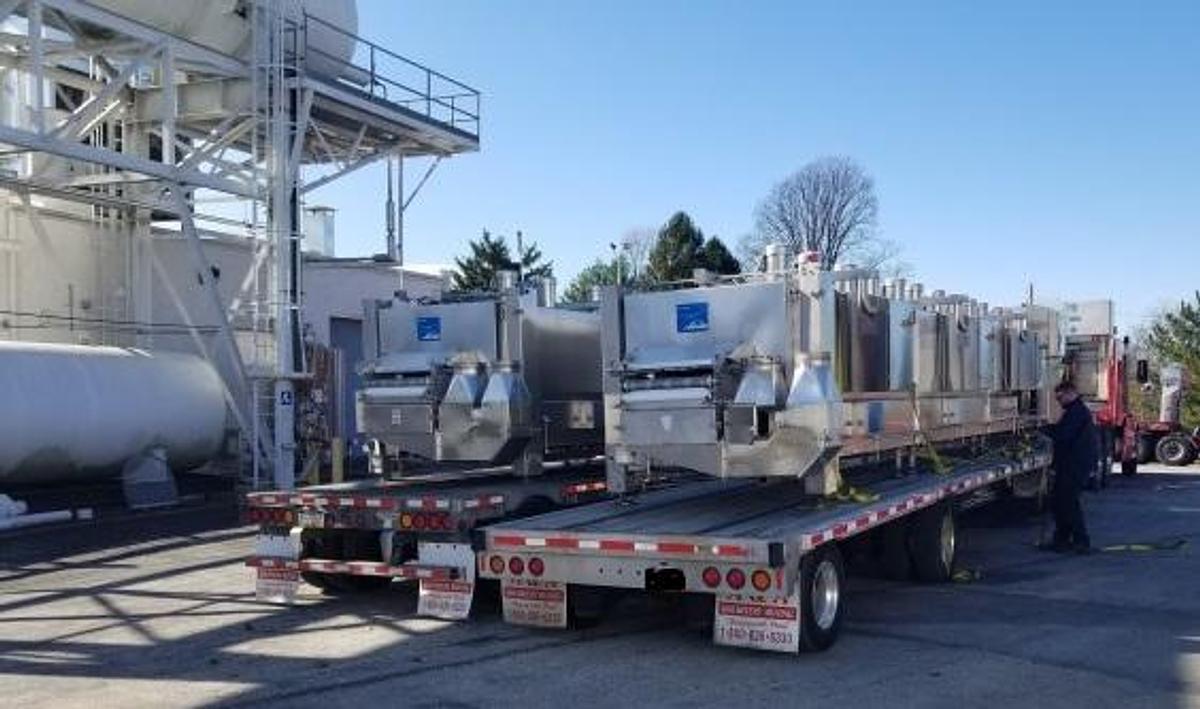
Industrial chillers vary widely in size and weight, from compact portable units that can be moved with a standard pallet jack to large tonnage systems that require heavy-duty crane rigging and flatbed transport. Buyers should ask sellers for detailed dimensions and weights before finalizing a purchase to ensure they have the appropriate receiving equipment and facility access. Smaller portable chillers may ship on standard pallets, while larger units often require custom crating to protect refrigerant lines, electrical panels, and structural components during transit. The level of packaging required will directly affect shipping costs, so it is worth getting a clear breakdown of what is included.
For large or heavy equipment, rigging costs for loading at the seller's location and unloading at the destination can be significant and are typically quoted separately from freight. Buyers should ask sellers specifically about what rigging services are included in the quoted price and what will be the buyer's responsibility upon delivery. Some used equipment dealers can coordinate full turnkey freight arrangements, while others quote equipment only and leave logistics to the buyer. Getting a complete landed cost, including the equipment price, packaging, rigging, freight, and any required permits for oversized loads, before committing to a purchase avoids unexpected expenses.
What payment terms should I expect when buying used chiller equipment?
Most used industrial equipment dealers require full payment prior to shipping the equipment. This is standard practice in the industry and reflects the nature of used machinery transactions, where the seller needs to confirm cleared funds before releasing equipment for loading and transport. Buyers who are unfamiliar with a dealer should expect to pay in full upfront, typically via wire transfer, though some dealers also accept credit cards or other payment methods depending on the transaction size.
Repeat customers with an established relationship with a dealer may occasionally be offered payment terms, but this is at the dealer's discretion and is not a standard expectation for first-time buyers. Before submitting payment, buyers should ensure they have completed any desired inspections and are satisfied with the equipment description, condition, and all-in pricing including shipping and rigging. Since used equipment is generally sold as-is, taking the time to ask questions, request photos or video, and clarify any uncertainties before payment is the most practical way to protect the investment.
What energy efficiency ratings should I look for when evaluating used chillers?
Chiller efficiency is most commonly expressed as the Coefficient of Performance (COP), which is the ratio of cooling output to energy input. A COP of 3.0 means the chiller delivers 3 units of cooling for every 1 unit of electricity consumed. Modern high-efficiency chillers can achieve COP ratings between 5.0 and 7.0 at full load under ideal conditions, while older or lower-efficiency units may fall in the 2.5 to 3.5 range. For buyers evaluating used equipment, the COP or kW per ton rating listed on the equipment's nameplate or original specification sheet provides a useful baseline for comparing energy costs across different machines.
It is worth noting that real-world efficiency often differs from nameplate ratings, particularly in used equipment that may have aged components, a partially degraded refrigerant charge, or fouled heat exchanger surfaces. A chiller operating with a dirty condenser or low refrigerant can consume significantly more energy than its rated efficiency would suggest. Buyers should factor in the cost of any servicing needed to restore the unit to good operating condition when comparing the total cost of ownership between different used machines. In applications where the chiller will run continuously or at high utilization, even modest improvements in COP can translate to meaningful reductions in annual energy costs, making efficiency a worthwhile consideration alongside purchase price.