Category
Subcategory
Manufacturer
Model
Bucket Elevators Bucket Elevators & Bucket Lifters
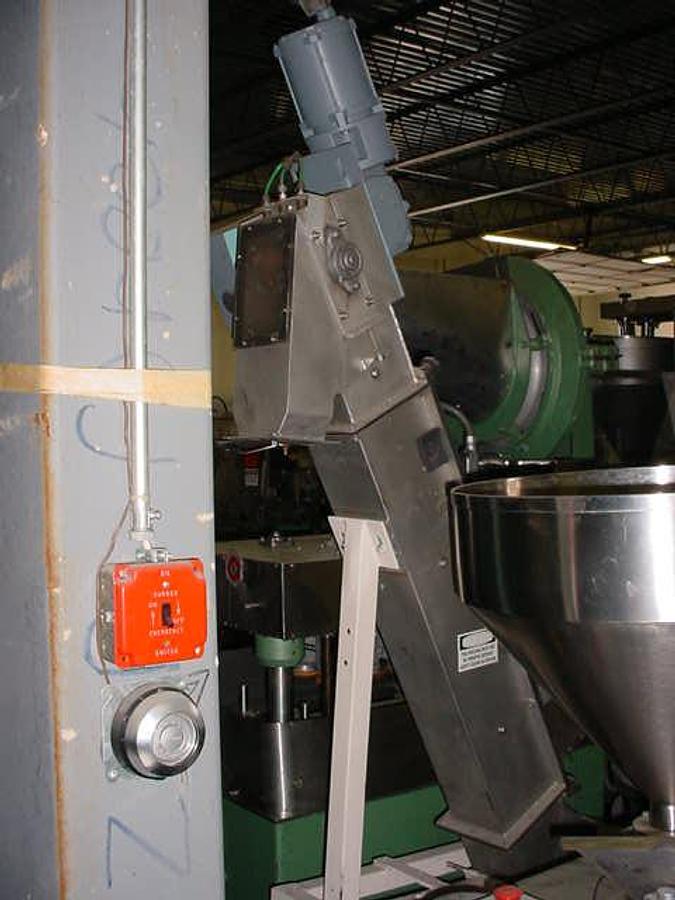
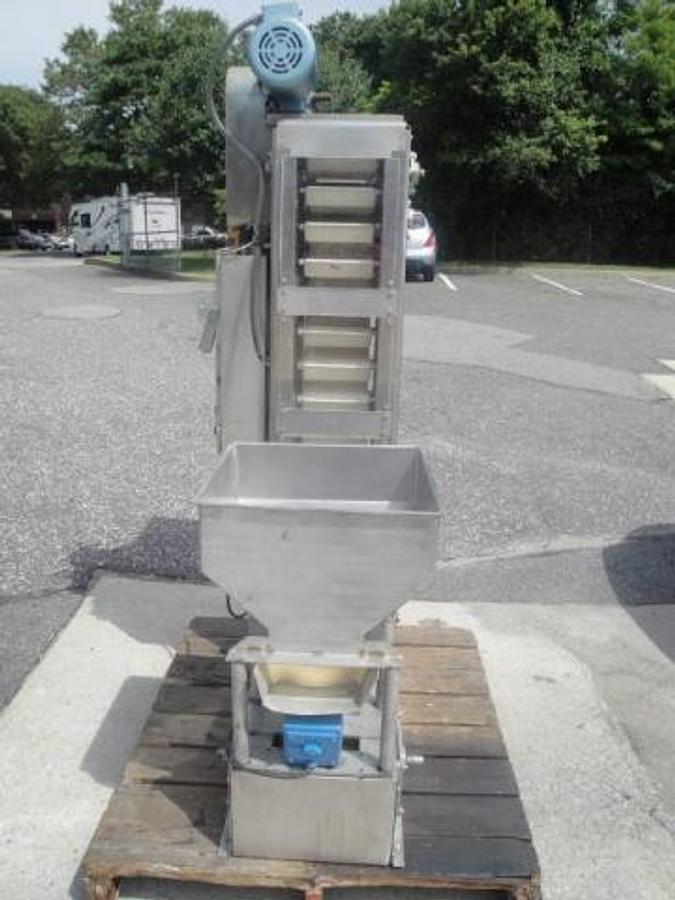
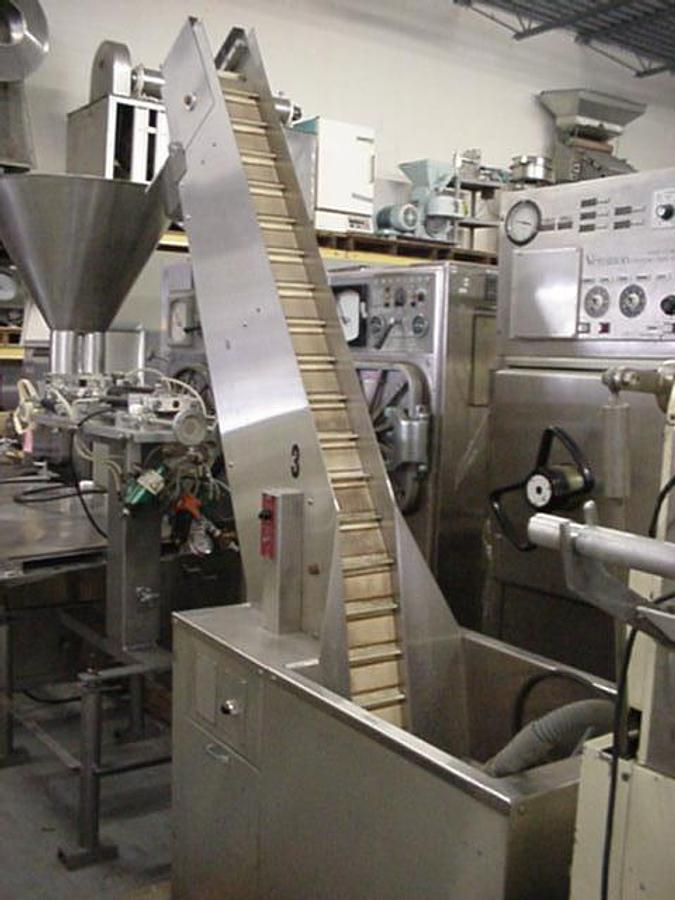
A bucket elevator, bucket lifter, or belt elevator is used to vertically transfer granulars, solids, or powders in a production line. Conveyor elevators can be provided in different widths and heights depending on your needs. We have a variety of used bucket elevators including the WHIZ-LIFTER bucket elevator.
FAQ :
What is a bucket elevator and what is it used for?
A bucket elevator (also called a bucket lifter or belt elevator) is a type of mechanical conveyor designed to move bulk materials vertically. It uses a series of buckets attached to a belt or chain that continuously scoops, lifts, and discharges material at the top of the unit. They are a staple piece of equipment in facilities that need to transfer granulars, powders, or solid materials from one elevation to another within a production line, without the footprint that a long inclined conveyor would require.
Bucket elevators are used across a wide range of industries, including grain and seed handling, food processing, chemical manufacturing, mining, fertilizer production, and construction materials. The specific design varies by application. Centrifugal discharge models are the most common choice for free-flowing granular materials like grain or seeds, while continuous bucket elevators are better suited for fragile, aerated, or sticky materials that need gentler handling. Discharge heights, bucket sizes, belt widths, and drive motor specifications all vary depending on the throughput requirements and the physical properties of the material being conveyed.
What sizes and capacities are available for used bucket elevators?
Used bucket elevators come in a broad range of sizes and capacity ratings, which is one of the reasons they serve so many different industries. Discharge heights on available units can range from around 6 feet all the way up to 17 feet or more, with bucket sizes varying accordingly. For example, units with 6-inch by 12-inch buckets are common in heavier-duty applications, while smaller 4.5-inch by 4-inch buckets are found on narrower, lighter-duty elevators. Belt widths also vary, and the overall height of the unit directly affects how much vertical lift is achievable in a given facility.
Capacity is typically rated in bushels per hour (BPH) for grain applications or tons per hour (TPH) for industrial and mining uses. Buyers should carefully match the rated capacity of a used unit to their actual throughput requirements before purchasing. Keep in mind that a used machine's real-world capacity may differ from its nameplate rating depending on its condition, the material being handled, and how it has been maintained over its service life. Reviewing the full specifications of any used unit, including motor horsepower, belt speed, and bucket spacing, gives a much more accurate picture of what the machine can realistically handle.
What materials can a bucket elevator handle?
Bucket elevators are versatile and can handle a wide variety of bulk materials, which is why they appear in so many different industries. Common materials include grain, corn, soybeans, wheat, and other seeds; cement, sand, and aggregates in construction; fertilizers and potash in agriculture; coal, ore, and minerals in mining; and powders, pellets, and granules in chemical and pharmaceutical manufacturing. The key factor is whether the material is a solid, granular, or powder that can be scooped and discharged without excessive degradation or buildup.
Material properties heavily influence which type of bucket elevator is appropriate. Abrasive materials like sand or ore accelerate wear on buckets and belts, so heavier-duty components and more frequent inspection are necessary. Fragile materials like certain food products or friable chemicals are better handled by continuous-style elevators that minimize impact and breakage during discharge. Sticky or wet materials can cause buildup inside the casing, which affects performance and requires more frequent cleaning. When evaluating a used bucket elevator, it is important to confirm that the unit was designed and previously used for a material type similar to what you intend to run through it, since mismatched applications accelerate wear and can create safety concerns.
What are the key components to inspect before purchasing a used bucket elevator?
A thorough inspection of a used bucket elevator should cover several critical components. The belt or chain is one of the most important items to evaluate, as wear, cracking, stretching, or damage here can mean significant repair costs shortly after purchase. The buckets themselves should be checked for cracks, deformation, excessive wear, or missing attachment hardware. The head section (top) and boot section (bottom) of the elevator are also high-wear areas, so examine the pulleys or sprockets, bearings, and seals carefully. The drive motor and gearbox should be checked for proper operation, unusual noise, oil leaks, and any signs of overheating.
Beyond the mechanical components, the casing or housing should be inspected for alignment, corrosion, dents, or holes that could allow material leakage or dust emissions. For stainless steel units used in food or pharmaceutical applications, check for pitting, weld quality, and surface finish integrity. If the elevator has a belt tensioning system, verify that it is functional and properly adjusted. Asking the seller for any available maintenance records, past inspection reports, or information about the machine's last use can also provide valuable context. Reputable used equipment dealers will typically accommodate in-person or video inspections so buyers can assess the machine's condition before committing to a purchase.
How do I determine if a used bucket elevator is in good working condition before buying?
The best way to assess the condition of a used bucket elevator is through a direct inspection, either in person or via a detailed video walkthrough arranged with the seller. A visual inspection should cover all major components including the belt or chain, buckets, drive assembly, head and boot sections, and the casing. Look for signs of excessive wear, corrosion, cracking, or missing parts. If the machine is still installed at a facility and in active production, an in-person inspection can sometimes be arranged between the buyer, the dealer, and the facility owner, which gives the best possible view of the machine under real operating conditions.
It is worth understanding that most used equipment dealers do not have the ability to run production tests on machinery, since doing so requires permits and operational infrastructure that a typical dealer will not have. This means the buyer carries the responsibility of evaluating condition based on visual inspection and available documentation. Asking for photos or video of the machine running, if it was recently decommissioned, is a reasonable request. Consulting the original manufacturer about parts availability and support for the specific model and age of the unit is also a smart step, since some older models may have limited parts availability, which affects long-term serviceability.
What is the typical price range for used bucket elevators?
Pricing for used bucket elevators varies considerably based on size, discharge height, material of construction, brand, and overall condition. Smaller, simpler units with lower discharge heights and standard carbon steel construction can be found at relatively modest price points, while larger stainless steel units with significant discharge heights and higher throughput capacity command substantially higher prices. Stainless steel construction, which is common in food processing and pharmaceutical applications, adds meaningful cost compared to painted or carbon steel equivalents of similar size.
Brand reputation also plays a role in pricing. Units from well-regarded manufacturers tend to hold their value better and may be priced higher than off-brand equivalents, though they often come with better parts availability and manufacturer support. Condition is arguably the biggest pricing variable. A unit that is clean, complete, and recently decommissioned from a well-maintained facility will typically be priced higher than one that shows heavy wear or is missing components. Buyers should factor in the cost of any replacement parts, reconditioning work, shipping, and rigging when calculating the true landed cost of a used bucket elevator, since these expenses can add up significantly for larger units.
Are replacement parts and buckets easy to find for older bucket elevator models?
Parts availability for used bucket elevators depends largely on the brand, model, and age of the unit. For well-known manufacturers with an established presence in the market, replacement buckets, belts, bearings, and drive components are often still available through the manufacturer or through aftermarket suppliers. Buckets in particular are frequently available as aftermarket parts, since many are made to standard size specifications that cross-reference across multiple brands. Companies like Maxi-Lift and Tapco, for example, supply replacement buckets for a wide range of elevator brands and configurations.
For older or less common models, parts availability can be more limited. Before purchasing a used bucket elevator, it is a good practice to contact the manufacturer directly to ask about parts support for that specific model and production year. The manufacturer can tell you whether replacement belts, buckets, sprockets, and other wear items are still in production or available through their service network. If the manufacturer no longer supports a particular model, buyers should assess whether standard-dimension aftermarket parts can serve as substitutes, or whether the cost and difficulty of sourcing parts would make the machine impractical to maintain over time.
What safety standards and certifications should a used bucket elevator meet?
Bucket elevators handling combustible dusts, such as grain, flour, sugar, or certain chemical powders, are subject to strict safety regulations because of the risk of dust explosions. In the United States, OSHA's grain handling facility standard (29 CFR 1910.272) sets specific requirements for bucket elevators in grain applications, including requirements for belt slip and speed monitoring, bearing temperature monitoring, and explosion venting. The National Fire Protection Association (NFPA) also publishes standards relevant to dust-handling equipment, including NFPA 61 for agricultural dust and NFPA 654 for combustible dust in general. In facilities that fall under ATEX regulations (primarily in Europe), equipment must meet specific zone classifications for use in potentially explosive atmospheres.
When purchasing a used bucket elevator, buyers should verify that the unit was designed and built to meet the applicable safety standards for their intended application and jurisdiction. This includes checking for the presence of safety monitoring devices, explosion venting panels, and proper grounding provisions. Even if a used unit was compliant at the time of manufacture, it may require updates or modifications to meet current standards or the specific requirements of a new facility. Consulting with a qualified process safety engineer before installation is a sound practice, particularly for applications involving combustible materials. Local authorities having jurisdiction (AHJ) may also need to approve the equipment before it goes into service.
How much does it cost to ship or transport a used bucket elevator?
Shipping costs for used bucket elevators vary widely based on the size and weight of the unit, the distance between the seller and the buyer, and the level of packaging or crating required to protect the machine in transit. Smaller, lighter units may ship on standard pallets via LTL (less-than-truckload) freight at relatively modest cost. Larger units with tall casings or heavy drive assemblies may need to be disassembled, crated, or specially packaged to prevent damage, which adds both labor and materials cost before the freight charges are even calculated. For very large or heavy units, specialized rigging equipment may be required for loading at the origin and unloading at the destination, and those rigging services carry their own fees.
Buyers should ask the seller for a detailed breakdown of all costs involved in getting the machine from its current location to the destination, including packaging, rigging, freight, and any required permits for oversized loads. This full landed cost calculation is important because the shipping and handling expenses on a large piece of industrial equipment can sometimes approach or exceed the purchase price of the machine itself. Getting freight quotes from multiple carriers and confirming the machine's dimensions and weight with the seller before requesting quotes will help avoid surprises. Buyers should also clarify who is responsible for unloading the equipment once it arrives at the destination.
What payment terms are typical when buying used bucket elevators from a dealer?
Most used equipment dealers require full payment before a machine is released for shipping. This is standard practice in the used industrial equipment market and applies to bucket elevators as it does to most other categories of machinery. Payment is typically accepted via wire transfer, though some dealers also accept credit cards or other methods depending on the transaction size. Buyers who are new to a particular dealer should expect to pay in full upfront, since dealers generally extend payment terms only to established repeat customers with a track record of completed transactions.
Before sending payment, buyers should confirm all the details of the sale in writing, including the machine's description, condition as represented, included components, and the agreed shipping and packaging terms. This documentation protects both parties and ensures there is a clear record of what was agreed upon. Since used equipment is typically sold as-is, the inspection process prior to purchase is the buyer's primary opportunity to verify condition. Taking the time to do a thorough inspection, review all available photos and documentation, and ask detailed questions before payment is made is the most effective way to ensure confidence in the purchase.