Category
Subcategory
Manufacturer
Model
Kettles
Agitated & Non-Agitated
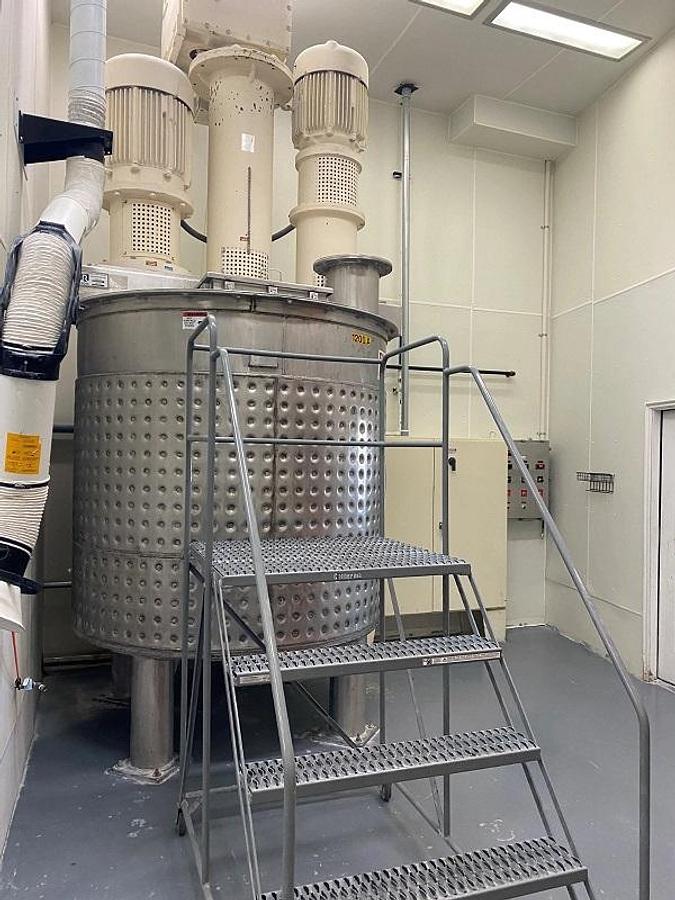
We stock a large variety of used stainless steel kettles for food, cosmetic, pharmaceutical, and chemical processing. We have used kettles for manufacturing including used jacketed kettles, vacuum kettles, high pressure kettles, steam kettles, and kettles with explosion-proof motors. Kettles without agitation are available as well as scrape surface agitated kettles (single motion and double motion agitation), propeller agitated kettles, and high speed homogenizing kettles. Tilting kettles and bottom discharge kettles as well as cooking kettles (both electric kettles and gas fired kettles) are available. Our inventory includes used LEE kettles, used GROEN kettles, and used HAMILTON kettles as well as other brands in all sizes including 500 gallon and 1,000 gallon and both larger and smaller.
FAQ :
What types of used stainless steel kettles are available for industrial and food processing applications?
The used stainless steel kettle market for industrial and processing applications covers a wide range of configurations. Common types include jacketed kettles, vacuum kettles, high-pressure kettles, steam kettles, and explosion-proof motor kettles. Agitation styles vary considerably, with options such as scrape surface agitation (single and double motion), propeller agitation, and high-speed homogenizing. Tilting kettles, bottom discharge kettles, and cooking kettles fired by gas or electricity are also frequently available on the used market.
Sizes span a broad range, from small 5-gallon bench-scale units up to 2,000-gallon production vessels. Brands commonly found in the used market include Groen, Lee, Hamilton, Chester Jensen, Feldmeier, Mueller, Cleveland Range, and Walker, among others. Kettles are used across food manufacturing, cosmetic production, pharmaceutical processing, and chemical applications, so the construction standards and material grades tend to be well-suited for sanitary or industrial environments even when purchased used.
What grade of stainless steel should I look for in a used industrial kettle?
For food, beverage, cosmetic, and pharmaceutical processing, 316 stainless steel is generally the preferred grade in used kettles. Type 316 contains molybdenum, which gives it superior resistance to chlorides and acidic products compared to 304 (also written as 18/8). Many listings for used kettles specify 316SS or 316L (the low-carbon variant), which is particularly desirable for welded sanitary equipment because it reduces the risk of carbide precipitation at weld zones.
Type 304 stainless is also widely used and performs well in many food and general processing applications. When evaluating a used kettle, confirm the material designation listed on the nameplate or in the seller's specifications. For chemical or high-acid product applications, 316 or 316L is strongly recommended. Regardless of grade, inspect the interior surfaces carefully for pitting or deep scratches, as surface degradation can compromise corrosion resistance even on a high-quality alloy.
How do I inspect a used stainless steel kettle before purchasing?
A thorough inspection of a used stainless steel kettle should cover both the vessel itself and its mechanical components. On the vessel, look closely at the interior surface for pitting, deep scratches, rust spots, or signs of heavy scale buildup. Minor surface marks are common on used equipment, but deep pitting or active corrosion can indicate the steel has been compromised and may harbor bacteria or continue to degrade. Check all welds, seams, and the jacket for any signs of cracking or previous repairs. On jacketed kettles, ask whether the jacket has been pressure-tested and review the jacket pressure rating relative to your intended steam or hot water supply.
Reputable used equipment dealers typically accommodate in-person inspections, virtual walk-throughs, or detailed video reviews of a machine's current condition. Some kettles may still be in production at a facility, allowing an inspection while the equipment is operating. Keep in mind that most dealers do not have the permitting required to run actual product through a machine, so testing is generally limited to mechanical operation of agitators, motors, and discharge valves rather than a full production trial. Asking for photos of the nameplate, agitator assembly, jacket connections, and discharge port will give a clearer picture of the unit's condition before committing to a purchase.
What is the typical lifespan of a stainless steel processing kettle, and does buying used make sense?
Well-built stainless steel processing kettles are among the more durable pieces of food and chemical manufacturing equipment available. A properly maintained jacketed kettle from a reputable manufacturer can remain in service for 20 to 40 years or more. The stainless vessel itself rarely wears out under normal conditions; the components most likely to require attention over time are mechanical parts like agitator seals, gearboxes, motors, and control systems. This durability is a primary reason the used kettle market is active and well-supplied.
Buying used makes practical sense for many buyers, particularly when budget constraints exist or when a facility needs a specific size or configuration that would involve a long lead time if ordered through a manufacturer. The cost savings on used industrial kettles can be substantial compared to equivalent equipment purchased through normal channels. The trade-off is that used equipment is sold as-is, so buyers carry the responsibility of evaluating condition carefully. Selecting a dealer that specializes in food and processing equipment, has a long track record, and offers detailed inspection options reduces the risk considerably.
What is a jacketed kettle, and why is the jacket pressure rating important?
A jacketed kettle has a double-wall construction where the space between the inner vessel and the outer shell, called the jacket, circulates a heating or cooling medium such as steam, hot water, or chilled water. This indirect heating method gives precise temperature control and prevents scorching or hot spots that would occur with direct flame or immersion heating. Jacketed kettles are standard in food manufacturing, pharmaceuticals, and cosmetics because the product never contacts the heat source directly.
The jacket pressure rating, typically expressed in PSI, determines what steam pressure the jacket can safely handle and therefore what maximum temperatures are achievable. Common ratings on used kettles range from 30 PSI up to 150 PSI or higher on specialized units. A 100 PSI steam jacket, for example, corresponds to steam temperatures around 338°F (170°C), which suits a wide range of cooking and processing applications. When evaluating a used jacketed kettle, confirm the jacket pressure rating matches your facility's steam supply and process requirements. Also verify that the unit carries an ASME code stamp if your facility or jurisdiction requires it, as this certification confirms the vessel was built to recognized pressure vessel standards.
What are the differences between scrape surface, double motion, and propeller agitation in used kettles?
Agitation style has a significant effect on how a kettle handles different products, so understanding the options is important when selecting used equipment. Scrape surface agitation uses blades that travel along the interior wall of the vessel, continuously removing product from the heated surface. This is critical for viscous, sticky, or heat-sensitive products like jams, confections, sauces, and certain cosmetic formulations, where product left in contact with the hot wall would scorch or degrade. Single motion scrapers rotate in one direction, while double motion (also called twin action or dual motion) systems typically combine a rotating outer scraper with a counter-rotating inner agitator for more thorough blending.
Propeller and paddle agitators are better suited for lower-viscosity products that need general blending rather than wall-scraping. High-speed homogenizing kettles add a high-shear mixing element, which is used to reduce particle size, emulsify, or disperse ingredients that would not blend adequately with standard agitation. Some kettles combine multiple agitation types, such as a scraper with an inline homogenizer, to handle complex formulations. When buying used, confirm that all agitation components are present and that the gearbox and motor are intact, as replacement parts for older models can sometimes be difficult to source.
Are used stainless steel kettles safe for food and pharmaceutical production?
Stainless steel, particularly 304 and 316 grades, is inherently non-reactive, non-porous in good condition, and resistant to the cleaning chemicals used in food and pharmaceutical environments. It does not leach chemicals into products and is free from BPA and other polymer-related concerns. These properties make it the material of choice for sanitary processing equipment globally, and a used stainless kettle in good condition retains those same material properties.
The key safety consideration with used equipment is the condition of the interior surfaces. Pitting, deep scratches, or crevices can harbor bacteria and are difficult to clean effectively. Before putting a used kettle into production, a thorough inspection and a proper clean-in-place (CIP) or manual cleaning and sanitizing procedure should be performed. For regulated industries like pharmaceuticals or certain food categories, buyers may also need to re-qualify the equipment through their internal validation processes. Consulting with the equipment manufacturer about the specific model's design and any known maintenance considerations can also help buyers assess whether a particular used unit is appropriate for their application.
What should buyers know about shipping and rigging costs for used stainless steel kettles?
Shipping costs for used industrial kettles vary considerably based on the size and weight of the vessel, the distance being shipped, and the level of packaging required. Smaller kettles in the 5 to 40 gallon range can often be palletized and shipped via standard freight carriers at relatively modest cost. Larger kettles, particularly those in the 500 to 2,000 gallon range, are heavy, often awkwardly shaped, and require careful crating or custom packaging to prevent damage in transit. The cost of that crating is typically passed on to the buyer and should be factored into the total landed cost of the equipment.
For large kettles, loading at the dealer's facility and unloading at the buyer's facility may require a forklift or crane, and rigging services carry their own fees. Buyers should ask the dealer specifically about packaging method, rigging requirements at both ends, and freight carrier options before finalizing a purchase. Getting a clear picture of all costs, including the equipment price, packaging, rigging, and freight, avoids surprises and allows for a proper comparison against alternative sourcing options.
What payment terms do used stainless steel kettle dealers typically require?
Most used industrial equipment dealers require full payment prior to releasing a machine for shipment. This is standard practice across the used machinery industry and reflects the fact that used equipment transactions do not carry the same financing infrastructure that exists for new capital equipment purchases. Payment is commonly accepted by wire transfer, though some dealers also accept credit cards for smaller purchases. Buyers should confirm accepted payment methods with the dealer before proceeding.
Some dealers extend payment terms to repeat customers or established buyers with a history of transactions, but this is at the dealer's discretion rather than a standard offering. For buyers making a significant purchase for the first time, it is worth asking whether any flexibility exists, though full prepayment should be expected as the default. Because payment is required before shipment, conducting a thorough inspection of the equipment prior to payment is especially important. Reputable dealers will accommodate inspection requests, whether in person or by video, before a buyer is asked to commit funds.
Which brands of used stainless steel processing kettles are most commonly available and well-regarded?
Several manufacturers have established strong reputations in the industrial kettle market, and their equipment tends to hold up well over years of production use. Groen is one of the most widely recognized names, with a long history of producing jacketed and agitated kettles for food service and food manufacturing in sizes ranging from a few gallons up to several hundred gallons. Lee Industries is another prominent manufacturer known for precision-built jacketed kettles and reactors, particularly popular in food, cosmetic, and pharmaceutical applications. Hamilton (including Hamilton and Trinity Industries models) produces well-regarded double motion and scraper kettles used in similar industries.
Chester Jensen is known for its cooker-cooler systems, which combine heating and cooling capability in a single vessel, a useful feature for temperature-sensitive processes. Feldmeier, Mueller, and Walker are also respected names frequently found in used inventory, particularly in larger capacities. Cleveland Range and Groen are common in food service and institutional cooking applications. When evaluating a used kettle from any brand, checking with the manufacturer about parts availability and technical support for the specific model and age of the unit is a practical step, as older or discontinued models may have limited support regardless of the brand's overall reputation.