Category
Subcategory
Manufacturer
Model
Filters-pressure leaf
Used Pressure Leaf Filters, Horizontal & Vertical
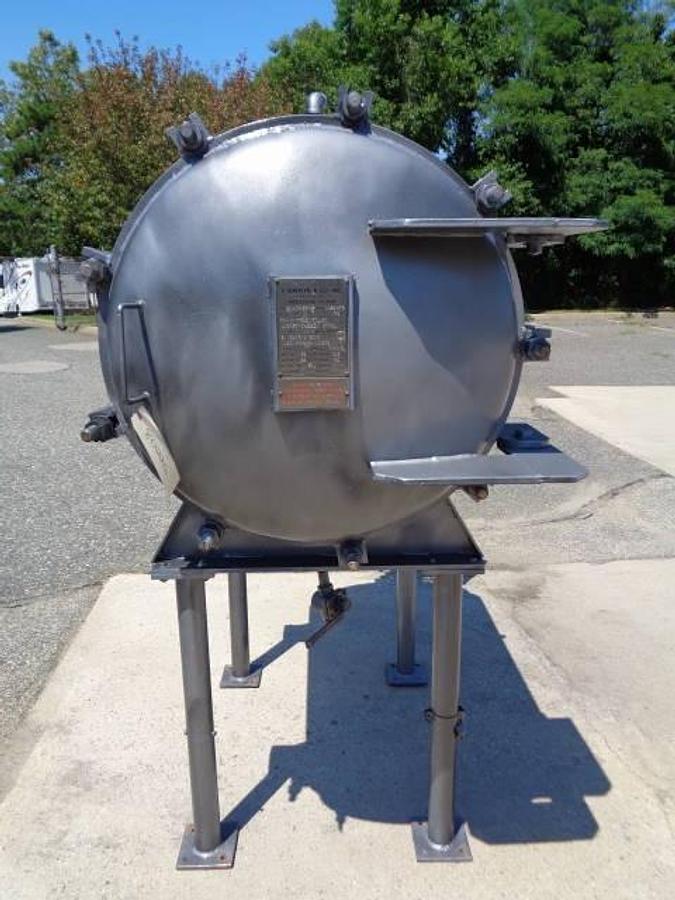
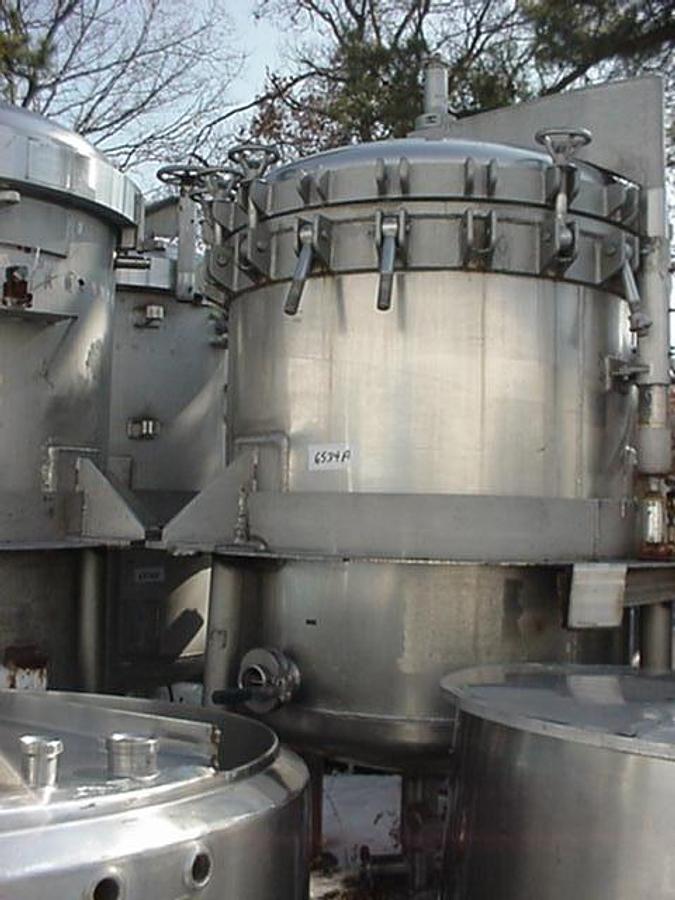
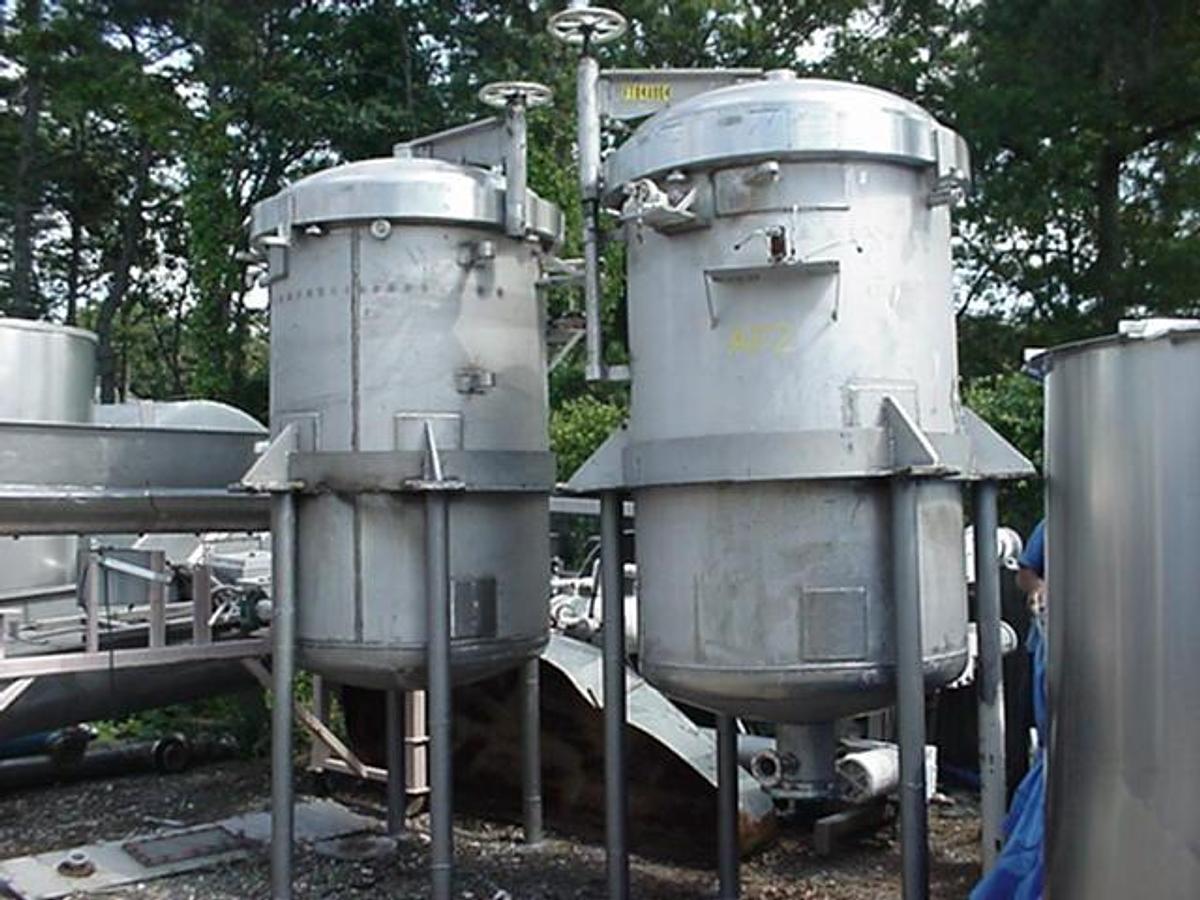
Pressure leaf filters consist of a battery of horizontal or vertical filter plates mounted in a pressurized tank (pressure vessel). We are suppliers of both horizontal pressure leaf filters and vertical pressure leaf filters. Our inventory of used pressure leaf filters includes used pressure filters from a variety of brands including SPARKLER pressure leaf filters, U.S. AUTOJET pressure leaf filters, and DURCO pressure leaf filters (incl DURIRON).
FAQ :
What is a pressure leaf filter and how does it work?
A pressure leaf filter is an industrial filtration device that separates fine solids from liquids using a series of filter leaves housed inside a pressurized tank, or pressure vessel. Each leaf is a flat, framed screen element coated with a filter aid material, most commonly diatomaceous earth or perlite, which forms a permeable cake layer on the leaf surface. Liquid slurry is pumped into the pressurized vessel, and as it passes through the filter aid cake and the leaf screen, solids are captured on the outside while clarified filtrate exits through the leaf internals and out of the vessel. The pressure differential across the filter cake is what drives the separation, allowing these machines to handle fine particles that gravity or vacuum filters cannot effectively capture.
Pressure leaf filters come in two primary orientations: horizontal and vertical. In a horizontal pressure leaf filter, the leaves are stacked vertically inside a horizontal cylindrical vessel, and the unit is typically opened at one end to remove the leaf bundle for cleaning or cake discharge. In a vertical pressure leaf filter, the leaves are arranged horizontally inside a vertical vessel. The choice between the two depends largely on the application. Vertical units are generally preferred when dry cake discharge is needed, since the cake can drop cleanly from the leaves by vibration or spinning. Horizontal units tend to suit wet cake discharge better. Both designs operate under the same fundamental principle of pressurized flow through a precoated filter medium.
What industries commonly use pressure leaf filters?
Pressure leaf filters are workhorses in any industry that needs to clarify liquids at scale while handling fine or gelatinous solids that would blind other filter types quickly. Edible oil refining is one of the most common applications, where these filters remove spent bleaching earth and other fine solids from vegetable, soybean, and palm oils. Brewing and beverage production rely on them to polish beer, wine, and juice. Pharmaceutical manufacturing uses pressure leaf filters for solvent recovery, API clarification, and sterile filtration applications. Sugar refining, biodiesel production, and chemical processing are also heavy users, as are lubricant oil manufacturers who need to remove fine contaminants from base oils.
The common thread across all these industries is the need to handle high volumes of liquid with very fine suspended solids, often under conditions that require sanitary or corrosion-resistant construction. Stainless steel construction, particularly 316 or 316L stainless, is standard in food, beverage, and pharmaceutical applications because it resists corrosion from aggressive process fluids and can be cleaned to hygienic standards. Carbon steel vessels are more common in heavy chemical or industrial applications where corrosion is less of a concern. When evaluating a used pressure leaf filter, understanding which industry it came from can give buyers a useful starting point for assessing the likely wear patterns and the level of sanitary construction built into the machine.
What should I inspect before purchasing a used pressure leaf filter?
Buying a used pressure leaf filter requires a methodical inspection because several components are subject to wear, corrosion, and mechanical fatigue over years of service. The pressure vessel itself is the first priority. Buyers should check the shell for corrosion pitting, weld repairs, and any signs of stress cracking, particularly around nozzle connections and the head seals. The pressure rating stamped on the vessel nameplate should be verified, and if the machine has been in corrosive service, it may be worth having the wall thickness checked ultrasonically. The condition of gaskets and seals should also be noted, as these will almost certainly need replacement.
The filter leaves are the most critical wear components. Each leaf should be examined for tears, holes, or deformation in the screen mesh, as well as for any corrosion or blinding of the drainage core. Damaged leaves reduce effective filter area and will need to be replaced, which can add meaningful cost to the purchase. The internal distribution headers, the cake discharge mechanism (whether that is a vibrator, spinner, or sluice system), and any agitators should all be checked for mechanical integrity. Reputable used equipment dealers will accommodate in-person inspections or detailed video walkthroughs of the machine so buyers can assess its current condition accurately. Some machines may still be installed at a production facility and can be viewed in operation, though dealers typically cannot run actual product through the filter during an inspection due to permitting and operational constraints. Buyers should ask specifically about the last service history and what the filter was processing, since certain applications leave residues or cause corrosion that may not be immediately visible.
How do I determine the right size or capacity of a used pressure leaf filter for my application?
Sizing a pressure leaf filter correctly comes down to two primary specifications: total filter leaf area, measured in square feet, and vessel volume, measured in gallons or liters. Filter leaf area determines how much solid the unit can hold before it needs to be cleaned and how fast it can process liquid at an acceptable pressure drop. A general rule of thumb used in many industries is to calculate the expected solids loading per cycle and match it to the leaf area so the cake does not become so thick that it blinds prematurely or so thin that it falls off the leaves. Vendors of filter aids like diatomaceous earth often publish application-specific guidelines that can help buyers estimate the leaf area required for a given flow rate and solids concentration.
Beyond leaf area and volume, buyers should confirm the vessel's pressure rating in PSI to make sure it suits their process, the material of construction matches the chemical compatibility requirements of their fluid, and the physical footprint of the unit fits their facility. Horizontal units tend to require more floor length but less headroom, while vertical units need more vertical clearance but a smaller footprint. Used pressure leaf filters are available in a range of sizes, from smaller units with vessel diameters around 24 to 30 inches suited for pilot or lower-volume production, up to large units with 48-inch or larger diameter vessels capable of handling high-volume industrial processing. Consulting with an equipment dealer who specializes in filtration equipment and can discuss the specific models in their inventory is a practical way to narrow down the right fit for a given application.
What is the difference between a horizontal and a vertical pressure leaf filter?
The orientation of the filter leaves and the vessel changes several practical aspects of how the filter operates and how cake is discharged. In a horizontal pressure leaf filter, the vessel lies on its side and the filter leaves are oriented vertically inside it, stacked along the length of the vessel. To discharge the filter cake, the vessel is typically opened at one end and the leaf bundle is either slid out or the cake is sluiced out with wash liquid. This makes horizontal units well suited to applications where wet cake discharge is acceptable, such as when the solids are a waste product that will be slurried away. Horizontal units also tend to be easier to access for leaf inspection and maintenance since the bundle can be pulled out.
Vertical pressure leaf filters house their leaves horizontally inside a vertical cylindrical vessel. When the filtration cycle is complete, the cake is discharged by vibrating or spinning the leaves, which causes the dry cake to break away and fall to the bottom cone of the vessel for removal. This makes vertical units the preferred choice when dry cake recovery is important, for example in applications where the solids have value or where a drier cake reduces disposal costs. Vertical units also tend to have a smaller floor footprint, which matters in facilities with limited floor space but adequate headroom. Both designs are available in stainless steel construction for sanitary applications and in a range of vessel sizes, so the choice between them is primarily driven by the cake discharge method that best fits the process.
What types of liquids or slurries can be filtered using a pressure leaf filter?
Pressure leaf filters are used across a wide range of process fluids, and their versatility is one of the reasons they have remained a standard piece of equipment in so many industries for decades. They handle edible oils including soybean, canola, sunflower, and palm oil during refining and bleaching stages. In brewing and beverage production, they clarify beer, wine, cider, and fruit juices. Pharmaceutical and fine chemical applications include solvent-based solutions, API slurries, and other process liquids that require tight solid removal. Industrial applications extend to lubricant oils, biodiesel, sugar liquors, and various aqueous chemical streams.
The key variable is not so much the liquid itself but the nature of the solids being removed and the chemical compatibility of the filter materials with the process fluid. Pressure leaf filters work best when used with a precoat of filter aid, which creates a permeable cake that captures fine particles without blinding the leaf screen directly. For aggressive solvents or acidic or alkaline fluids, the vessel and leaf construction material matters significantly. Stainless steel 316 or 316L construction is standard for corrosive or sanitary applications, while carbon steel may be acceptable for less aggressive fluids. Buyers sourcing a used pressure leaf filter should verify what the unit was previously processing, since some residues can be difficult to clean out completely and certain prior uses may have caused chemical attack on internal surfaces that would not be obvious from a visual inspection alone.
Are replacement parts and filter leaves readily available for older used pressure leaf filter models?
Parts availability varies depending on the manufacturer and the age of the unit, and it is one of the practical considerations buyers should address before committing to a purchase. For well-established brands like Sparkler, Durco (also known as Duriron), and U.S. Autojet, replacement filter leaves and internal components have historically been available through the manufacturers or through specialty filtration suppliers, though buyers should contact the manufacturer directly to confirm current availability for a specific model and age. Older or discontinued models may have limited factory support, and in some cases buyers need to source custom-fabricated replacement leaves from third-party fabricators who can replicate the leaf dimensions and screen specifications.
Filter leaves are considered wear components, not long-lived structural parts, so a used pressure leaf filter will almost certainly need at least some leaf replacement over its service life. The cost of a full set of replacement leaves can be significant depending on the number of leaves, their size, and the screen material required. Before purchasing a used unit, buyers should count the leaves, inspect each one carefully for screen damage or corrosion, and get a quote on replacement leaves from the manufacturer or a qualified fabricator so they have a clear picture of the total cost to bring the unit into service. Consulting with the manufacturer also gives buyers a sense of what level of technical support to expect for that particular model, which can be valuable during installation and startup.
What is the typical lifespan of a pressure leaf filter, and how many years of useful service can a used unit provide?
The pressure vessel of a well-maintained pressure leaf filter can last for several decades, since it is a relatively straightforward piece of pressure equipment that does not have high-wear moving parts in the vessel shell itself. Many units in industrial service have been operating for 20 to 30 years or more, and it is not uncommon to find used pressure leaf filters on the market that were manufactured in the 1980s or 1990s and are still mechanically sound. The longevity of the vessel depends heavily on the corrosiveness of the process fluid it handled, how well it was maintained, and whether it was operated within its rated pressure and temperature limits.
The filter leaves and internal seals are a different story. These components have a shorter service life and should be treated as consumables that will need periodic replacement regardless of how well the overall machine was maintained. A used pressure leaf filter that has been in continuous heavy-duty service may have leaves that are near the end of their useful life even if the vessel is in excellent condition. Buyers should factor in the cost of leaf replacement and any seal or gasket work when evaluating the total investment in a used unit. A thorough inspection, either in person or through a detailed video provided by the dealer, is the best way to assess how much remaining useful life the filter leaves have and what refurbishment work will be needed before the unit can be put back into production.
How difficult is it to install and integrate a used pressure leaf filter into an existing production line?
Installing a pressure leaf filter into an existing process line is a mechanical and process engineering task that varies in complexity depending on the size of the unit, the existing facility infrastructure, and the specific process requirements. At a basic level, the filter needs to be connected to the inlet feed line, the filtrate outlet, the cake discharge system, and any wash or blow-down connections. It also needs to be tied into the compressed air or nitrogen supply used for pressure assist and cake drying, and in most cases it will require electrical connections for any motorized components like vibrators or leaf-spinning mechanisms. For vertical units with a bottom cone discharge, adequate headroom below the vessel for a solids receiver or conveyor is also a consideration.
For larger units, rigging and placement can be a significant part of the installation project. A 48-inch diameter vertical pressure leaf filter with a full complement of leaves and liquid can weigh several thousand pounds, and moving it into position within a facility may require a crane or heavy forklift. Buyers should discuss the physical dimensions and weight of the unit with the dealer before purchase to plan the installation logistics. Used pressure leaf filters are generally designed to the same piping and connection standards as comparable equipment, so integration with existing stainless steel process piping is straightforward for experienced millwrights and process engineers. Having access to the manufacturer's documentation for the specific model, including the piping and instrumentation diagram and the operating manual, makes the integration process considerably smoother, and buyers should ask the dealer whether any documentation is available with the unit.
What should buyers understand about shipping and payment when purchasing a used pressure leaf filter?
Used pressure leaf filters are heavy, often bulky pieces of industrial equipment, and shipping costs can be a meaningful part of the total landed cost. A 48-inch diameter vessel with its internal leaf bundle and associated hardware can weigh several thousand pounds, and depending on the configuration it may require a flatbed truck or specialized freight rather than standard LTL shipping. Smaller units may be palletized and crated for standard freight, while larger ones may need heavy-duty rigging for loading at the seller's facility and unloading at the buyer's site. Buyers should ask the dealer specifically about how the unit will be packaged, what rigging will be required, and what the estimated freight cost is to their location before finalizing a purchase decision, since these costs can vary substantially based on distance and the level of packaging required to prevent damage in transit.
On the payment side, most used equipment dealers require full payment before a machine ships. Some dealers extend terms to established repeat customers, but buyers purchasing from a dealer for the first time should expect to pay in full prior to shipment. This is standard practice in the used machinery industry and reflects the fact that these transactions involve significant sums and equipment that cannot easily be returned once shipped. Buyers who want to protect themselves should focus on selecting dealers with a long track record in industrial filtration equipment specifically, and should take full advantage of inspection opportunities, whether in person, by video, or through detailed photographs, before committing to a purchase. A thorough pre-purchase inspection is the primary tool a buyer has to verify the condition of the equipment, since used machinery is sold as-is without manufacturer warranties.