Category
Manufacturer
Model
Used Metal Detectors for Sale
Pre-Owned Belt, Pipeline, and Gravity-Fed Metal Detectors In Stock
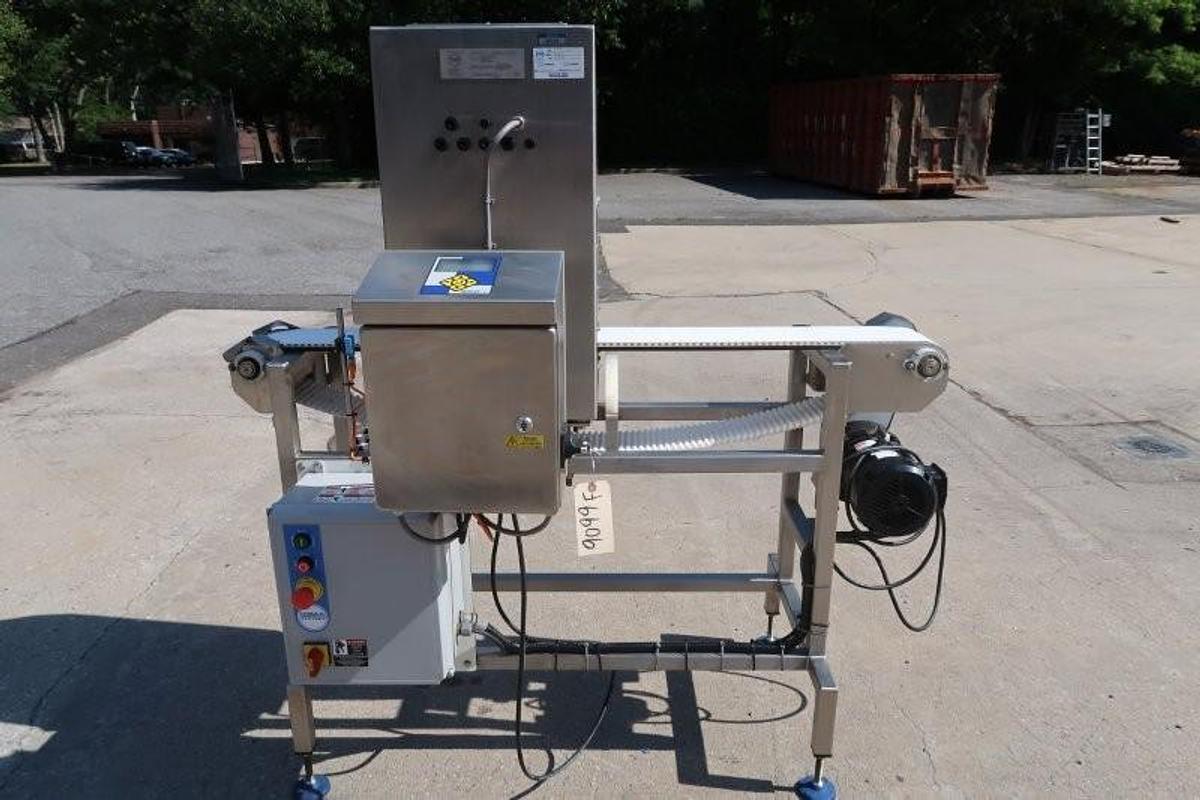
Wohl Industries stocks used metal detectors for food, pharmaceutical, and packaging lines. You get pre-owned belt-style detectors, pipeline detectors, and gravity-fed units. Metal detectors find ferrous, non-ferrous, and stainless contaminants before product ships. Belt units inspect packaged goods with automatic reject. Pipeline models scan pumped liquids and slurries. Gravity units check free-falling powder and granules. Detection protects your customers and your brand. Buying used cuts your capital cost and lead time. We inspect every machine before we ship. We have sold processing and packaging equipment since 1968. Send us your product and aperture size, and we match you to the right detector.
FAQ :
Is it worth buying a used metal detector for industrial or food production use?
For food manufacturers, processors, and packagers, buying a used industrial metal detector is often a very practical decision. These machines, built by brands like Safeline, Loma, Goring Kerr, Fortress Technology, and Eriez, are engineered for continuous production environments and are built to last. A well-maintained unit from one of these manufacturers can deliver years of reliable service at a fraction of the cost of a comparable machine purchased directly from the manufacturer. The key is sourcing from a dealer who specializes in food and packaging equipment and has a verifiable track record, so you can trust the condition assessment you receive.
The value proposition is especially strong for companies scaling up production, running a secondary or backup inspection line, or operating in a cost-sensitive environment. Used conveyorized belt-style detectors and pipeline inline models are widely available in a range of aperture sizes, making it realistic to find a unit that fits your specific product dimensions and throughput requirements. Buyers should factor in the full landed cost, including any rigging, crating, and freight, and should request a thorough inspection before committing to a purchase. With proper due diligence, a used industrial metal detector can deliver the same contamination detection performance as a comparable machine at a significantly lower capital outlay.
What should I look for when buying a used industrial metal detector?
The most important starting point is understanding the application. Conveyorized belt-style detectors are used for packaged or solid products moving along a production line, while pipeline and inline models are designed for liquids, pumped products, or free-flowing bulk materials. Aperture size is a critical spec: the opening needs to match the size of the product being inspected, so always confirm the width and height dimensions before purchasing. Machines with stainless steel frames are generally preferred in food and pharmaceutical environments because they can withstand washdown conditions.
Beyond the physical configuration, buyers should closely examine the condition of the detector head, the control box, and all associated electronics. Ask the dealer for a video or in-person inspection showing the machine powered on and running through a basic detection test. Confirm whether the rejection mechanism, whether an air blast, pusher arm, or diverter, is included and functional. It is also worth contacting the manufacturer directly to ask about parts availability and software support for the specific model you are considering, as older models may have limited support. Dealers who specialize in food processing equipment will typically be able to provide detailed condition notes and facilitate inspections, which is a strong signal that they stand behind what they are selling.
What are the most reputable brands to look for in used industrial metal detectors?
Several brands have established long track records in industrial contamination detection, and their equipment tends to hold up well on the used market. Safeline (now part of Mettler Toledo) is one of the most widely recognized names in food-grade metal detection, with a broad range of conveyorized and pipeline models that appear frequently in the used equipment market. Loma Systems is another well-regarded manufacturer, known for reliable electronics and a range of models including the IQ2 and IQ4 series. Goring Kerr, also absorbed into the Mettler Toledo family over the years, produced durable machines that remain in service at many food facilities. Fortress Technology, Eriez, and S+S Inspection round out the list of brands with strong reputations for build quality and detection performance.
When evaluating a specific model from any of these manufacturers, it is worth researching when that model was in production and whether the manufacturer still supports it with parts and technical assistance. Older machines from well-known brands can still perform reliably, but parts availability does diminish over time, which is something to weigh carefully. Dealers who specialize in inspection equipment will often carry multiple brands and can help match a buyer to the right model for their product type, line speed, and aperture requirements. Sticking with established brands from a knowledgeable dealer is the most straightforward way to reduce risk on a used equipment purchase.
What is the typical lifespan of an industrial metal detector?
Industrial metal detectors built for food and pharmaceutical production are generally designed for demanding, continuous-use environments, and with proper maintenance they can remain serviceable for 15 to 20 years or more. The electronics are often the first component to show age, particularly older analog control systems, but many manufacturers have produced machines with modular electronics that can be upgraded or repaired without replacing the entire unit. The detector head and coil assembly, if not physically damaged or exposed to excessive moisture intrusion, tend to be quite durable over long service periods.
The practical lifespan of any specific machine on the used market depends heavily on how it was used and maintained in its previous installation. A detector that ran a single-shift dry bakery line for ten years is likely in better shape than one that ran three shifts in a wet protein processing environment for the same period. This is why inspection is so important before purchase. Buyers should ask about the machine's production history, the types of products it inspected, and whether it received regular calibration and preventive maintenance. Contacting the manufacturer with the serial number can sometimes yield useful information about the unit's production date and service history, which helps set realistic expectations for remaining service life.
What is the difference between a belt-style conveyorized metal detector and a pipeline metal detector?
Belt-style or conveyorized metal detectors use a conveyor belt to pass packaged or unpackaged solid products through a detection aperture. The product travels horizontally through the opening, and when metal contamination is detected, a rejection mechanism diverts the affected product off the line. These machines are common in bakery, snack food, frozen food, meat processing, and general packaging applications. Aperture sizes vary considerably, and selecting the right opening for your product size and packaging height is essential for both detection sensitivity and line integration.
Pipeline metal detectors, sometimes called inline or flow-through detectors, are designed for products that are pumped or gravity-fed through a pipe. They are used for liquids, pastes, slurries, and bulk granular or powder products. The product flows through a cylindrical aperture in the detector head, and a diverter valve or other rejection mechanism removes contaminated product from the flow stream. Tri-clamp ports are a common connection standard in food-grade pipeline detectors, making sanitary installation and cleaning easier. Both detector types are available in the used equipment market across a range of aperture sizes and configurations, so the right choice depends entirely on your product form and production process.
How does the inspection process work when buying a used metal detector?
Reputable used equipment dealers typically offer buyers the opportunity to inspect a machine before committing to a purchase. This can take several forms depending on the machine's current location. If the detector is still installed at a production facility, the dealer may be able to arrange an in-person visit or a live video walkthrough where the machine is shown running on the line. If the equipment has already been decommissioned and is at the dealer's facility, an in-person or video inspection can usually be arranged directly with the dealer. Either way, the goal is to give the buyer an accurate picture of the machine's current condition and functional status.
During an inspection, buyers should ask to see the machine powered on, the control interface demonstrated, and if possible, a basic detection test performed using a test piece. Examine the detector head for any physical damage, corrosion, or signs of moisture intrusion. Check the condition of the conveyor belt and frame on belt-style units, and inspect all electrical connections and the control box for any visible issues. Keep in mind that most dealers are not set up to run actual production, so a full production trial is generally not feasible in a dealer environment. Buyers who have specific sensitivity requirements or regulatory compliance needs should factor in their own commissioning and validation process after the machine arrives at their facility.
Do used metal detectors come with a warranty?
Warranties on used industrial equipment are generally not offered the way they are on equipment sold directly by manufacturers. Most used equipment dealers sell machines on an as-is basis, which means the responsibility for evaluating condition falls on the buyer prior to purchase. This is standard practice across the used machinery industry and is not unique to metal detectors. It is one of the primary reasons that thorough pre-purchase inspection matters so much, and why working with a dealer who has a long history in the food and packaging equipment sector is worth prioritizing over simply finding the lowest price.
Buyers should ask dealers directly about their policies regarding disputes if a machine arrives in materially different condition than described or shown during inspection. Beyond that, contacting the original manufacturer before purchasing is a smart step. Manufacturers can often tell you whether a specific model is still supported, what parts are available, and what level of technical assistance they can provide. Some manufacturers will service and calibrate used machines of their own brand, which can provide a meaningful layer of support even without a dealer warranty. Understanding the support landscape before you buy helps set realistic expectations and reduces the risk of being left without recourse if something needs attention after delivery.
What aperture size do I need for a used metal detector?
Aperture size is one of the most critical specifications to get right when selecting a used metal detector, and it is determined by the dimensions of the largest product or package that needs to pass through the detector. For conveyorized belt-style machines, the aperture is described as a width by height measurement. The product, including any packaging, must fit comfortably within that opening with some clearance on all sides. Running product too close to the edges of the aperture can cause false rejects due to the product effect, where the detector registers the product itself rather than a contaminant.
As a general rule, the smaller the aperture relative to the product size, the more sensitive the detector can be set for small metal fragments. A very large aperture used to inspect a small product will result in reduced sensitivity because the detector's electromagnetic field is spread over a larger area. For pipeline detectors, aperture refers to the internal diameter of the flow-through head, which needs to match the pipe size in your production line. Used machines are available across a wide range of aperture sizes, from compact units with openings under 10 inches wide to large conveyorized systems exceeding 24 inches in width. Knowing your product dimensions and packaging height before searching for a used unit will significantly narrow the field and help you find the right fit.
What are the typical shipping and logistics considerations when buying a used metal detector?
Shipping a used industrial metal detector requires more planning than a standard freight shipment. The detector head contains sensitive electronics and coil assemblies that can be damaged by rough handling, vibration, or improper support during transit. Reputable dealers will palletize or crate the machine appropriately before shipment, but the level of packaging required, and its associated cost, will vary depending on the size and weight of the unit. Buyers should ask the dealer specifically how the machine will be packaged and what that packaging cost includes before agreeing to a purchase price.
Larger conveyorized systems with full conveyor frames may require specialized rigging equipment for loading at the dealer's location and unloading at the buyer's facility. This can add meaningful cost to the transaction and requires coordination between the buyer, the dealer, and the freight carrier. Buyers should request a detailed breakdown of all costs involved, including crating, rigging, freight, and any liftgate or inside delivery fees, so they understand the full landed cost of the machine before it arrives. International shipments add additional layers of complexity around customs, duties, and documentation, so those details should be confirmed with the dealer early in the process.
What payment terms should I expect when purchasing a used metal detector from a dealer?
Most used equipment dealers require payment in full before a machine is shipped or released. This is standard practice in the used machinery industry and applies to first-time buyers in nearly all cases. The rationale is straightforward: unlike a retail transaction where a product can be easily returned and resold, industrial machinery is a specialized asset that is difficult to remarket quickly if a buyer backs out after shipment. Buyers should be prepared to wire funds or arrange another accepted form of payment before the machine leaves the dealer's facility.
Some dealers may offer payment terms or deferred payment arrangements to established customers with a history of repeat purchases, but this is not common for first-time transactions. Buyers who need financing should explore equipment financing options through third-party lenders, as many lenders specialize in used machinery and can move quickly on transactions of this type. Before sending any payment, buyers should confirm the dealer's identity, review any available transaction history or references, and ensure that all agreed-upon inspection results and machine specifications are documented in writing. Paying only after a satisfactory inspection has been completed is the most straightforward way to protect your interests in a used equipment transaction.