Category
Subcategory
Manufacturer
Model
Cappers Used Kapsall Cappers & Retorquers, etc.
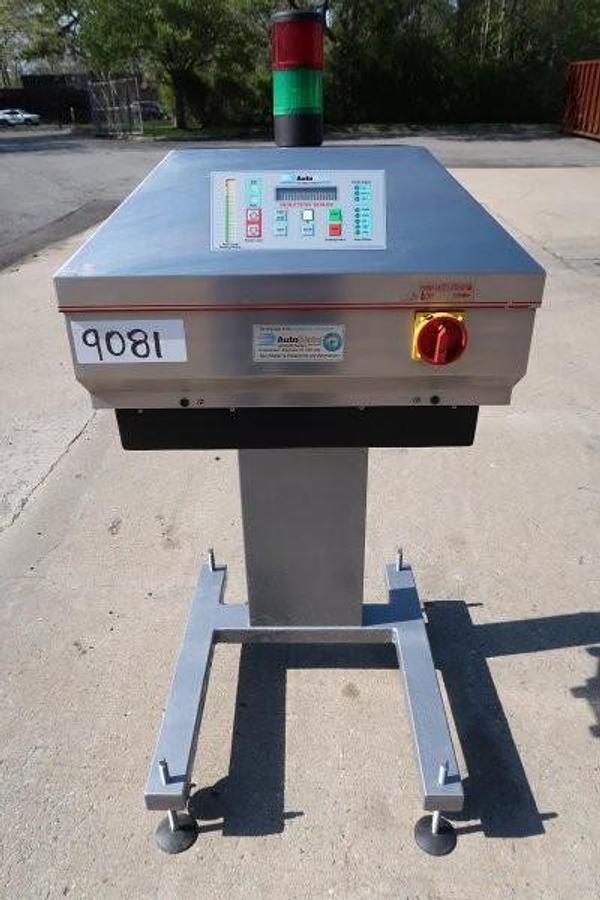
Capping machines are used to torque caps onto containers. Cappers can be used on containers of different configurations, diameters, and materials from glass jars to pet containers (plastic bottles) and bottles of different shapes. Our inventory contains both fully automatic cappers and semi-automatic cappers, cap tighteners and retorquers as well as quill cappers (or spindle cappers) and chuck cappers in both straight-line/in-line and high speed rotary configurations. We stock a variety of brands including KAPS-ALL, RESINA, PACK WEST, and ZALKIN. Provide us with your required cap diameter, cap type, and speed and we will provide you with the proper used capping machine to suit your needs.
FAQ :
What types of used cappers are available on the secondhand market?
The used capper market covers a wide range of machine types, each designed for specific cap styles and production environments. The main categories include spindle cappers (also called quill cappers), chuck cappers, snap cappers, press-on cappers, steam cappers, and induction sealers. Spindle cappers use rotating discs to apply torque to screw caps and are among the most commonly found used machines. Chuck cappers grip the cap directly and apply a set torque, making them well-suited for applications requiring precise closure. Snap and press-on cappers handle caps that do not require rotation, while steam and vacuum cappers are used for hermetic sealing on food products like jars.
Within each category, machines are further classified by their level of automation. Fully automatic inline cappers handle cap feeding, placement, and torquing without operator intervention and are available in both straight-line and high-speed rotary configurations. Semi-automatic cappers require an operator to place caps before the machine applies torque, making them a practical choice for smaller production runs. Retorquers and cap tighteners are a specialized subset used to verify or re-apply torque to caps that have already been placed, often positioned downstream on a packaging line. Brands commonly found in the used market include KAPS-ALL, RESINA, PACK WEST, ZALKIN, Swanmatic, Surekap, Aesus, and Enercon, among others.
What should I look for when evaluating a used capper before buying?
Assessing a used capper requires looking beyond basic functionality. Start with the mechanical condition of the spindles, chuck heads, or quills, since these are the highest-wear components on any capping machine. Worn spindle discs or chuck inserts will produce inconsistent torque and may need immediate replacement. Check the condition of the drive belts, bearings, and any conveyor components. On stainless steel machines, inspect welds and surfaces for corrosion, cracks, or repairs that could indicate the machine was used in a harsh environment. Ask the dealer for any available service records, maintenance logs, or information about the production environment the machine came from.
Reputable used equipment dealers will typically offer in-person inspections, video walkthroughs, or recorded video captures of the machine so buyers can evaluate its current condition before committing to a purchase. Some machines may still be installed and running at the facility where they are being decommissioned, which gives buyers the opportunity to see the equipment in operation. Keep in mind that most dealers do not have the permits or infrastructure to run full production trials, so live product testing at the dealer's location is generally not available. Buyers should also contact the original manufacturer to understand what level of technical support, spare parts availability, and documentation can still be obtained for the specific model and age of machine being considered, since older or discontinued models may have limited support.
What cap types and container configurations are compatible with used capping machines?
Capping machines are designed around specific cap styles, and compatibility is one of the first things to confirm before purchasing a used unit. Screw caps (also called continuous thread caps) are the most common and are handled by spindle and chuck cappers. Snap caps and press-on closures require a different mechanism, typically a press-on or snap capper. Steam and vacuum cappers are used for twist-off lug caps common in food processing. Induction sealers do not apply the cap itself but instead bond a foil liner inside an already-applied cap using electromagnetic heat, making them a separate category that works alongside other capping equipment.
On the container side, used cappers can be configured to handle a wide range of shapes, diameters, and materials, including glass jars, PET plastic bottles, HDPE bottles, and containers with round, oval, or irregular profiles. The key specification to match is cap diameter, which determines whether the machine's spindles, chuck tooling, or guides can be adjusted or changed out to fit your application. Most inline spindle cappers accommodate a range of cap diameters through adjustable tooling or changeover parts. When inquiring about a specific used machine, providing the cap diameter, cap type, container height, and required output speed in bottles per minute will help a dealer determine whether a particular unit is suitable for your line.
Are used cappers capable of handling high-volume commercial production?
Yes, many used cappers on the market were originally built for high-volume commercial and industrial production and are fully capable of meeting demanding output requirements. Automatic inline spindle cappers and rotary cappers from brands like KAPS-ALL, RESINA, and Pack West are designed for continuous production environments and can achieve speeds ranging from 80 to over 300 bottles per minute depending on the model and configuration. For example, machines like the Pack West Auto 200 eight-spindle capper are rated at 300 per minute, and rotary screw cappers such as the U.S. Bottlers PMC-16 can reach 425 per minute. These machines were built to run in food, beverage, pharmaceutical, and chemical packaging lines and retain that capability when properly maintained.
The suitability of a used capper for high-volume production depends heavily on its mechanical condition at the time of purchase. Machines with stainless steel frames are generally preferred for commercial food and pharmaceutical applications because they meet sanitary construction standards and resist corrosion from washdowns and product exposure. Semi-automatic cappers, while popular for smaller operations, are limited by the speed at which an operator can feed caps and are better suited to runs of a few hundred to a few thousand containers per shift rather than continuous high-speed production. Buyers targeting high-volume applications should focus on fully automatic machines with cap elevators or bowl feeders, which automate the cap sorting and delivery process and remove the operator bottleneck entirely.
Which brands of used cappers are considered most reliable when buying secondhand?
Brand reputation matters considerably in the used capper market because it directly affects parts availability, technical documentation, and the level of manufacturer support a buyer can expect after purchase. KAPS-ALL is one of the most widely recognized names in the screw capping segment and has a large installed base across food, beverage, and pharmaceutical industries. Their machines are known for mechanical durability, and the brand has been in production long enough that many older models are still supported with parts and service manuals. RESINA, PACK WEST, and ZALKIN are similarly well-regarded for inline and rotary capping applications, particularly in higher-speed production environments.
For semi-automatic and tabletop applications, Swanmatic and Surekap are frequently found in the used market and have reputations for reliable, straightforward operation that makes them easy to maintain and adjust. Aesus, Enercon (for induction sealers), and New England Machinery also appear regularly in used inventories and are generally supported by their manufacturers for parts and technical guidance. When evaluating any used machine, it is worth contacting the manufacturer directly to ask about parts availability, the availability of electrical schematics or manuals, and whether their service team still supports that model. An older machine from a well-supported brand can often be a better investment than a newer machine from a manufacturer that has since exited the market or discontinued that product line.
Can replacement parts be sourced for a used capper after purchase?
Parts availability varies significantly depending on the brand, model, and age of the machine. For widely used brands like KAPS-ALL, Swanmatic, Enercon, and New England Machinery, many wear parts such as spindle discs, belts, bearings, and chuck inserts are still actively manufactured and can be ordered directly from the original equipment manufacturer or through authorized distributors. These companies have supported their product lines for decades, which means even machines that are 20 or more years old may still have serviceable parts available. It is always a good idea to contact the manufacturer before purchasing a used machine to confirm what parts are stocked and what the lead times look like.
For less common brands or machines that have been discontinued, sourcing parts can be more challenging. In these cases, buyers often rely on third-party machining to fabricate wear parts, sourcing generic components like bearings and belts through industrial suppliers, or purchasing a second machine of the same model as a parts donor. Spindle discs and cap-contact components are the most frequently replaced parts on screw cappers and are worth inquiring about specifically before committing to a purchase. Buyers should also ask the seller whether any spare parts or tooling are included with the machine, as dealers sometimes have additional change parts, spare discs, or tooling sets that were used with the machine during its production life and can be included in the sale.
What is the difference between a spindle capper and a chuck capper?
Spindle cappers and chuck cappers are both used to apply screw-type closures, but they work through different mechanisms and are suited to different applications. A spindle capper (also called a quill capper) uses a series of rotating friction discs arranged in pairs along a conveyor. As a capped container passes through, the spinning discs contact the sides of the cap and apply torque through friction, driving the cap down onto the container threads. The number of spindle pairs (four, six, or eight spindles) affects how much torque can be applied and at what speed. Spindle cappers are well-suited to high-speed inline production because they cap continuously without stopping the container.
Chuck cappers work differently. A chuck head descends onto the cap, grips it directly, and applies a precise rotational torque before releasing. This approach allows for more controlled and repeatable torque values, which is important in pharmaceutical and nutraceutical applications where closure integrity must meet specific standards. Chuck cappers are available in single-head semi-automatic configurations for low-volume use and in multi-head rotary configurations for high-speed lines. The trade-off is that chuck cappers typically require the container to pause momentarily during capping, which can limit throughput compared to a continuous-motion spindle capper running at equivalent speeds. Both types are commonly available in the used market, and the right choice depends on cap style, required torque precision, and production speed requirements.
What output speeds should buyers expect from used capping machines?
Output speed on capping machines is measured in containers per minute (CPM) or bottles per minute (BPM), and the range across different machine types is substantial. Tabletop and benchtop semi-automatic cappers like the Swanmatic C300 series are designed for manual-assist production and typically handle anywhere from 5 to 30 containers per minute depending on the operator and cap type. These are practical for small-batch production, startups, and contract packagers handling short runs across multiple SKUs. Portable cap tighteners and retorquers operate in a similar range and are often used as secondary stations to verify or re-apply torque after an automated line.
Automatic inline spindle cappers cover a much wider range. Four-spindle automatic machines like the KAPS-ALL E4 are typically rated around 80 per minute, while six-spindle models such as the KAPS-ALL A6 and A2 series are commonly rated at 150 to 200 per minute. Eight-spindle machines and high-speed rotary cappers push further, with models like the Pack West Auto 200 rated at 300 per minute and rotary units exceeding 400 per minute. When evaluating a used machine's speed rating, keep in mind that the published speed assumes a specific cap diameter, container type, and line configuration. Real-world throughput on your specific application may differ, and it is worth discussing expected output with the dealer based on your container and cap specifications before purchasing.
Do used cappers come with any warranty or guarantee?
Used capping machines are typically sold as-is, without a warranty from the dealer. Warranties on packaging equipment are generally only offered by the original manufacturer on machines sold through authorized channels, and that coverage does not transfer to subsequent owners or apply to machines sold through the secondary market. This is standard practice across the used machinery industry and is not specific to any one dealer or machine type. Because there is no warranty safety net, the responsibility for assessing the machine's condition falls on the buyer prior to purchase.
To manage that risk, buyers should work exclusively with dealers who have an established track record in the packaging machinery segment and who can provide detailed information about the machine's history, condition, and provenance. Reputable dealers will accommodate in-person inspections at their facility, or they will arrange virtual inspections and video walkthroughs so buyers can evaluate the equipment before committing. For machines still installed at a production facility, some dealers can arrange access for the buyer to observe the equipment running in its current environment. Buyers should also contact the machine's manufacturer directly to understand what technical support, service documentation, and parts availability they can expect, since the manufacturer's level of support for a given model can vary considerably based on the machine's age and whether that product line is still active.
What should buyers expect regarding shipping and delivery of a used capper?
Shipping a used capper involves more logistical planning than standard freight because these machines range from compact benchtop units to large inline systems that require industrial rigging. Smaller tabletop cappers like the Swanmatic C300 or portable retorquers can often be palletized and shipped via standard LTL freight carriers with relatively straightforward packaging. Larger automatic inline cappers and rotary systems are heavier and more complex, often requiring custom crating to protect sensitive components like spindle assemblies, conveyors, and electrical panels during transit. The level of packaging required directly affects shipping costs, and buyers should ask the dealer for a detailed breakdown of crating, rigging, and freight charges before finalizing a purchase to understand the full landed cost.
For large machines, loading at the origin and unloading at the destination may require a forklift, crane, or specialized rigging crew, and those costs are typically the buyer's responsibility unless otherwise negotiated. If the machine is being shipped internationally, additional considerations include export documentation, customs duties, and compliance with the destination country's electrical standards, since many used machines are configured for North American voltage and may require transformer or electrical modifications. Buyers should clarify all of these details with the dealer in advance. Most reputable dealers have experience coordinating domestic and international shipments and can provide guidance on what to expect, but the buyer should confirm packaging methods, carrier selection, and delivery requirements before the machine leaves the seller's facility.