Category
Subcategory
Manufacturer
Model
Tumbling Mixers
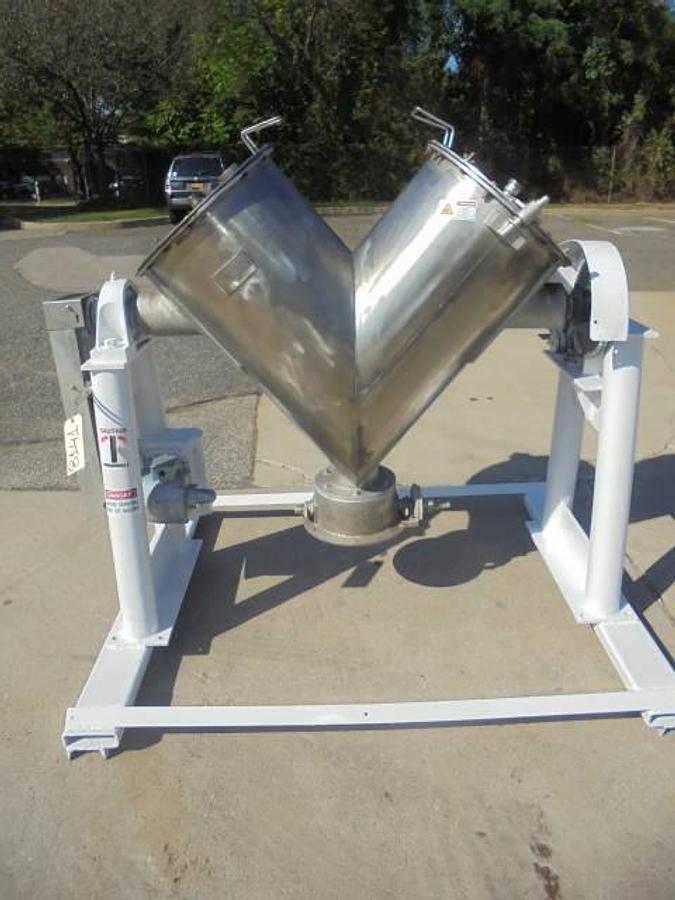
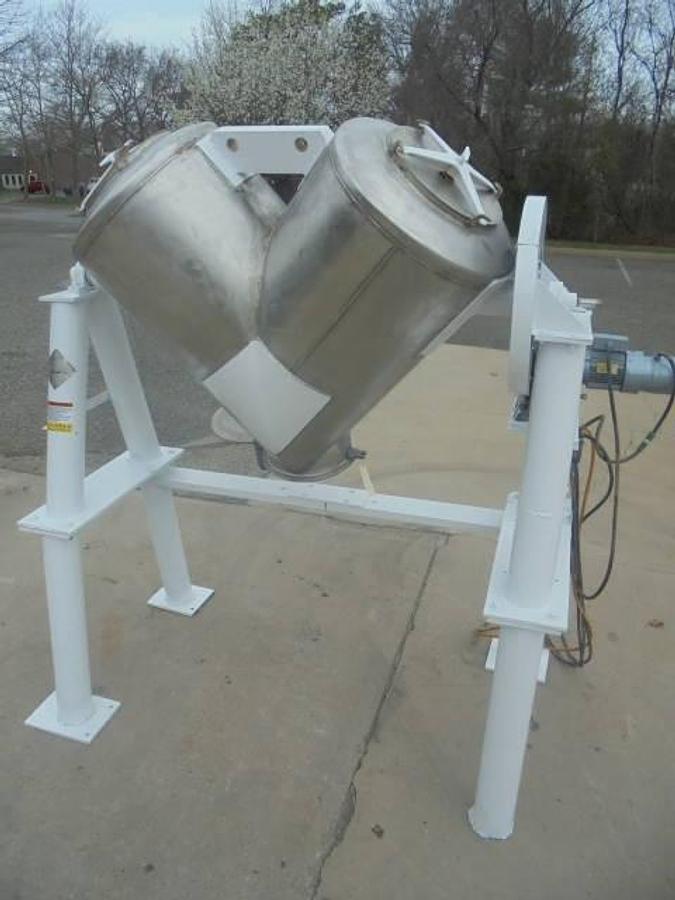
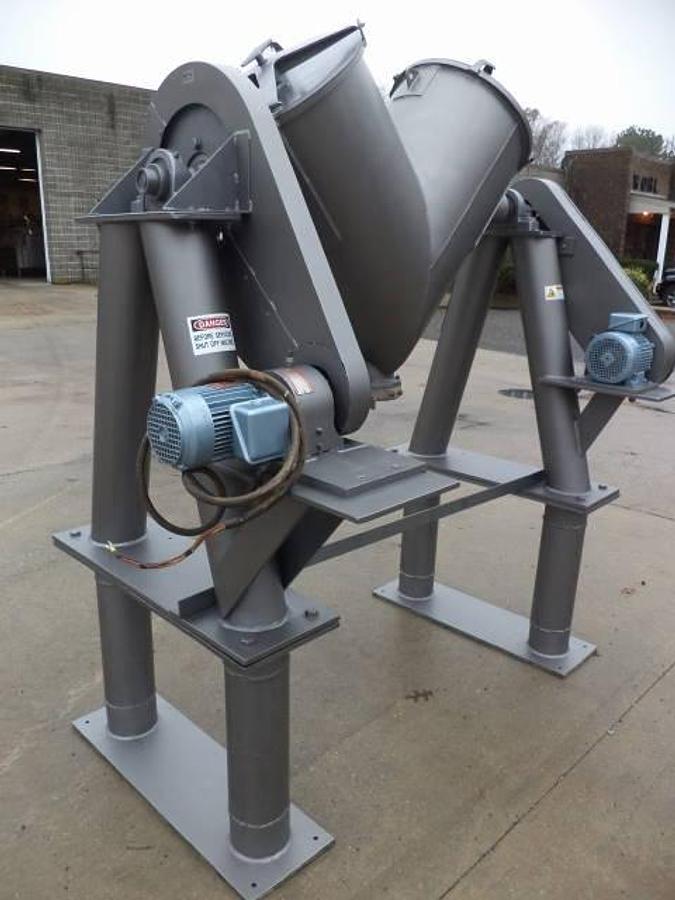
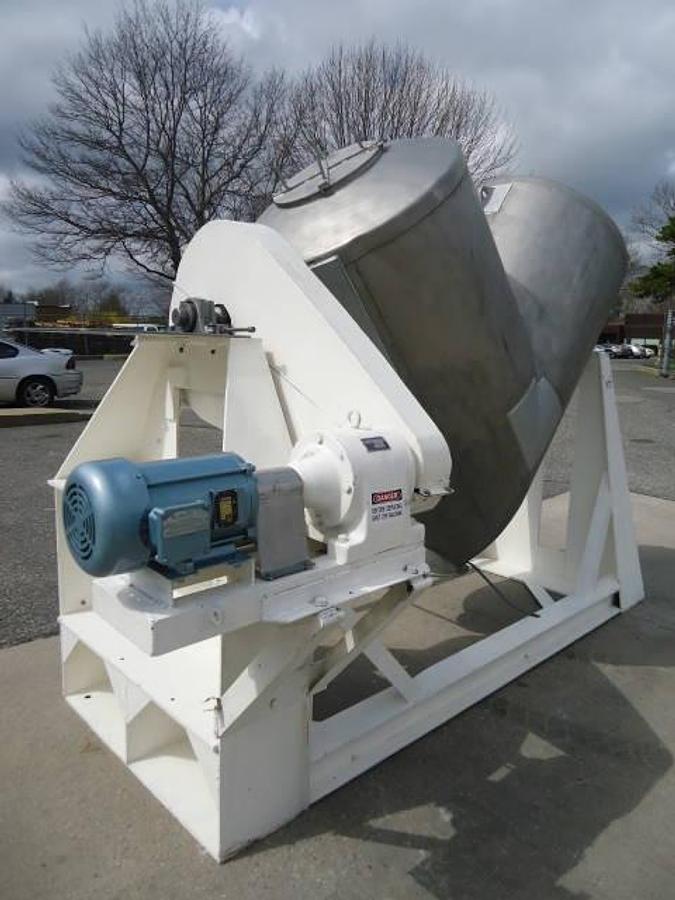
V-Blenders (Twin Shell), Double Cone Blenders, & Slant Cone
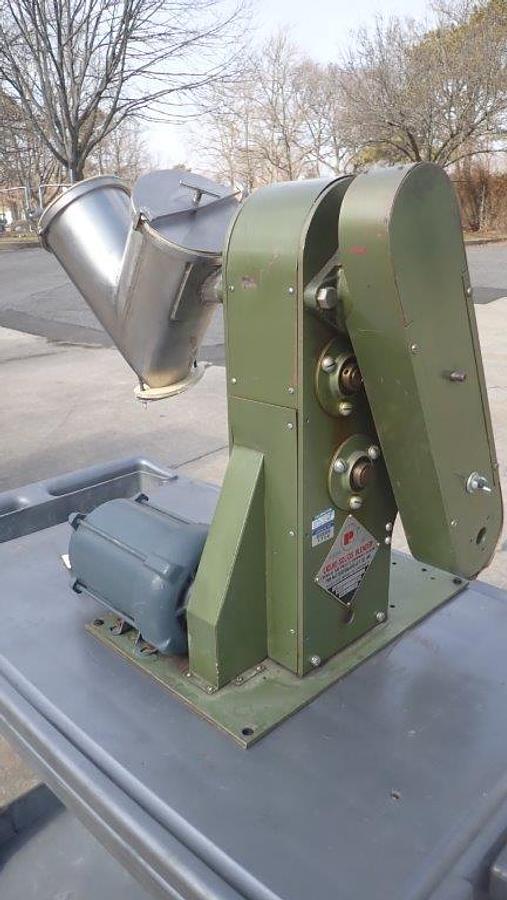
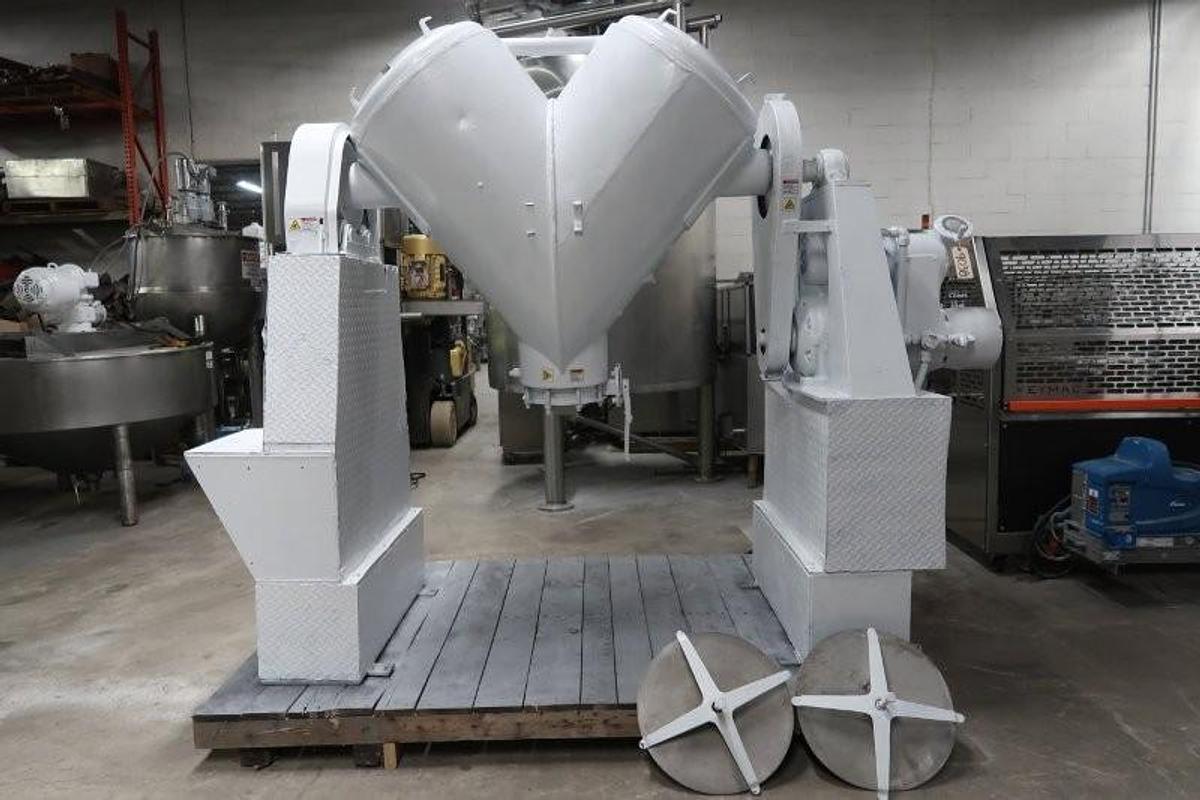
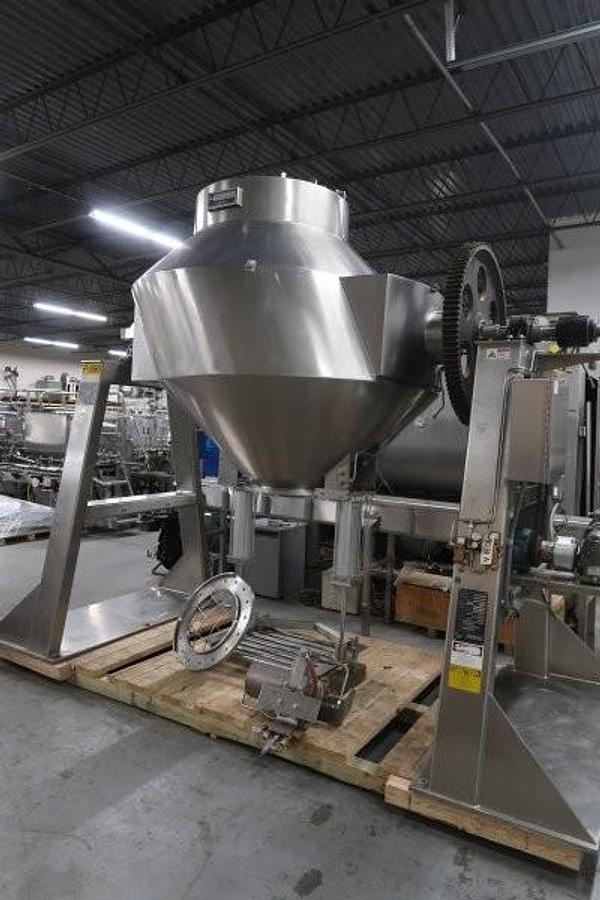
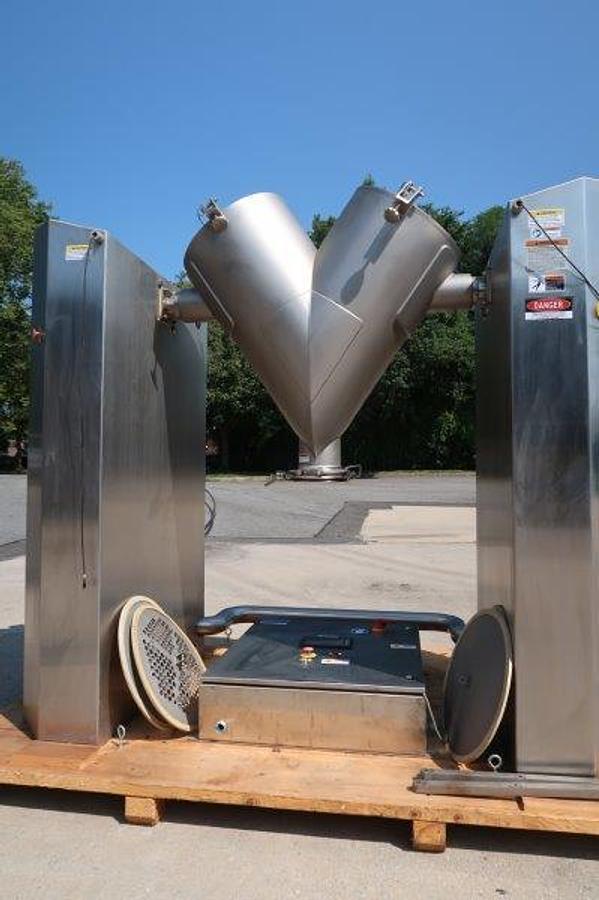
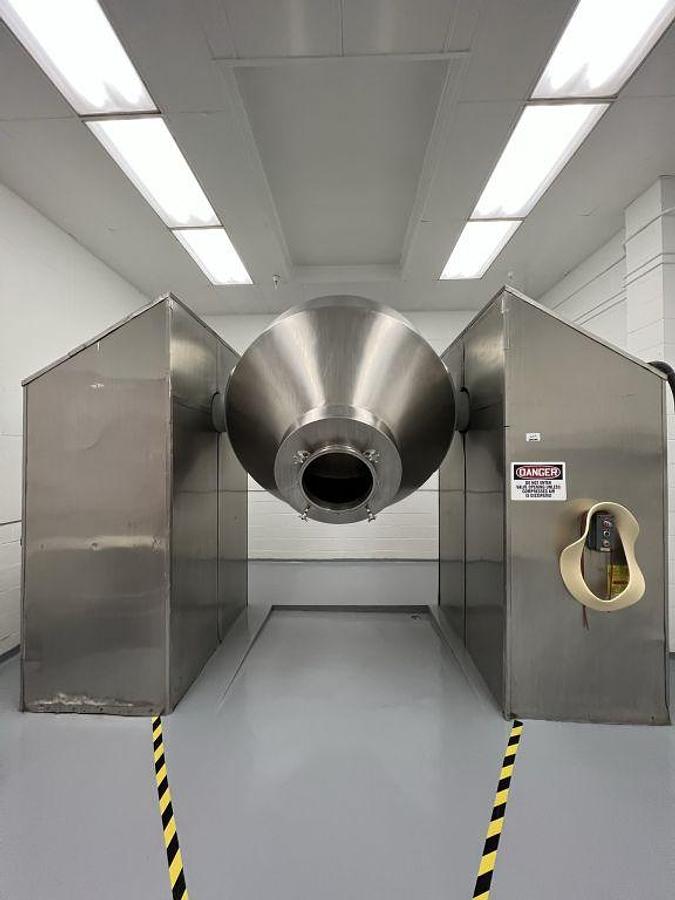
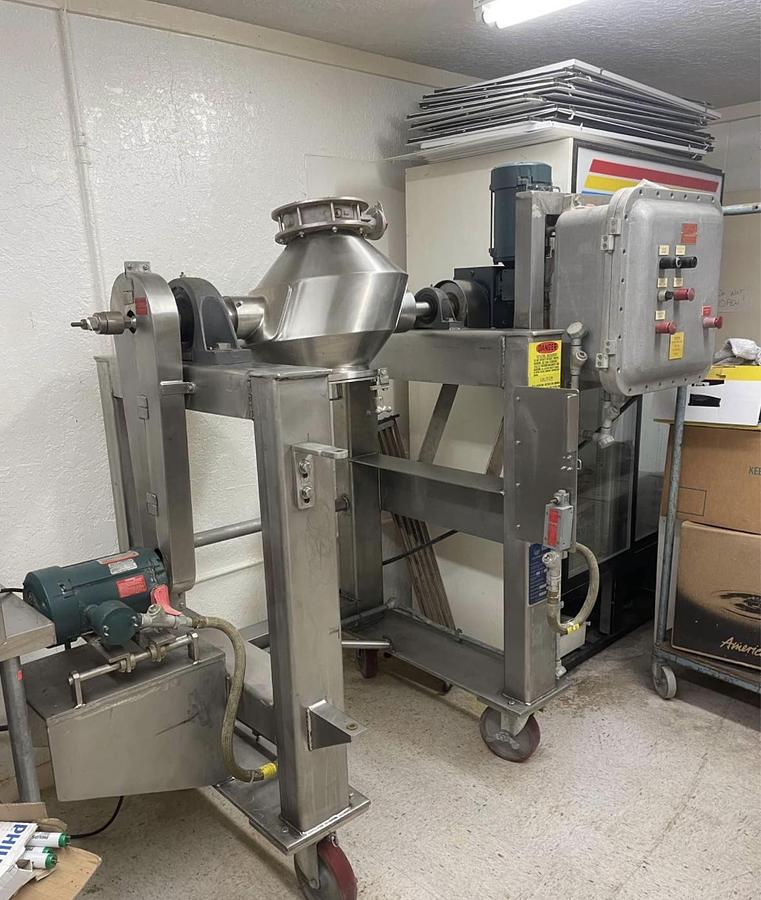
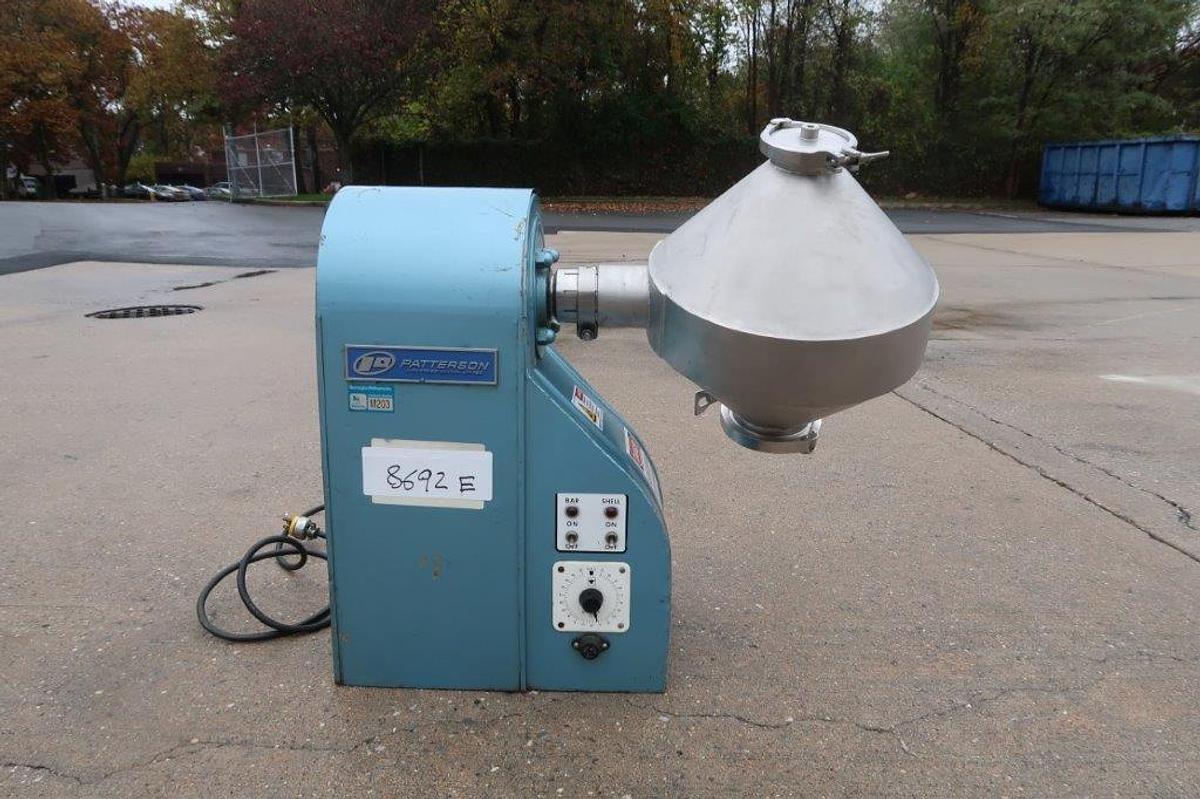
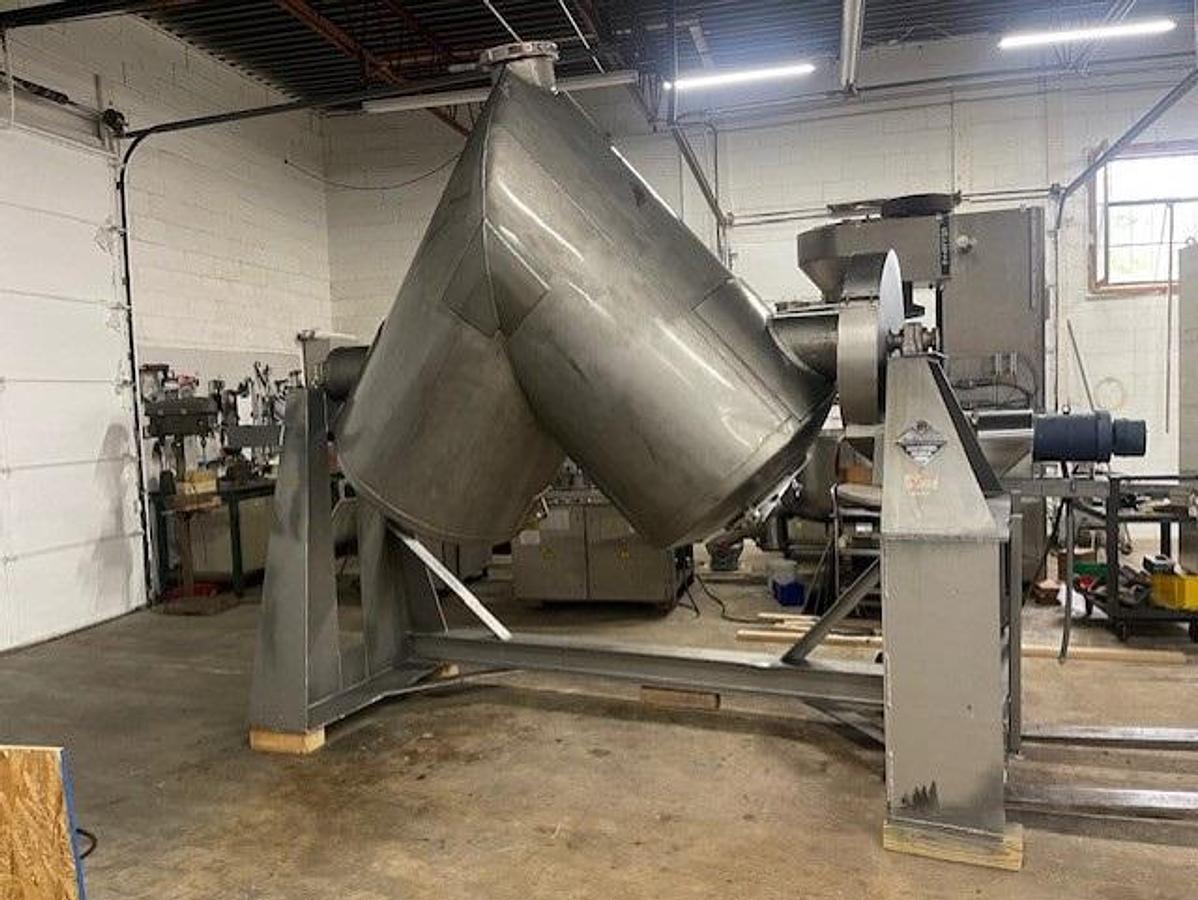
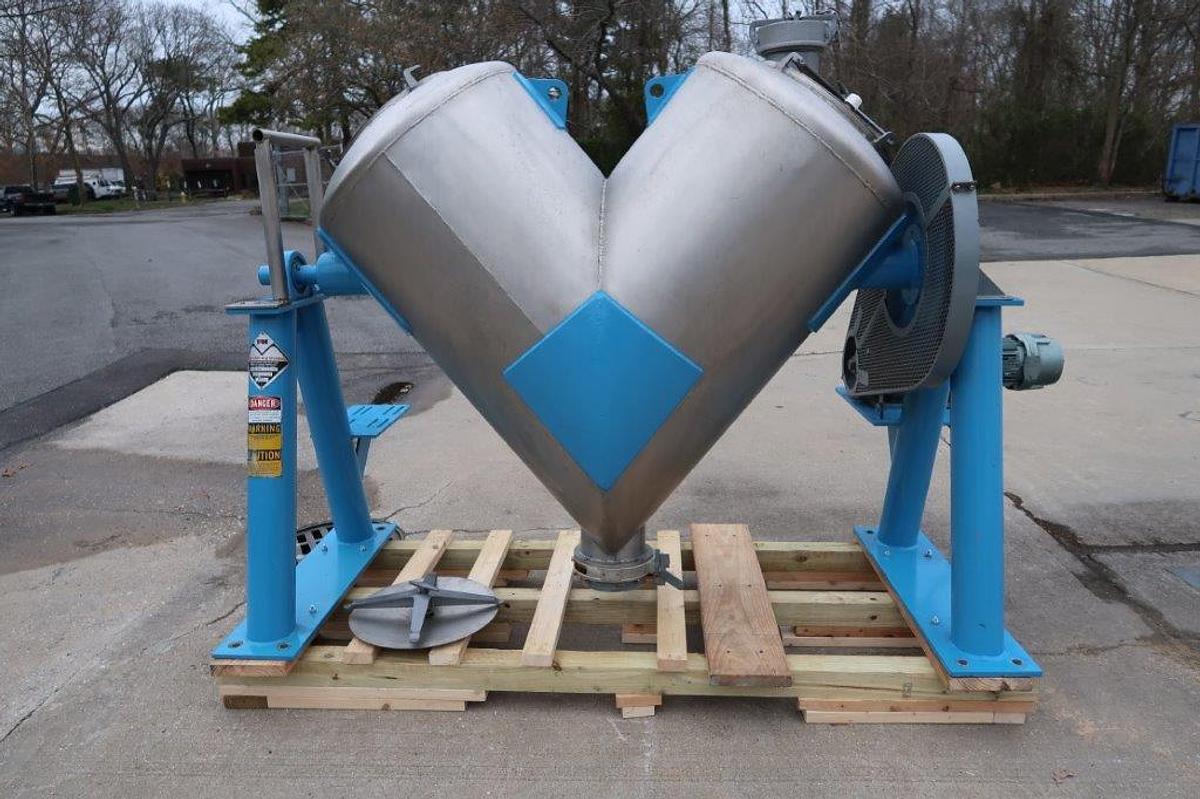
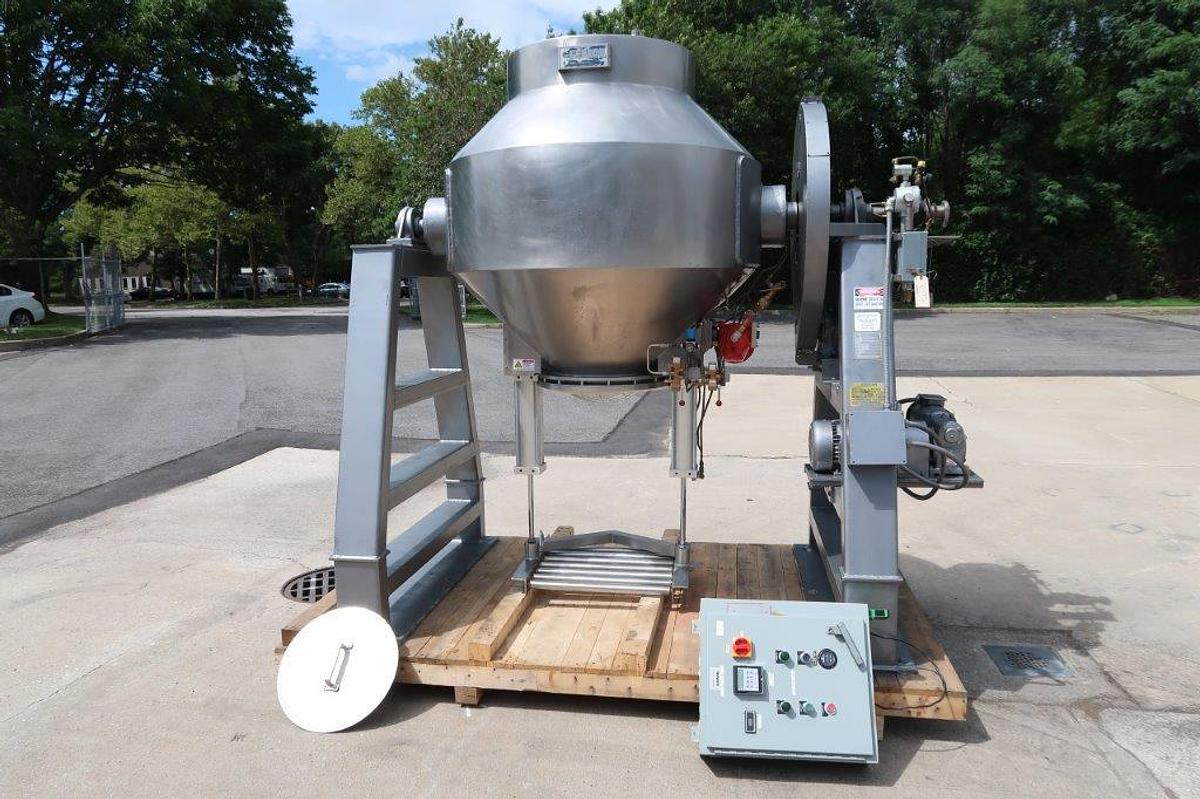
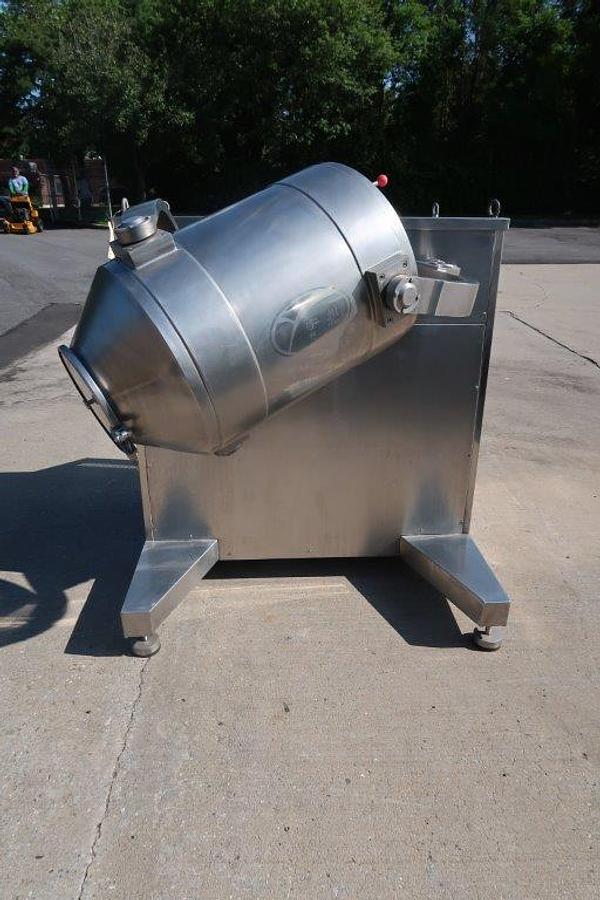
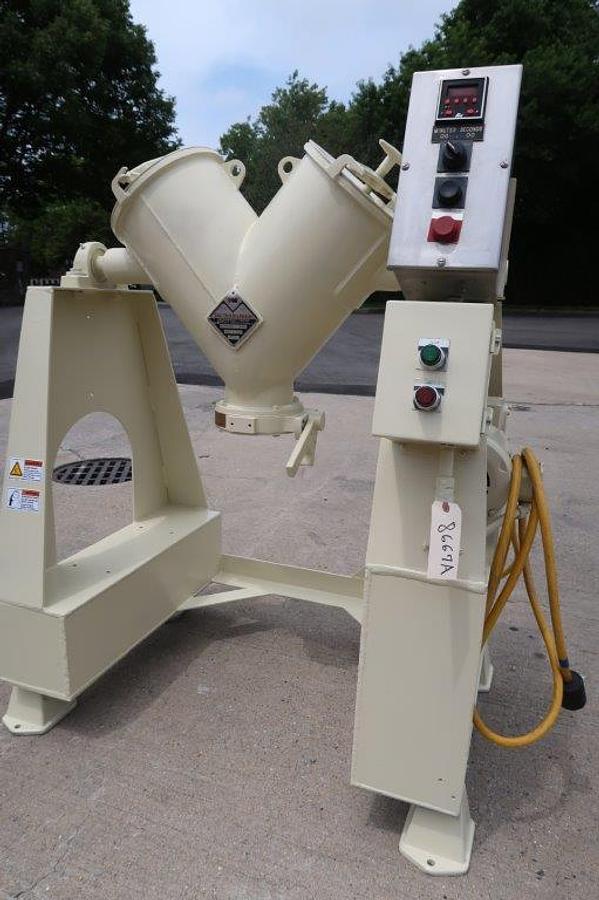
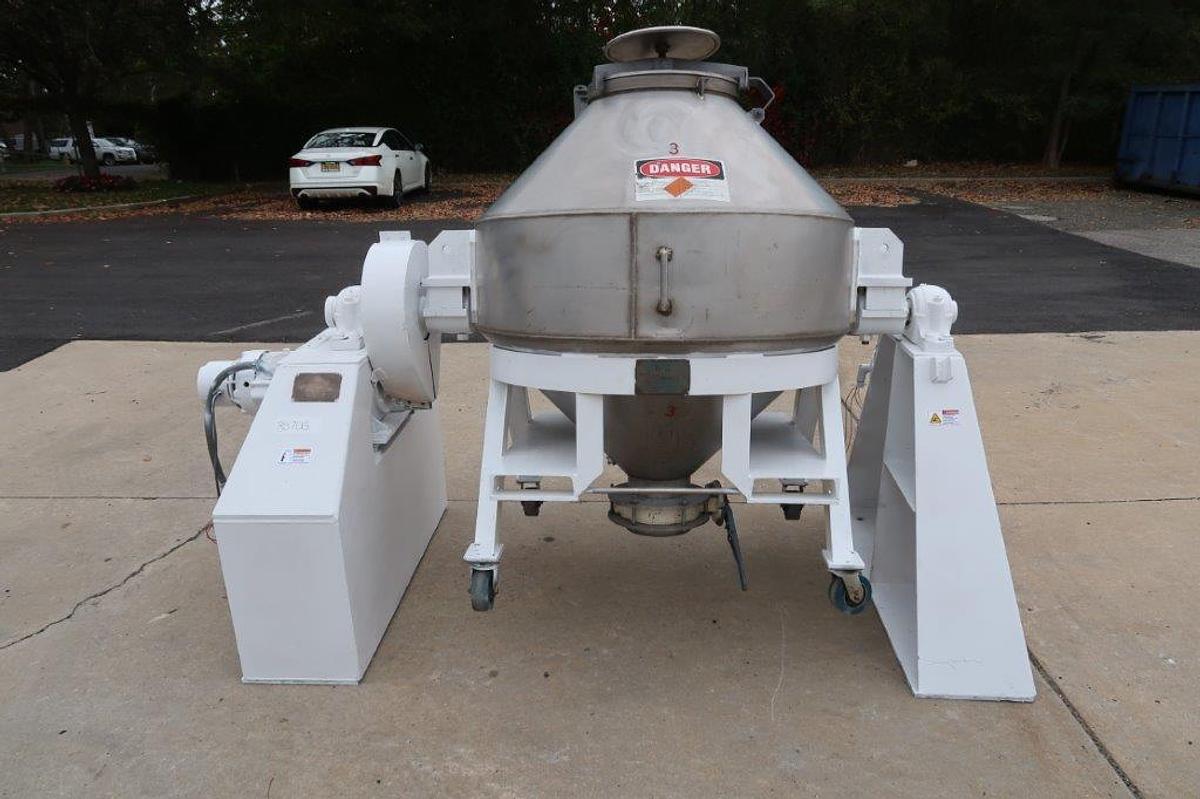
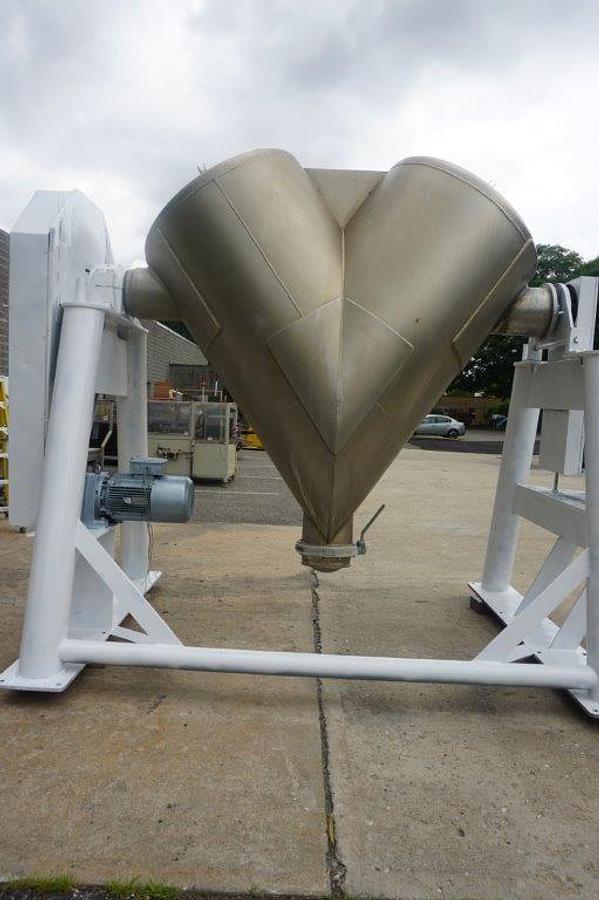
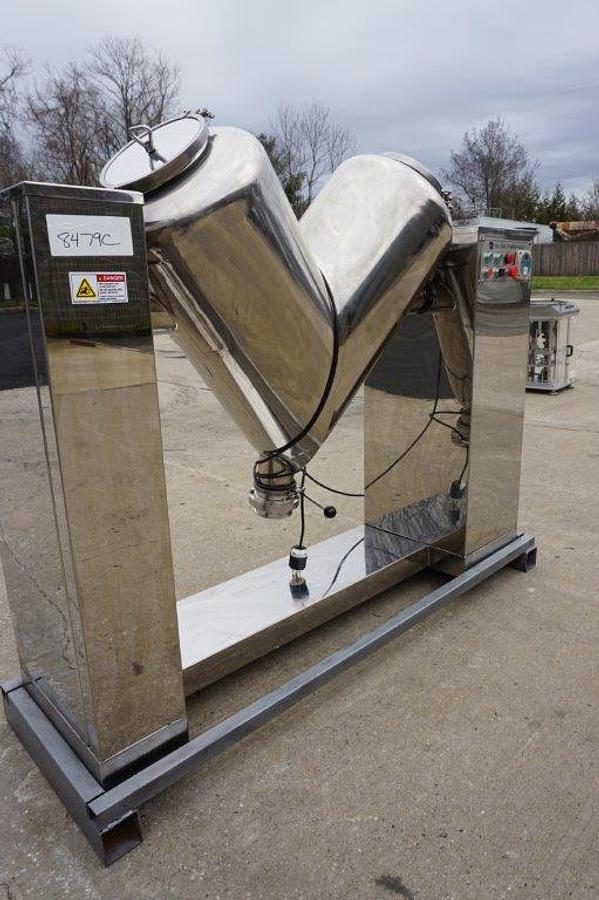
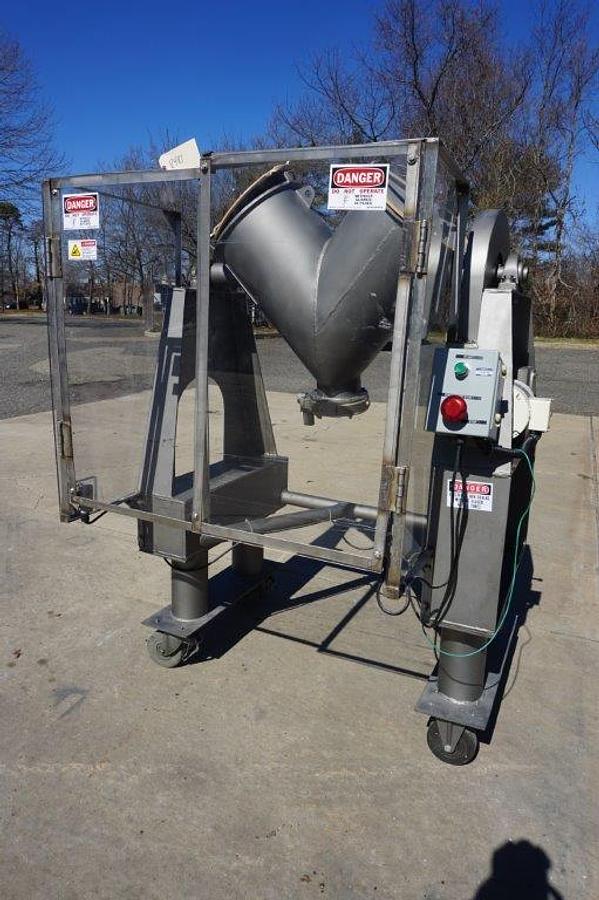
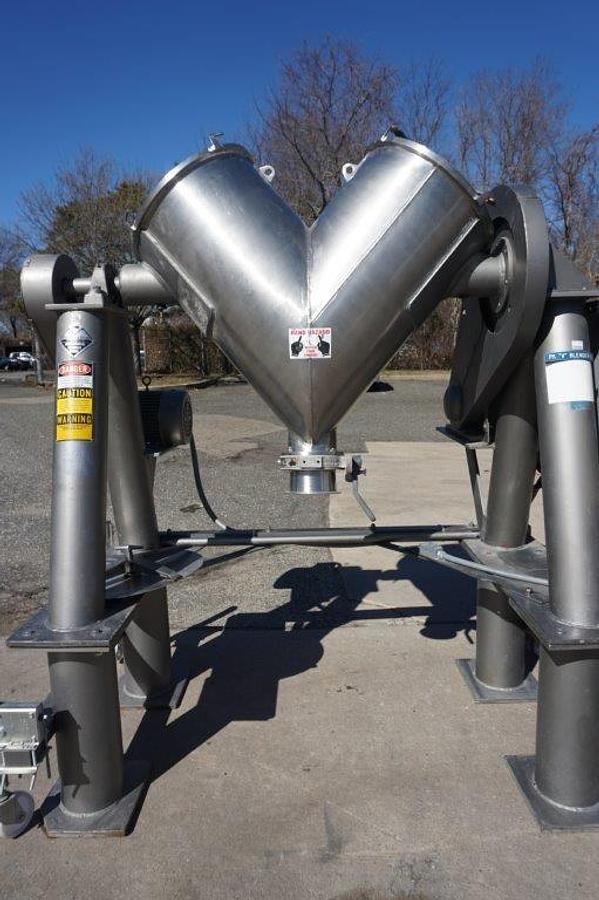
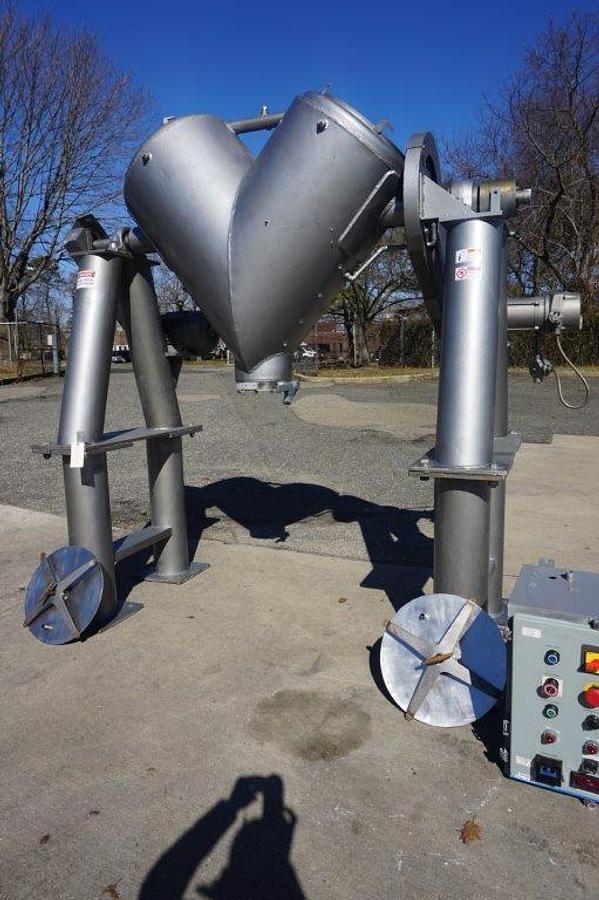
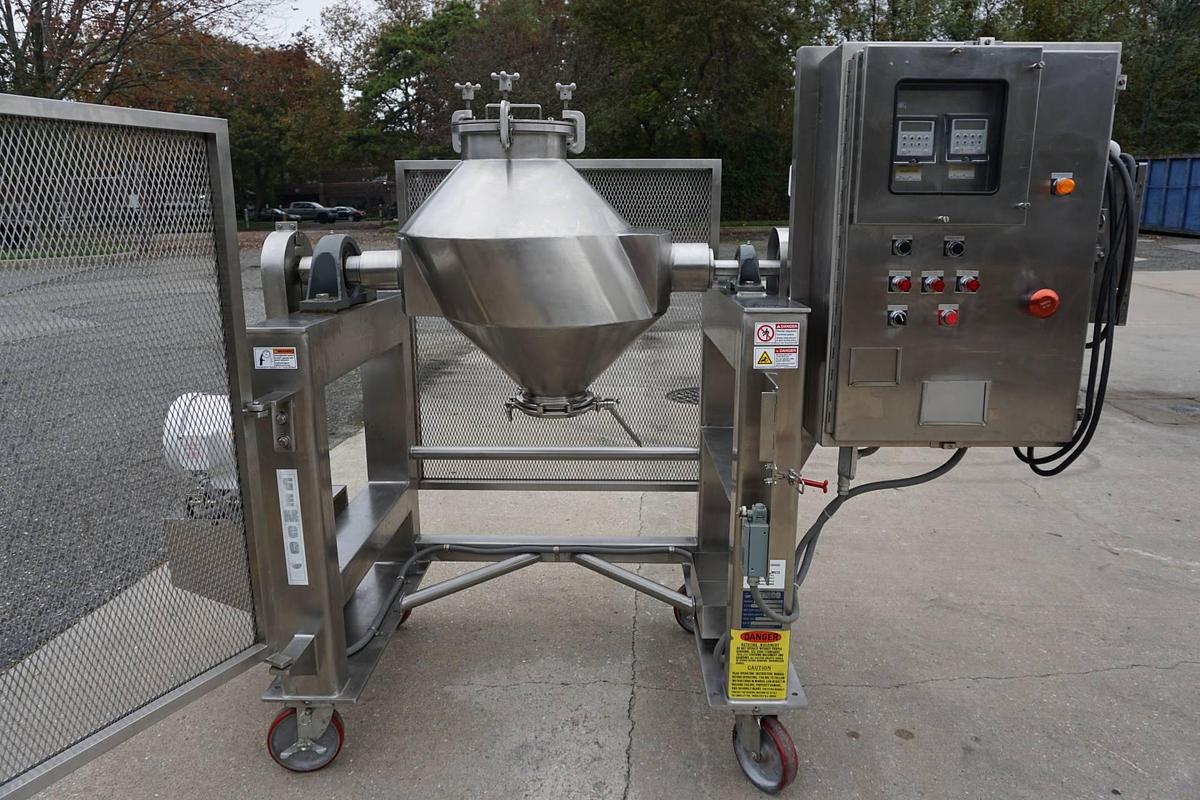
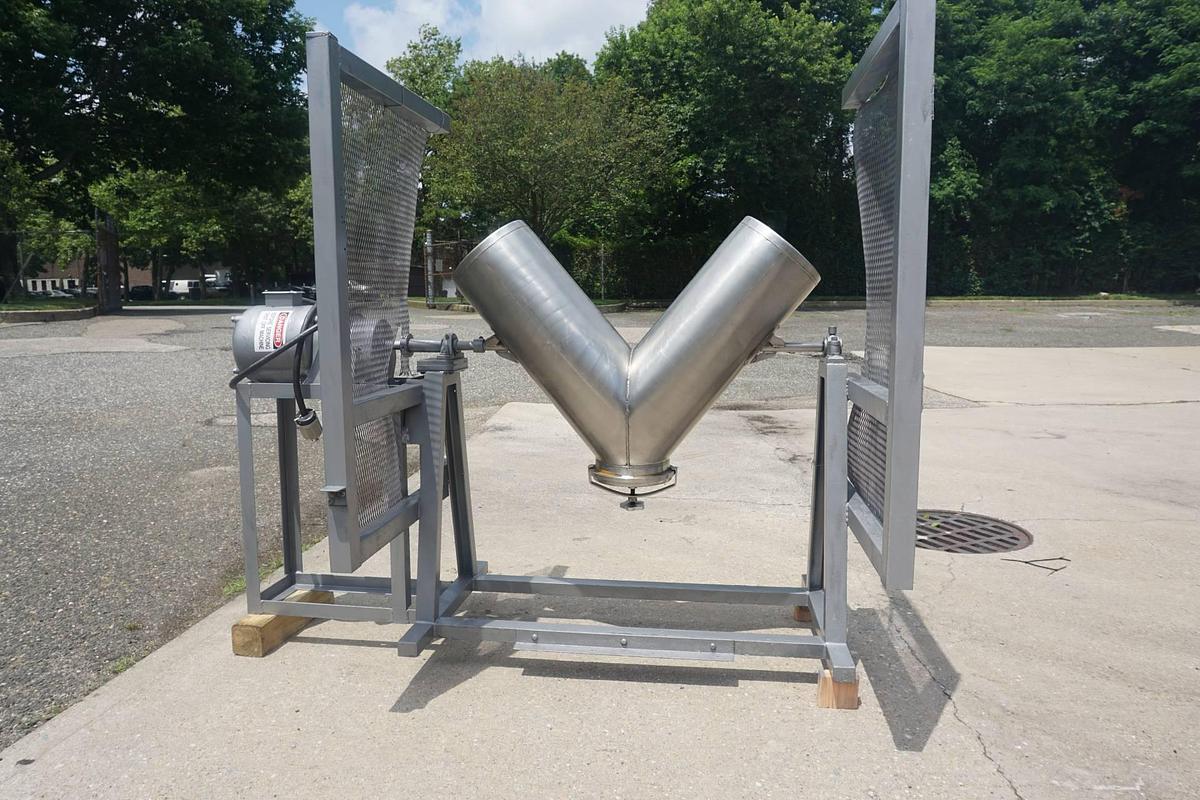
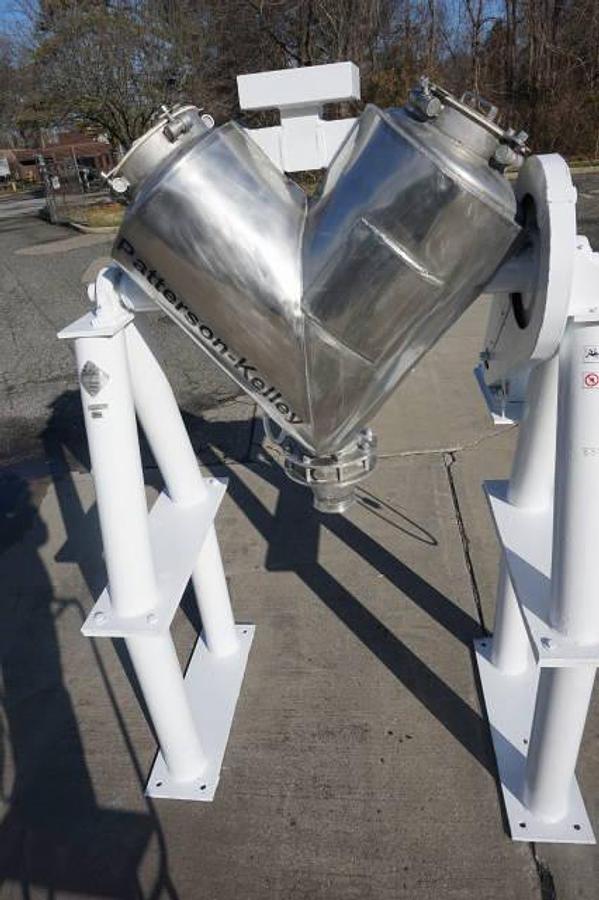
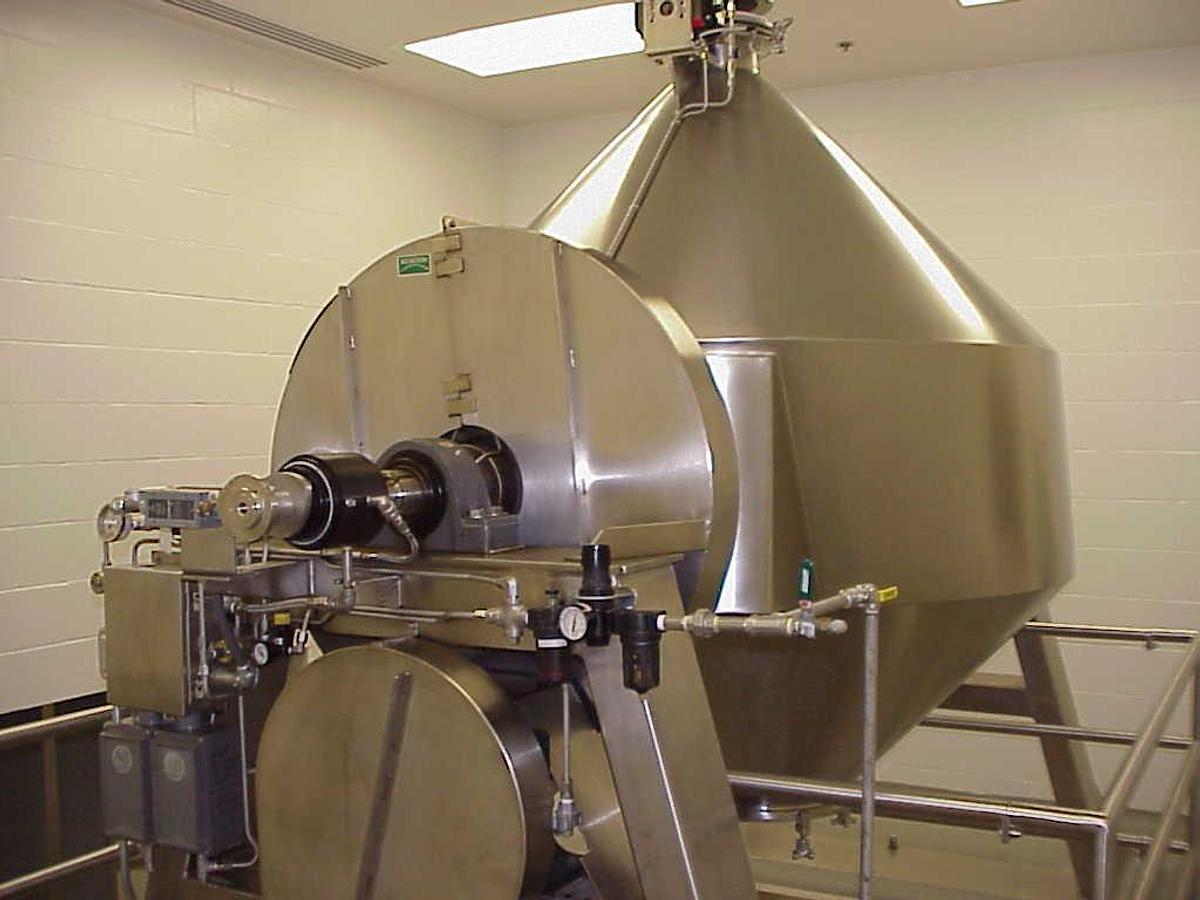
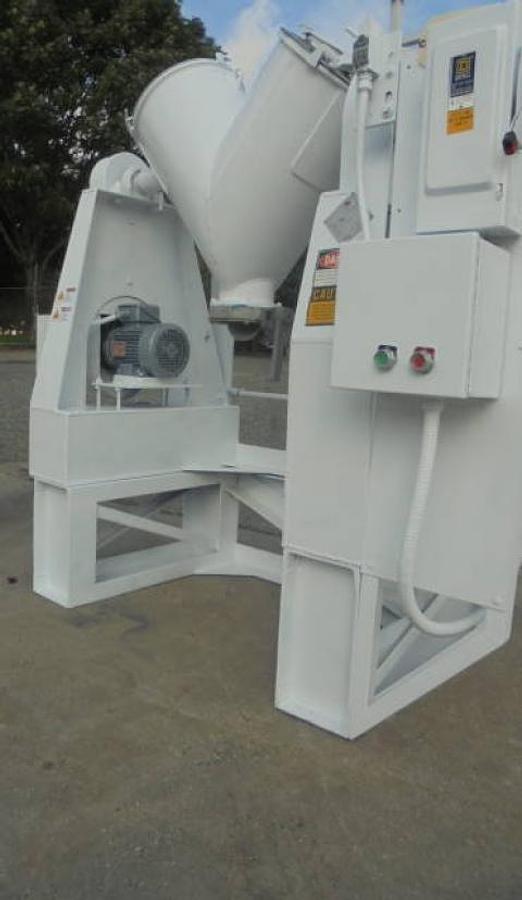
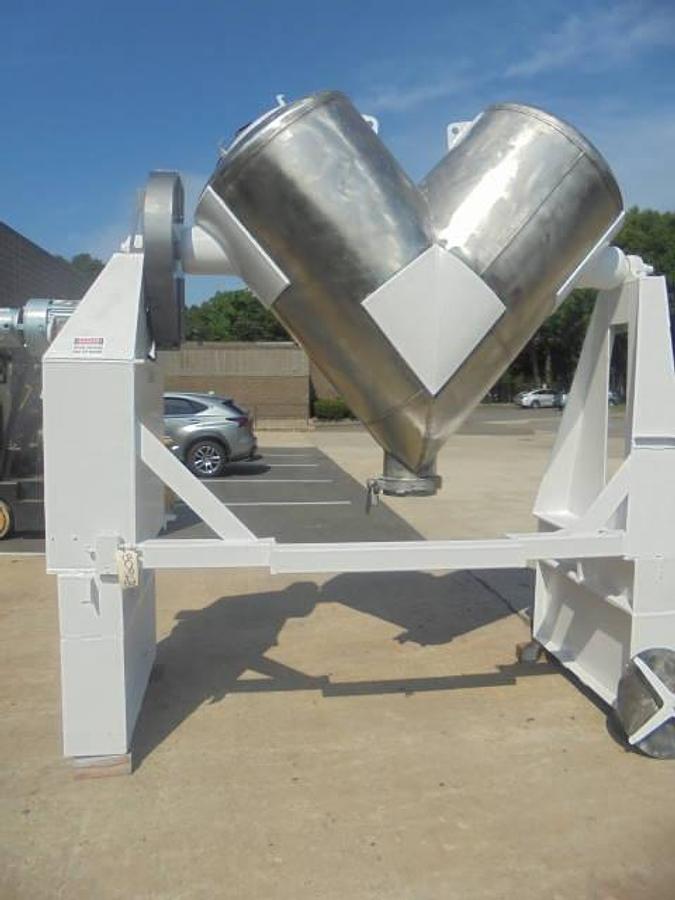
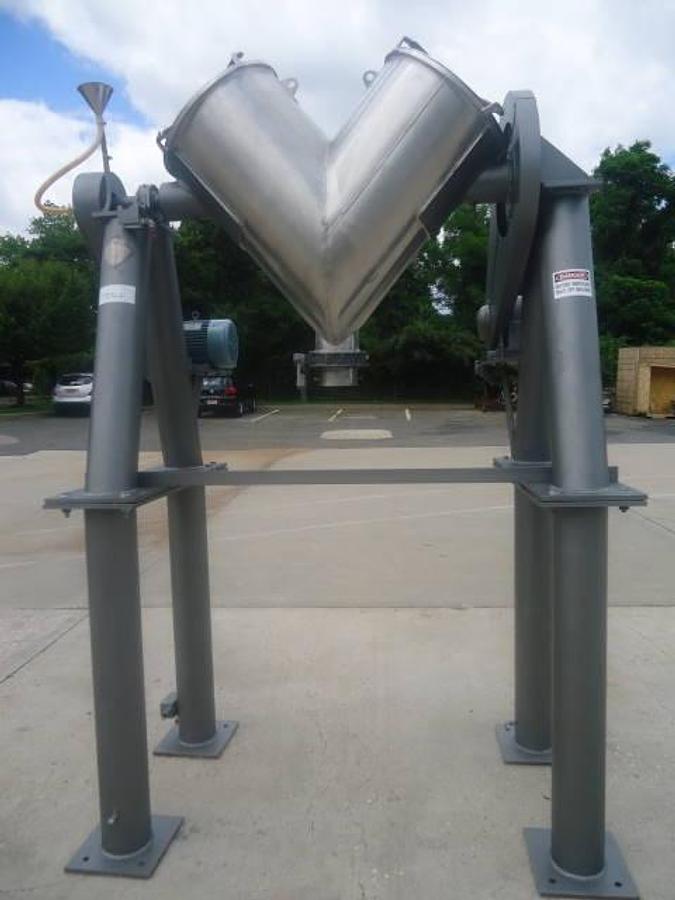
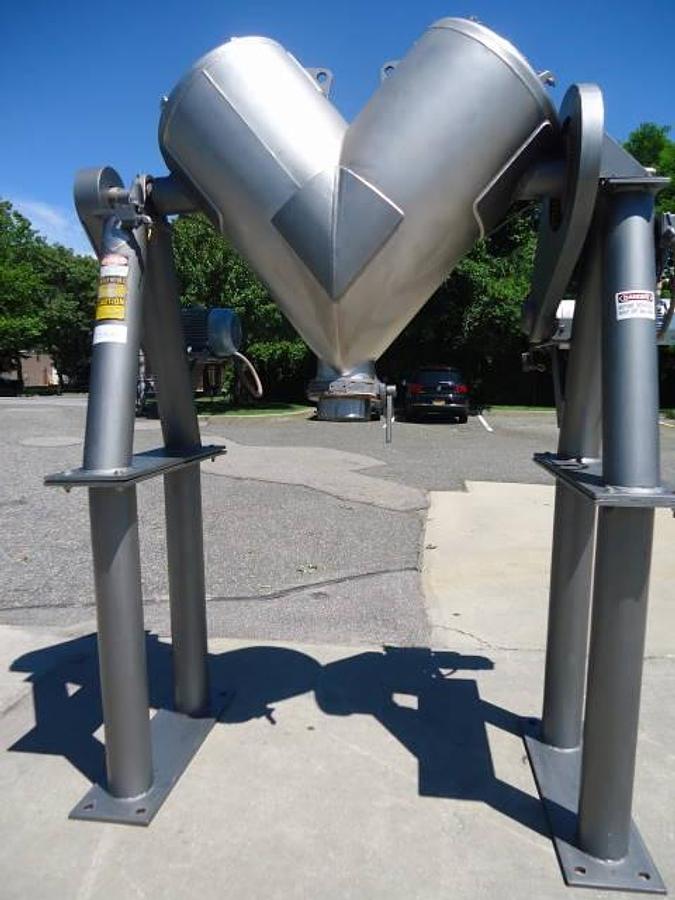
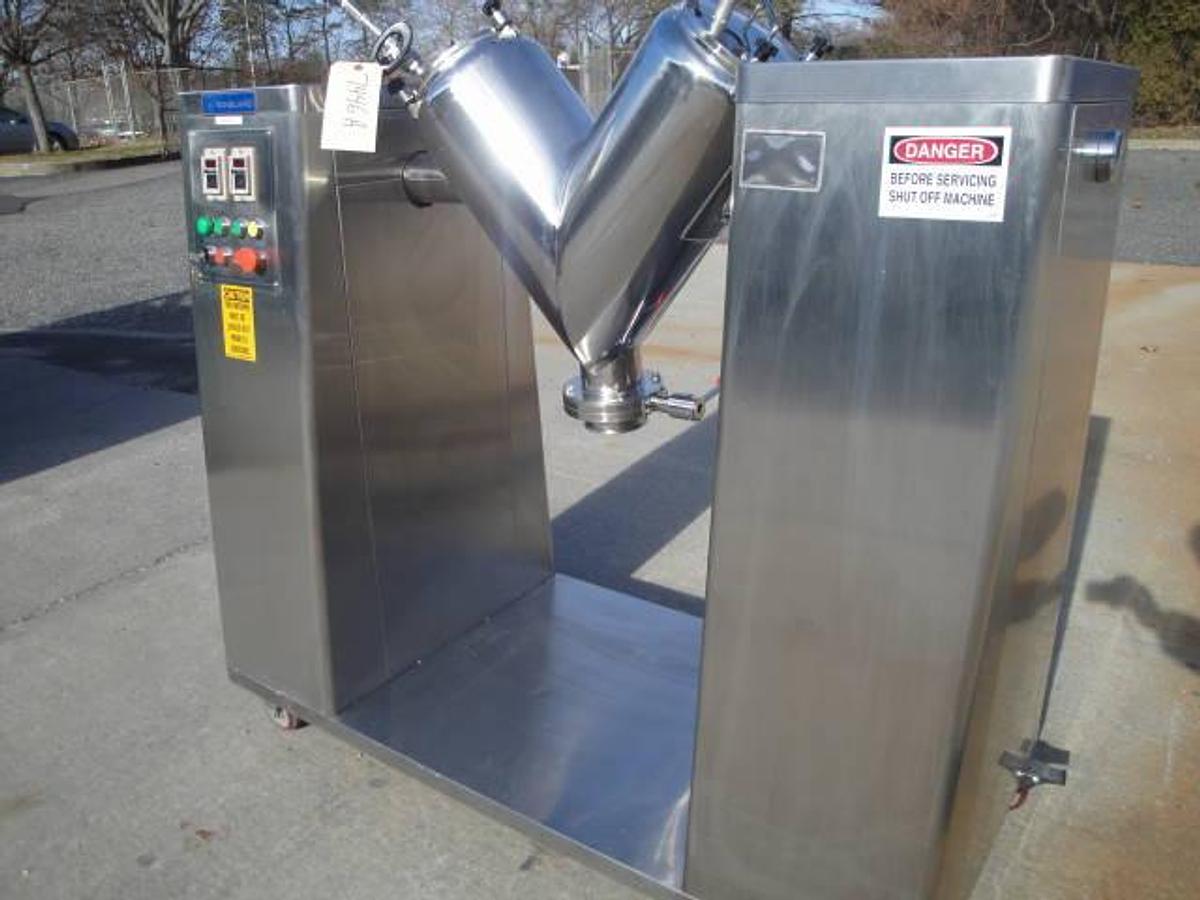
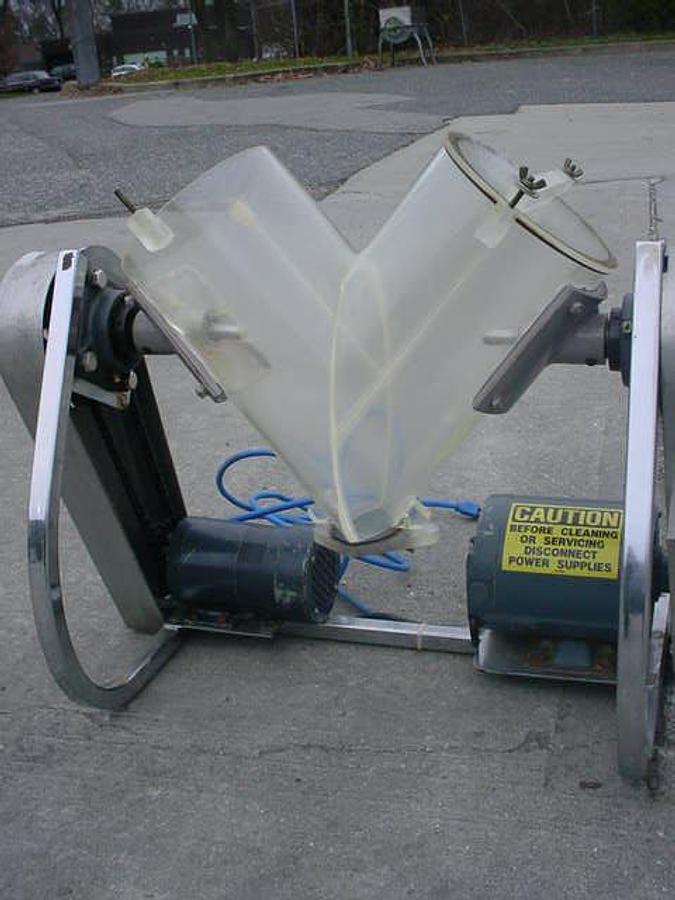
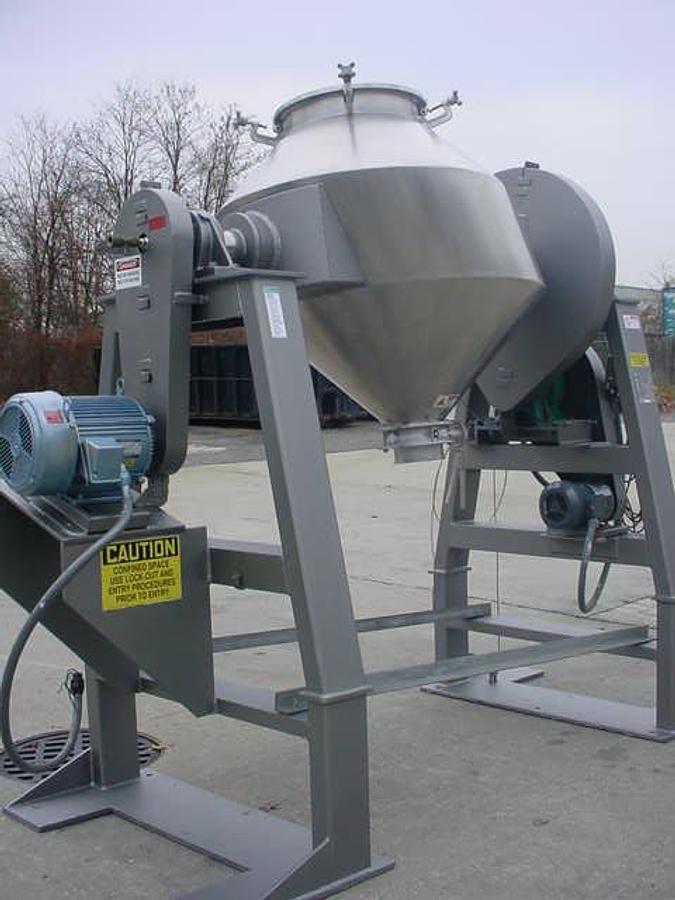
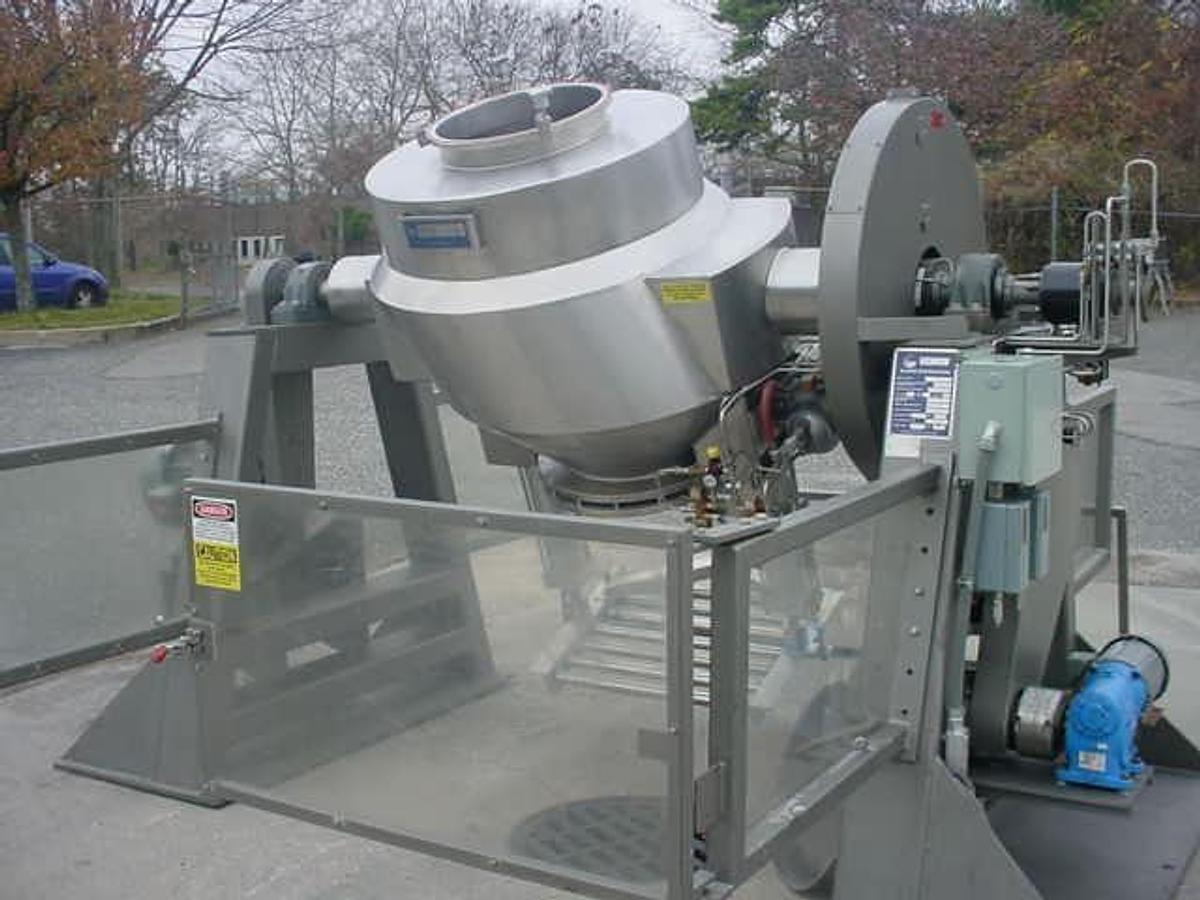
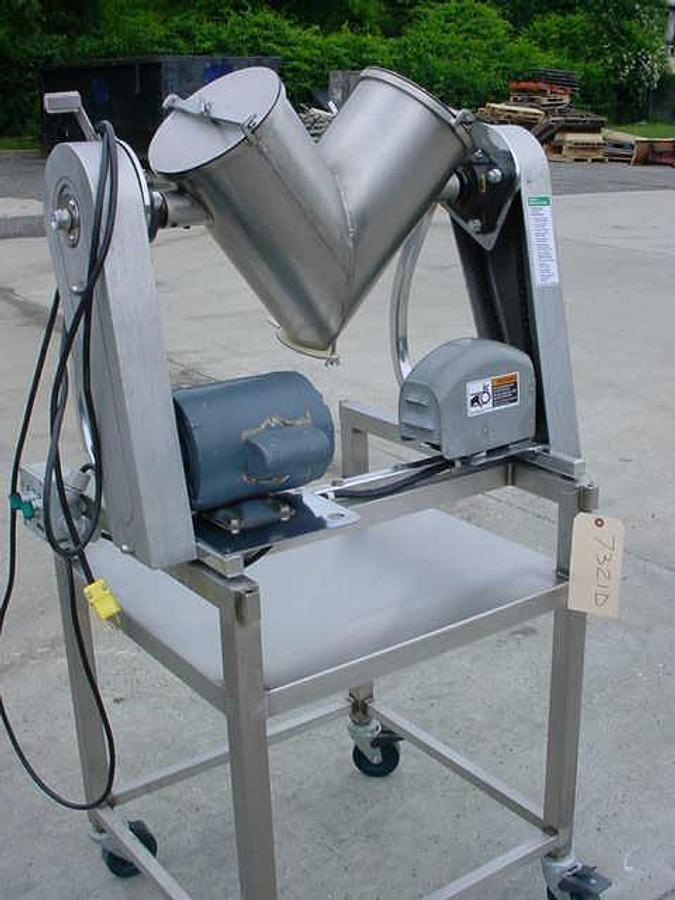
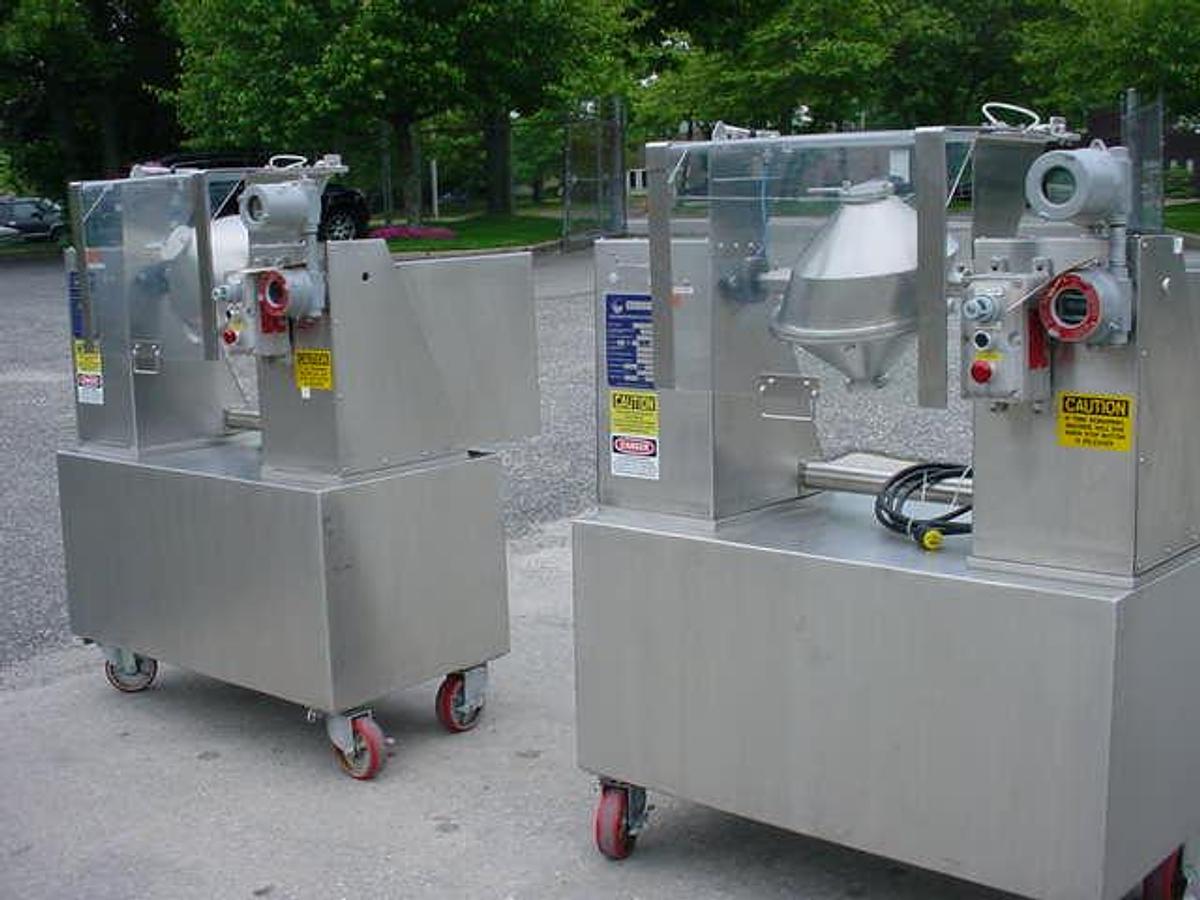
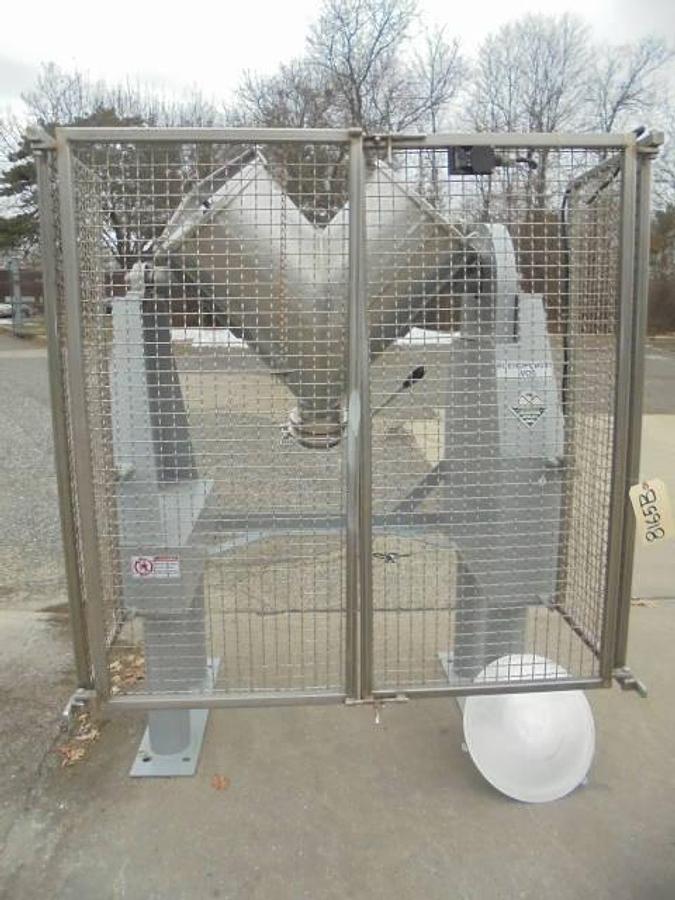
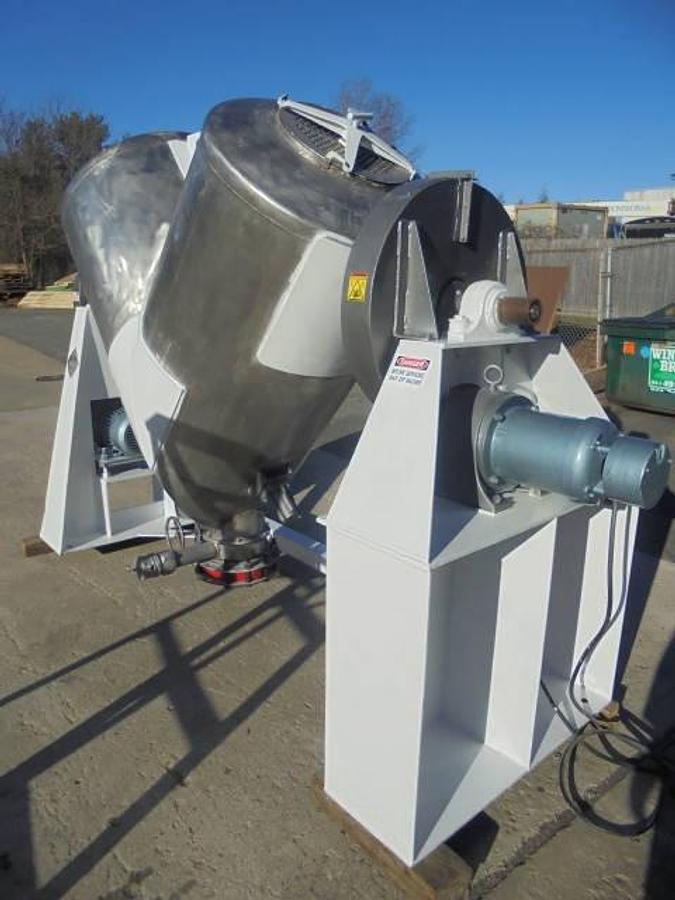
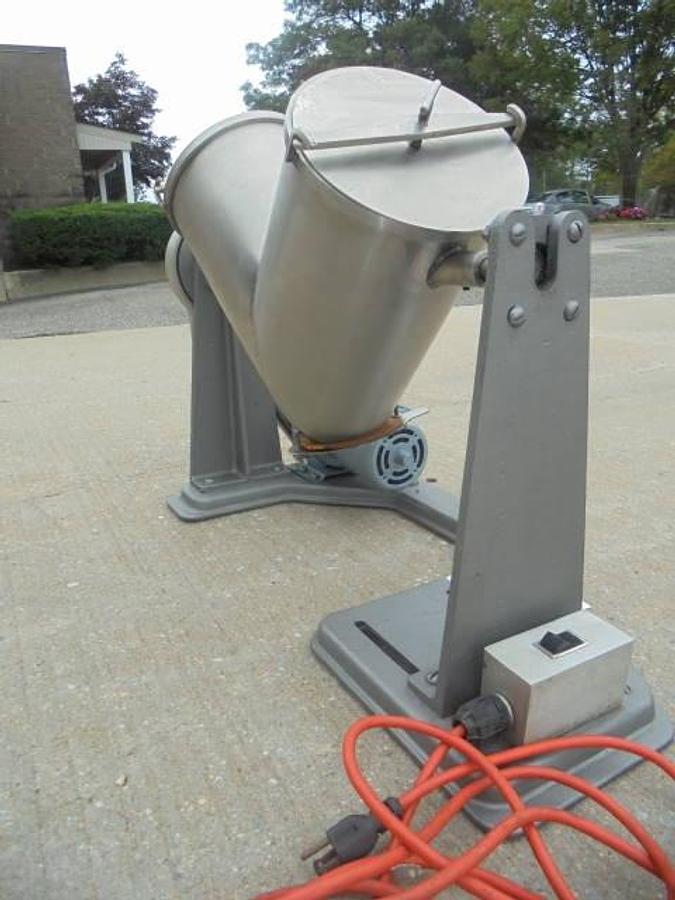
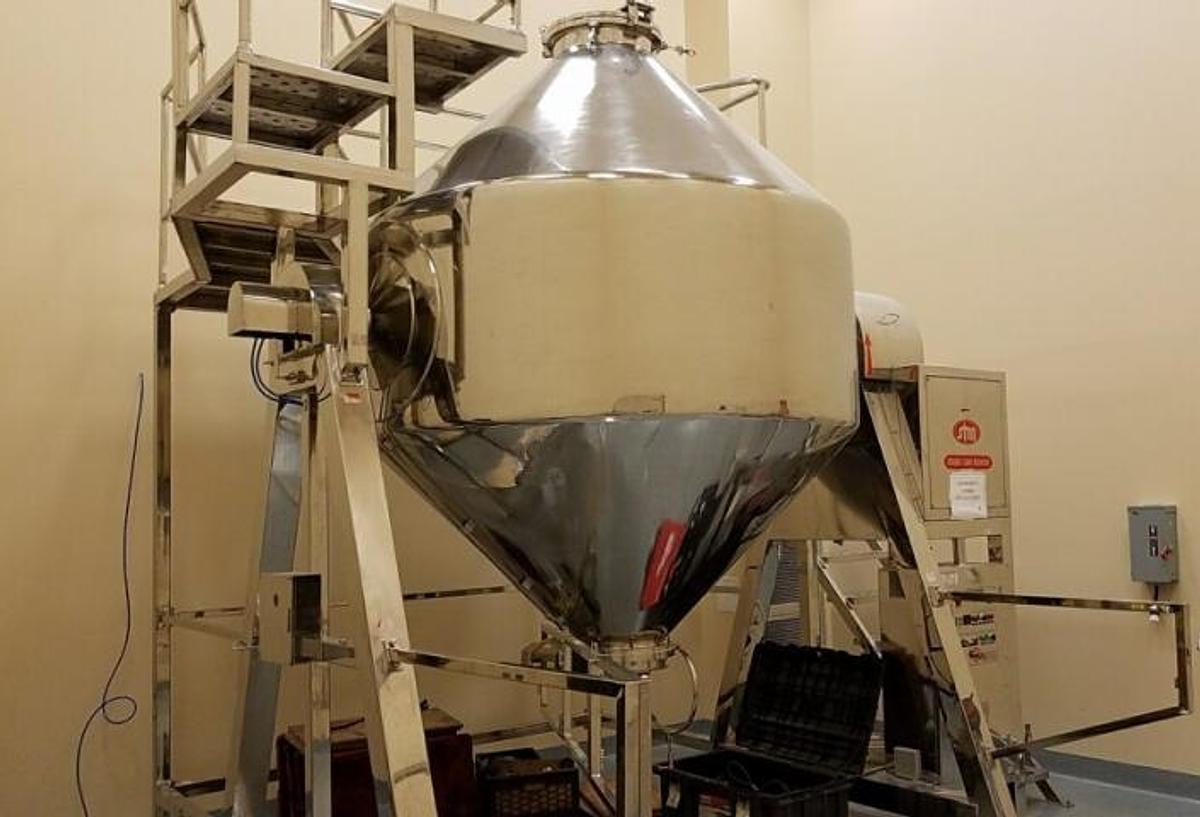
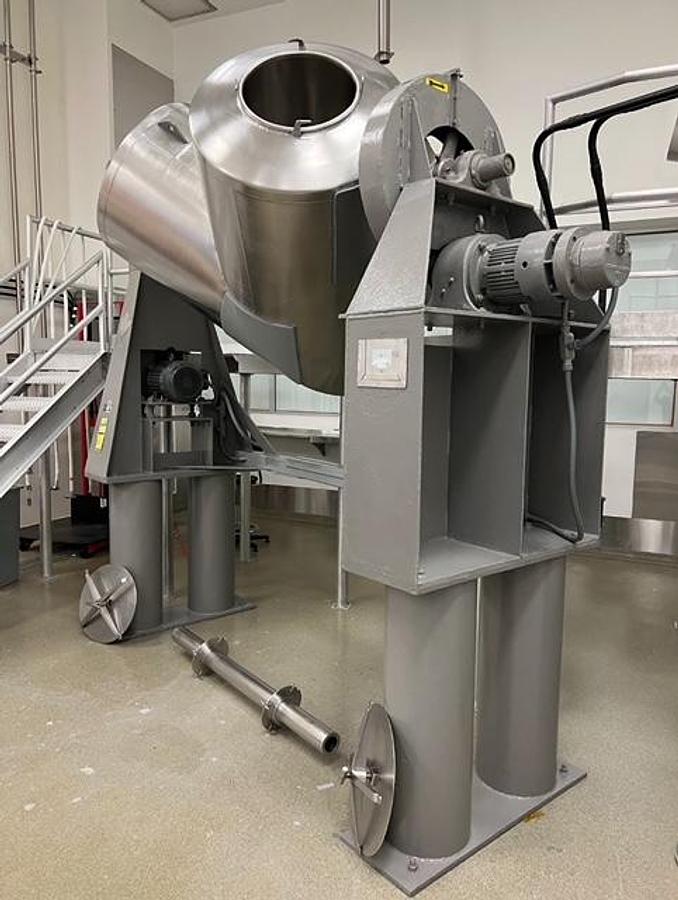
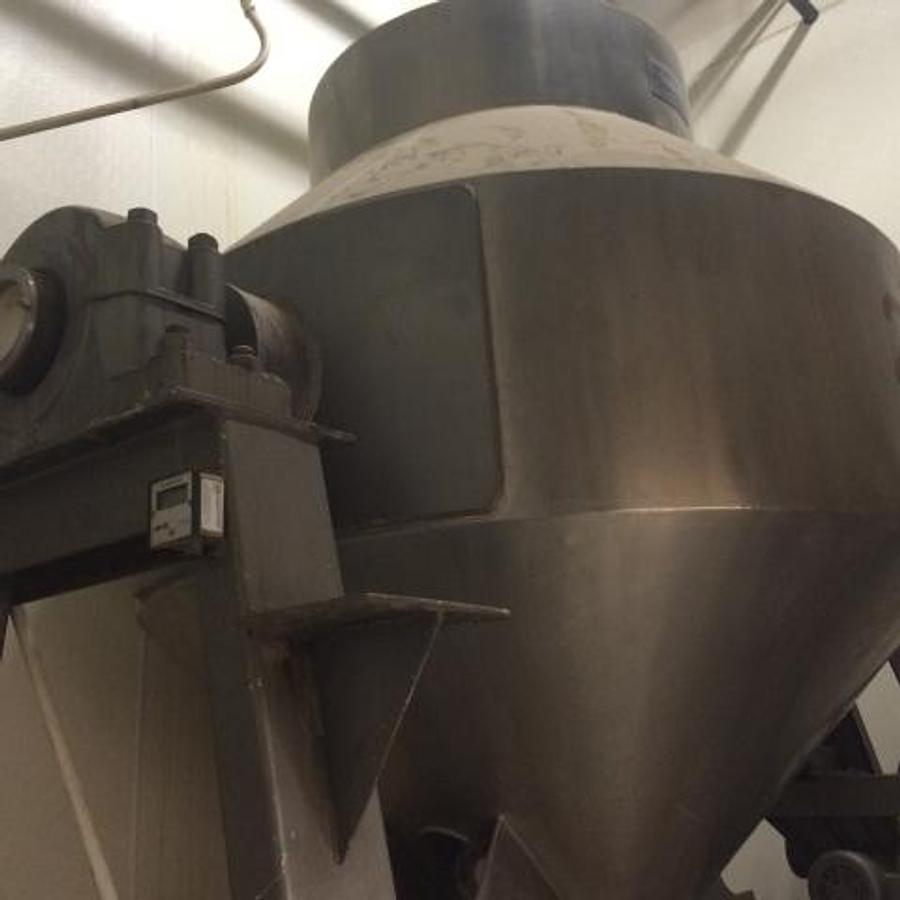
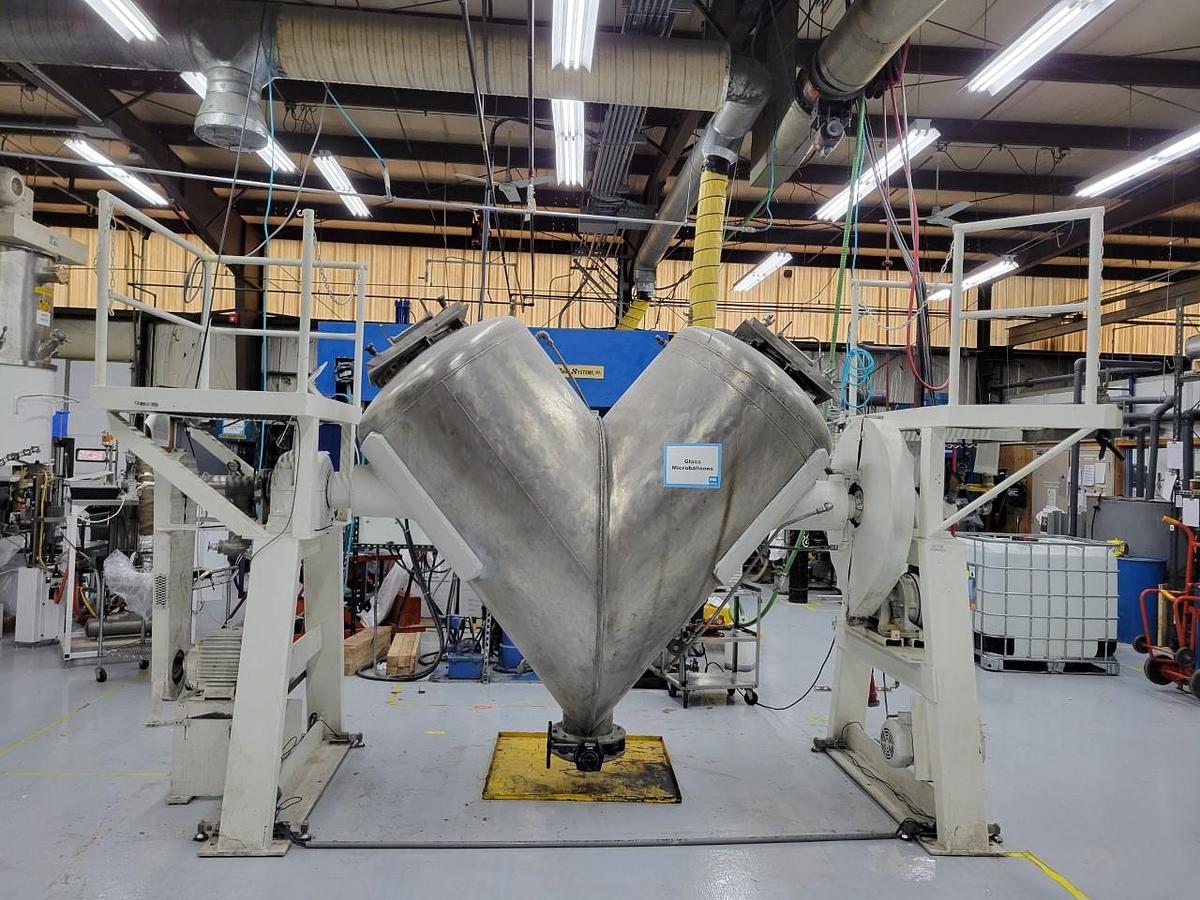
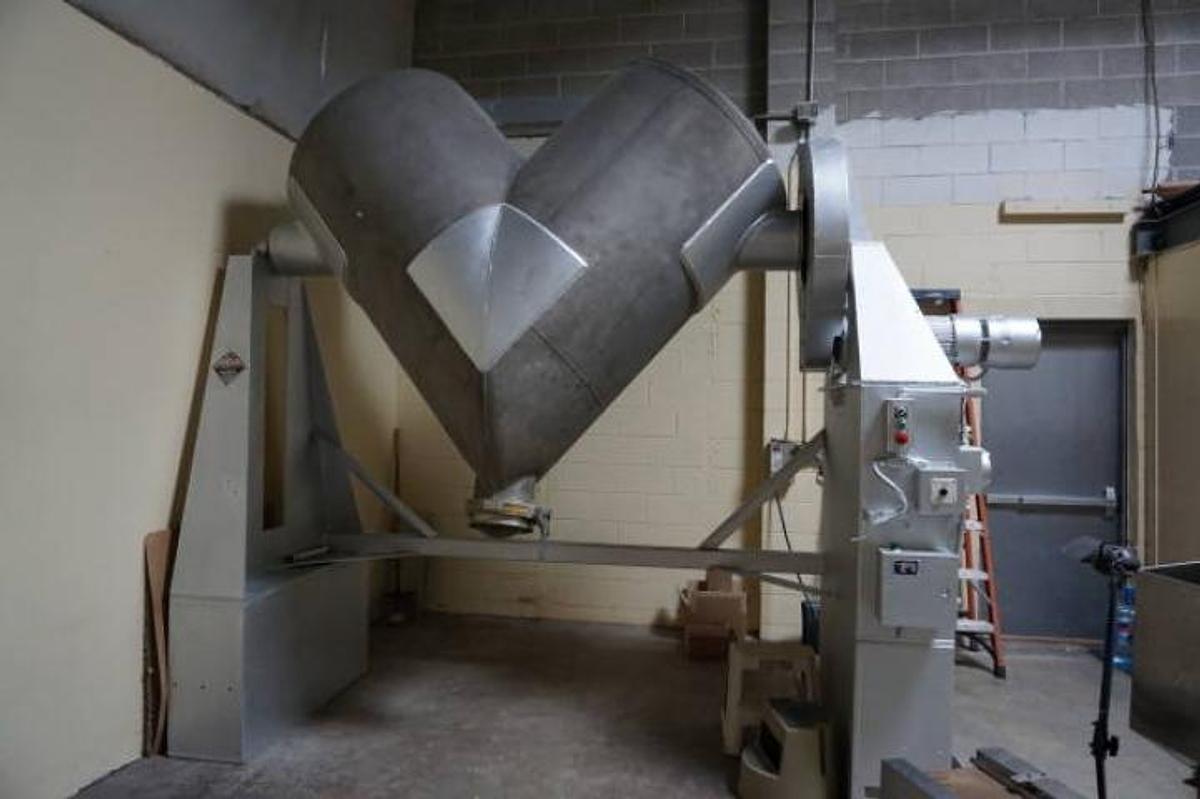
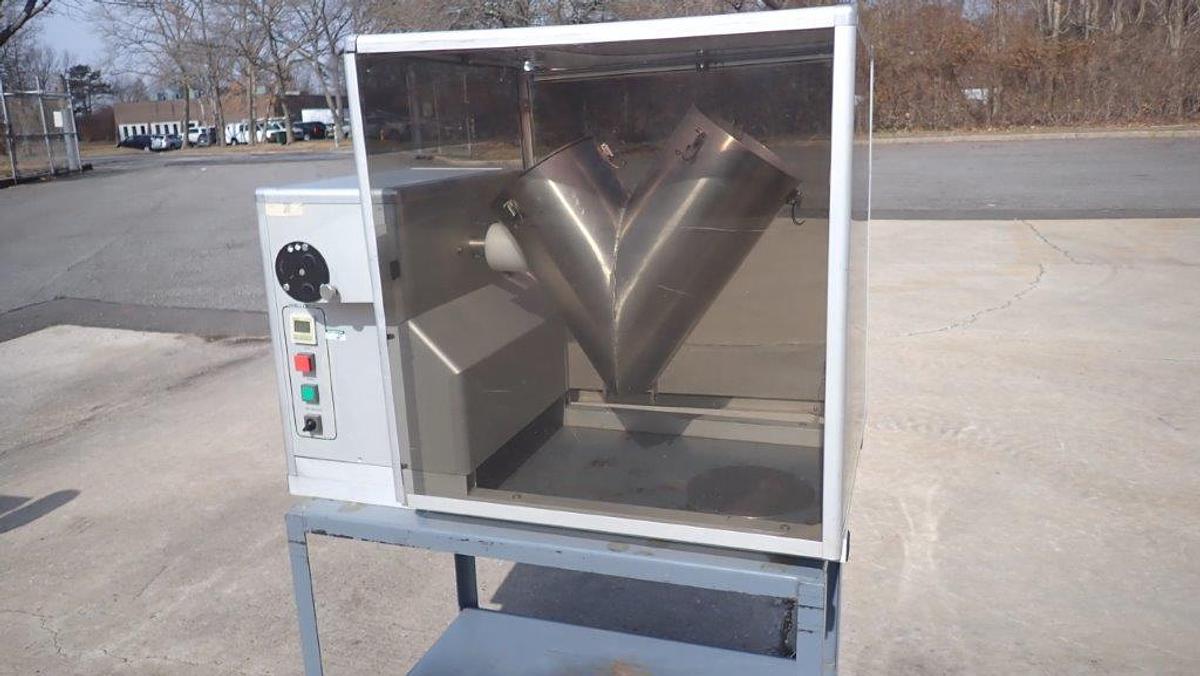
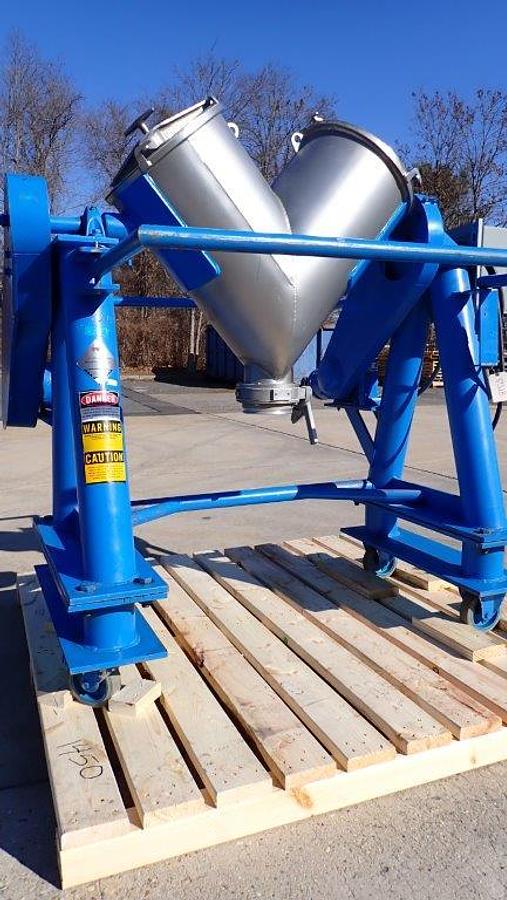
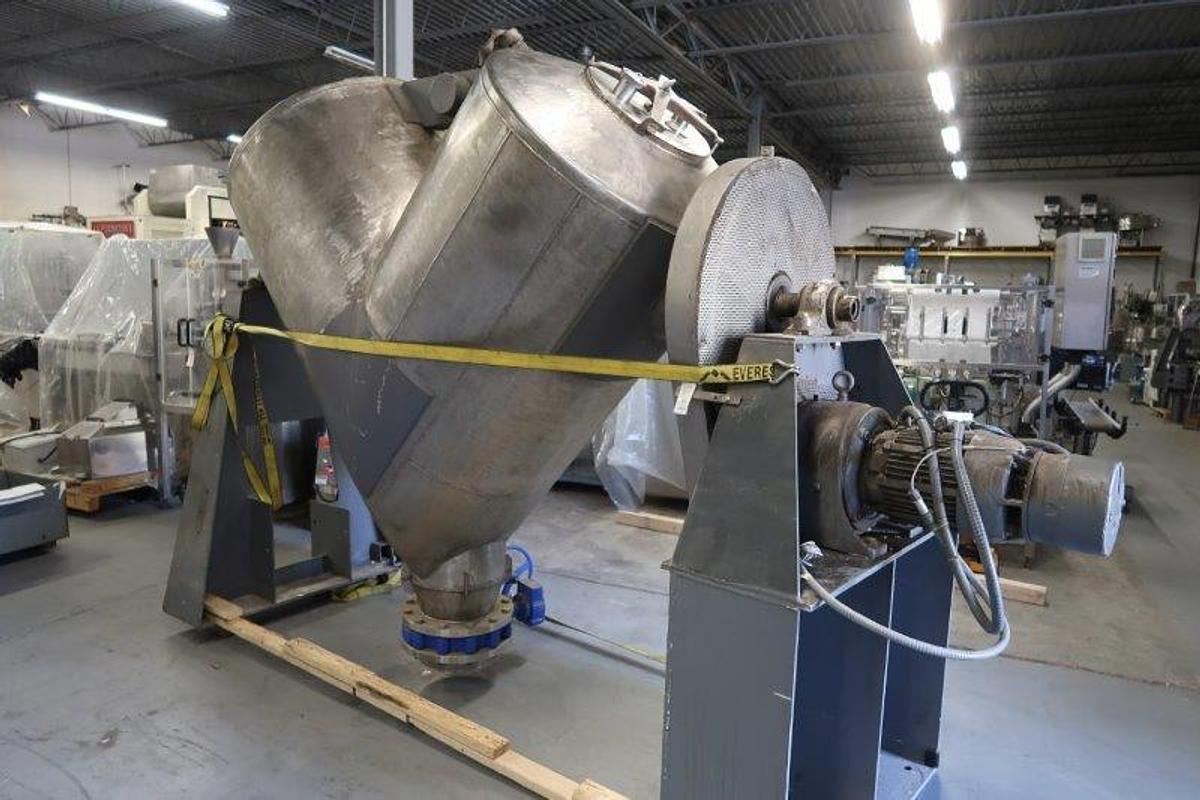
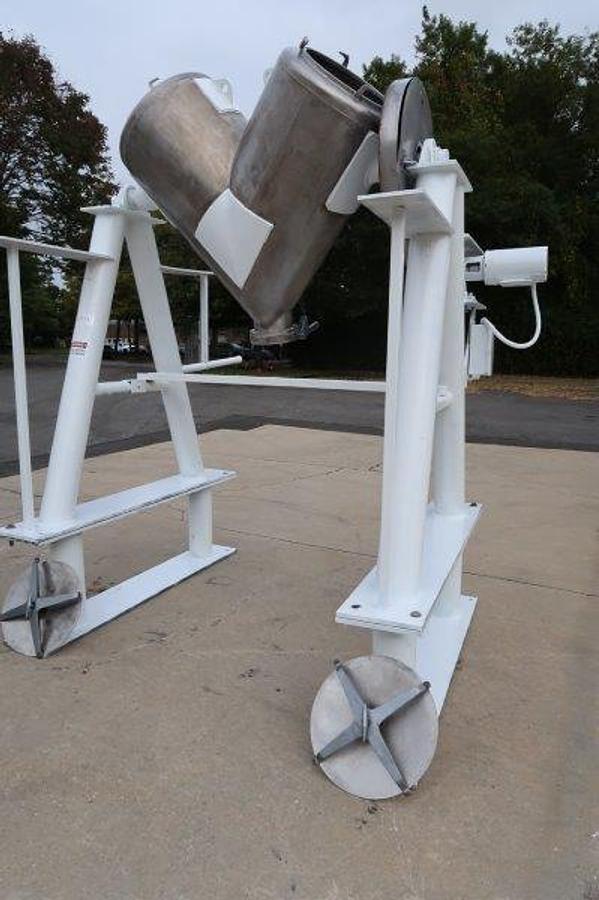
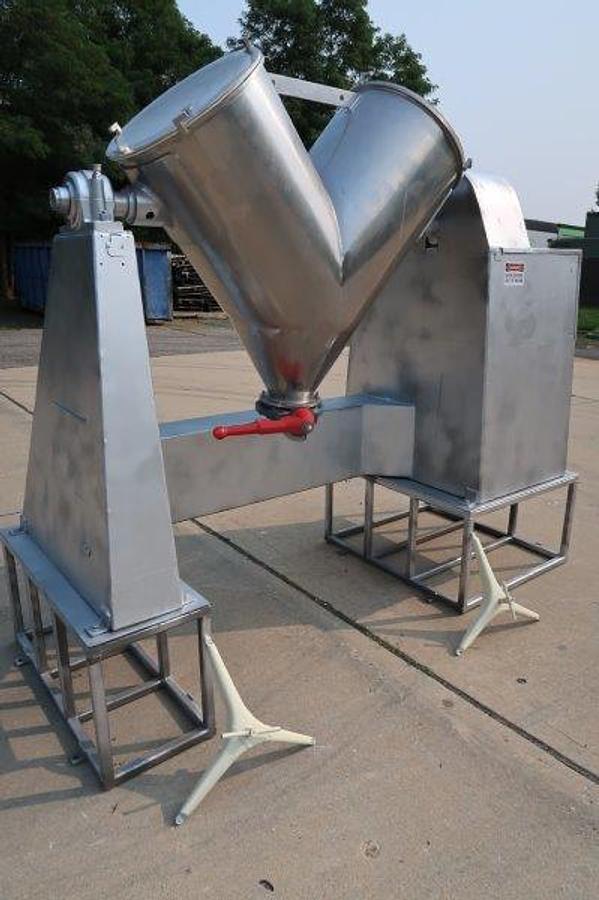
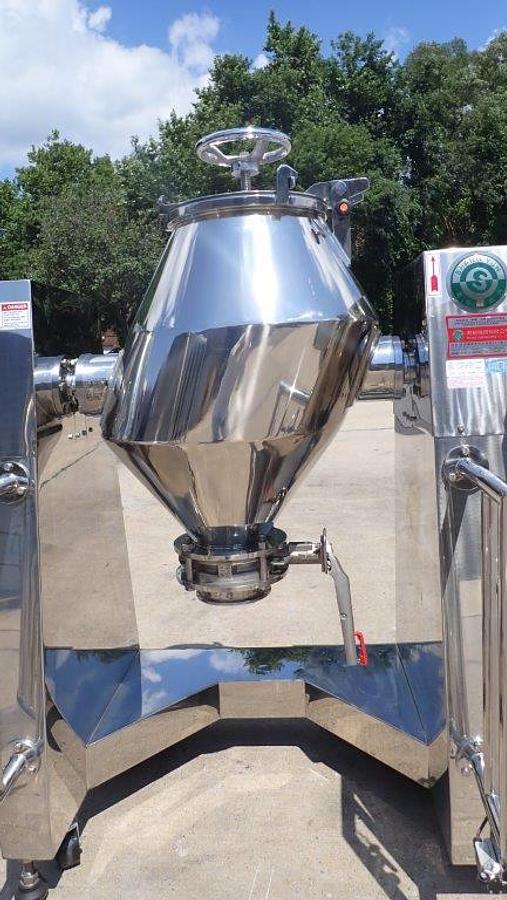
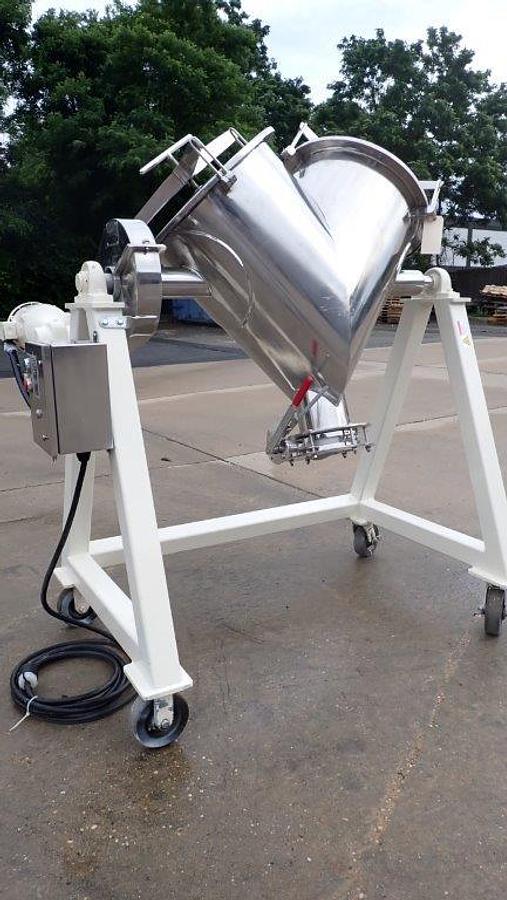
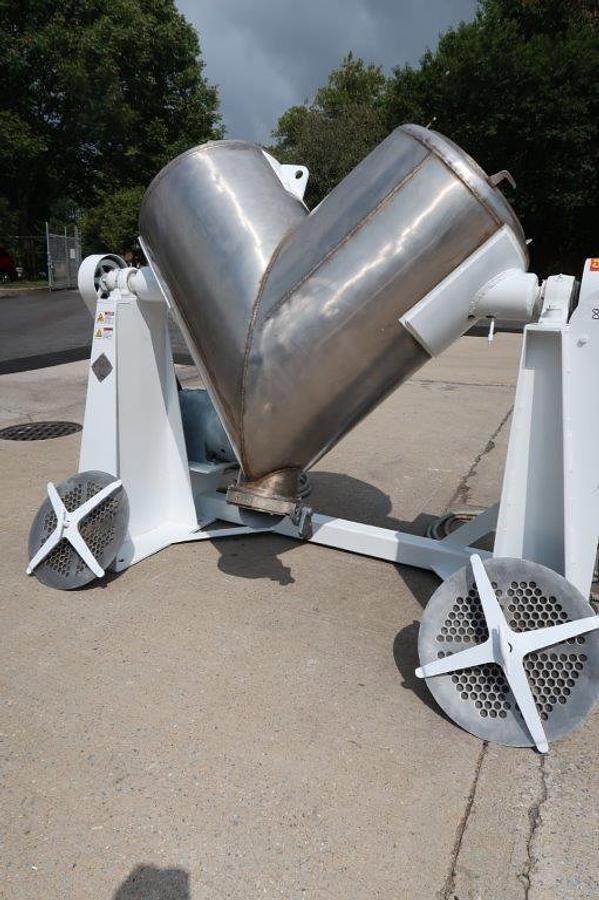
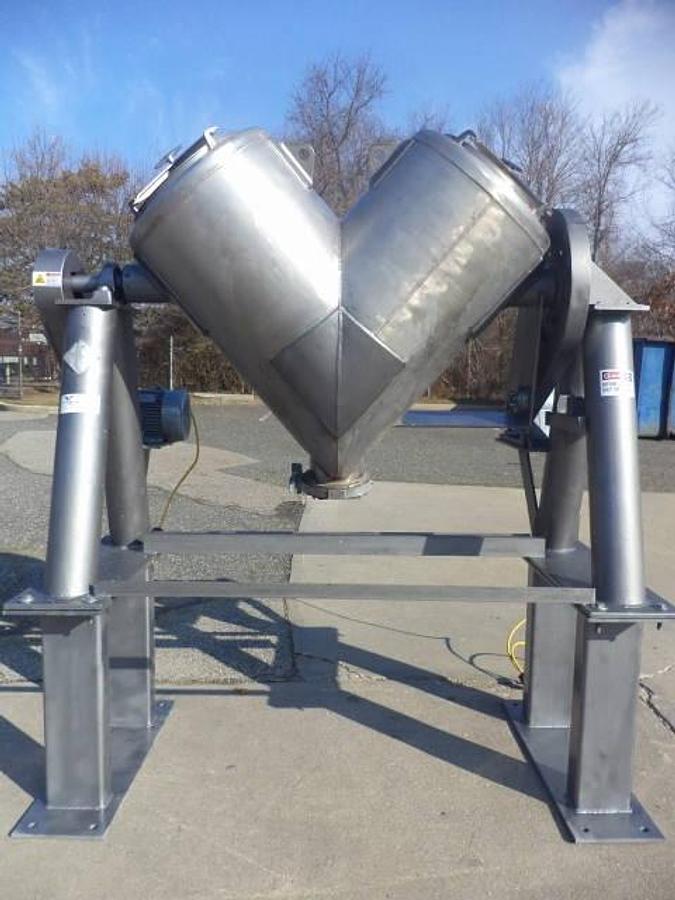
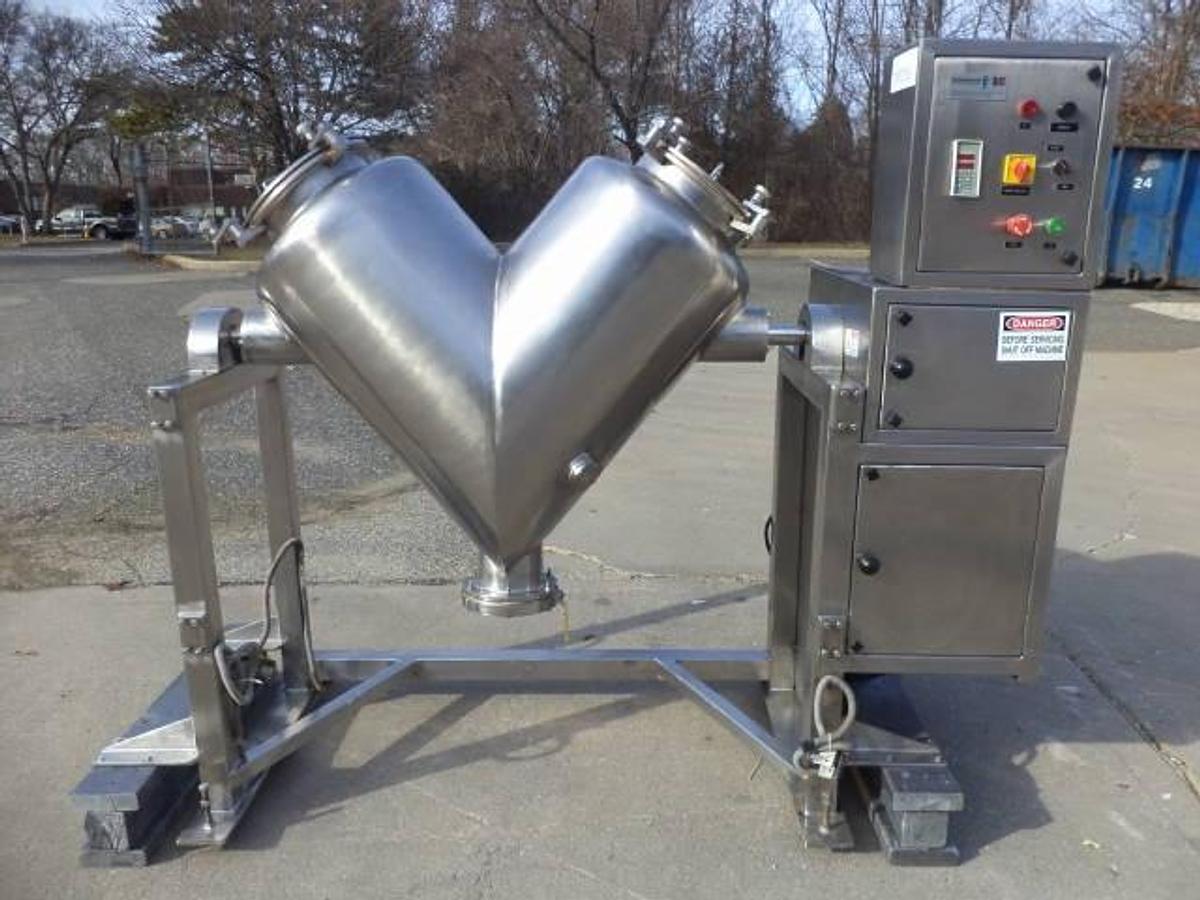
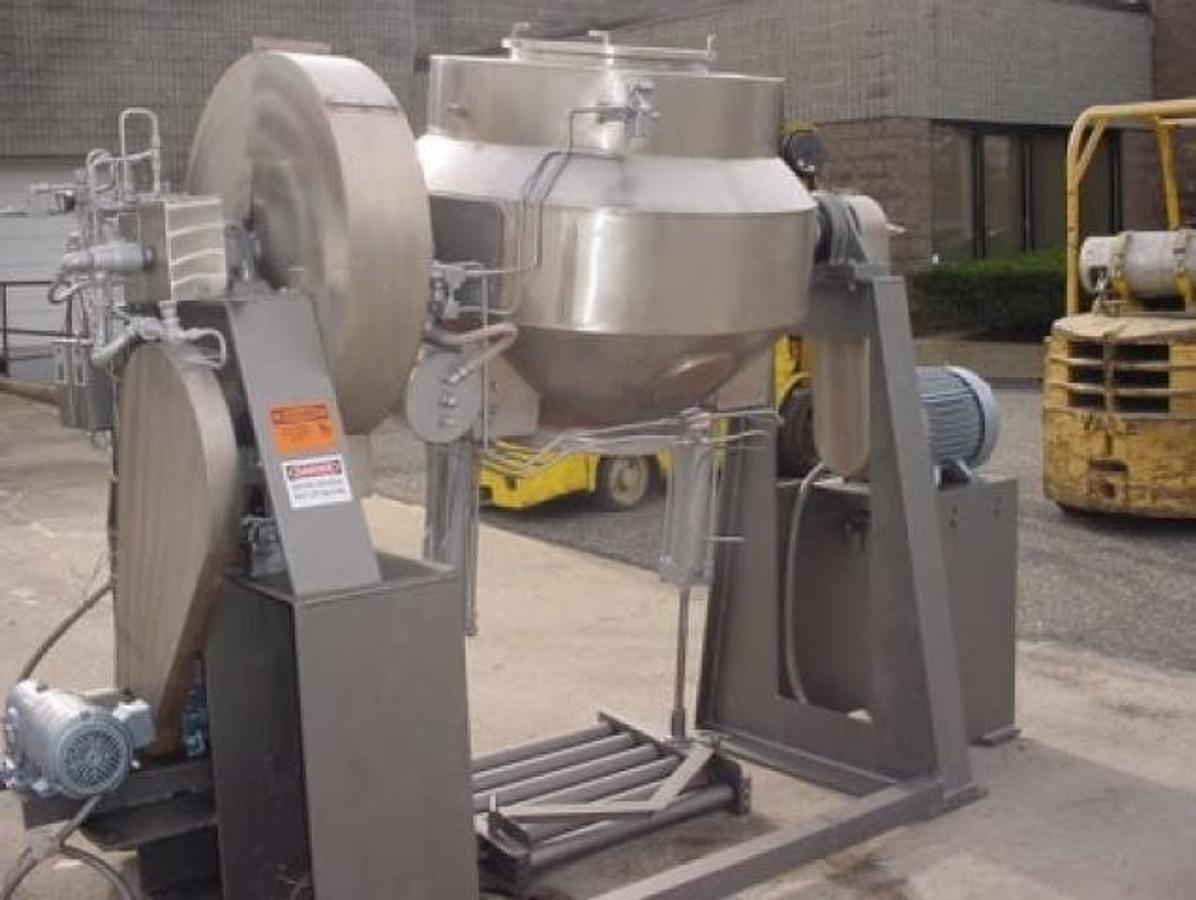
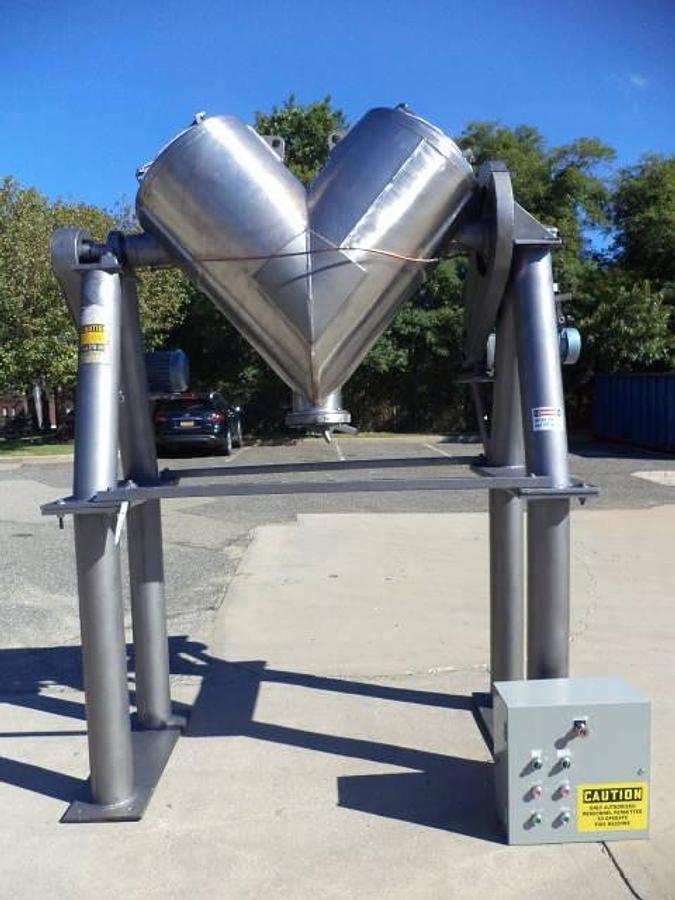
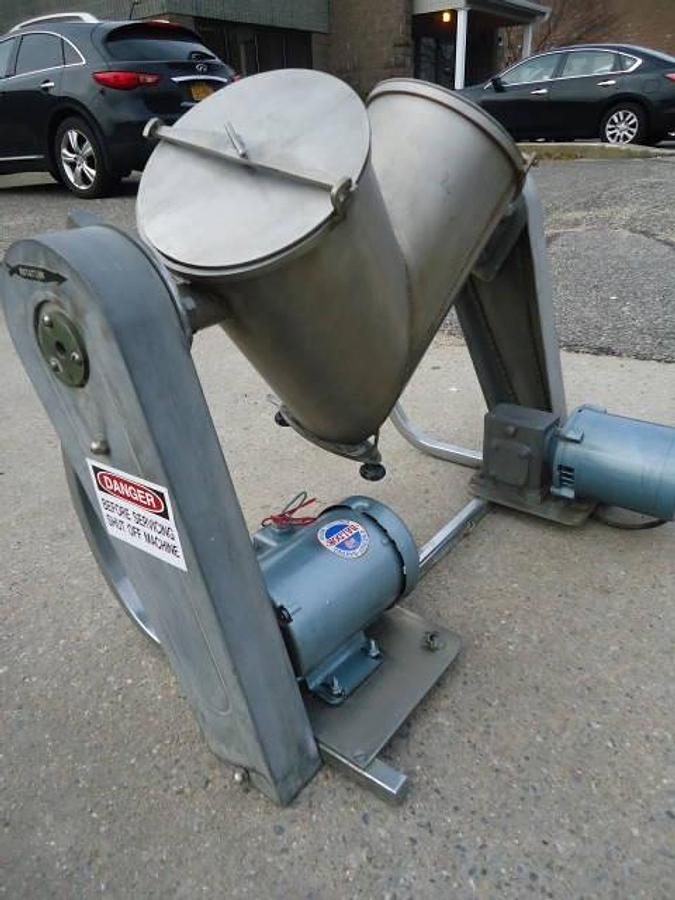
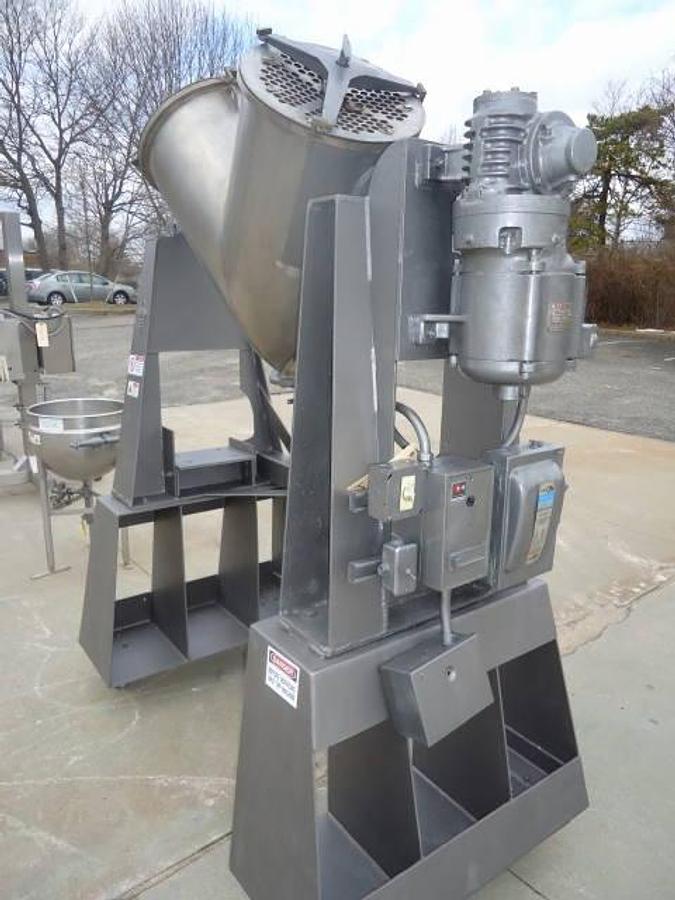
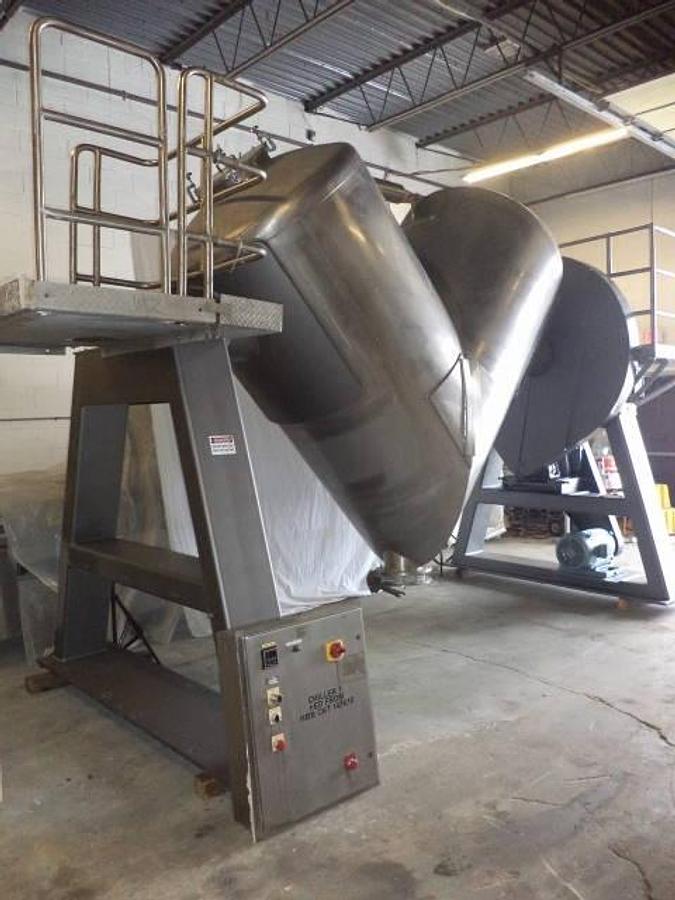
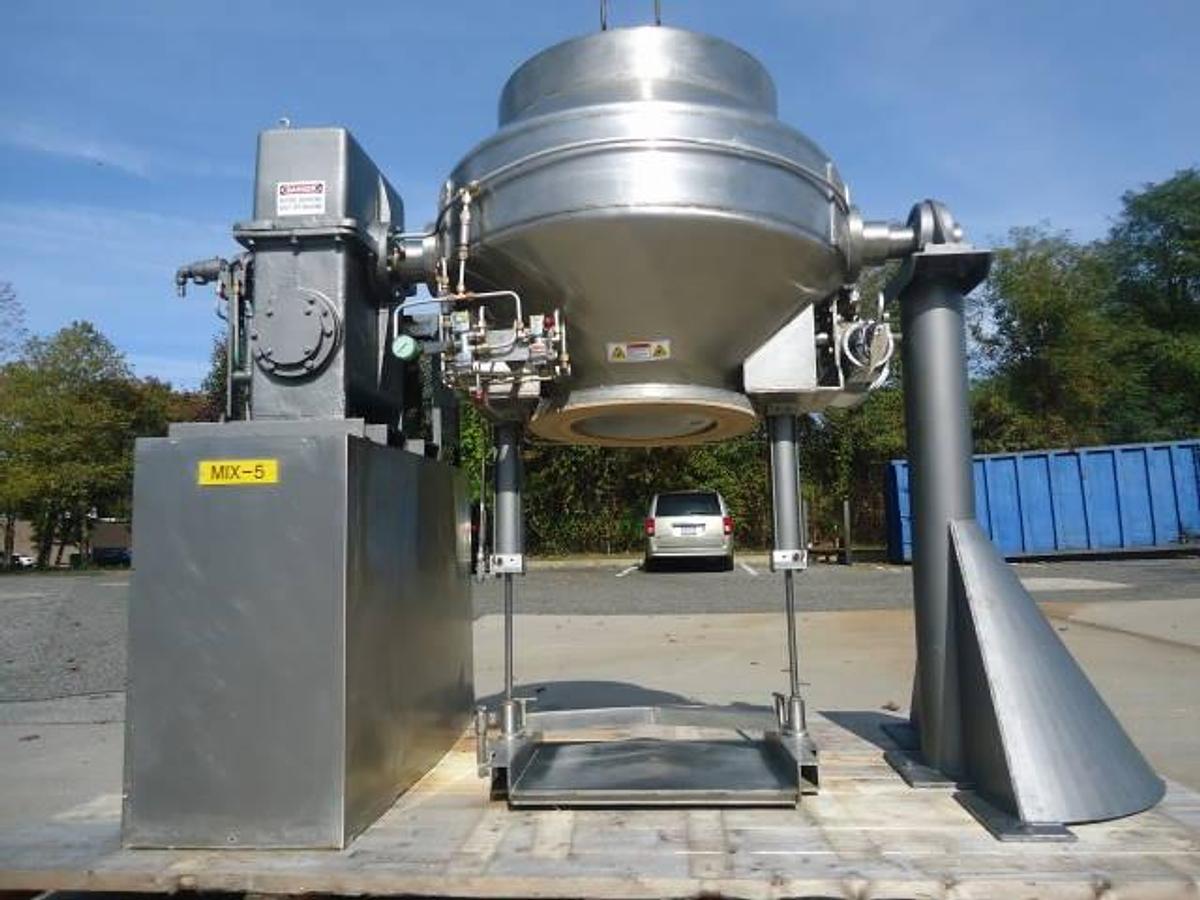
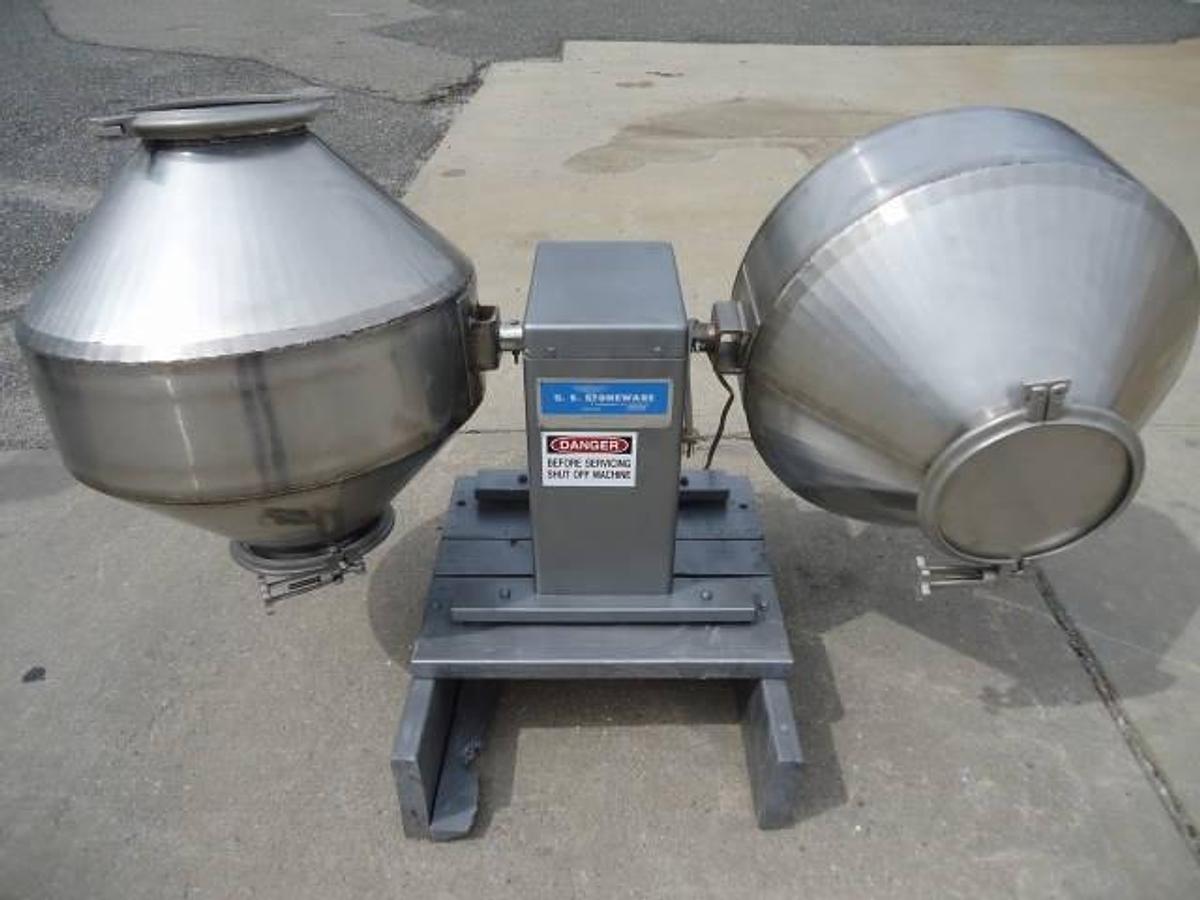
Tumbling mixers use a tumbling vessel to mix product. Tumble blenders are typically used to mix dry delicate products and powders. Our tumbling mixers are available in a variety of form factors including used V Blenders, used Double Cone Blenders, and used Slant Cone Blenders as well as used Twin Shell Blenders. We are suppliers of used PATTERSON KELLEY V Blenders, GEMCO blenders along with other brands of V Tumbling Blenders and other form factors. Many have internal intensifying bars (intensifier bars) – i.e. liquid-solids bars and pin intensifier bars.
FAQ :
What is a tumbling mixer and how does it work?
A tumbling mixer is a blending machine that mixes product by rotating an enclosed vessel rather than using internal agitators or paddles. As the vessel turns, gravity repeatedly lifts and cascades the material, creating a gentle folding action that blends the contents without applying shear force. This makes tumbling mixers particularly well-suited for dry powders, granules, and fragile particulates that could be damaged or degraded by more aggressive mixing methods.
The most common vessel shapes are the V-blender (twin shell), double cone blender, and slant cone blender, each of which creates a slightly different flow pattern during rotation. V-blenders split and recombine the material stream with each revolution, which is especially effective for achieving homogenous blends quickly. Double cone and slant cone designs rely on a smooth tumbling motion that is favored in pharmaceutical and food applications where sanitary construction and easy cleanability are priorities. Many tumbling mixers are also equipped with intensifier bars, which are internal rotating bars that break up agglomerates and introduce liquids into the powder bed during blending.
What industries commonly use tumbling mixers?
Tumbling mixers are used across a broad range of industries wherever dry or semi-dry materials need to be blended gently and uniformly. Pharmaceutical manufacturing is one of the heaviest users, relying on V-blenders and double cone blenders to mix active ingredients with excipients before tablet compression or capsule filling. Food processing facilities use them for spice blends, powdered drink mixes, baking ingredients, and nutritional supplements. Chemical manufacturers blend pigments, fertilizers, and specialty compounds, while cosmetics producers use them for face powders, bath salts, and similar formulations.
Plastics compounding and nutraceutical production are also significant application areas. Because tumbling mixers handle materials gently, they are the preferred choice any time a product is fragile, abrasive, or prone to segregation. The sanitary design options available in stainless steel construction, particularly 304 and 316 SS, make these machines practical for regulated industries that require thorough cleaning and documentation between batches. The wide range of vessel capacities, from laboratory-scale 8-quart units up to 100 cubic foot production blenders, means a tumbling mixer can fit almost any production scale.
What are the main types of tumbling mixers available on the used market?
The used tumbling mixer market offers several distinct vessel configurations, and the right choice depends on the material being processed and the production environment. Twin shell V-blenders are the most common type and are recognized by their V-shaped vessel formed by two cylinders joined at an angle. They are efficient blenders for free-flowing powders and are available in a wide range of capacities. Double cone blenders feature a symmetrical hourglass-shaped vessel that provides smooth, consistent tumbling and is easy to clean, making them popular in pharmaceutical and food applications. Slant cone blenders combine a cylindrical body with an angled cone discharge, which simplifies product unloading and is practical for larger batch sizes.
Beyond vessel shape, used tumbling mixers vary significantly by features. Machines with intensifier bars, sometimes called liquid-solids bars or pin bars, can introduce liquid binders or break up lumps during blending. Jacketed vessels allow temperature control during mixing. Explosion-proof (XP) models are built for environments handling flammable materials. Vacuum-capable models are used when oxygen exclusion or moisture control is critical. Tabletop and portable units serve laboratory or pilot-scale needs, while large floor-mounted blenders handle full production volumes. Understanding which features a specific process requires will narrow the search considerably when evaluating used equipment.
What brands of used tumbling mixers are most reliable?
Patterson-Kelley (often listed as P-K or Patterson Kelley) and Gemco are two of the most widely respected names in tumbling mixer manufacturing, and both brands appear frequently on the used equipment market. Patterson-Kelley has been producing twin shell V-blenders for decades, and their machines are known for heavy-duty construction, consistent performance, and a broad installed base across pharmaceutical, chemical, and food industries. Gemco is similarly well-regarded, particularly for their slant cone and double cone designs, including the Gemco-Matic line, which is recognized for its auto-unloading capability.
Other brands that appear on the used market include Expert Industries, Komline-Sanderson, LFA, Apex, and various international manufacturers. When evaluating any brand, it is worth contacting the manufacturer directly to ask about parts availability and technical support for a specific model and age of machine. Older machines from well-established manufacturers often still have replacement parts available, but availability can vary based on how long ago a particular model was discontinued. Sticking with established brands that have a documented service history tends to reduce risk when purchasing used equipment, and a reputable used equipment dealer specializing in processing machinery will typically have experience with which models hold up best over time.
What drum capacities are typically available in used tumbling mixers?
Used tumbling mixers span a very wide range of vessel capacities, making it possible to find equipment suited to laboratory development work all the way up to high-volume production. On the small end, 8-quart and 1-cubic-foot machines are used in R&D, quality control labs, and pilot-scale trials. Mid-range units in the 3 to 20 cubic foot range are common in small to medium production environments. Larger blenders in the 30, 50, 75, and 100 cubic foot range handle full-scale industrial production runs and are frequently found in pharmaceutical plants, bulk chemical facilities, and food manufacturing operations.
When selecting a capacity, it is important to note that tumbling mixers are typically filled to between 50% and 70% of their rated volume for optimal blending performance. Overfilling reduces the free space needed for material movement, which compromises blend uniformity. Underfilling can cause material to pool rather than cascade. For example, a 10 cubic foot blender would typically process a working batch of 5 to 7 cubic feet. Buyers should calculate their actual batch volume requirements and select a vessel size that allows for proper fill ratios, rather than simply matching the rated capacity to the target batch size.
What should I inspect when evaluating a used tumbling mixer before purchasing?
A thorough inspection of a used tumbling mixer should cover both mechanical and process-contact components. Start with the vessel itself, checking for dents, cracks, weld repairs, pitting, or corrosion on interior surfaces. For pharmaceutical or food-grade applications, surface finish matters significantly, so look closely at the interior polish and verify that it meets the required standards such as sanitary or pharma-grade 316 stainless. Inspect the discharge valve or butterfly valve for wear, seal integrity, and smooth operation, since a leaking or sticky discharge valve can cause product loss and contamination. Examine the drive motor, gearbox, and shaft bearings for unusual noise, vibration, or signs of overheating.
Beyond the machine itself, ask the dealer for any available maintenance records, operational history, or documentation of prior use. Knowing what materials were previously processed in the blender is particularly important if the vessel will be used in a regulated environment, since cross-contamination history can affect qualification. Dealers will generally accommodate in-person inspections or virtual inspections via video, and some machines may still be installed and operational at a production facility where a live demonstration can be arranged. Keep in mind that most equipment dealers are not set up to run actual product trials, so buyers should plan to assess mechanical condition rather than expect a full production test. Consulting with the manufacturer about parts availability and service support for the specific model is also a practical step before committing to a purchase.
What materials can be processed in a tumbling mixer?
Tumbling mixers are designed primarily for dry free-flowing powders, granules, and crystalline materials. Common applications include blending pharmaceutical powders and granules before compression, mixing spices and seasoning blends, combining powdered nutritional supplements, blending pigments and dyes, mixing fertilizer granules, and processing plastic resins and color concentrates. The gentle tumbling action is well-suited for fragile materials that would break apart in a ribbon blender or high-shear mixer, such as coated granules, spray-dried particles, or agglomerated powders.
Many tumbling mixers, particularly those equipped with liquid-solids intensifier bars, can also handle liquid additions to a powder bed. This is common in pharmaceutical wet granulation processes and in applications where a liquid binder, lubricant, or flavor coating needs to be distributed evenly through a dry blend. Vacuum-capable models allow moisture-sensitive materials to be processed under reduced pressure. The key limitation of tumbling mixers is that they are not well-suited for wet slurries, pastes, or highly cohesive materials that do not flow freely, since these materials tend to stick to vessel walls rather than tumbling freely. For those applications, a different mixer type such as a ribbon blender or paddle mixer would typically be more appropriate.
What is an intensifier bar, and do I need one in a used tumbling mixer?
An intensifier bar is an internal rotating bar or shaft assembly mounted inside the blending vessel of a tumbling mixer. As the vessel tumbles, the intensifier bar spins independently at a higher speed, creating a localized high-energy zone within the powder bed. This serves two primary functions: breaking up agglomerates or lumps that would not disperse through tumbling alone, and distributing liquid additions evenly throughout the dry blend. Intensifier bars are sometimes called liquid-solids bars when they include spray nozzles for liquid introduction, or pin bars when they carry protruding pins designed to disrupt compacted material.
Whether an intensifier bar is necessary depends entirely on the application. For free-flowing powders that blend easily and do not require liquid addition, a standard tumbling mixer without an intensifier bar will typically perform well. For materials that tend to clump, for formulations that require a liquid binder or lubricant, or for blends where a very small amount of a minor ingredient needs to be dispersed uniformly, an intensifier bar becomes a practical necessity. Pharmaceutical manufacturers frequently specify intensifier bar-equipped blenders for granulation and lubrication steps. Buyers who are not sure whether their process requires one should consider that adding an intensifier bar to an existing machine after purchase is generally more complex and costly than purchasing a unit that already has one installed.
How does the process of buying a used tumbling mixer typically work?
Purchasing a used tumbling mixer generally starts with identifying machines that match the required capacity, vessel type, material of construction, and any special features such as explosion-proof motors or intensifier bars. Reputable used equipment dealers who specialize in processing and pharmaceutical machinery will typically have detailed specifications, photographs, and condition notes for each machine listed. Once a candidate machine is identified, buyers should request additional information, arrange an inspection, and ask about the machine's operational history.
Inspections can be conducted in person at the dealer's facility, virtually via live video call, or through video recordings of the machine in its current state. Some machines remain installed at the facility where they were last used, and the dealer can coordinate an inspection at that location. After inspection and agreement on price, most used equipment dealers require full payment prior to shipping. Buyers should ask for a complete breakdown of packaging, rigging, and freight costs upfront to understand the total landed cost of the machine, since larger blenders may require specialized crating and heavy rigging for loading and unloading. Consulting the manufacturer about parts availability and service support for the specific model and serial number before finalizing a purchase is a practical step that can prevent surprises after delivery.
Are replacement parts and manufacturer support available for older used tumbling mixers?
Parts availability for used tumbling mixers varies considerably depending on the brand, model, and age of the machine. For well-established manufacturers like Patterson-Kelley and Gemco, many commonly worn components such as seals, gaskets, discharge valves, and drive components have remained consistent across model generations, which means parts are often still obtainable even for machines that are decades old. However, availability is not guaranteed, and it is always worth contacting the manufacturer directly with the model number and serial number to get a clear picture of what parts and technical support they can provide for that specific unit.
For older or discontinued models, third-party suppliers and specialty rebuild shops can sometimes fabricate or source equivalent replacement parts. Buyers purchasing used equipment should factor parts availability into their decision, particularly for critical wear items like seals, bearings, and discharge valve components that will need periodic replacement during normal operation. Machines from manufacturers who have since gone out of business or been acquired present a higher risk of parts scarcity. Choosing machines from brands with a long track record and an active service network reduces this risk meaningfully. A used equipment dealer with deep experience in processing machinery can often provide guidance on which models have the strongest aftermarket support.