Category
Subcategory
Manufacturer
Model
Tanks stainless steel-alloy
Stainless Steel Tanks, Jacketed Tanks, Pressure, Single-Shell
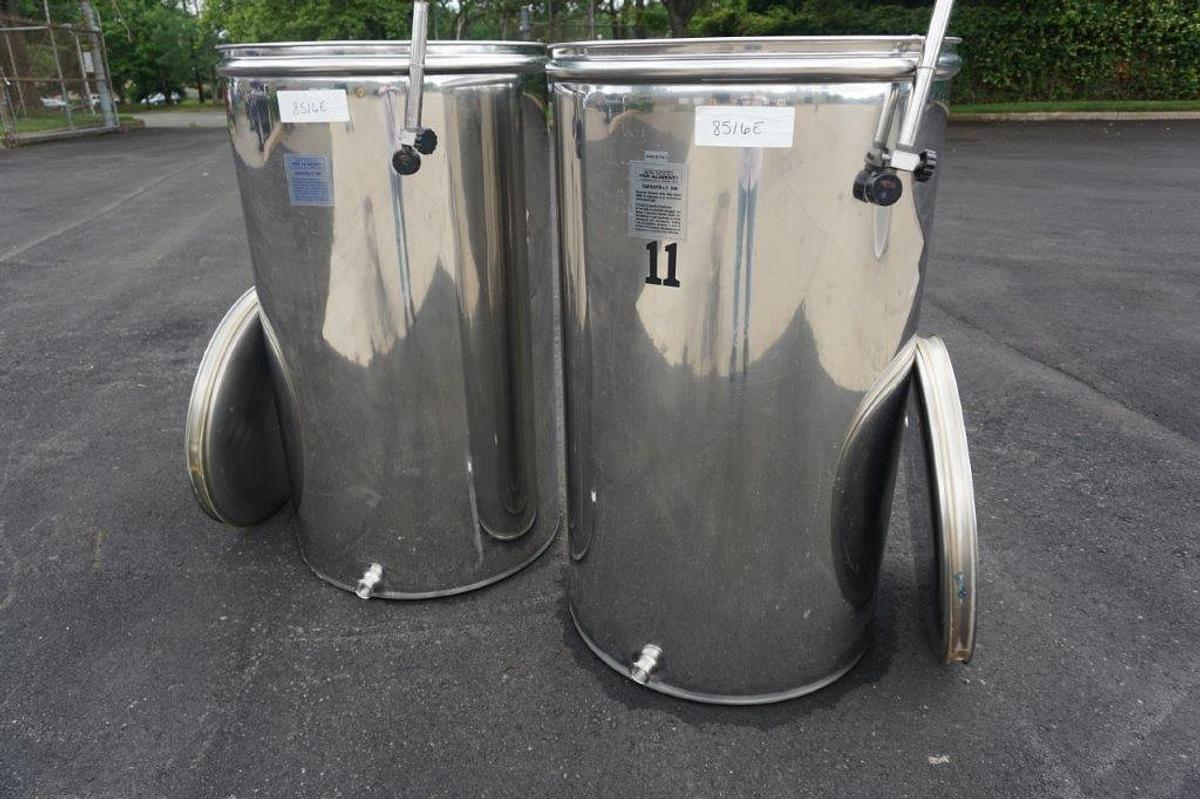
We stock a large selection of used stainless steel tanks including both horizontal tanks and vertical tanks for all of your food, pharmaceutical, cosmetic, and chemical processing/production needs. Our selection of used stainless tanks are available with a variety of traits such as jacketed tanks, single-shell tanks, sanitary tanks, pressure tanks, insulated tanks, vacuum tanks, and agitated/mixing tanks. We are suppliers of stainless steel tanks in all capacities including 200 gallon, 500 gallon, and 1,000 gallon tanks.
FAQ :
What grades of stainless steel are used in tanks, and which grade is best for my application?
The two most common grades found in used stainless steel tanks are 304 and 316/316L. Type 304 is the workhorse of the industry, widely used in food processing, dairy, brewing, and general chemical storage where the product being handled is not highly corrosive. It offers good corrosion resistance, is easy to clean, and holds up well in most sanitary processing environments. You'll find 304 stainless in a large share of the used tank market across a broad range of capacities and configurations.
Type 316 and its low-carbon variant 316L are the preferred choice when the application involves chlorides, acidic compounds, saltwater, aggressive cleaning agents, or pharmaceutical-grade processing. The addition of molybdenum in 316 stainless gives it meaningfully better resistance to pitting and crevice corrosion compared to 304. For pharmaceutical manufacturing, cosmetics production, and specialty chemical applications, 316L is often a requirement rather than a preference. When evaluating used tanks, always confirm the steel grade from the seller, check any available documentation or nameplate data, and match the grade to the specific demands of your process. A tank that served a dairy application in 304 stainless may not be appropriate if your process involves high-chloride cleaners or acidic formulations where 316L would be the correct specification.
What types of used stainless steel tanks are available on the market?
The used stainless steel tank market covers a wide range of configurations designed for different processing and storage needs. Common types include jacketed tanks (which use a surrounding jacket for heating or cooling the tank contents), single-shell storage tanks, pressure vessels rated for specific PSI levels, sanitary tanks with polished interiors and sanitary fittings, vacuum tanks, insulated tanks, and agitated or mixing tanks equipped with propellers, turbines, scrapers, or high-shear mixers. Tanks are also available in horizontal and vertical orientations, and in bottom configurations such as flat, dished, or cone bottom, each suited to different drainage and mixing requirements.
Beyond standard storage and mixing tanks, buyers can find more specialized equipment including jacketed kettles, conical fermenters used in brewing and winemaking, portable tanks on casters for flexible production layouts, stackable totes for bulk liquid storage, and scraper-agitated vessels for viscous products. Capacities in the used market range from as small as 5 gallons up to 6,000 gallons or more, with common sizes clustering around 30, 50, 100, 200, 300, 500, and 1,000 gallon marks. This variety means buyers in food, beverage, pharmaceutical, cosmetic, and chemical industries can typically find a used tank that closely matches their process requirements without paying the lead times and costs associated with custom fabrication.
What certifications and compliance standards should I look for when buying a used stainless steel tank?
Three certification frameworks matter most when evaluating used stainless steel tanks for regulated industries. ASME (American Society of Mechanical Engineers) certification is critical for any pressurized vessel. An ASME-stamped tank has been designed, fabricated, and inspected to meet defined pressure vessel codes, and that stamp is a significant trust signal for industrial and pharmaceutical buyers. When buying used, confirm whether the original ASME stamp and documentation are still available, and be aware that repairs or modifications made after fabrication could affect the original certification status.
3-A Sanitary Standards certification indicates that a tank was designed and built to meet hygienic design criteria accepted by the dairy, food, and beverage industries in the United States. Tanks meeting 3-A standards feature smooth, crevice-free interior surfaces, self-draining designs, and materials that comply with FDA contact surface requirements. For pharmaceutical and biotech applications, buyers should also look for tanks with documented surface finish specifications, typically expressed as a Ra (roughness average) value, and confirm that all gaskets, seals, and fittings are FDA-compliant materials. Even if a used tank originally met these standards, buyers should inspect the interior surface condition carefully, since scratches, pitting, or repairs can compromise hygienic performance. Consulting with your quality assurance team or a process equipment specialist before purchasing is a practical step when compliance is non-negotiable.
How do I inspect a used stainless steel tank for corrosion, pitting, or weld damage before buying?
A thorough inspection of a used stainless steel tank should cover both the interior and exterior surfaces, welds, fittings, and any jacket or insulation system. On the interior, look for pitting, which appears as small craters or rough patches in the metal surface and is often caused by prolonged contact with chlorides or aggressive cleaning chemicals. Even minor pitting can be a serious concern in sanitary applications because bacteria can harbor in pitted surfaces that are impossible to clean effectively. Weld seams should be smooth and continuous without cracks, porosity, or discoloration that might indicate heat damage or improper repair work. For jacketed tanks, inspect the jacket for signs of scale buildup, leaks around jacket ports, or corrosion on the jacket exterior.
Reputable used equipment dealers will typically accommodate in-person inspections, virtual walkthroughs, or detailed video captures of the tank so buyers can assess condition before committing to a purchase. Some tanks may still be installed at the facility where they were last used, making it possible to see the equipment in its operational context. Keep in mind that most dealers do not have the permitting or production infrastructure to run actual product through a tank during inspection, so testing is generally limited to a visual and mechanical review. If the application is highly regulated or the tank will be used under pressure, engaging an independent inspector or a certified process engineer to evaluate the equipment on-site is a worthwhile investment before finalizing the purchase.
What industries commonly buy used stainless steel tanks, and are there industry-specific configurations available?
Used stainless steel tanks serve a broad cross-section of industries, and the market reflects that diversity in the range of configurations available. Food and beverage processing is one of the largest buyer segments, with demand for sanitary mixing tanks, jacketed kettles for cooking and pasteurization, fermentation vessels for brewing and winemaking, and storage tanks for ingredients and finished products. Pharmaceutical and nutraceutical manufacturers seek tanks with polished interiors, documented surface finishes, and FDA-compliant fittings. Cosmetics and personal care producers use jacketed mixing tanks for emulsification and blending. Chemical processors require tanks rated for specific pressures and built from grades like 316L that resist corrosive materials.
Within these broad categories, buyers can find tanks designed with industry-specific features. Sanitary tanks for food and pharma applications feature tri-clamp fittings, sloped bottoms for complete drainage, and CIP (clean-in-place) spray balls. Brewing and winemaking tanks often include cone bottoms for yeast collection and floating lids for variable-volume storage. Chemical mixing tanks may be built with explosion-proof motor mounts and high-pressure jackets. Scraper-agitated vessels are common in cosmetics and food applications where viscous products need continuous wall contact during mixing. When shopping for used tanks, specifying your industry and the nature of the product being processed will help narrow the search to configurations that are genuinely appropriate for your application rather than simply the right size.
How do I determine the right tank size and capacity for my production needs?
Selecting the right tank capacity starts with understanding your batch size or throughput requirements. For batch processing, the tank should hold at least your full working volume with enough headspace to account for mixing, foaming, or thermal expansion. A common guideline is to size the working volume at roughly 75 to 80 percent of the tank's total rated capacity, which leaves adequate room for agitation and prevents overflow. For continuous processes or storage applications, factor in your production cycle time and the volume of material you need to hold between transfers or deliveries.
Beyond raw gallons, consider the physical footprint and orientation of the tank relative to your facility. Vertical tanks with cone bottoms drain more completely and are often preferred for applications requiring full product recovery, but they need ceiling clearance. Horizontal tanks have a lower center of gravity and may fit better in spaces with height restrictions. Portable tanks on casters add flexibility for facilities with changing production layouts. The used market offers tanks across a very wide capacity range, from 5-gallon lab-scale vessels up to tanks exceeding 6,000 gallons, so it is generally possible to find a used tank that fits both the process volume and the physical constraints of the installation site. If your needs fall between standard sizes, keep in mind that used tanks are priced well below custom fabrication, which can make buying two smaller tanks a practical alternative to a single large unit.
What is a jacketed stainless steel tank, and when do I need one?
A jacketed tank has a second layer of metal surrounding part or all of the tank wall, creating a space through which a heating or cooling medium (such as steam, hot water, glycol, or chilled water) can be circulated. This allows the temperature of the tank contents to be precisely controlled without direct contact between the heat transfer medium and the product. Jacketed tanks are rated for specific jacket pressures, commonly ranging from 30 PSI on the lower end up to 150 PSI or more for steam-heated applications. The jacket pressure rating is a critical specification to verify when evaluating used equipment, and it should be matched to the utilities available at your facility.
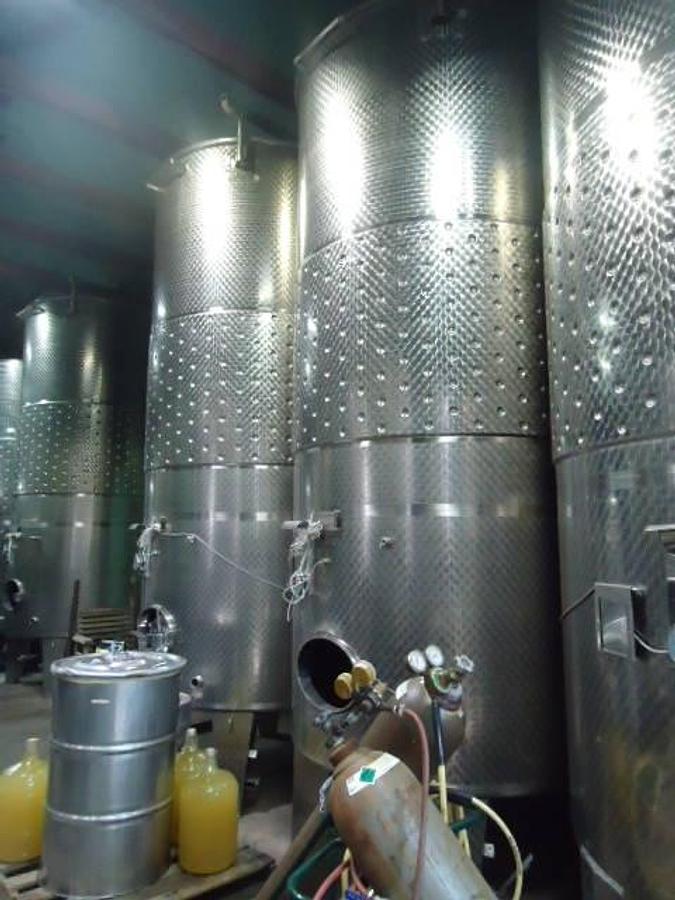
Jacketed tanks are used across a wide range of applications where temperature control is part of the process. In food manufacturing, jacketed kettles heat sauces, soups, confections, and dairy products. In pharmaceutical and cosmetic production, precise temperature management during mixing affects emulsion stability and product consistency. Fermentation processes in brewing and biotechnology use jacketed vessels to maintain optimal temperatures during active fermentation and for cold crashing. Beyond full-wall jackets, buyers will also encounter dimple jackets, which use a pattern of spot welds to create a corrugated heat transfer surface, and half-pipe jackets designed for higher-pressure heating applications. Each jacket style has different heat transfer characteristics, so matching the jacket type to your process requirements is worth discussing with your process engineer before selecting a used tank.
What should I know about shipping and delivery logistics for large used stainless steel tanks?
Shipping a large stainless steel tank is considerably more involved than standard freight, and understanding the full landed cost before purchase is important. Tanks need to be properly packaged, palletized, or crated to prevent damage in transit. The level of packaging required depends on the tank's size, weight, and configuration, and packaging costs will vary accordingly. Larger tanks, particularly those over several hundred gallons, may require specialized rigging equipment for loading at the origin and unloading at the destination. Rigging costs are typically separate from freight charges and should be confirmed with the seller upfront.
For very large tanks, flatbed trucking or lowboy trailers may be required, and delivery to the buyer's facility may need a forklift or crane for final placement. Buyers should ask the seller for a detailed breakdown of packaging, rigging, and freight costs so there are no surprises when the invoice arrives. If the tank is still installed at a production facility, the seller will coordinate with the facility for deinstallation and loading, which can add lead time to the transaction. For international shipments, additional considerations include export documentation, customs clearance, and compliance with the destination country's pressure vessel or sanitary equipment regulations. Getting a clear picture of all logistics costs before finalizing the purchase price allows for an accurate comparison between used tank options and helps avoid budget overruns.
Can used stainless steel tanks be reconditioned or refurbished, and what does that involve?
Used stainless steel tanks can often be reconditioned to improve their condition and extend their service life, though the scope of work depends on the tank's current state and the requirements of the intended application. Common reconditioning work includes mechanical polishing or electropolishing of the interior surface to restore the Ra finish required for sanitary applications, weld repair or refinishing where the surface has been scratched or damaged, replacement of gaskets, seals, and fittings, and cleaning or descaling of jacket systems that have accumulated mineral deposits. For tanks that will be used in regulated industries, reconditioning work should be documented so the finished condition can be verified against applicable standards.
Buyers should approach reconditioning costs as part of the total acquisition budget rather than an afterthought. A tank priced attractively may still represent good value even if it needs polishing or new fittings, but significant structural repairs, such as addressing deep pitting or cracked welds in a pressure vessel, can be expensive and may affect the tank's certification status. Before committing to a used tank that needs work, get a qualified fabricator or process equipment specialist to assess the scope and cost of reconditioning. In some cases, a used tank in better condition at a higher price will be more economical than a cheaper tank requiring extensive rework. The availability of replacement parts and service from the original manufacturer can also vary based on the age and model of the equipment, so checking with the manufacturer about ongoing support is a practical step.
What are the typical payment terms when purchasing used stainless steel tanks from a dealer?
Most used equipment dealers require full payment prior to shipping the equipment. This is standard practice in the used machinery industry and reflects the nature of selling pre-owned equipment where the dealer needs to confirm funds before releasing inventory. Buyers who are unfamiliar with a particular dealer should treat this as a normal expectation rather than a red flag, provided the dealer has a verifiable track record and established reputation in the industry. Payment is typically made by wire transfer, though specific accepted methods vary by dealer.
Some dealers may offer payment terms to repeat customers or established buyers with a history of transactions, but this is not the norm for first-time purchases. Because used equipment is sold as-is and payment is generally required in full before shipment, it is especially important to complete any desired inspections, review all available documentation, and confirm shipping and rigging costs before submitting payment. Buyers should also confirm the exact equipment being purchased matches the listing description and any representations made during the sales process. Choosing a dealer with a long history in the specific equipment category, such as stainless steel process tanks for food, pharma, or chemical applications, provides a meaningful layer of confidence when making a significant upfront payment.