Category
Manufacturer
Model
Wrappers Flow Wrappers, Shrink, Stretch, etc.
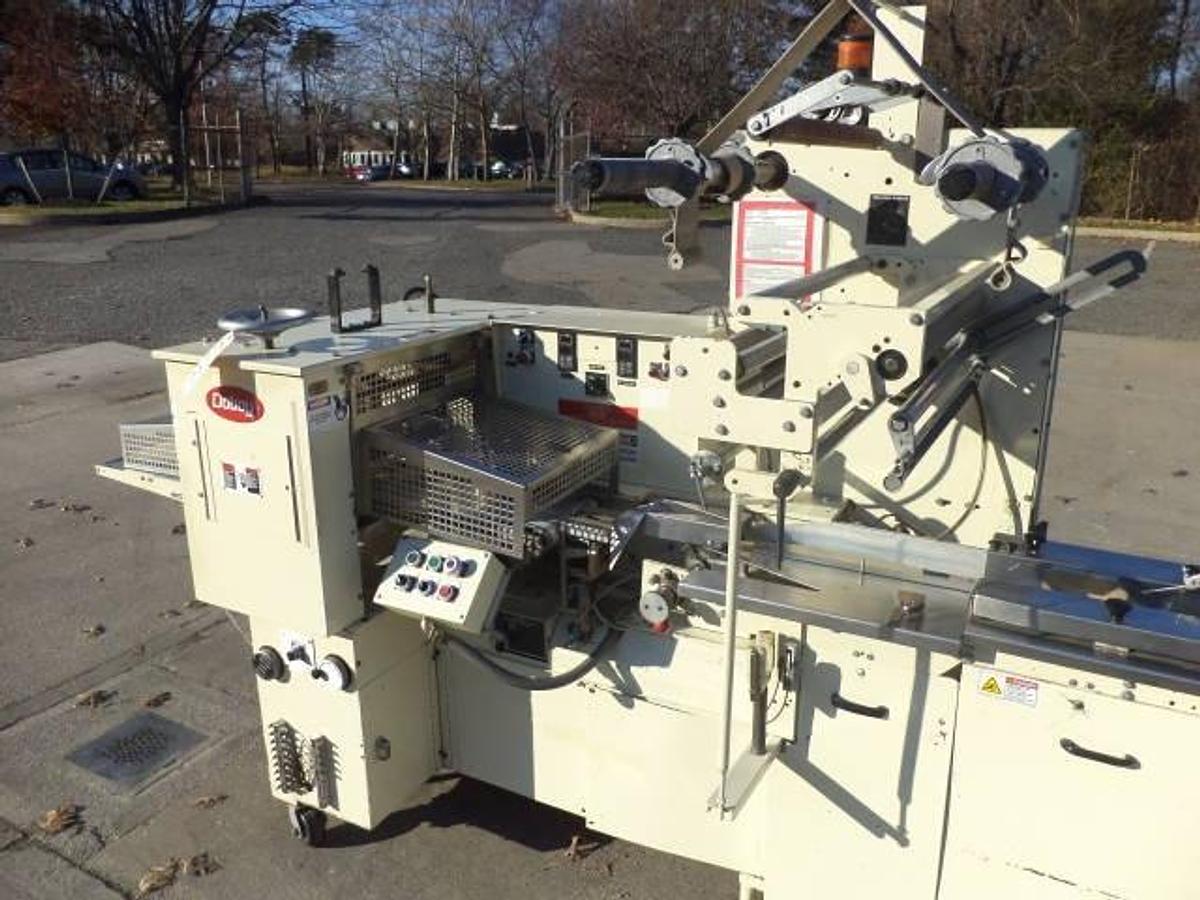
We stock a variety of used wrapping machines/wrapping equipment for use in packaging products. Our inventory includes used flow wrappers (incl. horizontal flow wrappers), used shrink wrappers, used stretch wrappers, used horizontal wrappers, and used soap wrappers for sale. We are suppliers of used DOBOY wrappers including DOBOY Super Mustang wrappers along with other brands of wrapper.
FAQ :
What types of used wrapping machines are available on the market?
The used wrapping machine market covers a wide range of equipment designed for different packaging applications. The most common categories include horizontal flow wrappers (sometimes called horizontal form-fill-seal machines), shrink wrappers with or without shrink tunnels, stretch wrappers for palletizing, overwrappers, and soap wrappers. Within each category there are semi-automatic and fully automatic configurations, and machines vary significantly in throughput speed. For example, some horizontal wrappers run at speeds of 120 to 150 products per minute, while smaller tabletop units handle much lower volumes. Brands commonly found in the used market include Doboy, Shanklin, Marden Edwards, Syntegon, Lantech, Robopac, and Wulftec, among others.
Beyond the basic categories, buyers should understand the distinction between machine types before purchasing. A flow wrapper encloses a product in a continuous film that is sealed on three or four sides, making it well-suited for food, bakery, and consumer goods applications. A shrink wrapper applies a loose film that then passes through a heat tunnel to conform tightly around the product. A stretch wrapper, by contrast, is used primarily for securing palletized loads with stretch film for transport or storage. Knowing which type of machine matches your production process and product dimensions is the first step toward making a sound purchasing decision in the used equipment market.
What should I inspect before buying a used wrapping machine?
Before committing to a purchase, buyers should request as much documentation as possible about the machine's history. This includes maintenance records, total run hours, any major repairs or part replacements, and the reason it was taken out of service. A machine decommissioned due to a facility closure or product line change is a very different risk profile than one retired because of mechanical failure. Ask the dealer whether the machine is still installed in a production environment or has been removed and stored, since storage conditions can affect electrical components, seals, and film drive systems over time.
Physical inspection is equally important. Buyers should look at the condition of the sealing jaws or bars, the state of the film drive rollers and belts, the integrity of electrical panels and wiring, and whether the machine shows signs of excessive wear or improvised repairs. Most reputable dealers will accommodate in-person inspections or, at minimum, detailed video walkthroughs of the machine in operation. Keep in mind that dealers typically do not have production permits that would allow them to run actual product through a machine, so a functional test will usually demonstrate mechanical operation rather than a full production run. Consulting the manufacturer directly is also advisable, since they can tell you whether parts and technical support are still available for that specific model and age of machine.
Do used wrapping machines come with a warranty?
Warranties on used industrial equipment work very differently than they do on equipment purchased directly from a manufacturer. Manufacturer warranties are tied to the sale of that manufacturer's product and do not transfer to subsequent buyers through the used market. Used equipment dealers typically sell machines on an as-is basis, which places the responsibility for evaluating the machine's condition squarely on the buyer before the sale is finalized.
This is precisely why the inspection process matters so much. Rather than relying on a warranty to protect you after the fact, the goal is to thoroughly assess the machine's condition before purchase. Choosing a dealer with a long track record in the packaging equipment industry, one who specializes in wrapping and packaging machinery specifically, significantly reduces risk. Experienced dealers are more likely to accurately represent a machine's condition, provide useful maintenance history, and accommodate thorough inspections. Buyers should also contact the machine's manufacturer directly to understand what level of technical support and parts availability they can realistically expect for the specific model and production year in question.
What is the typical lifespan of a wrapping machine, and how can I tell if a used one still has good life left?
Industrial wrapping machines are generally built for long service lives. Well-maintained flow wrappers, shrink wrappers, and stretch wrappers from reputable manufacturers routinely operate reliably for 15 to 25 years or more, particularly when they have been serviced regularly and not run beyond their rated capacity. The actual lifespan depends heavily on the intensity of use, the products being wrapped, the film types used, and the quality of ongoing maintenance. A machine that ran one shift per day in a clean dry goods facility will typically be in far better condition than one that ran three shifts in a high-humidity food production environment.
To gauge remaining useful life on a specific used machine, buyers should focus on a few key indicators. Total run hours and the maintenance log are the most direct measures. Beyond that, the condition of the sealing components, drive systems, and electrical controls tells a lot about how the machine was treated. If replacement parts are still manufactured or readily available through aftermarket suppliers, the machine has a practical service life ahead of it. If the model is old enough that parts are scarce, even a mechanically sound machine can become expensive to maintain. Talking to the manufacturer about parts availability for the specific model is one of the most useful steps a buyer can take before finalizing a purchase.
Can I get replacement parts and technical support for a used wrapping machine?
Parts and support availability varies considerably depending on the brand, model, and age of the machine. For widely used brands like Doboy, Shanklin, Marden Edwards, Syntegon, Lantech, and Robopac, parts are often available either directly from the manufacturer or through specialized aftermarket suppliers. Manufacturers generally continue to support their machines for many years after production ends, though the depth of that support depends on how old the model is and whether it was a high-volume platform. Before purchasing any used wrapping machine, it is worth contacting the manufacturer directly to ask specifically about parts availability, technical documentation, and whether they still offer service support for that model.
Beyond manufacturer support, the broader used parts market is another resource. Dealers who specialize in packaging equipment sometimes carry spare parts inventories, and there are third-party suppliers who stock components for popular wrapping machine platforms. Electrical components like PLCs, sensors, and drives often have generic equivalents available even when machine-specific parts are no longer made. Mechanical wear parts such as sealing jaws, belts, and rollers are frequently available through aftermarket channels. The key takeaway is that buyers should research parts availability before purchasing, not after, since a machine that cannot be serviced is a liability regardless of its purchase price.
What is the difference between a flow wrapper, a shrink wrapper, and a stretch wrapper?
These three machine types serve distinct purposes and should not be confused with one another, even though all three use film to enclose or secure products. A flow wrapper (also called a horizontal flow wrapper or horizontal form-fill-seal machine) continuously pulls a flat roll of film, forms it into a tube around the product, and creates fin seals along the length and cross seals at each end. The result is a tightly enclosed individual package. Flow wrappers are widely used for bakery items, candy bars, snack foods, hardware, and similar products that need to be individually wrapped at high speeds.
A shrink wrapper applies a loose film around a product or group of products, then passes the package through a heat shrink tunnel where the film contracts to conform snugly to the product's shape. This is common for multipacks, trays, and retail display packaging. A stretch wrapper, by contrast, does not use heat at all. It applies pre-stretched plastic film around a palletized load in a spiral or rotary pattern to stabilize the load for shipping or storage. Stretch wrappers are a staple of distribution centers and warehouses rather than production lines. Understanding which type of machine your application requires is essential before shopping the used market, since the three types are not interchangeable and serve very different packaging functions.
How do I determine what size or throughput capacity wrapping machine my operation needs?
Sizing a wrapping machine correctly starts with a clear picture of your production requirements. The most important factors are the number of packages per minute or per hour your line needs to produce, the physical dimensions and weight of the products being wrapped, and the type and width of film the machine must accommodate. For example, a horizontal flow wrapper rated at 150 packages per minute is overkill for a small batch operation producing a few hundred units per shift, while a 30-per-minute machine would be a bottleneck in a high-volume food production environment. Matching the machine's rated throughput to your actual production targets, with some headroom for growth, is the practical starting point.
Product dimensions are equally critical. The film width, forming box or former size, and the machine's maximum product height and length all need to match your product specifications. On used machines, these parameters are typically listed in the equipment specifications, but buyers should verify them against actual product dimensions before purchasing. It is also worth thinking about film compatibility. Machines designed for specific proprietary film formats can create ongoing supply and cost challenges, so confirming that the machine accepts standard commercially available film rolls is an important practical consideration. If your operation runs multiple product sizes, look for machines with quick-change tooling or adjustable formers to minimize changeover time.
Is it safe to buy a used wrapping machine without inspecting it in person?
Buying any piece of used industrial equipment without some form of inspection carries meaningful risk, and wrapping machines are no exception. The good news is that in-person inspection is not always the only option. Many reputable dealers offer detailed video inspections, live video calls where a technician walks through the machine and demonstrates its operation, or professionally produced video documentation of the equipment running under power. These remote inspection options have become a standard part of the used equipment buying process and can give buyers a reliable picture of a machine's condition when travel is not practical.
That said, there are limits to what any remote inspection can capture. Things like the feel of worn mechanical components, the smell of overheating electrical parts, or subtle vibrations during operation are easier to detect in person. For higher-value machines or complex equipment, arranging an in-person visit is worth the effort. Some machines are still installed in active production facilities where an inspection can be arranged between the dealer and the facility, allowing buyers to see the equipment running under actual production conditions. Regardless of how the inspection is conducted, buyers should ask specific questions about the machine's history, request close-up footage of wear-prone components like sealing jaws and drive systems, and confirm parts availability with the manufacturer before finalizing any purchase.
How does shipping and delivery work for used wrapping machines?
Shipping used wrapping machines involves more logistical complexity than standard freight because of the size, weight, and sensitivity of the equipment. Smaller tabletop or semi-automatic wrappers may ship on standard pallets, but larger inline flow wrappers, shrink tunnel systems, and pallet stretch wrappers typically require custom crating to prevent damage in transit. The level of packaging required directly affects shipping costs, and buyers should ask dealers specifically what packaging is included in the quoted price versus what might be an added charge. Rigging, which refers to the equipment and labor needed to safely lift and load heavy machinery onto a truck, is another cost that is often separate from the base freight rate.
For buyers, the most important step is to get a clear picture of the total landed cost before agreeing to a purchase. This means asking the dealer for an itemized breakdown that includes the machine price, any palletization or crating fees, rigging at the origin, freight to your facility, and any unloading or rigging costs at the destination. Freight quotes will vary based on the machine's dimensions, weight, the distance involved, and the carrier used. Buyers should also confirm who is responsible for insuring the shipment during transit, since damage claims on heavy equipment can be complex. Getting these details in writing before the sale is finalized protects both parties and eliminates surprises when the machine arrives.
What are typical payment terms when purchasing used wrapping machines from a dealer?
Payment practices in the used industrial equipment market differ from what buyers might expect in other purchasing contexts. Most used equipment dealers require payment in full before a machine is released for shipment. This is standard practice across the industry and reflects the nature of the transaction, since used equipment is typically a one-of-a-kind item that cannot easily be returned to inventory once shipped. Common payment methods include wire transfer, certified funds, and in some cases credit card for smaller purchases, though dealers may charge a processing fee for card payments on larger transactions.
For buyers with an established relationship with a dealer, some flexibility on payment terms may be available. Repeat customers who have completed multiple transactions with the same dealer are more likely to be offered extended terms or other arrangements. Financing through third-party equipment lenders is another option worth exploring, particularly for higher-value machines. Some buyers also use lease-to-own structures for used equipment, which can preserve working capital while still getting the machinery into production. Whatever payment arrangement is used, buyers should ensure they receive clear documentation of the sale terms, the machine's description and condition as represented, and any agreed-upon inspection rights before funds are transferred.