Category
Subcategory
Manufacturer
Model
Cookers
Batch Cookers & Continuous Cookers
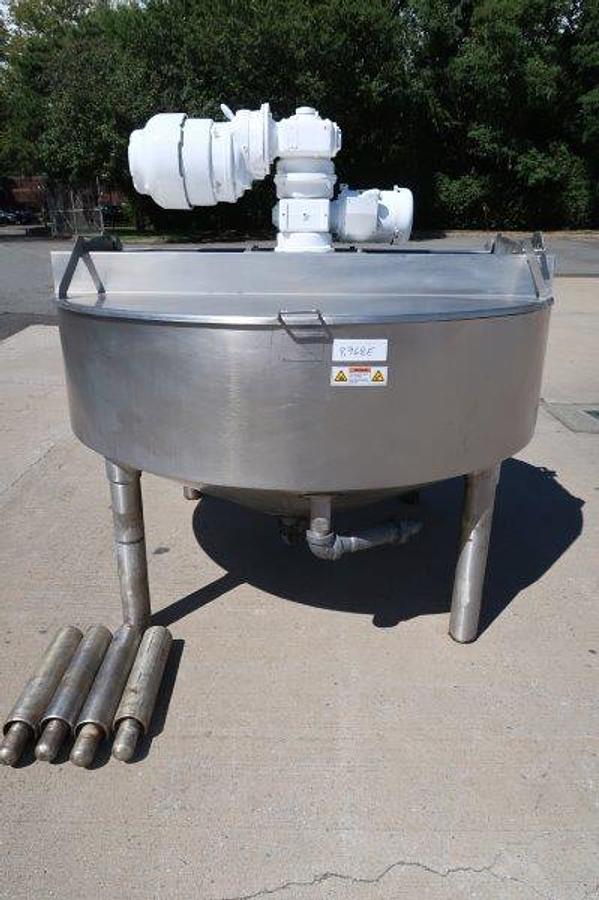
Our stock of used industrial cookers includes blanchers, pressure cookers, vacuum cookers, and kettle cookers. We have both batch cookers and continuous cookers. These cookers can be used to cook a variety of foods as we sell dedicated pasta cookers and rice cookers for manufacturing.
FAQ :
What types of used industrial cookers are available on the market?
The used industrial cooker market covers a wide range of equipment designed for different food manufacturing and processing applications. Common categories include blanchers, pressure cookers, vacuum cookers, kettle cookers, continuous fryers, and tilting steam kettles. Within those categories, buyers can find both batch cookers (which process a fixed quantity of product per cycle) and continuous cookers (which move product through a cooking zone without stopping). Dedicated units built specifically for pasta or rice production are also available, as are combination cooker/cooler systems that handle both stages of the thermal process in a single piece of equipment.
The size and configuration of available units varies considerably. Kettle cookers, for example, can range from compact 40-gallon tilting models to large 200-gallon jacketed vessels with cone bottoms and high-pressure steam jackets rated at 100 PSI or more. Continuous fryers and blanchers are sized by belt width, with units in the 34-inch range being common in snack food and vegetable processing lines. Stainless steel construction is standard across most categories, and well-known brands such as Groen, Cleveland Range, Market Forge, Chester Jensen, Mueller, Vulcan, and Heat and Control appear frequently in the used equipment market due to their durability and long service lives.
How do I verify the condition and functionality of a used industrial cooker before purchasing?
Verifying the condition of a used industrial cooker requires a methodical approach because these machines vary widely in age, usage intensity, and maintenance history. The first step is requesting a detailed service history and any available maintenance records from the seller. A well-documented maintenance log tells you whether the machine received regular attention or was run hard without upkeep. Beyond paperwork, buyers should arrange a direct inspection, either in person, via live video call, or through a recorded video walkthrough provided by the dealer. Reputable used equipment dealers will accommodate these requests as a standard part of the sales process. If the machine is still installed at a production facility, some dealers can coordinate an inspection at the plant itself, where the equipment may even be running in active production.
During the inspection, focus on the condition of the heating elements or burners, the integrity of any steam jackets or pressure vessels, the state of gaskets and seals, and the condition of all contact surfaces. For pressure cookers, ask whether the vessel has a current pressure vessel certification, since expired certifications can create compliance issues at your facility. Keep in mind that most used equipment dealers do not have the permitting or infrastructure to run actual food production tests, so the inspection will center on mechanical condition rather than a live production run. Consulting the original equipment manufacturer about the specific model and serial number can also reveal whether parts and technical support are still available, which is a practical indicator of how serviceable the machine will be going forward.
What certifications and compliance standards should I look for when buying a used industrial cooker?
NSF (National Sanitation Foundation) certification is the most important compliance marker to look for on used commercial and industrial food processing equipment. NSF-certified equipment has been evaluated against sanitation and food safety design standards, which matters both for regulatory compliance and for passing facility audits. Many food manufacturers, co-packers, and food service operations are required by their customers or by local health authorities to use NSF-listed equipment. When purchasing used equipment, verify that the NSF listing plate or data tag is still present on the machine and that the model itself remains on the NSF certified products database.
Beyond NSF, buyers should check for UL (Underwriters Laboratories) or ETL listings on electrically powered components, which speak to electrical safety compliance. For gas-fired equipment, CSA (Canadian Standards Association) or AGA (American Gas Association) certification is the relevant standard. Pressure vessels, including steam-jacketed kettles and pressure cookers, are subject to ASME (American Society of Mechanical Engineers) code requirements and must carry a valid ASME stamp along with documentation of inspection by a certified pressure vessel inspector. The inspection intervals and requirements vary by state, so it is worth confirming with your local boiler and pressure vessel inspection authority what documentation will be required before the equipment can be put into service at your facility.
Are replacement parts still available for older used industrial cooker models?
Parts availability is one of the most practical factors to evaluate before committing to a used industrial cooker, particularly for older models. Brands with long histories in the food equipment industry, including Groen, Cleveland Range, Market Forge, Vulcan, Hobart, Blodgett, and Southbend, tend to have better parts ecosystems than lesser-known or discontinued manufacturers. Many of these brands have been producing similar equipment designs for decades, which means components like gaskets, steam traps, valve assemblies, and heating elements are often still manufactured or available through aftermarket suppliers even for machines that are 20 or 30 years old.
The best way to assess parts availability for a specific machine is to contact the manufacturer directly with the model number and serial number before purchasing. Manufacturers can tell you whether the unit is still supported, which parts are stocked, and whether technical documentation such as parts manuals and wiring diagrams is available. This step is worth doing before the sale, not after. For older models where the manufacturer no longer supports the equipment, third-party rebuild shops and parts suppliers often stock common wear items, but availability becomes less predictable. Factoring in the likely cost and lead time for critical parts is a sensible part of the total cost of ownership calculation when evaluating any used industrial cooker.
What is the typical lifespan of an industrial cooker, and how much useful life should I expect from a used unit?
Industrial cookers built for food manufacturing are designed for continuous, heavy-duty use, and well-maintained units from reputable manufacturers routinely last 20 to 30 years or more. Steam-jacketed kettles and pressure cookers, in particular, are mechanically simple and built from heavy-gauge stainless steel, which means their structural longevity is high as long as the pressure vessel and steam jacket remain sound. Continuous cookers and fryers have more moving parts, including conveyors, drive systems, and heating elements, so their effective lifespan depends more heavily on how consistently they were maintained.
For a used unit, the remaining useful life depends on three things: the age of the machine, the intensity of its prior use, and the quality of maintenance it received. A 15-year-old kettle cooker from a low-volume operation that was serviced regularly may have far more life left than a 10-year-old continuous fryer that ran three shifts a day with minimal maintenance. This is why requesting service records and arranging a thorough inspection matters so much. Buyers should also weigh energy consumption, since older industrial cookers can use significantly more gas or electricity than current designs, and that gap in operating costs can partially offset the savings from buying used rather than purchasing a more recently manufactured machine.
What fuel types do used industrial cookers typically use, and can they be converted?
Used industrial cookers are available in gas-fired, electric, and steam-heated configurations. Gas-fired units, which include both natural gas and propane models, are common in continuous fryers, blanchers, and range-style cookers. Steam-jacketed kettles are typically heated by a facility's central steam supply or by an integral steam generator, and electric heating elements are found on smaller kettle cookers and specialty units. The fuel type of any specific used machine will be listed on its data plate and should be confirmed with the seller before purchase, since the infrastructure requirements at your facility need to match the equipment.
Conversions between natural gas and propane are often possible on gas-fired equipment and are generally handled by swapping the burner orifices and adjusting the regulator, though this work should always be performed by a qualified technician and verified against the manufacturer's specifications for that model. Converting a gas unit to electric, or vice versa, is a more involved modification that may not be practical or cost-effective depending on the machine's design. Before purchasing a used cooker with the intention of converting it, consult both the equipment manufacturer and a qualified service technician to confirm that the conversion is feasible for that specific model and that it can be done in a way that preserves any applicable safety certifications.
What are the installation requirements for a used industrial cooker?
Installation requirements for an industrial cooker depend on the type of equipment, its fuel source, and the size of the unit. Gas-fired cookers require a properly sized gas line with adequate BTU capacity, a shutoff valve, and in most jurisdictions a commercial hood with exhaust ventilation that meets local fire and health code requirements. The hood and makeup air system need to be sized to handle the heat and moisture output of the specific cooker, so buyers should confirm the BTU rating and steam output of the unit before designing or modifying ventilation infrastructure. Electric units have their own demands, typically requiring dedicated circuits with appropriate amperage and voltage, which can range from standard 208V three-phase service to higher-voltage configurations on large industrial units.
Steam-jacketed kettles and pressure cookers require a connection to a steam supply at the correct pressure rating, along with a condensate return line. Floor-mounted units often need to be anchored or leveled on a surface that can handle their operating weight, which for a 200-gallon filled kettle can exceed several thousand pounds. Local building and health departments will typically require permits for installation, and pressure vessels must be inspected and certified before being put into service. Engaging a qualified millwright, plumber, and electrician early in the process helps avoid costly surprises. Buyers should also factor in the cost of rigging the equipment into the facility, since large industrial cookers often require forklifts or cranes for placement.
What is the difference between a batch cooker and a continuous cooker in food manufacturing?
A batch cooker processes a defined quantity of product in a single cycle. The product is loaded, cooked for a set time under specific temperature and pressure conditions, and then unloaded before the next cycle begins. Steam-jacketed kettles, pressure cookers, and tilting kettle cookers are all examples of batch cooking equipment. Batch systems offer flexibility because the cooking parameters can be adjusted between cycles, making them well suited for operations that run multiple product types or recipes on the same line. They are also generally simpler mechanically, which can mean lower maintenance demands and easier cleaning.
A continuous cooker moves product through a cooking zone without stopping, typically via a conveyor belt, screw, or flighted system. Blanchers, continuous fryers, and tunnel cookers fall into this category. Continuous systems are designed for high-volume, single-product or limited-SKU operations where throughput is the priority. Because the product moves through at a consistent rate, continuous cookers can achieve very uniform cook results at scale. The tradeoff is that changeovers and cleaning cycles take the entire line down, and the mechanical complexity of conveyor and drive systems adds maintenance considerations that batch equipment does not have. Choosing between the two depends on production volume, product variety, and the flexibility the operation requires.
How does buying a used industrial cooker compare to purchasing recently manufactured equipment?
The primary advantage of buying used industrial cooking equipment is cost. Used machines typically sell for a fraction of the price of a comparable recently manufactured unit, which makes them attractive for startups, operations expanding on a limited capital budget, or facilities that need backup capacity without a major investment. Many used industrial cookers, particularly steam-jacketed kettles and pressure cookers from established manufacturers, are mechanically simple enough that age alone does not significantly diminish their performance if they have been maintained properly. The used market also allows buyers to acquire equipment from well-regarded manufacturers that may have long lead times on current production.
The tradeoffs are real, though. Older equipment may lack the energy efficiency of more recently designed machines, and the gap in gas or electricity consumption can add up meaningfully over months and years of production. Controls and automation on older units are typically less sophisticated, which may matter for operations that need precise data logging or integration with plant management systems. There is also no manufacturer support period remaining on a used machine, so buyers carry more responsibility for sourcing parts and technical expertise. The right choice depends on the specific application, the available capital, and how the total cost of ownership over the expected service period compares between a used unit and a more recently manufactured alternative.
What should buyers understand about shipping and payment when purchasing a used industrial cooker?
Shipping a used industrial cooker involves more logistical complexity than standard freight because of the size, weight, and fragility of this type of equipment. Proper packaging is critical. Depending on the machine, this can mean palletizing, custom crating, or both. The level of packaging required affects shipping costs, and buyers should ask the dealer for a detailed breakdown of palletization or crating charges before agreeing to a purchase price. For large units like 200-gallon kettles or continuous fryers, loading and unloading typically requires rigging equipment such as a forklift or crane, and rigging fees are generally an added cost on top of freight. Getting a full landed cost estimate, covering the machine price, packaging, rigging, freight, and any unloading requirements at the destination, is the right way to compare options accurately.
On the payment side, most used equipment dealers require full payment before the equipment ships. This is standard practice in the industry and reflects the fact that used machinery transactions do not typically involve the financing infrastructure that comes with purchasing from a manufacturer. Some dealers extend payment terms to repeat customers with an established relationship, but buyers approaching a dealer for the first time should expect to pay in full prior to shipment. Confirming payment terms, accepted payment methods, and the timeline from payment to shipment are all practical questions to resolve before finalizing any used equipment purchase.