Category
Subcategory
Manufacturer
Model
Dicers-slicers
Urschel Dicers, Urschel Slicers, Urschel Comitrol
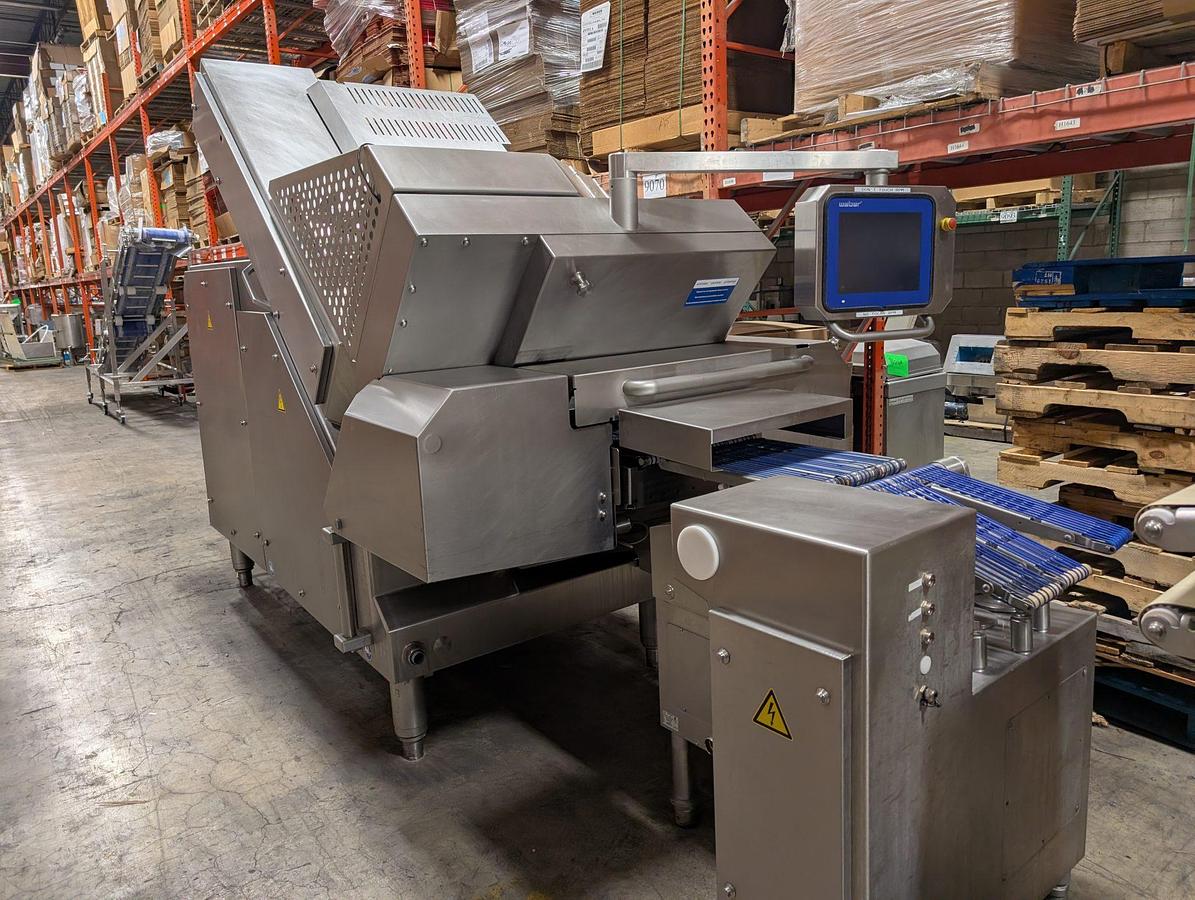
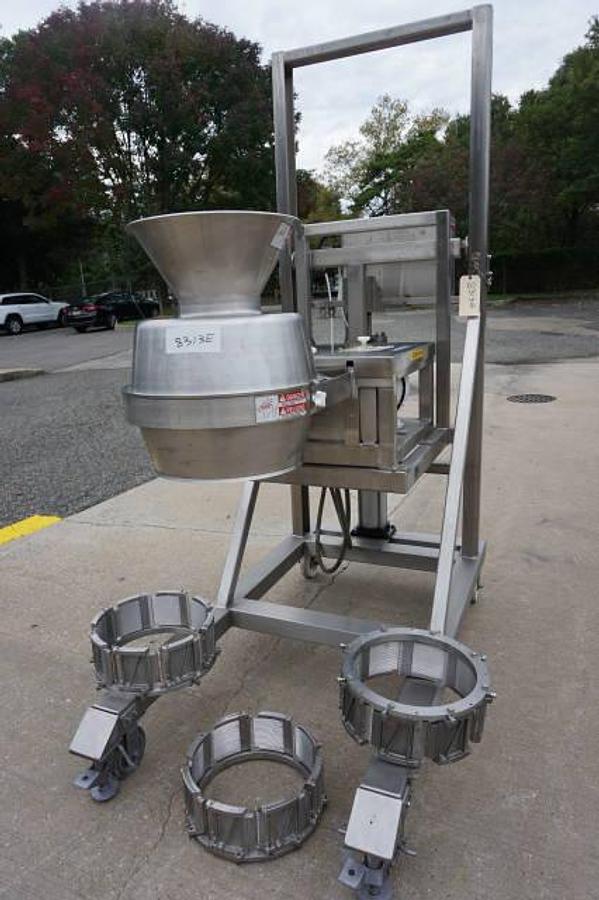
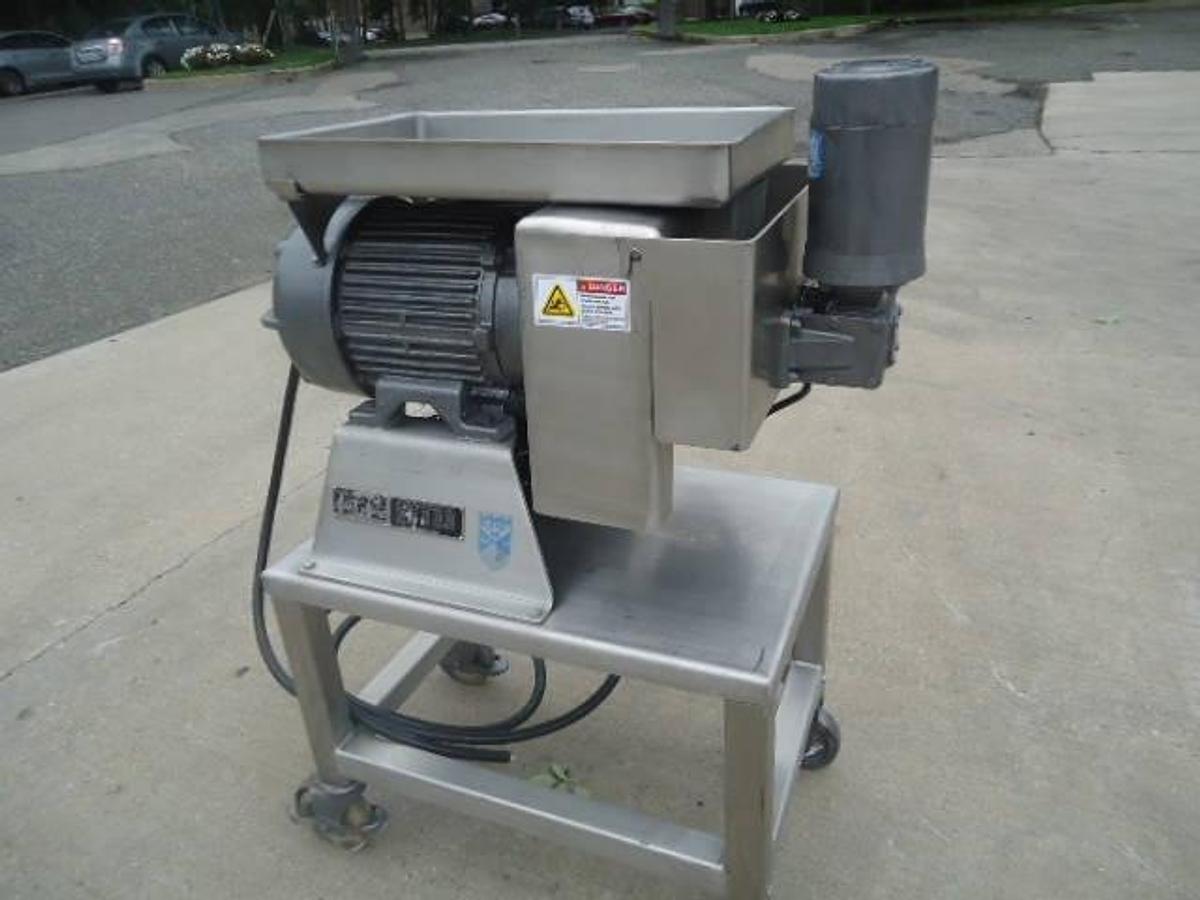
We stock used URSCHEL dicers and used URSCHEL slicers for use in the food processing industry. An URSCHEL slicer can be used to slice a wide variety of food including as a vegetable slicer, fruit slicer, and meat slicer. Our inventory also includes URSCHEL Comitrol machines which can be used for pureeing and emulsifying food products.
FAQ :
What is the difference between a dicer and a slicer, and do I need one or both?
A slicer cuts food into uniform flat pieces along a single plane, making it ideal for portioning meats, cheeses, vegetables, and fruits into consistent thicknesses. A dicer, by contrast, cuts product in multiple directions to produce uniform cubes, strips, or shreds. Some machines, like the Urschel G and Urschel CC-D, are designed to perform both functions depending on the tooling and blade configuration installed, which gives food processors flexibility without needing two separate pieces of equipment.
Whether you need one or both depends on your production requirements. High-volume operations that process a wide variety of products, such as a prepared foods manufacturer or a large commissary kitchen, often benefit from having both a dedicated slicer and a dedicated dicer on the floor. Smaller operations with more limited product variety may find that a combination dicer/slicer covers their needs. It is worth mapping out the specific cuts your operation requires before purchasing, since buying used equipment is most cost-effective when the machine is well-matched to the actual work it will be doing.
What brands of used dicers and slicers are most reliable for commercial food processing?
Urschel is widely regarded as the industry standard for commercial food processing dicers and slicers. The company has been manufacturing food cutting equipment for over a century, and their machines, including the Model G, Model H, RA series, CC-D, and the Comitrol line, are found in food processing plants around the world. Urschel machines are built to exceptionally tight tolerances, which is why they retain their value and remain in demand on the used market long after their initial production runs. Other brands that appear in the used market for food processing applications include GEA, Treif, Weber, and Emura, each of which has strong reputations in specific segments like deli slicing or industrial portioning.
One practical reason Urschel dominates the used market is parts availability. Because so many of these machines are still in active production use, the manufacturer has historically maintained support for older models, though buyers should always contact the manufacturer directly to confirm parts and support availability for a specific model and serial number range. When evaluating any used dicer or slicer brand, it pays to research the current availability of blades, impellers, and wear parts before committing to a purchase, since a machine that cannot be serviced or re-bladed has limited long-term value regardless of how well it runs at the time of sale.
How do I verify the condition of a used dicer or slicer before purchasing?
Inspecting a used dicer or slicer thoroughly before purchase is one of the most important steps a buyer can take. Reputable used equipment dealers will typically accommodate in-person inspections, virtual walkthroughs, or detailed video captures of the machine. When reviewing any of these, pay close attention to the blade assembly, blade guard, motor housing, feed chute, product hopper, and any visible wear points on the frame or carriage. Ask the dealer to show the machine from multiple angles, including the underside and any areas that are difficult to clean, since residue buildup in hard-to-reach spots can indicate poor maintenance history.
Beyond the visual inspection, it is worth asking the dealer about the machine's history, including what product it was used to process and approximately how many hours it has run. Some machines are sold directly out of active production facilities, which means an in-person inspection can sometimes be arranged at the plant itself. Keep in mind that most used equipment dealers do not have the permitting or production setup required to run actual product through a machine during a demo, so the inspection will generally focus on the mechanical condition, cleanliness, and completeness of the unit rather than a live production test. Buyers who are uncertain about what to look for may want to bring in a qualified equipment technician or mechanic familiar with the specific brand to assist with the evaluation.
Are replacement parts and blades still available for older Urschel dicers and slicers?
Parts availability for used Urschel equipment is one of the reasons these machines remain so sought after on the secondary market. Urschel has a long track record of supporting their equipment, and many models that have been out of production for years still have blades, impellers, and wear parts available either through the manufacturer or through specialized parts suppliers. That said, availability is not guaranteed for every model, and it can vary significantly depending on the age of the machine and whether a particular model was produced in large enough quantities to sustain an aftermarket parts ecosystem.
Before finalizing a purchase of any used dicer or slicer, buyers should contact the manufacturer directly to ask about parts and service support for that specific model and serial number. This is a step that is easy to overlook but can save significant headaches down the road. Common wear items on slicers and dicers, including blades, blade guards, carriage trays, and thickness adjustment components, are often available at reasonable cost for popular models, while more obscure or older machines may require custom fabrication or sourcing through specialty suppliers. A reputable used equipment dealer who specializes in food processing machinery will often be able to advise on parts availability as part of the buying conversation.
What sanitation and food safety standards should a used commercial dicer or slicer meet?
NSF International certification is the primary food safety standard to look for on commercial food processing equipment in the United States. NSF-certified equipment is designed and constructed to meet specific sanitation requirements, including the use of food-grade materials, smooth surfaces that resist bacterial growth, and designs that allow for thorough cleaning and disinfection. On used equipment, the NSF certification marking is typically found on a placard or stamp on the machine itself. Some local health inspectors and facility auditors require visible certification markings on equipment, so it is worth verifying that any used machine you are considering still carries its certification placard.
Beyond certification markings, the physical condition of the machine matters as much as the paperwork. A used dicer or slicer should be free of cracks, pitting, or corrosion on any food-contact surfaces, since these conditions create harborage points for bacteria that cannot be adequately cleaned. Stainless steel construction is the standard for food processing equipment, and many used machines on the market, including the Urschel H-A and RA-D models, are built in all-stainless configurations specifically for washdown environments. Buyers should also verify that all food-contact components, including blades, hoppers, and discharge chutes, are present and intact, since missing parts can compromise both safety and function.
Do used dicers and slicers come with any warranty or guarantee?
Used commercial food processing equipment is typically sold on an as-is basis, which is standard practice across the used machinery industry. Warranties are generally only offered by equipment manufacturers on products sold through their authorized channels, and that coverage does not transfer to subsequent buyers on the secondary market. This makes the inspection process especially important, since the buyer takes on responsibility for the machine's condition once the sale is complete.
Because there is no warranty safety net, selecting a reputable used equipment dealer with a long history in the food processing machinery space is one of the most effective ways to reduce risk. Dealers who specialize in a specific industry, like food processing equipment, tend to have deeper knowledge of the machines they sell and are more likely to accurately represent condition. Buyers should also factor in the cost of any servicing, blade replacement, or cleaning they may need to perform after purchase, and should ask the dealer detailed questions about the machine's history and current operating condition before committing. Taking the time to do a thorough inspection, whether in person or via video, is the most reliable way to understand what you are buying.
What production capacity or output should I look for in a used dicer or slicer?
Matching machine capacity to your actual production volume is one of the most important factors in selecting a used dicer or slicer. Commercial food cutting equipment spans a wide range of throughput capabilities. Smaller portable units like the Urschel G-A are well-suited to lower-volume operations or facilities that need flexibility to move equipment between stations. Larger, fixed machines like the Urschel RA series or the Urschel 3600 Comitrol are designed for continuous high-volume processing and are commonly found in industrial food manufacturing environments.
When evaluating capacity, look at the manufacturer's published specifications for the specific model you are considering, paying attention to output rates, feed opening dimensions, and motor horsepower. A 10 HP Comitrol, for example, is built for a very different workload than a 5 HP dicer on a portable stand. Buying a machine that is significantly oversized for your operation is not just a matter of paying more upfront. Larger machines consume more power, require more space, and can be harder to clean efficiently at low production volumes. Conversely, running a machine at the upper edge of its capacity continuously will accelerate wear on blades and drive components. Sizing the machine appropriately to your actual throughput needs will extend its useful life and keep operating costs reasonable.
Can I inspect or test a used dicer or slicer before completing the purchase?
Most reputable used equipment dealers will accommodate some form of inspection before a sale is finalized. The options typically include an in-person visit to the dealer's facility, a virtual inspection conducted over video call, or a detailed video capture of the machine that the dealer provides to the buyer. Each approach has trade-offs. An in-person inspection gives the buyer the most complete picture of the machine's condition, including the ability to check for noise, vibration, or other issues that are hard to assess remotely. Virtual and video inspections are a practical alternative when travel is not feasible, and a thorough dealer will show all major components, including the blade assembly, motor, hopper, and any wear points.
In some cases, machines are still located at the production facility where they were used, rather than at the dealer's warehouse. When that is the situation, an in-person inspection may be arranged at the plant, and the machine may even be observed running in production. However, buyers should not expect dealers to run actual product through a machine as part of a demo at their own facility. Used equipment dealers generally do not hold the food production permitting required to operate food processing equipment in a production context. The inspection is therefore focused on mechanical condition, cleanliness, completeness of parts, and overall state of the machine rather than a live product test.
What should I know about shipping costs and logistics when buying a used dicer or slicer?
Shipping costs for used food processing equipment can vary considerably depending on the size and weight of the machine, the distance it needs to travel, and the level of packaging required to protect it in transit. Smaller portable units, like a Urschel G-A on a portable stand, are relatively straightforward to palletize and ship via standard freight carriers. Larger machines, such as a Urschel 3600 Comitrol with a screw feed assembly, may require custom crating and heavier-duty rigging for both loading at the origin and unloading at the destination. These added packaging and rigging costs can be meaningful and should be factored into the total landed cost of the equipment before comparing prices.
Buyers should ask the dealer for a detailed breakdown of packaging, rigging, and freight charges before committing to a purchase. It is also worth asking whether the dealer handles shipping coordination or whether the buyer is responsible for arranging their own carrier. For very large or heavy machines, a specialized machinery mover with the right equipment, such as a forklift or crane, may be required at the receiving end, and arranging that in advance will prevent delays and potential damage on delivery. Understanding the full logistics picture upfront avoids surprises and makes it easier to compare the true cost of machines from different sellers.
What payment terms are typical when purchasing used food processing equipment like dicers and slicers?
The standard practice in the used equipment industry is full payment prior to shipment. This applies to most transactions, regardless of the machine's price or the buyer's purchase history with a given dealer. The reasoning is straightforward: once a machine ships, the dealer has limited recourse if payment issues arise, and used equipment transactions generally do not involve the same credit infrastructure that exists in other commercial purchasing contexts. Buyers who are accustomed to net payment terms from other suppliers should plan accordingly and have funds available before expecting a machine to be prepared for shipment.
Some dealers do offer payment terms to repeat customers or buyers with an established relationship, but this is the exception rather than the rule and is typically arranged on a case-by-case basis. For buyers making a significant purchase, it is reasonable to ask the dealer what payment methods are accepted and whether any flexibility exists on timing, particularly for larger transactions. Wire transfer is the most common payment method for used machinery purchases of any significant value. Buyers should also confirm whether the quoted price includes any preparation, cleaning, or testing of the machine prior to shipment, or whether those services carry additional charges.