Category
Subcategory
Manufacturer
Model
Freezers
Freeze Tunnels, Spiral Freezers, Nitrogen Freezers
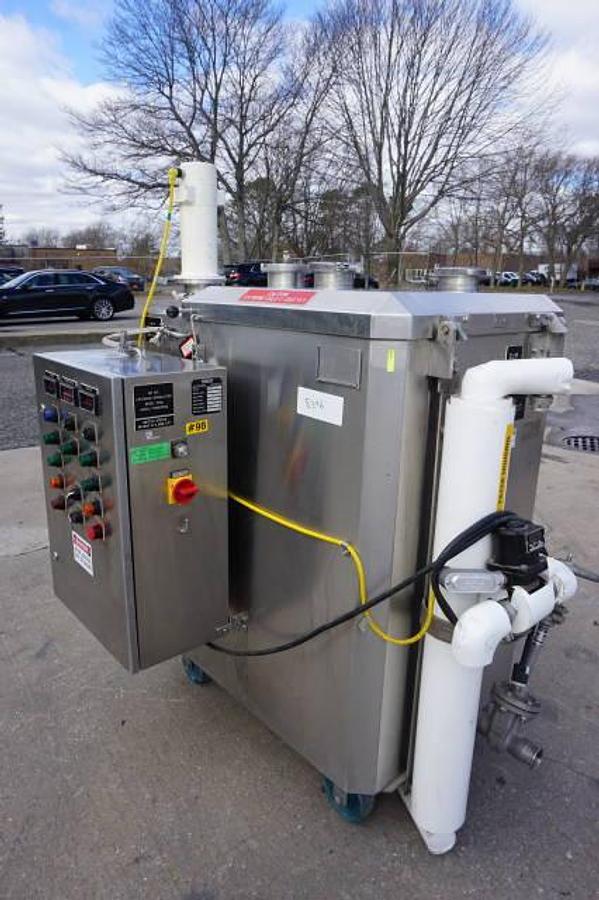
We stock a variety of industrial freezers for food processing including used freeze tunnels, freeze dryers, and spiral freezers. Our freezers include immersion freezers and nitrogen freezers/nitrogen tunnels. Our inventory of freezing tunnels includes used freezers from LIQUID CARBONICS, KRYOPRAY, and NORTHFIELD.
FAQ :
What types of used industrial freezers are typically available for sale?
The used industrial freezer market covers a wide range of equipment types, each designed for specific food processing and cold storage applications. The most common categories include spiral freezers, freeze tunnels, blast freezers, cryogenic nitrogen freezers, immersion freezers, and freeze dryers. Within the cryogenic segment, liquid nitrogen tunnel freezers and CO2 spiral freezers are particularly common on the used market, with brands like Liquid Carbonics, Kryospray, Linde, Praxair, and Airco appearing regularly in dealer inventories. Freeze dryers from manufacturers like Virtis and Thermovac are also available for applications requiring sublimation-based preservation.
For buyers with more general cold storage needs, walk-in freezers, reach-in freezers, and chest freezers round out the used market. Industrial blast freezers, which operate at much lower temperatures than standard units, are sought after in meat processing, seafood, and ready-meal production. Spiral freezers are especially popular in high-volume food manufacturing because of their compact footprint relative to throughput capacity. When shopping for used equipment, buyers should clearly define their required temperature range, belt width, and throughput volume before evaluating specific machines, since the performance specs vary considerably across these different freezer types.
What is the typical temperature range for used industrial freezers?
Standard industrial freezers typically operate between -10°F and 0°F (-23°C to -18°C), which covers most general food storage and processing requirements. Blast freezers and cryogenic tunnel freezers go significantly colder. Liquid nitrogen freezers, for example, can achieve temperatures as low as -320°F (-196°C), making them suitable for rapid individual quick freezing (IQF) of seafood, poultry, fruits, and other products where cell structure preservation is critical. CO2-based spiral freezers typically operate in the -50°F to -100°F range depending on the configuration.
When evaluating a used industrial freezer, confirming that the unit can still reach and hold its rated temperature range is one of the most important steps in the buying process. Refrigeration components, insulation integrity, and control systems all degrade over time, and a machine that once hit -40°F may no longer perform to that spec after years of production use. Buyers should request documentation of recent temperature performance and, where possible, arrange an inspection to observe the unit operating under load. For cryogenic units, the condition of the cryogen delivery system and controls is equally important to inspect alongside the conveyor and enclosure components.
How do I evaluate the condition of a used industrial freezer before buying?
Evaluating a used industrial freezer requires looking beyond surface appearance. The most important starting point is requesting any available maintenance logs and service history. A machine with documented routine maintenance, compressor service records, and refrigerant charge history gives a buyer far more confidence than one with no paperwork at all. Physical inspection should cover the condition of insulation panels, door seals, evaporator coils, condensing units, belts or conveyors (for tunnel and spiral freezers), and the control system. Rust, ice buildup in unusual locations, and worn seals are common indicators of deferred maintenance.
Reputable used equipment dealers typically offer in-person inspections, video walkthroughs, or photo documentation of machines. Some equipment may still be in active production at a food processing facility, which allows buyers to observe the unit running under real operating conditions. In other cases, the machine may be decommissioned and available for a static inspection. Keep in mind that most dealers do not have the permits or infrastructure to run full production tests, so buyers should factor that limitation into their evaluation process. Consulting with the original manufacturer about the specific model and age can also help buyers understand what parts are still available and what level of technical support to expect going forward.
What certifications should I verify on a used industrial freezer?
NSF (National Sanitation Foundation) and UL (Underwriters Laboratories) certifications are the two most important compliance markers to verify on any used industrial freezer intended for food processing environments. NSF certification indicates that the equipment meets food safety and sanitation design standards, which is a requirement for many commercial food production facilities and is often reviewed during health department or third-party audits. UL certification addresses electrical safety and is relevant for equipment connected to industrial power supplies. Buyers should check whether the certification labels are still physically present on the unit and whether the specific model retains its listed status.
For facilities subject to USDA, FDA, or other regulatory oversight, confirming that equipment meets applicable standards before purchase can prevent costly compliance issues down the line. It is worth noting that certification status on used equipment can be complicated by modifications made during the machine's service life. If a unit has been altered, retrofitted, or repaired with non-standard components, its original certification may no longer apply. Buyers operating in regulated environments should discuss this with their compliance team and, if necessary, consult with the certifying body directly to understand what steps would be required to bring a modified unit back into compliance.
What is the typical price range for used industrial freezers?
Pricing for used industrial freezers varies considerably based on type, size, brand, age, and condition. Smaller used reach-in or chest freezers designed for commercial use might be found in the low thousands of dollars, while mid-range industrial units such as smaller blast freezers or compact tunnel freezers typically fall in the $10,000 to $50,000 range. Large spiral freezers, cryogenic liquid nitrogen tunnels, and high-capacity freeze tunnels from established manufacturers can run anywhere from $50,000 to well over $150,000 depending on specifications and condition. Freeze dryers, particularly those used in pharmaceutical or specialty food applications, can also command significant prices on the used market.
Beyond the purchase price, buyers should factor in total landed cost when budgeting. This includes freight, rigging for loading and unloading, crating or palletization, and any site preparation or installation costs. Large industrial freezers often require specialized rigging equipment and experienced crews, which adds to the overall expense. Buyers should request detailed shipping and handling quotes from the dealer before finalizing a purchase to avoid surprises. In many cases, the logistics costs for a large piece of refrigeration equipment can represent a meaningful percentage of the machine's purchase price, especially for buyers located far from the seller's facility.
What are the main differences between spiral freezers, freeze tunnels, and blast freezers?
Spiral freezers use a continuously moving conveyor belt arranged in a helical path inside an insulated enclosure, allowing products to travel a long distance through the freezing zone while occupying a relatively small floor footprint. They are widely used in high-volume food production for items like burgers, chicken pieces, fish fillets, and baked goods. Freeze tunnels, also called tunnel freezers, move product through a straight insulated chamber on a flat conveyor belt, with refrigeration applied from above, below, or both sides. Cryogenic tunnel freezers use liquid nitrogen or CO2 as the refrigerant, achieving very rapid freezing that is well-suited for IQF applications where product quality and cell structure are priorities.
Blast freezers work differently from both of the above. Rather than moving product through a refrigerated zone on a conveyor, blast freezers rapidly chill stationary product using high-velocity cold air circulation inside a chamber. They are commonly used in batch processing environments where product is loaded on racks or trays and frozen in cycles. Each type has distinct advantages depending on throughput requirements, product type, available floor space, and the speed of freezing required. Buyers evaluating used equipment in any of these categories should match the machine's design to their specific production process rather than selecting based on price alone, since the wrong freezer type can create bottlenecks or product quality issues regardless of how well the unit functions mechanically.
What is the typical lifespan of an industrial freezer, and does buying used make sense?
Industrial freezers are built for durability, and well-maintained units from reputable manufacturers commonly operate for 15 to 25 years or more in production environments. Cryogenic tunnel freezers and spiral freezers made from stainless steel construction tend to hold up particularly well over time, since the primary wear points are mechanical components like conveyor drives, belts, and refrigeration systems rather than the structural enclosure itself. The practical lifespan of any specific used unit depends heavily on how it was operated, how consistently it was maintained, and whether it was ever modified or repaired with substandard components.
Buying used makes strong economic sense for many buyers, particularly those who need proven industrial capacity without the capital outlay of purchasing comparable equipment at full price. A used spiral freezer or cryogenic tunnel from a recognized manufacturer, purchased in good condition, can deliver years of reliable service at a fraction of the cost of a comparable unit. The key is doing the homework upfront. Selecting a dealer who specializes in food processing equipment, requesting inspection access, and consulting with the manufacturer about parts availability for the specific model all reduce the risk of purchasing a unit that will be expensive to maintain or difficult to support. For buyers with a clear production requirement and the diligence to evaluate equipment properly, the used market offers genuine value.
Can used industrial freezers be retrofitted or upgraded with modern components?
Many used industrial freezers can be upgraded with modern components, though the feasibility depends on the specific machine, its age, and the type of modification being considered. Control system upgrades are among the most common retrofits, replacing older analog or relay-based controls with programmable logic controllers (PLCs) that offer better monitoring, data logging, and integration with plant-wide systems. Conveyor belts on tunnel and spiral freezers can often be replaced with newer materials that offer improved sanitation or wear resistance. Refrigeration components including evaporators, fan motors, and compressors can frequently be replaced with more energy-efficient equivalents, potentially reducing operating costs over the machine's remaining service life.
That said, retrofitting is not always straightforward. Older machines may use refrigerants that are no longer in production or that require special handling under current environmental regulations, which can complicate compressor or refrigeration system upgrades. Structural modifications to insulated enclosures are generally more complex and costly. Before committing to a retrofit, buyers should get a detailed assessment from a qualified refrigeration or food equipment technician who can evaluate whether the planned upgrades are compatible with the existing machine architecture. In some cases, the cost of bringing an older unit up to a desired specification can approach the cost of purchasing a more recent used machine, so it is worth running the numbers before proceeding.
How does shipping and delivery work for used industrial freezers?
Shipping a large industrial freezer involves considerably more planning than standard freight. Most used equipment dealers require full payment prior to releasing equipment for shipment. The buyer and dealer should discuss packaging requirements in detail before finalizing logistics, since the level of palletization or crating needed to protect the machine in transit directly affects shipping costs. Smaller units may ship on standard pallets with appropriate blocking and bracing, while larger tunnel freezers and spiral freezers typically require custom crating or skidding to prevent damage during transport. Buyers should ask for a clear breakdown of all packaging, rigging, and freight costs to understand the full landed cost before committing.
Loading and unloading large industrial freezers almost always requires specialized rigging equipment such as forklifts with sufficient capacity, cranes, or machinery moving services. These rigging costs are typically separate from freight and can be significant depending on the machine's weight and the site conditions at both the origin and destination. Buyers should confirm that their receiving facility has the necessary equipment and clearances to accept a large industrial machine before the unit ships. Some dealers can coordinate full turnkey logistics including rigging, freight, and delivery to the buyer's dock, while others handle only the loading side and leave the buyer to arrange inbound logistics. Clarifying this scope upfront prevents delays and unexpected costs at delivery.
What should buyers know about payment terms when purchasing used industrial freezers?
Used equipment dealers typically require full payment before a machine is released for shipment. This is standard practice in the industry and applies to most transactions regardless of the buyer's size or purchasing history. Some dealers extend payment terms to established repeat customers with whom they have a track record, but buyers should not assume this option is available unless it has been explicitly discussed and agreed upon in advance. Wire transfer is the most common payment method for large equipment purchases, though dealers may also accept other forms of verified funds.
For buyers who are unfamiliar with a dealer, the full-payment-before-shipping model underscores the importance of selecting a reputable seller with a verifiable history in the industry. Checking how long a dealer has been in business, reviewing their inventory depth, and speaking with past customers are all reasonable steps before sending a significant payment. Buyers should also ensure they receive clear documentation of the sale including a detailed description of the equipment, any disclosed condition notes, and confirmation of what is included with the machine (spare parts, documentation, accessories). Having this paperwork in order protects both parties and creates a clear record of the transaction terms.