Category
Subcategory
Manufacturer
Model
Filters-other
Reverse Osmosis Filters, Basket Filters, etc.
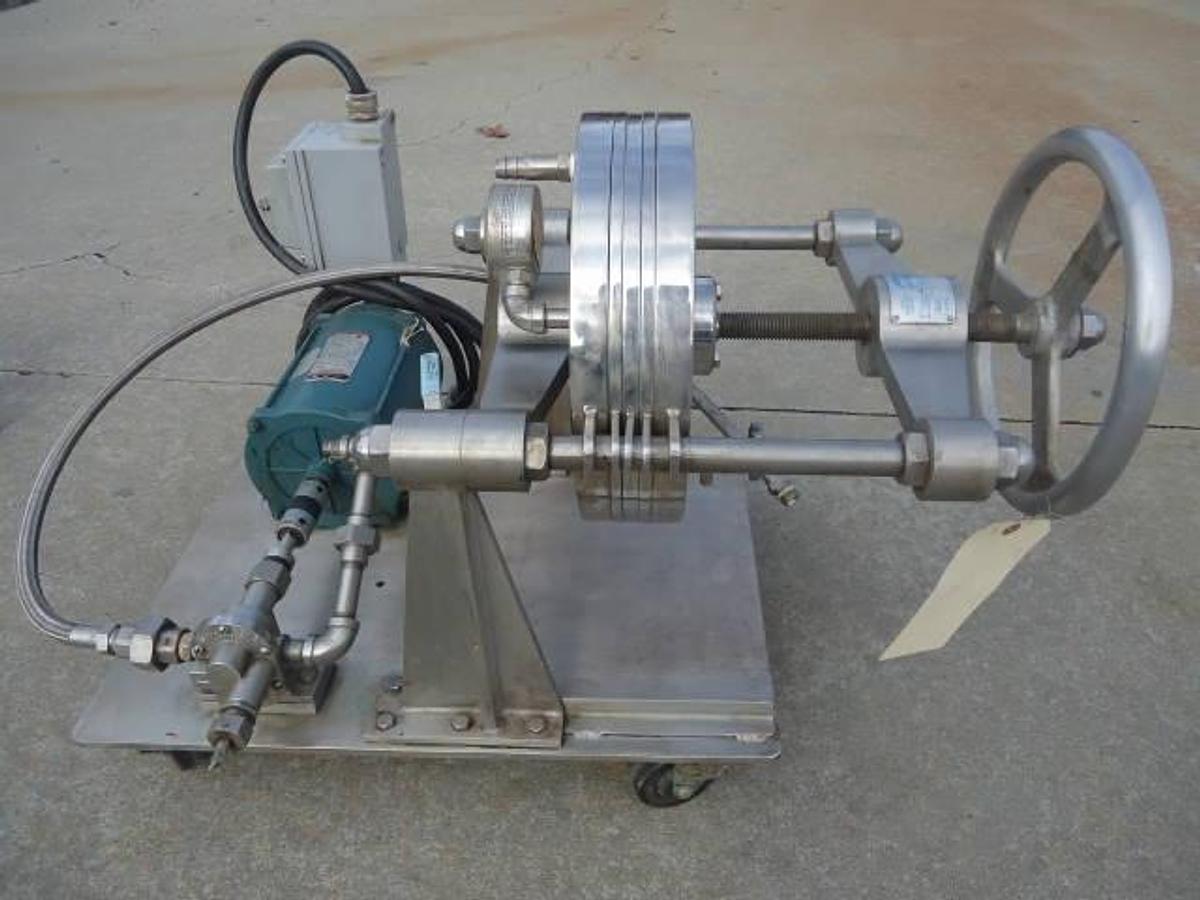
Our inventory includes used filters for use in the food, chemical, cosmetic, and pharmaceutical industries. We are suppliers of a selection of used filtering equipment including used reverse osmosis filters, used cartridge filters, used basket filters, used disc filters, used inline basket filters, and used rotary vacuum filters (drum filters) for your manufacturing and production needs.
FAQ :
What types of used industrial filters are available for sale?
The used industrial filter market covers a wide range of equipment types suited to liquid, air, and gas filtration across many production environments. Common categories include reverse osmosis filtration systems, cartridge filters, basket filters (both inline and standard), disc filters, membrane filters, pressure leaf filters, rotary vacuum drum filters, ion exchange and demineralization systems, and bioprocess filter columns. Brands like Millipore, Alfa Laval, Pall Corporation, Donaldson, Parker Hannifin, and Ionics appear regularly in used dealer inventories, and equipment is available in a variety of materials including 304 and 316 stainless steel, which is especially important for sanitary and corrosion-resistant applications.
Beyond liquid filtration, the used market also carries dust collectors, baghouse filters, HEPA units, hydraulic filters, and oil filtration systems. Sizes range from small lab-scale units (such as 120mm or 293mm disc filter holders) up to large-capacity industrial systems capable of handling high-volume production flows. Buyers sourcing equipment for the food, beverage, pharmaceutical, cosmetic, or chemical industries will typically find the widest selection, since those sectors generate significant turnover of filtration equipment as facilities upgrade, retool, or close.
What industries commonly buy used industrial filters?
Filtration equipment is essential across a surprisingly broad range of industries, which is why the used market for it stays active. Food and beverage processors rely on basket filters, disc filters, and reverse osmosis systems to maintain product purity and meet regulatory standards. Pharmaceutical and biotech manufacturers use membrane filters, filter presses, and bioprocess columns to achieve the sterile conditions their products require. Chemical processors depend on pressure leaf filters and cartridge systems to separate solids from liquids at various stages of production. Cosmetic manufacturers also use many of the same sanitary filter types found in food and pharma applications.
Outside of those core sectors, oil and gas operations use coalescing filters and high-pressure liquid filtration systems, while manufacturing facilities of all kinds rely on dust collectors, baghouse filters, and hydraulic filtration to protect equipment and maintain air quality. Water treatment plants and industrial facilities with high-purity water requirements are consistent buyers of used reverse osmosis and ion exchange demineralization systems. Because filtration needs cut across so many production environments, buyers from almost any process industry can typically find used equipment that fits their application if they work with a dealer who specializes in their sector.
How do I know if a used industrial filter is still functional and safe to use?
The most reliable way to assess a used industrial filter's condition is through a direct inspection, either in person at the dealer's facility or via a live video walkthrough. Reputable used equipment dealers will accommodate both options, and in some cases the equipment may still be installed and operating at the selling facility, which gives buyers an opportunity to see it running under real production conditions. During an inspection, buyers should focus on the filter housing, welds, seals, and any pressure-bearing components, since these represent the core investment. Filter media itself is often replaceable at relatively low cost, so housing integrity is the more critical factor to evaluate.
Buyers should also cross-reference the unit's model number and specifications against manufacturer documentation to confirm that parts and replacement media are still available for that particular model and age of equipment. Consulting the original manufacturer directly is a smart step, since they can advise on what level of support, spare parts, and service documentation exists for older units. Keep in mind that most used equipment dealers do not have the production permitting required to run actual product through a filter during a demonstration, so functional testing in a full production sense is generally not possible at a dealer's warehouse. A thorough visual and mechanical inspection, combined with manufacturer consultation, is the standard due-diligence process for used filtration equipment.
What should I look for when inspecting a used industrial filter before buying?
Start with the filter housing, which is the most expensive component to replace. Look for cracks, corrosion, pitting, or weld repairs, particularly on stainless steel units used in sanitary applications where surface integrity directly affects cleanability and contamination risk. Check gasket surfaces, inlet and outlet connections, and any pressure relief or drain ports for signs of leakage, erosion, or previous repairs. On basket and cartridge-style housings, examine the basket or element support structure for deformation. For membrane or disc filter holders, inspect the clamping mechanism and sealing surfaces carefully, since even minor damage there can compromise filtration performance.
Beyond the housing itself, verify the unit's specifications against your application requirements before committing to a purchase. Confirm the flow rate capacity, maximum operating pressure, temperature rating, and material compatibility with your process fluid. Cross-reference the model number with manufacturer documentation to ensure replacement media, seals, and spare parts are still available for that model. If the filter is part of a larger system (such as a reverse osmosis skid or an ion exchange demineralization unit), ask the dealer about the condition of pumps, valves, instrumentation, and controls included with the system. Getting a clear picture of what is and is not included in the sale price will help you accurately estimate the total cost to put the equipment into service.
What are the most trusted brands of used industrial filters to look for?
Several manufacturers have built strong reputations in industrial filtration, and their equipment tends to hold up well in the used market because of the quality of materials and construction. Millipore (now part of MilliporeSigma) is widely recognized for membrane and disc filtration equipment used in pharmaceutical and laboratory settings. Pall Corporation produces a broad range of liquid and gas filtration systems used across pharma, biotech, food and beverage, and industrial applications. Alfa Laval is a respected name in sanitary filtration, particularly for stainless steel basket and heat-exchanger-integrated filter systems. Ionics and US Filter are well-known for water treatment equipment including reverse osmosis and ion exchange systems.
On the industrial and air filtration side, Donaldson, Parker Hannifin, Camfil, and Farr are consistently well-regarded for dust collectors, baghouse systems, and process air filtration. For fluid power applications, Baldwin Filters and Fleetguard have strong track records in hydraulic and lubrication filtration. When buying used, sticking to established brands matters for a practical reason: parts availability. Older or obscure equipment can become difficult and expensive to maintain if replacement elements, seals, or internal components are no longer manufactured or stocked. A quick check with the manufacturer before purchase can confirm whether support is still available for the specific model and age of unit you are considering.
Can used industrial filters be reconditioned or refurbished before purchase?
Some used equipment dealers do perform basic reconditioning work on filtration equipment before listing it for sale. This can include cleaning, repainting, replacing worn seals or gaskets, and in some cases replacing filter media or internal components. However, the extent of reconditioning varies significantly from one dealer to another, and buyers should ask specifically what work, if any, has been done to a unit before assuming it has been fully restored. A dealer who specializes in a particular industry segment, such as pharmaceutical or food processing filtration, is more likely to understand the sanitary standards and technical requirements that reconditioning in those sectors demands.
For buyers who purchase equipment in as-is condition, third-party refurbishment is also an option. Specialized service shops can rebuild filter housings, re-coat internal surfaces, replace pressure seals, and in some cases bring older equipment up to current sanitary or pressure vessel standards. The cost-effectiveness of refurbishment depends heavily on the original quality of the housing and the availability of replacement parts. High-quality stainless steel housings from reputable manufacturers are often excellent candidates for reconditioning because the base material is durable and parts are more likely to be available. Buyers should factor potential refurbishment costs into their total acquisition budget when evaluating used filtration equipment.
How does buying used industrial filters compare to buying new equipment?
The primary advantage of buying used industrial filtration equipment is cost. Used filters, filter housings, and complete filtration systems typically sell for a fraction of the price of equivalent equipment purchased through a manufacturer or authorized distributor. For businesses that need to scale up production capacity, replace a failed unit quickly, or equip a new facility on a limited capital budget, the used market can offer substantial savings. Delivery timelines can also be faster with used equipment since there is no manufacturing lead time, which matters when a production line is down.
The trade-offs are worth understanding clearly. Used equipment is sold as-is, meaning the buyer takes on the responsibility of verifying condition, confirming compatibility, and addressing any refurbishment needs. There is no manufacturer warranty coverage on used equipment purchased through a dealer. Buyers also need to account for potential costs like replacement seals, filter media, or ancillary components that may need to be sourced before the unit is production-ready. Working with a dealer who has a long track record in your specific industry helps reduce risk, since experienced specialists are more likely to accurately represent equipment condition and help buyers avoid units that would require costly repairs to bring into service.
What is the typical remaining useful life of a used industrial filter?
Remaining useful life for used industrial filtration equipment varies widely depending on the type of filter, the materials it is made from, how intensively it was used in its previous application, and how well it was maintained. Filter housings made from heavy-gauge stainless steel, particularly 316 SS used in sanitary or corrosive applications, are known for exceptional durability and can remain serviceable for decades when properly maintained. A well-built stainless steel basket filter or filter press from a reputable manufacturer may have many years of productive life remaining even after years of prior use, provided the housing is structurally sound and sealing surfaces are intact.
The filter media, cartridges, or membranes inside a used housing are a separate consideration entirely. These consumable components typically need to be replaced before or shortly after putting a used unit into service, regardless of their apparent condition. The housing represents the major capital investment; the media is an ongoing operating cost. Buyers should also factor in the age of the equipment relative to parts availability. A filter system that is 10 to 15 years old may still have plenty of structural life left in the housing, but if the manufacturer has discontinued the model, sourcing replacement elements or internal components could become challenging over time. Checking parts availability before purchase is a practical step that many buyers overlook.
What are the typical payment and shipping arrangements when buying used industrial filters?
Most used equipment dealers require payment in full before a unit ships. Some dealers extend credit terms to established customers with a purchase history, but buyers who are transacting with a dealer for the first time should expect to pay upfront. Common payment methods include wire transfer and credit card, though accepted methods vary by dealer. Because used equipment transactions can involve significant dollar amounts, buyers should verify the dealer's legitimacy and track record before sending funds, and should get a clear written description of the equipment and its condition as part of the sale documentation.
Shipping costs for industrial filtration equipment depend on the size and weight of the unit, the packaging required to protect it in transit, and any rigging needed for loading and unloading. Smaller units like lab filter holders or inline basket filters can often be crated and shipped via freight carrier at reasonable cost. Larger systems such as reverse osmosis skids, filter presses, or multi-vessel demineralization systems may require forklift loading, flatbed trucking, and destination rigging, all of which add to the landed cost. Buyers should ask dealers for a detailed breakdown of packaging, rigging, and freight charges before finalizing a purchase so there are no surprises when the invoice arrives. The total landed cost, not just the equipment price, is the relevant number for budget planning.
How do I verify that a used industrial filter is compatible with my application before buying?
Compatibility verification starts with matching the filter's technical specifications to your process requirements. The key parameters to confirm include flow rate capacity, maximum operating pressure, temperature rating, and the materials of construction relative to your process fluid. For example, a filter housing rated for water service at moderate temperatures may not be suitable for a solvent or acid application even if the physical dimensions look right. Stainless steel grade matters too: 304 SS and 316 SS have different corrosion resistance profiles, and the right choice depends on the chemistry of the fluid being filtered.
Beyond material and pressure compatibility, buyers need to confirm that replacement filter media, cartridges, or membranes are available in the correct size and specification for the housing they are purchasing. This means cross-referencing the housing model number with current manufacturer catalogs or contacting the manufacturer directly to confirm what elements are compatible and still in production. Inlet and outlet connection sizes and configurations should also be verified against your existing piping. If the used filter is part of a larger system, such as a skid-mounted reverse osmosis unit with pumps and controls, each component's compatibility with your facility's utilities (voltage, water supply, drain requirements) needs to be confirmed before the equipment arrives on site. Taking the time to do this homework before purchase avoids costly surprises during installation.