Category
Subcategory
Manufacturer
Model
Homogenizers
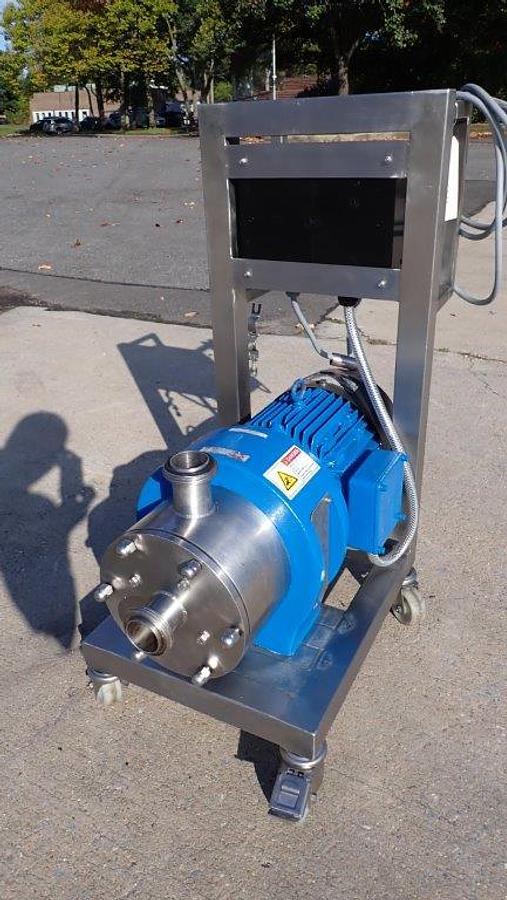
Inline Homogenizers & Batch Homogenizers
Homogenizers operate by forcing a product through a small orifice/valve at high pressure. They are used to homogenize dairy products and other food, cosmetic, or pharmaceutical goods to make them consistent throughout. Our inventory includes used homogenizers which can be used in the manufacturing of milk, ice cream, and other food products. We stock used APV GAULIN homogenizers as well as batch-type “drop in” homogenizing mixers (homo mixers) from various brands and explosion proof homogenizers.
FAQ :
What types of used homogenizers are available on the market?
Used homogenizers fall into several broad categories, and understanding the differences helps buyers match the right machine to their application. High-pressure homogenizers (also called pressure homogenizers) work by forcing product through a small orifice or valve at high pressure, typically ranging from 3,000 to 15,000 PSI or more. These are the workhorses of dairy, food, and pharmaceutical production lines and are among the most frequently traded machines in the used equipment market. Brands like APV Gaulin and Manton Gaulin dominate this segment, with two-stage configurations being especially common for applications like milk, ice cream, and emulsified products.
Beyond high-pressure units, buyers will also find rotor-stator homogenizers (sometimes called high shear mixers or homo-mixers), which use a spinning rotor inside a fixed stator to create intense mechanical shear. These come in both inline and batch (drop-in) configurations and are popular in cosmetic, pharmaceutical, and specialty food manufacturing. Brands like Silverson, Arde Barinco, Greerco, and Ross are frequently available used. Ultrasonic homogenizers, which use cavitation generated by high-frequency sound waves, are less common in the used market but do appear, particularly in lab-scale units. Explosion-proof (XP) models are a further subcategory worth noting for buyers working in environments with flammable materials.
What is the difference between a used homogenizer and a refurbished homogenizer?
The distinction matters quite a bit when budgeting for a purchase. A used homogenizer is typically sold in its current condition, as removed from a production facility or storage. It may have visible wear, accumulated hours, and no formal inspection or testing performed by the seller. These machines are generally priced lower, but the buyer takes on more responsibility for assessing condition and planning any needed servicing after purchase. Most used equipment dealers sell machinery on an as-is basis, which places the burden of inspection squarely on the buyer.
A refurbished homogenizer, by contrast, has gone through some level of inspection, cleaning, and mechanical restoration before being offered for sale. This might include replacing worn seals, valves, or homogenizing pistons, pressure-testing the unit, and verifying motor function. Refurbished machines typically carry a higher asking price to reflect that labor and parts investment. Buyers who lack in-house engineering resources to evaluate or repair equipment after purchase often find the premium worthwhile. Regardless of which category a machine falls into, prospective buyers should ask the seller specifically what work, if any, has been done to the unit and request any available documentation on its service history and prior operating conditions.
What industries use homogenizers, and which applications are best suited to used equipment?
Homogenizers are used across a wide range of industries, though food and beverage, dairy, cosmetics, and pharmaceuticals account for the largest share of demand. In dairy processing, homogenizers break down fat globules in milk to prevent cream separation and improve texture in products like whole milk, cream, and ice cream. Food manufacturers use them for salad dressings, sauces, and other emulsified products. Pharmaceutical and nutraceutical producers rely on high-pressure and rotor-stator homogenizers for emulsions, suspensions, and liposomal drug formulations. Cosmetic manufacturers use them to produce lotions, creams, and serums with consistent particle size and texture.
Used homogenizers are particularly well-suited to applications where the product being processed is relatively standard and the equipment specifications are well understood. A dairy processor adding a second production line, a contract manufacturer scaling up capacity, or a startup looking to minimize capital expenditure are all common buyers in the used market. Lab-scale and pilot-scale homogenizers are also frequently purchased used by R&D teams and universities that need functional equipment without the cost of buying at full list price. The key is matching the machine's pressure rating, flow rate, and material construction (typically stainless steel for food and pharma applications) to the specific process requirements before committing to a purchase.
What key specifications should I evaluate when buying a used homogenizer?
Several technical parameters determine whether a specific used homogenizer will perform adequately for a given application. Maximum operating pressure is one of the most critical specs for high-pressure models, typically expressed in PSI or bar. Common used units operate in ranges from 3,000 PSI on the low end to 10,000 PSI or higher for demanding pharmaceutical or fine emulsion applications. Flow rate or throughput capacity (often expressed in gallons per hour or liters per hour) determines how much product the machine can process in a given shift. Motor horsepower directly influences both throughput and the machine's ability to maintain pressure under load.
Beyond those primary specs, buyers should also consider the number of homogenizing stages (single-stage vs. two-stage configurations affect final particle size distribution), the materials of construction (stainless steel is standard for food, dairy, and pharmaceutical use), and whether the machine is configured for inline continuous processing or batch operation. For rotor-stator mixers, shaft length, RPM, and the size and style of the mixing head are all relevant. Explosion-proof (XP) motor ratings matter for facilities handling flammable solvents or other hazardous materials. Buyers should also ask about the availability of replacement parts for the specific model, since older or discontinued machines may have limited parts support from the manufacturer.
What brands of used homogenizers are most commonly available and well-regarded?
A handful of manufacturers have built long-standing reputations in homogenizer production, and their equipment tends to hold up well over years of industrial use, which is part of why it circulates actively in the used market. APV Gaulin (now part of GEA) is arguably the most recognized name in high-pressure homogenizers, with models like the M3, MS18, MP3, and the 300 CGE appearing regularly in used equipment inventories. Manton Gaulin is closely related historically and produced many of the same machine families. These units are known for their durability and the relatively wide availability of replacement parts and service knowledge.
In the rotor-stator and high shear mixer category, Silverson is a highly respected brand with a strong global service network, making used Silverson units particularly attractive. Arde Barinco, Greerco, Ross, and Gifford Wood are other names that appear frequently in used inventories and have earned solid reputations in food, chemical, and pharmaceutical processing. For ultrasonic homogenizers, Sonic (makers of the Sonolator) is a well-known name. When evaluating any used machine, the brand's current support posture matters: buyers should contact the manufacturer directly to understand what technical support, spare parts, and service documentation are available for the specific model and vintage they are considering.
How do I verify the working condition of a used homogenizer before purchasing?
Inspecting a used homogenizer before purchase is one of the most important steps a buyer can take to avoid costly surprises. Most reputable used equipment dealers will accommodate in-person inspections at their facility, or provide detailed video walkthroughs and photo documentation of the machine. In some cases, the equipment may still be installed at the facility where it was last used, and the dealer can arrange access for a direct inspection at that site. During inspection, buyers should look at the condition of the homogenizing valve assembly or rotor-stator components, check for wear on pistons and seals, inspect the motor nameplate and electrical condition, and look for any signs of corrosion, cracking, or prior repairs.
One practical limitation to be aware of: most used equipment dealers do not have the permitting or infrastructure to run actual product through a machine for a live production test. What they can typically do is demonstrate that the motor runs, the pump builds pressure, and the mechanical components move freely. Buyers with specific performance requirements should factor in the cost of a post-purchase inspection by a qualified service technician or the manufacturer's service team before putting the machine into production. Requesting any available service records, operating logs, or maintenance history from the seller is also worthwhile, as this documentation can give meaningful insight into how the machine was operated and what wear to expect.
What certifications or documentation should I ask for when buying a used homogenizer?
Documentation requests are a reasonable and expected part of any used industrial equipment purchase. At a minimum, buyers should ask for the machine's nameplate specifications (which are typically affixed to the unit itself), any available operator or maintenance manuals, and whatever service or repair history the seller has on file. For machines that were previously used in food, dairy, or pharmaceutical production, it is worth asking whether the unit was operating under any sanitary or regulatory compliance framework, such as 3-A Sanitary Standards for dairy equipment or FDA cGMP guidelines for pharmaceutical applications.
It is important to understand that used equipment dealers generally do not re-certify machines to regulatory standards, and a machine's prior compliance status does not automatically carry forward to a new owner's facility. Buyers operating in regulated industries should plan to have their quality and engineering teams evaluate whether a specific used unit can be validated or qualified for their process, and budget for any cleaning, documentation, or third-party inspection work that may be required. Contacting the original manufacturer is also advisable: they can often confirm whether a specific model is still supported, whether current spare parts are compatible, and whether any safety bulletins or design changes apply to the unit in question.
Are replacement parts still available for older used homogenizer models?
Parts availability is one of the most practical questions to resolve before committing to a used homogenizer purchase, particularly for older or discontinued models. For well-established brands like APV Gaulin and GEA, many core wear components (homogenizing valves, pistons, seals, and plunger packing) remain available either directly from the manufacturer or through third-party parts suppliers who specialize in processing equipment. Silverson also maintains strong parts and service support for its rotor-stator mixers across a wide range of model generations. The age and production status of a specific model significantly affects what is available.
For less common brands or older machines that have been out of production for many years, parts sourcing can become a real challenge. In those cases, buyers have a few options: sourcing parts from other used machines of the same model (sometimes called "parts machines"), working with a machine shop to fabricate custom components, or consulting with aftermarket parts suppliers who produce compatible wear items. Before purchasing any used homogenizer, it is worth calling the manufacturer's parts or service department with the model number and serial number to get a direct answer on current parts availability. This single step can prevent a situation where a machine sits idle because a $50 seal is no longer manufactured.
What should I expect regarding shipping and rigging costs for a used homogenizer?
Shipping costs for used homogenizers vary considerably based on the size and weight of the machine, the distance being shipped, and the level of packaging required to protect the equipment in transit. Small lab-scale or tabletop homogenizers and batch-style mixers can often be palletized and shipped via standard freight carriers at relatively modest cost. Larger high-pressure homogenizers, particularly multi-stage units with heavy-duty pump assemblies and motors in the 15 to 75 HP range, may weigh several thousand pounds and require custom crating or skidding to prevent damage during transport.
For larger machines, rigging costs at both the origin and destination should be factored into the total landed cost. Loading a heavy homogenizer onto a freight truck may require a forklift or crane at the seller's facility, and unloading at the buyer's site requires the same. Buyers who do not have rigging capabilities at their facility will need to arrange and pay for that service separately. It is always a good practice to ask the seller for a detailed breakdown of packaging, loading, freight, and any destination rigging costs before finalizing a purchase, so the full delivered cost is clearly understood. Freight quotes can shift based on fuel surcharges and carrier availability, so getting those numbers in writing close to the purchase date is advisable.
What are typical payment terms for purchasing used homogenizers from equipment dealers?
Payment practices in the used industrial equipment market follow fairly consistent norms. The large majority of used equipment dealers require full payment prior to shipping the machine. This protects the seller from situations where equipment leaves their facility before funds are confirmed, and it is the standard expectation buyers should plan for. Wire transfer is the most common payment method for transactions of any meaningful size, though some dealers also accept credit cards for smaller purchases, sometimes with a processing fee.
For buyers with an established purchasing relationship with a particular dealer, some flexibility on payment terms may be possible, but this is the exception rather than the rule and is typically extended only to repeat customers with a proven track record. Buyers who require financing should explore equipment financing through third-party lenders, as many banks and specialty finance companies offer loans or leases for used industrial machinery. It is worth asking the dealer whether they have relationships with financing partners who are familiar with used processing equipment, as that can simplify the process. Regardless of payment structure, buyers should ensure they receive a clear bill of sale and that title transfer is documented before or at the time of payment.