Category
Manufacturer
Model
Blister Equipment Blister Sealers & Thermoformers
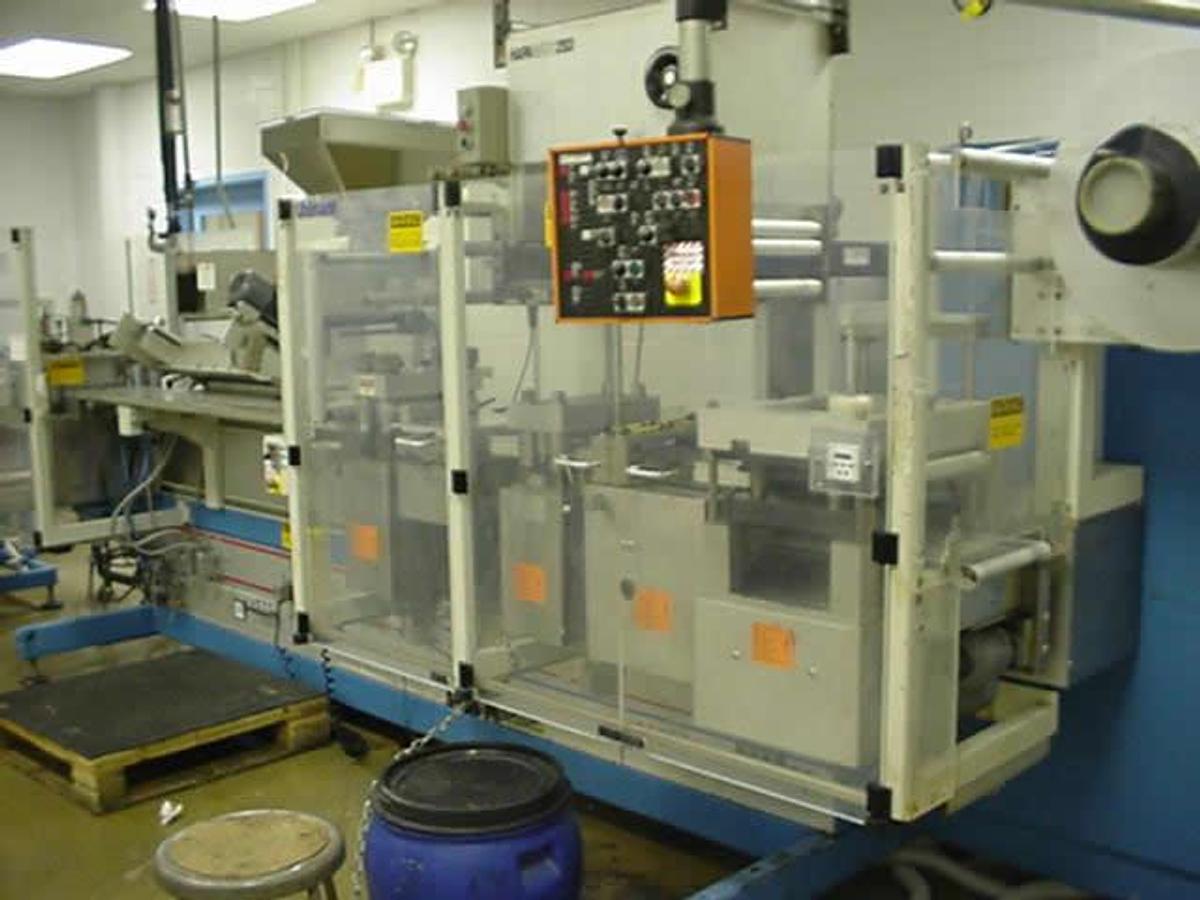
Blister sealers – or clamshell sealers – are used to package goods so that they are safe from contamination, damage, pilferage, or spoilage. Our wide selection of used packaging equipment makes us suppliers of used blister sealing machine for the pharmaceutical, cosmetic and food industries. Blister packing machines are available from a variety of brands including ALLOYD blister sealers and UHLMANN blister thermoforming machines.
FAQ :
What types of used blister packaging equipment are available on the market?
Used blister packaging equipment falls into several distinct categories, each designed for different production volumes and product types. The main machine types are thermoform-fill-seal machines, cold-form blister machines, rotary blister machines, and flatbed blister machines. Thermoform-fill-seal machines heat a plastic web, form it into cavities, fill those cavities with product, and then seal a lidding material over the top. Cold-form machines, by contrast, use aluminum-based foil that is mechanically formed without heat, which is common in pharmaceutical applications where moisture and oxygen barrier properties are critical. Rotary machines are built for high-speed continuous production, while flatbed machines operate in an intermittent motion and are often better suited for smaller batch sizes or complex formats.
Beyond the machine type, used blister packaging equipment is also categorized by industry application. Pharmaceutical blister lines, such as those made by Uhlmann or IMA, are engineered to meet strict regulatory standards and often include features like camera inspection systems and reject stations. Equipment designed for consumer goods, cosmetics, or food packaging tends to be less complex from a compliance standpoint but still needs to match the specific cavity dimensions, sealing temperatures, and throughput requirements of the buyer's product. Buyers should clearly define their production requirements before evaluating used machines, since the range of available equipment spans from compact benchtop blister sealers to fully automated high-speed lines capable of producing tens of thousands of blisters per hour.
What are the most reliable brands of used blister packaging equipment?
Brand reputation matters significantly in the used blister packaging market, both for machine reliability and for long-term parts and support availability. Uhlmann is widely regarded as one of the most respected names in pharmaceutical blister packaging, known for precision engineering and machines that hold up well over extended service lives. IMA, Bosch (now operating under the Syntegon brand), CAM, Marchesini, and Romaco are also well-established names with strong track records in the pharmaceutical and consumer goods sectors. In the North American market, Alloyd has a long history producing blister sealers and clamshell sealing equipment used across food, hardware, and consumer product industries. These brands tend to retain resale value better than lesser-known manufacturers, and their machines are more likely to have available service documentation and spare parts.
When evaluating a used machine from any of these manufacturers, it is worth contacting the manufacturer directly to ask about parts availability and technical support for the specific model and age of the machine. Older models may have limited support, and some components may need to be sourced from third-party suppliers or fabricated. Machines from reputable brands also tend to have better documentation histories, which makes it easier to verify maintenance records and understand the machine's service life. Choosing a well-known brand does not eliminate the need for a thorough inspection, but it does reduce the risk of ending up with a machine that cannot be serviced or supported after purchase.
How can I verify that used blister packaging equipment is in good working condition before buying?
Verifying the condition of used blister packaging equipment requires more than a visual check. The most useful documents to request from a seller are maintenance logs, Factory Acceptance Test (FAT) records, and any available inspection reports. Maintenance logs show whether the machine was serviced on a regular schedule and can reveal recurring issues or major repairs. FAT documentation, if available, confirms that the machine met its specified performance criteria at some point in its operating life. Buyers should also ask whether the machine is currently in production at a facility, since running equipment can sometimes be inspected while actively processing product, giving the clearest possible picture of its condition.
Most reputable used equipment dealers offer in-person inspections, virtual walkthroughs, or detailed video captures of the machine in its current state. Because used equipment dealers typically do not hold production permits, they are generally not able to run actual product through a machine during an inspection, but they can demonstrate mechanical function, show electrical panels, and walk through the controls. Buyers who cannot travel for an in-person inspection should request a thorough video that covers all major components, including the forming station, sealing station, cutting station, and any inspection or rejection systems. Engaging a third-party machinery inspector or a qualified technician familiar with the specific brand is another practical step, particularly for high-value pharmaceutical blister lines where compliance and precision tolerances are critical.
What tooling and format parts should I ask about before purchasing used blister packaging equipment?
Tooling is one of the most commonly overlooked cost factors in a used blister packaging purchase. Format parts, which include the forming dies, sealing tools, and cutting dies specific to a given blister cavity size and shape, are often sold separately from the base machine. If a seller is not including tooling in the sale price, the buyer will need to either source compatible used tooling or have custom tooling fabricated, which can run from several thousand to tens of thousands of dollars depending on the complexity and the machine brand. Before finalizing any purchase, buyers should confirm exactly which tooling sets are included, what blister formats those tools produce, and whether the tools are in usable condition.
Beyond format tooling, it is also worth asking about spare parts inventory. Items like heating elements, sealing gaskets, forming membranes, and drive belts are consumable components that wear over time. A machine sold with a stock of spare parts is meaningfully more valuable than one sold without, since sourcing parts for older machines can take time and sometimes requires working with specialized suppliers or directly with the manufacturer. For pharmaceutical equipment in particular, buyers should verify whether critical components are still available from the manufacturer or from qualified aftermarket sources, since regulatory requirements may restrict the use of non-approved replacement parts in validated production environments.
What production speeds can I expect from used blister packaging equipment?
Production speed in blister packaging equipment is typically expressed in cycles per minute or blisters per minute, and the range across machine types is wide. Entry-level or older flatbed blister machines may produce anywhere from 20 to 60 cycles per minute, while high-speed rotary pharmaceutical lines from manufacturers like Uhlmann or IMA can reach 400 to 600 blisters per minute or more under ideal conditions. The actual throughput a buyer should expect from a used machine depends on the machine's age, its mechanical condition, the blister format being run, and the product being packaged. A machine that was rated at a certain speed when it was built may perform somewhat below that specification after years of use, particularly if it has not been consistently maintained.
It is also important to distinguish between rated speed and practical production speed. Rated speeds are typically measured under controlled conditions with a specific format and product. In real production environments, changeover time, reject rates, film tension adjustments, and other variables reduce effective output. When evaluating a used blister line, buyers should ask the seller or the previous owner about the machine's typical operating speed in production, not just its rated maximum. If the machine is still running at a facility, observing it in operation is the most reliable way to assess realistic throughput. For buyers with specific output targets, it is worth calculating whether the machine's practical speed, accounting for downtime and changeovers, can meet production requirements before committing to a purchase.
Can used blister packaging equipment be upgraded with modern controls or compliance features?
Older blister packaging machines, particularly those built before the mid-2000s, often lack modern human-machine interfaces (HMIs), electronic batch records, or the data logging capabilities required for 21 CFR Part 11 compliance in pharmaceutical manufacturing. Some of these machines can be retrofitted with updated controls, touchscreen interfaces, or vision inspection systems, but the feasibility and cost of doing so varies considerably by machine brand, age, and mechanical platform. In some cases, a controls upgrade is straightforward and can be handled by a qualified systems integrator. In other cases, the machine's architecture makes modernization impractical or cost-prohibitive relative to buying a more recent used machine that already has the needed features.
Buyers considering a controls upgrade should get a qualified assessment from a controls engineer or an integrator familiar with the specific machine brand before purchasing. The cost of a full controls retrofit on a pharmaceutical blister line can range from $30,000 to well over $100,000 depending on the scope of work, so it needs to be factored into the total acquisition cost. For serialization and track-and-trace requirements, which are now mandatory in many pharmaceutical markets, buyers should also verify whether the machine's mechanical design can physically accommodate the necessary cameras, printers, and rejection systems, since adding those components to a machine not originally designed for them is not always practical. Consumer goods or food packaging applications generally face fewer regulatory constraints, making controls upgrades on older machines a more straightforward cost-benefit calculation.
What industries commonly use blister packaging equipment?
Blister packaging equipment is used across a wide range of industries, with pharmaceutical manufacturing being the most prominent. In pharma, blister packs are the standard format for unit-dose solid oral medications like tablets and capsules, valued for their tamper evidence, moisture protection, and patient compliance features. The pharmaceutical blister packaging market is one of the largest end-use segments globally, and it drives significant demand for both new and used blister packaging machines. Beyond pharmaceuticals, medical device manufacturers use blister packaging to present sterile products in a format that maintains sterility until the point of use.
Consumer goods is another major application area. Hardware items like screws, batteries, and small tools are commonly sold in clamshell or blister card formats that allow retail display while protecting against pilferage. Cosmetics and personal care products, including razors, contact lenses, and small accessories, are frequently packaged on blister lines as well. The food industry uses blister packaging for products like chewing gum, candy, and certain fresh or processed foods where individual portion packaging is desirable. Each of these industries has different requirements for materials, sealing temperatures, cavity geometry, and regulatory compliance, which is why the used blister equipment market includes such a diverse range of machine types and configurations.
What should I know about shipping and logistics when buying used blister packaging equipment?
Shipping used blister packaging equipment involves considerably more complexity than shipping standard freight. These machines range from compact benchtop units to large pharmaceutical lines that can weigh several tons and occupy significant floor space. Proper packaging is critical to preventing damage in transit. Depending on the machine's size and fragility, it may need to be palletized with blocking and bracing, enclosed in a wooden crate, or wrapped with protective materials to secure moving parts and exposed components. The level of packaging required directly affects shipping costs, and buyers should ask sellers for a clear breakdown of palletization or crating charges before agreeing to a purchase price.
For larger blister lines, rigging is required both at the point of origin and at the destination. Rigging involves the use of forklifts, cranes, or specialized equipment to safely move and load heavy machinery, and it carries its own cost that is separate from freight. Buyers should confirm with the seller whether rigging at the origin is included in the quoted price or is an additional charge. On the receiving end, buyers are typically responsible for arranging their own rigging and installation. International shipments add further considerations, including customs documentation, import duties, and compliance with export control regulations for certain types of pharmaceutical manufacturing equipment. Getting a full picture of the landed cost, including freight, rigging, crating, and any applicable duties, is essential before finalizing a used equipment purchase.
How difficult is it to find service technicians for used blister packaging equipment?
Finding qualified service technicians for used blister packaging equipment can be challenging, and the difficulty increases with the age and obscurity of the machine. For major brands like Uhlmann, IMA, Syntegon (formerly Bosch), and Alloyd, there is a broader pool of technicians with relevant experience, including both manufacturer-trained service engineers and independent contractors who have worked on these machines throughout their careers. Pharmaceutical equipment in particular tends to attract experienced technicians because of the high value of the machines and the regulatory environment that demands consistent maintenance. However, for older models or less common brands, finding someone with direct hands-on experience can require more effort and may involve higher service rates.
Before purchasing a used blister machine, it is worth asking the seller about the service network for that specific brand and model. Some manufacturers continue to support older machines and can provide field service or at least phone support. Others may have discontinued support for equipment beyond a certain age, in which case buyers will need to rely on independent technicians or in-house maintenance staff. Buyers should also consider the availability of technical documentation, including electrical schematics, mechanical drawings, and parts manuals, since these materials are essential for any technician working on the machine. Sellers who can provide complete documentation packages are offering meaningfully more value than those selling a machine with no paperwork, particularly for complex pharmaceutical blister lines where troubleshooting without documentation can be extremely time-consuming.
What payment terms are typical when purchasing used blister packaging equipment?
Payment practices in the used blister packaging equipment market are fairly consistent across the industry. Most used equipment dealers require full payment before a machine is released for shipping. This protects the seller from the risk of shipping expensive machinery before funds have cleared, and it is a standard practice that buyers should expect when working with reputable dealers. Some dealers may extend payment terms to established customers with a prior purchasing history, but for first-time buyers, full payment upfront is the norm. Buyers should factor this into their planning, particularly for high-value pharmaceutical blister lines where purchase prices can range from tens of thousands to several hundred thousand dollars.
Accepted payment methods vary by dealer but commonly include wire transfer, which is the most widely used method for large equipment transactions. Buyers should be cautious about any seller who requests unusual payment arrangements or who is unwilling to provide clear documentation of the machine before funds are transferred. Working with established, reputable dealers who have a verifiable track record in the industry is the most effective way to reduce financial risk in a used equipment transaction. Before sending any payment, buyers should ensure they have received sufficient documentation about the machine's condition, confirmed the terms of the sale in writing, and clarified all costs including shipping, rigging, and any applicable taxes or fees so there are no surprises after the purchase is complete.