Category
Manufacturer
Model
Used Wine Equipment for Sale
Pre-Owned Bottling Lines, Presses, and Fermentation Tanks In Stock
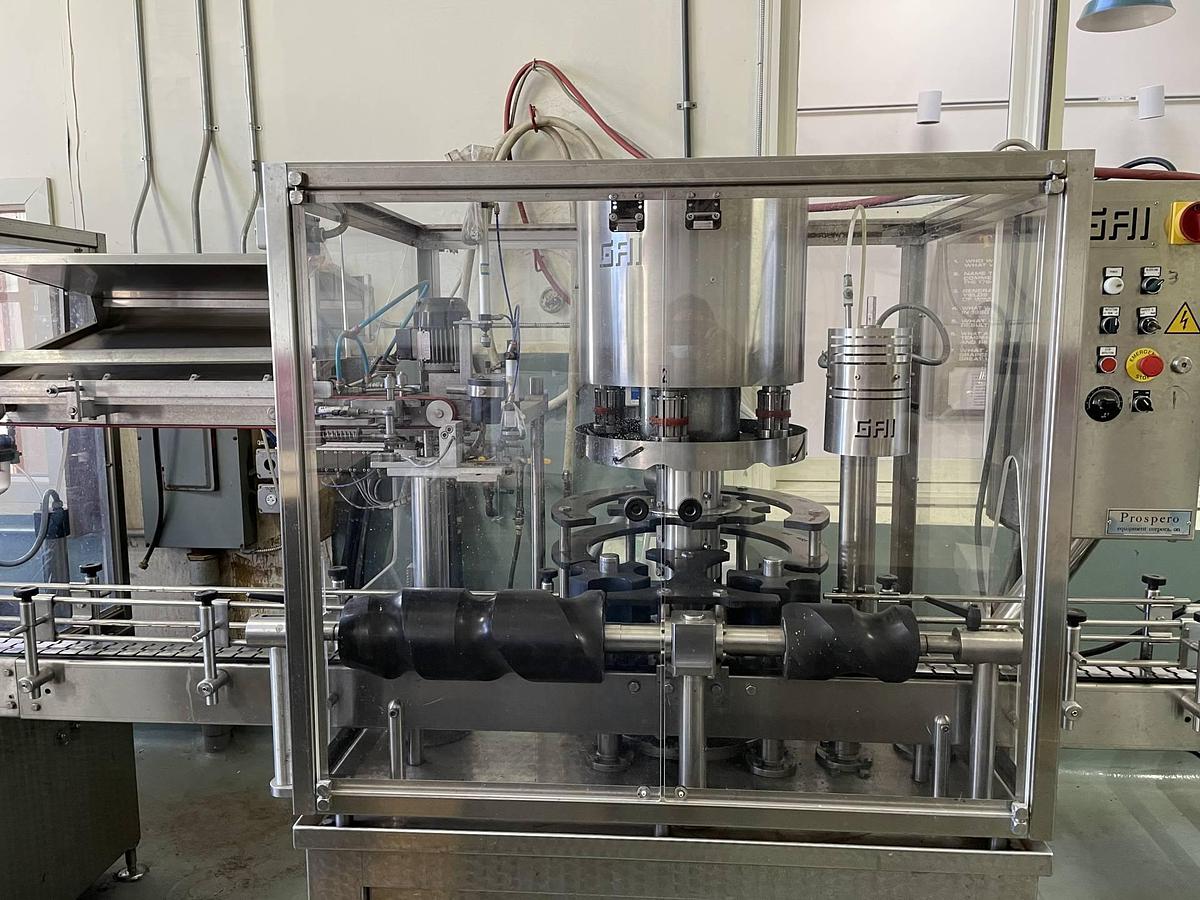
Wohl Industries stocks used wine equipment for wineries, cideries, and beverage producers. You get pre-owned bottling lines, grape crushers, de-stemmers, wine presses, and jacketed fermentation tanks. Bottling monoblocks rinse, fill, and cork at production speed. Crushers and de-stemmers prepare fruit at harvest. Presses extract juice with gentle pressure. Jacketed tanks hold fermentation at set temperature. Buying used cuts your capital cost and lead time. We inspect every machine before we ship. We have sold processing and packaging equipment since 1968. Send us your case volume and process, and we match you to the right equipment.
FAQ :
What types of used wine equipment are commonly available for purchase?
The used wine equipment market covers a wide range of machinery and vessels that span every stage of winemaking, from grape processing through to finished bottle packaging. Common categories include bottling lines (monoblock rinsing, filling, and corking systems), fermentation tanks, grape crushers and de-stemmers, wine filter presses, stainless steel pumps, labeling systems, and wire hooders. Bottling lines from manufacturers like GAI, Prospero, Robino and Galandrino, Kosme, and Bubbio appear frequently in used inventory, ranging from semi-automatic single-head corkers suited to small producers all the way up to fully automated monoblock lines capable of 55 or more bottles per minute.
On the vessel side, buyers can find stainless steel jacketed vertical and horizontal tanks in a broad range of capacities, from 264-gallon units with floating lids up to 3,660-gallon jacketed tanks designed for temperature-controlled fermentation. Portable stainless steel pumps, siphon fillers, and positive displacement pumps round out the processing side of the inventory. Because used equipment comes from working wineries, the machines available at any given time reflect real production environments, which means buyers can often find complete lines or matched sets of equipment rather than just individual components.
How do I evaluate whether used wine equipment is in good working condition before buying?
Evaluating used wine equipment requires a combination of physical inspection, documentation review, and direct communication with the seller. Reputable used equipment dealers typically offer in-person inspections, virtual walkthroughs, or video captures of machines so buyers can assess current condition before committing to a purchase. For equipment that is still installed at a winery or production facility, some dealers can arrange access to view the machine while it is still in operation or recently decommissioned, which gives the clearest picture of how it has been maintained. Buyers should look for visible wear on seals, valves, and contact surfaces, check for corrosion or pitting on stainless steel, and verify that all mechanical components move freely.
It is worth noting that most used equipment dealers do not have the permitting required to run actual product through machinery at their facility, so live production testing is generally not available once equipment has left a winery. This makes pre-purchase inspection all the more important. Buyers should also ask about the provenance of the equipment, specifically which winery it came from, how long it was in service, and whether any maintenance records are available. Equipment sourced from established wineries with documented maintenance histories carries significantly less risk than machinery of unknown origin. Consulting the original manufacturer about a specific model and serial number can also help buyers understand what service support and parts availability to expect.
What should I inspect on used stainless steel wine tanks before buying?
Stainless steel tanks are among the most durable categories of used wine equipment, and well-maintained units can remain in service for decades. That said, a careful inspection before purchase is essential. Buyers should examine the interior surface for pitting, deep scratches, or corrosion, particularly around welds, fittings, and the cone or bottom drain area. Surface pitting creates microscopic harborage points for bacteria and spoilage organisms, which creates sanitation challenges that may be difficult to fully resolve. Check that all gaskets and seals on valves, manways, and fittings are intact, and verify that floating lids (if present) move freely and seal correctly.
For jacketed tanks used in temperature-controlled fermentation, the integrity of the cooling jacket is equally important. Ask whether the jacket has been pressure-tested and whether there is any history of leaks or repairs. Inspect the exterior for dents or deformation that could affect jacket performance. Verify that all tri-clamp fittings, racking ports, and sample valves are present and undamaged, since replacing proprietary fittings can add unexpected cost. Capacity markings and calibration should also be confirmed, especially for tanks used in regulated production environments where accurate volume measurement is required for compliance. Getting a thorough video inspection or in-person visit before purchase is the most reliable way to assess a tank's true condition.
Is used wine equipment sanitary and safe to use for food production?
Used wine equipment can absolutely be safe for food production, but buyers should plan for thorough cleaning and sanitation before putting any piece of used equipment back into service. Stainless steel is the gold standard for food-contact surfaces in winemaking because it is non-porous, resistant to acids and cleaning chemicals, and does not harbor microorganisms when properly maintained. Used stainless steel tanks, pumps, and bottling components that are free of significant pitting or surface damage can be cleaned and sanitized to food-safe standards using food-grade sanitizers such as sodium metabisulfite, citric acid solutions, or peracetic acid-based products like Star San. A full clean-in-place (CIP) cycle followed by a sanitizing rinse is standard practice when commissioning any used piece of wine equipment.
The bigger sanitation concern arises with equipment that has pitted, scratched, or corroded contact surfaces, since these defects can harbor spoilage organisms that routine sanitation may not fully address. This is one reason why careful visual inspection of interior surfaces is so important before purchase. Rubber and silicone components such as gaskets, hoses, and diaphragms should be replaced as a matter of course on any used equipment, since these materials degrade over time and can retain odors or microbial contamination even after cleaning. With proper reconditioning, used wine equipment from reputable sources is routinely put back into commercial production at wineries of all sizes.
What are the most reputable brands of used winemaking equipment to look for?
Several Italian manufacturers dominate the used wine bottling and processing equipment market because of their long track record of building durable, serviceable machines for the global wine industry. GAI is one of the most widely recognized names in wine bottling, producing monoblock rinsing, filling, and corking lines that appear frequently in used inventory across a range of capacities and configurations. Prospero, which distributes and services GAI equipment in North America, is another name buyers encounter regularly. Robino and Galandrino are well-regarded for wire hooding and capsule application equipment, while Kosme (part of the Krones Group) produces rotary labeling systems that are widely used in mid-to-large production wineries.
On the tank and vessel side, manufacturers like L.A. Inox (Italy) and Feldmeier (USA) are respected for stainless steel fabrication quality. For pumps, Waukesha is a trusted American brand known for its positive displacement pump designs, which are widely used in sanitary food and beverage applications including winemaking. Liverani is an Italian manufacturer known for reliable stainless steel wine pumps. When evaluating used equipment, brand reputation matters because it directly affects parts availability, manufacturer support, and the availability of qualified service technicians. Buyers should contact manufacturers directly to confirm what level of support is available for a specific model and production year before finalizing a purchase.
Can I find replacement parts for older used wine equipment?
Parts availability varies considerably depending on the manufacturer, the age of the machine, and whether the model is still in current production. For well-established brands like GAI, Waukesha, and Krones/Kosme, parts support tends to be strong because these companies have large installed bases and active dealer networks. Contacting the manufacturer directly with the machine's model number and serial number is the most reliable way to get an accurate picture of what parts are available and at what cost. Manufacturers can also advise on whether a machine is still supported or has been superseded by newer designs, which affects long-term serviceability.
For older or less common equipment, buyers may need to source parts through third-party suppliers, fabricate custom components, or work with local machine shops. Wear items like seals, gaskets, valves, and filling heads are often available as generic or aftermarket parts even when manufacturer-specific components are no longer stocked. This is one reason why buyers are advised to consult with manufacturers before purchasing used equipment, particularly for machines that are more than 15 to 20 years old. A machine that runs well at the time of purchase but has no parts support path can become a costly problem down the line. Factoring parts availability into the total cost of ownership is an important step in evaluating any used wine equipment purchase.
Do used wine equipment dealers offer warranties or guarantees?
Used wine equipment is typically sold on an as-is basis, which is standard practice across the used industrial machinery market. Unlike purchasing directly from a manufacturer, buying used equipment means the buyer assumes responsibility for verifying condition prior to purchase. This places significant weight on the inspection process, and it is one of the main reasons buyers are encouraged to work only with dealers who have a long, verifiable track record of selling wine industry machinery specifically. A dealer with deep experience in winemaking equipment will be better positioned to accurately represent a machine's condition and history than a general industrial surplus seller.
Because there is no warranty backstop on used equipment, due diligence before purchase is the buyer's primary protection. This means taking full advantage of whatever inspection options the dealer offers, whether that is an in-person visit, a video walkthrough, or a detailed photographic inspection. Buyers should also consult with the original manufacturer about the specific model to understand what service support, parts, and technical documentation are available. Choosing a dealer who specializes in wine and beverage equipment, rather than a general machinery liquidator, provides meaningful risk reduction even in the absence of a formal warranty, because specialized dealers have reputational incentives to accurately represent the equipment they sell.
How does shipping and logistics work when buying used wine equipment?
Shipping used wine equipment involves more planning than typical freight because the machines are heavy, often irregularly shaped, and sensitive to vibration and impact damage. Proper packaging is critical, and costs will vary depending on whether the equipment is palletized, crated, or requires custom skidding. Smaller items like single-head corkers or individual pumps may ship on standard pallets with appropriate strapping and wrapping, while larger monoblock bottling lines or multi-thousand-gallon tanks require custom crating and specialized rigging for both loading at origin and unloading at the buyer's facility. Buyers should ask the dealer specifically what packaging will be used and whether rigging costs are included in the quoted price or billed separately.
For large or heavy equipment, freight costs can be a significant portion of the total landed cost, and buyers are advised to get a full breakdown of all charges before finalizing a purchase. This includes freight, fuel surcharges, liftgate or dock fees at delivery, and any rigging or crane services required at the destination. Some equipment may still be installed at a winery at the time of sale, which means decommissioning, disconnection, and removal costs also need to be factored in. Getting clarity on the complete landed cost, including packaging, rigging, freight, and delivery, is an essential step before comparing the price of used equipment against alternatives.
What payment terms should buyers expect when purchasing used wine equipment?
Most used equipment dealers require payment in full prior to shipping. This is the standard practice in the used industrial machinery market and reflects the nature of the transaction, where the dealer needs to confirm cleared funds before releasing equipment for shipment or allowing removal from a facility. Buyers who are unfamiliar with a particular dealer should expect to pay in full upfront and should factor this into their purchasing timeline and cash flow planning. Wire transfer is the most common payment method for transactions of significant size, though some dealers may accept other forms of payment depending on the transaction amount.
For buyers who have established a relationship with a dealer through previous purchases, some dealers may offer extended payment terms as an accommodation to repeat customers. This is not universal, and buyers should not assume terms are available without asking explicitly. When purchasing high-value equipment such as a complete bottling line or a set of large fermentation tanks, buyers should also consider whether an escrow arrangement or phased payment tied to inspection milestones makes sense for their situation. The key takeaway is to clarify payment expectations with the dealer early in the conversation, before investing significant time in evaluating specific machines, so there are no surprises at the point of purchase.
What is the typical lifespan of used stainless steel winery tanks and bottling equipment?
Stainless steel winery equipment is built to last, and well-maintained tanks, pumps, and bottling machinery can remain in productive service for 30 years or more. The longevity of stainless steel in winemaking applications comes from its resistance to the acids, sulfites, and cleaning chemicals used routinely in wine production. Tanks that have been properly cleaned, kept free of standing liquid, and stored in covered environments tend to show minimal degradation even after many years of use. Jacketed fermentation tanks with intact cooling systems can remain fully functional for decades, making used stainless steel vessels one of the most cost-effective categories of used wine equipment available.
Bottling line equipment has a somewhat more variable lifespan because it contains more mechanical components, electronics, and wear parts than a passive vessel. A GAI monoblock bottling line from the 1990s, for example, may still be mechanically sound but could require updated controls or replacement of pneumatic components to bring it back to full performance. The key variables are how intensively the machine was used (bottles per year), how well it was maintained, and whether it was cleaned and lubricated on schedule. Buyers evaluating older bottling equipment should ask about the machine's production history and inspect filling heads, conveyor systems, and corking mechanisms carefully. With proper reconditioning, quality bottling equipment can deliver many additional years of reliable service even when purchased used.