Category
Subcategory
Manufacturer
Model
FAQ :
What types of fruit processing equipment are available for commercial use?
Commercial fruit processing covers a wide range of operations, and the equipment reflects that variety. The most common categories include fruit washers, peelers, slicers and dicers, juice extractors, pulpers, destoners, sorting and grading machines, blanchers, dryers, and complete integrated processing lines. Within each category there are further distinctions based on the type of fruit being processed, the desired output (whole, sliced, pureed, juiced, dried), and the scale of production. A citrus juice operation, for example, requires entirely different machinery than a facility producing dried mango slices or apple sauce.
Some machines are designed for a single function, like a slicer or a peeler, while others combine multiple steps into one unit. Equipment manufacturers like Urschel, FMC, Alfa Laval, and Bertuzzi have historically produced specialized lines for fruit processing, and their machines show up frequently in the used equipment market. Buyers sourcing used fruit processing equipment should pay close attention to the specific model and its intended application, since a machine optimized for soft fruits like berries may not perform well on harder varieties like apples or mangoes. Reviewing the original manufacturer's specifications alongside the current condition of the machine is a practical starting point for any evaluation.
What should I look for when buying used fruit processing equipment?
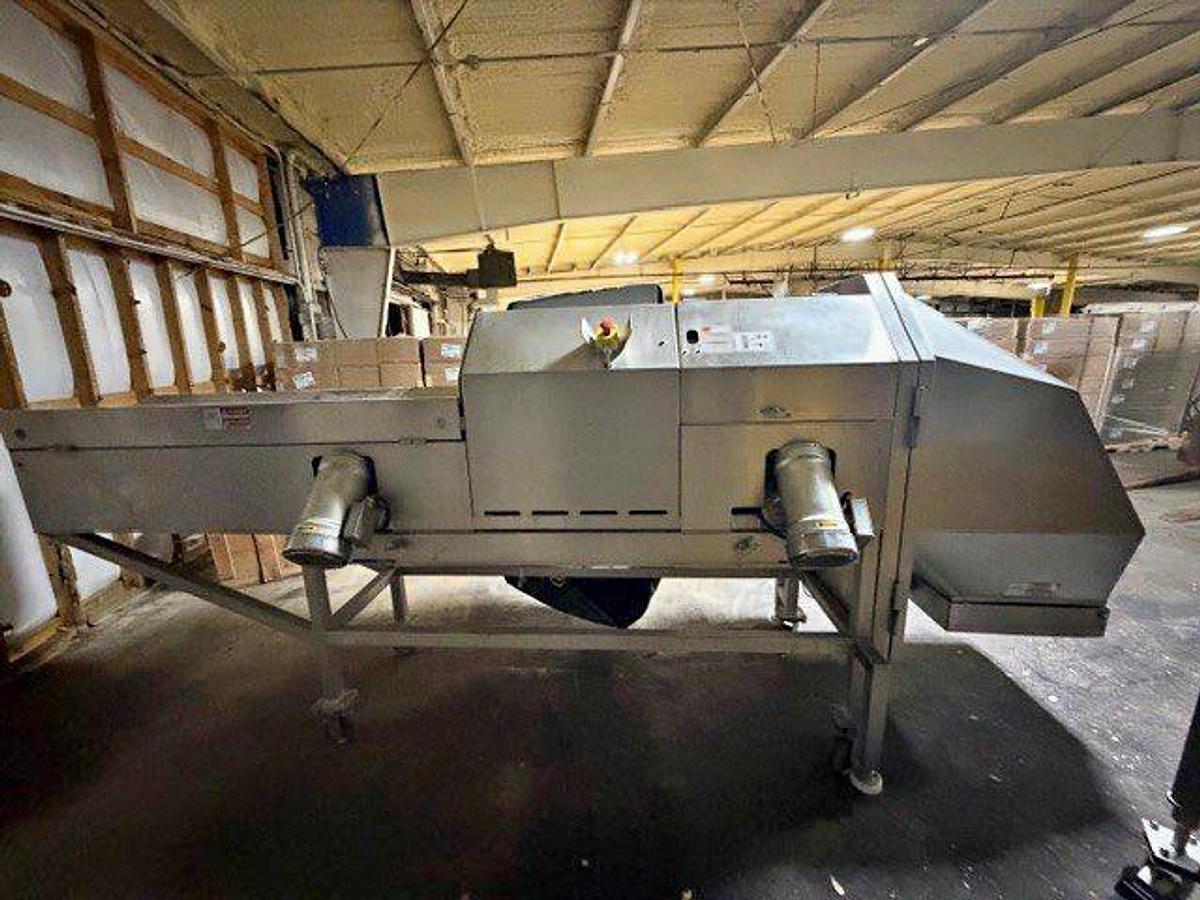
Condition is the single most important factor. With used machinery, there is no manufacturer standing behind the sale, so the burden of due diligence falls entirely on the buyer. Start by requesting detailed photos and, if possible, arrange an in-person or video inspection. Look at the condition of contact surfaces (blades, conveyor belts, seals, and any parts that touch the fruit directly), check for corrosion or pitting on stainless steel components, and ask about the machine's service history. A machine that was regularly maintained and cleaned in a food-safe environment is a very different purchase from one that sat idle for years.
Beyond physical condition, buyers should verify the machine's processing capacity against their production requirements. Capacity is typically measured in kilograms per hour or tons per day, and buying a machine that is undersized for your operation is a common and costly mistake. It is also worth contacting the original manufacturer to ask about parts availability and technical support for that specific model and age of machine, since older equipment may have limited spare parts in circulation. Reputable used equipment dealers who specialize in food processing machinery will typically have more institutional knowledge about specific machines and can help buyers understand what they are actually getting.
How do I determine the right processing capacity for my operation?
Processing capacity is almost always the first specification buyers should nail down before looking at anything else. The key figure is how many kilograms or tons of raw fruit you need to process per hour or per day at peak production. This number should account for seasonal volume spikes, not just average throughput, since fruit processing is often highly seasonal. Undersizing your equipment means production bottlenecks during your busiest periods, while oversizing means paying for capacity you never use.
Once you have a target throughput figure, factor in yield loss. Raw fruit loses a significant percentage of its weight during washing, peeling, pitting, and trimming, so the machine's rated capacity for whole fruit input may look very different from its output in finished product. It is also worth thinking about whether you need one high-capacity machine or multiple smaller units running in parallel, since redundancy can protect against costly downtime. When evaluating used equipment, ask the dealer for documentation of the machine's rated capacity and, where possible, ask whether the machine was operating at or near that rated capacity before it was decommissioned.
What materials and construction standards matter most in fruit processing machinery?
Food contact surfaces are the most critical area to evaluate. Stainless steel is the industry standard for fruit processing equipment, with 304-grade stainless being the most common and 316-grade used in applications where higher corrosion resistance is needed, such as in high-acid environments or where chlorine-based sanitizers are used frequently. Avoid equipment where food contact surfaces have been repaired with non-food-grade materials or where the original surface finish has been compromised, as this can create harborage points for bacteria and make sanitation much harder.
Beyond the material itself, look at the design of the machine from a cleanability standpoint. Equipment designed for food processing should have smooth, crevice-free surfaces, minimal horizontal ledges where water can pool, and tool-free or quick-release disassembly for cleaning. Certifications like CE (common in European-manufactured equipment) and compliance with 3-A Sanitary Standards are indicators that a machine was originally built to food safety requirements. When buying used equipment, verify that any modifications or repairs made over the machine's life have not compromised these design features.
Can commercial fruit processing equipment handle multiple types of fruit, or is it designed for specific varieties?
It depends heavily on the type of machine. Some equipment is genuinely multi-purpose. Certain washers, conveyors, sorting tables, and general-purpose slicers can handle a wide range of fruit types with minimal or no changeover. Urschel slicers, for example, are well-regarded in the industry for their ability to process different products by swapping out cutting components, which makes them popular in operations that run multiple SKUs. This kind of flexibility is one reason these machines hold their value well in the used equipment market.
Other machines are highly fruit-specific by design. Citrus juicers, cherry destoners, mango peelers, and pineapple corers are built around the geometry and texture of a particular fruit, and trying to adapt them to other varieties is usually impractical. Before purchasing used equipment, confirm exactly what the machine was designed to process and whether it can be reconfigured for your specific application. Manufacturers can often clarify what changeover parts are available and what range of products a given model was intended to handle.
What is the typical price range for used fruit processing equipment?
Pricing varies enormously depending on the type of machine, its age, brand, condition, and complexity. A used fruit washer or basic sorting table might be available for a few thousand dollars, while a high-capacity industrial slicer from a reputable manufacturer like Urschel can run anywhere from $10,000 to $50,000 or more depending on the model and condition. Complete integrated processing lines, which include multiple pieces of equipment configured to work together, can reach six figures. The used market generally offers significant savings compared to buying the same equipment directly from a manufacturer, but the gap varies by category.
Buyers should also account for the total landed cost, not just the listed price. Rigging, crating, freight, and any refurbishment or installation work needed after delivery can add meaningfully to the final cost. A machine listed at an attractive price that requires significant reconditioning may end up costing more in total than a higher-priced machine in better condition. Getting a clear picture of shipping and rigging costs upfront, along with an honest assessment of the machine's current condition, is the only way to make an accurate cost comparison.
How does the inspection process work when buying used fruit processing equipment?
Most reputable used equipment dealers will offer buyers the opportunity to inspect machinery before committing to a purchase. Inspections can be done in person, via live video call, or through detailed video recordings of the machine. The goal in any inspection is to get an accurate picture of the machine's current mechanical condition, the state of wear on key components, and any visible damage or repair history. For larger or more complex machines, it is worth hiring an independent equipment inspector or a technician familiar with that type of machinery to accompany you or review inspection footage.
One important nuance with used food processing equipment is that dealers typically cannot run product through the machines during an inspection. Operating a food production line requires facility permits and sanitation controls that an equipment dealer will not have in place. What you can assess is whether the machine powers on, whether moving parts operate smoothly, and the physical condition of all components. Some machines may still be installed and in production at the facility where they are being sold, in which case the dealer may be able to arrange an inspection at the plant. In that scenario, you may be able to observe the machine running under actual production conditions, which is the most informative inspection possible.
What are the cleaning and sanitation requirements for fruit processing machinery?
Sanitation is non-negotiable in fruit processing, and the cleaning requirements for commercial equipment are significant. Most food-grade fruit processing machines are designed for clean-in-place (CIP) or wash-down cleaning, meaning they can be disassembled to varying degrees and cleaned with water, food-safe detergents, and sanitizing agents without damaging the machine. The frequency and thoroughness of cleaning depends on the type of fruit being processed (high-sugar, high-acid fruits require more rigorous sanitation), the production volume, and applicable food safety regulations.
For buyers evaluating used equipment, the sanitation history of a machine matters. Equipment that was properly cleaned and maintained throughout its operating life will typically be in better internal condition than machines where sanitation was inconsistent. When inspecting used machinery, look for signs of product buildup in hard-to-reach areas, corrosion on seals or gaskets, and the condition of any rubber or plastic components that come into contact with fruit. These parts often need replacement on used machines regardless of the machine's overall condition, and factoring in that cost upfront is part of making a realistic purchase decision.
What are the energy efficiency considerations for commercial fruit processing equipment?
Energy consumption has become a meaningful factor in equipment purchasing decisions, particularly for operations running multiple shifts or processing high volumes seasonally. Older machines, which make up a large portion of the used equipment market, were often designed before energy efficiency was a priority, and their motors, drives, and heating or cooling components may consume significantly more power than current-generation equipment. Buyers should ask for the machine's motor horsepower ratings and, where possible, compare them against the throughput capacity to get a sense of energy consumption per unit of output.
Fully automated processing lines tend to be more energy-efficient per unit of output than semi-automatic setups at high volumes, because they minimize idle time and optimize machine cycles. However, for smaller or mid-sized operations that do not run at full capacity continuously, a simpler semi-automatic machine may actually be more economical in practice because the capital cost is lower and energy is only consumed when the machine is actively running. When evaluating used equipment, it is worth calculating the estimated annual energy cost at your expected production volume and factoring that into the total cost of ownership alongside the purchase price and any refurbishment expenses.
What should buyers understand about shipping and payment when purchasing used fruit processing equipment?
Payment terms in the used equipment market are straightforward in most cases. Dealers generally require full payment before a machine ships, and this is standard practice across the industry. Some dealers extend credit terms to repeat customers with an established relationship, but first-time buyers should expect to pay in full upfront. This makes thorough pre-purchase inspection even more important, since payment typically happens before the buyer takes physical possession of the machine.
Shipping costs can vary significantly and depend on the size and weight of the machine, the destination, and the level of packaging required to protect it in transit. Smaller equipment may ship on a standard pallet, while larger machines require custom crating and heavy-duty rigging for both loading and unloading. Rigging costs at both ends of the shipment are real expenses that buyers sometimes overlook. Before finalizing a purchase, ask the dealer for a detailed breakdown of all shipping, crating, and rigging costs so you have a clear picture of the total landed cost of the equipment at your facility.