Category
Manufacturer
Model
Zanasi
Zanasi specializes in manufacturing coding and marking equipment, primarily serving the food, beverage, and pharmaceutical industries. Their machines are designed for high-speed printing and labeling, ensuring compliance with industry standards. Zanasi’s commitment to innovation allows them to offer solutions that enhance traceability and branding for manufacturers.
FAQ:
What is a Zanasi encapsulator and what is it used for?
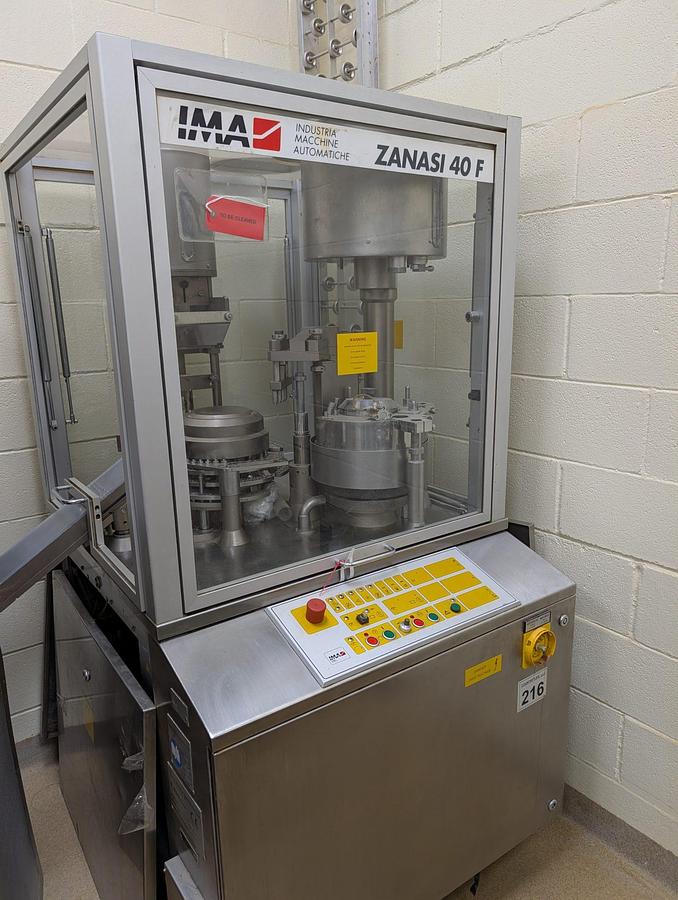
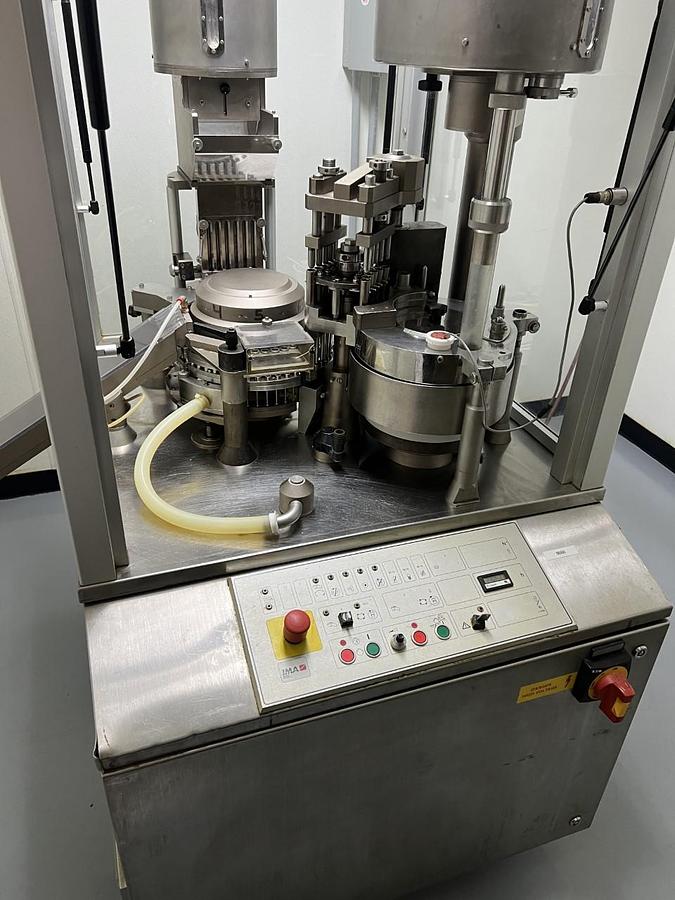
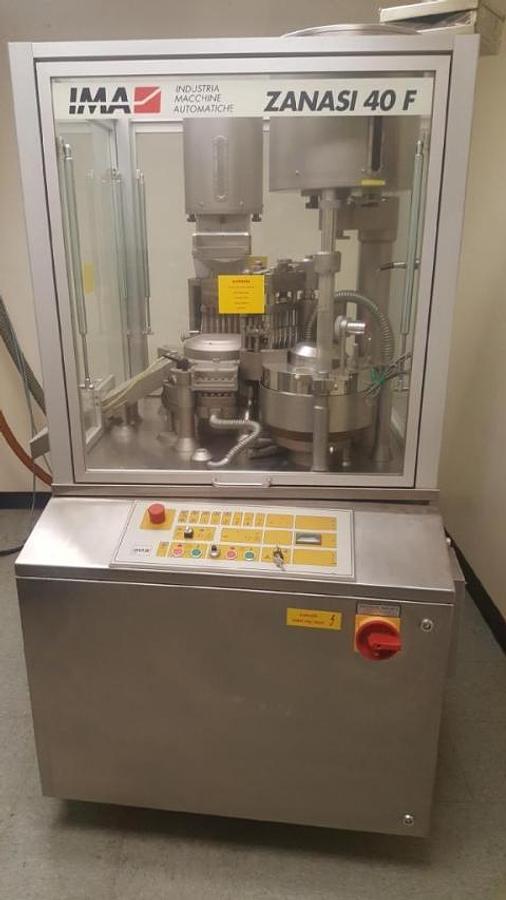
Zanasi encapsulators are intermittent-motion capsule filling machines manufactured by Zanasi, an Italian brand that is now part of the IMA Group. These machines are designed to fill hard gelatin or HPMC capsules with precise doses of powder, pellets, tablets, or liquid fills, and they are widely used in pharmaceutical manufacturing, nutraceutical production, and dietary supplement operations. The machines are built around a dosing disc system that delivers a high degree of fill-weight accuracy, which is a core requirement for pharmaceutical-grade production where dosing consistency directly affects product safety and regulatory compliance.
Beyond the pharmaceutical sector, Zanasi encapsulators are also found in contract manufacturing facilities and R&D laboratories where consistent, repeatable capsule filling is essential. The machines range from compact laboratory-scale units capable of a few thousand capsules per hour all the way up to high-output production models that can process tens of thousands of capsules per hour. This range makes the Zanasi platform a practical choice across a wide spectrum of production environments, from early-stage product development through full commercial-scale manufacturing. Their reputation for mechanical reliability and fill-weight precision has made them a long-standing reference point in capsule filling equipment worldwide.
What capsule sizes are compatible with Zanasi encapsulators?
Zanasi encapsulators are designed to work with a broad range of standard hard capsule sizes, and the specific sizes a given machine can run depend on the tooling (dosing discs and capsule holders) installed on that machine. Common capsule sizes include 00, 0, 1, 2, 3, and 4, which cover the majority of pharmaceutical and nutraceutical applications. For example, used Zanasi 40F machines are frequently listed with size 00 and size 0 tooling, which are among the most widely used sizes in dietary supplement production because they accommodate larger fill volumes.
Changing capsule sizes on a Zanasi machine typically requires swapping out the tooling set for that size, which includes the dosing disc, capsule body holders, and related components. When purchasing a used Zanasi encapsulator, buyers should confirm exactly which tooling sizes are included with the machine, since additional tooling sets represent a meaningful added cost if purchased separately. Both hard gelatin capsules and HPMC (hydroxypropyl methylcellulose) capsules, the vegetarian alternative, are compatible with Zanasi machines, which is increasingly relevant given growing consumer demand for plant-based supplement formats. Confirming tooling compatibility and availability before purchase is one of the most practical steps a buyer can take to ensure the machine will run their specific product from day one.
What is the production capacity of a Zanasi 40F encapsulator?
The Zanasi 40F is a mid-to-high-output capsule filling machine with a rated production capacity of approximately 40,000 capsules per hour. This output level places the 40F squarely in the commercial production range, making it suitable for contract manufacturers, established pharmaceutical companies, and supplement brands running consistent production volumes. The 40F uses intermittent rotary motion combined with a dosing disc filling system, which is the mechanism responsible for both the machine's speed and its fill-weight accuracy.
In practical production environments, actual throughput will vary based on the capsule size being run, the characteristics of the fill material (flowability, bulk density, and particle size all play a role), operator experience, and the condition of the machine. Used 40F units that have been well maintained can still achieve output close to their rated capacity, though buyers should factor in the age and service history of any specific machine when estimating real-world performance. The 40F sits above smaller Zanasi models like the 6F and 12F, which are more commonly used in laboratory or small-batch settings, and below larger models like the 70F, which are designed for higher-volume continuous production. For many mid-scale operations, the 40F represents a practical balance between output capacity and footprint.
What types of fill materials can Zanasi encapsulators handle?
Zanasi encapsulators are primarily engineered for dry powder and pellet fills, which represent the most common fill types in pharmaceutical and nutraceutical capsule production. The dosing disc system at the heart of these machines compresses powder into a slug inside a bore of the disc, then transfers that slug into the capsule body, a process that works best with free-flowing to moderately cohesive powders. Pellet fills, including coated pellets used in modified-release formulations, are also well-suited to Zanasi machines, and certain models can be configured with pellet-specific dosing systems.
Some Zanasi models can be adapted for tablet inserts (placing a small tablet inside a capsule alongside a powder fill) and for micro-tablet fills, which are used in certain controlled-release pharmaceutical products. Liquid fills are generally not the primary application for Zanasi intermittent-motion machines, as liquid encapsulation typically requires specialized equipment with different sealing and dosing mechanisms. When evaluating a used Zanasi encapsulator for a specific fill type, buyers should confirm the dosing system configuration on that particular machine and whether any additional tooling or modifications would be required for their product. The fill material's physical properties, particularly its flowability and bulk density, will significantly influence fill-weight consistency and overall machine performance.
Are used Zanasi encapsulators a reliable option for pharmaceutical production?
Used Zanasi encapsulators have a solid track record in pharmaceutical and nutraceutical production environments, largely because the machines were built to demanding tolerances and many units have demonstrated long operational lifespans. The IMA Group's engineering standards for the Zanasi line emphasized mechanical durability, and it is not uncommon to find machines from earlier production runs still operating in commercial facilities decades after manufacture. That said, reliability in a used machine depends heavily on its maintenance history, how it was operated, and whether it has been properly stored and serviced between uses.
Buyers considering a used Zanasi encapsulator should prioritize purchasing from a dealer with demonstrated experience in pharmaceutical and food processing equipment, since industry-specific knowledge affects how machines are evaluated, stored, and represented. Requesting an inspection, either in person or via a detailed video walkthrough, is an important step before committing to a purchase. Inspections give buyers a realistic picture of the machine's mechanical condition, including wear on dosing discs, capsule transport components, and drive systems. It is also worth contacting IMA Group or authorized parts distributors before purchasing to understand what level of parts and technical support is available for the specific model and serial number in question, since parts availability can vary meaningfully between current and discontinued models.
What should buyers look for when inspecting a used Zanasi encapsulator before purchase?
A thorough inspection of a used Zanasi encapsulator should cover both mechanical condition and completeness of the machine. Key mechanical areas to evaluate include the dosing disc and its bores for wear or damage, the capsule rectification and transport systems, the opening and closing stations, and the drive components including cams and bearings. Worn dosing discs directly affect fill-weight accuracy, which is a critical performance parameter, so their condition deserves close attention. Buyers should also check the machine's frame and guarding for signs of damage or corrosion, and verify that all major assemblies are present and intact.
Beyond mechanical condition, buyers should confirm which tooling sizes are included with the machine, since dosing discs, capsule holders, and related change parts are model-specific and can be expensive to source separately, particularly for older machines. Asking for any available maintenance records or service logs provides useful context about how the machine was used and what repairs have been performed. Most reputable used equipment dealers will accommodate in-person inspections or provide detailed video documentation of the machine in its current state. Keep in mind that equipment dealers generally do not have production-grade facilities to run actual capsule fill trials, so inspections focus on mechanical condition rather than live production output. Consulting with a qualified Zanasi or IMA technician to review inspection findings before finalizing a purchase is a reasonable precaution for high-value acquisitions.
What GMP and regulatory compliance considerations apply to Zanasi encapsulators?
Zanasi encapsulators were designed for use in regulated pharmaceutical manufacturing environments, and the machines incorporate features consistent with Good Manufacturing Practice (GMP) requirements, including accessible surfaces for cleaning, stainless steel product-contact components, and designs that minimize cross-contamination risk. In regulated markets, pharmaceutical manufacturers are required to validate their equipment as part of process validation, which means demonstrating that the machine consistently performs within specified parameters. This validation work, including Installation Qualification (IQ), Operational Qualification (OQ), and Performance Qualification (PQ), is the responsibility of the buyer and their quality team, not the equipment seller.
For a used machine, the validation process starts fresh regardless of any prior validation status at a previous facility, since the machine has changed ownership, location, and potentially configuration. Buyers should account for validation costs and timelines when planning a used equipment acquisition. It is also worth noting that the regulatory expectations for dietary supplement manufacturing under FDA 21 CFR Part 111 (Current Good Manufacturing Practice for dietary supplements) differ somewhat from pharmaceutical drug manufacturing requirements under 21 CFR Parts 210 and 211, though both require documented equipment qualification. Confirming that the machine's design and condition are compatible with the applicable regulatory framework for the intended product is an important step before purchase, and engaging a regulatory consultant or qualified person familiar with capsule filling operations can help buyers assess this accurately.
How does the Zanasi dosing disc system work, and why does it matter for fill accuracy?
The dosing disc is the central filling mechanism in Zanasi intermittent-motion encapsulators. The disc contains a series of precision-bored holes arranged in a circular pattern. As the machine cycles, powder is fed into these bores and compressed into a compact slug by a tamping pin assembly. The disc rotates incrementally, and after a set number of tamping steps, the completed powder slug is ejected directly into the waiting capsule body. The fill weight is controlled by adjusting the depth of the bores in the dosing disc and the tamping pressure, giving operators a reliable way to dial in target fill weights.
This mechanism matters because fill-weight consistency is one of the most closely monitored quality attributes in capsule production, particularly for pharmaceutical products where dosing accuracy has direct patient safety implications. The dosing disc approach delivers tighter weight variation compared to simpler auger-based filling systems, which is why Zanasi machines became a preferred choice in pharmaceutical environments. When evaluating a used Zanasi machine, the condition of the dosing disc itself is one of the most important factors to assess. Worn bores produce inconsistent slug formation, which leads to fill-weight variability. Replacement dosing discs are available from IMA Group and authorized parts suppliers, but availability and cost vary by model, so confirming this before purchase is a practical step.
What spare parts and maintenance support should buyers expect for used Zanasi encapsulators?
Spare parts support for Zanasi encapsulators is managed through IMA Group, the parent company, and a network of authorized parts distributors. For current and recently discontinued models, parts availability is generally reasonable, covering consumable and wear items like dosing discs, capsule holders, seals, and drive components. For older or long-discontinued models, parts availability becomes less predictable, and buyers may need to source some components from third-party machine shops capable of fabricating parts to specification, or from other used machine inventories.
Before purchasing a used Zanasi encapsulator, it is strongly recommended to contact IMA Group or an authorized distributor with the machine's model number and serial number to get a clear picture of what parts are stocked, what lead times look like, and whether any components are no longer available. This due diligence can prevent situations where a machine is acquired but cannot be kept running due to an unavailable critical part. Routine maintenance on Zanasi machines involves lubrication of cam mechanisms and bearings, inspection and replacement of wear parts in the dosing and transport systems, and periodic calibration of fill-weight parameters. Buyers with in-house maintenance teams experienced in pharmaceutical packaging machinery will generally find Zanasi machines approachable to maintain, given the well-documented mechanical design and the availability of technical documentation for most models.
What should buyers know about shipping and payment when purchasing a used Zanasi encapsulator?
Zanasi encapsulators are industrial machines with significant weight and mechanical complexity, so shipping requires careful planning. The machine should be properly palletized or crated to prevent damage in transit, and the level of packaging required will affect shipping costs. Larger models may require specialized rigging equipment for loading and unloading at both origin and destination, which adds to the total landed cost. Buyers should ask the seller for a detailed breakdown of packaging, rigging, and freight costs before finalizing a purchase so there are no surprises in the total acquisition cost.
On payment terms, used equipment dealers typically require full payment before a machine ships. Some dealers may offer extended terms to established repeat customers, but this is not standard practice for first-time transactions. It is worth asking the seller directly about their payment process and any flexibility available. Buyers should also confirm the inspection process before payment is made, since most reputable dealers will accommodate in-person visits or provide thorough video documentation of the machine's condition. Getting a clear and accurate picture of the machine's current state before funds are transferred is the most important protective step a buyer can take, given that used equipment is generally sold as-is without manufacturer warranty coverage.