Category
Manufacturer
Model
Walker
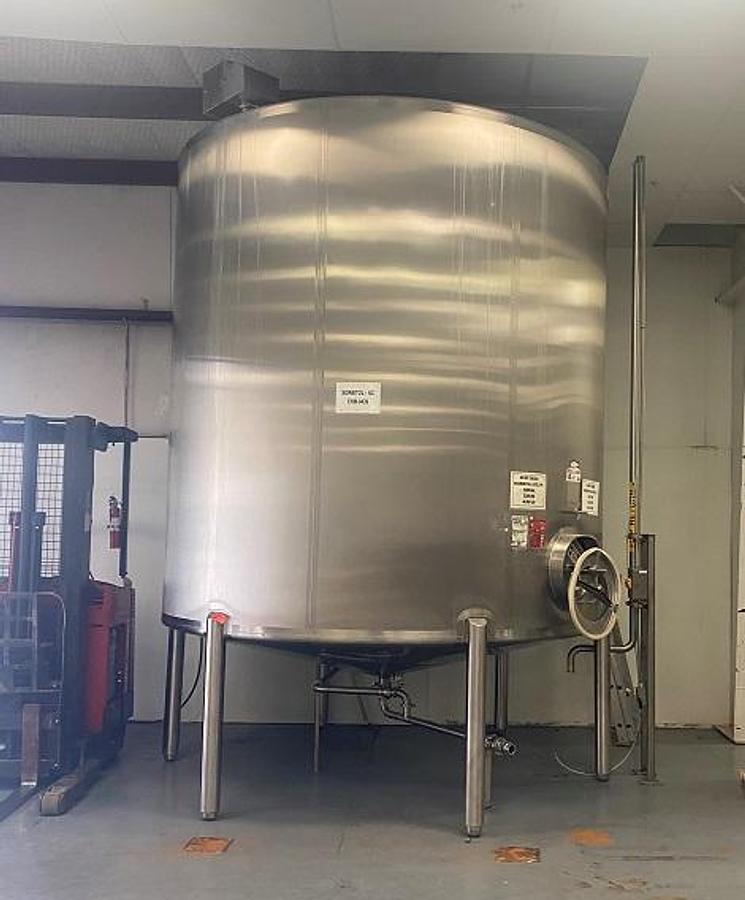
Walker is a leader in the production of stainless steel equipment for the food and beverage industries. Their product line includes tanks, mixers, and custom fabrication services, catering to both small and large-scale operations.
FAQ:
What sizes are Walker stainless steel tanks available in on the used market?
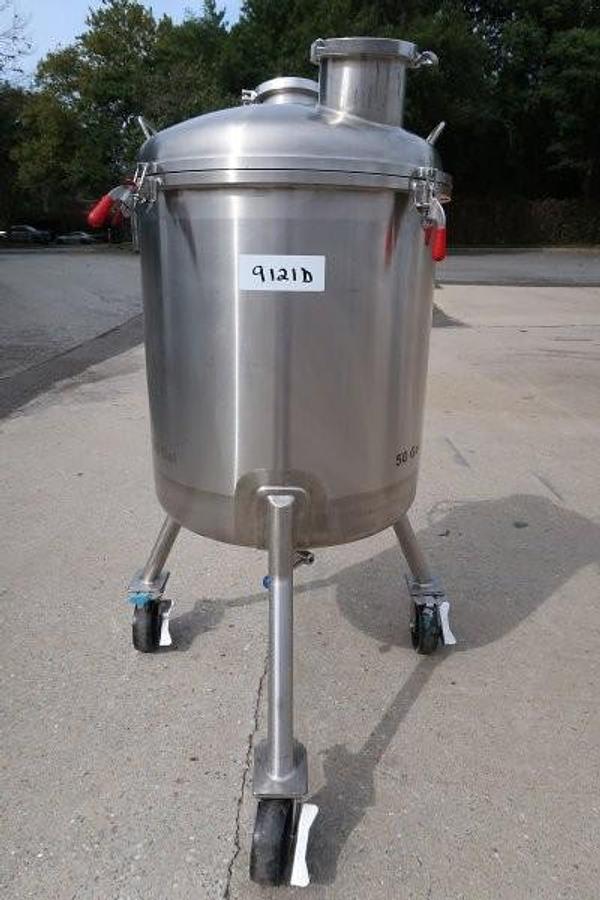
Used Walker stainless steel tanks appear across a wide range of capacities, making them practical for small-batch operations and large-scale production alike. On the secondary market, it's common to find units ranging from as small as 65 liters all the way up to 5,000 gallons or more. Mid-range sizes like 100-gallon, 250-gallon, 300-gallon, 750-gallon, and 1,000-gallon tanks tend to move frequently because they fit a broad range of processing applications in food, beverage, dairy, and pharmaceutical facilities.
Because Walker built tanks to customer specifications throughout their history, used inventory can be surprisingly varied in both size and configuration. A buyer looking for a specific capacity may need to monitor dealer listings over time, as availability shifts depending on what facilities are decommissioning or upgrading their equipment. Working with a dealer who specializes in sanitary stainless steel processing equipment is the most reliable way to find a particular size, since general machinery dealers may carry only occasional Walker units rather than a dedicated inventory.
What grade of stainless steel is used in Walker tanks?
Walker tanks are predominantly constructed from 304 or 316L stainless steel, and the grade used in any given unit is one of the most important specs to confirm before purchasing. Type 304 stainless is the more common of the two and handles the majority of food and beverage applications well. Type 316L stainless contains molybdenum, which significantly improves resistance to chlorides and corrosive cleaning agents, making it the preferred choice for pharmaceutical manufacturing, dairy processing, and any application where aggressive CIP (clean-in-place) chemicals are used regularly.
On used equipment listings, the stainless grade is typically noted in the product description, and buyers should verify this detail carefully. A tank listed as 316L commands higher value on the secondary market because of its broader application range and longer service life in demanding environments. If the grade is not clearly documented, it's worth asking the dealer directly or consulting the tank's data plate, which is usually affixed to the vessel and includes fabrication details such as material grade, working pressure, and the year of manufacture.
What industries are Walker stainless steel tanks designed for?
Walker built their stainless steel tank line with sanitary processing environments in mind, and their equipment shows up across a wide range of industries as a result. Dairy processing, food manufacturing, beverage production (including wine, beer, and juice), pharmaceutical compounding, and specialty chemical processing are the most common end markets. The company's long focus on hygienic design, smooth interior welds, and compliance with sanitary standards made their tanks a go-to choice for facilities where product purity and cleanability are non-negotiable.
On the used market, this cross-industry demand is actually an advantage for buyers. A Walker jacketed mixing tank originally used in a dairy plant may be perfectly suited for a craft beverage producer or a cosmetics manufacturer, provided the tank is properly cleaned and inspected before it enters a new production environment. The versatility of sanitary stainless construction means that used Walker tanks can often be redeployed across industries without significant modification, which is one reason the secondary market for these units stays active.
What does a jacketed Walker tank do, and why does it matter?
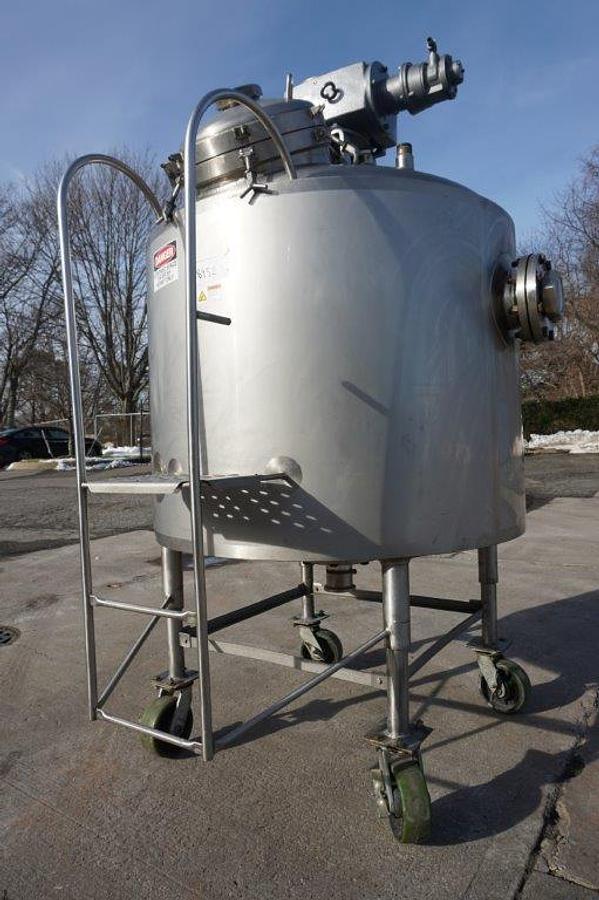
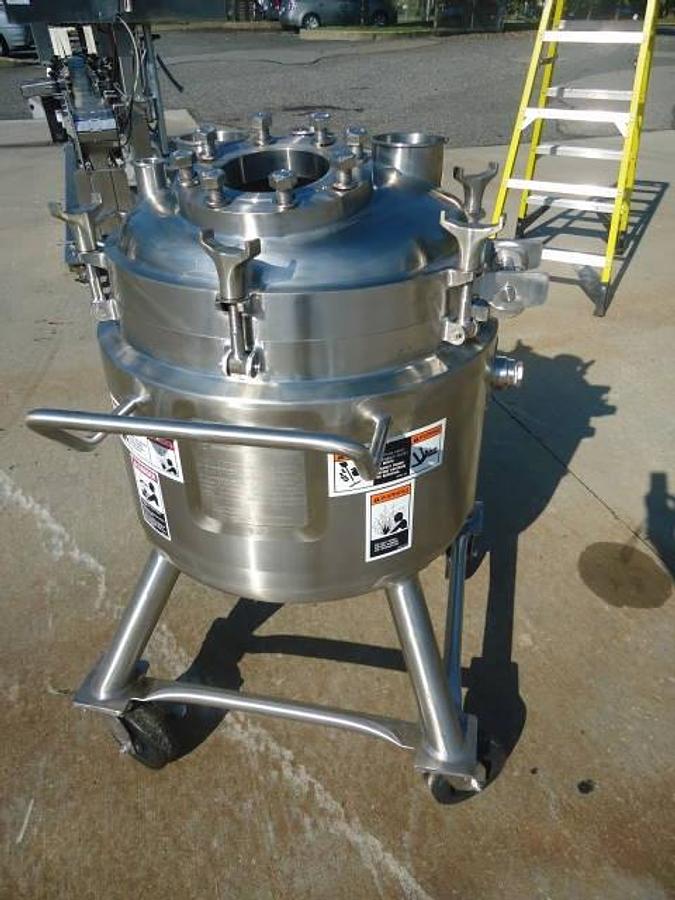
A jacketed tank has an outer layer, or jacket, surrounding part or all of the vessel wall. Heating or cooling media, typically water, steam, or glycol, circulates through this jacket to regulate the temperature of the product inside. For processes like fermentation, pasteurization, emulsification, and chemical reactions, precise temperature control is critical to product quality and consistency. Walker offered jacketed tanks across a wide range of their product line, and many used units on the market carry jacket pressure ratings between 75 PSI and 100 PSI, which accommodates both hot water and low-pressure steam systems.
When evaluating a used jacketed Walker tank, buyers should pay close attention to the jacket's condition during any inspection. Corrosion, scale buildup, or evidence of leaks in the jacket space can affect heat transfer efficiency and may require repair before the tank goes back into service. Dealers who specialize in sanitary processing equipment can usually provide photos or video of the jacket connections and interior surfaces, giving buyers a clearer picture of what they're purchasing before committing to a transaction.
Do Walker stainless steel tanks come with agitators or mixing systems?
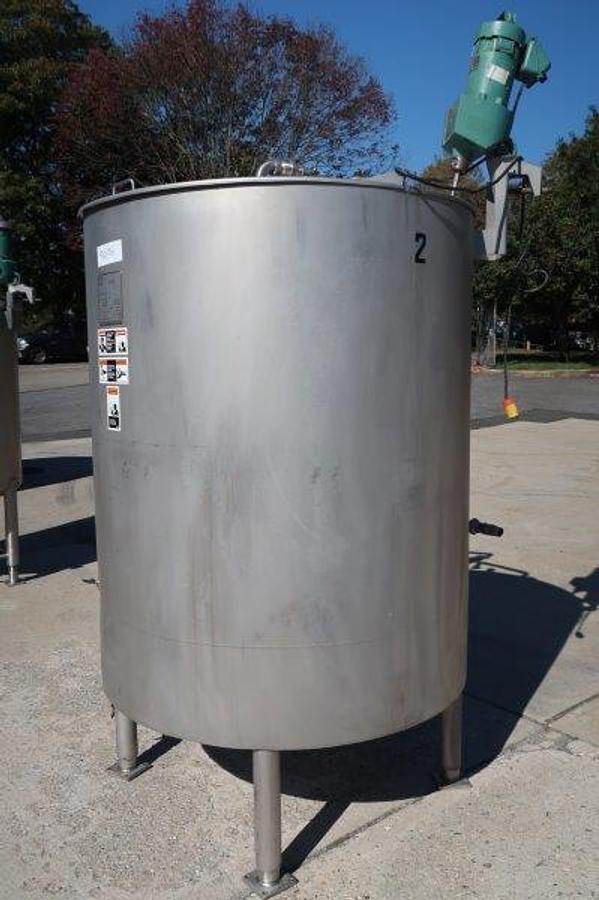
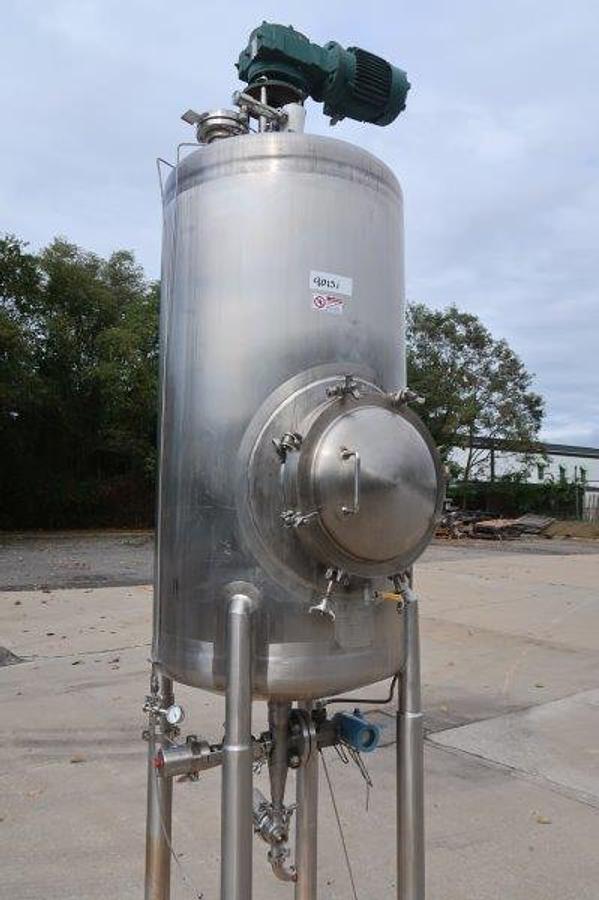
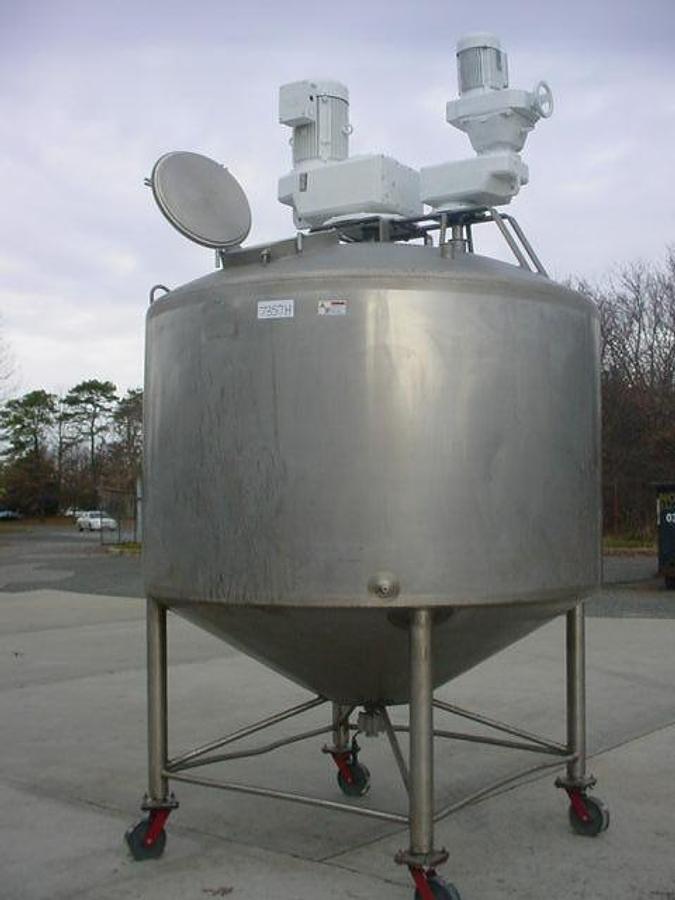
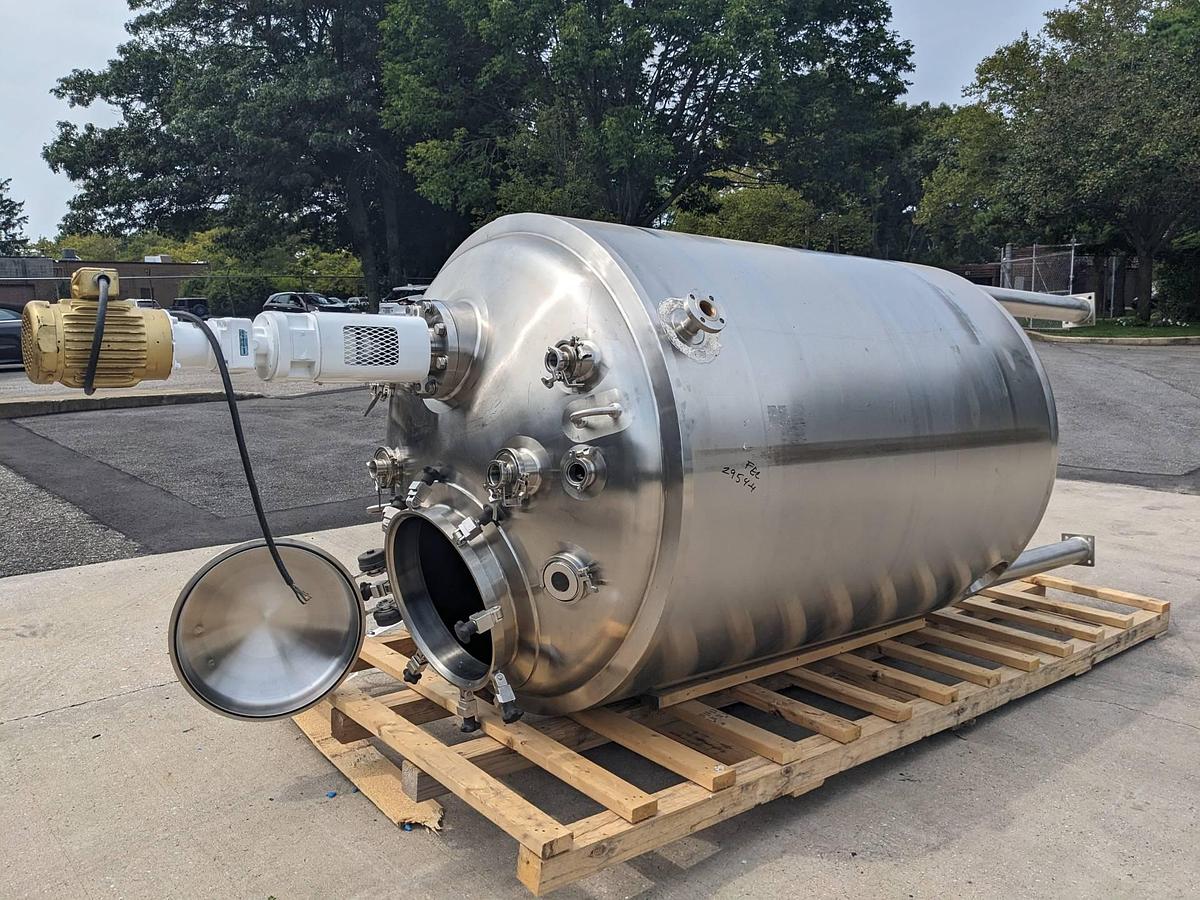
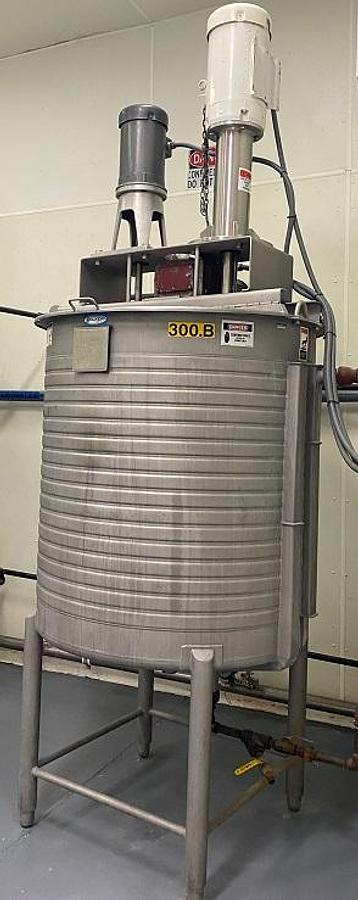
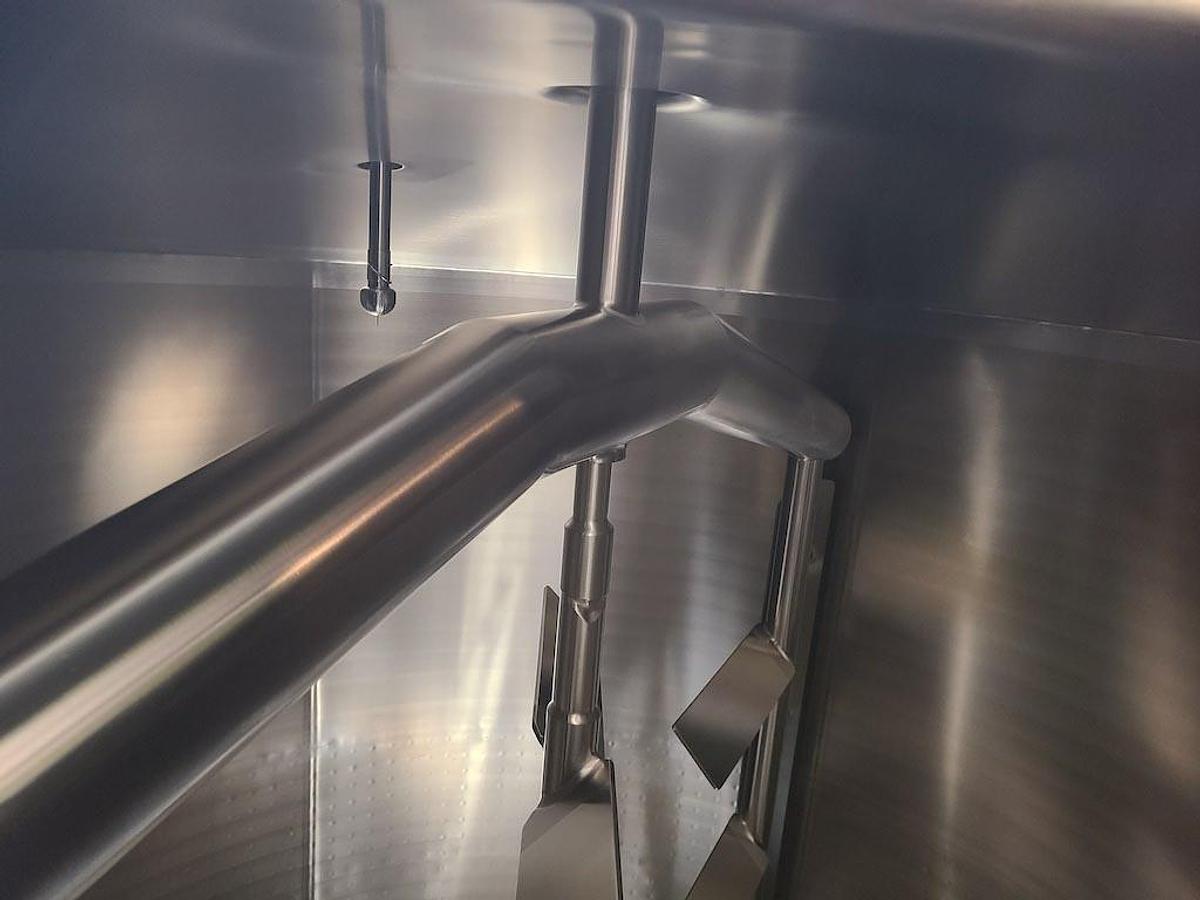
Many Walker tanks were built with integrated agitation systems, and used listings frequently include these mixing components as part of the unit. Common configurations include single-motion agitators, double-motion or dual-action agitators, scraper agitators, and high shear mixing heads. Double-motion designs, for example, use two independently driven mixing elements to handle viscous or difficult-to-blend products. Scraper agitators keep product moving along the vessel walls to prevent scorching or buildup during heated processing. High shear mixers are used when tight particle size reduction or emulsification is required.
Buyers should confirm the agitator type and drive condition as part of any pre-purchase inspection. Motors, gearboxes, and shaft seals are wear components, and their condition directly affects how quickly a tank can be put back into production after purchase. A dealer should be able to provide details on the agitator drive configuration, and if the tank is still installed at a facility, there may be an opportunity to observe it in operation or at least confirm that the drive turns freely. Replacement parts for Walker agitator systems are generally available through the manufacturer's support network, though availability can vary depending on the age and model of the unit.
Are Walker stainless steel tanks built to 3-A Sanitary Standards or ASME code?
Walker has a long history of building equipment to recognized industry standards, and many of their tanks were fabricated to meet 3-A Sanitary Standards, which govern hygienic design for dairy and food processing equipment. 3-A compliance addresses surface finish, weld quality, drainage characteristics, and material requirements, all of which are critical in environments where contamination risk must be minimized. Some Walker pressure vessels were also built to ASME (American Society of Mechanical Engineers) code, which applies to tanks designed to operate under internal pressure and is required in many regulated processing environments.
For buyers in regulated industries, confirming the certifications that apply to a specific used tank is important before purchase. The original data plate on the vessel typically records pressure ratings, material grades, and any applicable code stamps. If a tank will be put back into service in a facility subject to regulatory inspection, it's worth consulting with the relevant authority, whether that's a state dairy board, FDA auditor, or third-party certifier, to understand what documentation or re-inspection may be required before the used equipment can be approved for production use.
What should buyers inspect when purchasing a used Walker stainless steel tank?
A thorough inspection of a used stainless steel tank covers several areas: the interior surface finish and weld condition, the integrity of any jacket or insulation, the condition of all valves, fittings, and nozzles, and the operational status of any agitator or mixing drive. Interior surfaces should be free of deep pitting, cracks, or compromised welds that could harbor bacteria or affect product quality. On jacketed units, checking for scale buildup or evidence of past leaks in the jacket space is equally important, since these issues can reduce heat transfer performance significantly.
Reputable dealers typically offer in-person inspections, video walkthroughs, or photo documentation to help buyers evaluate a tank's condition before purchase. If the equipment is still installed at a production facility, some dealers can arrange for a buyer or their representative to visit the site directly. Keep in mind that most used equipment dealers are not set up to run full production tests, since that would require proper permitting and a complete processing line. The practical goal of any inspection is to get an accurate, honest picture of the tank's current mechanical condition so the buyer can make an informed decision about whether any refurbishment is needed before putting the unit back into service.
What is the typical price range for used Walker stainless steel tanks?
Pricing for used Walker stainless steel tanks varies considerably based on size, configuration, stainless grade, and overall condition. Small units in the 65-liter to 100-gallon range can often be found for a few thousand dollars, while mid-size jacketed mixing tanks in the 250 to 750-gallon range frequently list in the $5,000 to $25,000 range depending on features like agitator type, jacket pressure rating, and whether the unit includes additional accessories. Larger tanks of 1,000 gallons and above, particularly those with double-motion agitation or specialized reactor configurations, can run significantly higher.
Used Walker tanks tend to hold their value well compared to lesser-known brands because of the company's reputation for quality fabrication and the durability of their stainless construction. Buyers should factor in additional costs beyond the purchase price, including freight, rigging for loading and unloading, and any refurbishment or reconditioning work needed before the tank enters service. Getting a clear picture of the total landed cost, not just the sticker price, is the right way to evaluate whether a particular unit represents good value for a specific application.
How does shipping and delivery work for used Walker stainless steel tanks?
Shipping a large stainless steel tank requires more planning than standard freight. Smaller units may be palletized and shipped via common carrier, while larger tanks typically require flatbed trucking and professional rigging for both loading at the seller's location and unloading at the buyer's facility. The level of crating or bracing needed to protect the tank in transit affects shipping costs, and buyers should ask the dealer for specifics on how the equipment will be packaged and what rigging equipment will be required at each end of the move.
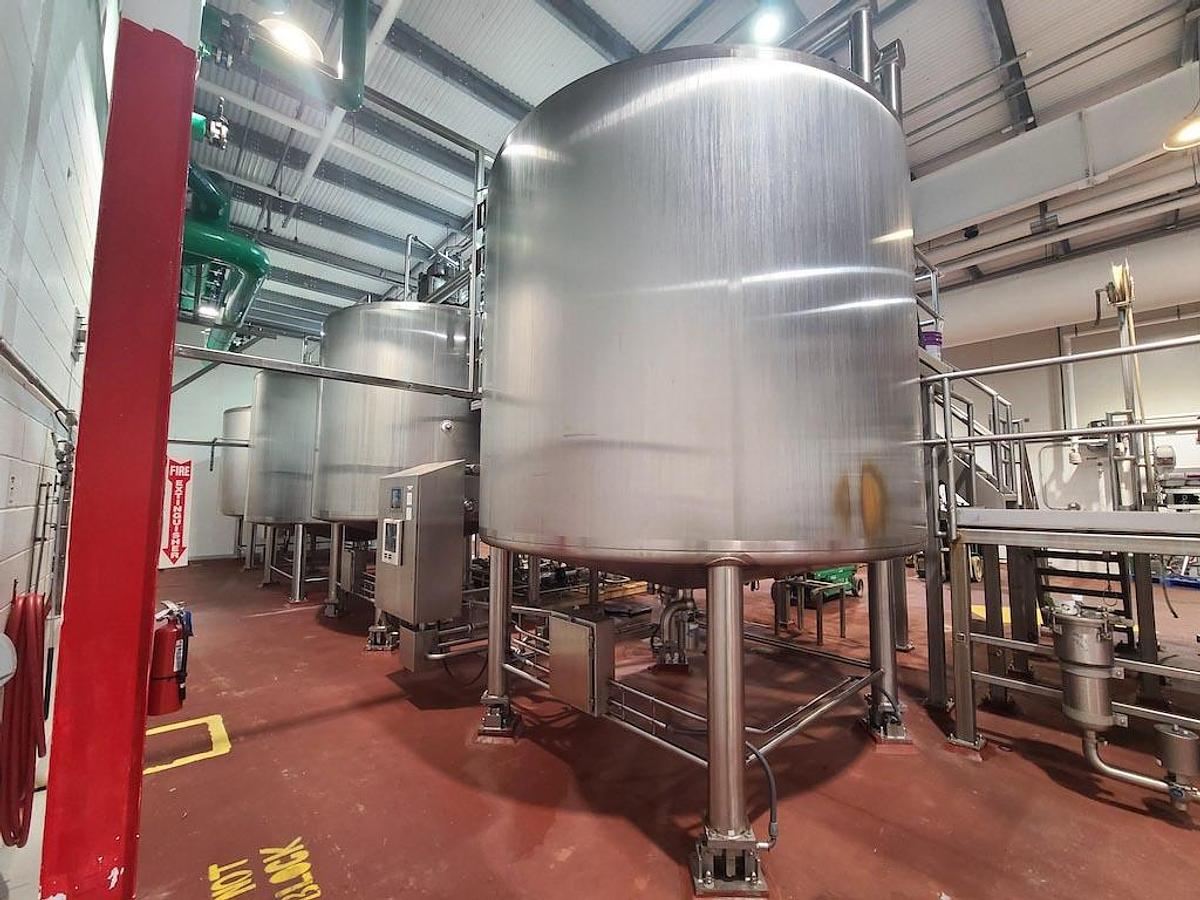
Buyers should request a full breakdown of shipping, rigging, and packaging costs before finalizing a purchase so there are no surprises in the total landed price. For very large tanks, like 4,000 or 5,000-gallon vessels, specialized heavy-haul transport may be necessary, and unloading may require a crane or forklift with sufficient capacity. Coordinating these logistics in advance, including confirming that the receiving facility has the equipment and clearance to accept a large vessel, will help avoid costly delays once the tank is in transit.
What payment terms are typical when buying used Walker stainless steel tanks from a dealer?
Most used equipment dealers require payment in full before a tank is released for shipping. This is standard practice in the industry and reflects the nature of the secondary market, where dealers are not typically set up to extend credit to first-time buyers. Payment is usually accepted by wire transfer, though some dealers may accept other methods depending on the transaction size. Buyers who have an established relationship with a particular dealer may occasionally be able to negotiate terms, but this is the exception rather than the rule.
For buyers making a significant purchase, it's reasonable to ask the dealer about their payment process and what documentation will be provided upon completion of the transaction. A bill of sale, any available equipment records, and confirmation of the release date are all things worth clarifying before funds are transferred. Taking time to vet the dealer's track record and industry reputation before committing to payment is a practical step, particularly for higher-value tanks. Dealers who specialize in sanitary processing equipment and have a long history in the industry are generally the safer choice over general surplus sellers who may have limited knowledge of the equipment they're offering.