Category
Subcategory
Manufacturer
Model
Us Filter
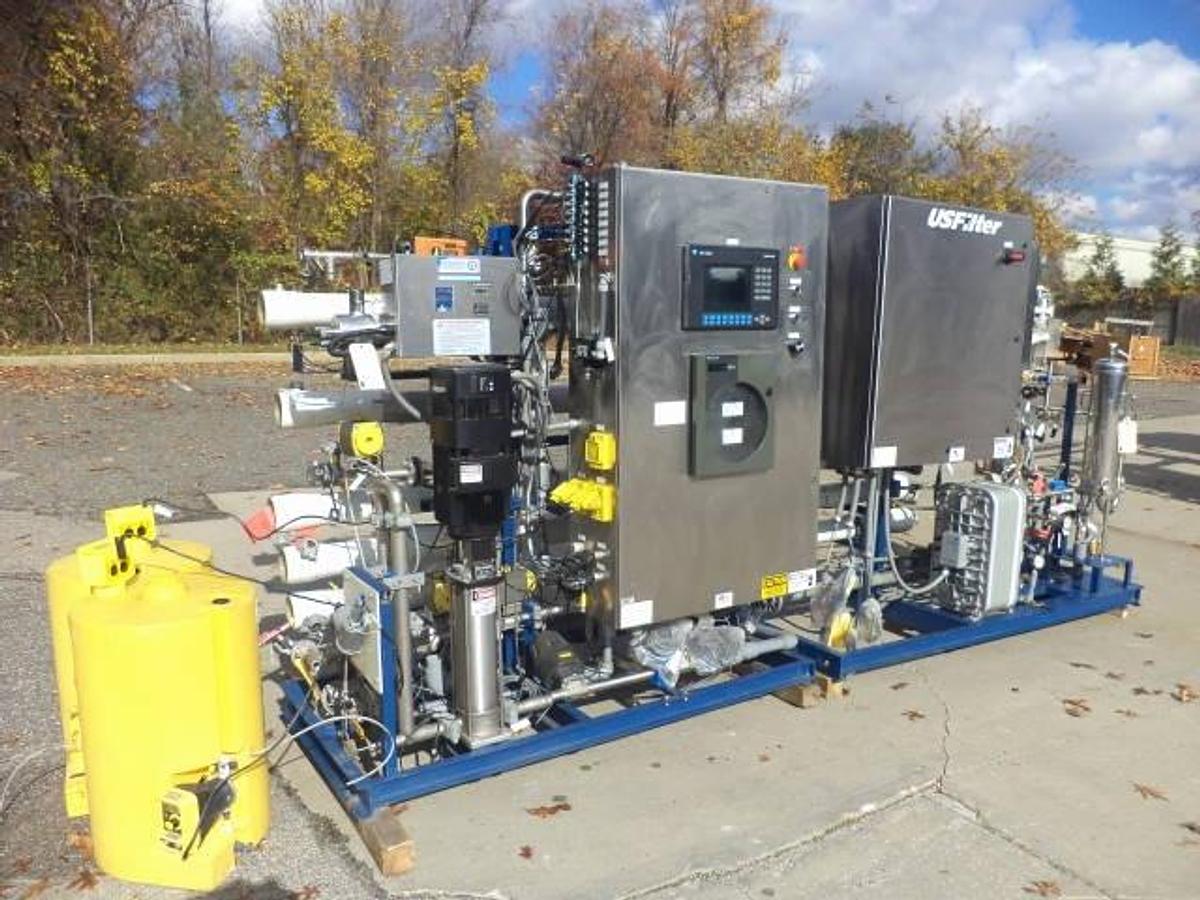
Us Filter manufactures filtration systems for various industrial applications, including food and beverage processing. They are recognized for their high-efficiency filters that ensure product purity and compliance with regulatory standards. Us Filter’s commitment to quality makes them a trusted partner in the manufacturing sector.
FAQ:
What is a US Filter reverse osmosis system and how does it work?
US Filter was a well-established water treatment company that produced reverse osmosis systems for both industrial and commercial applications, including food and beverage processing facilities. Their RO systems work by forcing pressurized water through a semi-permeable membrane with pores small enough to block dissolved solids, heavy metals, bacteria, and other contaminants while allowing purified water molecules to pass through. The result is water with dramatically reduced total dissolved solids (TDS), typically achieving a 90-99% reduction depending on the system configuration and source water quality.
US Filter was eventually acquired by Siemens Water Technologies and later became part of Evoqua Water Technologies, which means the brand no longer operates as an independent manufacturer. That history matters for buyers considering used equipment, since parts availability and technical support will depend on Evoqua's current catalog or compatible third-party suppliers rather than US Filter directly. The underlying membrane technology and filtration principles, however, remain well-understood and widely supported across the water treatment industry.
What contaminants does a US Filter reverse osmosis system remove?
US Filter RO systems were designed to reduce a broad range of dissolved and suspended contaminants. Depending on the specific system and its pre-filtration configuration, these units were capable of removing or significantly reducing lead, arsenic, nitrates, fluoride, chlorine, chloramines, bacteria, sediment, and various industrial chemicals. The semi-permeable RO membrane is responsible for blocking dissolved ionic contaminants, while pre-filters handle larger particulates and chlorine that could otherwise degrade the membrane over time.
For industrial and food-grade applications, US Filter systems were often specified precisely because of their ability to meet strict product purity and regulatory compliance standards. TDS reduction in the 90-99% range was typical for well-maintained systems operating within their designed pressure and flow parameters. Buyers evaluating a used US Filter RO unit should review the system's original specifications alongside the source water chemistry at their facility, since contaminant removal efficiency can vary based on feed water temperature, pressure, and the condition of the membrane and pre-filters at the time of purchase.
What are the typical stages of filtration in a US Filter RO system?
Most US Filter reverse osmosis systems used a multi-stage filtration approach. A common configuration included a sediment pre-filter to remove particulates and protect downstream components, followed by one or more carbon block filters to reduce chlorine and organic compounds that can foul or damage the RO membrane. The core RO membrane stage then handles dissolved solids, heavy metals, and microbial contaminants. Many systems also incorporated a post-carbon polishing filter as a final stage to improve taste and remove any residual compounds before the water reached the point of use.
Industrial-scale US Filter systems often added additional stages depending on the application, such as softening pre-treatment for high-hardness feed water, UV disinfection, or remineralization for specific food and beverage production requirements. The exact stage count and component types varied by model and the intended end use. When evaluating a used US Filter RO system, it is worth identifying which model it is and cross-referencing the original specification sheet to understand the full filtration sequence and the replacement components that will be needed to return it to proper operating condition.
What should buyers know about purchasing a used US Filter reverse osmosis system?
Buying a used US Filter RO system can offer significant cost savings compared to purchasing equivalent industrial water treatment capacity through a current manufacturer, but it does require careful due diligence. Because US Filter no longer operates as an independent brand, buyers cannot rely on direct manufacturer support. Parts, membranes, and service documentation will need to be sourced through Evoqua Water Technologies, which absorbed much of the US Filter product line, or through compatible third-party suppliers that manufacture cross-compatible membranes and filter housings.
Used RO equipment is typically sold as-is, which places the responsibility of condition assessment squarely on the buyer. Reputable used equipment dealers with specific experience in water treatment and filtration machinery are the best source for these systems, as they are more likely to accurately represent the condition of the unit and facilitate meaningful inspections. Buyers should request an in-person or video inspection to assess the physical condition of housings, membranes, pumps, and controls. It is also worth contacting Evoqua directly to understand what level of parts availability and technical documentation exists for the specific model being considered, since older or less common configurations may have limited support options.
What is the typical water production capacity of industrial US Filter RO systems?
US Filter produced RO systems across a wide capacity range, from smaller commercial units designed for light industrial or food service use to large-scale systems capable of producing tens of thousands of gallons per day for manufacturing facilities. Capacity is generally rated in gallons per day (GPD) or gallons per minute (GPM) and depends on the number and size of membrane elements installed, the operating pressure of the feed pump, and the quality of the incoming water supply. Higher TDS feed water or lower operating temperatures will typically reduce effective output below the rated capacity.
For buyers sourcing a used US Filter system, matching the unit's rated capacity to the actual daily water demand of the facility is a critical step. Oversized systems can run inefficiently and cause membrane fouling from insufficient cross-flow velocity, while undersized systems will struggle to meet production needs. The system's nameplate data, along with any available documentation from the dealer, should be used to confirm flow rates and recovery ratios before purchase. A water treatment specialist can help evaluate whether a specific used unit is appropriately sized for a given application.
How does the wastewater or reject ratio work in a reverse osmosis system?
Every reverse osmosis system produces two output streams: purified permeate water and a concentrate stream, often called reject or brine, which carries the contaminants that were blocked by the membrane. The ratio of purified water to reject water is known as the recovery rate. Residential and light commercial RO systems often recover only 25-50% of feed water as purified output, meaning a significant volume is discharged as waste. Industrial systems, including those made by US Filter, were frequently engineered for higher recovery rates, sometimes reaching 75-85%, to reduce water consumption and operating costs in high-volume production environments.
Recovery rate is influenced by feed water quality, system pressure, membrane type, and whether the system includes recirculation or energy recovery components. High-mineral or high-TDS feed water generally limits how aggressively recovery can be pushed before scaling becomes a risk on the membrane surface. Buyers evaluating a used industrial RO system should review the original recovery rate specifications and assess whether the feed water at their facility is compatible with those design parameters. Pre-treatment adjustments, such as antiscalant dosing or water softening, may be needed to maintain the system's intended recovery performance.
How difficult is it to install an industrial US Filter reverse osmosis system?
Industrial-scale RO systems are considerably more involved to install than residential under-sink units. A US Filter industrial system will typically require a dedicated feed water supply line sized to the system's inlet flow requirements, a drain connection for the reject stream, electrical service for the high-pressure pump and control panel, and in many cases, pre-treatment equipment such as a softener or sediment filtration upstream of the RO unit itself. Depending on the size and weight of the system, rigging and placement within the facility may also require a forklift or overhead crane.
For used equipment specifically, installation complexity is compounded by the need to verify the condition of all internal components before commissioning. Membranes may need to be replaced if the system has been sitting idle, and O-rings, pressure vessels, and fittings should all be inspected for wear or damage. It is strongly advisable to work with a qualified water treatment engineer or industrial plumber who has experience with RO systems during installation. Some used equipment dealers can provide technical documentation or connect buyers with service contacts familiar with the specific equipment, which can simplify the commissioning process considerably.
How often do membranes and filters need to be replaced on a US Filter RO system?
Replacement intervals for RO membranes and pre-filters depend heavily on feed water quality, system usage, and how well the pre-treatment equipment is maintained. In industrial settings with relatively clean feed water and consistent pre-treatment, RO membranes can last anywhere from two to five years before performance degrades to the point of requiring replacement. Pre-filters, including sediment and carbon stages, typically require more frequent attention, often every three to twelve months depending on the particulate and chlorine load in the feed water.
For a used US Filter system, the condition of the existing membranes and filter media at the time of purchase is an important consideration. If the system has been decommissioned for an extended period, the membranes may have dried out or biologically fouled, which generally means they will need to be replaced before the system can produce water that meets its rated specifications. Replacement membranes compatible with US Filter pressure vessels are available through Evoqua Water Technologies and various third-party membrane manufacturers that produce cross-compatible elements. Buyers should factor replacement media costs into the total acquisition budget when evaluating used RO equipment.
What inspections should a buyer request before purchasing a used reverse osmosis system?
A thorough inspection is one of the most important steps in buying used water treatment equipment. Buyers should request either an in-person visit or a detailed video walkthrough that covers the condition of pressure vessels, membrane housings, high-pressure pump, control panel, valves, and interconnecting piping. Visible corrosion, cracked housings, or evidence of past leaks are all red flags that warrant further investigation or negotiation. The inspection should also include a review of any available service records, original equipment documentation, or performance logs that indicate how the system was operated and maintained.
It is worth noting that most used equipment dealers do not have the permitting or production infrastructure to run a full operational test with actual feed water, so buyers should not expect a live performance demonstration in most cases. What a reputable dealer can provide is an honest assessment of the physical condition of the unit, facilitation of access for inspection (including at the original production facility if the equipment is still on-site there), and any documentation available for the specific model. Buyers who want a performance-level assessment beyond visual inspection may want to engage an independent water treatment engineer to evaluate the system before finalizing the purchase.
What are the typical payment and shipping considerations when buying used industrial RO equipment?
Used industrial equipment dealers generally require full payment prior to releasing equipment for shipment. Some dealers extend payment terms to established repeat customers, but first-time buyers should plan for payment in full upfront. It is important to clarify exactly what is included in the listed price, since ancillary costs such as crating, palletizing, rigging, and freight can add meaningfully to the total landed cost of a large industrial RO system. Requesting an itemized quote that covers all of these elements before committing to a purchase prevents unexpected costs at the time of shipment.
Shipping an industrial RO system requires careful preparation to prevent damage in transit. Depending on the size and configuration of the unit, this may involve custom crating, blocking and bracing of internal components, and draining or purging of any residual water to prevent freeze damage or biological growth during transport. At the destination, larger systems will likely require a forklift or rigging crew for unloading, which is an additional cost the buyer should arrange in advance. Buyers should discuss all packaging, loading, and freight details directly with the dealer to get a clear picture of the full cost and logistics before the transaction is finalized.