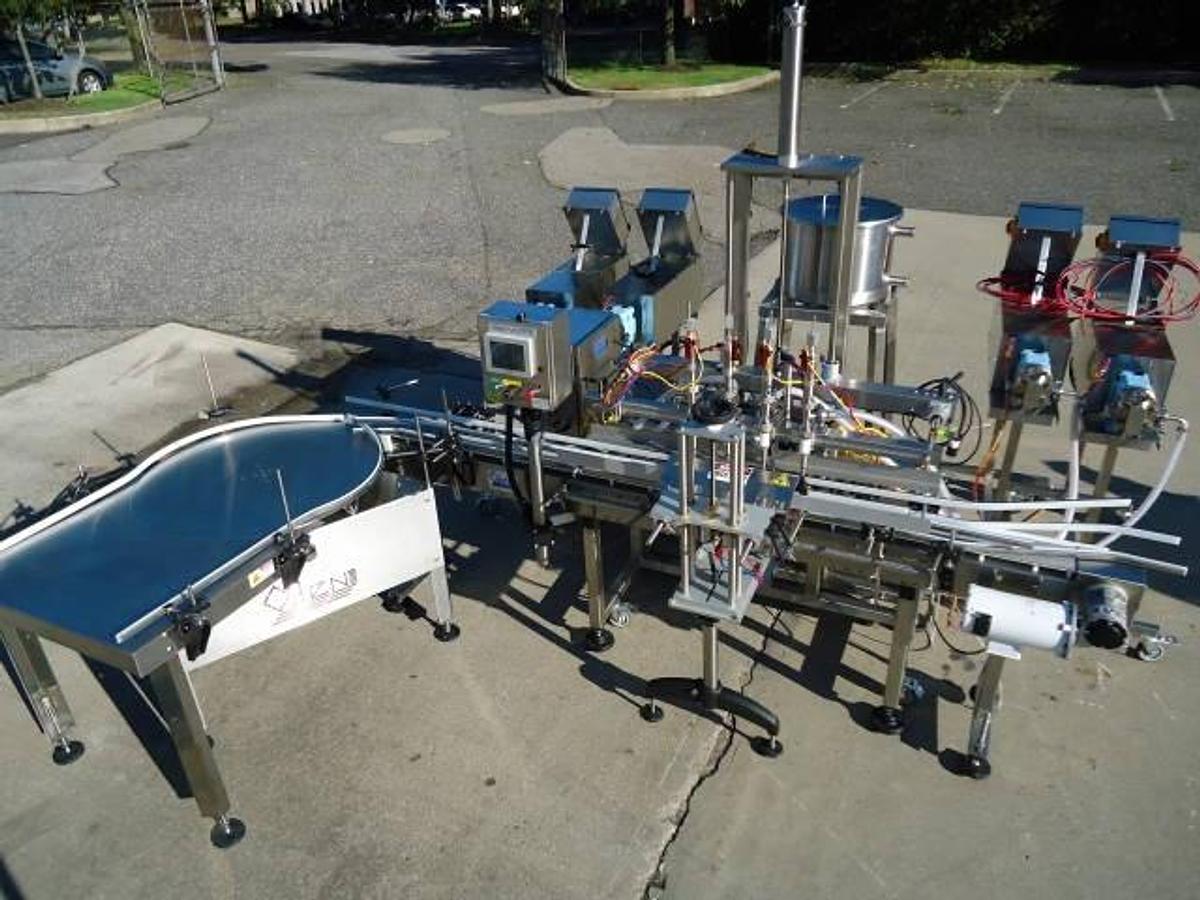
Category
Manufacturer
Model
FAQ:
What does 'unused' mean when buying a filling system from a used equipment dealer?
In the used machinery market, 'unused' refers to equipment that was manufactured and acquired but never placed into active production service. This is different from 'refurbished' or 'reconditioned' equipment. Unused filling systems typically originate from plant closures, canceled capital projects, overstock situations, or company liquidations where the machinery was purchased or built but the production line it was intended for never came online.
That said, 'unused' does not automatically mean the machine is in perfect, ready-to-run condition. A filling system that has sat in a warehouse for several years, even without ever running product, can develop issues with seals, gaskets, lubricants, and electronic components depending on how it was stored. Buyers should ask the dealer specifically about storage conditions, how long the machine has been idle, and whether any components are known to need attention before commissioning. An in-person or video inspection is strongly recommended to assess the actual physical state of the equipment before purchase.
What types of products can a used automatic filling system handle?
Filling systems are built to handle a wide range of product types, and the specific design of the machine determines what it can run effectively. Common categories include thin liquids (water, juices, cleaning solutions), viscous liquids (syrups, sauces, lotions, gels), pastes (peanut butter, adhesives, thick creams), free-flowing powders (protein supplements, spices, flour), and granules (coffee, seeds, hardware components). Each product type typically requires a different filling mechanism, such as piston fillers for viscous products, auger fillers for powders, or gravity/overflow fillers for thin liquids.
When evaluating a specific used filling system, buyers should confirm the filling principle the machine uses and cross-reference it against the product they intend to run. A servo-driven modular system, for example, can often be configured with different fill heads or nozzles to accommodate multiple product types. Asking the dealer for the machine's original specifications sheet, and if possible consulting the manufacturer directly, will help clarify exactly what product viscosity range and container types the system was designed to handle.
What fill speed and output rate should I expect from a used automatic filling system?
Fill speed is one of the most critical specs to evaluate before purchasing any filling system, and it is typically expressed in units per minute (UPM) or containers per hour. Entry-level automatic fillers may handle 20 to 60 containers per minute, while high-speed production systems can exceed 200 to 400 UPM depending on the number of fill heads and the product being run. A four-head filling system, for instance, fills four containers simultaneously per cycle, which multiplies throughput significantly compared to a single-head unit.
Keep in mind that rated fill speeds are usually based on ideal conditions with a specific container size and product viscosity. Actual throughput in your facility may vary depending on line integration, operator experience, container changeover time, and product characteristics. When reviewing a used filling system listing, look for the number of fill heads, the fill volume range per head, and the cycle rate. If the original spec sheet is not available through the dealer, the machine's model number can often be used to look up documentation directly through the manufacturer.
What fill volume range do automatic filling systems typically cover?
Fill volume range refers to the minimum and maximum amount of product the machine can dispense per container per cycle, and this varies considerably by machine type and configuration. Many general-purpose liquid fillers cover a range from as little as 1 milliliter up to several liters, while systems designed for larger containers (gallon jugs, drums, or industrial containers) may fill 1 to 5 gallons or more per cycle. Powder and granule auger fillers are usually rated by weight (grams or ounces) rather than volume.
For buyers sourcing a used filling system, confirming the fill volume range is essential to ensure the machine matches current and anticipated production needs. A machine with a narrow fill range may require expensive retooling or replacement of fill heads to accommodate different container sizes. It is worth asking the dealer whether any additional tooling, nozzles, or changeover parts are included with the machine, as these accessories can add meaningful value and flexibility to the purchase.
Do unused filling systems come with any warranty or protection for the buyer?
Used equipment dealers, including those selling unused machinery, typically sell equipment on an 'as-is' basis. Warranties are generally only offered by original manufacturers on factory-direct purchases, and that coverage does not transfer when a machine changes hands through the secondary market. This applies even to unused equipment that has never run production, since the machine is still being sold outside of a direct manufacturer relationship.
Because of this, buyers carry the responsibility of thoroughly vetting both the equipment and the dealer before completing a purchase. Choosing a dealer with a long track record in the specific industry (food processing, pharmaceutical, cosmetics, etc.) is one of the most effective ways to reduce risk. Buyers should also contact the manufacturer directly to understand what level of technical support, spare parts availability, and documentation they can expect for that specific model and serial number. A reputable dealer will accommodate in-person or video inspections and be transparent about the machine's storage history and known condition.
What condition are seals, gaskets, and perishable components in on an unused filling system that has been in storage?
This is one of the most overlooked considerations when buying unused filling equipment. Rubber seals, O-rings, gaskets, and similar elastomeric components have a finite shelf life regardless of whether the machine has ever been used. Depending on the material (Buna-N, EPDM, silicone, PTFE), these parts can begin to degrade, harden, or crack after several years in storage, particularly if the machine was stored in a facility with temperature fluctuations, humidity, or UV exposure. Lubricants can also dry out or separate, and certain electronic components such as capacitors can deteriorate over time.
Buyers should ask the dealer directly how long the machine has been in storage and under what conditions. If the machine has been sitting for more than two to three years, it is reasonable to budget for seal and gasket replacement as part of commissioning costs. Requesting a video inspection that specifically shows the condition of product-contact surfaces, hose connections, and any visible sealing components is a practical step. A qualified machine technician or integrator can often review inspection footage and provide a rough estimate of what refurbishment work may be needed before the machine runs production.
What certifications should a filling system have for food, beverage, or pharmaceutical production?
Regulatory compliance is a non-negotiable factor for filling systems used in regulated industries. For food and beverage applications, the most relevant standards include FDA CFR 21 compliance for food-contact materials, NSF/3-A certification for sanitary equipment design, and cGMP (current Good Manufacturing Practice) guidelines that govern equipment construction and cleanability. Pharmaceutical filling lines face even stricter requirements, often needing to comply with FDA 21 CFR Part 211, EU GMP Annex 1 for sterile products, or USP standards depending on the product.
For equipment sold into European markets, CE marking is required, and for environments with flammable or explosive materials (solvents, aerosols, certain powders), ATEX certification is critical for safety compliance. When evaluating a used or unused filling system, buyers should request all available documentation confirming the certifications the machine carried at the time of manufacture. It is also worth noting that regulatory standards evolve over time, so a machine built to the standards of a decade ago may need modifications to meet current requirements. Consulting with a regulatory or compliance specialist before finalizing a purchase is advisable for any application in a regulated industry.
Is a used filling system compatible with my existing production line and container sizes?
Line compatibility is one of the most practical questions to resolve before purchasing any filling system, used or otherwise. Key integration factors include conveyor height and width, infeed and outfeed configurations, container material and geometry (round, square, flexible pouches), cap style, and whether the system is designed for inline or rotary operation. Most automatic filling systems are built around a specific container diameter and height range, and while many can be adjusted within a certain window, significant deviations from the designed range may require tooling changes or mechanical modifications.
Buyers should gather detailed measurements of their existing line and compare them against the machine's documented specifications before committing to a purchase. If the original spec sheet is not available, the model number can often be used to locate documentation through the manufacturer. Dealers who specialize in filling and packaging equipment are generally better positioned to help assess compatibility than general machinery resellers, since they understand the nuances of line integration. Some dealers may also be able to facilitate a conversation with a systems integrator who can evaluate compatibility based on inspection photos or video.
How should I inspect a used filling system before buying it?
Inspections are the single most important step in the used equipment buying process, and most reputable dealers will accommodate them in some form. Options typically include an in-person visit to the dealer's facility or the plant where the machine is currently located, a live video walkthrough conducted via phone or video call, or a recorded video inspection that the dealer provides showing the machine's current state. For unused equipment, the inspection should focus on physical condition (corrosion, dents, missing components), the state of product-contact surfaces, condition of electrical panels and wiring, and any visible wear on mechanical components.
Keep in mind that most used equipment dealers do not have the permits or production infrastructure to run actual product through a machine during an inspection. What a buyer can reasonably expect is a visual and mechanical assessment, not a full production trial. If the machine is still installed at a production facility and has not yet been decommissioned, there may be an opportunity to observe it running, though this depends on the circumstances of the sale. Buyers with specific technical concerns should consider bringing or hiring a qualified technician or engineer to participate in the inspection, either in person or by reviewing inspection footage.
What are the typical shipping and logistics considerations when buying a filling system?
Shipping a filling system involves considerably more planning than standard freight. Most filling systems are heavy, multi-component machines that require proper palletization or custom crating to prevent damage in transit. The level of packaging required depends on the machine's size, weight, and fragility, and dealers will typically charge for crating or rigging services on top of the base freight cost. Larger systems may need to be partially disassembled before shipping, which adds both labor cost and reassembly time on the buyer's end.
For machines that weigh several thousand pounds or more, specialized rigging equipment (forklifts, cranes, flatbed trucks) is often required for both loading at the origin and unloading at the destination. Buyers should ask the dealer for a detailed breakdown of all costs involved, including crating, rigging, freight, and any insurance options, to accurately calculate the total landed cost of the equipment. International shipments add additional complexity in the form of customs documentation, import duties, and compliance with destination-country regulations. Getting a complete picture of logistics costs upfront prevents unexpected expenses after the purchase is finalized.