Category
Manufacturer
Model
Univex
Univex is a manufacturer of food processing equipment, catering primarily to the bakery and food service industries. They are known for their high-quality mixers, slicers, and portioning machines that enhance food production efficiency. Univex’s commitment to quality ensures that they meet the diverse needs of their clients.
FAQ:
What types of Univex food equipment are commonly available on the used market?
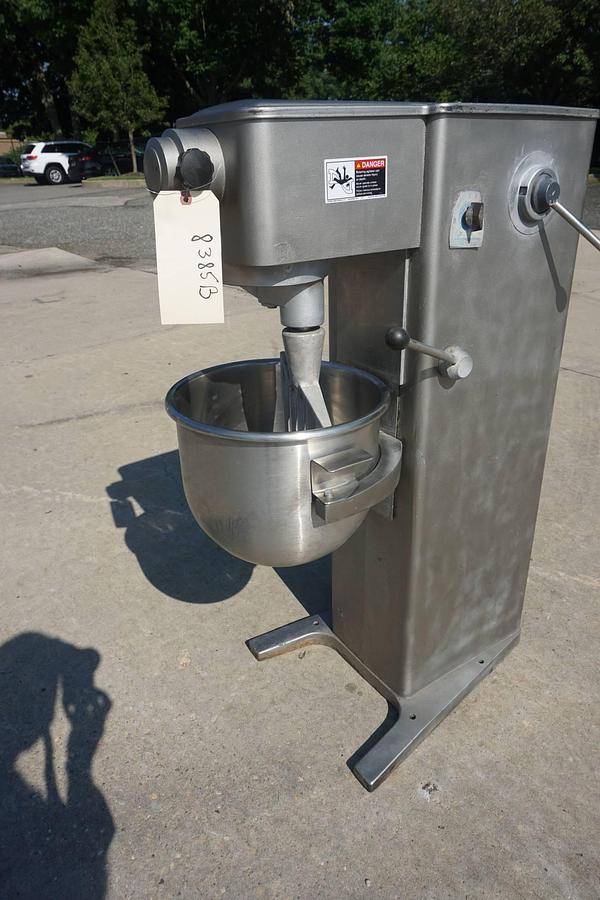
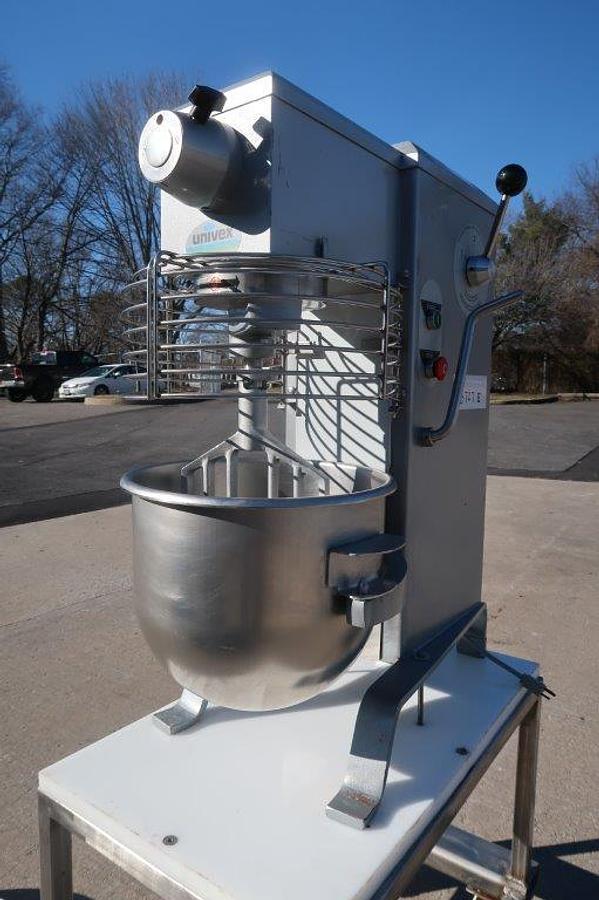
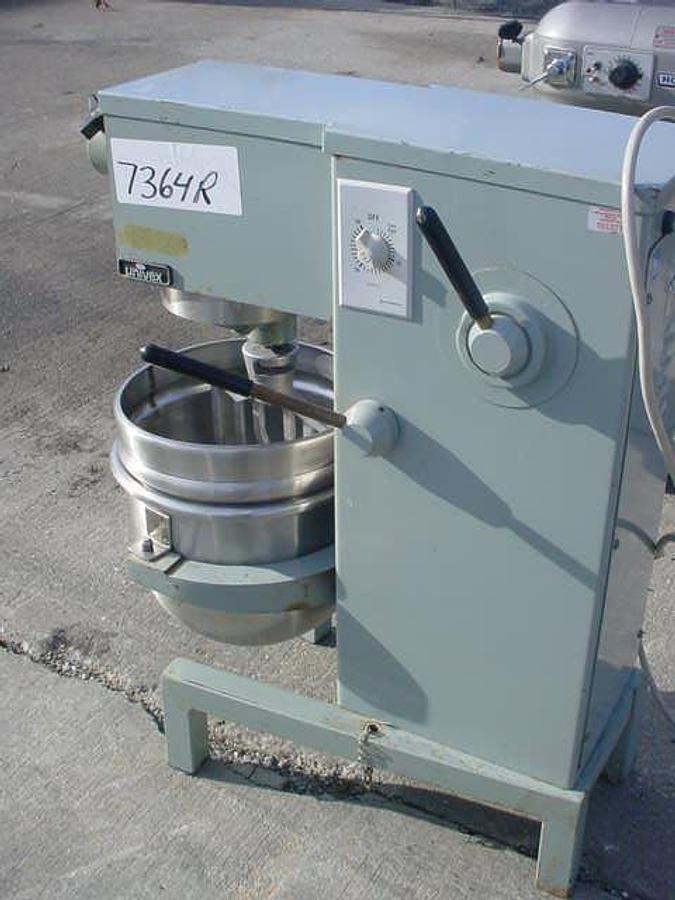
Univex has built its reputation around a focused lineup of commercial food processing equipment, and the used market reflects that specialization well. The most frequently available machines include planetary bowl mixers in a range of capacities (from compact 10-quart countertop units up to large 140-quart floor models), meat and deli slicers, dough sheeters, and portioning machines. Bakery-oriented equipment tends to dominate the used supply, since Univex has historically served that segment more than any other.
Among used listings, planetary mixers are by far the most common find. Models like the 12-quart and 20-quart bowl mixers show up regularly and are popular with smaller bakeries, pizzerias, and catering operations that need reliable mixing capacity without the footprint of a full floor-standing machine. Buyers looking for specific configurations, such as variable-speed versus multi-speed models or stainless steel bowl options, should check listings carefully since used inventory varies and exact specs depend on what has come off the market at any given time.
Is Univex food equipment designed for commercial use or home kitchens?
Univex equipment is built exclusively for commercial foodservice environments. The brand has focused on bakeries, delis, pizzerias, restaurants, and institutional kitchens since its founding in 1948, and every aspect of its design reflects that. The machines are built to handle continuous production cycles, heavy batch loads, and the kind of daily wear that would quickly overwhelm consumer-grade appliances. NSF certification is standard across most Univex product lines, which is a requirement for equipment used in licensed commercial kitchens.
For home cooks or small-scale hobbyists, Univex equipment is generally overkill in terms of size, power draw, and cost. A used 20-quart planetary mixer, for example, is a serious piece of production machinery. That said, some buyers, such as cottage food producers, serious home bakers with dedicated kitchen space, or micro-bakery operators, do purchase used Univex machines precisely because they want commercial-grade durability. The key consideration is whether the space, electrical setup, and production volume justify the investment.
What should buyers know about purchasing used Univex equipment instead of buying from a manufacturer?
Buying used Univex equipment means acquiring machines that have already been in commercial service, which carries both advantages and considerations that differ significantly from buying through a manufacturer's distribution channel. The primary advantage is cost. Used commercial mixers and slicers can be acquired at a fraction of what comparable equipment costs through standard commercial channels, making it possible for smaller operations to access the same build quality that larger production facilities rely on. The trade-off is that the buyer takes on responsibility for assessing the machine's condition.
Used equipment is typically sold as-is, so the burden of inspection falls on the buyer. Reputable used equipment dealers will accommodate in-person or video inspections before purchase, and buyers should take full advantage of that. It's also worth contacting Univex directly to understand what level of parts availability and technical support exists for a specific model and age of machine, since older or discontinued models may have more limited support. Selecting a dealer with a long track record in the food equipment space, rather than a general reseller, makes a meaningful difference in the reliability of what you're getting.
How do Univex planetary mixers compare to other commercial mixer brands?
Univex sits in a competitive segment of the commercial mixer market alongside brands like Hobart, Globe, and Thunderbird. Among industry professionals, Univex is generally regarded as a mid-to-premium brand with a strong reputation for durability and consistent mixing performance. The brand's mixers are particularly well-regarded in bakery settings where dough consistency matters and machines run for extended periods each day. Compared to Hobart, which is often considered the benchmark for heavy-duty commercial mixing, Univex is frequently cited as a solid alternative that offers comparable build quality at a somewhat more accessible price point.
On the used market, these comparisons become even more relevant because buyers are evaluating specific machines rather than brand positioning. A well-maintained used Univex 20-quart mixer can outperform a neglected unit from any brand. Buyers should focus on the machine's service history, the availability of replacement parts for that specific model, and whether the dealer can provide documentation or a visual inspection that gives confidence in its current working condition. Univex's commercial-grade construction means that machines from this brand often have long service lives when properly maintained, which is part of what makes them attractive on the secondary market.
What is the typical price range for used Univex food equipment?
Pricing for used Univex equipment varies considerably based on machine type, capacity, age, and condition. Smaller countertop planetary mixers in the 10 to 20-quart range tend to be the most accessible entry point on the used market, often available at prices well below what comparable capacity machines cost through commercial channels. Larger floor-standing mixers with capacities of 60 quarts and above command significantly higher prices due to their production capacity and the cost of the equipment when it was placed in service.
As a general reference, used commercial mixers from established brands like Univex can range from roughly a few hundred dollars for smaller or older units in fair condition, up to several thousand dollars for larger capacity machines in good working order. Slicers and portioning equipment tend to fall in a different range depending on their specifications. Buyers should factor in shipping, rigging, and any reconditioning costs when evaluating total acquisition cost, since a lower sticker price doesn't always mean the lowest landed cost, especially for heavier floor-standing equipment that requires freight and unloading equipment.
What capacity options are available for Univex planetary mixers?
Univex has produced planetary mixers across a wide range of bowl capacities to serve different production scales. On the smaller end, countertop models starting around 10 to 12 quarts are common in operations that need reliable mixing capability without dedicating significant floor space. Mid-range models in the 20 to 30-quart range are among the most popular in bakeries and pizzerias because they balance batch size with manageable footprint and power requirements. At the upper end, Univex has manufactured floor-standing models reaching 140 quarts, which are suited to high-volume production environments.
On the used market, 12-quart and 20-quart models appear most frequently, including both multi-speed and variable-speed configurations, and stainless steel bowl options. Buyers should verify the bowl size, attachment compatibility, and speed range for any specific used machine they're considering, since different production years and model variants can have different specifications even within the same nominal capacity. Checking with the manufacturer about attachment availability for a specific model number is a practical step before committing to a purchase.
Are replacement parts and accessories available for used Univex equipment?
Parts availability for Univex equipment depends largely on the model's age and whether it falls within a production line that the manufacturer continues to support. Univex has been manufacturing commercial food equipment since 1948, and like most equipment manufacturers, support for older or discontinued models can become more limited over time. Before purchasing a used Univex machine, it's advisable to contact Univex directly with the model number to get a clear picture of what parts, attachments, and technical support are available for that specific unit.
Common wear items for planetary mixers, such as bowl hooks, flat beaters, wire whips, and bowl lift components, are often available through Univex's parts network or through aftermarket suppliers that serve the commercial foodservice equipment sector. For slicers and portioning machines, blade availability and sharpening service access are the key considerations. A machine that's mechanically sound but lacks parts support can become a costly problem down the line, so this is a due-diligence step that serious buyers shouldn't skip, regardless of how attractive the purchase price appears.
How should buyers inspect used Univex equipment before purchasing?
Inspecting used commercial food equipment is the most important step in the buying process, and reputable dealers will offer multiple ways to accommodate it. In-person inspections are the most thorough option and allow a buyer to assess the machine's physical condition, check for wear on critical components, listen to the motor, and evaluate overall cleanliness and maintenance history. When in-person visits aren't practical, video inspections or detailed video walkthroughs captured by the dealer are a reasonable alternative that can reveal a lot about a machine's condition.
Buyers should keep in mind that most used equipment dealers operate from warehouse or resale facilities rather than licensed food production environments, which means they generally can't run a full production test with actual product. What a dealer can typically demonstrate is that a machine powers on, that the motor runs, and that mechanical components like speed controls, bowl lifts, and attachments function as expected. For equipment still in service at a production facility, some dealers can arrange inspections at the actual plant where the machine is operating, which offers the most complete picture of its working condition. Buyers should ask specifically what the inspection will cover and request photos or video of any areas of concern before committing to a purchase.
What are the typical shipping and delivery considerations for used Univex equipment?
Shipping used commercial food equipment involves more planning than standard freight because of the weight, dimensions, and fragility of certain components. Smaller countertop Univex mixers can often be palletized and shipped via standard LTL freight carriers, but the packaging needs to be adequate to protect the machine from the kind of handling that commercial freight involves. Larger floor-standing mixers and slicers may require crating rather than simple palletization, and the cost of that crating is typically passed on to the buyer as part of the shipping quote.
For heavy floor-standing equipment, loading and unloading may require a forklift or other rigging equipment, which adds to the total logistics cost. Buyers should ask dealers for a complete breakdown of packaging, rigging, and freight charges before finalizing a purchase so there are no surprises in the landed cost. If the destination facility doesn't have a loading dock or forklift access, buyers need to arrange for that separately or request liftgate service from the carrier. Getting a clear picture of the full delivery cost upfront is just as important as evaluating the machine's condition and purchase price.
What payment terms do used food equipment dealers typically require?
Payment practices in the used commercial equipment industry are fairly consistent across reputable dealers. The standard expectation is full payment prior to the equipment being released for shipping or pickup. This applies to most transactions, particularly for buyers who are purchasing from a dealer for the first time. The reasoning is straightforward: used equipment is a finite, specific asset, and dealers need payment confirmation before allocating resources to packaging, rigging, and coordinating logistics.
Some dealers extend more flexible terms to repeat customers or established accounts with a documented purchasing history, but this is the exception rather than the rule for first-time buyers. Buyers should clarify accepted payment methods early in the process, as wire transfers are common for larger transactions. Understanding the full payment timeline, including when payment is due relative to inspection and shipping scheduling, helps avoid delays once a purchase decision is made. Asking about these specifics upfront is a straightforward way to ensure the transaction moves smoothly.