Category
Manufacturer
Model
FAQ:
What types of equipment does Toronto Coppersmithing manufacture?
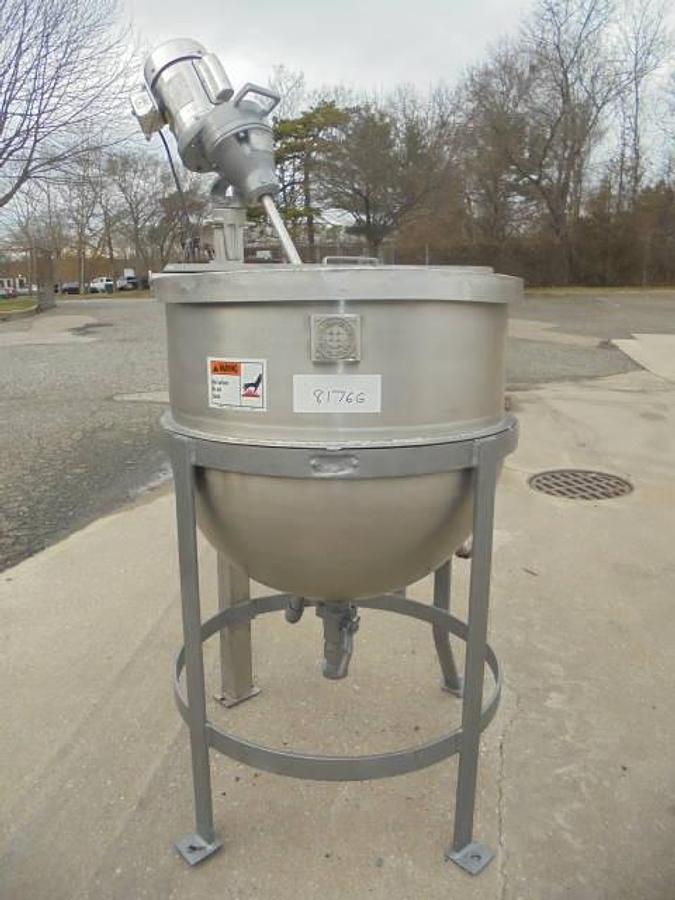
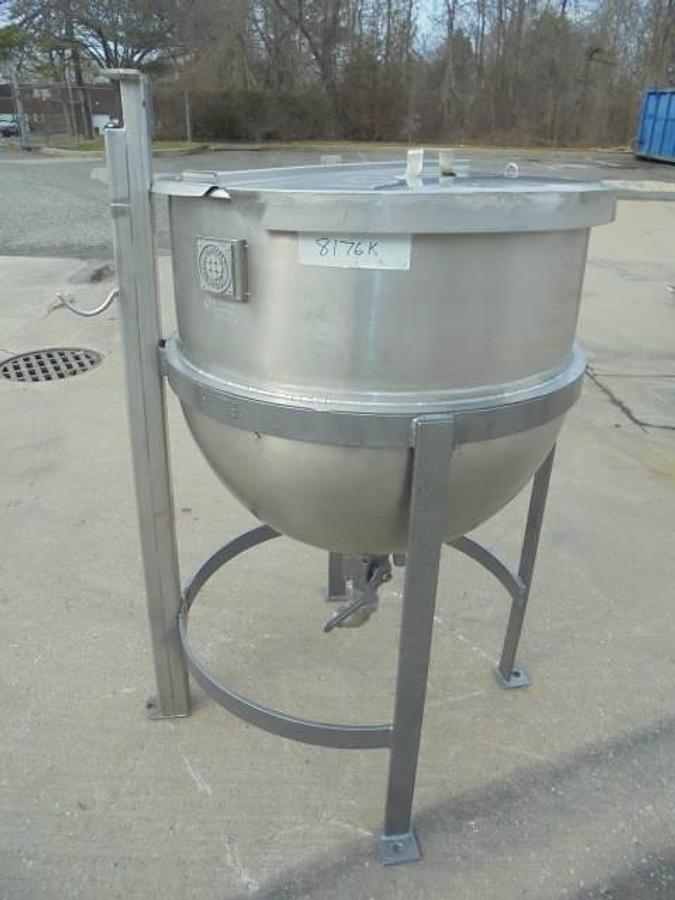
Toronto Coppersmithing is a manufacturer known for producing industrial-grade mixing and blending equipment, including jacketed mix kettles and ribbon blenders built for demanding processing environments. Their equipment is commonly found in food processing, pharmaceutical, chemical, and cosmetic manufacturing facilities where precise mixing, heating, or blending under pressure is required. Specific models include jacketed mix kettles rated at 100 PSI and stainless steel double ribbon blenders with jacketed configurations, available in capacities ranging from 40 cubic feet to 60 gallons and beyond.
The jacketed design on Toronto Coppersmithing equipment allows for temperature control during processing, which is critical in applications where ingredients must be heated, cooled, or maintained at a specific temperature throughout the mix cycle. The use of stainless steel construction in models like their double ribbon blender reflects the sanitary and corrosion-resistance standards required in regulated industries. Buyers sourcing used Toronto Coppersmithing equipment should pay close attention to jacket pressure ratings, vessel capacity, and the condition of internal agitator components, as these directly affect the machine's suitability for a given application.
What is a jacketed mix kettle and what is it used for?
A jacketed mix kettle is a vessel with a double-wall construction where the space between the inner and outer walls, called the jacket, is used to circulate steam, hot water, or cooling fluid. This allows the contents of the kettle to be heated or cooled indirectly and uniformly without direct flame or contact with external heating elements. Jacketed mix kettles are widely used in food production, confectionery, sauces, pharmaceuticals, and personal care product manufacturing, where temperature control during blending is critical to product quality and consistency.
The pressure rating of the jacket, often expressed in PSI, determines how much steam pressure the jacket can safely handle and directly affects the maximum temperature achievable during processing. A kettle rated at 100 PSI jacket pressure, like those produced by Toronto Coppersmithing, is capable of handling high-temperature steam applications suited to commercial and industrial production. When evaluating a used jacketed mix kettle, buyers should assess the condition of the jacket welds, any signs of corrosion or pitting on interior surfaces, the integrity of seals and gaskets, and whether the agitator or mixing mechanism operates smoothly. These factors determine both the safety and the practical usability of the equipment in a production setting.
What is a double ribbon blender and how does it work?
A double ribbon blender is a type of industrial mixing equipment that uses two helical ribbon agitators mounted on a central shaft inside a horizontal trough. The outer ribbon moves material in one direction along the trough while the inner ribbon moves it in the opposite direction, creating a continuous counterflow that produces thorough, uniform blending. This design is highly effective for dry powders, granules, pastes, and semi-solid materials, and is commonly used in food processing, chemical blending, plastics compounding, and pharmaceutical manufacturing.
The jacketed version of a double ribbon blender, such as those produced by Toronto Coppersmithing, adds temperature control capability to the mixing process. The jacket surrounding the trough allows steam or hot water to circulate and heat the batch, or cold water to cool it, depending on the process requirements. A stainless steel construction is standard for applications where sanitation, corrosion resistance, or regulatory compliance is required. When buying a used double ribbon blender, key inspection points include the condition of the ribbon welds and clearances from the trough wall, the state of the end seals, gearbox and drive condition, and whether the jacket has been pressure-tested. Any gaps or wear in the ribbon-to-trough clearance can significantly reduce blending efficiency.
What should buyers inspect when purchasing used industrial mixing equipment?
Buying used industrial mixing equipment requires a methodical inspection to understand the machine's actual condition and remaining service life. The most critical areas to examine include the interior vessel surfaces for corrosion, pitting, scratches, or weld repairs that could compromise sanitation or structural integrity. For jacketed equipment, the jacket itself should be checked for signs of leaks, previous repairs, or pressure-related damage. Agitator components, including ribbons, paddles, or blades, should be inspected for wear, warping, or missing welds that would reduce mixing effectiveness. Drive components such as gearboxes, motors, and belts should be examined for smooth, quiet operation without excessive vibration or heat.
Buyers should also request documentation where available, including any maintenance records, prior repair history, or manufacturer specifications for the model. Reputable used equipment dealers will typically accommodate in-person inspections or, where the machine is still installed at a production facility, arrange a video or live inspection so the buyer can observe the equipment in its current state. Keep in mind that most used equipment dealers are not set up to run full production tests, as that requires different permitting and operational infrastructure. Consulting the original manufacturer about parts availability and technical support for the specific model and age of the machine is also a practical step before committing to a purchase, since older models may have limited parts availability.
How is used industrial processing equipment typically priced?
Pricing for used industrial processing equipment like mix kettles and ribbon blenders varies considerably based on factors including the manufacturer's reputation, vessel capacity, construction material, jacket pressure rating, age, overall condition, and current market demand for that equipment type. Stainless steel construction and higher pressure jacket ratings generally command a premium over carbon steel or lower-rated alternatives. Equipment from established manufacturers with a track record in regulated industries, such as food or pharmaceutical processing, tends to hold its value better because buyers in those sectors have specific compliance requirements that limit their options.
Used equipment can sell for anywhere from 20% to 70% of the cost of a comparable machine, depending on condition and how recently the model was produced. Capacity is a major pricing driver, with larger vessels commanding higher prices due to both material costs and the specialized rigging and shipping requirements involved in moving them. Buyers should factor in not just the purchase price but also the costs of inspection, shipping, rigging, any required reconditioning or parts replacement, and reinstallation when calculating the true landed cost of a used machine. Getting a clear picture of all these costs upfront from the dealer helps avoid surprises and makes it easier to compare options accurately.
Do used equipment dealers offer warranties on industrial machinery?
Warranties on used industrial equipment are generally not offered by dealers. Used machinery is typically sold on an as-is basis, meaning the buyer accepts the equipment in its current condition without a guarantee of performance or coverage for future failures. This is standard practice across the used equipment industry and reflects the reality that the dealer often has limited knowledge of the machine's full operating history. The responsibility for evaluating the condition of the equipment falls on the buyer, which is why thorough inspection before purchase is so important.
Buyers can reduce their risk by choosing dealers who specialize in their specific industry and have a long track record of selling that type of equipment, as these dealers are more likely to represent machines accurately and support buyers through the purchasing process. Inspections, whether in person, by video, or through detailed photo documentation, are the primary tool a buyer has to assess what they are getting. It is also worth contacting the equipment manufacturer directly to understand what level of technical support, parts availability, and service documentation exists for the specific model being considered. Older machines or discontinued models may have limited manufacturer support, which is a practical factor in evaluating long-term usability.
What are the shipping and rigging considerations for large industrial processing equipment?
Shipping large industrial equipment like mix kettles and ribbon blenders involves significantly more planning and cost than standard freight. These machines are heavy, often awkwardly shaped, and require proper packaging to prevent damage during transit. Depending on the size and weight of the equipment, crating or heavy-duty palletization may be required, and the cost of that packaging is typically passed on to the buyer. Buyers should ask the dealer specifically what packaging is included in the quoted price and what additional costs may apply for more protective crating.
Rigging is another major cost factor for larger machines. Loading and unloading equipment that weighs several thousand pounds requires forklifts, cranes, or specialized rigging crews, and those services are generally billed separately from the freight charges. Buyers should get a clear breakdown of rigging costs at both the origin and destination before finalizing a purchase. For equipment still installed at a production facility, the dealer will typically coordinate with the facility and a rigging company to handle removal and loading. Buyers should confirm that their own facility is prepared to receive the equipment, including having appropriate unloading equipment available, adequate floor load capacity, and enough clearance to move the machine into its installation position.
What payment terms are typical when buying used industrial equipment?
Used equipment dealers almost universally require full payment before a machine is shipped. This is standard practice in the industry and reflects the dealer's need to protect against non-payment on high-value transactions where the equipment is difficult to recover once it has been transported. Payment is typically made by wire transfer, though some dealers may accept other forms of payment depending on the transaction size and the buyer's relationship with the dealer. Buyers should confirm accepted payment methods and any associated fees early in the purchasing process.
Some dealers may offer payment terms or extended arrangements to repeat customers or buyers with an established purchasing history, but this is the exception rather than the rule for first-time transactions. Buyers who need financing should explore third-party equipment financing options, as many financial institutions and specialty lenders offer loans or leases for used industrial equipment purchases. Before committing to any purchase, buyers should have a clear understanding of the total cost including equipment price, packaging, rigging, and shipping, so that financing arrangements cover the full landed cost rather than just the sticker price of the machine.
How can buyers verify the condition of used processing equipment before purchasing?
The most reliable way to verify the condition of used processing equipment is through a direct inspection, either in person or via a live video walkthrough conducted by the dealer. In-person inspections allow a buyer or their technician to physically examine the machine, check for wear, test mechanical components where possible, and get a hands-on sense of the equipment's condition. For equipment still installed at an operating facility, the dealer can often arrange for the buyer to visit the site and observe the machine in its production environment, which provides valuable context about how it was used and maintained.
Video inspections and detailed photo documentation are practical alternatives when travel is not feasible, and most reputable dealers will accommodate these requests. A thorough video inspection should cover the interior vessel surfaces, agitator or mixing components, drive assembly, jacket connections, control panel, and any visible wear points. Buyers should not hesitate to ask specific questions and request close-up views of areas of concern. It is also worth noting that most dealers cannot run production tests on equipment, as operating machinery for production purposes requires permits and infrastructure that a typical dealer facility does not have. Combining a detailed visual inspection with manufacturer consultation about the model's known wear points and parts availability gives buyers the most complete picture before committing to a purchase.
What industries commonly use jacketed mix kettles and ribbon blenders?
Jacketed mix kettles and ribbon blenders are workhorses across a wide range of processing industries. In food manufacturing, they are used for producing sauces, soups, confections, dairy products, dressings, and prepared meals where controlled heating and consistent blending are essential to product quality. Pharmaceutical and nutraceutical manufacturers rely on them for blending active ingredients with excipients, where precise temperature control and sanitary stainless steel construction are regulatory requirements. Personal care and cosmetic manufacturers use them for lotions, creams, and ointments that require heating and homogeneous mixing.
Chemical processing is another major application area, covering everything from adhesives and coatings to agricultural chemicals and specialty compounds. The ability to apply heat or cooling through the jacket while blending makes these machines versatile enough to handle products with very different viscosities and processing requirements. Plastics and rubber compounding, pet food production, and cannabis extraction and processing are additional sectors where these machines appear regularly. Because of this broad applicability, used jacketed mix kettles and ribbon blenders from reputable manufacturers tend to have consistent demand in the secondary market, and buyers across many industries actively seek out quality used units as a cost-effective alternative to purchasing comparable equipment.