Category
Manufacturer
Model
Thomas Engineering
Thomas Engineering is recognized for its custom manufacturing solutions, primarily serving the food, pharmaceutical, and packaging industries. They are known for their versatile machinery that can be tailored to meet specific production requirements. Thomas Engineering’s commitment to customer satisfaction and innovation makes them a trusted partner in equipment manufacturing.
FAQ:
What types of equipment does Thomas Engineering manufacture?
Thomas Engineering specializes in custom manufacturing solutions for the food, pharmaceutical, and packaging industries. Their most recognized product line includes tablet coating systems, particularly the Accela-Cota coating pan series, which has become a standard piece of equipment in pharmaceutical and nutraceutical tablet production. These machines are designed to apply coatings to tablets, pellets, and other solid dosage forms in a controlled, repeatable environment. Thomas Engineering also produces air handling units that work in conjunction with their coating pans to regulate temperature, humidity, and airflow during the coating process.
Beyond tablet coating, Thomas Engineering has built a reputation for versatile machinery that can be configured to meet specific production requirements across a range of industries. Their equipment is frequently found in GMP-compliant pharmaceutical manufacturing facilities, research and development labs, contract manufacturers, and food processing operations where precise coating or encapsulation is required. Because Thomas Engineering machines are built to demanding industrial standards, they tend to have long operational lifespans, which is a primary reason older models remain highly sought after on the used equipment market.
What is the Accela-Cota coating pan and why is it widely used in pharmaceutical manufacturing?
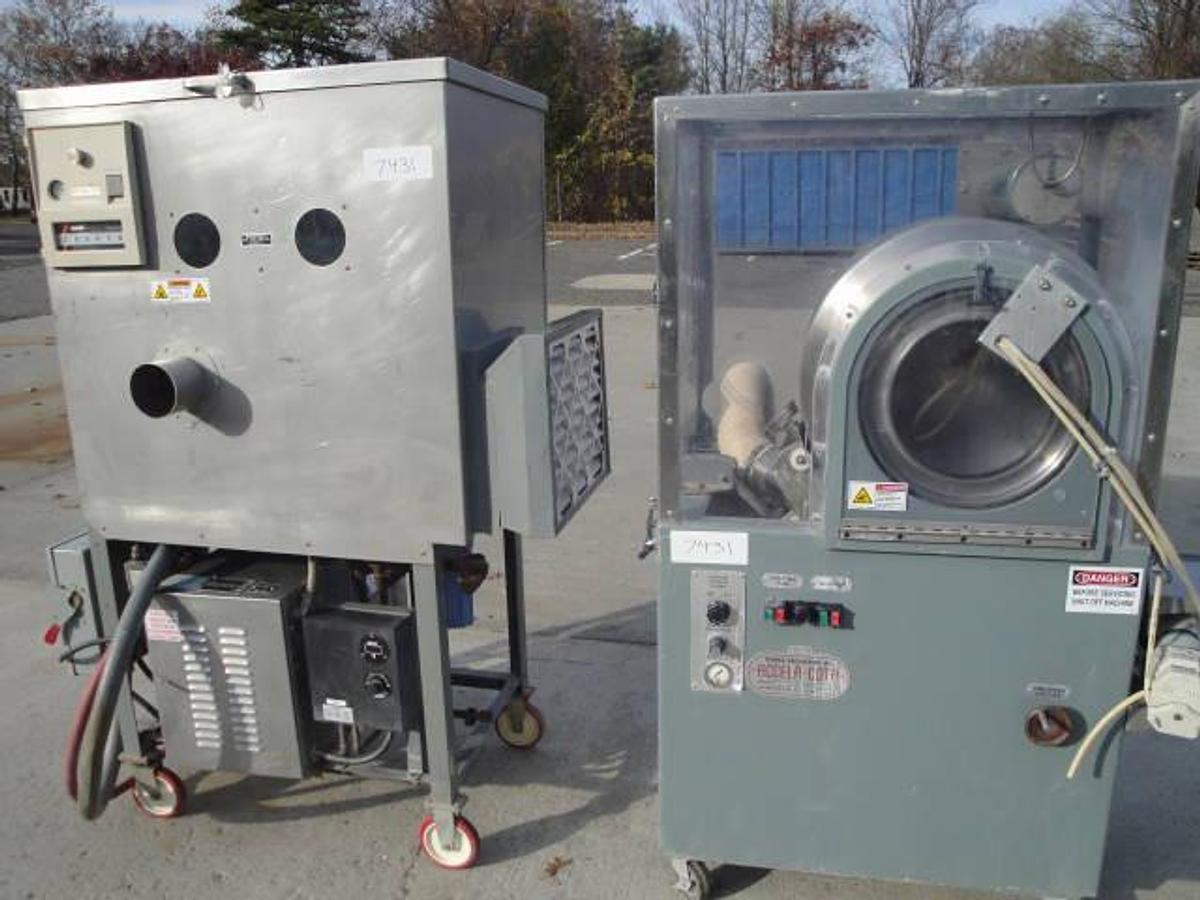
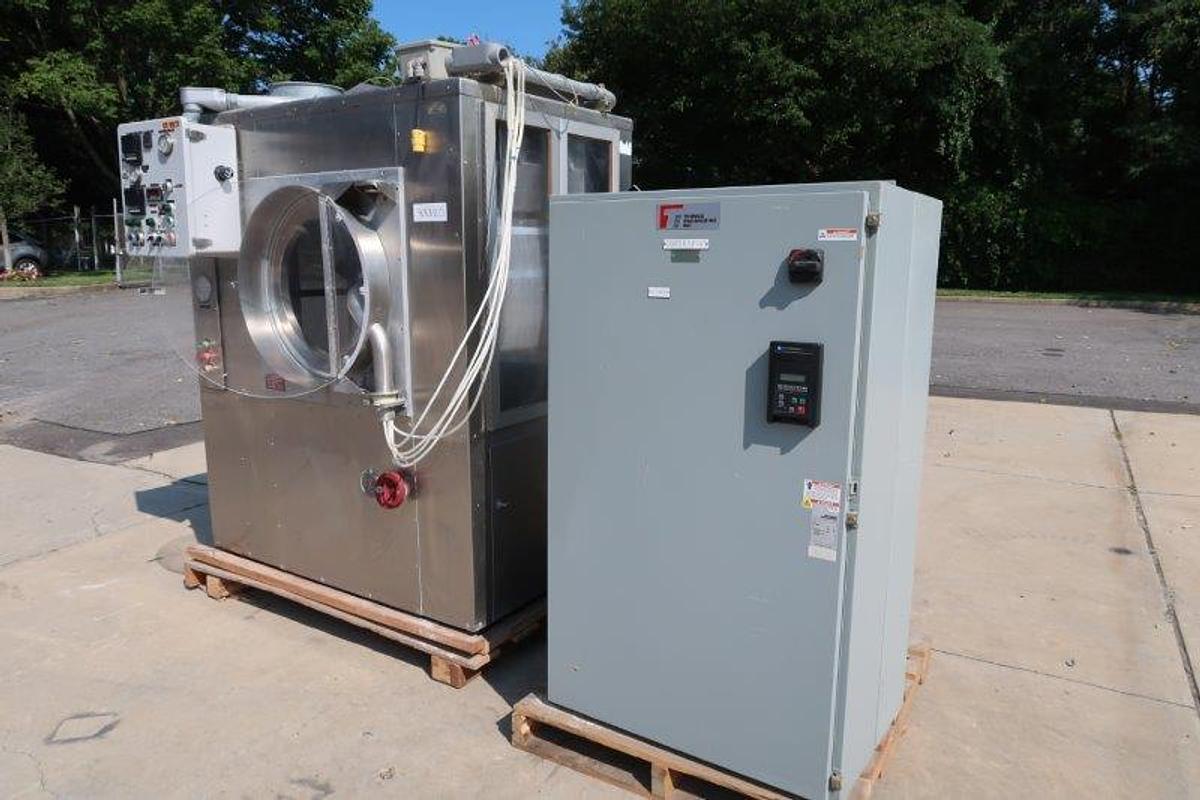
The Accela-Cota is a perforated coating pan system designed for the film coating of tablets, pellets, and granules. The perforated drum design allows process air to flow directly through the tablet bed, which significantly improves drying efficiency compared to conventional solid-pan coaters. This means shorter processing times, more consistent coating quality, and better control over moisture and temperature throughout the batch. The system is commonly paired with an air handling unit that conditions the inlet air and exhausts the process air, giving operators precise control over the coating environment.
In pharmaceutical manufacturing, the Accela-Cota became a widely adopted standard because it supports both aqueous and solvent-based coating processes and can be validated to meet FDA, GMP, and cGMP compliance requirements. Available in multiple pan diameters (common sizes include 24-inch and 48-inch models), the equipment scales from laboratory and pilot-scale development work up to full commercial production. The durability and consistency of these machines have made them a long-term fixture in manufacturing facilities, and used Accela-Cota units in good working condition are actively sought by pharmaceutical companies, nutraceutical producers, and contract manufacturers looking to add or expand coating capacity without the lead time and cost of purchasing new equipment.
Who typically buys used Thomas Engineering equipment?
The primary buyers of used Thomas Engineering equipment are pharmaceutical manufacturers, nutraceutical companies, contract manufacturing organizations (CMOs), and research institutions that need tablet coating capability. These buyers often have validated processes already built around Thomas Engineering equipment, which makes acquiring a compatible used machine a practical way to expand capacity or replace aging equipment without retraining staff or revalidating a completely different platform. Food processing companies that coat confectionery products, seeds, or functional ingredients are also common buyers, since the Accela-Cota's controlled environment suits those applications as well.
Smaller operations and startups in the pharmaceutical or supplement space frequently turn to the used equipment market because a used Thomas Engineering coating system can represent significant cost savings compared to purchasing equivalent new equipment. Research and development labs at universities and pharmaceutical companies also purchase used units for pilot-scale work, where a 24-inch pan is often the right size for small batch development. Regardless of the buyer type, most are looking for machines that are mechanically sound, have documentation available if possible, and can be inspected before purchase, since compliance and validation history can affect how quickly a machine can be put back into production.
What should buyers consider when evaluating used Thomas Engineering equipment?
Condition assessment is the most critical step. Buyers should look closely at the perforated drum for wear, dents, or corrosion, since the drum is central to the coating process and replacement can be costly. The drive system, seals, spray nozzle assemblies, and air handling connections should all be examined for signs of wear or prior repairs. If the machine was used in pharmaceutical production, it may have been cleaned and maintained according to GMP protocols, which is generally a positive indicator of overall care. Asking the seller for any available maintenance records, calibration logs, or prior validation documentation can provide useful context, even if that documentation does not transfer formal compliance status to a new owner.
Buyers should also consult directly with Thomas Engineering or an authorized service provider to understand what level of parts and technical support is available for the specific model and age of the machine they are considering. Older or discontinued models may have limited parts availability, which can affect long-term serviceability. A thorough inspection, either in person or via a detailed video walkthrough arranged through the seller, is strongly recommended before committing to a purchase. Used equipment is typically sold as-is, so the buyer bears responsibility for verifying the machine's condition and suitability for their intended application prior to completing the transaction.
Are replacement parts available for older Thomas Engineering coating systems?
Parts availability for Thomas Engineering equipment varies depending on the model and its age. For well-established models like the Accela-Cota, many components including spray nozzles, seals, gaskets, and drive components have been in service long enough that third-party parts suppliers and specialty pharmaceutical equipment service companies carry compatible parts. Some components are also shared across multiple generations of the machine, which can make sourcing easier. That said, buyers should not assume parts will be readily available without doing some homework first.
The most reliable way to gauge parts availability is to contact Thomas Engineering directly with the model number and serial number of the machine in question. The manufacturer can confirm whether they still support that model with spare parts and technical service, and can give an honest assessment of what might be difficult to source. This step is particularly important for machines that are several decades old or that were produced in limited quantities. Buyers who skip this step sometimes find themselves with a machine they cannot cost-effectively maintain, so verifying parts availability before purchase is a practical part of due diligence on any used pharmaceutical equipment acquisition.
What does GMP compliance mean in the context of used tablet coating equipment?
Good Manufacturing Practice (GMP) is a regulatory framework enforced by agencies like the FDA that governs how pharmaceutical and certain food products are manufactured, tested, and controlled. For tablet coating equipment, GMP compliance means the machine is designed and operated in a way that supports consistent product quality, prevents contamination, and allows for cleaning validation and process documentation. Key design features that support GMP compliance include smooth, crevice-free internal surfaces, accessible components for cleaning, and the ability to document and control process parameters like spray rate, pan speed, inlet air temperature, and exhaust conditions.
When a used coating system is sold, it does not automatically carry GMP compliance status to a new facility. Each regulated manufacturer must qualify and validate equipment within their own quality system before using it in production. This means a buyer purchasing a used Thomas Engineering coating pan will typically need to go through installation qualification (IQ), operational qualification (OQ), and potentially performance qualification (PQ) at their site. The fact that a machine was previously used in a GMP environment is a positive indicator of its design suitability, but it does not replace the buyer's own validation obligations. Buyers should factor the time and cost of requalification into their total acquisition planning.
How does the inspection process work when buying used Thomas Engineering equipment?
Most reputable used equipment dealers offer buyers the option to inspect machinery before finalizing a purchase. Inspections can take place in person at the dealer's facility or, if the equipment is still located at the facility where it was last used, arrangements can sometimes be made for the buyer to visit that location. In-person inspections give buyers the most complete picture of a machine's condition, allowing them to examine the drum, mechanical components, control systems, and overall build quality directly. Buyers are encouraged to bring a qualified technician or engineer familiar with tablet coating equipment to assist with the evaluation.
For buyers who cannot travel, video inspections have become a widely accepted alternative. A dealer can conduct a live video walkthrough of the machine, demonstrating mechanical movement, showing the interior and exterior condition, and answering questions in real time. Some dealers also provide pre-recorded video documentation. One important limitation to keep in mind is that most used equipment dealers are not set up to run actual production processes during an inspection, since that would require production permits and a full operating environment that dealers typically do not have. The inspection is therefore focused on mechanical condition and visual assessment rather than a full production trial. Buyers should ask specific questions about the machine's last known operating status and request as much documentation as the seller has available.
What is the typical price range for used Thomas Engineering coating equipment?
Pricing for used Thomas Engineering tablet coating systems varies considerably based on the pan size, model generation, overall condition, and what accessories are included with the sale. A smaller 24-inch Accela-Cota system in working condition might be priced anywhere from the low tens of thousands of dollars up to significantly more if it includes a matching air handling unit, spray systems, and documentation. Larger 48-inch systems, which are suited to higher-volume commercial production, generally command higher prices reflecting their greater capacity and the higher cost of equivalent new equipment.
Beyond the machine price itself, buyers should account for the full landed cost of the equipment. This includes freight and shipping charges, which can be substantial for heavy industrial equipment, as well as rigging fees for loading and unloading, any crating or specialized packaging required to protect the machine in transit, and the cost of installation and requalification at the buyer's facility. Getting a clear picture of all these costs before committing to a purchase helps avoid surprises. Buyers should request detailed shipping and rigging quotes from the seller as part of their evaluation process, since these costs can meaningfully affect the total investment.
What are the standard payment terms when purchasing used industrial equipment?
Used equipment dealers generally require full payment before a machine is released for shipping. This is standard practice across the industry and reflects the fact that once equipment leaves a dealer's possession, verifying its condition and managing disputes becomes significantly more complicated. Payment is typically made by wire transfer, though some dealers accept other forms of payment depending on the transaction size and the buyer's relationship with the seller. Buyers who have an established history with a particular dealer may occasionally be offered different terms, but first-time buyers should expect to pay in full prior to shipment.
Buyers should also be aware that financing options for used industrial equipment are available through third-party equipment financing companies and leasing firms, even if the dealer itself does not offer in-house financing. Equipment financing for pharmaceutical and food processing machinery is a well-established market, and buyers with strong credit profiles can often structure purchases as loans or leases that spread the cost over time. Exploring financing options in parallel with the equipment search can help buyers move quickly when the right machine becomes available, since well-priced used Thomas Engineering equipment tends to sell without sitting on the market for extended periods.
How is used tablet coating equipment typically shipped, and what should buyers expect for freight costs?
Shipping heavy industrial equipment like tablet coating pans requires more planning than standard freight. Machines need to be properly prepared for transport, which typically involves draining any fluids, securing moving parts, and protecting delicate components like spray nozzles and control panels. Depending on the size and fragility of the equipment, the dealer may palletize the machine, build a custom crate around it, or ship it on a flatbed with specialized blocking and bracing. The level of packaging directly affects both the safety of the equipment in transit and the freight cost, so buyers should ask the seller exactly how the machine will be prepared before it ships.
For larger coating systems, rigging is often required at both ends of the shipment. Loading the machine onto a truck at the dealer's facility may require a forklift or crane, and unloading at the buyer's location will require similar equipment. If the buyer's facility is not set up for heavy rigging, they may need to hire a rigging company, which adds to the total landed cost. Freight rates for heavy machinery vary based on distance, weight, dimensions, and current carrier pricing, so buyers should request a freight quote specific to their location rather than estimating from general rates. Getting all of these costs itemized before finalizing the purchase gives a clear and accurate picture of what the equipment will actually cost to put in place.