Category
Manufacturer
Model
FAQ:
What is a Thermo-Steam boiler and what is it used for?
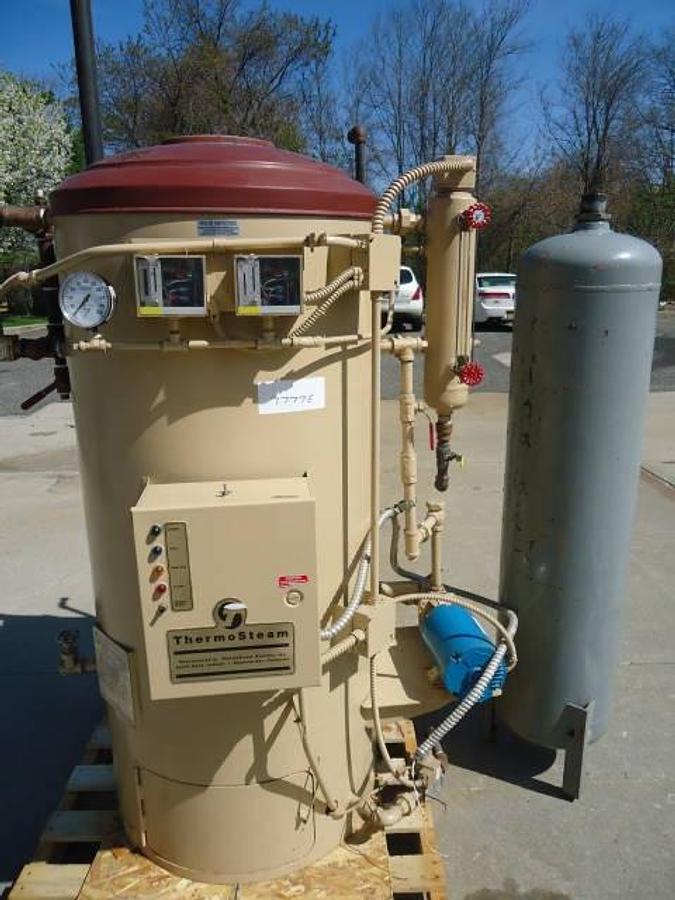
Thermo-Steam is a manufacturer of gas-fired steam boilers designed to generate steam for heating and process applications. Their boilers operate by burning natural gas to heat water in a pressure vessel until steam is produced, which is then distributed through piping to radiators, heat exchangers, or process equipment. The 9.5 hp gas-fired models are a good example of the compact, industrial-grade units the brand produces, capable of delivering consistent steam output for a range of applications.
Steam boilers from manufacturers like Thermo-Steam are used across a wide variety of industries. Common applications include commercial and industrial space heating, laundry and dry-cleaning operations, food processing, pharmaceutical manufacturing, and light industrial process heating. The specific horsepower rating of a boiler determines how much steam it can generate per hour, so matching the unit to the intended application is an important step before purchasing.
What does 9.5 hp mean on a gas-fired steam boiler, and how do I know if that capacity is right for my needs?
Boiler horsepower (hp) is a unit of steam output capacity, not engine power. One boiler horsepower equals the ability to produce approximately 34.5 pounds of steam per hour at 212 degrees Fahrenheit, which translates to roughly 33,475 BTUs per hour. A 9.5 hp gas-fired boiler can therefore produce around 327 pounds of steam per hour, making it suitable for small commercial heating systems, laundry equipment, food service operations, or light industrial process applications.
Determining whether 9.5 hp is sufficient for a specific application requires calculating the total steam demand of all connected equipment or the square footage of the space being heated. A licensed boiler technician or mechanical engineer can perform a load calculation to confirm the right size. Undersizing a boiler leads to inadequate performance, while oversizing results in short-cycling, wasted fuel, and accelerated wear. For buyers considering a used Thermo-Steam unit at this capacity, consulting with an HVAC or steam systems professional before purchase is a practical step.
What should buyers know about purchasing a used Thermo-Steam boiler versus buying one directly from a manufacturer?
Buying a used Thermo-Steam boiler through a reputable used equipment dealer is a common approach for businesses looking to reduce capital expenditure on steam generation equipment. Used boilers are typically sold at a significant discount compared to purchasing through a manufacturer's distribution channel, and the savings can be substantial on commercial-grade units. The trade-off is that used equipment is generally sold as-is, meaning the buyer takes on the responsibility of verifying the machine's condition before committing to a purchase.
This makes the selection of a trustworthy dealer critical. Buyers should look for dealers with a long track record of selling industrial and commercial boiler equipment, and who specialize in this category rather than selling general surplus machinery. A reputable dealer will provide detailed photographs, maintenance records if available, and the opportunity to inspect the unit either in person or via video. Because used boilers do not carry manufacturer warranties, the buyer's due diligence during the inspection phase is the primary protection against purchasing equipment with hidden mechanical issues.
How should a used Thermo-Steam boiler be inspected before purchase?
Inspecting a used steam boiler before purchase is one of the most important steps in the buying process. Buyers should request a thorough visual inspection of the pressure vessel, burner assembly, controls, safety valves, and any visible piping or fittings. Signs of corrosion, scale buildup, weld repairs, or damaged refractory material inside the firebox are all red flags that warrant further investigation. A professional boiler inspector or licensed boiler technician can evaluate these components far more accurately than a general equipment buyer.
Most used equipment dealers will accommodate in-person inspections at their facility, or can provide detailed video walkthroughs and still photographs if travel is not practical. In some cases, the boiler may still be installed and operating at the facility where it was decommissioned, which allows for a more complete assessment of its running condition. Keep in mind that dealers typically do not have the permitting or infrastructure to run production tests, so operational testing may be limited. Buyers should also contact the boiler manufacturer directly to ask about parts availability and technical support for the specific model and age of the unit being considered, since older models may have limited parts availability.
What fuel types do gas-fired steam boilers like Thermo-Steam units typically support?
Gas-fired steam boilers are designed to run on gaseous fuels, with natural gas being the most common. Many commercial gas-fired boiler models can also be configured or converted to run on propane (liquefied petroleum gas), which is useful in locations without access to a natural gas utility line. The specific fuel compatibility of any given unit depends on the burner assembly installed and the gas train components, so buyers should confirm the fuel type the unit was configured for before assuming it can run on an alternative gas without modification.
For used boilers, it is especially important to verify the fuel configuration because the unit may have been modified from its factory setup during its service life. A licensed gas technician or burner service specialist can assess whether the burner is set up for the correct fuel type and input pressure at the buyer's location. Switching a burner from natural gas to propane, or vice versa, typically requires changing orifices and adjusting gas pressure settings, and should always be done by a qualified technician to ensure safe and efficient operation.
What are the key compliance and safety considerations for installing a used commercial steam boiler?
Commercial steam boilers in the United States are subject to the ASME Boiler and Pressure Vessel Code, which sets the design and construction standards for pressure vessels. Beyond the equipment itself, installation must comply with local building codes, mechanical codes, and in many jurisdictions, the boiler must be registered and inspected by a state or local boiler inspector before it can be placed into service. This is true regardless of whether the boiler is purchased used or through a manufacturer, and buyers should research the specific requirements in their jurisdiction before finalizing a purchase.
EPA emission standards also apply to commercial gas-fired boilers, particularly for units above certain input thresholds. Older boilers may not meet current emission standards without burner upgrades, which is an additional cost to factor into the total ownership calculation. Hiring a licensed boiler installer or mechanical contractor familiar with local code requirements is the most reliable way to ensure the installation passes inspection. Some jurisdictions also require that only licensed boiler operators run and maintain steam boilers above a certain pressure or capacity, so buyers should confirm operator licensing requirements in their area before commissioning the equipment.
What is the typical total cost of ownership for a used gas-fired steam boiler?
The purchase price of a used steam boiler is only one part of the total cost of ownership. Buyers should budget for shipping and rigging costs, which can be substantial for heavy commercial boilers and vary based on the distance, the need for specialized lifting equipment, and the level of crating or packaging required to protect the unit in transit. Installation costs include labor for mechanical piping, gas line connections, electrical controls, venting or flue connections, and any required permits and inspections. Depending on the complexity of the installation and local labor rates, these costs can rival or exceed the purchase price of the boiler itself.
Ongoing operating costs are dominated by fuel consumption, which is directly tied to the boiler's thermal efficiency and the load it carries. Older boilers generally have lower thermal efficiency ratings than more recently manufactured units, meaning they consume more fuel to produce the same amount of steam. Annual maintenance, including burner tune-ups, water treatment, safety valve testing, and internal inspections, adds to the long-term cost picture. Buyers who evaluate all of these factors together, rather than focusing solely on the upfront purchase price, are in a much better position to assess whether a specific used boiler represents good value for their application.
Does a used steam boiler purchase come with a warranty?
Warranties on steam boilers are typically offered by the original equipment manufacturer and apply to units sold through authorized distribution channels. Used boilers sold through equipment dealers are generally offered on an as-is basis, without any warranty coverage from either the dealer or the manufacturer. This is standard practice in the used industrial equipment market and reflects the fact that the dealer has no way to certify the full service history or internal condition of a pressure vessel that has been in operation.
Because there is no warranty safety net, the buyer's inspection process becomes the primary line of defense against purchasing a unit with significant hidden issues. Buyers are well-served by selecting dealers who specialize in boiler and steam equipment, have a verifiable track record in the industry, and are willing to provide thorough documentation and inspection access. Consulting the manufacturer about parts availability and service support for the specific model is also advisable, since the ability to source replacement parts and get technical guidance can significantly affect the long-term viability of the equipment.
What are the shipping and logistics considerations for buying a used Thermo-Steam boiler?
Steam boilers are heavy, pressure-rated vessels that require careful handling during transport. Proper packaging is essential to prevent damage in transit, and the level of protection required, whether pallet, skid, or full wooden crate, will affect the shipping cost. Buyers should ask the dealer specifically how the unit will be packaged and what that packaging cost includes. For larger or heavier boilers, specialized rigging equipment may be needed to load the unit at the dealer's facility and unload it at the destination, which adds to the total freight cost.
Buyers should request a complete landed cost breakdown from the dealer before finalizing a purchase. This should include the equipment price, packaging and crating fees, freight charges to the delivery address, and any rigging or lift gate fees at either end of the shipment. For installations in tight spaces or upper-floor mechanical rooms, additional rigging or disassembly may be required, and it is worth discussing these logistics with both the dealer and the installing contractor before the unit ships. Understanding the full delivery cost upfront prevents surprises and allows for accurate budgeting.
Does a used steam boiler require installation by a licensed professional?
In virtually all commercial and industrial applications, steam boiler installation must be performed by licensed professionals. Most jurisdictions require that gas-fired boilers be connected to gas supply lines by a licensed plumber or gas fitter, and that the overall installation be completed by a licensed mechanical contractor. The completed installation is then typically subject to inspection by a local building or boiler inspector before the unit can be legally operated. Attempting to install a steam boiler without the appropriate licensed contractors can result in failed inspections, insurance coverage issues, and serious safety risks.
For used boilers specifically, installation complexity can be higher than for a freshly manufactured unit because the piping connections, control wiring, and venting may need to be adapted to an existing building infrastructure rather than designed from scratch. A mechanical contractor with experience in steam systems is the right person to assess these requirements. Before purchasing a used boiler, it is worth getting a preliminary installation estimate from a qualified contractor who can review the unit's specifications and the site conditions, so the full cost of getting the boiler into service is understood before the purchase is made.