Category
Manufacturer
Model
Sweco
Sweco is a leader in separation and grinding technology, catering to industries such as food, chemical, and mineral processing. They are particularly recognized for their vibratory screening equipment and grinding mills, which are designed for efficiency and precision. Sweco’s products are engineered to optimize material processing and recovery.
FAQ:
What sizes of Sweco vibratory screeners are commonly available on the used equipment market?
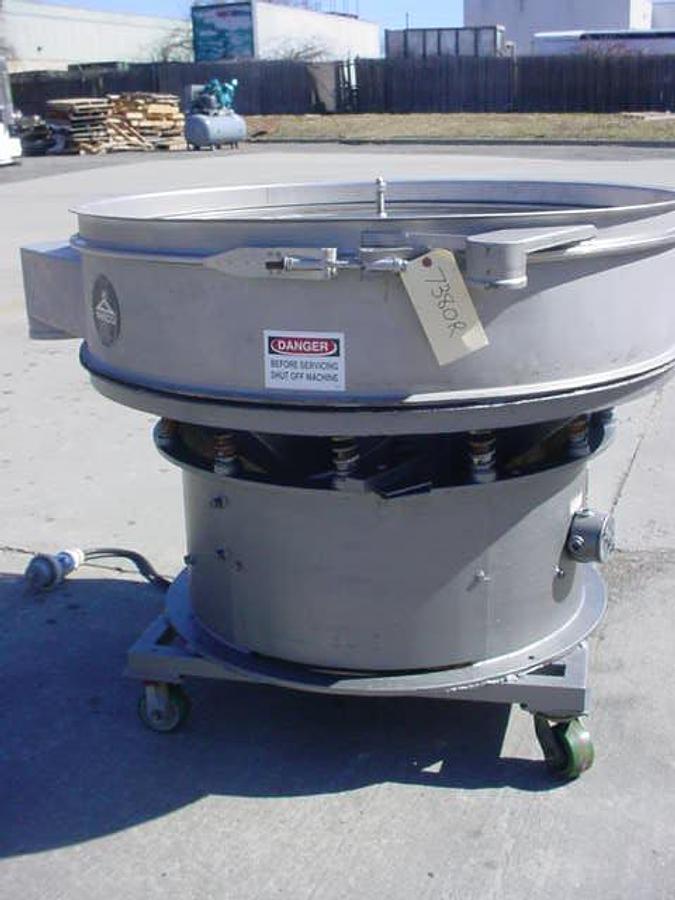
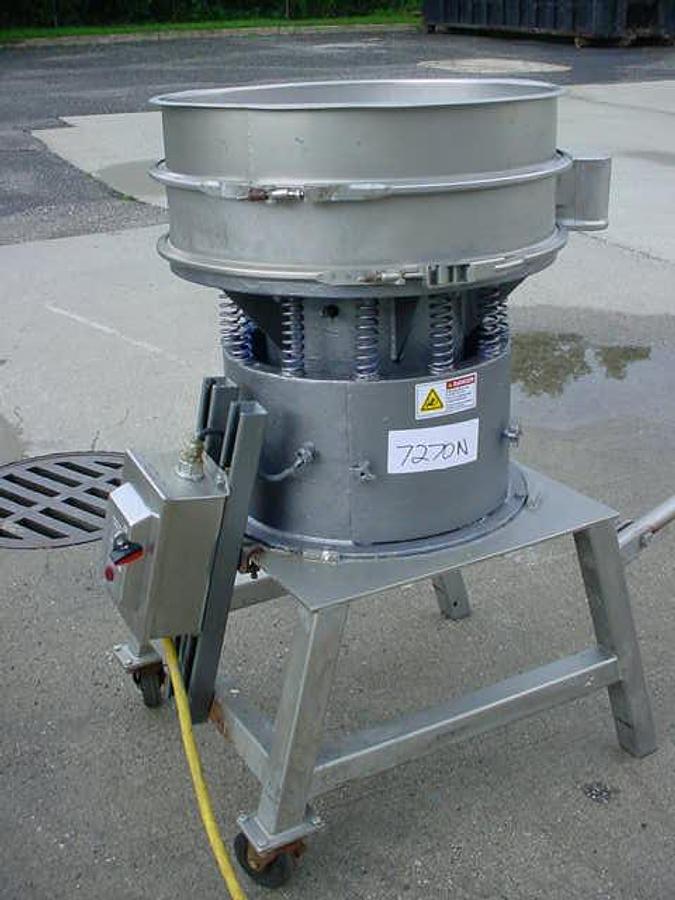
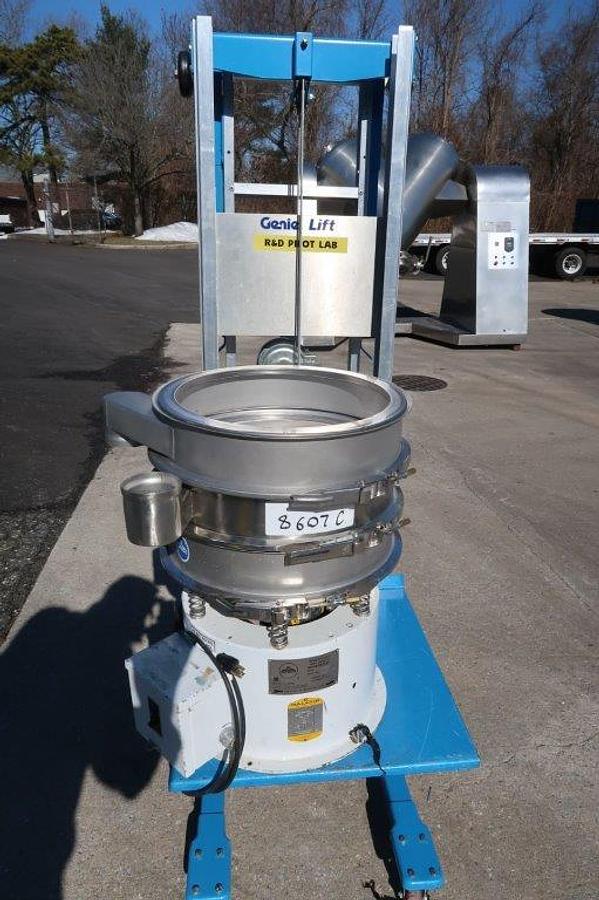
Sweco round vibratory separators are produced in a range of diameters, and the used market reflects that variety closely. Machines with 18-inch, 24-inch, 30-inch, 40-inch, and 48-inch diameters turn up regularly, with 48-inch units being among the most sought-after because they offer higher throughput while still fitting within standard plant footprints. Smaller 18-inch and 24-inch units are popular for pilot-scale operations, lab environments, or lower-volume production lines where space and budget are constraints.
When shopping for a used Sweco screener, diameter is only one part of the sizing equation. The number of decks, the screen mesh configuration, and the motor horsepower all affect what a particular machine can realistically handle. A 48-inch two-deck unit, for example, will behave very differently from a 48-inch single-deck scalper. Buyers should review the full specifications of each listing carefully and, when possible, request additional photos or a video inspection to confirm the machine's condition before committing to a purchase.
What is the difference between a Sweco round separator and a rectangular screener?
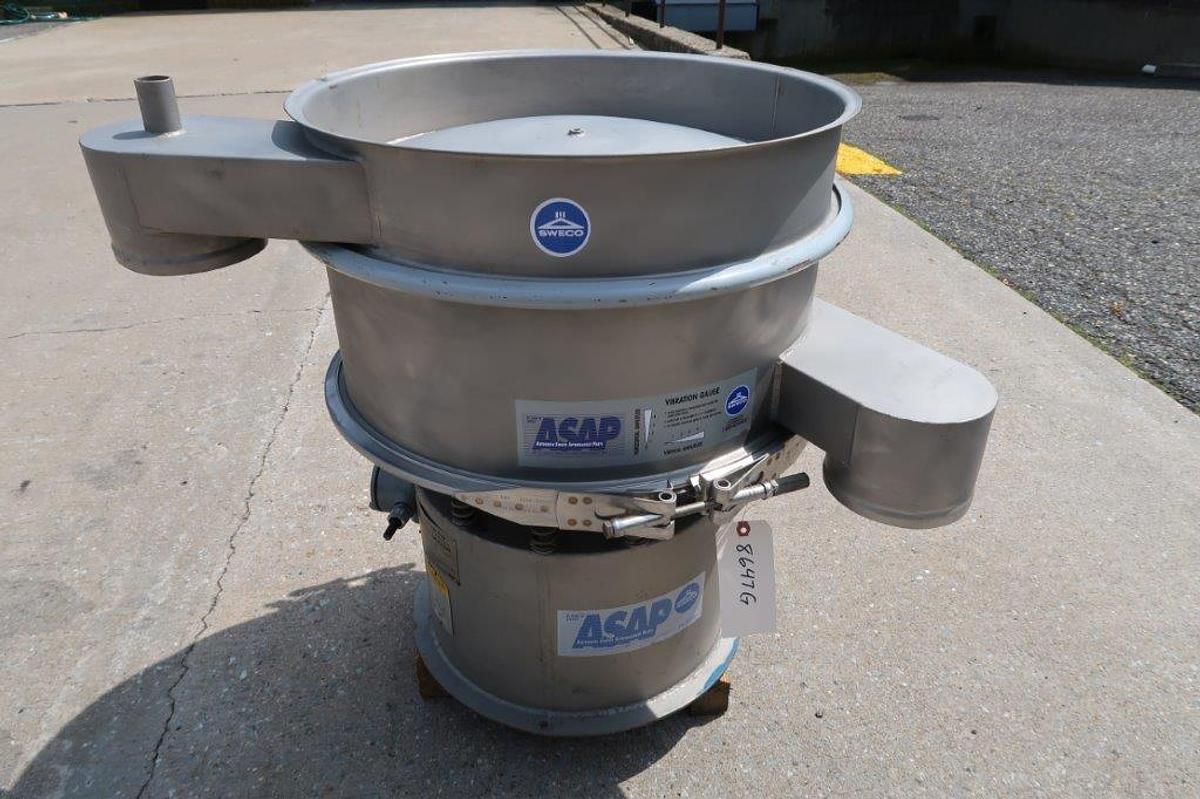
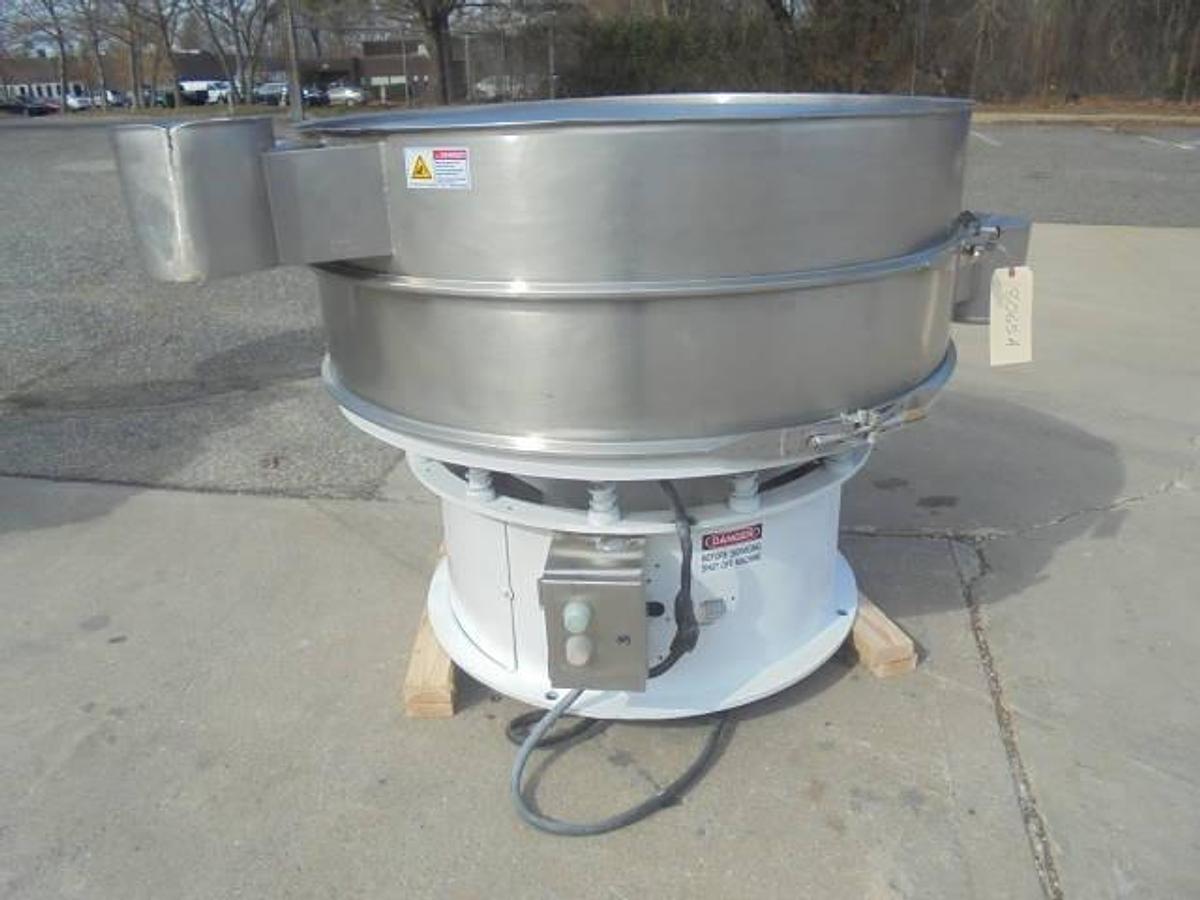
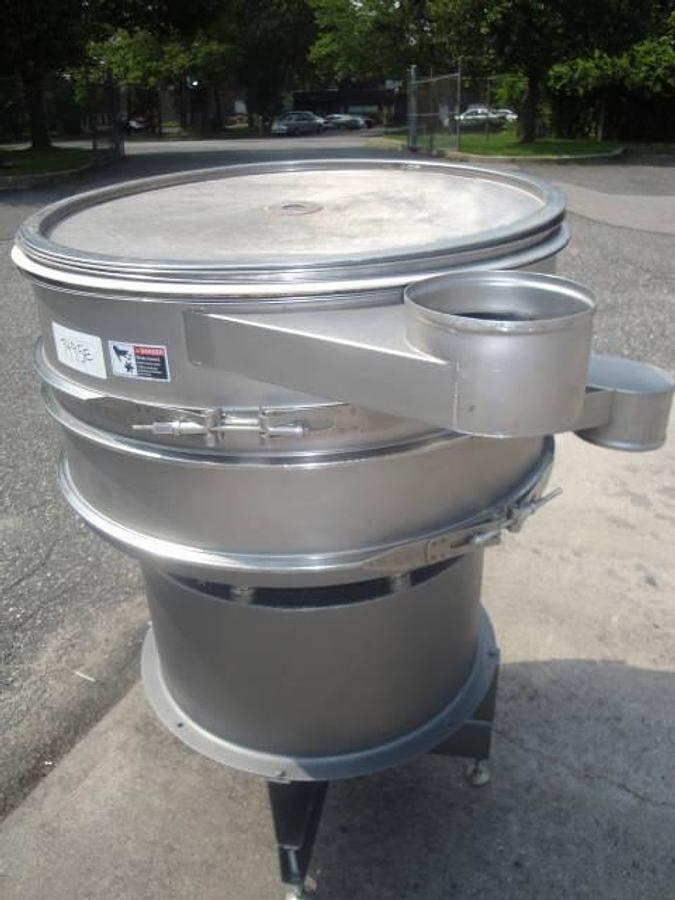
Sweco round vibratory separators use a circular screening deck and generate a three-dimensional elliptical motion that moves material in a spiral path from the center of the screen outward toward the discharge spout. This motion is well-suited for wet or dry classification, liquid-solid separation, and applications where gentle handling of fragile materials matters. The round design also makes it easier to achieve a tight particle size cut because material travels a longer, more controlled path across the screen surface before discharging.
Rectangular screeners, by contrast, use a linear or elliptical vibration pattern that conveys material in a straight line from feed end to discharge end. They tend to offer higher capacity per unit of floor space and are often preferred for scalping, dewatering, or high-tonnage applications in mining and aggregates. For food, pharmaceutical, chemical, and fine-particle applications, the Sweco round separator is generally the more common choice because of its precision and versatility. Both designs are available on the used equipment market, and the right choice depends on the specific material, desired throughput, and the separation cut points required.
How many screening decks can a Sweco vibratory screener accommodate?
Most Sweco round vibratory separators are designed to accept up to three screening decks stacked vertically within the same machine frame. Each deck holds a separate screen mesh, which allows the machine to classify material into up to four distinct fractions in a single pass. For example, a three-deck unit can simultaneously separate oversize, two intermediate fractions, and fines, all without the need for multiple machines or additional conveying equipment between stages. This stacking capability is one of the reasons Sweco separators are so widely used in industries that require tight particle size control.
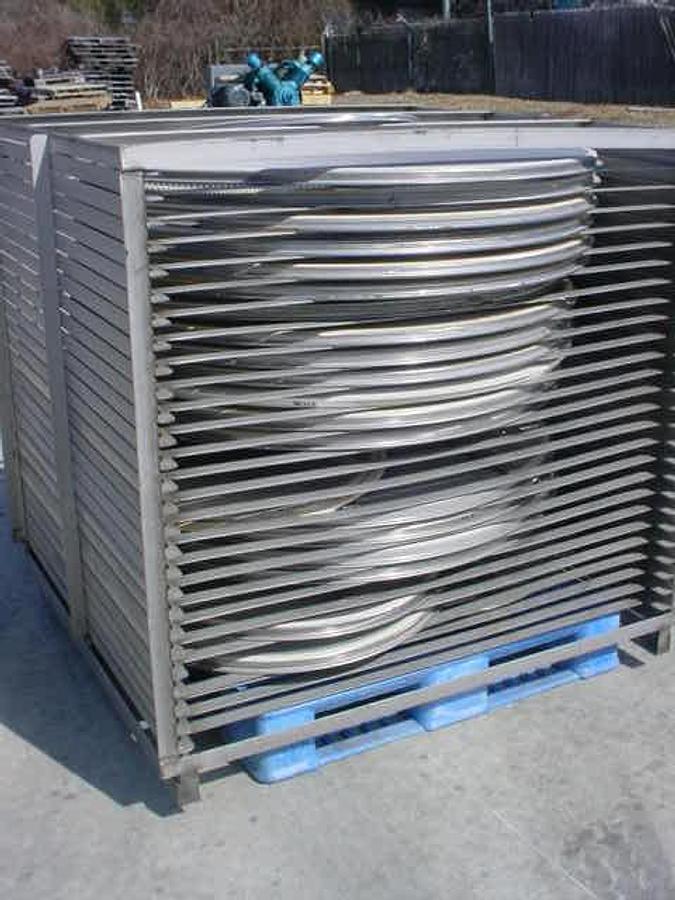
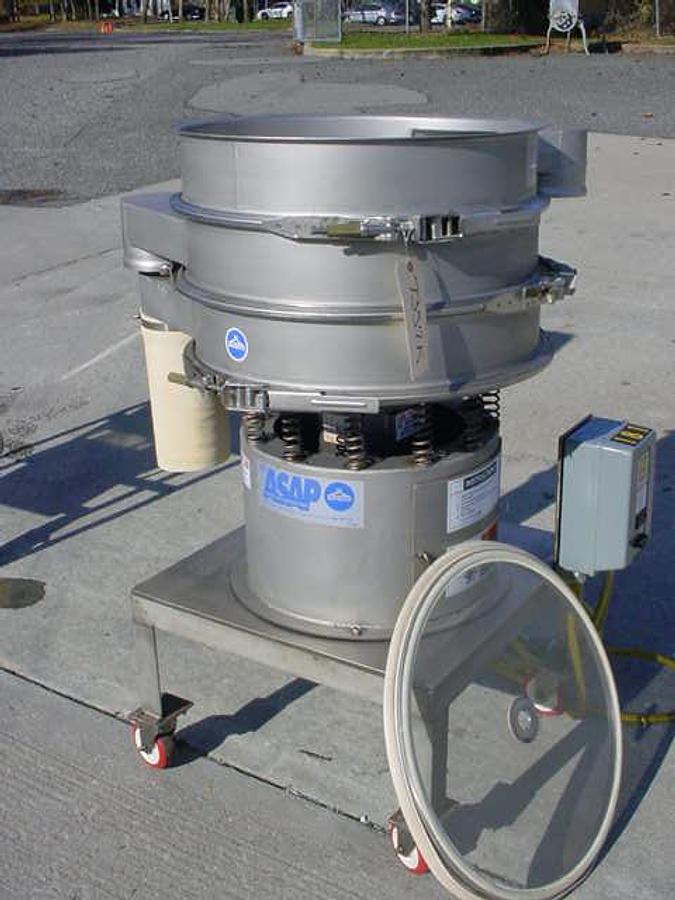
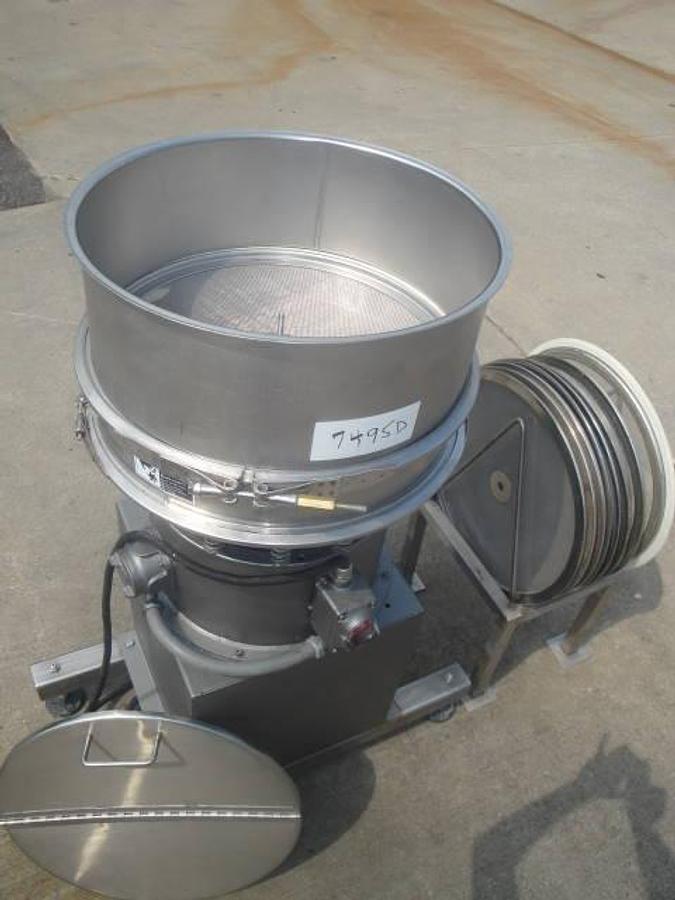
Used Sweco screeners are available in single-deck, two-deck, and three-deck configurations, and the listings on the market reflect that range. A two-deck unit is a common choice for operations that need to separate a product from fines while also removing oversize contamination. Buyers should confirm the number of decks present in a specific used machine and check whether the screen frames, gaskets, and clamp rings are included and in usable condition, since sourcing missing deck components separately adds to the overall cost of putting the machine back into service.
What industries use Sweco vibratory screeners?
Sweco vibratory separators are used across a remarkably broad range of industries, which is a large part of why they hold their value well on the used equipment market. Food processing is one of the most common applications, covering everything from sifting flour and sugar to classifying spices, grains, and powdered ingredients. Pharmaceutical and nutraceutical manufacturers use them for precise particle size control and contamination removal. Chemical producers rely on them for separating pigments, resins, and fine powders. Mineral processing, plastics, and coatings are also frequent applications.
Beyond dry powder and granule separation, Sweco screeners handle liquid-solid separation effectively, making them useful in wastewater treatment, slurry processing, and paint or ink filtration. The stainless steel construction found on many models makes them compliant with sanitary requirements in food and pharmaceutical environments. Because the same basic machine platform works across so many different materials and industries, a used Sweco screener originally configured for one application can often be reconfigured with different screen meshes for an entirely different process, which adds to its appeal as a second-hand purchase.
Are used Sweco vibratory screeners a reliable purchase option?
Sweco has been manufacturing vibratory separation equipment since the 1940s, and the brand is widely regarded as an industry standard. The machines are built with heavy-gauge frames, robust motor assemblies, and a design that has changed relatively little over decades, which means older units are generally straightforward to service and maintain. Many used Sweco screeners available on the market have years of productive life remaining, particularly when they have been well-maintained or decommissioned simply because a facility upgraded or changed its process rather than because the equipment failed.
That said, used equipment is sold as-is, and the condition of any specific machine depends entirely on how it was operated and maintained by the previous owner. Buyers should take full advantage of inspection options offered by the selling dealer, whether that means an in-person visit, a live video walkthrough, or reviewing detailed photo documentation. Key things to assess include the condition of the motor and base springs, the integrity of the screen frames and gaskets, any signs of corrosion or cracking in the body, and whether the machine still has its clamp rings and discharge spouts. Selecting a dealer who specializes in process and separation equipment and has a verifiable track record will significantly reduce the risk associated with a used machine purchase.
What materials and particle sizes can Sweco vibratory screeners process?
Sweco vibratory separators handle an exceptionally wide range of materials, from coarse granules down to very fine powders, as well as slurries and liquid-solid mixtures. On the dry side, common materials include flour, sugar, salt, spices, chemical powders, plastic pellets, resins, pigments, metal powders, and mineral fines. On the wet side, the machines are used for removing solids from process liquids, dewatering slurries, and filtering paints, inks, and coatings. The circular vibratory motion is gentle enough for fragile materials like breakfast cereals or pharmaceutical granules, yet effective enough for abrasive mineral products.
In terms of particle size range, Sweco separators can work with screen meshes from very coarse openings used for scalping down to very fine meshes capable of separating particles in the range of 400 mesh or finer, depending on the material characteristics and the screen tension. The actual separation efficiency at fine mesh sizes depends on factors like feed moisture, particle shape, and bulk density. When evaluating a used machine for a specific application, buyers should confirm that the existing screen frames are compatible with the mesh sizes they need, or factor in the cost of sourcing appropriate screen media before the machine is put back into production.
Are replacement parts and screen media readily available for used Sweco screeners?
Screen media and replacement parts for Sweco round separators are widely available from both the manufacturer and a large network of third-party suppliers. Because the Sweco platform has been in production for decades with relatively consistent dimensional standards, screens, gaskets, clamp rings, and motor components for many models are not difficult to source. Third-party screen manufacturers produce compatible media in a broad range of mesh sizes and materials, including stainless steel wire cloth, polyurethane, and specialty woven fabrics, often at a lower cost than direct manufacturer pricing.
For older or less common models, it is worth consulting with the manufacturer before purchasing a used machine to understand what level of parts support is available for that specific model and age. Some very old units may have components that are no longer stocked, which could complicate maintenance down the road. Buyers should also inspect the used machine carefully to determine what parts, if any, are missing or worn, and get a realistic estimate of what it will cost to bring the machine to full working condition. A used Sweco screener that is missing clamp rings, discharge spouts, or screen frames can still represent good value, but those costs need to be factored into the purchase decision.
What power and voltage requirements do Sweco vibratory screeners typically have?
Sweco vibratory separators are motor-driven machines, and the power requirements vary based on the size of the unit and the application it was built for. Smaller units in the 18-inch to 24-inch diameter range typically run on fractional horsepower motors, while larger 48-inch machines commonly use motors in the range of 1.5 to 2.5 horsepower. Voltage configurations on used machines found in North America are most commonly 230/460 volt, three-phase, though single-phase configurations exist for smaller units. International buyers should pay close attention to the motor nameplate data to confirm compatibility with their local electrical supply.
Before purchasing a used Sweco screener, it is a good practice to confirm the motor specifications with the selling dealer and verify whether the motor is included and in working condition. Some used machines are sold without motors, or with motors that have been removed for other use. If the motor needs to be replaced or rewound, that cost should be factored into the total investment. A dealer who specializes in separation equipment should be able to provide the motor nameplate information from the listing or upon request, allowing buyers to assess electrical compatibility before the machine ships.
What should buyers inspect before purchasing a used Sweco vibratory screener?
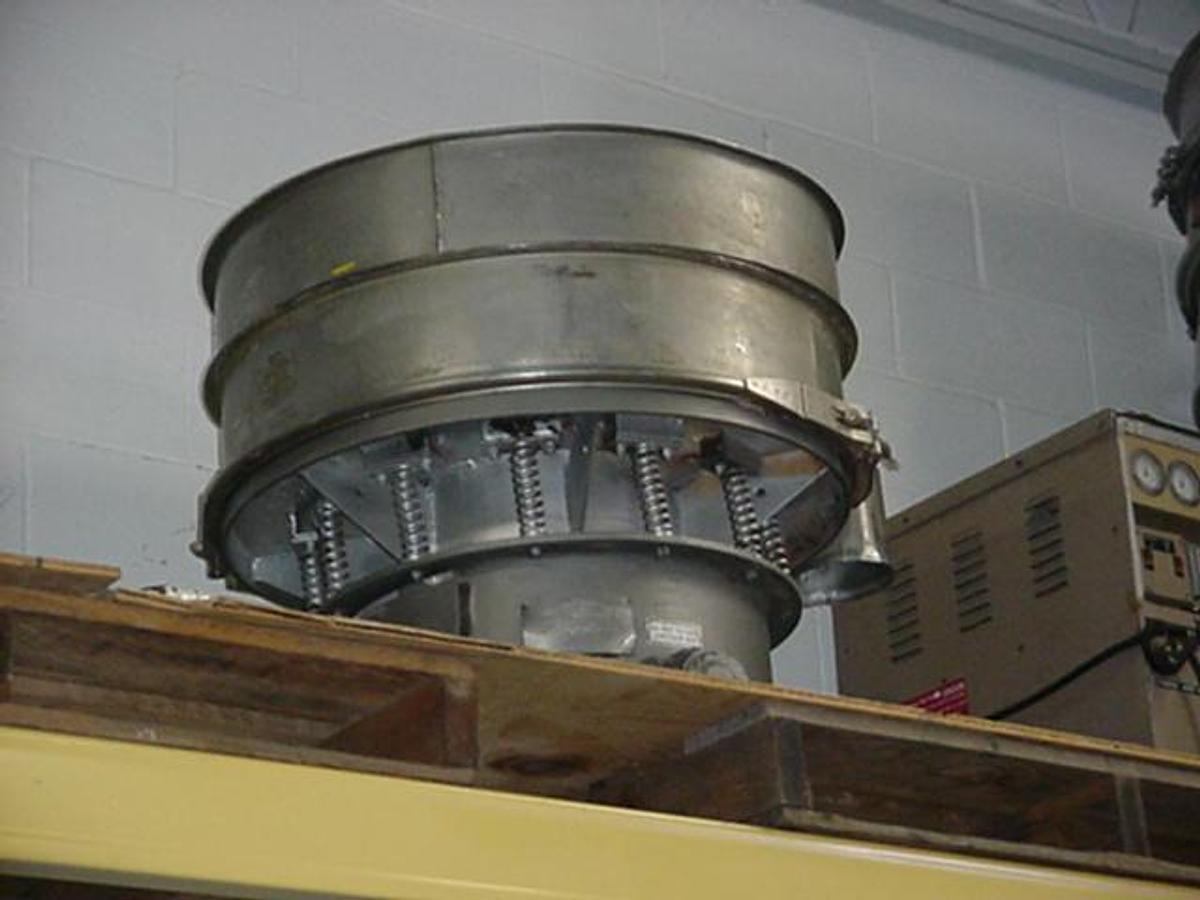
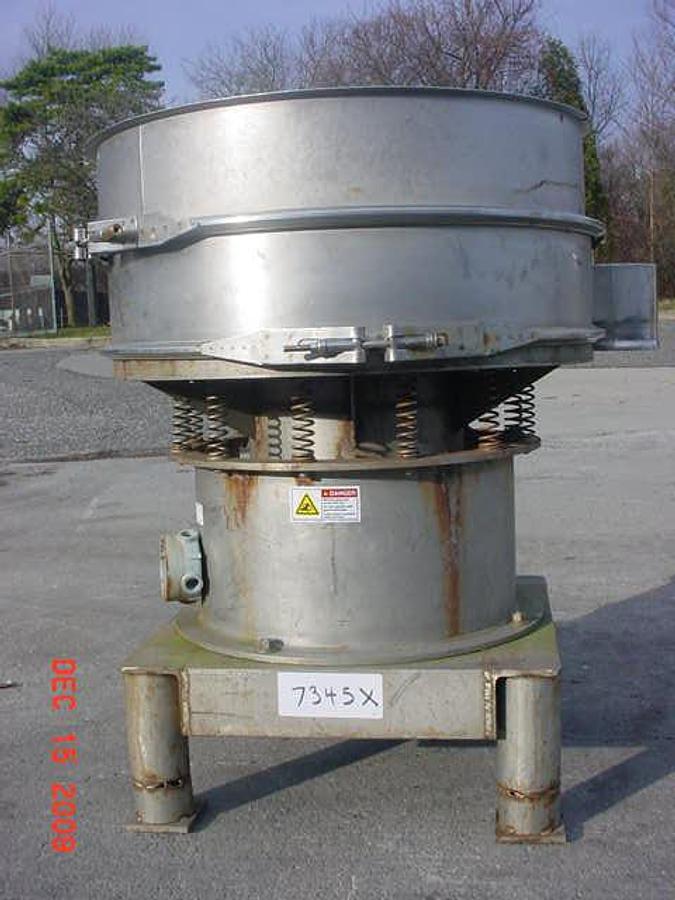
A thorough inspection of a used Sweco screener covers several key areas. The motor and its mounting should be examined for signs of overheating, corrosion, or physical damage. The base springs, which are critical to the machine's vibratory motion and isolation from the support structure, should be checked for fatigue, cracking, or uneven wear. The body of the machine, particularly on stainless steel units used in food or chemical applications, should be examined for cracks, pitting, or weld repairs that could indicate past stress or impact damage. The screen frames, clamp rings, gaskets, and discharge spouts should all be present and in serviceable condition.
Most reputable used equipment dealers will accommodate inspection requests, whether in person, via live video call, or through detailed photo and video documentation of the machine. Some machines may still be installed and in production at the facility where they are being sold, which can allow a buyer to observe the equipment running under actual process conditions. Keep in mind that dealers typically do not have the ability to run product through a machine in a test environment, as that requires production permitting and infrastructure that an equipment reseller does not maintain. The goal of any inspection is to get an accurate, honest picture of the machine's current mechanical condition so the buyer can make a well-informed purchasing decision.
What are the typical shipping and payment considerations when buying a used Sweco screener?
Shipping costs for used Sweco vibratory screeners depend on the size and weight of the machine, the origin and destination locations, and the level of packaging or crating required to protect the equipment in transit. Smaller 18-inch or 24-inch units can often be palletized and shipped via freight carrier at a relatively modest cost, while larger 48-inch machines with significant weight may require custom crating and heavy-duty rigging for both loading and unloading. Buyers should ask the dealer for a detailed breakdown of packaging, rigging, and freight costs before finalizing a purchase, since the landed cost of a machine can differ meaningfully from the listed price.
On the payment side, most used equipment dealers require full payment prior to shipment. Some dealers extend payment terms to established repeat customers, but buyers who are purchasing from a dealer for the first time should expect to pay in full before the machine is released. Wire transfer is the most common payment method for used industrial equipment transactions of this type. Buyers should also confirm with the dealer how the machine will be prepared for shipment, whether any disassembly is required, and what documentation will be provided, such as photos of the machine packaged and ready to load.