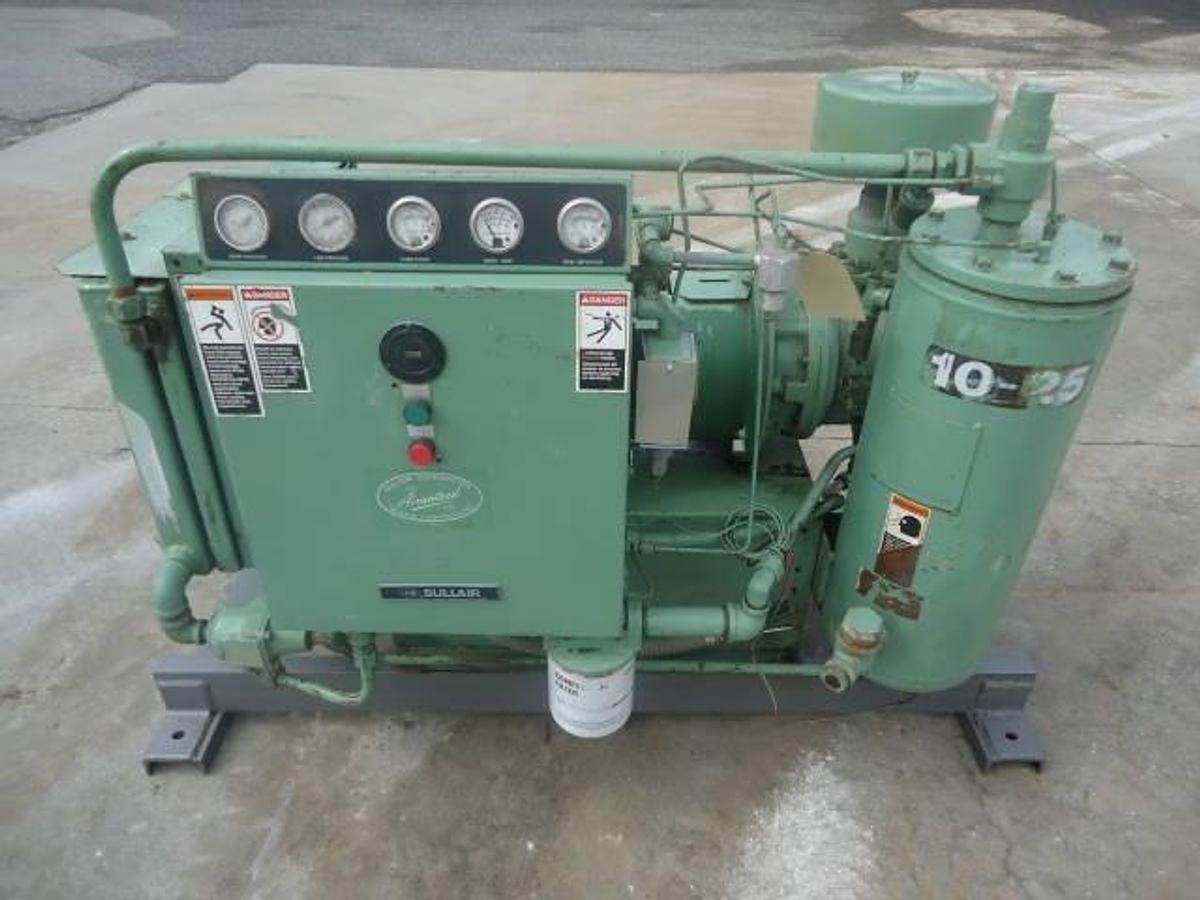
Category
Manufacturer
Model
FAQ:
What makes Sullair air compressors a reliable choice for industrial use?
Sullair has been manufacturing air compressors since 1965, and the brand built its reputation largely on rotary screw technology designed for continuous-duty industrial operation. The core of that reputation comes from fluid-injected rotary screw design, which manages heat buildup during operation far more effectively than dry-running alternatives. By circulating fluid through the compression chamber, the technology keeps operating temperatures lower, reduces wear on internal components, and extends the overall service life of the machine. Industries like manufacturing, automotive, oil and gas, construction, and food processing have relied on Sullair equipment for decades precisely because the machines are engineered to run for long shifts without the thermal stress that shortens compressor life.
When buying a used Sullair, that engineering heritage matters a great deal. A well-maintained Sullair rotary screw compressor can accumulate tens of thousands of operating hours before requiring major service, which is one reason these machines hold their value in the used equipment market. Buyers evaluating a used unit should request hour meter readings and any available service records to gauge how much life remains. The brand's longevity also means parts and technical documentation are generally accessible, which is a practical advantage compared to purchasing used equipment from manufacturers with shorter histories or discontinued product lines.
What horsepower and CFM ranges are available for Sullair air compressors?
Sullair produces stationary rotary screw compressors across a broad horsepower spectrum, generally ranging from around 5 HP on the smaller end up to 350 HP and beyond for larger industrial models. Portable and contractor-grade units extend the range further for job site applications. Each horsepower class corresponds to a different CFM (cubic feet per minute) output, which is the figure that actually determines whether a compressor can meet the air demand of a specific application. Smaller units in the 10 to 30 HP range typically deliver somewhere between 40 and 130 CFM, while larger industrial models in the 100 to 350 HP range can produce several hundred CFM at rated pressure.
For buyers shopping used Sullair equipment, matching CFM output to application demand is the most important specification to evaluate. A common mistake is focusing only on horsepower without confirming the actual free air delivery at the working pressure required. Sullair's model numbering system often encodes both horsepower and pressure rating, making it easier to cross-reference specifications. A used equipment dealer specializing in industrial air compressors can help interpret model numbers and pull the corresponding spec sheets so buyers can verify that a particular machine fits their production requirements before committing to a purchase.
What is the difference between a Sullair rotary screw compressor and a reciprocating air compressor?
Rotary screw compressors and reciprocating (piston) compressors compress air through fundamentally different mechanical processes. A reciprocating compressor uses pistons driven by a crankshaft to compress air in cylinders, similar in concept to an engine. These machines are generally built for intermittent duty cycles, meaning they are designed to run, stop, and cool down rather than operate continuously for hours at a stretch. Sullair's product line is built primarily around rotary screw technology, where two meshing helical rotors trap and compress air as it moves through the compression chamber. Because there is no reciprocating motion and no valves opening and closing under pressure, rotary screw compressors produce far less vibration and are rated for continuous 100% duty cycle operation.
For industrial facilities that need a steady, uninterrupted supply of compressed air, the rotary screw design offers clear practical advantages. Lower vibration means less wear on the machine and the mounting structure, and continuous-duty capability eliminates the production interruptions that come with mandatory cool-down periods. Sullair's fluid-injected rotary screw models add another layer of durability by using circulating fluid to manage heat, which is the primary enemy of compressor longevity. Used Sullair rotary screw compressors are frequently sought in the secondary market specifically because buyers want that continuous-duty performance at a lower acquisition cost than purchasing a comparable machine at retail price.
Can you buy a used Sullair air compressor, and is it a practical option?
Used Sullair air compressors are widely available through industrial equipment dealers and represent a practical option for facilities that need reliable compressed air capacity without the cost of retail-priced equipment. Sullair's build quality and the longevity of rotary screw technology mean that a properly maintained used machine can deliver years of additional service. The key variable is the condition of the specific unit being purchased, which is why the inspection process matters so much. Buyers should request the hour meter reading, any available maintenance logs, and information about recent fluid changes, filter replacements, and separator service. These records give a clearer picture of how the machine was operated and whether it received routine care.
When evaluating a used Sullair, it helps to work with a dealer who specializes in industrial air compressors rather than a general machinery reseller. Specialists are more likely to understand the service intervals specific to Sullair equipment, can identify signs of deferred maintenance, and can provide video or in-person inspections so buyers can assess the machine's condition before purchase. Used equipment is typically sold as-is, so the inspection process is the buyer's primary tool for managing risk. Consulting with a Sullair service provider about parts availability for the specific model under consideration is also a smart step, since older or less common models may have longer lead times for certain components.
What should I inspect when buying a used Sullair air compressor?
A thorough inspection of a used Sullair air compressor should cover both the mechanical condition of the machine and its service history. Start with the hour meter, which gives a baseline for how much the machine has been used. Rotary screw compressors from Sullair are built for longevity, but high hours combined with evidence of missed maintenance intervals is a red flag. Check the condition of the compressor fluid, which should be clean and at the proper level. Discolored, milky, or heavily contaminated fluid suggests moisture intrusion or extended intervals between fluid changes, both of which can indicate internal wear. Inspect the air-oil separator, inlet filter, and oil filter, as these consumables reflect how diligently the machine was serviced.
Beyond the fluids and filters, examine the drive belts or coupling for wear, check the motor for any signs of overheating or electrical issues, and look at the cooler for debris buildup or damage. Listen for unusual noises during operation if the machine can be run during inspection. Most reputable used equipment dealers will accommodate in-person inspections or provide detailed video walkthroughs of the machine. Some units may still be installed and operating at the facility where they are being decommissioned, which allows for an inspection under actual running conditions. Because used compressors are sold as-is, taking the time to conduct a careful inspection before purchase is the most effective way to assess the machine's current condition and remaining service life.
What is the typical lifespan of a Sullair air compressor?
Sullair rotary screw air compressors are frequently cited as among the longer-lasting machines in their class, with well-maintained units commonly reaching 50,000 to 100,000 operating hours before requiring major overhaul or replacement of core components. That range is not a guarantee for any individual machine, but it reflects the design intent behind Sullair's fluid-injected rotary screw technology. The fluid injection system keeps operating temperatures in check, which is the single biggest factor in extending the life of the rotor assembly and bearings. Machines that run at consistently high temperatures, whether from low fluid levels, clogged coolers, or inadequate ventilation in the compressor room, will wear out significantly faster regardless of brand.
In practical terms, the lifespan of a specific used Sullair depends heavily on how it was operated and maintained during its previous service life. A 10-year-old machine with 15,000 hours and a clean service history may have considerably more useful life remaining than a 5-year-old unit with 40,000 hours and a record of skipped maintenance. When evaluating a used compressor, hour meters and service records are the most reliable indicators of remaining life. Buyers who plan to put a used Sullair into continuous production service should also factor in the cost of a pre-purchase service, including fluid change, filter replacement, and a belt or coupling inspection, to reset the maintenance baseline and confirm the machine is ready for reliable operation.
Are parts and service support readily available for used Sullair compressors?
Sullair has maintained a presence in the industrial compressor market for over five decades, and that longevity generally translates to good parts availability for most models. The brand's rotary screw compressors share a number of common consumable components across model generations, including air-oil separators, inlet filters, oil filters, and compressor fluid, which are stocked by authorized Sullair distributors and many independent service providers. For older or less common models, lead times on certain parts can be longer, so buyers considering a used Sullair should check with a Sullair distributor or service center about parts availability for the specific model and serial number before completing a purchase.
Service support is another factor worth investigating before buying. Sullair maintains a network of authorized service centers, and independent compressor service companies also work on Sullair equipment given how widely the machines are used in industry. Buyers should contact local service providers to confirm familiarity with the specific model they are considering and to get a sense of typical service costs. For older machines, it is also worth asking Sullair directly about the level of technical support they provide for that model, since very old or discontinued product lines may have limited factory support. Understanding the service landscape before purchase helps buyers plan for ongoing maintenance costs and avoid situations where a needed repair becomes difficult due to parts or expertise availability.
What is a variable speed drive (VSD) Sullair compressor, and is it worth considering used?
A variable speed drive compressor adjusts the speed of the motor in real time to match the actual air demand of the facility, rather than running at a fixed speed regardless of how much compressed air is being consumed. Sullair offers VSD models in its rotary screw lineup, and the energy savings from this design can be substantial. In applications where air demand fluctuates throughout the day, a VSD compressor can reduce energy consumption by 35 to 50 percent compared to a fixed-speed unit running at full load. For facilities with variable production schedules or processes that cycle on and off, that efficiency difference translates directly into lower operating costs over the life of the machine.
Buying a used VSD Sullair compressor introduces some additional inspection considerations compared to a standard fixed-speed unit. The variable frequency drive (VFD) that controls motor speed is an electronic component, and its condition should be evaluated carefully. Ask about the service history of the drive, whether any fault codes have been logged, and whether the cooling fans and filters on the drive enclosure have been maintained. VFDs are repairable and replaceable, but they add a layer of complexity that buyers should account for. A used VSD compressor in good condition can still deliver meaningful energy savings and may be available at a significant discount compared to a comparable fixed-speed machine, making it worth considering for facilities where energy costs are a primary operating concern.
How does shipping and delivery work when purchasing a used Sullair air compressor?
Shipping a used Sullair air compressor involves more logistics than typical freight shipments because of the size and weight of industrial compressor packages. Smaller units in the 10 to 25 HP range can often be moved on standard pallets with appropriate blocking and strapping, but larger machines typically require custom crating or skidding to prevent damage in transit. The level of packaging directly affects shipping costs, and buyers should ask the dealer for a detailed breakdown of palletization or crating charges before agreeing to a purchase. Getting clarity on those costs upfront avoids surprises when the final invoice arrives.
For larger Sullair compressors, loading and unloading may require forklift or crane rigging, which adds to the total landed cost. Buyers should confirm whether they have the appropriate equipment on their end to receive a heavy machine safely. Freight carriers experienced with industrial machinery are generally preferable to standard LTL carriers for compressor shipments, as they are more familiar with proper handling procedures. Most used equipment dealers require full payment before a machine ships. If a buyer has concerns about the machine's condition after delivery, it is worth discussing inspection procedures with the dealer before purchase, since used equipment is typically sold as-is and the opportunity to assess the machine's condition is best handled before the transaction is finalized.
How should I match a used Sullair compressor to my facility's air demand?
Selecting the right used Sullair compressor starts with understanding the compressed air requirements of the equipment and processes it will serve. The two most important specifications are CFM (cubic feet per minute) and PSI (pounds per square inch). CFM represents the volume of air the compressor can deliver, and PSI represents the pressure at which it delivers that air. Every pneumatic tool, machine, or process has a rated CFM and PSI requirement, and the compressor must be able to meet the peak combined demand of everything running simultaneously. A common rule of thumb is to add up the CFM requirements of all connected equipment and then size the compressor to handle that total with some additional capacity as a buffer, typically 20 to 25 percent above calculated demand.
Beyond CFM and PSI, consider the duty cycle of the application. If the facility runs production continuously across multiple shifts, a rotary screw compressor rated for 100% duty cycle is the appropriate choice. If air demand is intermittent, a smaller unit may suffice. For facilities with highly variable demand, a VSD model can reduce energy costs significantly. When evaluating a specific used Sullair unit, confirm that the rated CFM at the required operating pressure matches the specs on the nameplate, and ask the dealer whether the machine has been tested recently. A dealer familiar with industrial air compressors can help cross-reference Sullair model specifications against a facility's requirements, which reduces the risk of purchasing a machine that is either undersized for the application or significantly oversized, which wastes energy and increases wear.