Category
Manufacturer
Model
Stainless Fabrication Inc.
Stainless Fabrication Inc. is a key player in the production of stainless steel equipment for various industries, including food and pharmaceuticals. Their custom fabrication services cater to specific client needs, ensuring high-quality and durable equipment.
FAQ:
What types of equipment does Stainless Fabrication Inc manufacture?
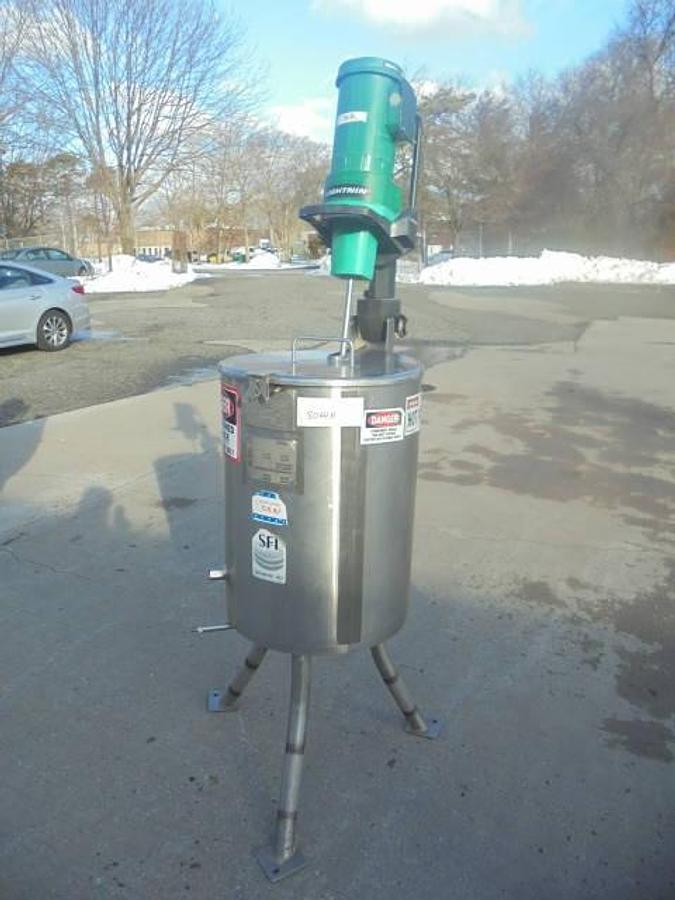
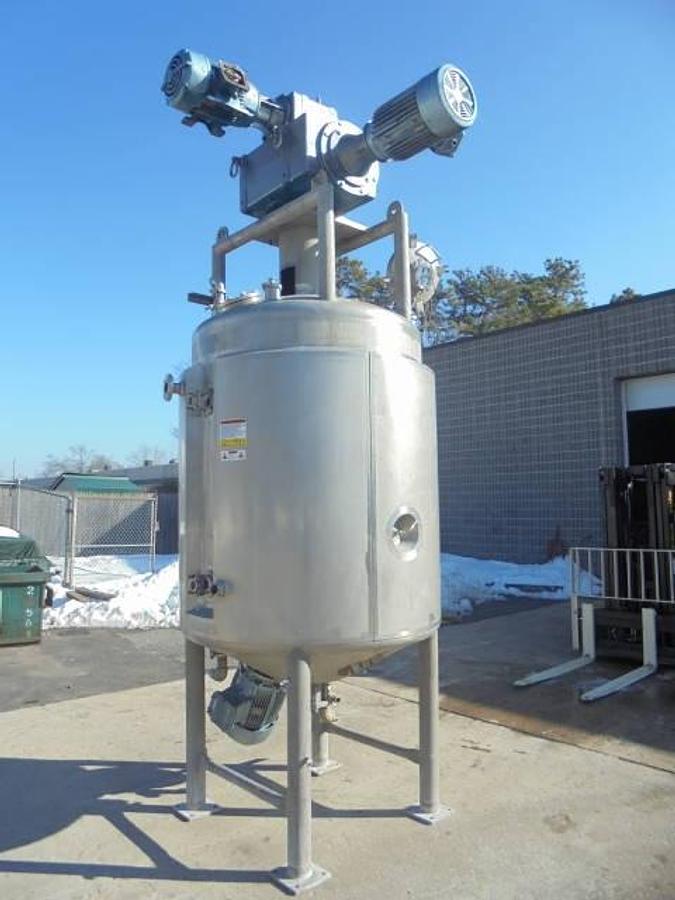
Stainless Fabrication Inc. specializes in stainless steel processing equipment built primarily for food, beverage, dairy, pharmaceutical, and chemical manufacturing environments. Their product line covers a wide range of vessels and processing systems, including liquid storage tanks, mixing kettles, jacketed reactors, pressure vessels, hoppers, and custom-fabricated stainless steel components. Two examples that appear regularly on the used market are their 15-gallon jacketed mix kettles rated to 150 PSI and their 600-gallon triple motion jacketed vacuum kettles and reactors, both of which reflect the company's focus on precision-built, heavy-duty processing equipment.
The company is headquartered in Springfield, Missouri, and has built a reputation for producing equipment to tight tolerances with sanitary construction in mind. Many of their tanks and vessels are designed to meet 3-A Sanitary Standards, which governs equipment that comes into direct contact with food or beverage products. Because the equipment is built to last and holds up well over extended service lives, used Stainless Fabrication Inc. machinery remains in high demand on the secondary market long after its initial installation.
What grade of stainless steel is typically used in Stainless Fabrication Inc equipment?
Stainless Fabrication Inc. equipment is generally constructed from 304 or 316L stainless steel, depending on the intended application. Grade 304 is the more common choice for general food and beverage processing, offering good corrosion resistance and ease of cleaning at a lower cost. Grade 316L is preferred for pharmaceutical applications and environments where the equipment is exposed to aggressive cleaning chemicals, chlorides, or highly acidic or alkaline products. The key difference between the two is that 316L contains molybdenum, which significantly increases its resistance to pitting and crevice corrosion.
For buyers evaluating used Stainless Fabrication Inc. equipment, confirming the steel grade is an important step, particularly if the machine will be used in a regulated environment like pharmaceutical or dairy processing. The steel grade affects not only corrosion resistance but also compatibility with CIP (clean-in-place) systems and the types of products that can safely be processed in the vessel. Sellers of used equipment should be able to provide the original material specifications or mill certifications if they are available from the original documentation that accompanied the machine.
What industries commonly use Stainless Fabrication Inc equipment?
Stainless Fabrication Inc. equipment is designed for industries that require sanitary, corrosion-resistant processing systems. The primary markets include food manufacturing, beverage production, dairy processing, pharmaceutical manufacturing, nutraceuticals, and specialty chemical processing. These industries share a common need for equipment that can be thoroughly cleaned and sanitized, withstand repeated thermal cycling, and meet regulatory standards for product contact surfaces. The jacketed kettles and vacuum reactors that Stainless Fabrication Inc. produces, for example, are well-suited to cooking, blending, emulsifying, and reacting processes across all of these sectors.
Because the equipment is built to sanitary standards and fabricated from food-grade stainless steel, it also finds use in cosmetics manufacturing, cannabis extraction, and other emerging industries that handle sensitive or regulated materials. When purchasing used Stainless Fabrication Inc. equipment, buyers should assess whether the specific vessel configuration, pressure rating, and agitation style match their production requirements. A 600-gallon triple motion jacketed vacuum kettle, for instance, is a versatile piece of equipment but is best suited to applications that require complex agitation patterns, vacuum processing, or precise temperature control through the jacket.
Does used Stainless Fabrication Inc equipment meet sanitary and regulatory standards like 3-A or FDA requirements?
Stainless Fabrication Inc. builds much of its equipment to comply with 3-A Sanitary Standards, which are widely recognized benchmarks for equipment used in dairy, food, and beverage processing. Equipment designed to these standards features smooth, crevice-free internal surfaces, self-draining geometry, and materials that resist product absorption and bacterial growth. Many of their vessels and kettles are also constructed in a way that supports compliance with FDA regulations governing food contact surfaces and Good Manufacturing Practice (GMP) requirements common in pharmaceutical production.
However, buyers of used equipment should verify the compliance status of any specific machine before assuming it meets current regulatory requirements. Standards evolve over time, and a machine that was compliant when built may require inspection, modification, or re-certification before it qualifies under current rules in a given facility. Consulting with the manufacturer or a sanitary equipment inspector is a practical step, especially for pharmaceutical or dairy applications where regulatory audits are routine. Reputable used equipment dealers can often provide documentation that accompanied the machine, which may include design specifications, pressure vessel certifications, or material test reports that support compliance verification.
What should buyers inspect when purchasing used Stainless Fabrication Inc jacketed kettles or reactors?
Used jacketed kettles and vacuum reactors from Stainless Fabrication Inc. are complex pieces of equipment, and a thorough inspection covers several distinct systems. The interior vessel surface should be examined for pitting, weld repairs, discoloration from overheating, or mechanical damage that could compromise sanitary integrity or structural strength. The jacket itself should be checked for leaks, scale buildup, and proper pressure rating documentation, since jackets on these vessels are often rated independently from the main vessel. Agitator seals, shaft bearings, gearboxes, and drive motors all have wear components that should be evaluated, and vacuum systems should be tested for their ability to hold a specified level of vacuum without excessive leakage.
Most reputable used equipment dealers can arrange in-person inspections, video walkthroughs, or detailed photo documentation to give buyers an accurate picture of the machine's condition. Some equipment may still be in production at a facility, which allows buyers to observe it running under actual process conditions, though dealers typically cannot run product through the machine themselves due to permitting constraints. Buyers who cannot visit in person should request close-up video of welds, the agitator assembly, all nozzle connections, and the jacket inlet and outlet. For high-value purchases, hiring an independent equipment inspector or process engineer to evaluate the machine before committing is a reasonable precaution.
How does the secondary market for used stainless steel processing equipment work?
The used stainless steel processing equipment market is active and well-established, driven by the fact that quality fabricated vessels and kettles can remain serviceable for decades when properly maintained. Equipment changes hands for a variety of reasons, including plant closures, production line reconfigurations, capacity upgrades, and product line changes, none of which necessarily reflect anything negative about the condition of the machinery being sold. Buyers in the food, pharmaceutical, and chemical industries regularly source used jacketed kettles, reactors, and storage tanks as a cost-effective alternative to purchasing equipment fabricated to order, which can involve long lead times and significantly higher upfront costs.
Specialized used equipment dealers who focus on sanitary and stainless steel processing equipment are generally the most reliable source for this type of machinery. They tend to have deeper knowledge of the equipment they carry, can answer technical questions about specifications and configurations, and are more likely to have documentation or history on the machines in their inventory. Buyers should ask about the machine's service history, what product it processed, how it was cleaned, and whether any repairs or modifications were made during its service life. This background information helps buyers assess whether the equipment is a good fit for their intended application and whether any reconditioning work may be needed before it goes back into production.
What are the typical shipping and rigging considerations for large stainless steel kettles and reactors?
Large jacketed kettles and vacuum reactors are heavy, often irregularly shaped pieces of equipment that require careful handling from the point of removal to final installation. Rigging costs for loading and unloading are typically separate from freight charges and depend on the size and weight of the vessel, the accessibility of the loading dock or plant floor, and whether specialized lifting equipment like cranes or forklifts with extended reach are required. Buyers should ask dealers for a detailed breakdown of packaging, rigging, and freight costs before finalizing a purchase, since the total landed cost of a large vessel can be meaningfully higher than the listed equipment price alone.
Properly crating or palletizing a vessel protects it from damage during transit and is an important consideration, particularly for equipment with exposed agitator shafts, nozzle connections, or instrumentation. The level of packaging required affects cost, and buyers should clarify with the dealer what is included in the quoted shipping price. For international shipments or cross-country moves, buyers may also need to account for freight insurance, customs documentation for cross-border shipments, and unloading capabilities at the destination facility. Coordinating the receiving end of the shipment in advance, including confirming that adequate rigging equipment will be available at the destination, helps avoid delays and unexpected costs on delivery day.
What payment terms are typical when buying used processing equipment from a dealer?
Most used equipment dealers require full payment prior to releasing a machine for shipment. This is standard practice in the industry and reflects the nature of used equipment transactions, where the seller needs to confirm funds before arranging logistics and committing labor and resources to preparing the machine for shipping. Payment is typically accepted by wire transfer, and some dealers may accept other forms of payment depending on the transaction size and the buyer's relationship with the dealer. Buyers who have an established purchasing history with a particular dealer may occasionally be able to negotiate payment terms, but this is the exception rather than the rule for first-time transactions.
Buyers should plan their purchasing timeline with this requirement in mind, particularly if internal approval processes or capital expenditure authorizations take time to complete. It is also worth confirming with the dealer exactly what triggers the payment deadline, whether that is at the time of purchase agreement, prior to scheduling removal, or prior to freight pickup, since this can affect logistics planning. For larger purchases, buyers sometimes request a period between payment and shipment to allow time to prepare the receiving facility, which reputable dealers can often accommodate within reason.
Are replacement parts and ongoing manufacturer support available for older Stainless Fabrication Inc equipment?
The availability of replacement parts and manufacturer support for used Stainless Fabrication Inc. equipment depends on the age of the machine and the specific components involved. Buyers considering a used vessel or kettle should contact Stainless Fabrication Inc. directly to ask about parts availability and technical support for the particular model and approximate vintage of the equipment they are evaluating. Manufacturers vary in how long they support older equipment, and some components, particularly agitator seals, gearboxes, and instrumentation, may have been sourced from third-party suppliers whose parts are available independently of the original equipment manufacturer.
For many stainless steel vessels and jacketed kettles, the vessel body itself has an extremely long service life and rarely requires manufacturer-sourced replacement parts. The components most likely to need attention over time are mechanical and electrical, including drive motors, gear reducers, shaft seals, and control systems. Many of these can be sourced from industrial supply companies or rebuilt by qualified service shops without involving the original manufacturer at all. Buyers should factor the cost of any likely reconditioning or component replacement into their total acquisition budget, particularly if the machine has been in storage or out of service for an extended period before purchase.
What is the difference between a jacketed mix kettle and a triple motion jacketed vacuum kettle?
A jacketed mix kettle is a vessel with a double-wall construction that allows a heating or cooling medium, typically steam, hot water, or glycol, to circulate through the jacket and control the temperature of the product inside. A single agitator, often a sweep-style or anchor-type blade, keeps the product moving to promote even heat transfer and prevent scorching. These kettles are workhorses in food and pharmaceutical manufacturing and are well-suited to cooking, pasteurizing, blending, and dissolving applications. The 15-gallon jacketed mix kettle rated to 150 PSI on the jacket is a compact example of this type, appropriate for pilot-scale production or small-batch specialty manufacturing.
A triple motion jacketed vacuum kettle adds two significant capabilities. The triple motion agitation system typically combines a slow-speed wall scraper, a counter-rotating central agitator, and a high-speed disperser or homogenizer, allowing the vessel to handle products with very different viscosity profiles and mixing requirements within a single unit. The vacuum capability allows manufacturers to process heat-sensitive products at lower temperatures by reducing the boiling point of the liquid phase, remove dissolved gases or air from a product, or conduct reactions under controlled atmospheric conditions. The 600-gallon triple motion jacketed vacuum kettle and reactor is a substantially more complex and versatile machine, commonly used in confectionery, sauces, cosmetics, and pharmaceutical manufacturing where precise control over temperature, agitation, and pressure is critical to product quality.