Category
Manufacturer
Model
Spee-Dee
Spee-Dee specializes in filling machines, particularly for dry products in the food and consumer goods industries. Their equipment is designed for high-speed production and accuracy. Spee-Dee’s innovative technology helps manufacturers achieve efficient packaging processes.
FAQ:
What types of products can Spee-Dee filling machines handle?
Spee-Dee filling machines are built primarily for dry products, making them a popular choice across the food, nutraceutical, pharmaceutical, and chemical industries. Their auger fillers handle fine to medium powders such as protein supplements, spices, flour, coffee, and pharmaceutical powders with consistent results. Volumetric cup fillers, another staple of the Spee-Dee lineup, are well-suited for granular or pelletized products like seeds, sugar, and snack foods.
The range of products these machines can process depends on the specific model and filling mechanism. Auger-style fillers are generally preferred for cohesive or non-free-flowing powders that need a controlled dispensing action, while cup fillers work best with free-flowing granules that settle predictably into a measured cavity. Buyers sourcing a used Spee-Dee machine should confirm the model type and any included tooling to make sure it aligns with their specific product characteristics before purchasing.
What is the difference between a Spee-Dee auger filler and a volumetric cup filler?
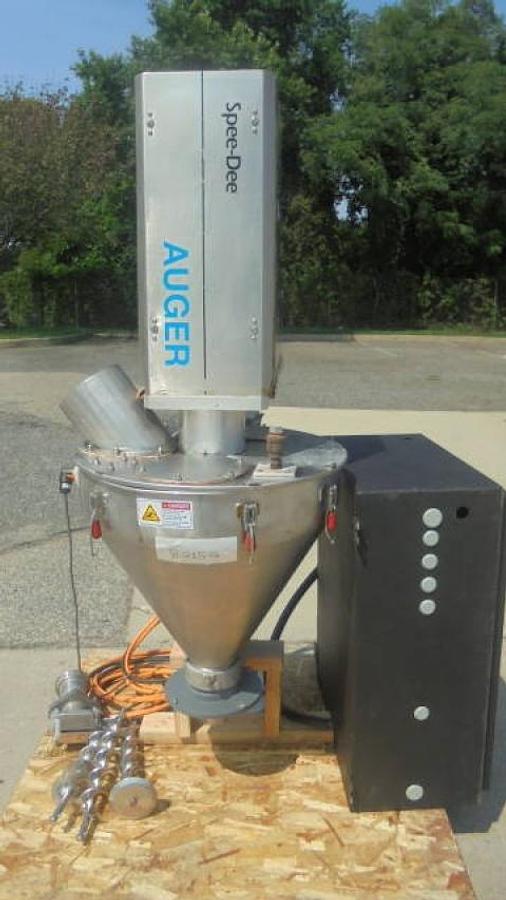
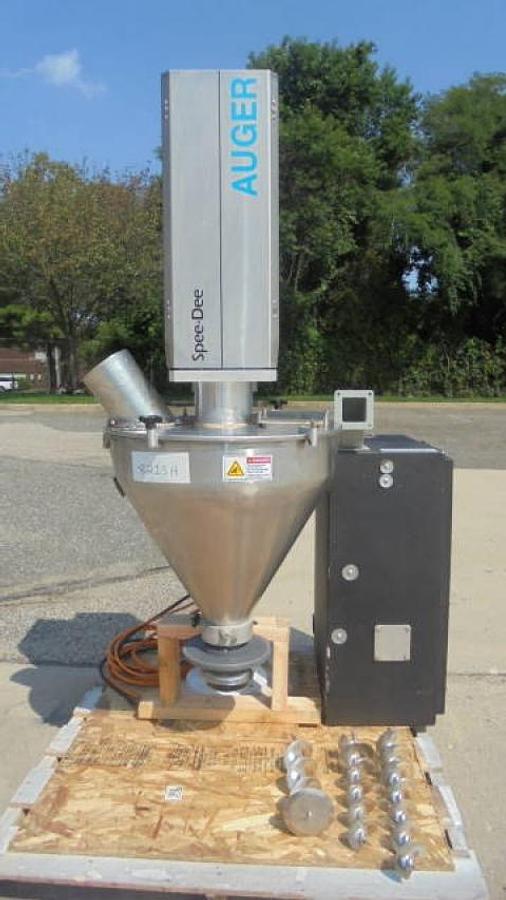
An auger filler uses a rotating screw mechanism inside a product hopper to dispense a measured volume or weight of powder into each container. The auger's rotation speed and pitch determine the fill amount, and servo-driven models like the Spee-Dee Digitronic series offer precise electronic control over that rotation, which translates to tighter fill accuracy. This makes auger fillers the preferred choice for fine powders, blended mixes, and any product that tends to bridge or clump.
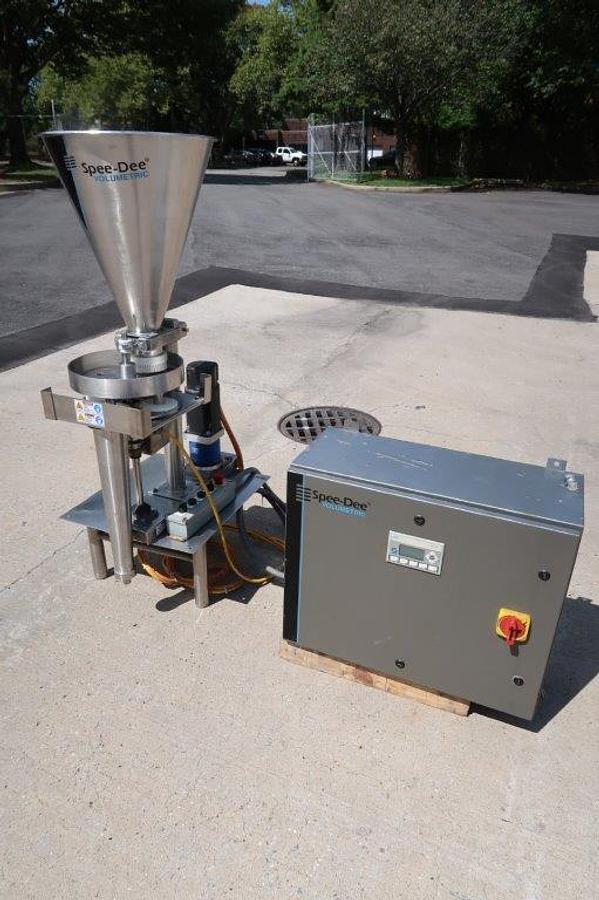
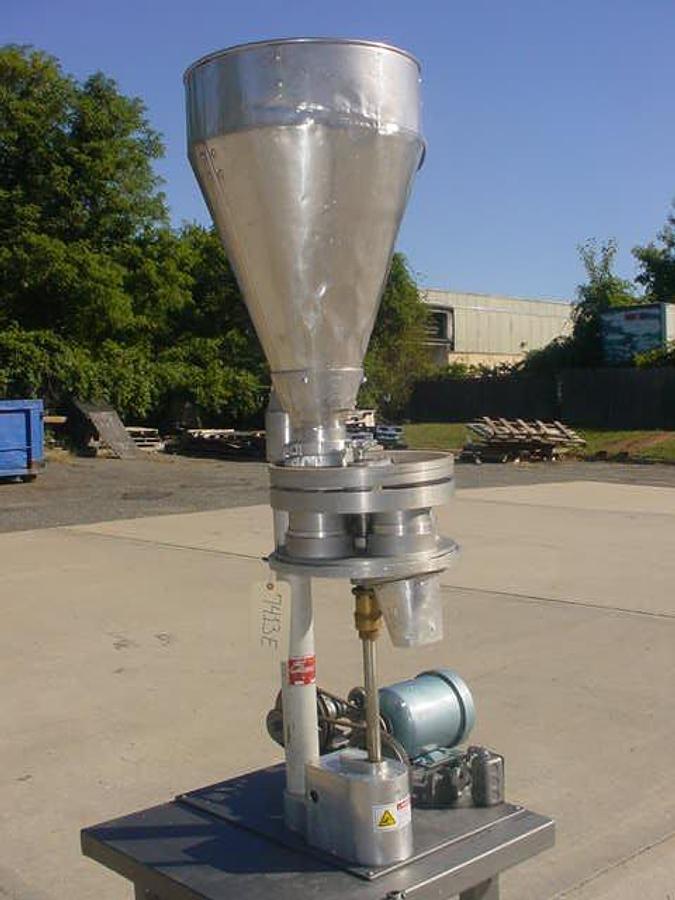
A volumetric cup filler works on a different principle: product flows into a fixed-volume cup, which is then discharged into the container below. These machines are mechanically simpler and typically run at very high speeds, making them cost-effective for free-flowing granular products where slight fill variation is acceptable. Spee-Dee offers both tabletop and floor-standing cup filler configurations. When evaluating a used machine, understanding which filling principle suits your product is the most important factor, since switching between filling technologies generally requires a different machine rather than a simple changeover.
What fill accuracy can you expect from a Spee-Dee filling machine?
Spee-Dee machines are well-regarded in the packaging industry for their fill accuracy. Servo auger models, such as the Digitronic series, are capable of achieving tolerances within plus or minus 0.5 to 1 percent of the target fill weight under consistent production conditions. That level of precision directly reduces product giveaway, which adds up to meaningful cost savings over high-volume production runs.
It is worth noting that actual accuracy on a used machine will depend on the condition of the auger, the filler tube, and the servo drive components at the time of purchase. Buyers should factor in the machine's age, hours of use, and maintenance history when estimating real-world performance. Requesting a video demonstration or arranging an in-person inspection gives the buyer the best opportunity to assess whether the machine is operating within acceptable tolerances before committing to a purchase.
What industries commonly use Spee-Dee filling machines?
Spee-Dee filling machines appear most frequently in food manufacturing, where speed, accuracy, and sanitary design are all critical. Spice blenders, coffee roasters, protein supplement producers, flour mills, and snack food packagers are among the most common users. The stainless steel construction found on many Spee-Dee models makes them compatible with washdown cleaning protocols required in food-grade environments.
Beyond food, Spee-Dee equipment is used in the nutraceutical and dietary supplement space, where fill accuracy directly affects label compliance and regulatory requirements. Chemical and agricultural product manufacturers also use these machines for dry granular and powder materials. The brand's reputation for durability and mechanical reliability means that used Spee-Dee machines often remain in service for many years after their initial installation, which is part of why they retain value on the secondary equipment market.
What is the typical production speed of a Spee-Dee filling machine?
Production speed varies considerably across the Spee-Dee product line and depends on the filling mechanism, container size, and product characteristics. Volumetric cup fillers are generally the faster option, with some configurations capable of filling several hundred containers per minute on free-flowing granular products. Auger fillers run at lower speeds by comparison, since the controlled rotation required for accurate powder dispensing takes more time per fill cycle, though many models can still achieve rates of 20 to 60 fills per minute or more depending on the target fill weight.
For buyers evaluating a used machine, the rated speed of the machine at the time of manufacture is a useful starting point, but actual throughput in a production setting depends on factors like container handling, product flow characteristics, and the current condition of the drive components. A machine that has been well-maintained and recently serviced will generally perform closer to its rated capacity than one that has been sitting idle or has worn parts. Inspecting the machine in person or reviewing video footage of it running is the most reliable way to gauge realistic output before purchasing.
Are used Spee-Dee filling machines a practical option for smaller manufacturers?
Used Spee-Dee machines can be a very practical entry point for smaller manufacturers who want production-grade filling equipment without the capital outlay of purchasing a machine directly from the manufacturer. Spee-Dee's tabletop volumetric cup filler, for example, is a compact unit designed for lower-volume operations and is frequently available on the secondary market. These smaller models give growing businesses access to the same fill accuracy and build quality found in larger production environments at a fraction of the cost.
That said, smaller operations should think carefully about the machine's throughput relative to their actual production needs, as well as the availability of parts and technical support for the specific model they are considering. Consulting with the manufacturer before purchasing a used machine is a smart step, since Spee-Dee can advise on which models are still supported and whether replacement parts are readily available. A reputable used equipment dealer who specializes in packaging machinery can also help match the right machine to the buyer's production volume and product type.
What should buyers look for when inspecting a used Spee-Dee filling machine?
A thorough inspection of a used Spee-Dee machine should cover both the mechanical and electrical components. On the mechanical side, buyers should examine the auger and filler tube for wear or damage, check the hopper for cracks or corrosion, and look at any seals or gaskets that may have degraded over time. For servo-driven models like the Digitronic series, the condition of the servo motor and control box is critical, since these components are expensive to replace and directly affect fill accuracy.
Most reputable used equipment dealers will accommodate in-person inspections or provide detailed video of the machine running. Keep in mind that dealers typically do not have the production permits required to run actual product through a machine, so testing will generally be a dry run rather than a live fill test with the buyer's specific product. Buyers who want to verify performance with their own product should ask whether an inspection at the selling facility is possible, particularly if the machine is still installed in a working plant. Getting a clear picture of the machine's current operating condition is the most important step a buyer can take before finalizing a purchase.
How does the Spee-Dee Digitronic servo auger filler differ from earlier auger filler models?
The Digitronic designation refers to Spee-Dee's servo-controlled auger filling platform, which uses an electronically controlled servo motor to drive the auger rather than a mechanical clutch-and-brake system used in older designs. This servo control allows the operator to program fill weights and make fine adjustments through a digital interface, which speeds up changeovers and improves repeatability across production runs. The electronic control also enables the machine to compensate for minor variations in product density more effectively than older mechanical systems.
Older auger filler designs without servo control are generally simpler mechanically and may be easier to maintain in some respects, but they offer less flexibility and typically require more manual adjustment when changing fill weights or switching products. For buyers sourcing a used machine, the Digitronic models tend to command a higher price on the secondary market because of their flexibility and accuracy, but they also require buyers to confirm that the control box and servo components are in good working order, since repairs or replacements for electronic control systems can be costly.
What are the typical shipping and logistics considerations when buying a used Spee-Dee filling machine?
Filling machines vary significantly in size and weight depending on the model, and proper packaging is essential to prevent damage during transit. Smaller tabletop units can often be crated and shipped via standard freight carriers, while larger floor-standing auger fillers may require custom crating, forklift loading, and specialized freight handling. Buyers should ask the dealer specifically about how the machine will be packaged and what rigging or loading equipment will be needed at both the origin and destination.
Shipping costs for used filling equipment are typically quoted separately from the machine price and can vary based on the level of crating required, the distance involved, and whether liftgate service or inside delivery is needed. For larger machines, rigging fees for loading at the dealer's facility and unloading at the buyer's plant are an added cost that should be factored into the total landed price. Most used equipment dealers require full payment before the machine ships, so buyers should clarify all freight and handling charges upfront to avoid surprises.
What level of manufacturer support is available for used Spee-Dee filling machines?
Spee-Dee Packaging Machinery, based in Clearwater, Minnesota, has been producing filling equipment for decades, and the brand has a reputation for building machines with long service lives. For buyers purchasing a used Spee-Dee machine, the level of support available from the manufacturer will depend largely on the model and its age. Newer or more recently discontinued models are more likely to have parts available and technical documentation on file, while older or discontinued configurations may have limited parts availability.
Buyers are strongly encouraged to contact Spee-Dee directly before purchasing a used machine to ask about parts availability, service manuals, and whether the manufacturer offers any support for that specific model. This step can prevent a situation where a buyer acquires a machine only to find that a critical component is no longer available. Used equipment is sold as-is by dealers, so the buyer takes on responsibility for maintenance and repairs after the sale. Working with a dealer who specializes in packaging and filling equipment, and who can provide detailed information about the machine's history and condition, significantly reduces that risk.