Category
Manufacturer
Model
Spantech
Spantech focuses on providing packaging solutions, particularly in the food and beverage sectors. Their equipment includes shrink wrapping and labeling machines, designed for high-speed production lines. Spantech’s innovative technology enhances efficiency and product presentation.
FAQ:
What types of Spantech conveyor systems are commonly available on the used equipment market?
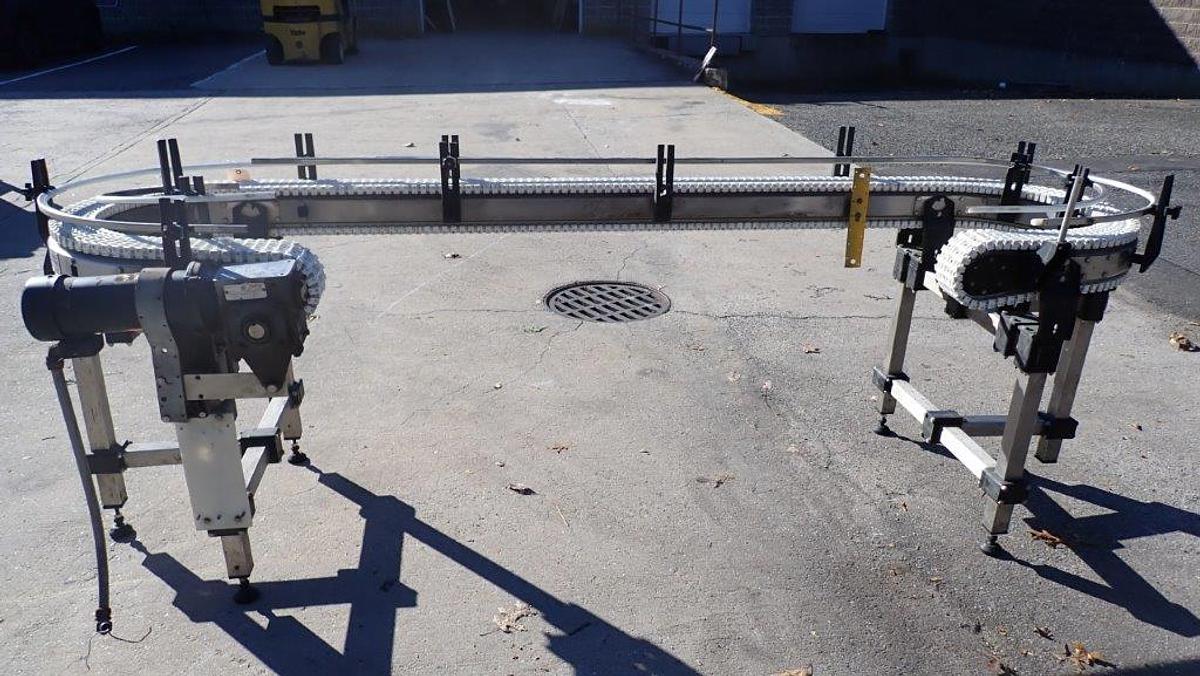
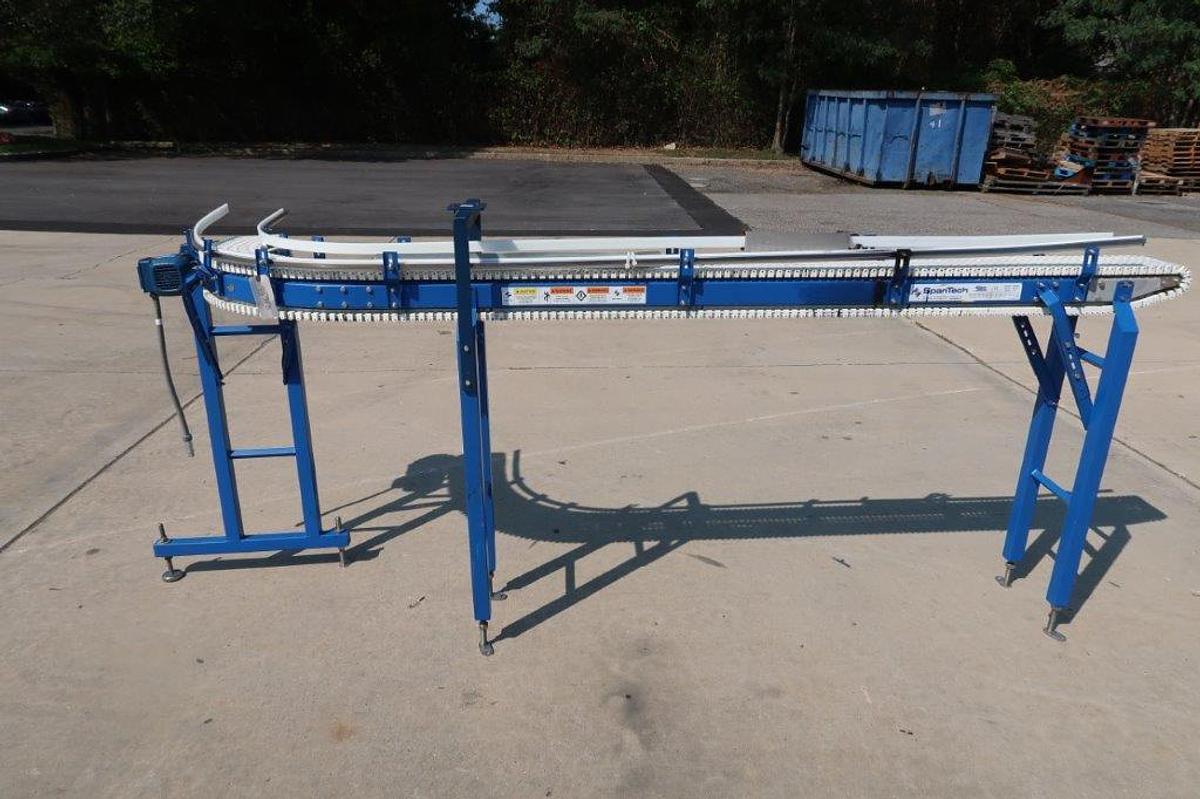
Spantech produces a range of conveyor systems built around modular belt technology, and several configurations show up regularly on the secondary market. Common units include straight-run conveyors, U-shaped conveyors, and 90-degree motorized conveyors that allow production lines to change direction without manual transfers. These angled and curved configurations are particularly popular in food and beverage packaging environments where floor space is limited and product flow needs to follow a specific path through the facility.
Beyond individual conveyor sections, buyers often seek complete conveyor lines that include infeed, transfer, and outfeed sections as matched sets. Purchasing a matched set can simplify integration since belt heights, speeds, and frame dimensions are already compatible. Used Spantech equipment in stainless steel construction tends to attract the most interest, as it holds up well over time and suits the sanitary requirements of food processing and pharmaceutical applications.
What industries are Spantech conveyors designed for?
Spantech conveyors were engineered primarily for food and beverage production, packaging, and related processing environments. Their modular belt systems are built with hygienic design principles in mind, meaning the frames, belting, and drive components are accessible for cleaning and allow for washdown procedures. This makes them a practical fit for facilities that must meet food safety standards and require equipment that can be thoroughly sanitized between production runs.
Outside of food and beverage, Spantech systems are also used in pharmaceutical manufacturing and general industrial packaging lines. Any production environment that handles small-to-medium sized products at moderate-to-high speeds and requires directional changes or accumulation zones tends to be a good candidate for Spantech equipment. The modular design means individual belt sections can be reconfigured or extended, which gives facilities flexibility as their production needs evolve.
What should buyers look for when inspecting used Spantech conveyor equipment?
A thorough inspection of used Spantech conveyor equipment should cover several key areas. Start with the modular belt itself, checking for cracked, broken, or missing belt links, as belt wear is one of the most common issues on conveyors that have seen heavy production use. Examine the drive motor and gearbox for signs of overheating, unusual noise, or leaking seals. The stainless steel frame should be inspected for weld cracks, corrosion pitting, or bent sections that could affect belt tracking. Sprockets and drive shafts are also worth close attention since worn sprockets cause belt slippage and uneven product movement.
Reputable used equipment dealers will accommodate in-person inspections or provide detailed video walkthroughs of the machine so buyers can assess condition before committing. Some Spantech units may still be installed in an active production facility at the time of sale, which can actually be an advantage since the buyer can observe the conveyor running under real operating conditions. Keep in mind that most dealers do not have the permits or setup required to run actual product through the equipment during a dealer-side inspection, so buyers should factor that limitation into their evaluation process.
How does the modular belt design of Spantech conveyors affect maintenance and repairability?
The modular plastic belt used in Spantech conveyor systems is one of the most practical features from a maintenance standpoint. Unlike continuous flat belts that require full replacement when damaged, modular belts are made up of interlocking plastic links. If a section of belt is cracked or broken, a technician can remove just the affected links and replace them without taking the entire belt out of service. This dramatically reduces both repair time and the cost of belt maintenance over the life of the conveyor.
The open structure of modular belts also makes cleaning easier, which is a meaningful benefit in food processing environments where sanitation is a daily requirement. Debris and product residue have fewer places to hide compared to solid belts, and the belt can often be cleaned in place. For buyers purchasing used Spantech equipment, assessing the current condition of the modular belt is straightforward since individual links can be visually inspected without disassembly. Replacement belt links and related components are available through Spantech and compatible third-party suppliers, though buyers should confirm parts availability for their specific belt series before purchasing.
What is the typical price range for used Spantech conveyor equipment?
Pricing for used Spantech conveyor equipment varies considerably depending on the configuration, size, age, and overall condition of the unit. Individual conveyor sections such as a short straight-run or a 90-degree transfer unit can range from a few hundred dollars to a few thousand dollars on the secondary market. Larger or more complex configurations, including U-shaped conveyors, multi-section lines, or units with integrated drives and controls, typically command higher prices that can reach into the tens of thousands of dollars depending on the scope of the system.
Beyond the purchase price, buyers should factor in the full landed cost of the equipment. Shipping, rigging, and packaging costs can add meaningfully to the total, particularly for heavier conveyor frames that require crating or specialized loading equipment. Asking the dealer for a detailed breakdown of these costs before agreeing to a purchase is a practical step. Stainless steel Spantech units generally hold their resale value better than painted carbon steel alternatives, so buyers comparing options should weigh material construction alongside the asking price.
Are replacement parts readily available for used Spantech conveyor systems?
Parts availability for Spantech conveyors depends largely on the age and specific model of the equipment. Spantech has been producing modular conveyor systems for a number of years, and many of the core components including modular belt links, drive sprockets, bearings, and motors are either still available through the manufacturer or through compatible third-party suppliers. The modular belt itself is often the most frequently replaced component, and buyers should verify that the belt series used on a particular unit is still in production before purchasing.
For older Spantech models, it is worth consulting directly with the manufacturer or an authorized service provider to understand what level of support is available. Age and model generation can affect whether certain components are still stocked or need to be sourced from surplus suppliers. Buyers who are considering a used Spantech conveyor for a critical production line should perform this parts availability check as part of their due diligence process, alongside the physical inspection of the machine. Planning ahead for eventual maintenance needs reduces the risk of unexpected downtime after the equipment is installed.
What are the key hygienic design features of Spantech conveyor systems?
Spantech conveyors are built with sanitary environments in mind, and several design choices reflect that priority. Stainless steel frame construction resists corrosion and tolerates the cleaning chemicals and moisture exposure common in food processing and pharmaceutical facilities. The modular belt design allows water and cleaning solutions to pass through the belt surface rather than pooling, which reduces the risk of bacterial growth in hard-to-reach areas. Frame legs and supports are typically designed to minimize horizontal surfaces where debris can accumulate.
Washdown capability is another important feature. Spantech systems are generally designed to handle high-pressure water cleaning, which is a standard sanitation practice in food and beverage plants. Drive components are positioned and sealed to minimize contamination risk during cleaning cycles. These hygienic characteristics are part of why Spantech equipment retains strong resale demand on the secondary market, as food processors and contract packagers actively seek out conveyors that meet or exceed their facility sanitation requirements without requiring significant modification after installation.
How should buyers approach shipping and logistics when purchasing used Spantech conveyor equipment?
Conveyor equipment requires careful handling during transit to prevent damage to the frame, belt, and drive components. Used equipment dealers typically offer several packaging options ranging from basic pallet mounting to full wooden crating, and the cost will vary based on the level of protection required for the specific unit. Longer conveyor sections or those with fragile electronics should be crated rather than simply palletized. Buyers should ask the dealer specifically what packaging will be used and whether that cost is included in the quoted price or billed separately.
For larger Spantech conveyor systems, loading and unloading may require a forklift or crane, and rigging costs can add to the total expense. Buyers who do not have material handling equipment at their receiving location should arrange for that in advance. It is also worth confirming freight carrier selection with the dealer, as machinery shipments benefit from carriers experienced with industrial equipment rather than standard parcel or LTL services. Getting a clear picture of all shipping-related costs before finalizing the purchase helps avoid surprises and allows for an accurate comparison of the total landed cost versus alternative equipment options.
What payment terms should buyers expect when purchasing used Spantech conveyor equipment from a dealer?
Used equipment dealers generally require full payment before the machinery is released for shipment. This is standard practice in the industry and reflects the fact that used equipment transactions do not carry the same credit infrastructure as purchases from large manufacturers. Buyers should plan for payment in full upfront, and should confirm with the dealer which payment methods are accepted, as wire transfer is the most common form for equipment transactions of meaningful value.
Some dealers extend payment terms to repeat customers or buyers with an established relationship, but this is not the norm for first-time transactions. Buyers who need financing for equipment purchases should arrange that independently through a bank or equipment financing company before approaching the dealer, as most used equipment dealers do not offer in-house financing programs. Clarifying payment expectations early in the conversation avoids delays once a machine is identified and helps move the transaction forward efficiently.
Can used Spantech conveyor systems be reconfigured or integrated into an existing production line?
One of the practical advantages of Spantech's modular conveyor platform is that individual sections can often be reconfigured or extended to fit a specific production line layout. Straight sections, curved sections, and incline or decline modules can be combined in different ways, and the consistent frame dimensions across the product line make it easier to integrate multiple used units purchased at different times. Buyers who need a specific layout should review the specifications of available used units carefully to confirm that belt widths, heights, and drive configurations are compatible with their existing equipment.
Integrating used conveyor equipment into a live production line does require some mechanical and electrical work. Belt height alignment, speed matching with adjacent equipment, and control system integration are all factors that a qualified conveyor technician or systems integrator should evaluate before installation. Buyers should also account for lead time on any custom mounting hardware or electrical modifications that may be needed. Purchasing used Spantech equipment in stainless steel construction is generally the safer choice for integration into food or pharmaceutical environments since it avoids the need to upgrade materials to meet facility standards after the fact.