Category
Manufacturer
Model
Shanklin
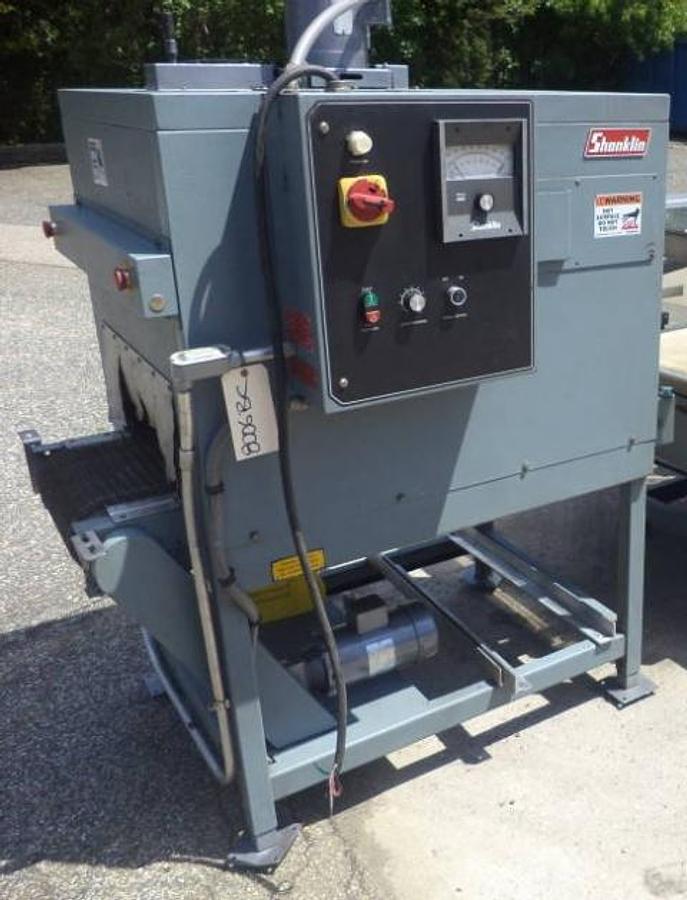
Shanklin is a leader in the development of shrink packaging machinery for the food and consumer goods industries. They are known for their reliable and efficient shrink wrappers that enhance product presentation and shelf life. Their equipment is widely used in various packaging applications.
FAQ:
What types of Shanklin shrink packaging machines are available on the used equipment market?
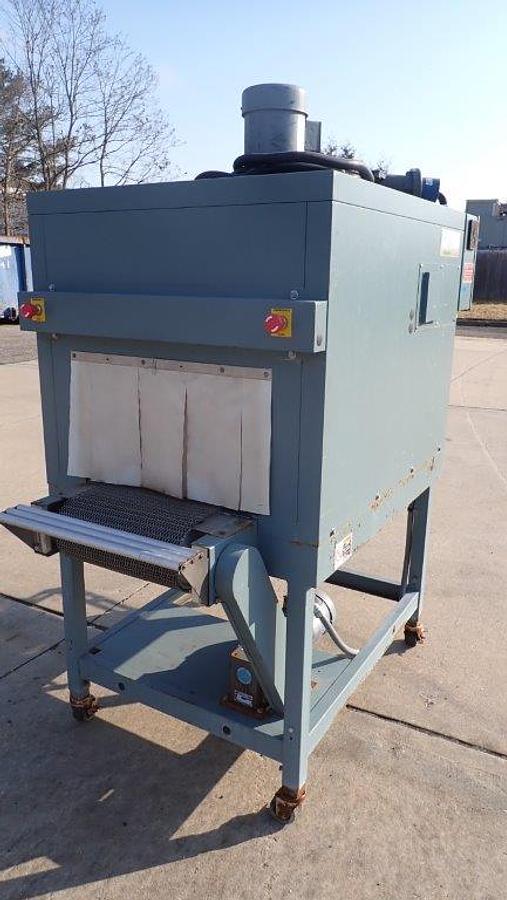
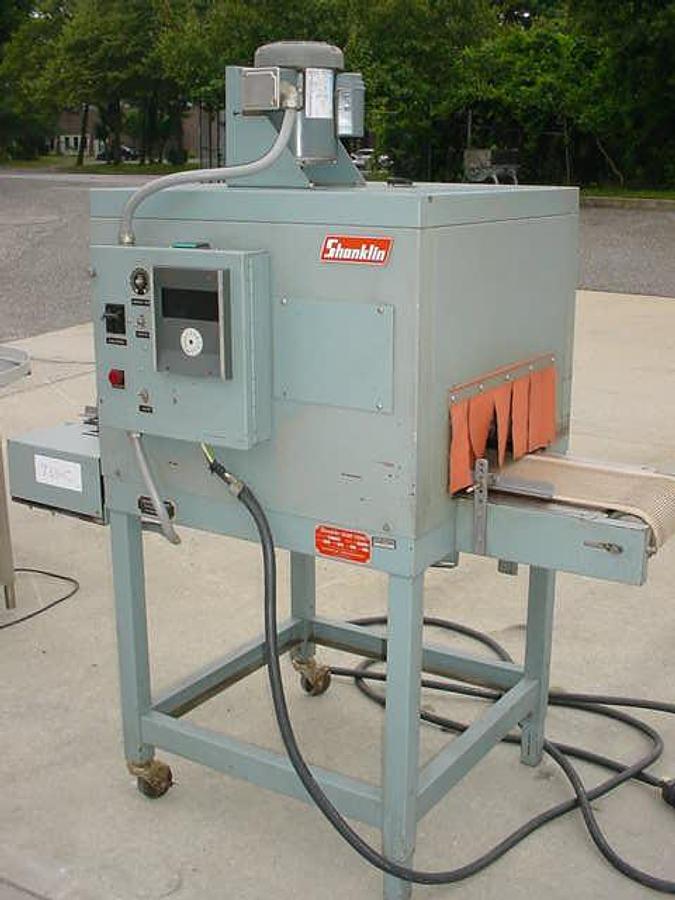
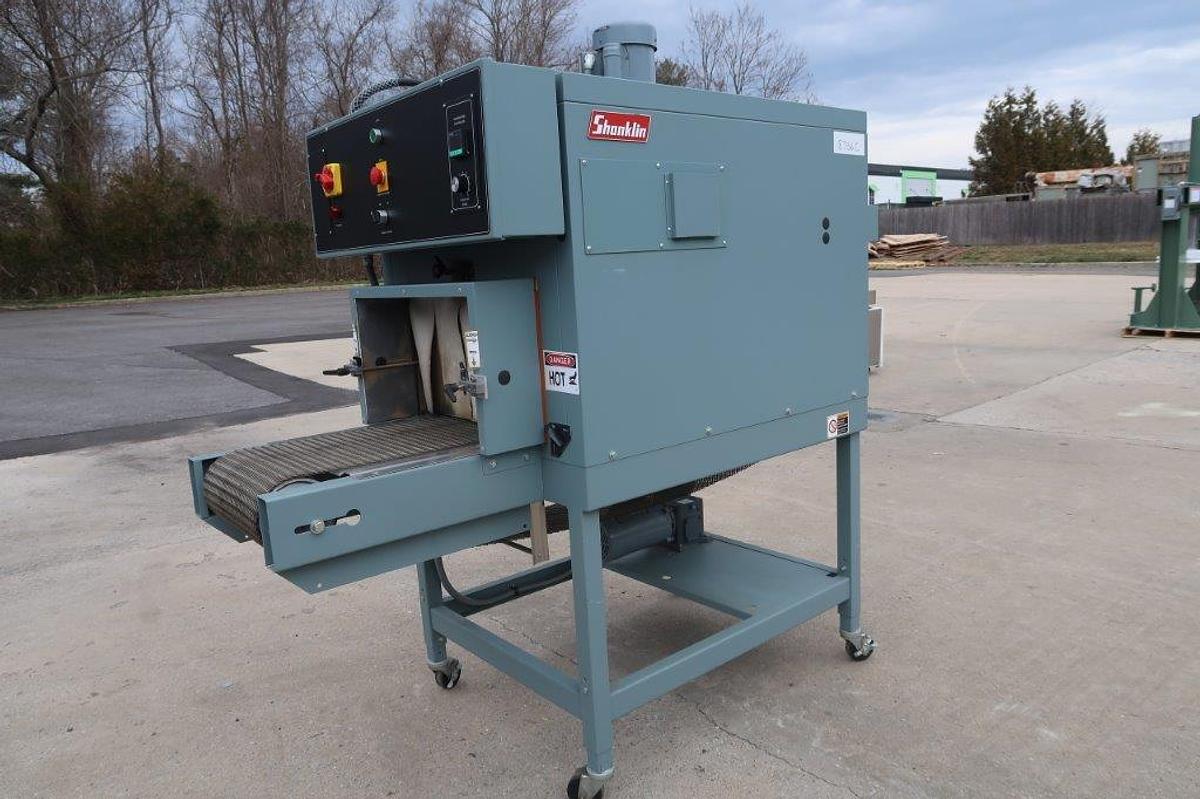
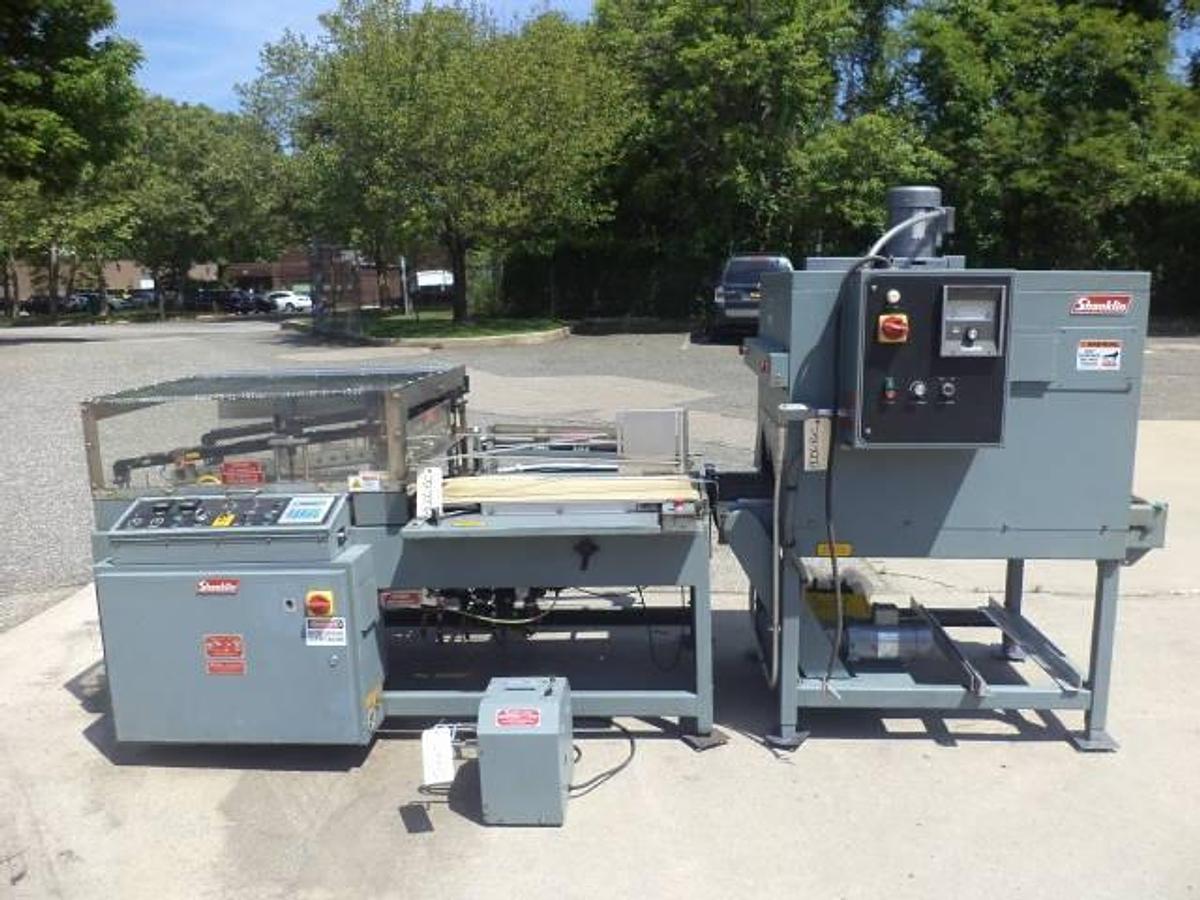
Shanklin built its reputation across several distinct product lines, each designed for different production environments and packaging requirements. The T-series shrink tunnels are among the most commonly found on the secondary market, with models like the T7H, T-7XL, T-74L, and T-6XL appearing regularly. These tunnels are designed to work in conjunction with sealers to complete the shrink wrapping process. The A-series covers automatic L-bar sealers, such as the A-27A and A-26A, which are often sold as complete systems paired with a shrink tunnel. Beyond those, Shanklin also produced F-series side sealers, C-series continuous motion wrappers, and various combination units that integrate sealing and tunneling into a single footprint.
On the used market, buyers can find standalone tunnels, standalone sealers, and fully integrated sealer-plus-tunnel combinations. Some listings include additional components like rewinders, casters for portability, or stainless steel construction suited for food-grade environments. The availability of specific models fluctuates based on what facilities are decommissioning, so buyers looking for a particular configuration may need to check dealer inventory regularly or place a request for a specific model. Because Shanklin equipment was deployed across food, pharmaceutical, cosmetics, printing, and industrial sectors, the secondary market tends to carry a reasonably diverse cross-section of models at any given time.
What is the difference between Shanklin L-bar sealers and shrink tunnels, and do I need both?
A Shanklin L-bar sealer and a shrink tunnel serve two distinct functions in the shrink packaging process, and most complete shrink wrap systems require both working in sequence. The L-bar sealer, such as the Shanklin A-26A or A-27A, uses an L-shaped sealing bar to cut and seal centerfold shrink film around a product. The result is a loosely wrapped package that still needs to be heat-shrunk to conform tightly to the product's shape. That second step is handled by the shrink tunnel, where the sealed package passes through a heated chamber on a conveyor belt. The heat causes the film to contract uniformly around the product, producing a tight, professional-looking package.
For most commercial packaging operations, both pieces of equipment are needed. Some used equipment dealers list them as combination packages, which can simplify sourcing and help ensure the sealer and tunnel are matched appropriately in terms of throughput speed and film width capacity. Buyers who already own one component and need to source the other should pay close attention to belt width, film width compatibility, and conveyor speed ranges to confirm the two machines will work together efficiently. Shanklin designed several of its sealer and tunnel models to complement each other, so reviewing the original specification sheets for each model, when available, can help identify compatible pairings.
What should buyers know about inspecting used Shanklin shrink packaging machinery before purchase?
Buying used packaging machinery requires a more thorough vetting process than purchasing from a manufacturer, since the equipment comes without the protections that accompany a factory purchase. Reputable used equipment dealers will typically offer inspection options that include in-person visits, live video walkthroughs, or recorded video documentation of the machine's current condition. For Shanklin equipment that is still installed and running at a production facility, some dealers can arrange an in-person inspection at the plant itself, where buyers may be able to observe the machine operating under real production conditions. If the machine has already been decommissioned and moved to a dealer's warehouse, a powered inspection showing the machine running empty is often possible, though testing with actual product is generally not feasible at a dealer's facility due to permitting and operational constraints.
During an inspection, buyers should focus on the condition of the sealing wires and heating elements, the state of the conveyor belts and drive components, the integrity of the tunnel's insulation and chamber, and the functionality of the control panel and temperature regulation systems. Checking for visible wear on sealing bars, corrosion on stainless steel components, and the condition of any film handling hardware is also worthwhile. Buyers should ask the dealer directly about the machine's service history, how long it was in production, and what, if any, maintenance or refurbishment has been performed. Selecting a dealer with a long track record in packaging equipment specifically adds an important layer of confidence to the process.
Are replacement parts and technical support still available for older Shanklin machines?
Shanklin was acquired by Sealed Air Corporation, which means the brand's service and parts infrastructure has been absorbed into a larger organization. For buyers considering older Shanklin models, it is worth contacting Sealed Air directly to understand what level of parts availability and technical support exists for the specific model and serial number in question. Parts availability can vary considerably depending on the age of the machine and whether that model was produced in large enough volumes to justify ongoing parts stocking. Common wear items like sealing wires, Teflon tape, conveyor belts, and heating elements tend to be more readily available than proprietary electronic components or obsolete control boards.
Beyond the manufacturer's channel, a healthy aftermarket parts ecosystem exists for well-known packaging machinery brands like Shanklin. Third-party parts suppliers and specialized packaging equipment service companies often stock or can source components for popular Shanklin models. Buyers should factor parts availability into their purchase decision, particularly for older or less common models. Consulting with a technician familiar with Shanklin equipment before finalizing a purchase is a practical step, as an experienced technician can assess the machine's condition, identify any components that may need near-term replacement, and give a realistic picture of ongoing maintenance requirements. The age and model of the machine are the two biggest variables in determining long-term supportability.
What film types and thicknesses are compatible with Shanklin shrink packaging equipment?
Shanklin shrink packaging machines are designed to work with a range of shrink film materials, with polyolefin (POF) and polyethylene (PE) being the most common. Polyolefin film is widely used in food, cosmetics, and consumer goods packaging because it is FDA-compliant, produces a clean seal, and delivers a high-clarity finished package. Polyethylene film is a heavier-duty option often used for bundling or industrial applications where appearance is secondary to protection. Some Shanklin models, particularly older ones, were designed with PVC film in mind, though PVC has fallen out of favor in many markets due to environmental and regulatory concerns. Buyers should confirm that the specific machine they are considering is compatible with the film type they intend to use.
Film thickness, measured in gauge or microns, also matters. Most Shanklin L-bar sealers and tunnels are calibrated to handle a range of film gauges, but the optimal range varies by model. Thinner films, typically in the 60 to 75 gauge range, are common for retail consumer goods, while thicker films may be used for heavier or irregularly shaped products. The tunnel temperature settings, conveyor speed, and sealing dwell time all need to be matched to the film being used. When purchasing a used Shanklin machine, asking the dealer about the film specifications the machine was running in its previous application can provide a useful starting point for dialing in settings during commissioning.
What packaging speeds can Shanklin shrink wrapping machines typically achieve?
Shanklin machines span a broad range of throughput capabilities depending on the model and configuration. Entry-level and semi-automatic models are generally suited to lower-volume operations, handling anywhere from 20 to 40 packages per minute under favorable conditions. Higher-end automatic and continuous motion models, such as those in the C-series, are built for demanding production environments and can process significantly higher volumes, with some configurations capable of exceeding 100 packages per minute. The A-series automatic L-bar sealers, which are commonly found on the used market, typically fall in a mid-range throughput category appropriate for moderate-volume production lines.
Actual throughput in a real production environment depends on several factors beyond the machine's rated capacity. Product size and shape, film type, the operator's experience level, and how well the machine is maintained all influence effective output. Buyers should compare the machine's rated speed against their actual production requirements and build in a reasonable buffer. When evaluating a used machine, it is also worth considering whether the conveyor speed and tunnel capacity are matched to the sealer's output, since a mismatch between those two components can create a bottleneck regardless of what either machine is rated to handle independently. Reviewing the original specification sheets for the specific model, when available from the manufacturer's documentation archive, gives the most reliable baseline for speed expectations.
What are the typical power and utility requirements for Shanklin shrink wrap machines?
Shanklin shrink packaging equipment, like most industrial heat-sealing machinery, requires a reliable electrical supply, and the specific requirements vary by model and configuration. Shrink tunnels are the most power-intensive component because they use electric heating elements to maintain consistent chamber temperatures. Many Shanklin tunnel models operate on three-phase power, commonly at 208-240V or 460-480V, and draw anywhere from 10 to 30 amps or more depending on the tunnel's size and heating capacity. Smaller, portable tunnel models may operate on single-phase 120V or 240V power, making them more accessible for facilities without three-phase electrical infrastructure. L-bar sealers generally have lower power demands than tunnels, though combination units that integrate both functions will have correspondingly higher total requirements.
Buyers should confirm the exact electrical specifications of any used Shanklin machine before purchase and compare those requirements against their facility's available power supply. Retrofitting electrical infrastructure to accommodate a machine that doesn't match the existing supply can add meaningful cost and lead time to a project. Beyond electricity, some Shanklin models with pneumatic components may require a compressed air supply, typically in the 80 to 100 PSI range. Dealers should be able to provide the machine's specification plate information or documentation, and buyers should also consult an electrician or facilities engineer to assess compatibility before committing to a purchase. Understanding the full utility requirements upfront prevents surprises during installation.
Can used Shanklin shrink packaging machinery be integrated into an existing production line?
Shanklin equipment was designed with production line integration in mind, and many models include features that facilitate connection to upstream and downstream equipment. Conveyor heights on Shanklin tunnels and sealers are generally adjustable within a range, which helps when matching the machine to an existing line's elevation. Conveyor belt widths vary by model, so buyers need to confirm that the machine's working width accommodates their product dimensions and aligns with adjacent conveyors. Some Shanklin models also include control interfaces that allow speed synchronization with upstream filling, labeling, or cartoning equipment, which is important for maintaining consistent throughput across a multi-machine line.
For used equipment specifically, integration planning requires a bit more diligence than it would with a purpose-specified machine. The buyer should obtain the machine's full dimensions, conveyor specifications, and any available wiring diagrams before planning the installation. If the machine was previously part of an integrated line, asking the dealer about its prior configuration can provide useful context. In some cases, minor modifications to infeed or outfeed conveyor sections are needed to bridge the gap between the Shanklin machine and adjacent equipment. Working with a packaging machinery integrator or an experienced technician during the installation phase can help identify and resolve compatibility issues before they become production problems. The flexibility built into most Shanklin models makes integration achievable in a wide range of facility layouts.
What industries commonly use Shanklin shrink packaging equipment?
Shanklin built its customer base across a wide range of industries, which is one reason used Shanklin machines appear in so many different types of facilities. The food industry has historically been one of the largest users, with Shanklin equipment applied to packaging fresh produce, meat, poultry, baked goods, and packaged snacks. The brand's stainless steel tunnel models, like the T-7XL, reflect the food industry's sanitation requirements. Beyond food, Shanklin machines are common in pharmaceutical and medical device packaging, where consistent, tamper-evident shrink wrapping is a regulatory and quality consideration. Consumer goods, cosmetics, printed materials, and software packaging are other sectors where Shanklin equipment has been widely deployed.
Industrial applications also represent a meaningful segment of Shanklin's installed base. Bundling multiple units together, protecting components during transit, and wrapping irregularly shaped items are all tasks that Shanklin equipment handles across manufacturing and distribution environments. This cross-industry versatility means that used Shanklin machines entering the secondary market come from a diverse pool of prior applications, and buyers should ask about a machine's previous use case to understand what conditions it was operating under. A machine that spent years in a food processing environment, for example, may have different wear patterns and cleaning histories than one used in a dry goods or printing operation. That context helps buyers assess condition and anticipate any reconditioning that may be needed.
What should buyers expect regarding shipping and payment when purchasing used Shanklin machinery?
Used Shanklin shrink packaging machines, particularly tunnel models, are substantial pieces of industrial equipment that require careful handling during transport. Proper packaging is critical to preventing damage in transit, and the level of preparation needed, ranging from basic palletization to full custom crating, will affect shipping costs. Larger or heavier machines may require professional rigging for loading and unloading, which adds to the total landed cost. Buyers should ask dealers for a complete breakdown of packaging, rigging, and freight charges before finalizing a purchase, since those costs can vary significantly based on the machine's size, the origin and destination locations, and the shipping method selected.
On the payment side, most used equipment dealers require full payment prior to releasing a machine for shipment. This is standard practice in the industry and reflects the nature of used equipment transactions, where the dealer needs to confirm funds before coordinating logistics. Some dealers may offer payment terms to repeat customers or established buyers, but first-time buyers should expect to pay in full upfront. Wire transfer is the most common payment method for transactions of this size. Buyers should also factor in any applicable sales tax, import duties if the machine is crossing a border, and installation costs when calculating the true total investment. Getting all of these figures in writing before committing to a purchase prevents unexpected expenses from emerging after the deal is done.