Category
Manufacturer
Model
FAQ:
What are Shaffer bakery mixers and who makes them?
Shaffer is a well-established brand in the commercial and industrial baking equipment industry, operating under the AMF Bakery Systems umbrella. The brand has decades of presence in the baking industry and is known specifically for heavy-duty mixing equipment designed to handle the demands of high-volume production environments. Shaffer mixers are built to a standard that prioritizes durability and consistent performance over long service lives, which is a big part of why they retain value and remain in active use long after their initial installation.
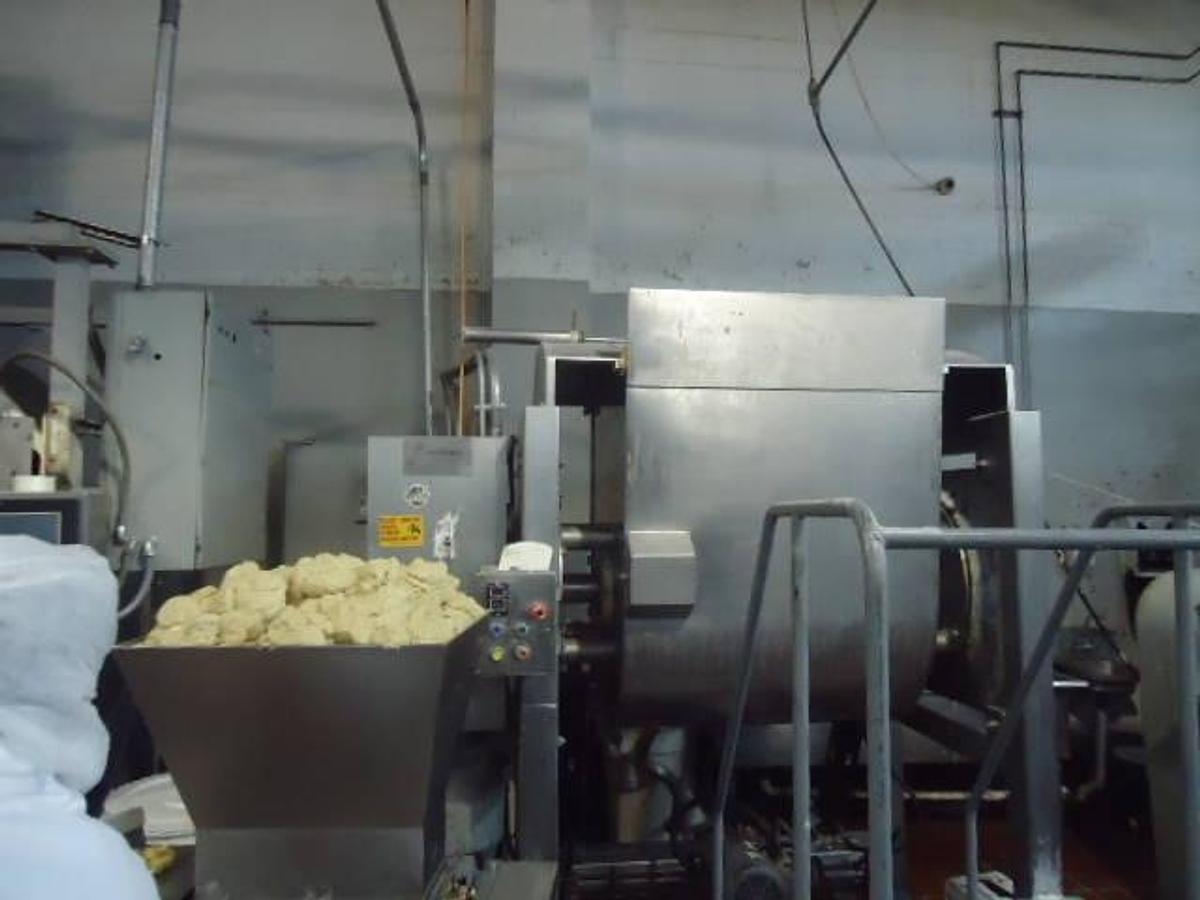
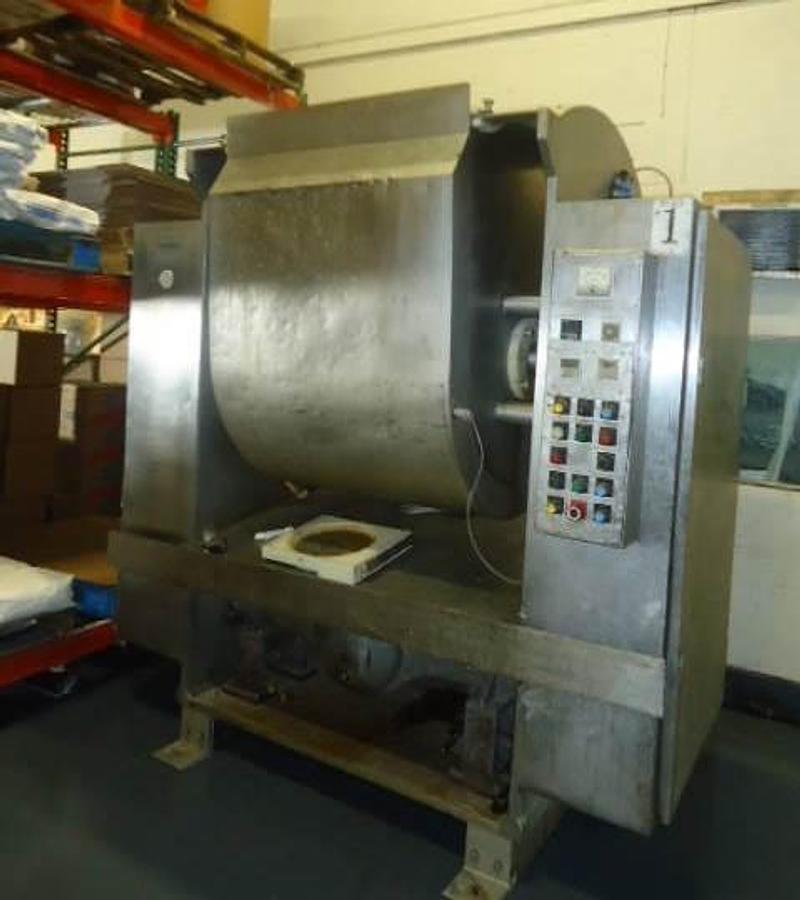
The most recognized Shaffer mixer designs include horizontal sigma arm mixers, which are engineered for thorough incorporation of dense, heavy doughs. These machines are a staple in large commercial bakeries, industrial food production facilities, and contract baking operations where batch consistency and throughput are critical. Because of their build quality, Shaffer mixers frequently appear on the used equipment market after years or even decades of service, making them accessible to buyers who need industrial-grade capacity without the cost of purchasing new equipment.
What sizes and capacities are available for used Shaffer bakery mixers?
Shaffer bakery mixers are available across a wide range of batch capacities, generally spanning from around 300 pounds of dough on the smaller end to well over 2,000 pounds per batch on the largest industrial models. Mid-range models, such as 600-pound and 1,200-pound capacity machines, are among the most commonly encountered on the used equipment market and represent a practical fit for medium to large commercial bakery operations. The specific capacity of a machine is usually indicated in its model designation, which makes it straightforward to compare options when shopping for used equipment.
For buyers sourcing used Shaffer mixers, available inventory at any given time depends on what has come off production lines and entered the secondary market. Listings may include machines specified in stainless steel construction, which is particularly relevant for food-grade production environments where sanitation and corrosion resistance are priorities. Buyers should carefully match the listed capacity to their actual production batch sizes, factoring in not just current volume but also anticipated growth, since undersizing a mixer can create bottlenecks just as quickly as oversizing one can create inefficiencies.
What types of dough and batters can Shaffer mixers handle?
Shaffer mixers are built specifically for heavy, dense mixing applications that would overwhelm lighter planetary or spiral mixers. Bread dough is the most common application, including high-hydration artisan-style loaves, sandwich bread doughs, and hearth breads that require extended mixing cycles to develop proper gluten structure. Cookie doughs, cracker doughs, and other stiff, low-moisture mixtures are also well within the capability of Shaffer horizontal sigma arm machines, which use a kneading and folding action that distributes ingredients thoroughly without overworking the product.
Beyond dough, Shaffer mixers are used for a range of other dense food mixtures in industrial settings, including certain confectionery masses, meat-based fillings, and specialty blended products. The sigma arm design excels at incorporating ingredients that resist blending, making it a versatile tool in facilities that produce multiple product types. Buyers evaluating a used Shaffer mixer should consider the range of products they intend to produce and confirm that the machine's mixing action and capacity align with those specific formulations, since different product types may benefit from different arm configurations or bowl geometries.
Are Shaffer bakery mixers suitable for small bakeries, or are they strictly industrial equipment?
Shaffer mixers are designed from the ground up for commercial and industrial scale production. Even the smaller models in the Shaffer lineup, such as 600-pound capacity machines, are intended for operations producing significant daily volumes of baked goods. For a small artisan bakery producing a few hundred loaves per day, a Shaffer mixer would almost certainly be oversized, and the capital cost, floor space requirements, and utility demands would likely outweigh the benefits.
That said, a growing mid-size bakery or a food production company expanding into higher-volume output may find that a used Shaffer mixer hits a practical sweet spot. Buying used allows a business to access industrial-grade capacity at a fraction of the cost of comparable new equipment. The key is an honest assessment of current and near-term production volumes. A 600-pound mixer, for example, could serve a regional wholesale bakery or a commissary kitchen very well, while a 1,200-pound machine is better suited to facilities running multiple shifts or producing for retail distribution at scale. Consulting with an equipment dealer who specializes in bakery machinery can help narrow down which capacity makes sense for a specific operation.
What is the typical price range for a used Shaffer bakery mixer?
Pricing for used Shaffer bakery mixers varies considerably depending on the model, capacity, age, condition, and any refurbishment work that has been performed. Smaller capacity models in good working condition may be priced in the range of several thousand dollars, while larger industrial units with capacities of 1,000 pounds or more can command prices well into the tens of thousands. Stainless steel construction, which is standard on many Shaffer models, tends to support higher resale values because of its durability and compliance with food-grade sanitation requirements.
Buyers should also factor in costs beyond the listed price of the machine itself. Rigging, crating, freight, and installation can add meaningfully to the total landed cost, particularly for large, heavy equipment like a 1,200-pound sigma arm mixer. Getting a clear picture of all-in costs before committing to a purchase is important. Reaching out to the selling dealer for a breakdown of packaging, loading, and shipping costs to a specific destination will prevent surprises. Buyers who take time to compare a few listings and ask detailed questions about machine condition tend to make better purchasing decisions than those who focus on price alone.
How do I determine the right Shaffer mixer model for my production volume?
The starting point for matching a Shaffer mixer to a production volume is calculating the total weight of dough or batter your operation needs to produce per shift or per day, then working backward to determine how many batches are realistic given your production schedule. A 600-pound capacity mixer running three batches per shift can produce up to 1,800 pounds of mixed product per shift, while a 1,200-pound machine running the same number of batches doubles that output. Mixing cycle times vary by product type, typically ranging from 8 to 20 minutes per batch for most bread doughs, so cycle time is a factor in calculating realistic daily throughput.
Beyond raw capacity math, buyers should consider the physical footprint of the machine, available three-phase electrical service, and the layout of the production floor. Larger Shaffer mixers require substantial floor space and may need reinforced flooring or specific utility connections. If a facility is already running at capacity, a used Shaffer mixer can be a cost-effective way to expand without building out a new production line. Equipment dealers who specialize in bakery machinery can often help buyers think through these variables and identify models that fit both the production requirements and the physical constraints of the facility.
What should buyers know about inspecting a used Shaffer mixer before purchasing?
Inspecting a used Shaffer mixer thoroughly before purchase is one of the most important steps a buyer can take to protect their investment. Reputable used equipment dealers typically offer in-person inspections, virtual walkthroughs, or detailed video documentation of a machine's current condition. For a mixer of this size and complexity, a video inspection should cover the mixing arms, bowl interior, drive components, seals, and any visible wear points on the frame and housing. Buyers should pay close attention to the condition of the sigma arms and bowl liner, since these components are subject to significant wear and can be costly to address.
It is worth noting that most used equipment dealers are not licensed food production facilities, so they generally cannot run actual product through a machine to demonstrate its mixing performance. What dealers can typically demonstrate is that the machine powers on, that the drive system functions, and that there are no obvious mechanical issues. For machines that are still installed at a production facility awaiting decommissioning, an in-person inspection at the plant may be possible, and in some cases the buyer may be able to observe the machine in operation. Buyers should ask the dealer directly about the machine's history, how it was last used, and whether any components have been replaced or repaired, as this context can significantly inform the purchase decision.
Are replacement parts and service support available for used Shaffer mixers?
Parts availability for Shaffer mixers depends heavily on the specific model and its age. Because Shaffer operates under the AMF Bakery Systems brand, buyers can contact AMF directly to inquire about parts support for a particular machine. Older or discontinued models may have limited factory support, while more recent designs are more likely to have parts in active supply. Before purchasing a used Shaffer mixer, it is a practical step to contact the manufacturer with the machine's model number and serial number to understand what level of support to expect, which components are still stocked, and what the lead times look like for critical wear parts.
For older machines where factory parts support is limited, third-party fabrication and aftermarket parts suppliers can sometimes fill the gap, particularly for simpler components like seals, gaskets, and wear liners. Sigma arm mixers as a category have been in use for many decades, and there is a community of experienced bakery equipment technicians who are familiar with their maintenance and repair. Buyers who are purchasing a used Shaffer mixer for a production environment should budget for preventive maintenance and have a plan for sourcing parts before a breakdown occurs, rather than waiting until something fails to figure out the supply chain.
What are the typical payment and shipping terms for buying a used Shaffer mixer from a dealer?
Used equipment dealers typically require full payment prior to shipping the machine. Some dealers may offer payment terms to repeat customers or established businesses with a prior purchasing relationship, but buyers who are purchasing from a dealer for the first time should expect to pay in full before the equipment is loaded and shipped. Accepted payment methods vary by dealer but commonly include wire transfer, and buyers should clarify the accepted forms of payment early in the process to avoid delays.
Shipping costs for a machine the size of a Shaffer bakery mixer can be substantial and should be factored into the total budget from the start. Larger machines require professional rigging for loading at the origin and unloading at the destination, which is typically an added cost on top of freight charges. The level of crating or palletization required to protect the machine in transit will also affect the shipping cost. Buyers should request a detailed breakdown of packaging, rigging, and freight costs to their specific location before finalizing a purchase, so there are no surprises in the total landed cost of the equipment.
What is the expected lifespan of a Shaffer bakery mixer, and how does maintenance affect it?
Shaffer mixers have a reputation for exceptional longevity, which is one of the primary reasons they hold value on the used equipment market. It is not unusual to find Shaffer machines that have been in continuous production use for 20, 30, or even 40 years. This durability is a product of their heavy-duty construction, which prioritizes robust drive systems, thick-walled bowls, and mechanical simplicity compared to more electronically complex modern equipment. A well-maintained Shaffer mixer can realistically serve a production facility for several decades before requiring major capital repairs.
Maintenance practices have a significant impact on how long these machines remain productive. Regular lubrication of drive components, inspection and replacement of seals and gaskets, monitoring of mixing arm wear, and keeping the bowl and housing clean are the core tasks that extend service life. Facilities that follow a documented preventive maintenance schedule tend to get far more useful life out of their equipment than those that only address issues reactively. When evaluating a used Shaffer mixer, asking about the maintenance history and whether service records are available can provide meaningful insight into how the machine has been treated and what condition to expect going forward.