Category
Manufacturer
Model
FAQ:
What is a Sentinel tabletop heat sealer used for?
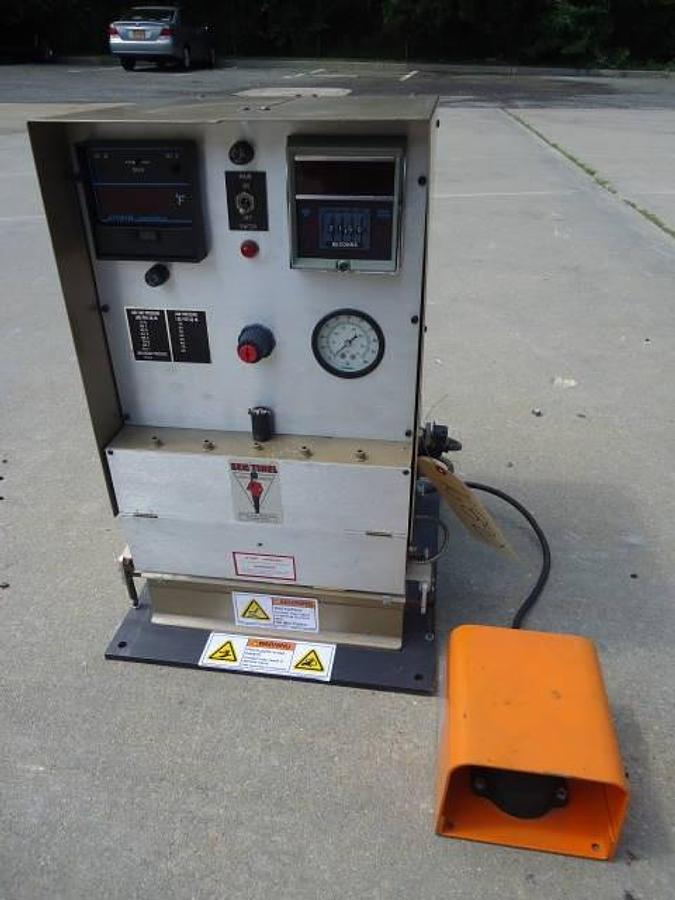
Sentinel tabletop heat sealers are mid-to-commercial grade machines designed for small businesses, light manufacturing operations, and packaging facilities that need reliable, repeatable bag sealing without the footprint or cost of a full inline sealing system. They sit on a workbench or packing table and handle a high volume of sealing tasks that would be impractical with hand-held or consumer-grade equipment. Common applications include food packaging, pharmaceutical pouches, industrial parts bagging, and retail product packaging.
The machines are built around a heavy-duty metal frame, which sets them apart from lighter-duty sealers that tend to wear out quickly under continuous use. Because of this build quality, they hold up well in production environments where the sealer is running dozens or hundreds of cycles per shift. Whether a facility is sealing poly bags of hardware components or foil-laminated pouches of food product, the Sentinel is designed to deliver consistent seals across a full workday.
What sealing technology does the Sentinel tabletop heat sealer use?
Most Sentinel tabletop heat sealers use impulse sealing technology rather than constant heat. With impulse sealing, the heating element only activates during the actual sealing cycle, then cools before the bag is released. This is different from constant-heat sealers, which maintain a hot bar at all times. The practical benefits of impulse sealing include lower energy consumption, a reduced risk of burning or melting thin materials, and a safer working environment since the sealing bar is not hot between cycles.
Impulse sealing also tends to produce cleaner, more consistent seals on thermoplastic films because the controlled heat-and-cool cycle fuses the material without over-processing it. For operators sealing a wide range of bag types throughout a shift, impulse technology gives more flexibility to adjust settings for different materials without constantly managing a hot bar. This makes Sentinel machines a practical choice for packaging lines that run varied product sizes or film types.
What packaging materials is the Sentinel tabletop heat sealer compatible with?
Sentinel tabletop heat sealers are compatible with a broad range of thermoplastic packaging materials. The most common include polyethylene (PE), polypropylene (PP), Mylar, and foil-laminated bags. These materials cover the majority of packaging applications in food production, pharmaceuticals, electronics, and general industrial use. The key requirement is that the material must be heat-sealable, meaning it contains a thermoplastic layer that fuses under heat and pressure.
Materials that are not heat-sealable, such as paper or woven fabrics without a poly coating, will not bond through heat sealing alone. Operators working with multi-layer or specialty laminates should check the material specifications against the sealer's temperature and dwell time range to confirm compatibility. Adjusting dwell time and temperature settings on the Sentinel allows it to accommodate different material thicknesses and compositions, giving packaging operations flexibility across a product line without needing separate machines for each film type.
What seal lengths are typically available on Sentinel tabletop heat sealers?
Sentinel tabletop heat sealers are available in multiple size configurations to suit different bag widths and packaging needs. Seal lengths in this category of machine typically range from around 8 inches up to 24 inches, with the most common commercial sizes falling in the 12-inch to 20-inch range. The right seal length depends on the widest bag a facility needs to seal, since the sealing bar must span the full width of the bag opening to create a complete seal.
When sourcing a used Sentinel sealer, it is worth confirming the exact seal bar length on the specific unit being purchased, as different models within the Sentinel line are built for different seal lengths. A machine sized for 12-inch bags cannot seal a 16-inch bag in a single pass, so matching the machine to the packaging application is an important step before purchase. Used equipment listings should specify the model and seal length, and buyers should verify this detail directly with the seller if it is not clearly stated.
What voltage options are available for Sentinel tabletop heat sealers?
Sentinel tabletop heat sealers are typically available in single-phase configurations, with voltage options that generally include 110V and 220V depending on the model. The 110V versions can run on standard household or light commercial circuits, making them easy to plug in and operate without any electrical modifications. The 220V models are suited for facilities with higher-amperage circuits, which is common in manufacturing and warehouse environments.
When purchasing a used Sentinel heat sealer, confirming the voltage requirement of the specific unit is an important step before finalizing the purchase. Running a 220V machine on a 110V circuit, or vice versa, can damage the machine or create a safety hazard. Buyers should verify the voltage, phase, and amperage requirements with the seller and check that their facility's electrical supply matches before the machine ships. This is a straightforward detail to confirm, but one that is easy to overlook when buying used equipment remotely.
How do you adjust temperature and dwell time on a Sentinel heat sealer?
Temperature and dwell time are the two primary settings that control seal quality on a Sentinel tabletop heat sealer. Temperature determines how much heat is applied to the film during the sealing cycle, while dwell time controls how long the heating element stays in contact with the material. Together, these settings must be dialed in to match the specific film type and thickness being sealed. Too little heat or too short a dwell time results in a weak or incomplete seal, while too much heat can melt, distort, or burn the material.
Sentinel sealers typically have manual or digital controls for both settings, allowing operators to make incremental adjustments until the seal quality is consistent. The recommended starting point is to consult the film manufacturer's specifications for the appropriate sealing temperature range, then fine-tune dwell time through test seals. On a used machine, it is a good practice to verify that the temperature control and timer are functioning accurately before running production, since calibration can drift on older equipment. Sellers of used Sentinel sealers should be able to demonstrate that these controls are operational during an inspection.
Is the Sentinel tabletop heat sealer suitable for food packaging applications?
Sentinel heat sealers are widely used in food packaging environments, particularly for sealing polyethylene and polypropylene bags, foil pouches, and Mylar bags that contain dry goods, snacks, coffee, spices, and similar products. The machines themselves are general-purpose heat sealers, so their suitability for a specific food application depends on the packaging materials being used rather than the sealer alone. As long as the bags or pouches are made from food-safe, heat-sealable film, a Sentinel sealer can produce the hermetic seals needed to protect the product.
For regulated food production environments, the packaging materials, facility conditions, and overall process must comply with applicable food safety standards. The sealer is a piece of equipment in that process, not a certified food-safe system on its own. Buyers sourcing a used Sentinel for food packaging should also factor in sanitation considerations, since used machines may require cleaning and inspection before being introduced into a food production area. Confirming the machine's condition through a pre-purchase inspection is especially important in this context.
What should buyers look for when inspecting a used Sentinel tabletop heat sealer?
A thorough inspection of a used Sentinel heat sealer should cover both the mechanical and electrical components of the machine. Key areas to check include the condition of the heating element and Teflon-coated sealing bar, since these wear over time and affect seal quality. The pressure arm, spring tension, and jaw alignment should all be examined to confirm the machine applies even pressure across the full seal length. Any warping, cracking, or uneven wear on the sealing jaw is a sign that seal quality may be inconsistent. The temperature control and dwell timer should be tested to verify they respond accurately and hold their settings.
Reputable used equipment dealers typically accommodate in-person inspections, virtual walkthroughs, or video captures of the machine in operation. Buyers who cannot visit in person should request a video showing the machine cycling through a seal, with close-up views of the heating element, controls, and jaw mechanism. Keep in mind that most equipment dealers are not set up to run actual production materials through a machine, since that requires different facility permitting. The inspection is focused on confirming mechanical and electrical function rather than running a full production test. Consulting the Sentinel manufacturer is also worthwhile to understand parts availability and support for the specific model being considered, since age and model generation can affect what service resources are accessible.
What are the shipping and handling considerations for a used Sentinel tabletop heat sealer?
Sentinel tabletop heat sealers are compact compared to large industrial equipment, but they still require careful packaging to prevent damage to the sealing jaw, control panel, and frame during transit. Sellers should palletize or crate the machine appropriately based on its size and weight. The level of packaging directly affects shipping cost, and buyers should ask the seller for specifics on how the machine will be prepared for shipment before agreeing to a price. Shipping charges will vary based on the packaging method, carrier, distance, and whether any special handling is required.
For heavier or larger Sentinel models, loading and unloading may require a liftgate or forklift, which can add to the total cost of getting the machine to its destination. Buyers should request a full breakdown of packaging, freight, and any rigging fees so they have an accurate picture of the total landed cost before committing to the purchase. It is also worth confirming the delivery format, whether the machine will arrive on a pallet, in a crate, or otherwise, so the receiving facility can prepare the right equipment to unload it safely.
What payment terms should buyers expect when purchasing a used Sentinel heat sealer?
Most used equipment dealers require payment in full before a machine ships. This is standard practice in the used machinery industry and applies to used Sentinel heat sealers as it does to most other equipment categories. The rationale is straightforward: unlike a retail purchase with easy returns, used machinery transactions involve significant logistics costs on both sides, and dealers need to confirm cleared payment before arranging packaging, freight, and pickup. Buyers should plan for this upfront payment requirement when budgeting for a purchase.
Some dealers may offer payment terms to repeat customers or established buyers with a track record, but this is the exception rather than the rule for first-time transactions. Buyers should ask about accepted payment methods early in the process, as some dealers prefer wire transfers, while others may accept credit cards or other forms of payment. Clarifying payment logistics before the purchase is finalized helps avoid delays once both parties have agreed on price and the machine is ready to ship.