Category
Manufacturer
Model
FAQ:
What sizes do used Sanitank stainless steel tanks typically come in?
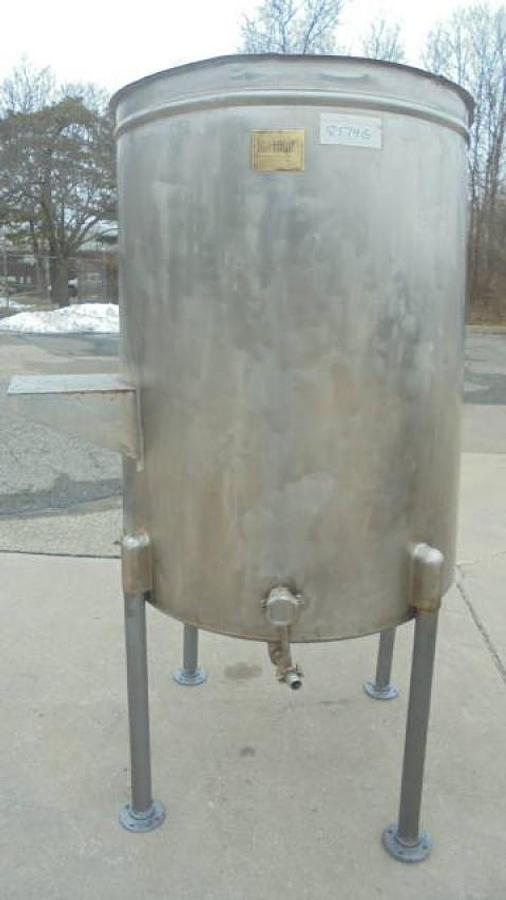
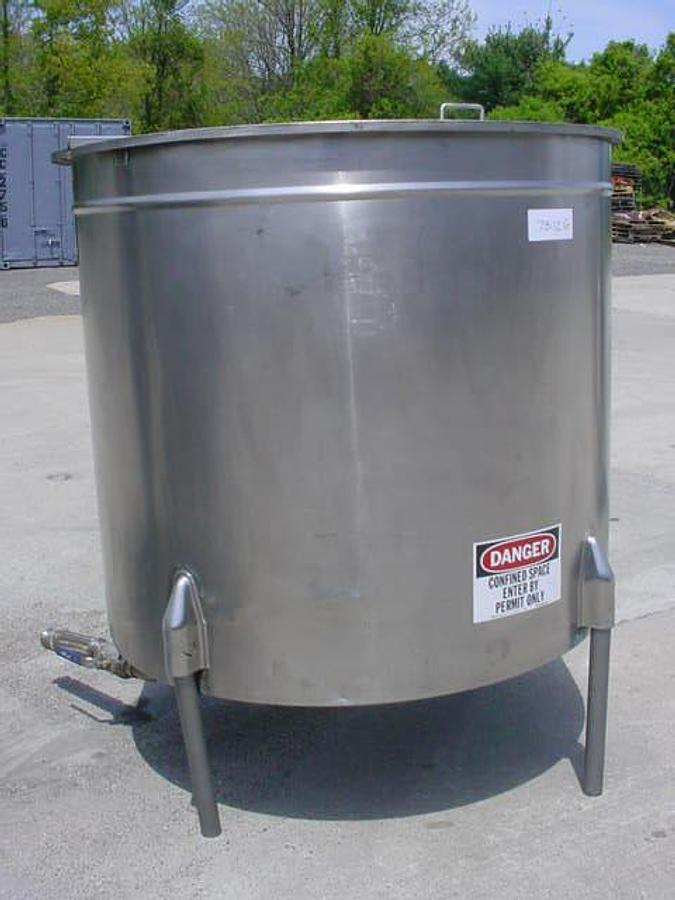
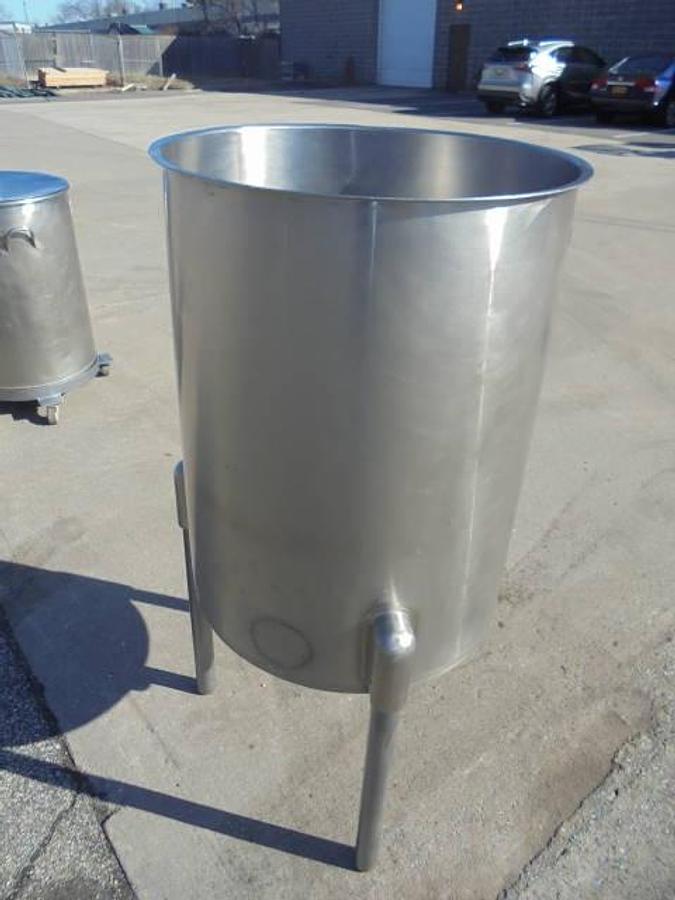
Sanitank stainless steel tanks span a wide range of capacities, from compact units around 50 to 60 gallons up to large industrial tanks exceeding 10,000 gallons. The right size depends on your process volume, available floor space, and whether the tank will be stationary or portable. On the used market, common sizes that appear regularly include 60-gallon, 230-gallon, 250-gallon, and 400-gallon vertical tanks, among others. Portable versions in the 200 to 300-gallon range often include side agitators and are popular in food processing, dairy, and pharmaceutical operations where batches are mixed and transferred frequently.
When buying a used Sanitank, it pays to think slightly larger than your immediate need. Capacity can become a bottleneck faster than most buyers expect, and sourcing a specific size on the secondary market takes time. Reviewing the exact specifications listed by the dealer, including interior dimensions and working capacity versus total capacity, helps avoid sizing mistakes. Some listings will also note whether the tank has a hinged lid, a manway, or other access features that affect how the tank integrates into your production line.
What grade of stainless steel is used in Sanitank tanks?
Sanitank tanks are most commonly constructed from 304 or 316L stainless steel. Type 304 is the standard choice for general food processing, water storage, and light chemical holding because it offers good corrosion resistance at a lower cost. Type 316L adds molybdenum to the alloy, which significantly improves resistance to chlorides, acids, and caustic cleaning agents. That makes 316L the preferred material in pharmaceutical manufacturing, dairy processing, and applications where aggressive CIP (clean-in-place) chemicals are used regularly.
When evaluating a used Sanitank, confirming the actual steel grade is an important step. The material grade affects not just corrosion performance but also regulatory compliance in certain industries. A reputable dealer should be able to provide documentation or mill certificates if available, and buyers can also request a close inspection of any stamped or welded identification plates on the tank. If the intended application involves chloride-heavy environments or strict pharmaceutical standards, prioritizing 316L over 304 is generally worth the price difference, even on the used market.
Are used Sanitank stainless steel tanks suitable for food and beverage applications?
Sanitank tanks are specifically designed with sanitary applications in mind, making them a common choice in food processing, beverage production, dairy operations, and pharmaceutical manufacturing. Key design features that support food-grade use include smooth interior welds, polished or electropolished interior surfaces, and configurations that minimize dead legs where product can pool and bacteria can grow. The interior surface finish is measured in Ra microinch or grit, and food-grade applications typically call for a finish of 32 Ra or finer, with electropolished or mirror finishes preferred in the most sensitive environments.
Buying a used Sanitank for food or beverage use requires a careful inspection to confirm the tank's interior condition. Scratches, pitting, or compromised welds can create harborage points for contamination that are difficult to clean effectively. Buyers should request detailed photos or video of the interior, and an in-person or virtual inspection is strongly recommended before purchase. It is also worth verifying whether the tank carries any sanitary certifications such as 3-A Sanitary Standards compliance or FDA-acceptable material documentation, as these credentials affect whether the tank can be used in regulated production environments without modification.
What certifications should buyers look for when purchasing a used Sanitank?
The most relevant certifications for Sanitank stainless steel tanks depend on the intended application. For food, beverage, and dairy processing, 3-A Sanitary Standards certification is widely recognized and often required by facility auditors and regulatory inspectors. This standard governs surface finish requirements, material specifications, and design features that allow thorough cleaning and prevent contamination. FDA compliance for contact materials is another common requirement, confirming that the materials used in tank construction are acceptable for direct food contact.
For tanks used in pharmaceutical or biotech applications, ASME (American Society of Mechanical Engineers) certification may be required if the tank is a pressure vessel. Some applications also require documentation of surface finish testing, weld inspection records, or material traceability. When buying used equipment, original certification paperwork may or may not accompany the tank. Buyers should ask the dealer upfront what documentation is available and, if certifications are critical to their process, factor in the potential cost of re-inspection or re-certification by a qualified third party. Consulting with your facility's compliance team before purchase can prevent costly surprises after delivery.
Can Sanitank stainless steel tanks be used to store chemicals or corrosive substances?
Stainless steel tanks, including those made by Sanitank, are used across a range of chemical storage applications, but compatibility depends heavily on the specific chemical, its concentration, and the grade of stainless steel in the tank. Type 316L stainless steel offers meaningfully better resistance to acids, chlorides, and caustic solutions compared to 304, and is generally the starting point for any chemical storage evaluation. That said, even 316L has limits. Highly concentrated hydrochloric acid, certain bleach solutions, and other aggressive chemicals can attack stainless steel over time, so a chemical compatibility check is essential before committing to a tank.
For used tanks intended for chemical service, the inspection process becomes even more critical. Previous use in a different chemical environment can leave residue, cause micro-pitting, or affect weld integrity in ways that are not immediately visible. Buyers should ask the dealer about the tank's service history if known, and request interior photos or a video walkthrough. In some cases, a used tank that has been in sanitary food service may actually be in better condition for chemical storage than one that has been used in a harsher industrial environment. Matching the tank's history and material grade to your specific chemical application reduces the risk of premature failure or contamination.
What is the difference between a vertical and a portable Sanitank stainless steel tank?
Vertical Sanitank tanks are fixed-position units designed to sit on legs or a base frame and remain stationary during use. They are commonly used for bulk storage, batch holding, or in-line processing steps where product stays in the tank for extended periods. Vertical tanks often have top-mounted lids or manways, and larger versions may include features like hinged lids for easy access, bottom outlet valves, and spray balls for CIP cleaning. Their stationary design makes them well-suited for permanent installation in a production facility.
Portable Sanitank tanks, by contrast, are mounted on casters or a wheeled frame so they can be moved between workstations or production areas. These units are popular in operations where flexibility matters, such as mixing batches in one area and transferring them to another for filling or packaging. Portable tanks often include agitators, typically side-mounted, to keep contents mixed during transport and use. When evaluating a used portable tank, pay attention to the condition of the casters, the agitator shaft seal, and the frame welds, as these components see more wear than on a stationary tank. Both vertical and portable configurations are regularly available on the used market in a range of capacities.
How should buyers inspect a used Sanitank before purchasing?
A thorough inspection of a used Sanitank should cover both the interior and exterior of the tank. On the exterior, look for dents, cracks, corrosion around welds, and the condition of any fittings, valves, or agitator assemblies. On the interior, the focus shifts to surface finish integrity. Scratches, pitting, discoloration from chemical exposure, and compromised welds are all red flags, particularly if the tank will be used in a sanitary application. The lid seal or gasket condition is also worth checking, as worn seals can be a contamination risk and a replacement cost to factor into the purchase.
Most used equipment dealers can accommodate in-person inspections, virtual walkthroughs, or detailed video captures of the tank so buyers can assess condition before committing. If the tank is still installed at a production facility, an in-person inspection may need to be coordinated between the dealer and the facility owner. Keep in mind that dealers typically do not have the permits or production setup to run product through the tank during inspection, so testing is limited to visual and mechanical checks rather than full operational trials. Buyers who cannot inspect in person should ask for close-up photos of the interior welds, fittings, and any areas of visible wear, and should work only with dealers who are transparent about the tank's known history and current condition.
What should buyers know about shipping a used Sanitank stainless steel tank?
Shipping a used stainless steel tank involves more logistical planning than most standard freight shipments. The size and weight of the tank determine the type of carrier and equipment needed. Smaller tanks in the 60 to 250-gallon range can often ship on standard pallets with proper blocking and strapping, while larger tanks may require custom crating to prevent damage in transit. The level of packaging directly affects shipping cost, and buyers should ask the dealer for a detailed breakdown of palletization or crating requirements before agreeing to a price.
Larger or heavier tanks often require specialized rigging for loading at the dealer's location and unloading at the destination. Forklift access, crane lifts, or liftgate service may all be necessary depending on the tank's size and the facilities involved, and these services add to the total landed cost. Buyers should confirm what equipment is available at their receiving location before the tank ships to avoid delays or damage on arrival. Getting a full landed cost estimate that includes packaging, rigging, freight, and any required unloading equipment gives a much clearer picture of the true purchase price compared to looking at the listed equipment price alone.
What payment terms are typical when buying used Sanitank tanks from a dealer?
Used equipment dealers generally require full payment before a tank is released for shipping. This is standard practice across the industry and reflects the nature of used equipment transactions, where the dealer needs to confirm funds before coordinating logistics. Some dealers may extend payment terms to repeat customers or buyers with an established purchasing history, but for first-time buyers, payment in full prior to shipment is the norm. Common payment methods include wire transfer, ACH, and in some cases credit card, though dealers may charge a processing fee for card payments on larger transactions.
Buyers should also account for the full landed cost when budgeting, not just the listed equipment price. Shipping, rigging, and crating costs can add meaningfully to the total, and these are typically separate from the equipment price. Clarifying all costs upfront, including any applicable sales tax depending on the buyer's location and the dealer's nexus, prevents surprises at the time of invoicing. Asking the dealer for a complete written quote that itemizes equipment, packaging, and freight before agreeing to purchase is a straightforward way to avoid misunderstandings.
How does buying a used Sanitank compare to purchasing a brand-new stainless steel tank?
The most obvious advantage of buying a used Sanitank is cost. Used stainless steel tanks are typically available at a significant discount compared to purchasing an equivalent tank through a manufacturer or distributor. For operations that need to add capacity quickly or are working within a tight capital budget, the used market can deliver a functional, well-built tank at a fraction of the replacement cost. Sanitank has a long-standing reputation in the sanitary and industrial tank space, so used units from this manufacturer tend to hold up well and are a known quantity among buyers familiar with the brand.
The tradeoffs are worth understanding clearly. Used equipment is sold as-is, meaning the buyer takes on the responsibility of verifying condition through inspection rather than relying on manufacturer quality controls for a freshly built unit. There is no production lead time to wait for, but there is also no ability to specify custom dimensions, connections, or finishes. The selection available at any given time depends on what has come to market, so buyers with very specific requirements may need to be patient or flexible. Working with a dealer who specializes in sanitary and food-grade processing equipment, rather than a general industrial surplus source, increases the likelihood of finding a tank with a clean service history and accurate documentation.