Category
Manufacturer
Model
FAQ:
What sizes and capacities are Sani-Fab stainless sanitary mix tanks available in?
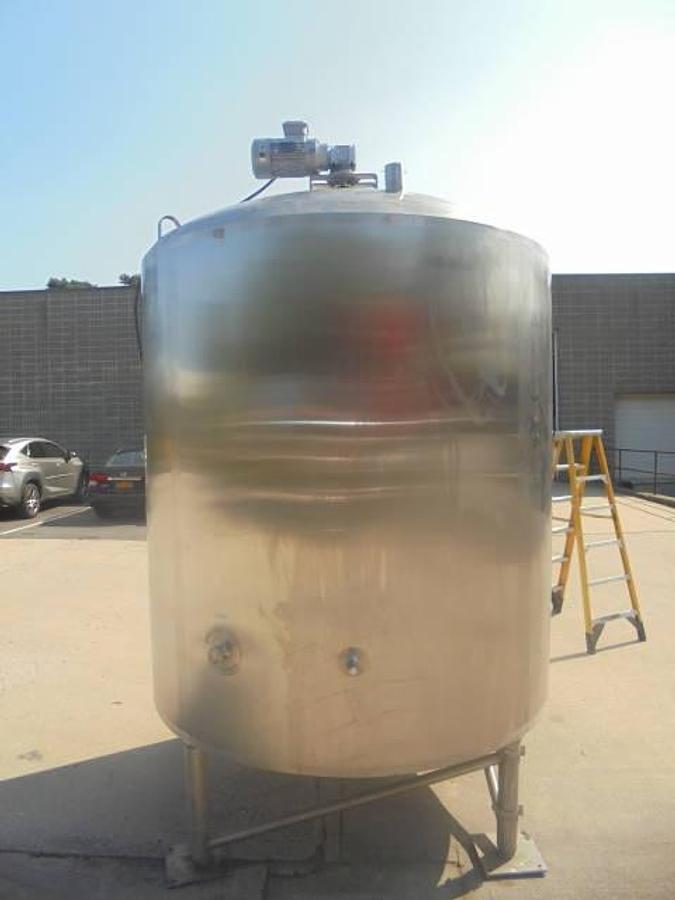
Sani-Fab sanitary mix tanks have been produced in a range of capacities to suit different production scales, from smaller pilot-batch vessels to large-scale processing tanks. On the used equipment market, capacities commonly encountered include tanks in the range of a few hundred gallons up to several thousand gallons. A 1,250-gallon insulated model is one example of the mid-range sizes that surface in the secondary market, and it reflects the kind of production-scale vessel that food, beverage, and pharmaceutical processors typically retire after years of reliable service.
Buyers sourcing used Sani-Fab tanks should pay close attention to the actual measured capacity versus the nominal rated capacity, as these can differ slightly depending on the vessel geometry and how the manufacturer defined working volume. Diameter, straight-wall height, and head configuration all affect usable volume. Asking the dealer for the full dimensional spec sheet, including overall height with any attached agitator or top-mounted components, is a practical step before committing to a purchase, particularly if the tank needs to fit within an existing facility layout.
What grade of stainless steel is used in Sani-Fab sanitary mix tanks?
Sani-Fab sanitary mix tanks are typically fabricated from 304 or 316L stainless steel, with the choice of alloy depending on the intended application. Type 304 is the more common and economical option, offering good corrosion resistance for most food, beverage, and dairy applications. Type 316L contains molybdenum and has a lower carbon content than standard 316, which gives it superior resistance to chloride-induced pitting and crevice corrosion. That makes 316L the preferred choice for pharmaceutical manufacturing, cosmetics processing, and any application involving aggressive cleaning chemistries or high-chloride product formulations.
When evaluating a used Sani-Fab tank, confirming the actual alloy grade is an important due-diligence step. Mill certifications or material test reports (MTRs) are the most reliable way to verify the stainless grade, and reputable dealers should be able to supply documentation if it was retained with the equipment. If MTRs are unavailable, a positive material identification (PMI) test using an XRF analyzer can be performed on-site or arranged through a third party. Knowing the exact alloy matters for regulatory compliance in pharmaceutical and food manufacturing environments where material traceability is often required.
What does the interior surface finish on a sanitary mix tank mean, and what Ra rating should buyers look for?
Surface finish on the interior of a sanitary mix tank refers to the smoothness of the wetted stainless steel surfaces, typically measured in Ra (roughness average) microinches or micrometers. A smoother surface has a lower Ra value and is less likely to harbor bacteria, biofilm, or product residue in microscopic surface irregularities. For sanitary process equipment used in food, dairy, beverage, and pharmaceutical applications, interior finishes of 32 Ra microinch (approximately 0.8 Ra micrometers) or better are the standard benchmark. Some pharmaceutical applications demand even finer finishes, down to 15 Ra microinch or 20 Ra microinch, particularly for sterile manufacturing environments.
On used equipment, the interior finish condition is one of the most important factors to assess before purchase. Years of production use, aggressive CIP cycles, and abrasive cleaning can degrade the surface finish over time. Buyers should request close-up photographs or video of the interior, paying attention to any pitting, weld seams, scratches, or discoloration that might indicate surface degradation. In some cases, a used tank can be re-polished to restore it to an acceptable finish, but that adds cost and should factor into the overall purchase decision. A thorough inspection, whether in person or via video, is the most reliable way to evaluate the actual interior condition of a specific tank.
Are Sani-Fab mix tanks certified to 3-A Sanitary Standards?
3-A Sanitary Standards are a set of design and fabrication criteria developed by 3-A SSI (Sanitary Standards, Inc.) for equipment used in dairy, food, and beverage processing. Equipment that meets these standards is designed to be cleanable, with smooth surfaces, minimal crevices, and geometries that allow effective drainage and inspection. For processors in regulated industries, 3-A compliance or certification is a meaningful trust signal and may be required by facility auditors, customers, or regulatory bodies. Sani-Fab, as a manufacturer of sanitary process equipment, has produced vessels designed with sanitary fabrication principles consistent with these standards, though whether a specific used tank carries a current 3-A symbol depends on the original build specification and the documentation retained with the machine.
When purchasing a used sanitary mix tank, buyers should ask the dealer whether the original 3-A documentation or compliance records are available. It is worth noting that a 3-A symbol on a piece of used equipment reflects the design intent at the time of manufacture, not necessarily the current condition of the machine after years of production use. Buyers in strictly regulated environments, such as dairy or pharmaceutical processing, should conduct a thorough inspection and, if necessary, consult with their quality assurance team to determine whether the used vessel meets current facility standards before placing it back into service.
What industries typically use Sani-Fab sanitary mix tanks?
Sani-Fab sanitary mix tanks are designed for industries where hygiene, cleanability, and material purity are non-negotiable. The primary markets include food processing, dairy manufacturing, beverage production (including craft brewing and juice processing), pharmaceutical manufacturing, nutraceuticals, and cosmetics or personal care product manufacturing. In all of these sectors, the mixing vessel comes into direct contact with consumable or regulated products, so the tank must be fabricated to sanitary standards that prevent contamination and allow thorough cleaning between batches.
The dairy industry has historically been one of the strongest drivers of sanitary stainless tank demand, given the strict hygiene requirements for milk, cream, yogurt, and cheese production. Pharmaceutical and biotech manufacturers require tanks that meet even more rigorous standards, often specifying 316L stainless steel, electropolished interior surfaces, and full documentation packages. Cosmetics and personal care manufacturers occupy a middle ground, generally requiring sanitary fabrication but not always the full regulatory documentation demanded in pharma. Used Sani-Fab tanks show up across all of these industries as processors upgrade capacity, change product lines, or consolidate facilities, making the secondary market a practical sourcing channel for buyers in any of these sectors.
Are Sani-Fab sanitary mix tanks compatible with CIP and SIP cleaning systems?
CIP (Clean-in-Place) and SIP (Steam-in-Place) compatibility is a standard design consideration for sanitary process tanks intended for regulated food, dairy, beverage, and pharmaceutical manufacturing. CIP compatibility means the tank is designed so that cleaning solutions can be circulated through the vessel and across all wetted surfaces without requiring disassembly, typically using spray balls or spray nozzles mounted inside the tank. SIP compatibility means the vessel can withstand pressurized steam for sterilization purposes, which requires appropriate pressure ratings, proper drainage design, and steam-compatible seals and fittings. Sani-Fab tanks built for these applications are generally designed with these requirements in mind, including sloped bottoms for full drainage and sanitary clamp fittings that allow spray devices to be installed and removed without tools.
When evaluating a used Sani-Fab tank for CIP or SIP use, buyers should verify that the spray ball or spray nozzle ports are present and in good condition, that the vessel's pressure rating is appropriate for the intended SIP cycle parameters, and that all gaskets and seals are intact or can be replaced with compatible materials. Dealers can typically provide photographs or video of the tank's interior fittings and nozzle configuration to help buyers assess compatibility before committing to a purchase. If the tank will be integrated into an existing CIP circuit, sharing the vessel's dimensional drawings and nozzle layout with the facility's process engineer before purchase is a practical way to confirm fit.
What agitator and mixing configurations are typically found on used sanitary mix tanks?
Sanitary mix tanks can be equipped with a variety of agitator styles depending on the viscosity and shear sensitivity of the products being processed. The most common configurations include top-mounted agitators with marine-style propeller impellers for low-viscosity applications like beverages and liquid dairy products, and anchor or paddle-style agitators for higher-viscosity products like sauces, creams, or gels. Side-entry agitators are less common in sanitary applications but do appear on larger storage and blending vessels. The agitator drive is typically an electric motor paired with a gear reducer, and the shaft seal where the agitator enters the tank is a critical sanitary component, usually a mechanical seal or a stuffing box designed to prevent contamination ingress.
On used equipment, the agitator is one of the components that deserves close inspection. Mechanical seals can wear over time and may need replacement, which adds to the total cost of putting a used tank back into service. The impeller blades should be checked for physical damage, corrosion, or pitting. Motor and gearbox condition, including any unusual noise, vibration, or oil leaks, should be evaluated during any inspection. Dealers who specialize in sanitary process equipment can often provide operational video of the agitator running, which gives buyers a reasonable baseline for assessing mechanical condition before arranging a more detailed inspection.
What does it mean for a sanitary mix tank to be insulated, and why does it matter?
An insulated sanitary mix tank is constructed with a layer of insulating material, typically polyurethane foam or mineral wool, encased between the inner process vessel and an outer shell or jacket. The purpose of insulation is to maintain product temperature over extended hold times without continuous energy input, which is valuable in food, dairy, beverage, and pharmaceutical processing where temperature-sensitive products need to stay within a specific range. Insulated tanks are distinct from jacketed tanks, which actively heat or cool the product by circulating a heat transfer medium through a jacket welded to the vessel wall. Some tanks combine both features, with an inner jacket for active temperature control and outer insulation to improve thermal efficiency.
For buyers evaluating a used insulated tank, the condition of the outer cladding and the integrity of the insulation are worth examining. Dents or damage to the outer shell can compress the insulation and reduce its effectiveness, and moisture intrusion into damaged insulation can lead to corrosion on the outer surface of the inner vessel over time. Asking the dealer for photographs of the exterior cladding and any visible welds or seams is a reasonable starting point. The thermal performance of a used insulated tank is difficult to measure directly without testing, but a well-maintained vessel with intact cladding and no visible damage to the outer shell should perform reasonably close to its original thermal specification.
What should buyers know about inspecting a used Sani-Fab sanitary mix tank before purchasing?
Inspecting a used sanitary mix tank before purchase is one of the most important steps a buyer can take, given that these vessels are sold as-is without manufacturer warranties. Reputable used equipment dealers will typically offer in-person inspections, virtual walkthroughs via video call, or pre-recorded video captures of the machine. The goal is to get an accurate picture of the tank's current condition, including the interior surface finish, the condition of all nozzles and fittings, the agitator and drive components, the integrity of any insulation or jacketing, and the overall cleanliness of the vessel. Some tanks may still be installed at a production facility where an inspection can be arranged on-site, giving buyers the opportunity to see the equipment in its operating environment.
Buyers should be aware that most used equipment dealers do not have the permits or facilities to run actual product through the tank during an inspection, so functional testing is generally limited to verifying that motors run, agitators rotate, and there are no obvious mechanical issues. For sanitary applications in regulated industries, buyers may also want to consult with the original manufacturer to understand parts availability, seal compatibility, and any model-specific maintenance considerations before finalizing a purchase. Engaging a qualified process equipment technician to participate in the inspection, either in person or via video, adds another layer of confidence and can surface issues that a non-specialist might overlook.
What are the typical shipping and logistics considerations for purchasing a used sanitary mix tank?
Sanitary mix tanks are heavy, sometimes oversized pieces of process equipment that require careful handling from the moment they leave the seller's facility to the moment they arrive at the buyer's plant. Shipping costs and logistics complexity scale with the size and weight of the vessel. A 1,250-gallon stainless tank, for example, can weigh several thousand pounds and may require a flatbed or specialized freight carrier rather than a standard LTL shipment. Proper packaging is critical: the tank should be palletized or crated to prevent movement during transit, and any protruding fittings, nozzles, or agitator components should be protected from impact damage. Buyers should ask the dealer specifically what packaging is included in the quoted price and what additional crating or rigging costs might apply.
For larger tanks, rigging equipment such as forklifts or cranes may be needed for both loading at the origin and unloading at the destination. These rigging costs are typically not included in the base shipping quote and should be discussed with the dealer upfront to avoid surprises on the landed cost. Buyers should also confirm that their receiving facility has the equipment and clearance needed to unload and position a vessel of that size. Most dealers require full payment prior to shipping, and some may offer payment terms to established customers with a prior purchase history. Getting a clear breakdown of all costs, including packaging, rigging, freight, and any applicable fuel surcharges, before finalizing the purchase is the best way to accurately budget for the total acquisition cost.