Category
Manufacturer
Model
Safeline
Safeline is recognized for its advanced inspection systems, particularly in the food processing sector. They manufacture metal detectors and X-ray inspection equipment that ensure product safety and compliance with industry regulations. Their technology is widely adopted to minimize contamination risks and enhance overall quality control.
FAQ:
What industries use Safeline metal detectors?
Safeline metal detectors are primarily built for food and beverage manufacturing, where contamination control is both a regulatory requirement and a liability concern. You'll find them on production lines handling meat, poultry, seafood, bakery goods, dairy products, snack foods, and ready-to-eat meals. Pharmaceutical manufacturers also rely on Safeline equipment to screen tablets, capsules, and bulk powders, and the detectors are common in packaging operations where foil or metalized film would otherwise complicate detection.
Beyond those core markets, Safeline systems show up in chemical processing, nutraceuticals, and any facility that operates under a HACCP plan or third-party audit scheme like BRC, IFS, or SQF. The broad industry adoption is part of why used Safeline units hold their appeal on the secondary market. A facility upgrading to a newer model or changing line configurations often sells off equipment that still has plenty of productive life left, making the used market a practical source for operations that need proven inspection technology without the cost of buying directly from a distributor.
What types of metal can Safeline detectors identify?
Safeline detectors are designed to find ferrous metals (iron and steel), non-ferrous metals (aluminum, copper, brass, lead), and stainless steel. Stainless steel is consistently the hardest contaminant type to detect because its magnetic and conductive properties are relatively weak compared to ferrous metals, and it blends poorly against the electromagnetic signal. Safeline addressed this directly through Multi-Simultaneous Frequency (MSF) technology, which runs multiple frequencies at once rather than a single fixed frequency, improving sensitivity across all metal types at the same time.
The practical benefit is that a single detector can handle a wider range of products and contaminant types without requiring a technician to manually switch settings for each run. For operations that process both wet and dry products, or products with high salt or mineral content that can mask detection signals, MSF technology provides a meaningful performance advantage. When evaluating a used Safeline unit, it's worth confirming which technology generation the specific model uses, as older units predate MSF and rely on single or dual-frequency designs that may have lower stainless steel sensitivity.
What is the detection sensitivity range for Safeline metal detectors?
Detection sensitivity varies by model, aperture size, product type, and operating frequency, so there is no single universal figure that applies across all Safeline equipment. As a general reference point, Safeline conveyorized detectors are capable of detecting ferrous spheres as small as 0.4 to 0.8 mm in diameter under ideal dry-product conditions. Non-ferrous detection typically runs slightly higher, and stainless steel detection ranges from roughly 1.0 to 2.5 mm depending on the model and the product effect of whatever is passing through the aperture.
Product effect is the key variable most buyers underestimate. Conductive or high-moisture products like fresh meat, cheese, or brined vegetables generate their own electromagnetic signal, which can mask small metal contaminants. Safeline's phase discrimination and MSF technology help separate the product signal from the contaminant signal, but sensitivity figures quoted under dry-product conditions will not always translate directly to wet-product applications. When purchasing a used Safeline unit, asking the seller for the original product test data or the model's specification sheet helps set realistic expectations for how the machine will perform on a specific production line.
Are Safeline metal detectors compliant with food safety standards like HACCP and BRC?
Safeline metal detectors are engineered to support compliance with major food safety frameworks including HACCP, BRC Global Standards, IFS Food, SQF, and FDA requirements in the United States. Metal detection is classified as a Critical Control Point (CCP) under HACCP plans, meaning the equipment must be capable of reliably detecting contamination at defined sensitivity thresholds and generating records that auditors can review. Safeline systems include data logging, reject confirmation, and test piece management features specifically to satisfy those audit requirements.
For buyers purchasing used Safeline equipment, the compliance picture is more nuanced. The machine itself may be fully capable of meeting detection standards, but the facility's HACCP plan will need to be validated with the specific unit installed in its actual production environment. Auditors want to see current performance data from the machine as it runs on your line, not the manufacturer's published specifications. A used unit that has been properly maintained and passes a documented validation test can satisfy BRC, IFS, and SQF auditors just as effectively as a unit purchased through a distributor. The validation process and record-keeping are what auditors scrutinize most closely.
What is the difference between a conveyorized and a pipeline Safeline metal detector?
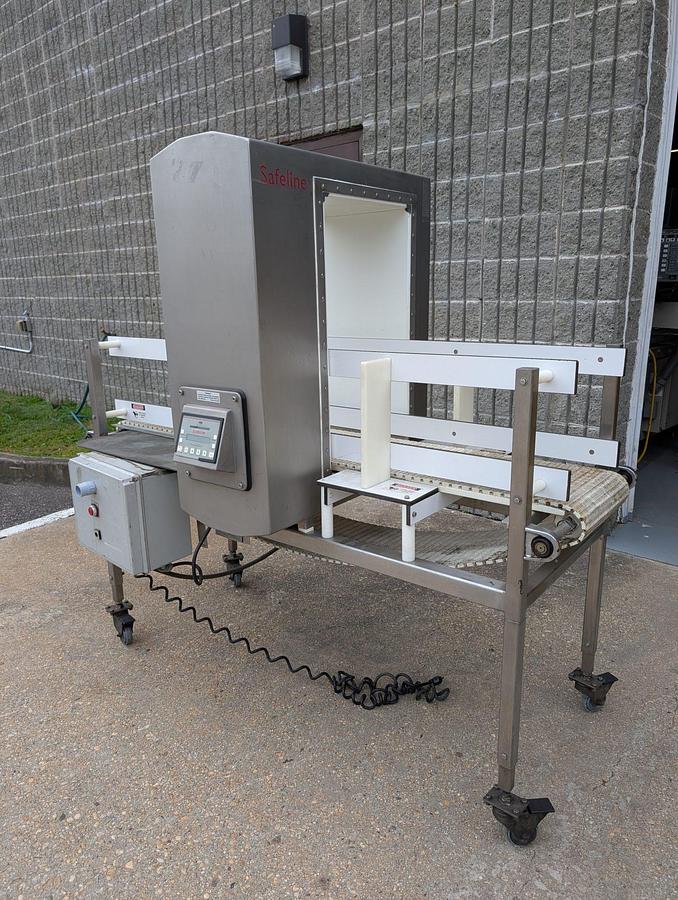
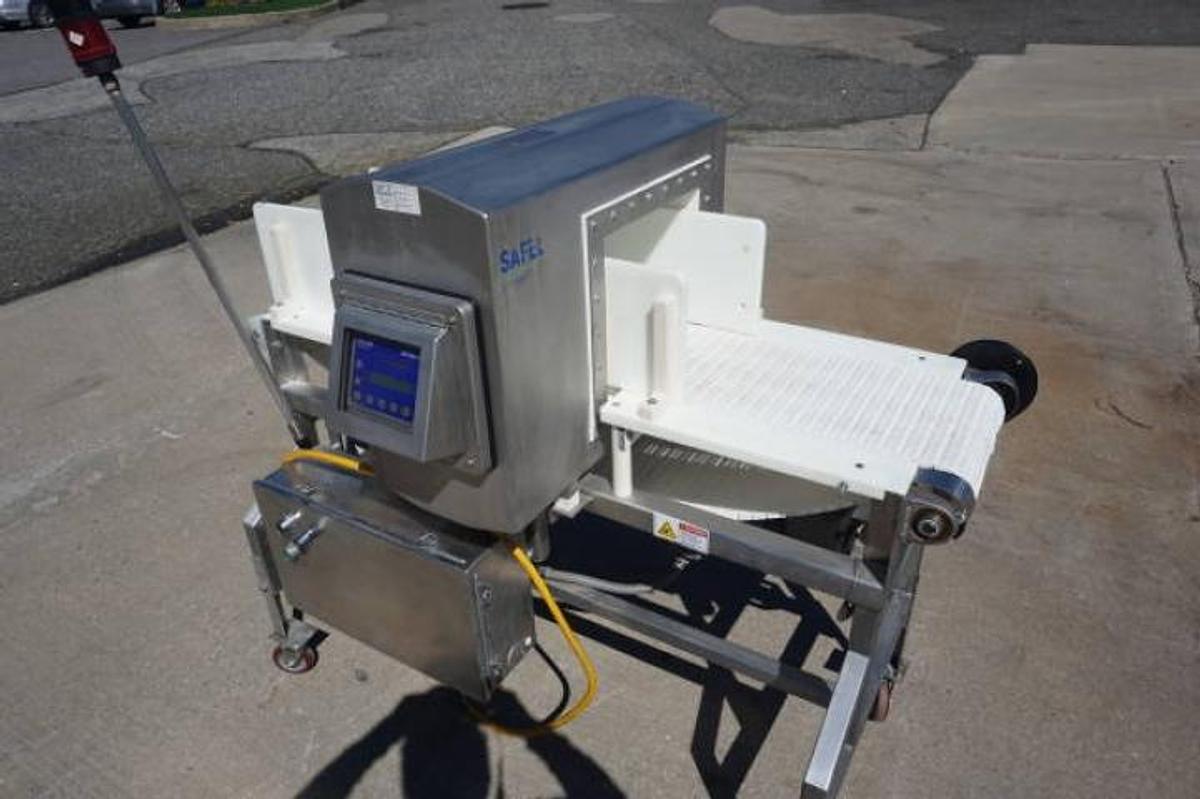
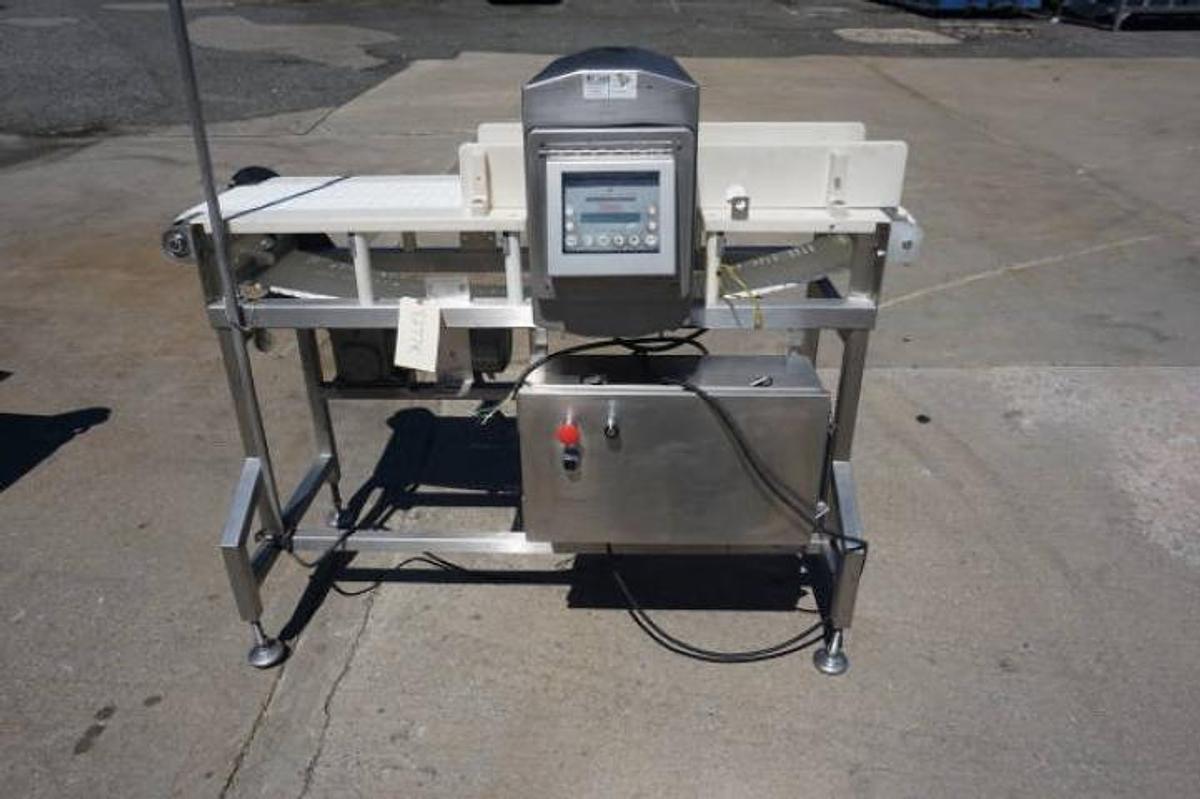
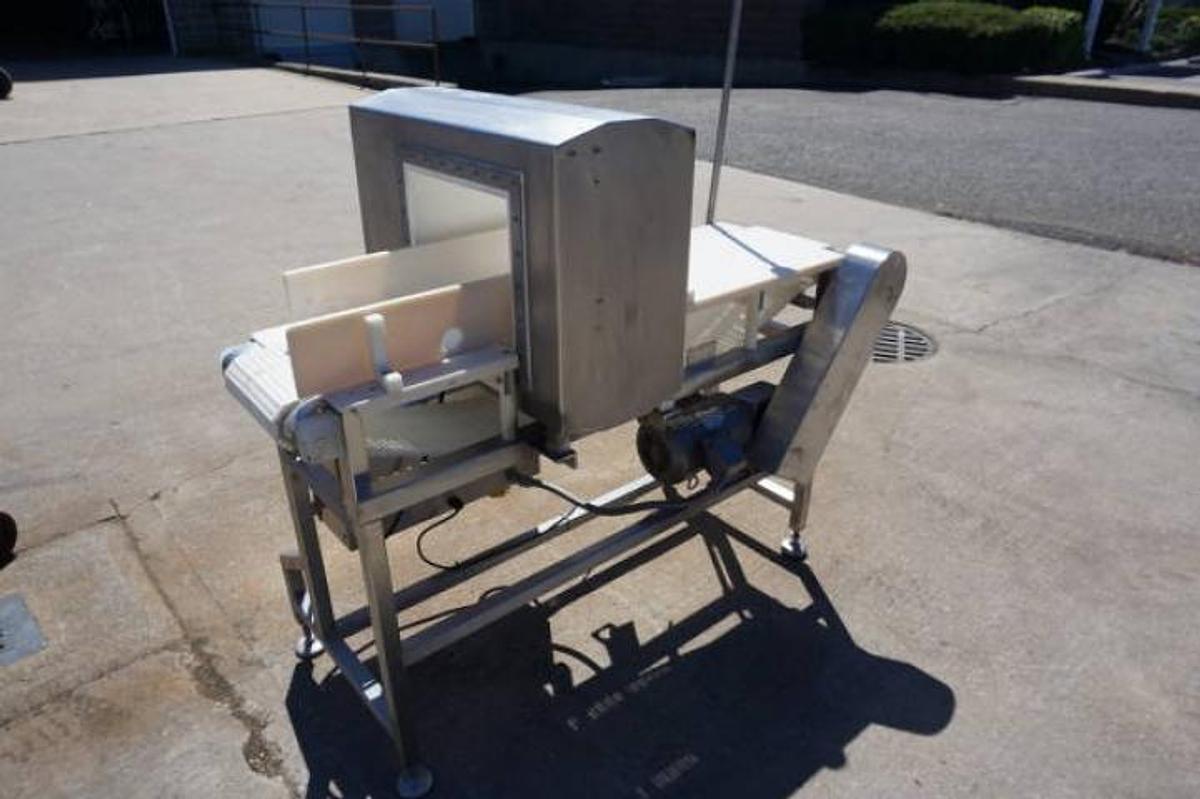
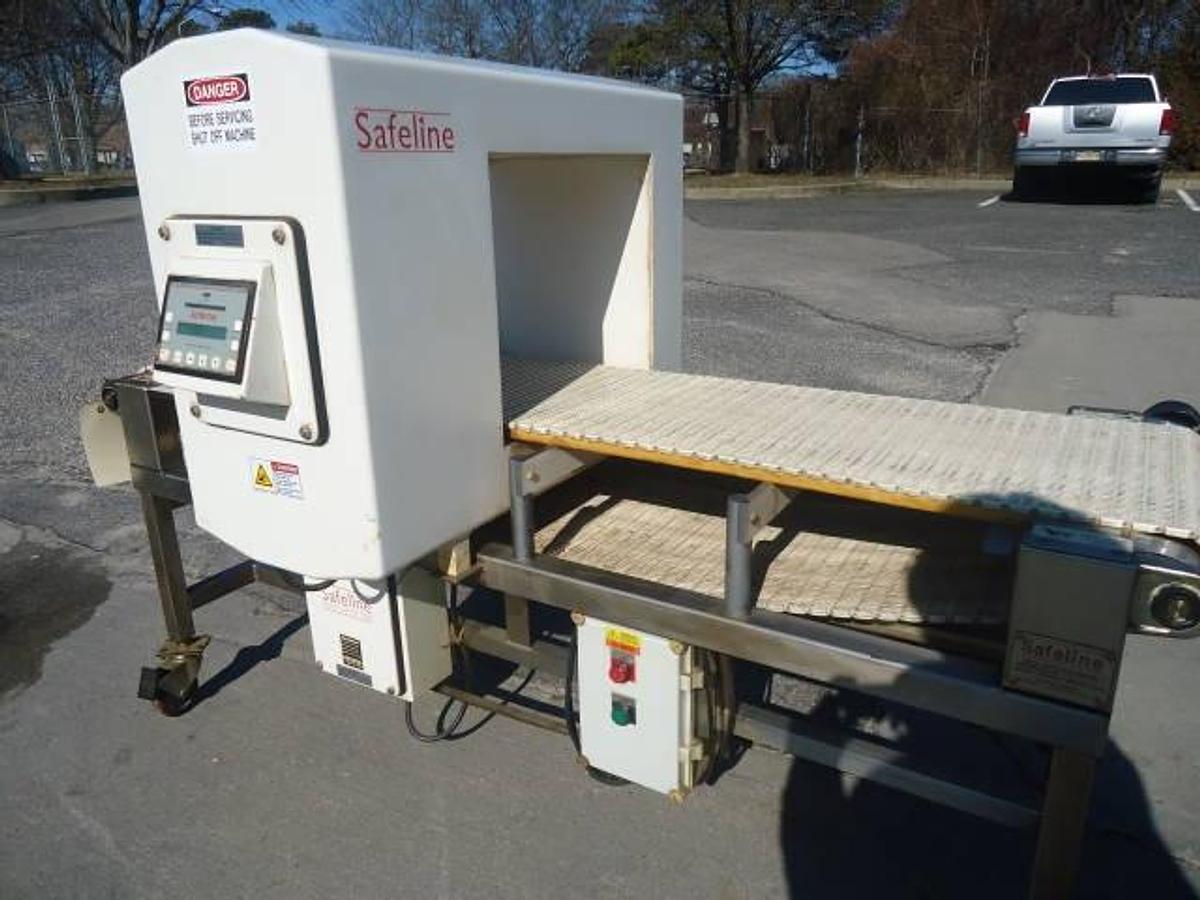
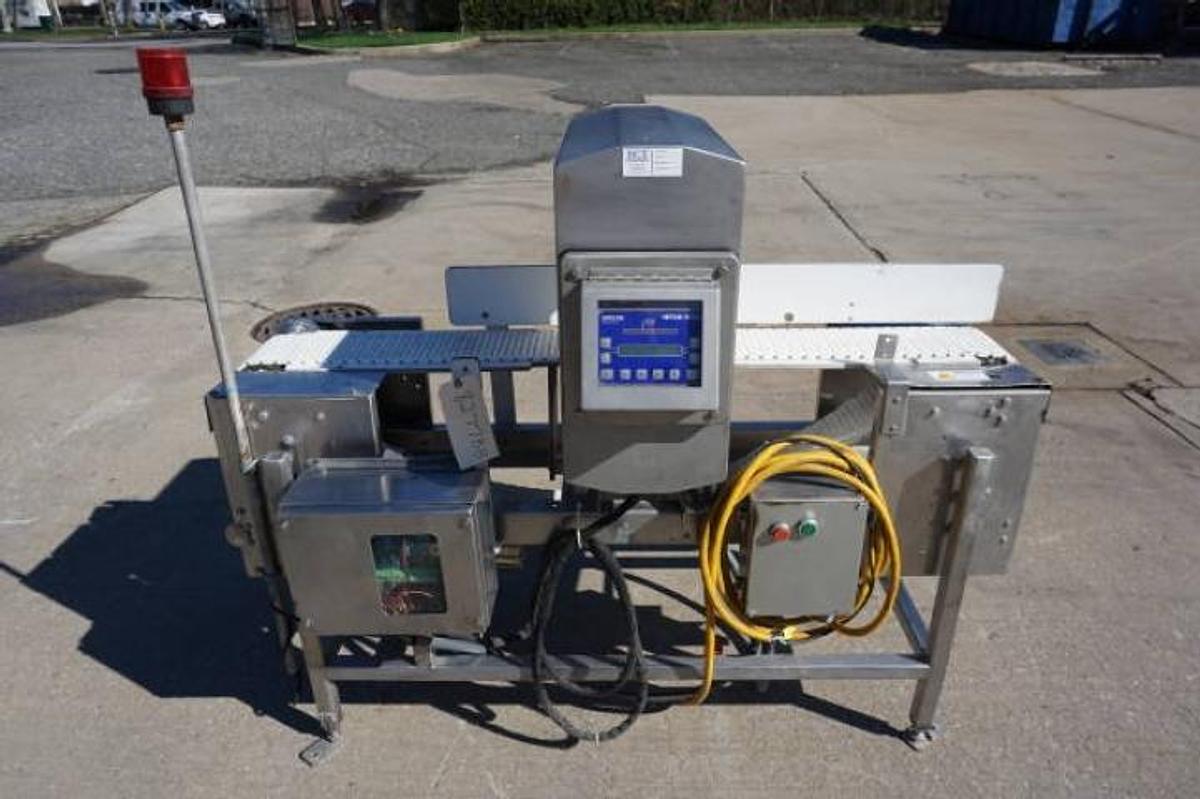
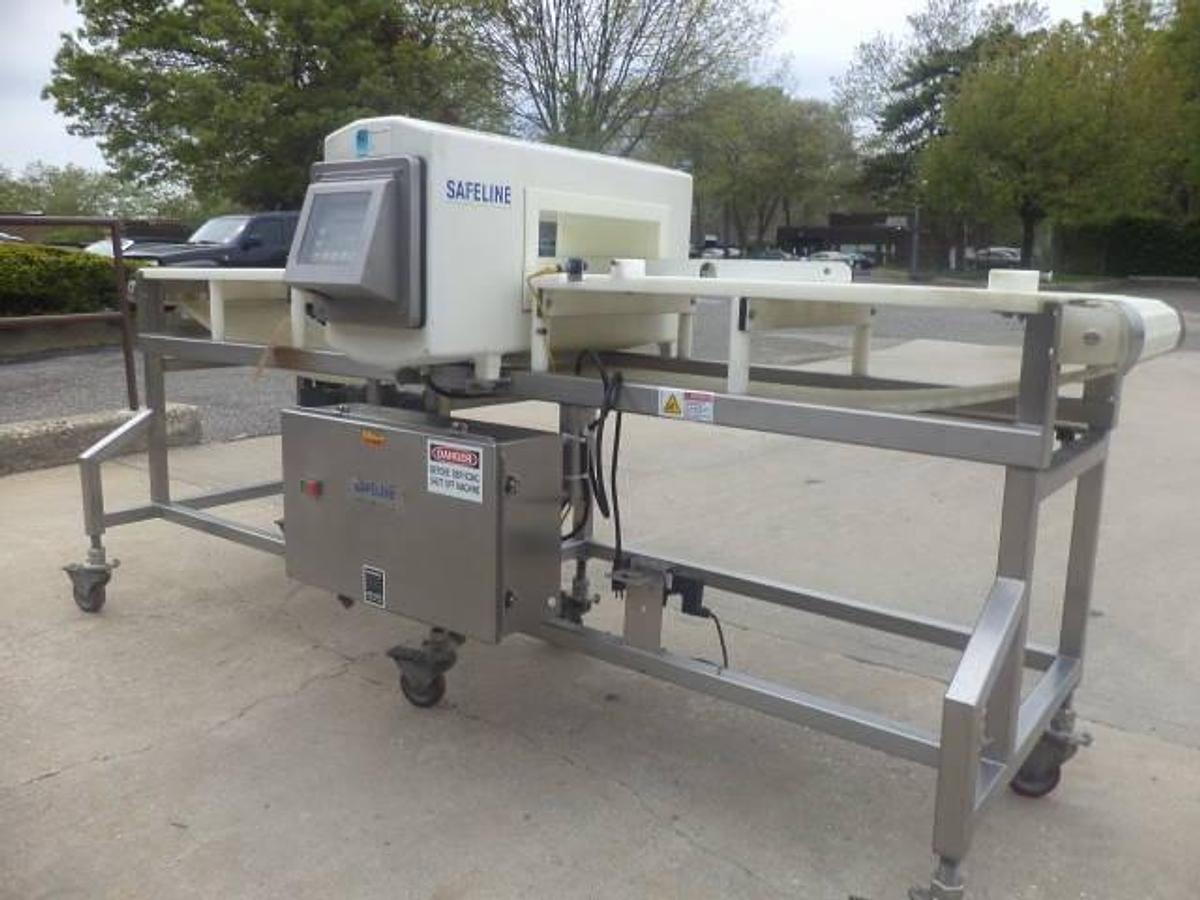
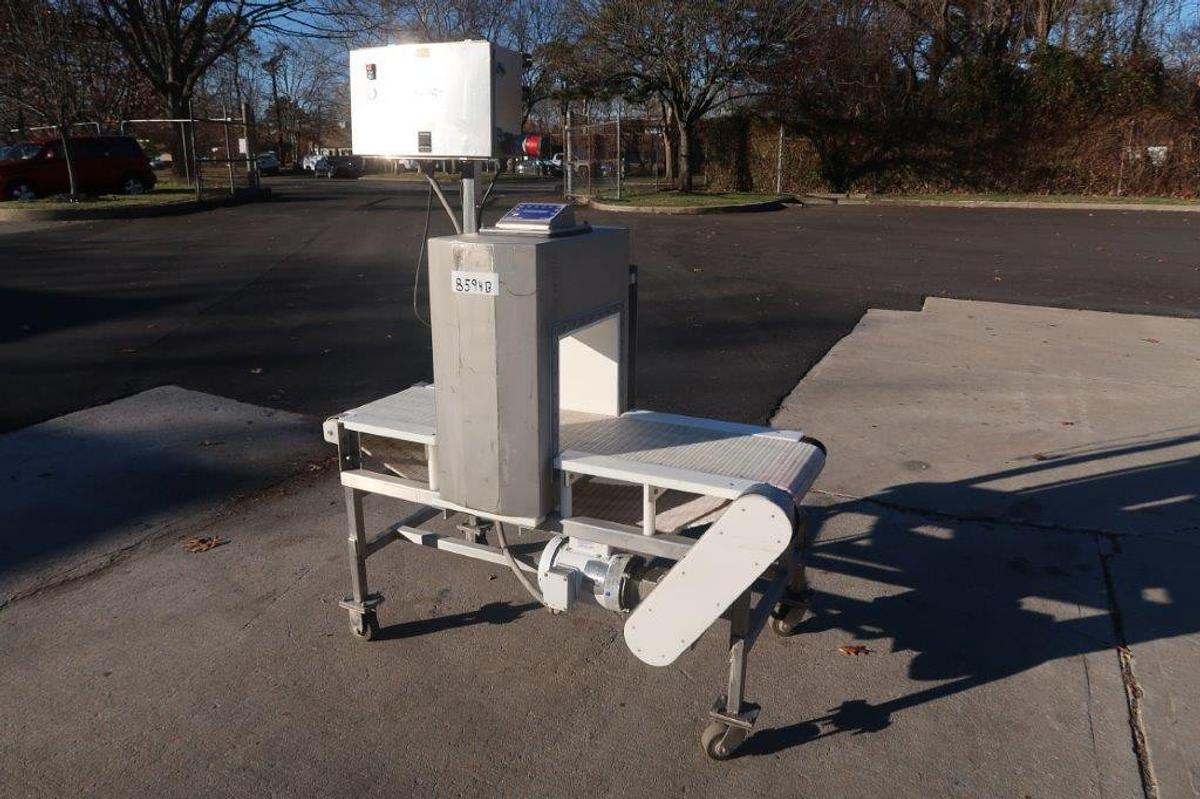
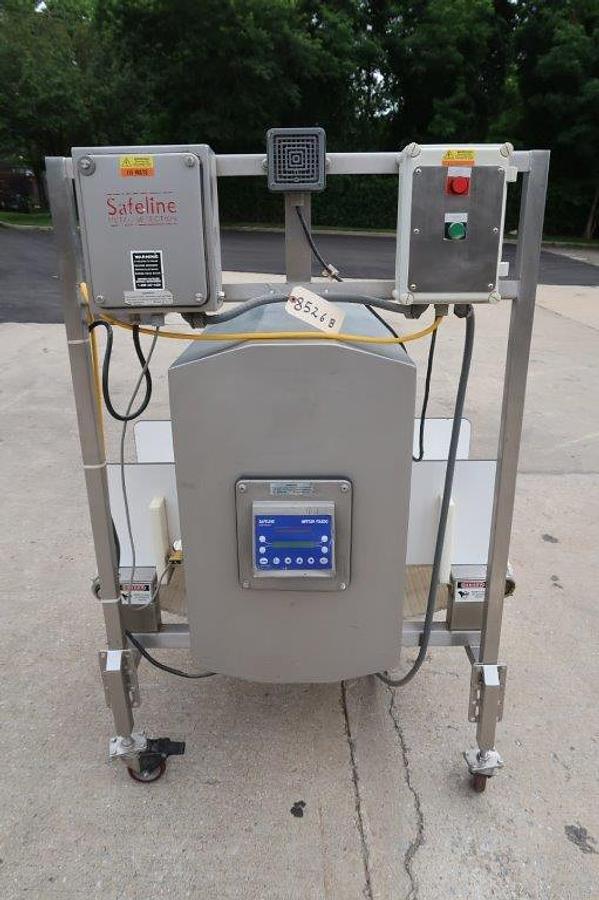
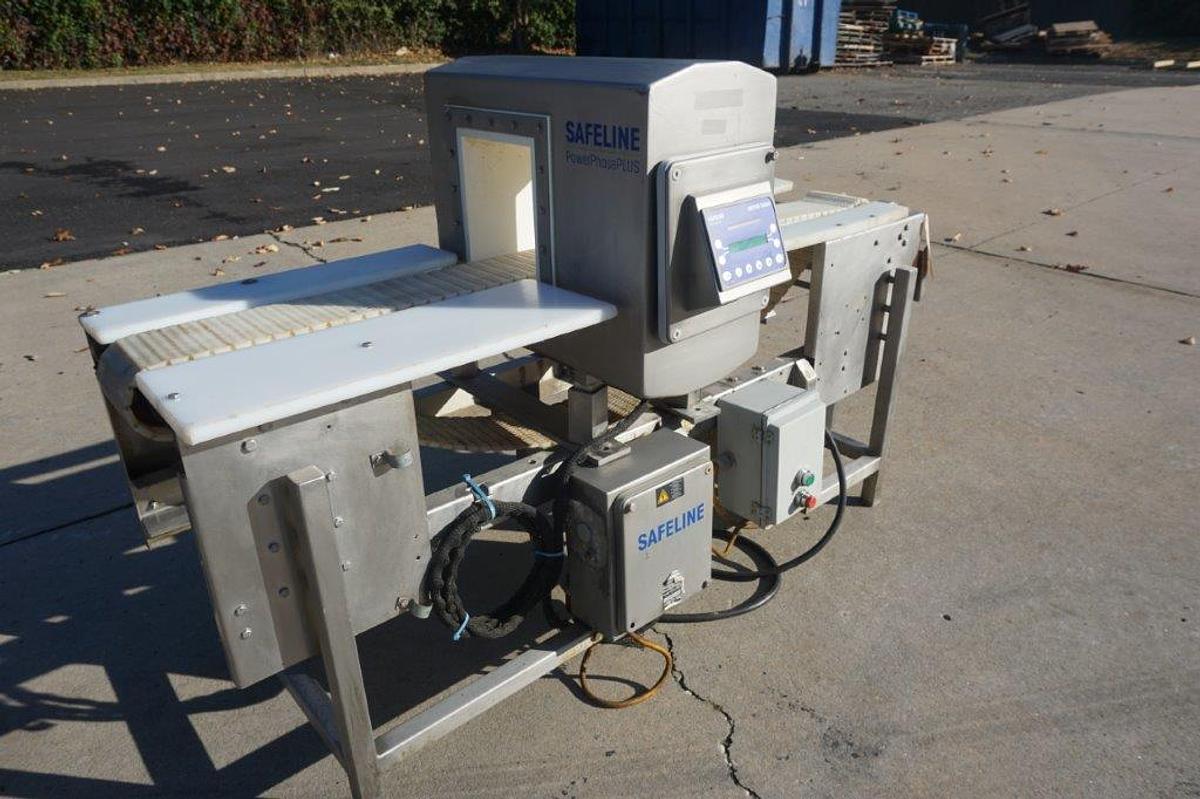
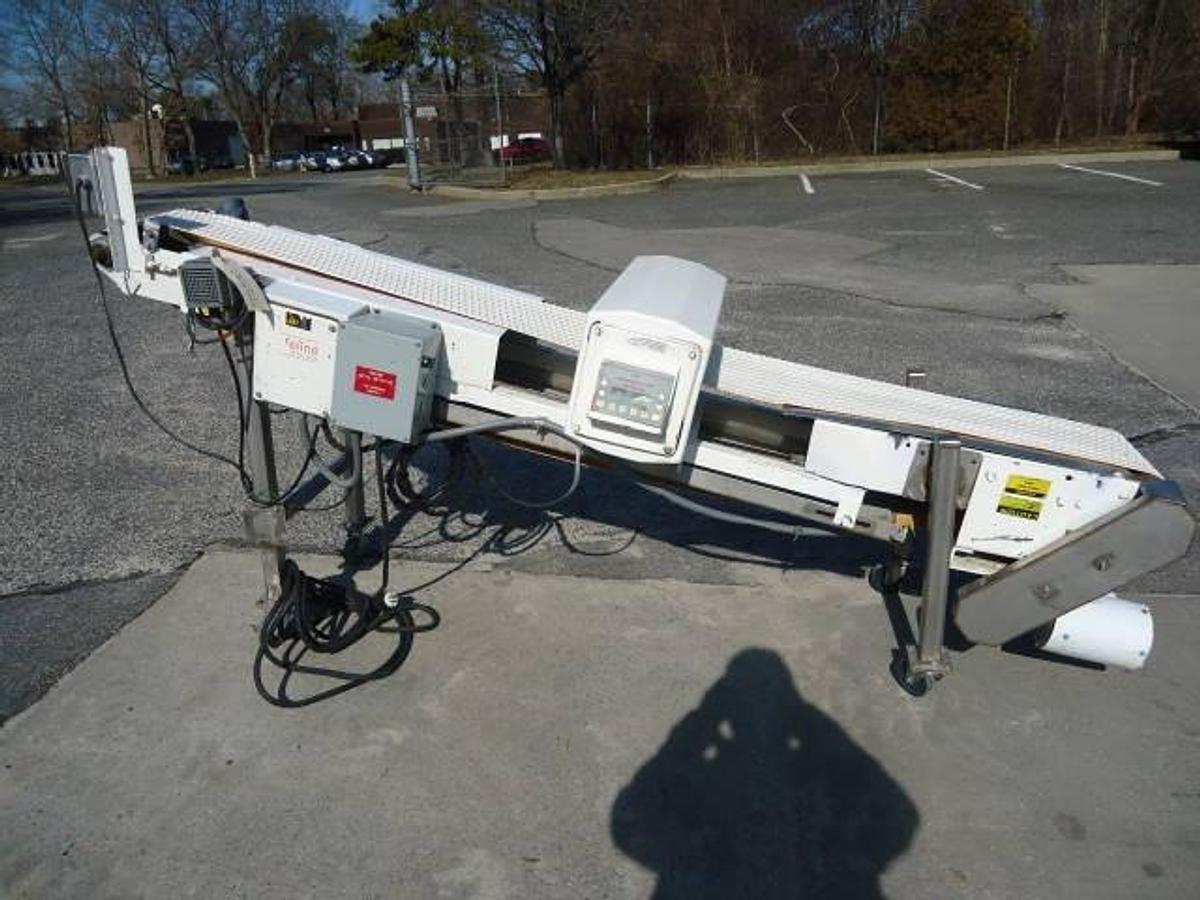
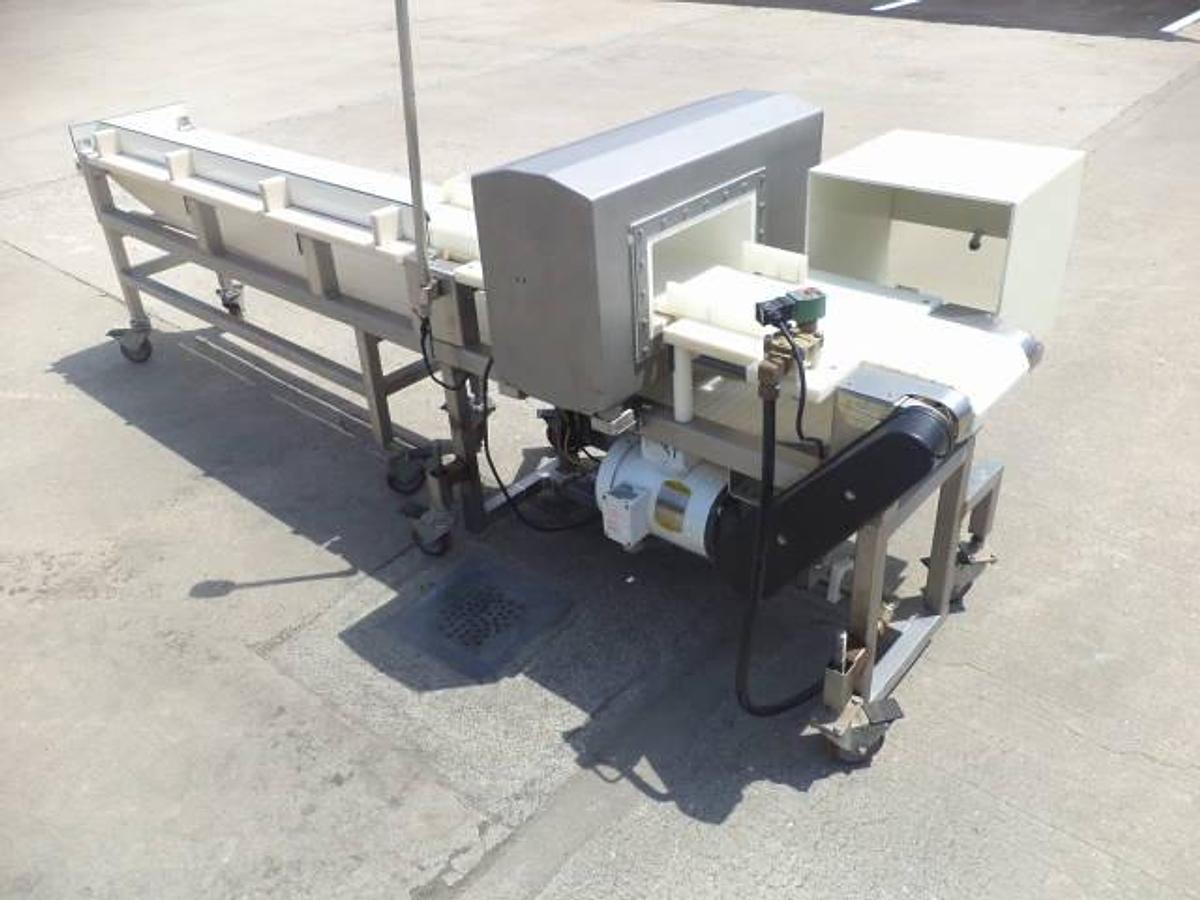
A conveyorized Safeline metal detector moves solid or packaged products through a detection aperture on a belt conveyor. The product travels horizontally (or on a slight incline in some configurations) through the detector head, and a reject mechanism removes any contaminated product from the line. Aperture sizes on used conveyorized Safeline units vary considerably. The listings available on the secondary market include apertures ranging from compact sizes like 11-3/4 inches wide by 5-7/8 inches high up to larger openings like 18 inches wide by 15 inches high, covering everything from small retail packs to bulk cases.
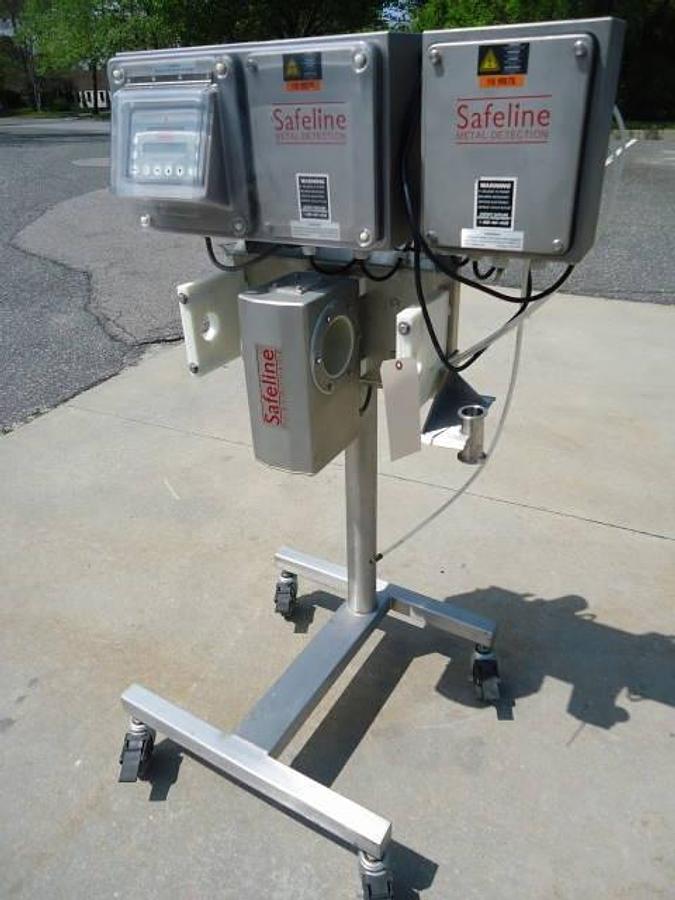
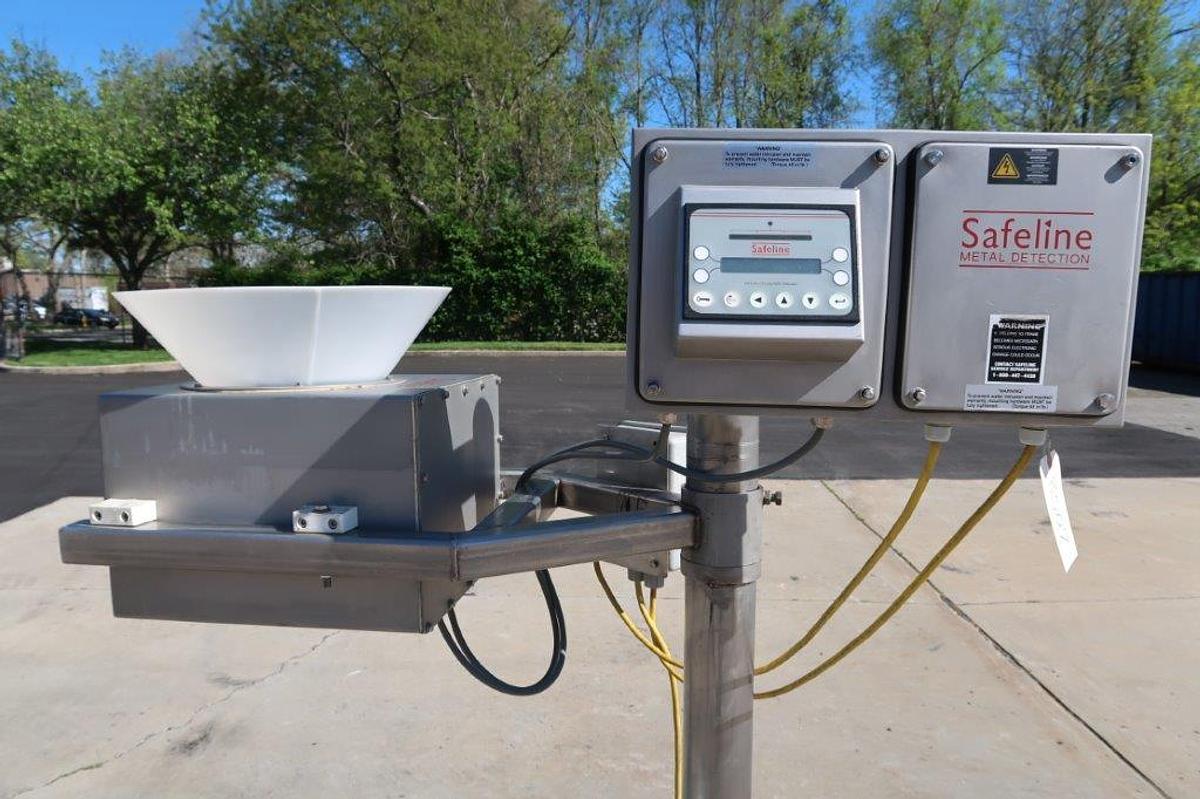
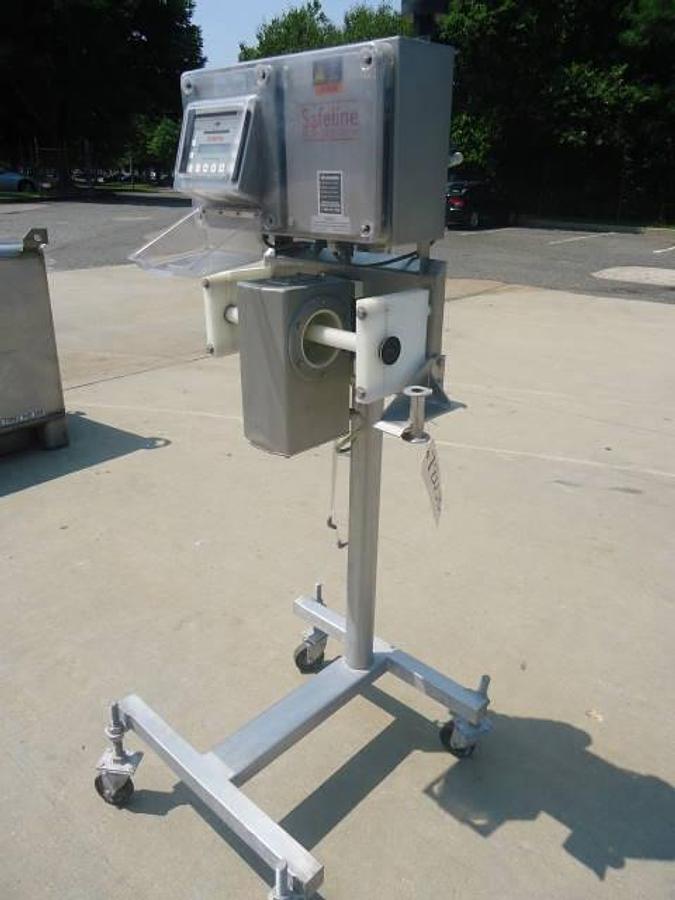
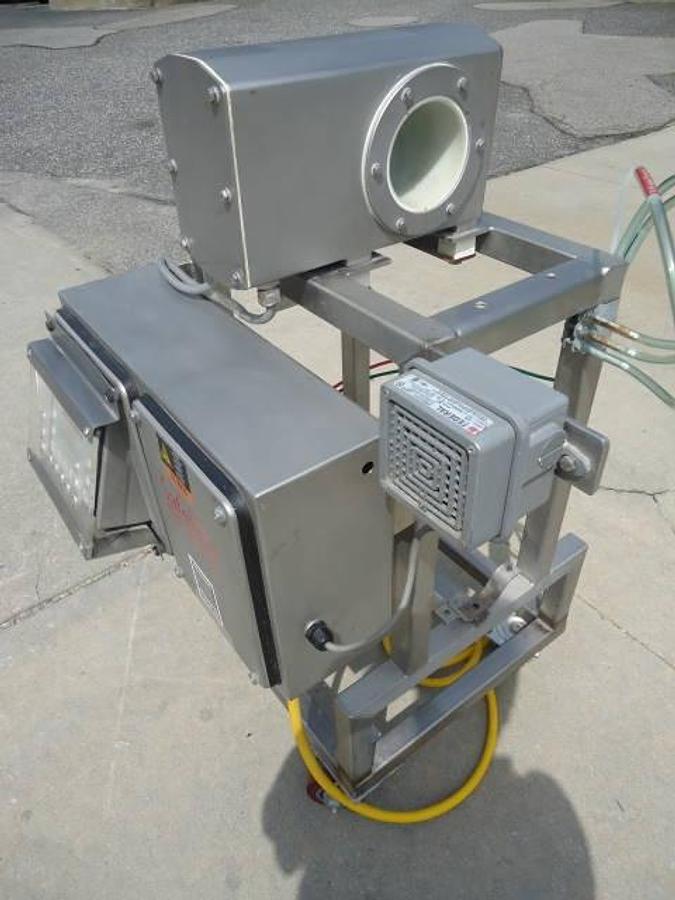
A pipeline metal detector, by contrast, is designed for liquid, semi-liquid, or pumped product applications. Product flows through a sealed pipe that passes through the detector head, which makes pipeline units the right choice for sauces, soups, slurries, dairy liquids, and similar pumpable products. Safeline pipeline detectors are available in various pipe diameters; used units with 4-inch diameter apertures appear regularly on the secondary market and are common in food processing environments. The reject mechanism on a pipeline system typically uses a divert valve rather than a mechanical pusher or air blast, which keeps the product contained within the piping system.
What should buyers look for when evaluating a used Safeline metal detector?
The aperture size is the first practical filter. The opening needs to accommodate the largest product or package format that will pass through it, with enough clearance that product doesn't graze the detector head and trigger false rejects. Beyond dimensions, buyers should look at the condition of the conveyor belt and drive system, the state of the stainless steel housing, and whether the control panel and display are functional. Safeline units are built for washdown environments, but used equipment may show wear on seals, gaskets, or electrical enclosures that affects IP rating performance.
The control system generation matters too, because it affects how much support and how many replacement parts are realistically available. Reputable used equipment dealers will typically accommodate in-person inspections or video walkthroughs of the machine so buyers can assess cosmetic and functional condition before committing. Some machines may still be installed at an active production facility, where a live inspection can be arranged. Keep in mind that most dealers do not have the production permits or facilities to run actual food product through the detector during a demo, so performance verification on your specific product will need to happen after installation. Consulting with Safeline's parent company, Mettler-Toledo, about parts availability and support for a specific model and serial number is a sensible step before finalizing a purchase.
Are Safeline metal detectors suitable for wet or high-moisture product applications?
Safeline detectors are widely used in wet-product applications including fresh meat, poultry, seafood, cheese, and produce. The challenge with wet products is that high moisture content and dissolved salts create a conductive product effect that can interfere with detection sensitivity. Safeline's phase discrimination technology and, in later models, Multi-Simultaneous Frequency (MSF) processing are specifically designed to compensate for product effect and maintain reliable sensitivity even when running conductive products.
From a physical standpoint, Safeline conveyorized and pipeline units are constructed in stainless steel and designed to meet IP65 or higher ingress protection ratings, making them suitable for regular washdown with water and cleaning chemicals. When buying a used unit intended for wet-product use, it's worth inspecting the condition of the detector head seals, the conveyor belt and drainage channels, and any electrical enclosures for signs of moisture ingress. A machine that has been used in a dry-product environment and is being repurposed for a wet-product line may need seal replacements or other refurbishment before it performs reliably in the new application.
How do Safeline metal detectors integrate with existing production line conveyor systems?
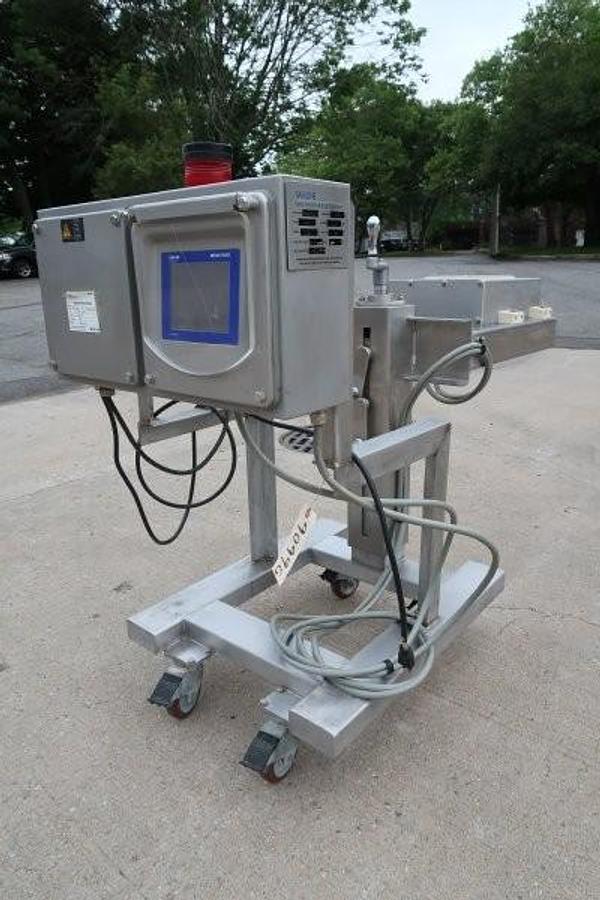
Safeline conveyorized detectors are designed as standalone units that can be positioned inline with an existing conveyor layout. The detector head sits over the belt, and the conveyor passes product through the aperture continuously. In many installations, the Safeline unit replaces a section of an existing line by matching conveyor height and belt width to the surrounding equipment. Portable models add flexibility because they can be repositioned between lines or moved to different areas of a facility as production schedules change.
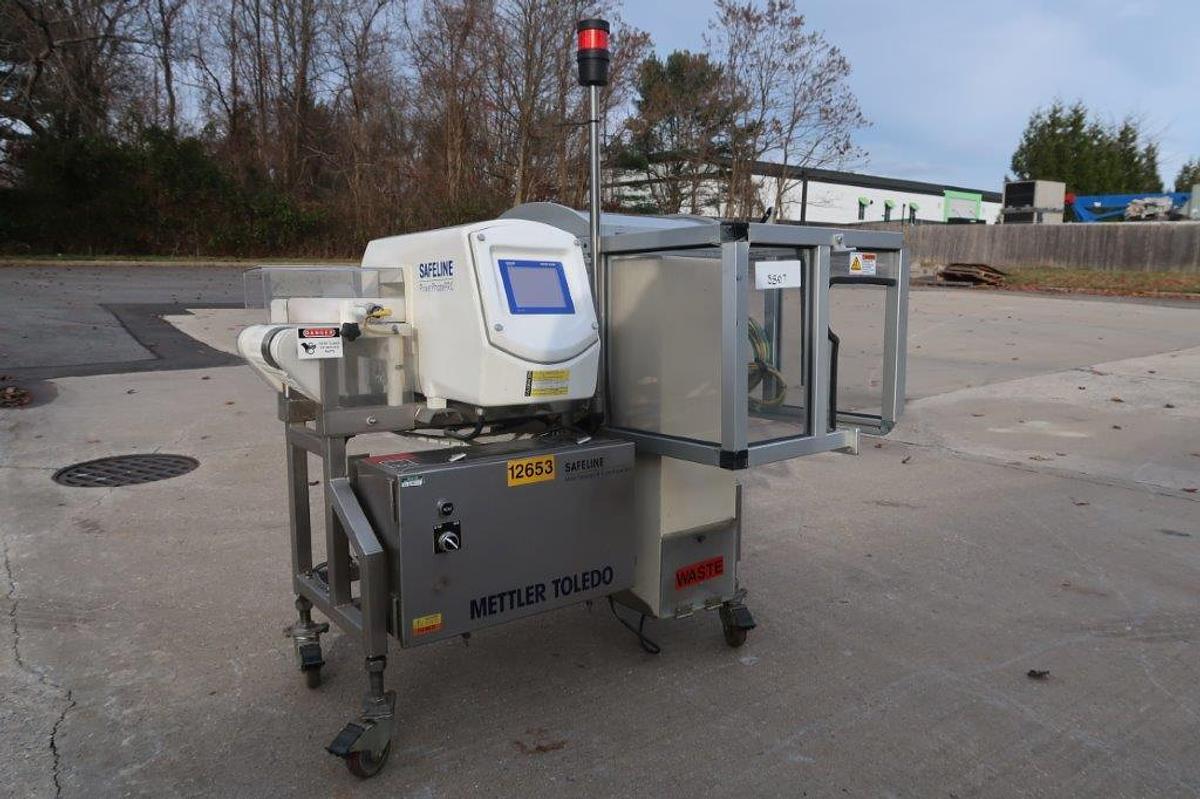
Integration also involves the reject system, which needs to be matched to the product type and line speed. Common reject mechanisms include air blast, pusher arm, and retract belt designs, each suited to different package formats and weights. On the controls side, Safeline units can typically be configured to trigger external signals, alarms, or line stops, and many models support data output for production monitoring or HACCP record-keeping systems. When evaluating a used unit, confirming that the reject mechanism is present and functional is important, as some machines are sold without the original reject system if it was modified or removed by the previous owner.
What is the typical price range for used Safeline metal detectors?
Pricing on the used market for Safeline metal detectors spans a wide range depending on model, age, aperture size, configuration, and overall condition. Entry-level or older single-frequency conveyorized units with smaller apertures can be found for a few thousand dollars, while larger aperture models, pipeline systems, or units with advanced MSF technology and intact reject systems typically command higher prices. Portable units often carry a premium because of the added flexibility they offer.
Buyers should also factor in the full landed cost, not just the purchase price. Shipping costs for metal detectors vary based on the size and weight of the unit, the packaging or crating required to protect it in transit, and whether rigging equipment is needed for loading or unloading. Larger conveyorized systems may require a forklift or crane for safe handling. Most used equipment dealers require full payment before the machine ships, and buyers should get a clear breakdown of all costs, including freight, crating, and any rigging fees, before comparing prices across sellers.
What payment and shipping terms are typical when buying used Safeline metal detectors from a dealer?
Most used equipment dealers require payment in full before a machine is released for shipment. Some dealers extend credit terms to established customers with a purchasing history, but first-time buyers should expect to pay upfront. Common payment methods include wire transfer and credit card, though larger transactions are typically handled by wire. Buyers should confirm accepted payment methods directly with the dealer before proceeding.
Shipping costs depend on the size and weight of the machine, the origin and destination, and the level of packaging required to protect the equipment in transit. Smaller portable Safeline units may ship palletized with standard freight carriers, while larger conveyorized systems often need custom crating to prevent damage. Heavy units may also require professional rigging for safe loading at the dealer's facility and unloading at the buyer's location, which adds to the total cost. Getting a complete freight quote that covers crating, rigging, and delivery before finalizing the purchase is the best way to avoid surprises and accurately compare the total cost of equipment from different sources.