Category
Manufacturer
Model
Reb
Reb manufactures a variety of industrial equipment, focusing on the packaging and processing sectors. They are particularly known for their custom solutions that cater to specific production line needs.
FAQ:
What types of products can Reb filling machines handle?
Reb filling machines are built to handle a wide range of product viscosities, from thin, free-flowing liquids to thick pastes and semi-solid materials. The piston-based filling mechanism that Reb commonly uses is particularly well-suited for viscous products because the positive displacement action pulls the product through the cylinder regardless of how easily it flows. This makes Reb equipment a practical choice for industries like food and beverage, cosmetics, personal care, household chemicals, and certain pharmaceutical applications where product consistency varies widely across a single production line.
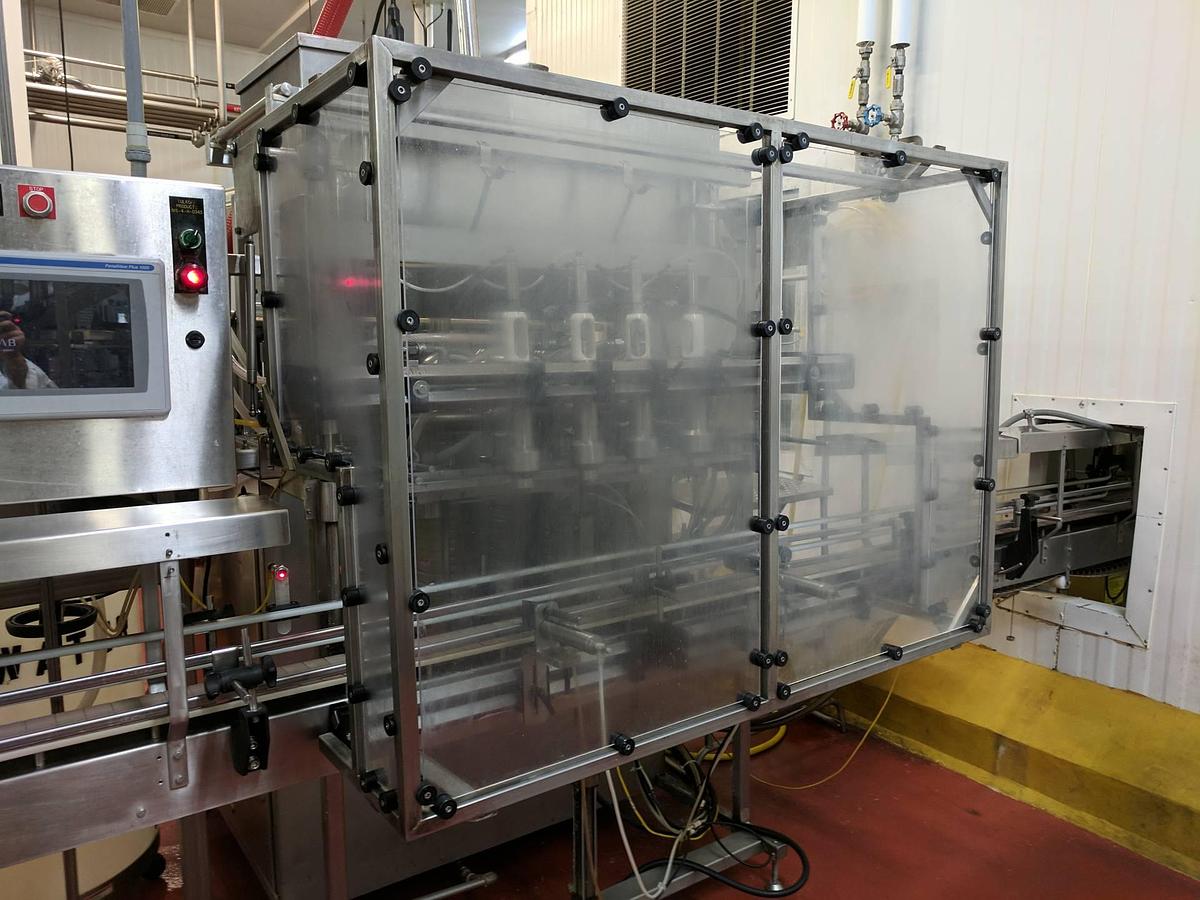
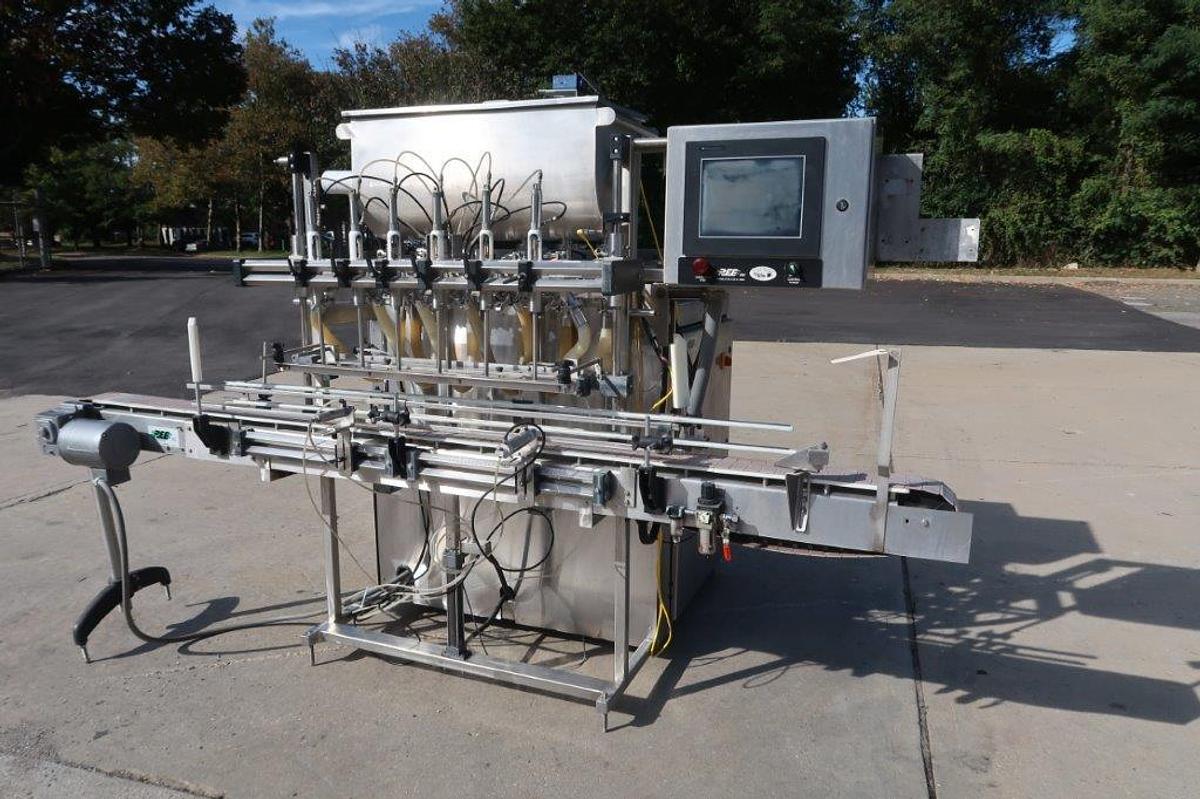
Many Reb models also incorporate agitated hoppers, which keep thicker or particulate-laden products moving and prevent settling or separation during the filling cycle. This feature is visible in several used Reb machines that come to market, including 4-piston and 6-head inline piston fillers equipped with agitated hoppers. For buyers with diverse product lines, this versatility across viscosity levels is one of the primary reasons Reb equipment holds its value on the used machinery market.
What is the typical output capacity of a Reb industrial filling machine?
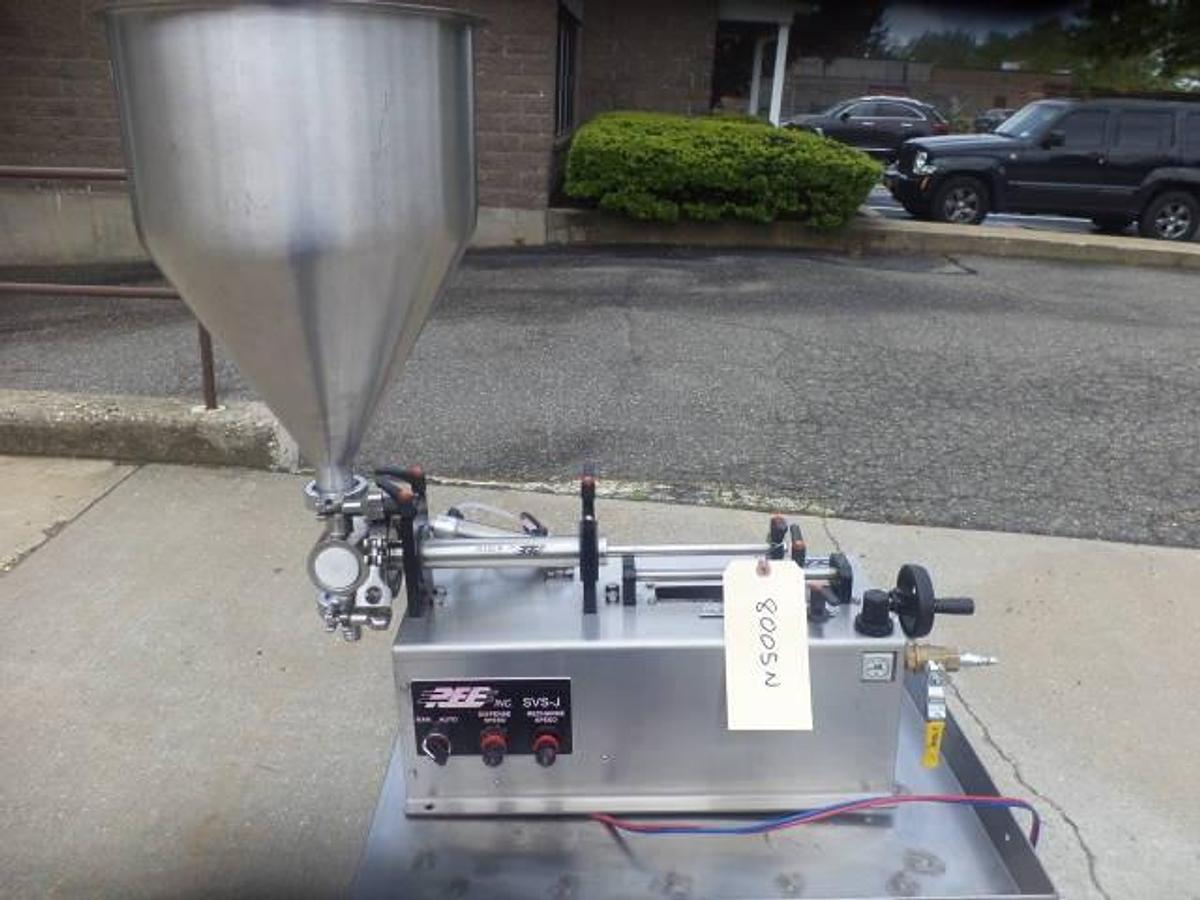
Output capacity on Reb filling machines depends heavily on the specific model, the number of fill heads, the fill volume being dispensed, and the viscosity of the product being filled. A single-head tabletop piston filler will naturally produce far fewer units per minute than a 6-head automatic inline machine running on a conveyor system. As a general reference point, single-head semi-automatic fillers in this class typically cycle anywhere from 10 to 30 fills per minute under normal operating conditions, while multi-head automatic inline machines can push significantly higher throughput depending on container size and dwell time.
When evaluating a used Reb machine, buyers should pay close attention to the number of fill heads and whether the unit is semi-automatic or fully automatic, since these two factors drive the biggest differences in production output. A 4-piston automatic inline filler, for example, is designed for continuous production line integration and will outperform a tabletop single-piston unit by a considerable margin. Requesting a video demonstration or in-person inspection from the dealer is the most reliable way to assess actual cycle speeds on a specific used machine before purchase.
What fill volume ranges do Reb piston fillers typically support?
Reb piston filling machines are engineered around adjustable piston stroke lengths, which means fill volumes can be calibrated across a defined range rather than being fixed at a single size. Depending on the model and piston size, this typically allows operators to fill containers ranging from a few ounces up to one gallon or more per cycle. The REB 4 Piston Automatic Gallon Inline Filler, for instance, is specifically designed around gallon-sized fills, and its extra-large pistons reflect that capacity. Smaller tabletop models with standard pistons are better suited for lower-volume fills in the ounce range.
For buyers who need flexibility across multiple container sizes, the adjustability of the piston stroke is a critical specification to verify on any used machine. Fill accuracy on well-maintained piston fillers generally falls within a tolerance of plus or minus 0.5 to 2 percent, which meets the requirements of most food, chemical, and cosmetic applications. When inspecting a used Reb filler, ask the dealer whether the machine has been recently calibrated and whether the pistons show significant wear, as worn seals or scored cylinders can affect fill consistency.
What container types are compatible with Reb filling machines?
Reb filling machines are primarily designed for rigid containers, with bottles, jugs, jars, and cans being the most common formats used in conjunction with their inline and tabletop piston fillers. The fill nozzle and conveyor configuration on inline models like the 6-head automatic inline piston filler are set up to accommodate containers that can stand upright and travel along a production line without deforming under the weight of the product or the pressure of the fill cycle. This makes Reb equipment a natural fit for packaging lines handling plastic or glass containers in the food, chemical, and personal care sectors.
Flexible pouches and non-rigid containers are generally less compatible with standard piston filler configurations without additional tooling or modifications. Buyers sourcing a used Reb machine for a specific container format should confirm the nozzle diameter, nozzle dive depth, and conveyor clearance dimensions with the dealer before purchasing. Container changeover on piston fillers typically involves adjusting nozzle height and stroke volume, which is straightforward on most Reb models, but verifying that the machine's physical dimensions accommodate the intended container is an important step in the evaluation process.
What is the price range for used Reb filling machines and what affects the cost?
Used Reb filling machines span a fairly wide price range depending on the model type, number of fill heads, level of automation, and overall condition of the equipment. Tabletop single-piston units at the lower end of the spectrum tend to be the most affordable entry point for small manufacturers or contract packagers with modest throughput requirements. Multi-head automatic inline systems like the 6-head piston filler sit at a higher price point because of the added mechanical complexity, higher output capacity, and greater production line integration they offer. The presence of features like agitated hoppers and extra-large pistons also factors into pricing.
Beyond the machine itself, buyers should account for the full landed cost of the equipment, which includes freight, any crating or rigging required for loading and unloading, and potential costs for installation or setup at the destination facility. Larger, heavier inline filling machines may require specialized rigging equipment, which adds to the total acquisition cost. Condition plays a significant role as well. A machine that was recently decommissioned from a clean production environment with low cycle hours will typically carry a higher price than one with visible wear or unknown service history. Requesting detailed photos, a condition report, and a video inspection from the dealer helps buyers assess whether the asking price reflects the machine's actual state.
How should buyers evaluate the condition of a used Reb filling machine before purchasing?
Evaluating a used Reb filling machine requires a systematic look at both the mechanical components and the machine's documented history. Key areas to examine include the condition of the pistons and cylinder bores, the integrity of seals and O-rings, the state of the fill nozzles, and the functionality of any agitation or hopper systems. Worn or damaged seals are among the most common issues on used piston fillers and can directly impact fill accuracy and product containment. Buyers should also check the condition of any conveyor components, electrical panels, and pneumatic lines on automatic inline models.
Reputable used equipment dealers will typically accommodate in-person inspections at their facility or, in cases where the machine is still located at the original production site, can arrange access through the current owner. Virtual inspections via live video call and pre-recorded video walkthroughs are also standard options when travel is not practical. Keep in mind that most used equipment dealers are not set up to run actual product through a machine during inspection, as production-level testing requires different permitting and facility capabilities. Buyers should also consult with the manufacturer directly to understand what parts and technical support are available for the specific model and age of machine they are considering, since older models may have limited parts availability.
What industries most commonly use Reb industrial filling machines?
Reb filling machines have found broad adoption across several industries where accurate, repeatable liquid or semi-liquid filling is a core production requirement. Food and beverage manufacturers use them for products like sauces, dressings, syrups, and oils. Personal care and cosmetics companies rely on piston fillers for lotions, creams, shampoos, and gels. Household and industrial chemical producers use them for cleaners, lubricants, and similar products. The piston-based design that Reb favors is well-suited to all of these categories because it handles varying viscosities without requiring significant mechanical changes between product runs.
Small to mid-sized manufacturers and contract packagers represent the core buyer segment for Reb equipment, particularly on the used market. These operations often need reliable filling solutions that can handle multiple product types without the capital expense of high-volume automated systems designed for large-scale production. Reb's range of tabletop single-piston fillers through multi-head automatic inline machines gives buyers at different production scales a practical set of options to match their throughput and budget requirements.
How easy is it to clean a used Reb piston filling machine between product runs?
Cleanability is an important practical consideration for any filling machine, and piston fillers as a category are generally well-regarded for their ability to be broken down and cleaned without extensive disassembly. On most piston filler designs, the product-contact components, including the cylinders, pistons, nozzles, and hopper, can be removed and cleaned manually or flushed with cleaning solutions between runs. This is particularly relevant for food, cosmetic, and pharmaceutical applications where cross-contamination between products or batches is a compliance concern.
Whether a specific used Reb machine supports Clean-In-Place (CIP) compatibility depends on the model and how it was configured for its previous production environment. CIP capability is not a standard feature on all piston filler designs, so buyers who require it should confirm this with the dealer and inspect the machine's plumbing and nozzle configuration accordingly. For machines that do not have integrated CIP, manual teardown and cleaning is the standard approach, which is manageable for lower-volume operations but adds labor time between changeovers. Asking for the original operator's manual, if available, can provide specific cleaning procedures recommended for that model.
What should buyers know about shipping and delivery for used industrial filling machines?
Shipping a used industrial filling machine involves more logistical planning than standard freight because of the size, weight, and mechanical sensitivity of the equipment. Smaller tabletop units like a single-piston bench filler can often be palletized and shipped via standard freight carriers with appropriate blocking and bracing to prevent movement in transit. Larger inline machines, such as multi-head automatic piston fillers with conveyors and hoppers, typically require custom crating and may need specialized rigging equipment for both loading at the origin and unloading at the destination. The cost of crating, rigging, and freight should be factored into the total acquisition budget before finalizing a purchase.
Buyers should ask the dealer for a detailed breakdown of all shipping-related costs, including packaging, loading, freight, and any destination rigging or unloading requirements, to get an accurate picture of the full landed cost of the machine. International shipments add additional complexity around customs documentation, import duties, and compliance with destination country regulations. Most used equipment dealers require full payment prior to releasing a machine for shipment, though some may offer payment terms to established repeat customers. Confirming all of these details in writing before the transaction is completed protects both parties and prevents unexpected costs at delivery.
Is technical support or installation assistance available when buying a used Reb filling machine?
Support availability for used industrial filling machines varies depending on the source of the purchase and the age of the equipment. Used equipment dealers generally sell machinery on an as-is basis and are not typically in a position to provide the same level of post-sale technical support that a manufacturer would offer on a machine sold directly. That said, dealers who specialize in packaging and filling equipment often have practical knowledge of common maintenance issues and can point buyers toward relevant resources, including operator manuals if available for the specific model.
For technical support beyond what a dealer can provide, buyers should contact Reb directly to determine what level of manufacturer support is available for the specific model and production year of the machine they are purchasing. Older models may have limited parts availability or may no longer be supported by the manufacturer, which is an important factor to evaluate before committing to a purchase. Buyers who lack in-house maintenance capabilities should also consider budgeting for a qualified third-party machine technician to inspect, install, and commission the equipment upon arrival. This is particularly advisable for automatic inline systems with more complex electrical and pneumatic components.