Category
Manufacturer
Model
Ramsey Icore
Ramsey Icore provides advanced manufacturing solutions, particularly in the automotive and aerospace industries. They specialize in high-precision measurement and inspection equipment, ensuring quality control throughout the production process.
FAQ:
What is a Ramsey Icore checkweigher and what is it used for?
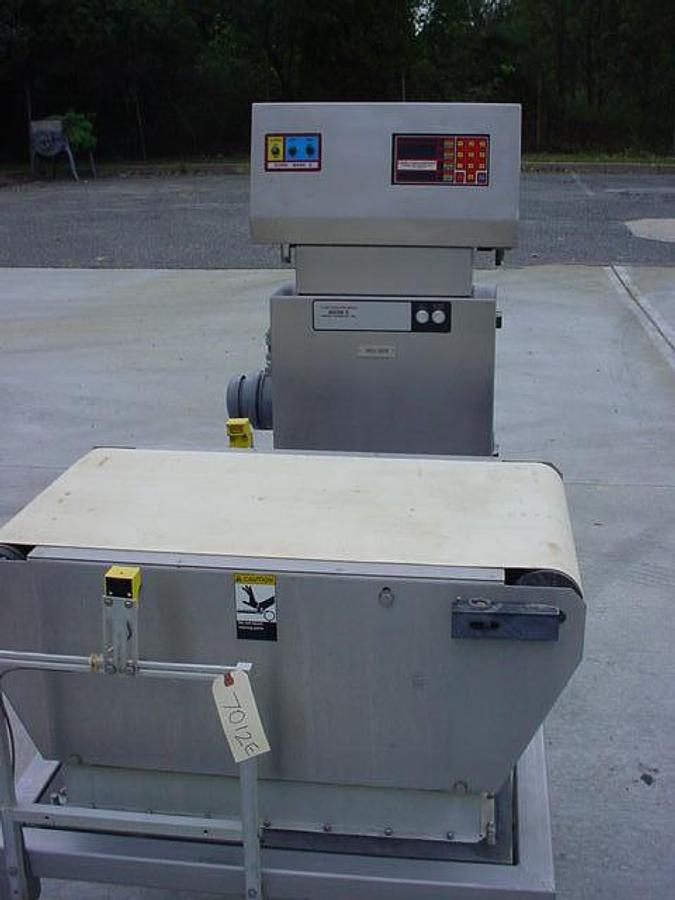
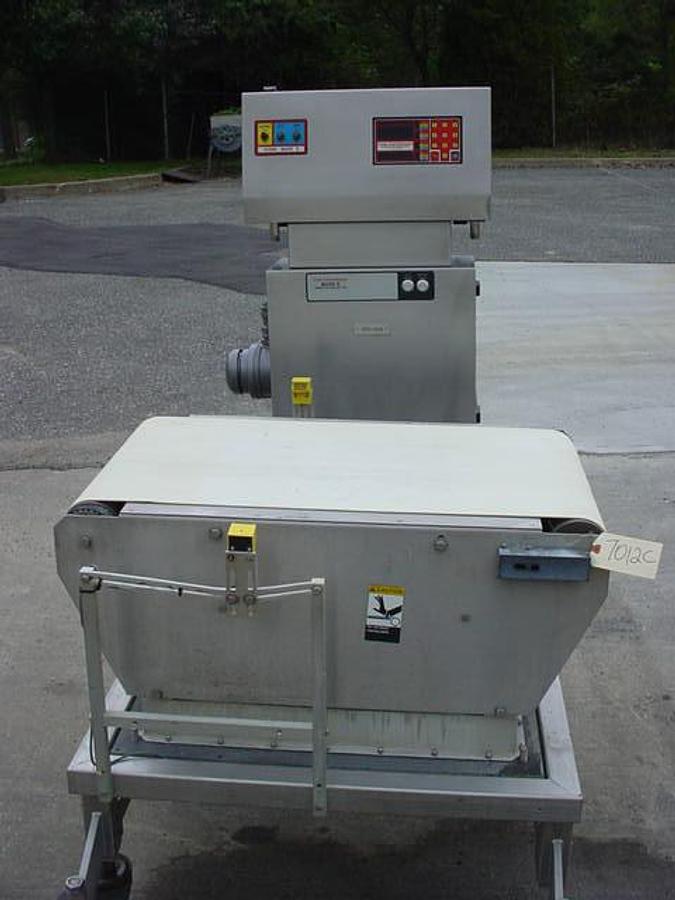
A Ramsey Icore checkweigher is an automated inline weighing system designed to verify the weight of products as they move along a production line. It uses a high-speed conveyor combined with precision load cell technology to weigh individual packages or products in real time, then accepts or rejects items that fall outside a specified weight tolerance. The system is built to handle continuous, high-throughput production environments where manual spot-checking would be impractical or insufficient for quality control requirements.
These machines serve a critical function in industries where accurate fill weights are tied to regulatory compliance, consumer safety, or cost control. In food and beverage production, for example, a checkweigher ensures that packages meet labeled net weight requirements, helping manufacturers avoid costly giveaway (overfilling) and regulatory fines for underfilling. In pharmaceutical manufacturing, the stakes are even higher, as incorrect dosage weights can have direct safety implications. The Ramsey Icore line, which includes models like the Mark II and Auto Check 9000, was specifically engineered for demanding production environments and earned a strong reputation for accuracy and reliability across several decades of industrial use.
What industries are Ramsey Icore checkweighers best suited for?
Ramsey Icore checkweighers were designed with precision and durability in mind, making them well suited for a wide range of manufacturing environments. Food and beverage processing is probably the most common application, where the machines verify filled package weights for items like snacks, frozen foods, canned goods, and bottled beverages. The stainless steel construction found on models like the Mark II makes them compatible with washdown environments, which is a practical requirement in food plants. Pharmaceutical and nutraceutical manufacturers also rely on these systems heavily, given the strict weight tolerances required for tablet counts, powder fills, and liquid dosing.
Beyond food and pharma, Ramsey Icore equipment has found use in industrial manufacturing settings, including automotive components, hardware, and consumer goods packaging, where consistent part counts or fill weights are essential for quality assurance. The brand's broader history in measurement and inspection equipment, including applications in automotive and aerospace production, reflects the engineering precision built into the checkweigher line. Buyers sourcing a used Ramsey Icore unit should consider whether the specific model and configuration they are evaluating matches the throughput speeds, weight ranges, and environmental conditions of their intended application, since different models were optimized for different production demands.
What should buyers look for when purchasing a used Ramsey Icore checkweigher?
Buying a used checkweigher requires a more thorough evaluation than purchasing standard conveyors or simple mechanical equipment, because the accuracy of the machine depends on several components that degrade with age and use. The load cell is the single most important component to assess. It is the heart of any checkweigher and is responsible for translating physical weight into an electronic signal. Load cells can drift, lose sensitivity, or fail entirely, and replacement costs can be significant. Buyers should ask for any available calibration records and, if possible, request a demonstration of the machine weighing known test weights to verify accuracy.
The belt drive system and conveyor components are also common wear points, and belts, rollers, and drive motors should be inspected for wear or damage. The control electronics, including the display unit and rejection mechanism, should be tested to confirm they are fully functional. On older units, control boards can be difficult to source, so understanding the condition of the electronics before purchase is critical. Requesting an in-person or video inspection from the dealer is strongly recommended, as it allows buyers to see the machine's actual condition rather than relying solely on photos or descriptions. Reputable used equipment dealers will typically accommodate these inspection requests and can often provide video walkthroughs if an in-person visit is not feasible.
Are parts and service still available for used Ramsey Icore checkweighers?
Parts availability for Ramsey Icore checkweighers is a legitimate concern for buyers in the used equipment market, particularly for older models. Thermo Fisher Scientific acquired the Ramsey brand and continues to provide some legacy support for Ramsey equipment, but availability varies significantly depending on the model and its age. For well-established models like the Mark II series, some replacement parts may still be obtainable through Thermo Fisher's service network, but buyers should contact the manufacturer directly before purchasing a used unit to understand exactly what level of support they can expect for the specific model and serial number they are considering.
For components that are no longer available through the manufacturer, third-party parts suppliers and aftermarket vendors have become an important resource for keeping older checkweighers operational. Load cells, belts, and many electronic components can often be sourced through industrial parts distributors or specialists who focus on legacy packaging and weighing equipment. The Ramsey Icore's modular design is a genuine advantage here, as it was built with component accessibility in mind, which makes field repairs and part swaps more straightforward than on some competing systems of the same era. Buyers should factor potential parts sourcing challenges into their total cost of ownership calculation when evaluating a used unit.
What is the typical price range for a used Ramsey Icore checkweigher?
Pricing for used Ramsey Icore checkweighers varies considerably based on the specific model, the age of the unit, its overall condition, and any included accessories or documentation. Entry-level or older models in fair condition may be available at lower price points, while well-maintained units with more recent control system upgrades or stainless steel construction tend to command higher prices. The Mark II and Auto Check 9000 models, being among the more capable units in the Icore line, generally fall in the mid-to-upper range of used checkweigher pricing when found in good working condition.
Buyers should approach pricing carefully and avoid focusing solely on the purchase price without accounting for the full landed cost. Shipping a checkweigher can be expensive depending on the machine's size and weight, and proper crating or palletization is necessary to prevent damage in transit. If the machine requires any refurbishment, load cell replacement, or control system repair after arrival, those costs can add up quickly. Getting a clear picture of the machine's condition through inspection before committing to a purchase is the best way to avoid unexpected expenses after the sale. Comparing prices across multiple reputable used equipment dealers is also a practical step to ensure a fair market price.
What weight ranges and throughput speeds does the Ramsey Icore checkweigher support?
The Ramsey Icore checkweigher line was designed to cover a broad range of production requirements, with different models optimized for different weight capacities and line speeds. Lighter-duty configurations were suited for small consumer packages, while heavier-duty versions could handle larger industrial or food service pack sizes. The Auto Check 9000 model, for example, was built with high-speed production environments in mind, capable of processing a substantial number of packages per minute while maintaining the tight weight tolerances required for compliance applications. Exact specifications vary by model and configuration, so buyers should request the original spec sheet or documentation for any used unit they are evaluating.
Throughput speed is closely tied to the weight range and the type of product being weighed. Lighter products on short conveyors can typically be processed faster than heavier, bulkier items. When evaluating a used Ramsey Icore for a specific application, buyers should confirm that the model's rated capacity and speed align with their production line requirements. A machine that was originally configured for a different product type may need belt or reject mechanism adjustments to perform optimally in a new setting. Used equipment dealers who specialize in packaging and weighing machinery can often provide guidance on whether a specific unit is a good fit for a buyer's intended use.
How does the inspection process work when buying a used Ramsey Icore checkweigher?
Inspections are a standard part of the used equipment buying process, and reputable dealers will typically offer buyers the option to inspect a machine in person, through a live video call, or via a detailed video recording of the equipment. The goal is to give the buyer an accurate picture of the machine's current condition before committing to a purchase. For a checkweigher specifically, a good inspection should cover the physical condition of the conveyor and frame, the state of the belt and drive components, the functionality of the control panel and display, and ideally a demonstration of the rejection mechanism operating correctly.
It is worth understanding that most used equipment dealers do not operate active production facilities, which means they typically cannot run actual product through the machine during an inspection. Testing with calibrated weights can verify that the load cell and weighing system are functioning, but a full production trial is generally not possible in a dealer's warehouse setting. In some cases, equipment may still be installed at the facility where it was last used, and the dealer can arrange an inspection at that location, where the machine may even still be in production or recently decommissioned. Buyers should ask specifically about where the machine is located and what type of inspection is available before making a purchasing decision.
Does the Ramsey Icore checkweigher integrate with existing production line equipment?
Integration capability is one of the practical strengths of the Ramsey Icore checkweigher line. These machines were designed for inline production use, meaning they are built to be positioned between other equipment on a conveyor line, receiving products from an upstream conveyor and passing accepted items to a downstream process. The reject mechanism, which can be configured as an air blast, pusher arm, or diverter depending on the model, automatically removes out-of-tolerance packages without interrupting the flow of acceptable product. This makes integration into an existing line relatively straightforward from a mechanical standpoint.
On the controls side, older Ramsey Icore units used proprietary control systems that may or may not be directly compatible with modern PLC-based line control systems without some interface work. Buyers planning to integrate a used unit into a fully automated line with centralized data collection should investigate the available I/O options on the specific model they are considering. Some units may require a controls upgrade or a custom interface to communicate with modern SCADA or MES systems. Consulting with an automation integrator or the equipment dealer about the specific communication capabilities of the unit before purchase can prevent integration headaches after the machine arrives on-site.
What certifications does the Ramsey Icore checkweigher carry, and do they transfer to a used unit?
Ramsey Icore checkweighers were manufactured to meet the weighing accuracy and performance standards required for trade and compliance applications in their target markets. Depending on the model and the market for which it was originally configured, units may have carried certifications such as NTEP (National Type Evaluation Program) approval in the United States or CE marking for European markets. OIML compliance was also relevant for units intended for international trade applications. These certifications indicate that the machine met specific legal metrology standards at the time of manufacture and type approval.
For a used unit, the practical relevance of these certifications depends on the buyer's intended application. If the machine will be used in a regulated trade environment where legal-for-trade certification is required, the buyer should verify whether the unit's certification is still valid or whether recertification will be needed after installation. Calibration drift, component replacement, or modifications to the machine can affect its certified status, and in most jurisdictions, a checkweigher used for legal-for-trade purposes must be inspected and certified by weights and measures authorities after installation regardless of its prior certification history. Buyers should consult with their local regulatory authority to understand the recertification requirements before purchasing a used unit for compliance-sensitive applications.
What are the typical shipping and payment terms for purchasing a used Ramsey Icore checkweigher?
Used checkweighers are substantial pieces of industrial equipment, and shipping costs can be a meaningful part of the total purchase price. Proper packaging is essential to prevent damage in transit. Depending on the machine's size and the dealer's standard practice, the unit may be shipped on a pallet or in a custom-built wooden crate. Heavier or more complex machines may require professional rigging for loading at the dealer's facility and unloading at the buyer's location, which adds to the overall cost. Buyers should ask dealers for a detailed breakdown of packaging, rigging, and freight charges to understand the full landed cost before finalizing a purchase.
On payment, most used equipment dealers require full payment before a machine ships. Some dealers may extend payment terms to established customers with a prior purchasing history, but this is not the norm for first-time buyers. Wire transfer is the most common payment method for industrial equipment transactions of this size. Buyers should confirm payment terms and any conditions around inspection and acceptance before sending funds. Since used equipment is typically sold as-is, the inspection process prior to purchase is the buyer's primary opportunity to assess condition and ask questions, making it important to complete any due diligence before payment is made rather than after.