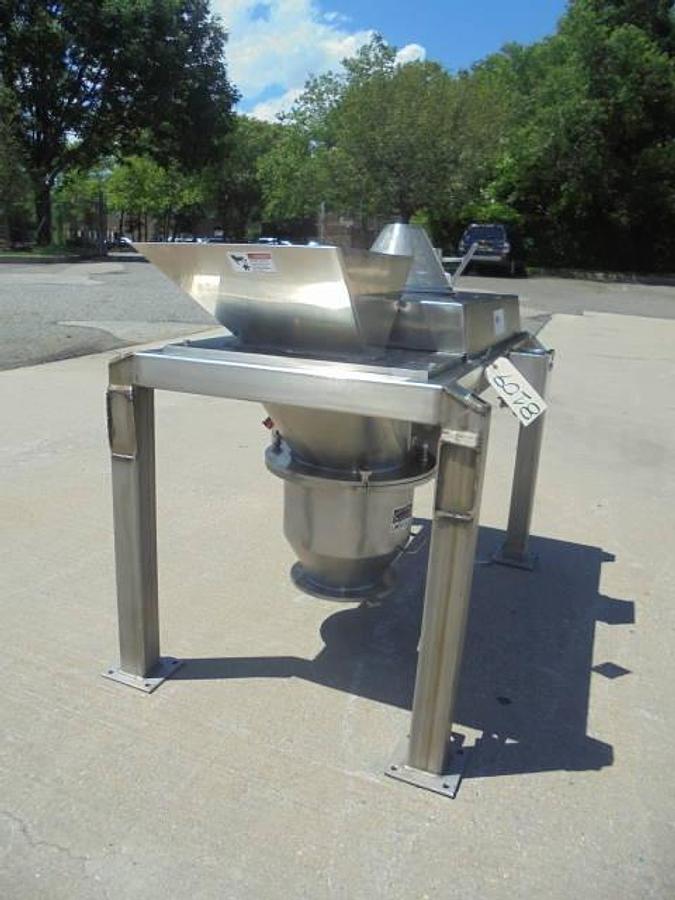
Category
Manufacturer
Model
Quadro
Quadro is known for its advanced milling and size reduction equipment, serving industries such as pharmaceuticals, food, and chemicals. Their products are designed to enhance processing efficiency and product quality.
FAQ:
What is a Quadro Comil and what makes it different from other milling equipment?
The Quadro Comil is a conical mill, and Quadro Engineering is widely credited as the company that developed this style of milling machine. The conical mill design uses a rotating impeller inside a conical screen to reduce particle size through a combination of compression, attrition, and impact. Because the milling action is relatively gentle compared to hammer mills or pin mills, the Comil produces a tighter, more consistent particle size distribution with minimal heat generation and dust. That combination of gentleness and precision made it the preferred choice in pharmaceutical granulation and food powder processing.
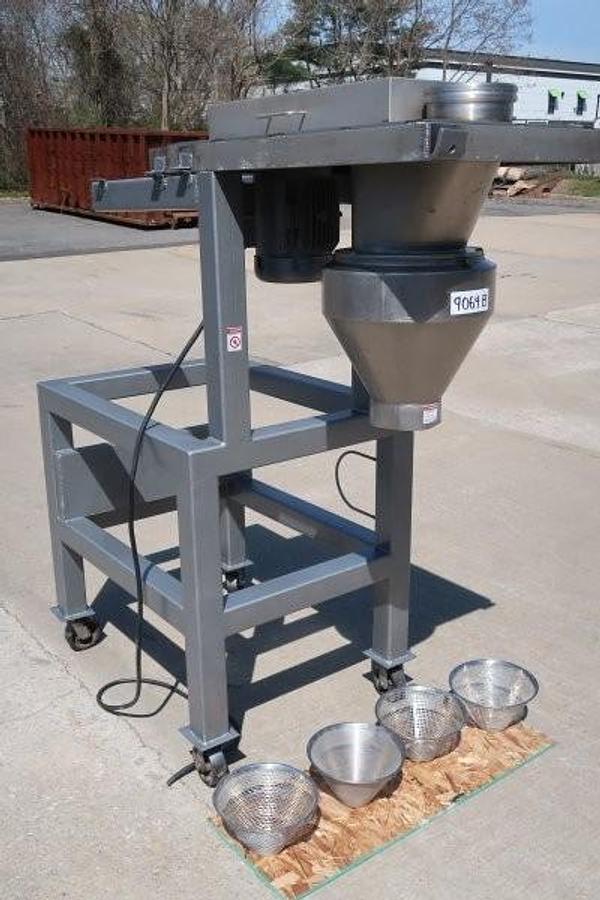
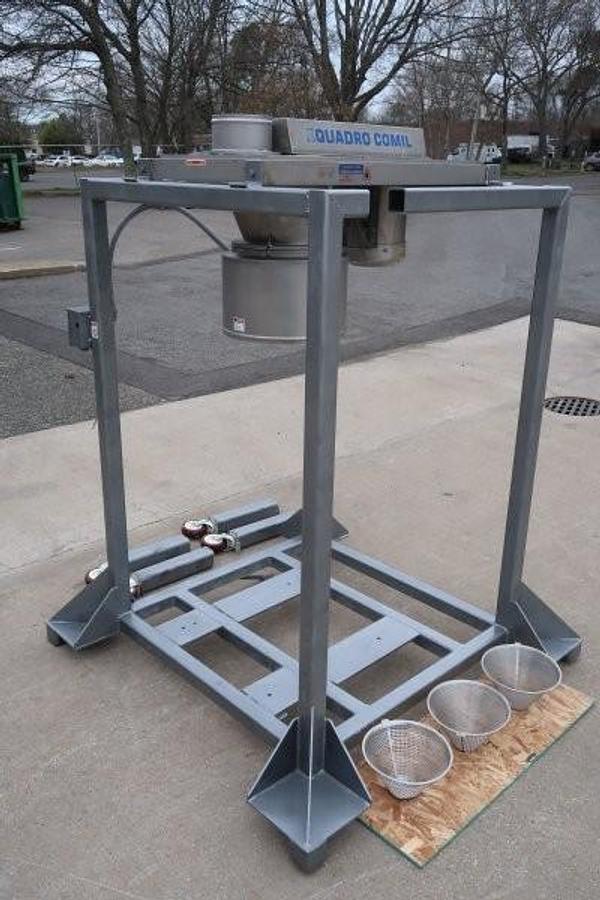
What sets the Comil apart from competing cone mills is the interchangeability of its screens and impellers. A single machine can be adapted to process very different materials simply by swapping tooling, which gives operators flexibility without needing multiple pieces of equipment. Quadro has also designed its product line so that results achieved on a lab-scale unit translate predictably to larger production-scale models, which significantly reduces the validation burden in regulated manufacturing environments. Used Quadro Comil units, including the 194 and 196S models, appear regularly in the secondary market and remain popular because the machines are built to last and spare parts and tooling are widely available.
What Quadro milling equipment models are typically available on the used market?
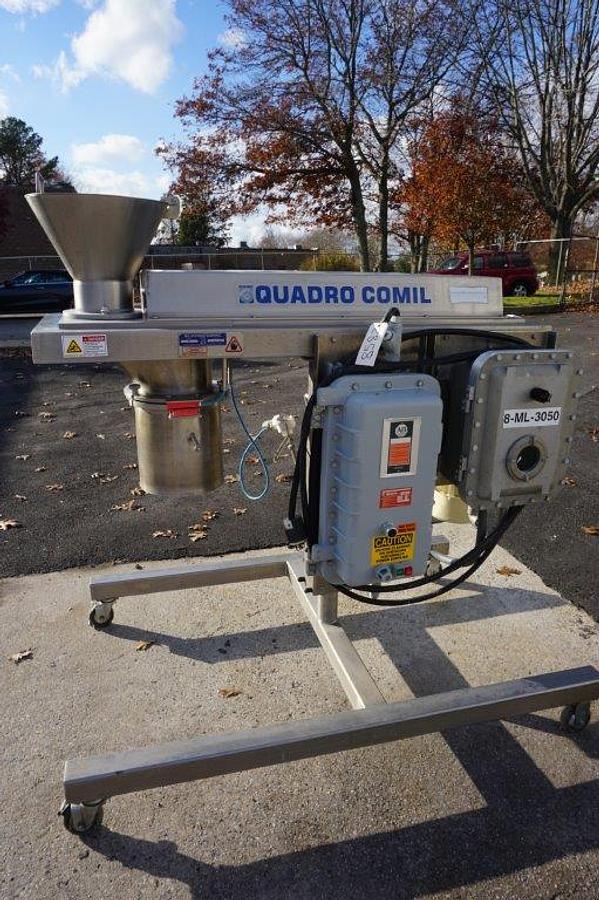
The most commonly traded Quadro machines on the used equipment market are the Comil cone mills, particularly the 196S and 194 models. The 196S is a mid-to-large production-scale unit and is available in motor configurations ranging from 7.5 HP to 10 HP depending on the specific listing. The 194 is a slightly different configuration and is sometimes offered in explosion-proof motor versions with variable speed drives, which makes it suitable for processing flammable or solvent-laden materials. Beyond the Comil line, Quadro also produced the Ytron series for high-shear mixing and dispersion applications, and those units appear occasionally in the used market as well.
On the smaller end, lab-scale Comil units such as the U5 and U10 are sought after by pharmaceutical development teams and contract manufacturers running small batches or scale-up studies. The U20 sits at the production scale and is one of the most recognized models in the line. Sanitary pneumatic conveyors, such as the Quadro Vac, are also available as standalone used units and are often purchased to complement an existing Comil installation. Buyers searching for used Quadro equipment should check whether listings specify motor horsepower, screen size availability, and whether the unit is explosion-proof, since those details significantly affect suitability for a given application.
What industries use Quadro milling equipment?
Quadro milling equipment is used most heavily in the pharmaceutical industry, where the Comil has become a standard piece of equipment for wet and dry granulation, milling of active pharmaceutical ingredients, and delumping of powders before blending or tableting. The machine's sanitary design, ease of cleaning, and ability to produce a consistent particle size distribution make it well-suited to GMP manufacturing environments where batch-to-batch repeatability is critical. Nutraceutical and dietary supplement manufacturers also rely on Quadro equipment for many of the same reasons.
Outside of pharma, the food processing industry uses Quadro mills for applications such as spice grinding, sugar milling, cocoa processing, and reduction of food powders. Chemical manufacturers use the equipment for processing pigments, resins, and specialty chemicals where controlled particle size is important for downstream processing or product performance. Because many of these industries operate under strict cleanliness and contamination-control requirements, Quadro's stainless steel construction and sanitary design have broad appeal across all of them. Buyers from any of these sectors frequently seek used Quadro units because the machines hold up well over time and can often be returned to full production service after basic inspection and cleaning.
What particle size range can Quadro milling equipment achieve?
Quadro Comil units are capable of producing a wide range of particle sizes depending on the screen and impeller combination selected. Screens are available in openings ranging from very fine, around 150 to 200 microns, up to coarser openings in the range of several millimeters for delumping or coarse sizing applications. The actual output particle size is influenced by several variables including screen opening size, impeller type, impeller speed, and feed rate. Because the Comil uses a relatively low-energy milling action, it is particularly well-suited to applications where the goal is a narrow size distribution rather than ultra-fine grinding.
For very fine milling below 100 microns, other technologies such as jet mills or high-energy ball mills are typically more appropriate. The Comil excels in the mid-range particle size reduction work that makes up the bulk of pharmaceutical granulation and food powder processing. One practical advantage of the Comil design is that changing the screen is straightforward, so a single machine can be quickly reconfigured to hit different target particle sizes for different products or batch specifications. Buyers evaluating used Quadro equipment should confirm which screens and impellers are included with the machine, since a complete tooling kit adds significant value to a used listing.
Are used Quadro Comil machines GMP compliant and suitable for pharmaceutical manufacturing?
Quadro designed the Comil line specifically with GMP pharmaceutical manufacturing in mind. The machines are constructed primarily from 316L stainless steel in product-contact areas, and the design allows for complete disassembly without tools in many configurations, which supports thorough cleaning and verification. The smooth internal surfaces minimize product hold-up and are compatible with standard clean-in-place or wash-in-place protocols used in pharmaceutical facilities. These design characteristics made the Comil one of the most widely adopted milling platforms in regulated drug manufacturing globally.
When purchasing a used Quadro Comil for pharmaceutical use, buyers should conduct a thorough inspection to assess the condition of product-contact surfaces, screens, seals, and the mill body itself. Surface finish degradation, scratches, or pitting in stainless steel components can create cleaning validation challenges. It is also worth consulting Quadro directly about parts availability for the specific model being considered, since older models may have limited support for certain components. A reputable used equipment dealer will typically accommodate in-person or video inspections so buyers can assess the machine's condition before purchase. Buyers should factor in any refurbishment costs needed to bring the machine to the surface finish and documentation standards required by their quality systems.
What should buyers inspect when evaluating a used Quadro milling machine?
A thorough inspection of a used Quadro mill should cover both mechanical condition and the state of product-contact surfaces. On the mechanical side, buyers should check the motor for proper operation, listen for unusual bearing noise, and verify that the variable speed drive (if equipped) functions across its full range. The impeller and screen should be examined for wear, deformation, or damage, since these components directly affect milling performance. Seals and gaskets should be assessed as well, since worn seals can be a source of contamination or product loss.
For product-contact surfaces, particularly in pharmaceutical and food applications, the condition of the stainless steel interior is important. Pitting, deep scratches, or corrosion can complicate cleaning validation and may require surface restoration before the machine is put back into service. Buyers should also confirm which screens, impellers, and tooling are included with the machine, as a complete set adds meaningful value. Most reputable used equipment dealers will offer in-person inspections at the machine's location, or at minimum a detailed video walkthrough. Keep in mind that dealers generally do not have production facilities, so functional testing under actual production conditions is typically not possible at the dealer's location. Some machines may still be installed at the facility where they were used, which can allow for a more complete operational assessment.
What is the typical price range for used Quadro milling equipment?
Pricing for used Quadro milling equipment varies considerably depending on the model, size, configuration, age, and overall condition of the machine. Smaller lab-scale units such as the U5 Comil tend to be less expensive than full production-scale models like the U20 or the 196S. Machines with explosion-proof motors, variable speed drives, or complete tooling kits command higher prices than base configurations. A used Comil in good working condition from a mid-size production model can range from a few thousand dollars for older units in basic configuration to well over twenty thousand dollars for newer, well-equipped machines with full tooling.
Buyers should factor in more than just the purchase price when calculating total acquisition cost. Shipping, rigging, and any crating or palletization required to safely transport the machine will add to the landed cost. Depending on the machine's condition, there may also be costs associated with replacing worn screens, seals, or other consumable components before the unit is placed back into service. Consulting with the dealer about the machine's history, hours of use, and any known issues will help buyers build a more accurate picture of total cost of ownership. Prices in the used market tend to reflect the strong reputation and durability of the Quadro brand, so these machines rarely sell at deep discounts even when older.
How does the Quadro Vac pneumatic conveyor work with Comil milling systems?
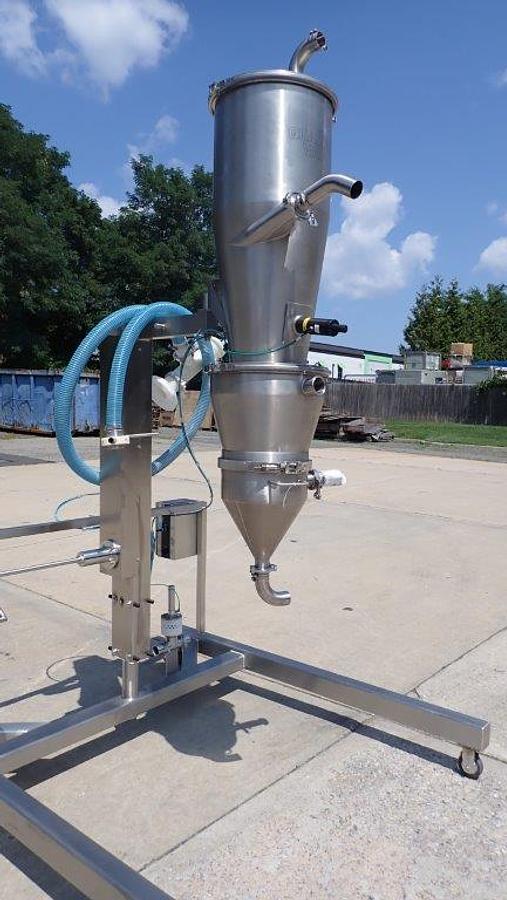
The Quadro Vac is a sanitary pneumatic conveyor designed to transfer powders and granules in a contained, dust-free manner. In a typical milling setup, it is used to feed material into the Comil or to convey milled product away from the mill discharge to the next processing step, such as a blender or a tablet press hopper. The pneumatic conveying approach is particularly valued in pharmaceutical and food manufacturing because it keeps product contained, reduces operator exposure to potent or dusty materials, and supports compliance with containment requirements in regulated facilities.
The Quadro Vac units available on the used market are typically portable, which gives facilities flexibility to move the conveyor between different processing areas or to pair it with different pieces of equipment as needed. Sanitary construction means the unit can be cleaned and validated to the same standards as the milling equipment it supports. Buyers considering a used Quadro Vac should inspect the conveyor body, filter elements, and any seals or gaskets for wear or damage. As with any used equipment purchase, an in-person or video inspection arranged through the dealer is the best way to assess actual condition before committing to a purchase.
What are the typical shipping and logistics considerations for purchasing used Quadro milling equipment?
Shipping a used Quadro Comil or related milling equipment requires careful planning to prevent damage in transit. Smaller units can often be palletized with appropriate blocking and bracing, while larger production-scale machines may require custom crating to adequately protect the mill body, motor, and any included tooling. The level of packaging required will affect shipping costs, and buyers should ask the dealer specifically what packaging is included in the quoted price. Rigging costs for loading and unloading heavier machines are typically an additional expense and should be factored into the total landed cost before finalizing a purchase.
For international shipments, buyers should also account for import duties, customs clearance fees, and any compliance documentation required by their country's regulatory authorities for used industrial equipment. Freight costs for machinery can be substantial, particularly for heavier production-scale units, and the choice of freight carrier and service level (standard freight versus expedited) will affect both cost and transit time. The best practice is to get a full breakdown of all shipping, rigging, and packaging costs from the dealer before completing the transaction, so there are no surprises in the total cost of acquiring the machine.
What payment terms do used equipment dealers typically offer for Quadro milling machines?
Most used equipment dealers require full payment before a machine is released for shipping. This is standard practice in the used machinery industry and reflects the fact that dealers are typically selling equipment on behalf of previous owners or from their own inventory, without the financing infrastructure that a manufacturer might have. For first-time buyers, full payment upfront is almost universally the expectation. Some dealers extend payment terms to established customers with a track record of purchases, but this is the exception rather than the rule.
Buyers who need financing for used equipment purchases generally arrange it independently through equipment financing companies or their own banking relationships, rather than through the dealer. Leasing is another option some buyers explore, and third-party equipment leasing companies will sometimes finance used industrial machinery depending on its age, condition, and resale value. When evaluating payment options, buyers should also keep in mind that the total cost includes shipping, rigging, and any refurbishment work needed after delivery, so it is worth building those figures into any financing arrangement from the start.